National News
Attorneys general sue to keep consumer bureau funded

Democratic attorneys general from 22 jurisdictions sued the Trump administration Monday over its plans to defund the Consumer Financial Protection Bureau.
“We won’t stand by as consumer protections are dismantled,” California Attorney General Rob Bonta said during a virtual news conference Monday with the attorneys general from Oregon, Colorado and New Jersey.
“The Trump administration’s latest effort to destroy the CFPB means that hundreds of thousands of consumer complaints will fall on deaf ears,” Bonta said. “If you have ever had issues with your car loan, mortgage loans or bank fees, if you have ever disputed a credit score error and expected to have the federal government on your side, this impacts you.”
The attorneys general emphasized the CFPB’s success in getting back $20 billion across the nation into the pockets of consumers who were treated unfairly by businesses.
“The CFPB is the only federal agency authorized to supervise the nation’s largest banks for their compliance with the federal consumer financial protection laws,” according to the suit, filed Monday in the U.S. District Court for Oregon in Eugene.
The CFPB gave notice on Nov. 10 that it would not request funding from the Federal Reserve to continue its operations. The bureau also said it had enough money to continue to operate until at least Dec. 31, after which it’s expected to close its operations.
The lawsuit challenges CFPB Acting Director Russel Vought’s refusal to request necessary funding from the Federal Reserve. The bureau’s action was based on a U.S. Department of Justice analysis that said money is taken from the Federal Reserve’s profits, which currently don’t exist.
The lawsuit says the Dodd-Frank Act refers to the Federal Reserve’s gross revenues, not the profits. The suit refers to Federal Reserve Chair Jerome Powell’s testimony before the Senate Committee on Banking, Housing and Urban Affairs that the Federal Reserve is required to fund the bureau even when the reserve is operating at a loss.
The suit argues Vought’s decision is contrary to congressional mandates and violates the Administrative Procedure Act and the U.S. Constitution.
Congress, not the Trump administration, holds the power of the purse, attorneys general said during Monday’s news conference.
“We’re defending Congress,” Colorado Attorney General Phil Weiser said. “We have to act because Congress isn’t acting.”
The Center Square reached out to the White House Monday, but did not get a response before press time.
California, Colorado, Oregon, New Jersey and New York are the states leading the coalition. The other plaintiffs are the attorneys general of Arizona, Connecticut, Delaware, the District of Columbia, Hawaii, Illinois, Maine, Maryland, Massachusetts, Michigan, Nevada, New Mexico, North Carolina, Rhode Island, Vermont and Wisconsin.
In other litigation news Monday, Bonta discussed the lawsuit challenging California’s congressional redistricting measure, Proposition 50. The case, filed by plaintiffs such as state Assemblymember David Tangipa, R-Fresno, and the U.S. Department of Justice, was heard by a three-judge panel last week in the U.S. District Court for Central California in Los Angeles.
“I think we’re going to get a ruling soon,” Bonta said, answering a question from The Center Square. “I think the evidence came in very well for the state of California for the durability and sustainability and legality for Proposition 50.”
He said he believes the federal judges will rule that proposition is a political-partisan gerrymander, which is legal, and not a racial gerrymander, which is illegal.
Tangipa told The Center Square he expects the case to go all the way to the U.S. Supreme Court.
If that happens, California will likely prevail, based on the U.S. Supreme Court’s ruling upholding congressional redistricting in Texas, Bonta said. He pointed to Justice Samuel Alito’s comments in a concurring opinion that described the California redistricting as a political-partisan gerrymander.
The Democratic supermajority in the California Legislature proposed the new congressional districts to pick up five Democratic seats in the U.S. House during the 2026 midterm election. That’s intended to offset the five seats that Texas Republicans expect to pick up in the same election after that state’s redistricting.
Trump announces ‘Golden Fleet’ Navy battleships

President Donald Trump on Monday announced the United States would be building two new battleships to be part of the Navy’s “Golden Fleet.”
Trump, alongside Secretary of State Marco Rubio, War Secretary Peter Hegseth and Secretary of the Navy John Phelan, announced the “Golden Fleet” of Navy ships. Trump said the U.S. would start building two ships, with the ultimate goal of having between 20 and 25 “Golden Fleet” ships total.
“These ships will be the first of a whole new class of battleships in the years to come,” Trump said. “America’s battleships have always been unmistakable symbols of American power.”
The Navy has steadily been increasing its shipbuilding capacity, with the goal to increase its overall fleet. When analyzing the Navy’s 2025 spending plan, the Congressional Budget Office estimated that total ship building costs would average $40 billion over the next 30 years.
Under the Navy’s 2025 purchasing plan, the number of battle force ships in the Navy would increase from 295 today to 390 in 2054. Overall, the Navy would purchase more current generation ships and smaller ships.
John Phelan, secretary of the Navy, said the new class of battleships will contain capacity to carry the nuclear-armed sea launch cruise missile. He highlighted that the Navy will have increased capabilities due to
“This is just one piece of the president’s golden fleet that we’re going to build,” Phelan said.
Trump said the new battleships will use hypersonic weapons and high powered lasers to the ship’s capabilities.
The Navy announced Friday it would commission a new class of frigates to be built in the United States. Frigates are meant to escort larger sea vessels, general patrols and anti-submarine warfare.
Hegseth highlighted the ship building as an example of the administration’s efforts to deter narcotrafficking behavior. He highlighted recent strikes of alleged narcotics smugglers in the Caribbean ocean.
“With every strike, we’re saving American lives,” Hegseth said. “No other president is willing to do real deterrence.”
Trump criticized an overall slow down of shipbuilding in the Navy. The latest battleship the Navy was first commissioned in 1944 and then recommissioned during the Gulf War in 1986.
“We’re going to restore America as a major ship building power. We’re going to ensure the USA has the most powerful fleet anywhere in the world and long into the future with battleships helping lead the way,” Trump said.
WATCH: WA and OR lawmakers irked as update on I-5 bridge costs still missing
A bipartisan group of lawmakers, whose charge is to provide updates on the plans and cost to replace the Interstate 5 bridge across the Columbia River between Washington and Oregon, has run into a bit of a roadblock.
Planners seem to be unable to provide cost estimates.
The aging bridge is a traffic bottleneck, slowing freight and commuters. Supporters of the replacement also site seismic risks in the event of a powerful earthquake.
Those who support finishing the original plan from years ago for another corridor, similar to SR205, argue the current bridge has many useful years remaining and contend neither state can afford the ballooning costs of a bridge replacement that includes light rail.
At a Dec 15 meeting of the Joint Oregon-Washington Legislative Action Committee, lawmakers from Oregon and Washington anticipated getting updated figures as years of delays and design changes have dramatically escalated costs.
“It’s a light rail project in search of a bridge,” said Vancouver Republican Rep. John Ley in an interview with The Center Square. “They decided we need to destroy the current bridge in order to create a pathway for the light rail.”
Ley is a member of the two-state committee.
During the Dec 15 meeting, planners said they are waiting on information from the U.S. Coast Guard.
“We do not have a numbers update for you this month,” said incoming program administrator Carley Francis.
She explained they are waiting on height requirements for the bridge and whether or not it will be a fixed span, as state lawmakers prefer, or a moveable structure, before final cost estimates can be provided.
A moveable span, like the current structure, would be far more expensive.
Lawmakers in both states are wrestling with major budget challenges as the 2026 legislative sessions approach.
Ley said one of the main obstacles for him is the design for light rail on the new bridge. He contends ridership doesn’t demand the rail line, and Washington taxpayers would be on the hook for subsidizing Portland’s rail system.
“I introduced a bill that went nowhere last year. And I introduced an amendment that said Washington will pay zero capital costs for a transit organization in another state. And of course, the Democrats killed it and wouldn’t hear it. It’s insanity on many levels,” Ley said. “But that is all part of the game, all in an effort to try and bail out Portland’s transit system that’s going broke.”
Oregon lawmakers on both sides of the aisle also raised pointed questions about the lack of specifics.
“Even with the Oregon budget right now, we’re asking all of our agencies to estimate a 5%, 10% cut in their future calculation of their budget,” said Oregon Rep. Thủy Trần, D-Portland. “Is your group doing the same?
“I’m sure Washington doesn’t have all the money it wants to have either and so we want to know how your committee or your team is adjusting to the change? You can’t punt it down the road without giving us something,” she said. “So I want a date and I want a report or else I would say that your teammates are not doing [the] work to be blunt ma’am.”
Oregon Rep. Shelly Boshart Davis, R-Albany, also pushed back on planners not providing new cost estimates.
“We can’t even tell Oregonians and Washingtonians the cost to what we’re looking at and part of the reason is we’re pacifying all of these stakeholders, and we can’t even say two auxiliary lanes,” Davis said. “This is craziness.”
She was referring to the current design including light rail, bike and pedestrian lanes, thereby limiting auxiliary lanes that provide extra space for drivers to safely speed up to match traffic flow as they merge.
Rep. Ley told The Center Square its inexcusable that planners can’t provide new cost estimates even with a final design not agreed upon.
“In a world of AI, in supercomputing….we could get daily updated cost estimates on what the bridge would be,” Ley said. “Bottom line is, they have numbers. But they know if they told them it was going to be $10 billion or $12 billion, both the Oregon and Washington legislature would say, “are you out of your flipping mind? There’s no way we can afford that.”
Some have speculated the entire project as designed will be scrapped. The federal government is scrutinizes projects all over the country, with a focus on examining transit projects, including light rail that had been automatically green-lighted by the Biden administration.
It’s unlikely Oregon and Washington could afford moving forward without federal funding.
WATCH: Organizer to Seattle: No need to wait for final fed policy on homelessness
Even though the U.S. Department of Housing and Urban Development (HUD) has temporarily withdrawn its recently announced policy changes that threaten deep cuts to “Housing First” programs, the founder of a Seattle-based community group is confident the changes are coming.
Andrea Suarez, who founded We Heart Seattle more than five years ago, said there’s “no need to wait” for federal action before the city alters its approach.
The grassroots group began by organizing trash cleanups in public spaces and offering resources to the city’s drug addicted and mentally ill population living on the streets and in city parks.
Before last Friday’s HUD decision to withdraw the policy changes due to several pending court challenges, Suarez told The Center Square she felt “vindicated” by HUD Secretary Scott Turner’s decision to change course on “the homeless industrial complex.”
“My loved ones, our loved ones, those 30,000 people alone in the state of Washington that have died since we implemented ‘housing first’ will not die in vain under this administration,” Suarez said. “That’s a big deal to the families who’ve been stuck in this vicious cycle of addiction with their loved one for so long unable to get real help.”
HUD’s original policy change would have capped how much of the $3.9 billion grant program could be used for permanent supportive housing at 30%. HUD has previously directed approximately 90% of Continuum of Care funding under its “Housing First” philosophy.
While non-profits and other homeless providers wait to find out what changes HUD will settle on, Suarez says there is no reason for the city of Seattle and other local municipalities to put off the course correction.
“Everyone can start right now to make recovery and self sufficiency the cornerstone of their programs,” wrote Suarez via text on Monday. “They can expand who they work with now by embracing faith-based organizations, private funded street outreach like We Heart Seattle and private funded recovery housing like Battlefield and Salvation Army.”
Over the summer, President Trump announced his administration was rejecting housing-first policies, which get a person into permanent housing before addressing their addiction, and/or mental illness. Trump administration officials said the failed approach encouraged “dependence on endless government handouts” while not addressing the root causes that led to someone ending up on the street.
“That first and foremost prevention piece is our mantra here,” Suarez said. “Make it harder to get high and easier to get clean. Make access to treatment so much easier, friction-free. There should always be a bed available when somebody wants that initial medical assisted stabilization.”
Suarez said it’s an often-repeated myth that there are no beds to take someone when they decide they want to get clean, at least in Seattle.
“There are places for people to go. We don’t need to keep building multi-million-dollar crisis centers for people,” Suarez said. “We’re not taking all 8,000 people off the street at once. We can start right now simply for free by saying from our own mouths as outreach staff, do you want to do something different with your life today? I’m willing to take you into treatment.”
Suarez said she has reached out to Seattle Mayor-Elect Katie Wilson and staff members asking for a meeting to discuss the work of We Heart Seattle and coming changes from HUD and how they can work together, but has so far found no one willing to meet.
“I learned everything I know in five years because we picked up trash and discovered the spectacular policy failures around drugs, crime, and homelessness,” she said. “The truth lies beneath the trash.”
HUD officials have stated they will be reissuing a revised policy and funding notice soon. But they still intend to pursue the shift away from the “Housing First” model toward a requirement to get clean and sober or take advantage of other behavioral health services in exchange for housing and other governmental assistance.
This fall, the Center Square created an explainer video on Housing First and the contrast with a ‘treatment first’ approach. That video is linked here.
Trump’s proposed $2,000 tariff rebate checks depend on Congress
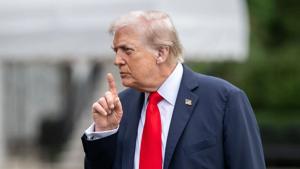
President Donald Trump needs Congress to take action to make good on a proposal to send some Americans $2,000 tariff rebate checks next year.
Director of the National Economic Council Kevin Hassett said the U.S. House and Senate will need to take up the matter.
“I would expect that in the new year, the president will bring forth a proposal to Congress to make that happen,” Hassett said on “Face the Nation” on Sunday.
Details about Trump’s tariff rebate proposal remain sparse. Trump has said he wants to issue the rebate checks and use the rest of the tariff revenue to pay down the nation’s $38 trillion debt, even as the U.S. Supreme Court has not yet determined whether he has the authority to impose tariffs.
Trump said the rebates would be for low and middle-income Americans, not the wealthy, but has not specified any income limits. Treasury Secretary Scott Bessent previously suggested the checks could go to those earning less than $100,000 a year, but noted that no decision had been made on income caps.
Three different scenarios analyzed by the Tax Foundation estimate that costs of distributing the checks would range from $279.8 billion to $606.8 billion. The scenarios varied according to income limits, single and joint filers and head of household filers.
“Even if all tariff revenues, including pre-existing and new tariffs, went toward rebates, revenue would still fall short,” according to a Tax Foundation report. “Even factoring in the collections that will come in over the remaining three months of the year, tariff money would not pay for even the narrowest tariff dividend option.”
The Committee for a Responsible Federal Budget also said the math doesn’t work, according to its analysis. The group said if the rebates were structured like the COVID-19 stimulus payments, the $2,000 dividend would cost about $600 billion, which is about twice as much as tariffs are expected to generate this year.
Lummis retirement follows scrutiny over stalled crypto legislation
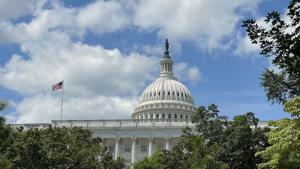
U.S. Sen. Cynthia Lummis, R-Wyo., announced she will not seek reelection in 2026, a move that comes as she faces mounting criticism of her role in delaying cryptocurrency legislation backed by the Trump White House and House Republicans.
Lummis, who has made digital asset policy a major focus of her Senate work, said her decision was driven by the demands of the job rather than political considerations.
“Deciding not to run for reelection does represent a change of heart for me, but in the difficult, exhausting session weeks this fall, I’ve come to accept that I do not have six more years in me,” Lummis said in a statement. “I am a devout legislator, but I feel like a sprinter in a marathon. The energy required doesn’t match up.”
Her announcement follows renewed scrutiny over stalled Senate action on digital asset market structure legislation. Earlier this year, the U.S. House passed the Digital Asset Market Clarity Act with bipartisan support, and President Donald Trump identified the bill as a priority.
Yet, the measure has not advanced in the Senate. Critics argue momentum slowed after Lummis and Senate Banking Committee Chairman Tim Scott, R-S.C., introduced separate legislation that would create a new category for so-called “ancillary assets.”
The Bull Moose Project, a conservative advocacy group, publicly criticized Lummis earlier this month, accusing her of sidelining the House-passed bill and delaying legislation the White House wanted finalized before Thanksgiving.
“The White House was clear that it wanted digital asset market legislation passed and on the President’s desk before Thanksgiving,” Bull Moose Project founder Aiden Buzzetti said in a release. “The House did its job, and the Senate was ready to pass it until Senator Lummis called an audible and fumbled the ball.”
Lummis has defended her approach, saying her proposal would provide clearer rules for innovators while strengthening consumer protections. She also said that negotiations in the Senate have been slower than she anticipated.
“These conversations at this point are very successful, yes, they’re slower than we hoped,” Lummis told Bloomberg earlier this fall.
In her retirement announcement, Lummis reiterated her continued support for Trump and said she plans to remain active through the end of her term.
“I am honored to have earned the support of President Trump and to have the opportunity to work side by side with him to fight for the people of Wyoming,” she said. “I look forward to continuing this partnership and throwing all my energy into bringing important legislation to his desk in 2026.”
Lummis’ decision sets the stage for a competitive Republican primary in Wyoming, while leaving unanswered questions about the future of digital asset legislation.
Trump administration pauses all offshore wind projects for security

The Trump administration paused all offshore wind projects Monday in a sweeping move that temporarily halts all construction in President Donald Trump’s least-favorite energy industry.
The Department of the Interior announced Monday that it was immediately pausing the leases for all large-scale offshore wind projects under construction in the United States due to national security risks. The move affects Vineyard Wind 1 near Martha’s Vineyard; Revolution Wind’s project for Rhode Island and Connecticut; Coastal Virginia Offshore Wind; and Sunrise Wind and Empire Wind 1 near New York.
The Department of War recently identified national security risks in classified reports, according to the Department of the Interior. Officials said the pause would give government agencies time to work with leaseholders and state partners to address the risks.
“The prime duty of the United States government is to protect the American people,” Secretary of the Interior Doug Burgum said. “Today’s action addresses emerging national security risks, including the rapid evolution of the relevant adversary technologies, and the vulnerabilities created by large-scale offshore wind projects with proximity near our east coast population centers.”
He added: “The Trump administration will always prioritize the security of the American people.”
Department of Interior officials said large-scale wind projects create radar interference called “clutter.” That clutter obscures legitimate moving targets and generates false targets near the wind projects.
The Department of Energy in a 2024 report stated that a radar’s threshold for false alarm detection can be increased to reduce some clutter, but an increased detection threshold could cause the radar to “miss actual targets.”
Dominion Energy said pausing Coastal Virginia Offshore Wind in response to the U.S. Department of Interior’s Director’s Order for a 90-day suspension of work would threaten jobs and reliability.
“The Coastal Virginia Offshore Wind Project is essential for American national security and meeting Virginia’s dramatically growing energy needs, the fastest growth in America. This growth is driven by the need to provide reliable power to many of America’s most important war fighting installations, the world’s largest warship manufacturer, and the largest concentration of data centers on the planet as well as the leading edge of the AI revolution,” the company said in a statement. “Stopping CVOW for any length of time will threaten grid reliability for some of the nation’s most important war fighting, AI, and civilian assets. It will also lead to energy inflation and threaten thousands of jobs.”
Dominion Energy said the rationale for the pause didn’t make sense.
“The project has been more than ten years in the works, involved close coordination with the military, and is located 27 to 44 miles offshore, so far offshore it does not raise visual impact concerns. The project’s two pilot turbines have been operating for five years without causing any impacts to national security,” the company noted.
The National Ocean Industries Association, a trade group for the offshore oil, gas and wind industries, urged the Trump administration to reconsider.
“NOIA urges the administration to move promptly, in collaboration with the industry, to end the pause on construction of offshore wind projects for potential national security concerns,” NOIA President Erik Milito said. “The regulatory process involves a rigorous framework for assessing the national security implications of proposed projects, and every project under construction has already undergone review by the Department of Defense with no objections.”
Noem offers $3,000, free flight for migrants who sign up to leave

Homeland Security Secretary Kristi Noem raised her incentives on Monday for illegal migrants who volunteer to return home before the end of the year as part of a program to lower deportation costs for taxpayers.
Noem had a new offer of $3,000 stipend and free flight home if they sign up to self-deport through the CBP Home app by the end of the year. That’s up from a previous offer of $1,000.
She said 1.9 million illegal aliens have voluntarily self-deported, including tens of thousands who used the CBP Home program since January.
“During the Christmas Season, the U.S. taxpayer is so generously TRIPLING the incentive to leave voluntarily for those in this country illegally – offering a $3,000 exit bonus, but just until the end of the year,” Noem said. “Illegal aliens should take advantage of this gift and self-deport because if they don’t, we will find them, we will arrest them, and they will never return.”
Self-deportation is less expensive than average cost to arrest, detain, and remove an illegal alien. That average stands at $17,121 per person. Even with the cost of the stipend, DHS projected that the use of CBP Home will decrease the costs of a deportation by around 70%, according to a DHS report.
DHS officials didn’t immediately respond to questions from The Center Square on the costs of the enhanced stipends or the total costs of the program.
Noem first announced the stipend and taxpayer-funded self-deportation plan in April after the administration reached agreements with countries to accept the returning citizens.
In May, DHS launched Project Homecoming, using chartered flights to return people and families, including young children, to their home countries. DHS began offering $1,000 stipends and U.S. taxpayer-funded flights to eligible nonviolent foreign nationals.
Lawmakers to hold Bondi in contempt if all Epstein files not released

Frustrated with a lack of cooperation from the U.S. Department of Justice, the lawmakers responsible for forcing the release of government files on Jeffrey Epstein are threatening legal repercussions.
Led by Reps. Thomas Massie, R-Ky., and Ro Khanna, D-Calif., Congress last month overwhelmingly passed the Epstein Files Transparency Act. The law mandates that the DOJ declassify all information pertaining to Epstein, a well-connected financier and convicted sex trafficker who died in prison in 2019.
The Justice Department failed to meet the 30-day deadline, however, releasing only part of the cache. As a result, Massie and Khanna have vowed to hold Bondi in contempt of Congress, which could lead to fines, impeachment, or even imprisonment.
Bondi said the delay is due to the number of redactions still needed to protect victims’ privacy, and that the rest of the files will be released on a rolling basis over the coming weeks.
Another batch of files is set to drop Monday afternoon. But lawmakers say the department’s track record of completely blacking out hundreds of pages and redacting information unrelated to victims’ protection proves the release is “bogus.”
“The survivors deserve justice. The DOJ release does not comply with the Epstein Files Transparency Act and does not provide what the survivors are guaranteed under the new law,” Massie posted on X on Monday.
“The results are in: nobody is buying this bogus Epstein release. The DOJ needs to quit protecting the rich, powerful, and politically connected,” he said in a follow-up post.
Most of the thousands of files already released are either heavily censored or reveal no new information. In a Monday letter to Congress, 18 of Epstein’s victims called for accountability and condemned the DOJ for seemingly trying to “keep survivors and the public in the dark as much as possible and as long as possible.”
“[W]hat we received was riddled with abnormal and extreme redactions with no explanation,” the women wrote. “Moreover, the partial release was done in a manner that made it difficult or impossible for survivors to find materials that would be most relevant to our search for accountability.”
Khanna has demanded that the next batch of files include FBI witness interviews which names other men, the Epstein emails seized from his computer, the 60 count draft indictment, and the 82 page prosecution memo.
“The DOJ must stop protecting rich & powerful men who were not charged or those who sabotaged the prosecution,” Khanna said on social media.
Bondi has defended the department’s approach, posting on X that the DOJ “will ensure that Justice is served.”
“The Department of Justice previously stated we will bring charges against anyone involved in the trafficking and exploitation of Jeffrey Epstein’s victims. We reaffirm this commitment, and ask any victim to please come forward with any information pertaining to any individuals who engaged in illicit activity at their expense,” Bondi said. “We have met with many victims and victims groups, and will continue to do so if more reach out.”
Texas mayor is first to issue proclamation banning Sharia law
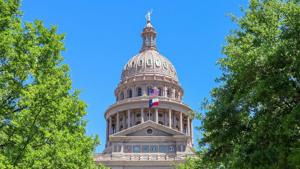
A Texas mayor appears to be the first to issue a proclamation banning Islamic Sharia law.
Keller Mayor Armin Mizani signed a proclamation “affirming constitutional supremacy, American sovereignty, and rejection of foreign legal systems,” stating that the U.S. and Texas constitutions “alone define the lawful framework for governance, justice, and civil order within this city.”
“In Keller, we are governed by American law, NEVER foreign legal systems like Sharia law or Sharia courts,” Mizani said in an X post. “As Mayor, I take my oath to the Constitution seriously. That’s why I have issued a proclamation affirming a simple principle: one U.S. Constitution, one legal system, and equal justice under the law. No competing legal systems have authority here.”
Keller is located in the Dallas-Fort Worth metroplex in Tarrant County and has a population of about 50,000.
The city “affirms that no foreign law, religious law, or external system of governance shall have any legal force or recognition within its jurisdiction and sharia law, sharia courts, and any other foreign or religious based systems are not recognized, authorized, or permitted to operate as civil or judicial authority within the city … and shall have no standing in municipal governance, adjudication, or public policy,” the proclamation states.
It also affirms the First Amendment rights of “every individual to freedom of religion, belief, expression, and peaceful worship, while making clear that religious belief does not confer authority to establish parallel legal systems or supersede civil law.”
Mizani said issuing the proclamation was “just the first step.” He plans to work with city council members “to permanently codify these principles,” he said. Mizani previously served on the city council from 2014 to 2020, when he was elected mayor.
He is now running for Texas House District 98, whose incumbent, state Rep. Giovanni Capriglione, R-Southlake, announced his retirement. Capriglione won 68% of the vote in the last election in the Republican-dominant district.
In total, three Republicans and two Democrats are running for the seat in March primaries.
Mizani, who was born and raised in Puerto Rico, said, “Texans should never apologize for our heritage or our values; instead, we should fight for them.”
The proclamation was issued as Texas lawmakers are leading an anti-Sharia law movement at the state and federal level, The Center Square reported.
U.S. Reps. Chip Roy and Keith Self, both Texas Republicans, last week launched a new Sharia-Free America Caucus in the U.S. House to “counter the alarming rise of Sharia Law in the United States,” they said. “Sharia is a dominating force that is not compatible with the U.S. Constitution.”
This is after they filed the Preserving a Sharia-Free America Act in October to prevent foreign nationals who follow Sharia law from entering the U.S. or from remaining in the country, The Center Square reported. Roy, who is running for attorney general, argues, “America is facing an existential threat – the spread of Sharia Law.”
Last month, Gov. Greg Abbott, who is running for reelection next year, issued three directives targeting Islamic groups, first designating the Muslim Brotherhood and the Council on Islamic American Relations (CAIR) as foreign terrorist organizations. CAIR sued and maintains it is not a terrorist organization and doesn’t fund terrorism.
Abbott also directed the Texas Department of Public Safety to launch criminal investigations into the Muslim Brotherhood and CAIR and ordered an investigation into an Islamic Tribunal operating in north Texas in Self’s district that claims to make judicial rulings.
One week after Abbott’s FTO designation, President Donald Trump designated the Muslim Brotherhood as an FTO. U.S. Sen. Ted Cruz, R-Texas, also refiled a bill he’s filed multiple times over 10 years to ban all Muslim Brotherhood members from the U.S.
Abbott also requested the Treasury Department to investigate CAIR for its alleged terrorist ties and suspend its 501(c)(3) tax-exempt nonprofit status, The Center Square reported.
Last week, U.S. Sen. John Cornyn, R-Texas, introduced legislation to allow the Treasury Department to terminate the tax-exempt status of groups that provide material support to terrorism, which he argues includes CAIR.
“CAIR is a radical group of terrorist sympathizers with a long history of undermining American values and trying to unconstitutionally impose Sharia Law on Texas, which is why I stand behind Governor Abbott’s decision to designate it as a foreign terrorist organization,” Cornyn, who is running for reelection in a tough primary race, said in a statement.
He also called on Trump to designate CAIR as an FTO “at the federal level to ensure this breeding ground for anti-American hate is starved of funding and forced to close its doors once and for all.”