National News
Trump prays for favorable Supreme Court ruling on tariff authority

President Donald Trump said his tariffs on foreign imports are fueling the nation’s economic growth as he prays for a favorable U.S. Supreme Court decision.
“The TARIFFS are responsible for the GREAT USA Economic Numbers JUST ANNOUNCED…AND THEY WILL ONLY GET BETTER!” Trump wrote in a social media post on Tuesday. “Also, NO INFLATION & GREAT NATIONAL SECURITY. Pray for the U.S. Supreme Court!!!”
Peter Navarro, a top trade adviser, gave a more detailed explanation defending Trump’s use of tariffs in an op-ed published Tuesday in the Wall Street Journal.
“The tariff debate remains distorted by two opposing misconceptions: that tariffs would instantly resurrect American industry, that they would immediately crash the economy and ignite runaway inflation,” Navarro wrote. “The experience of 2025 has disproved both. The economy didn’t collapse, but neither did a manufacturing renaissance appear on demand. These outcomes should surprise no one who understands how industrial capacity is built.”
Navarro said the resurrection would take longer. He also said the import duties wouldn’t produce inflation.
“The related slogan – ‘Who pays the tariff?’ – is equally misleading. Importers remit duties at the border, but who actually pays is determined by bargaining power, not paperwork,” he wrote. “In real markets, the burden falls on whoever can’t afford to lose access to the U.S. consumer.”
The Congressional Budget Office changed some of its tariff projections after noting that foreign businesses were picking up about 5% of the cost of the tariffs through lower prices.
“We had previously projected that foreign exporters would not reduce their prices to offset increased tariff rates. We now project that foreign exporters will reduce their prices by an amount equivalent to 5% of the increase in tariff rate,” according to a CBO report from November.
A recent Goldman Sachs report found that U.S. consumers will pay 55% of the costs resulting from Trump’s tariffs, U.S. businesses will pay 22%, and foreign exporters will pay 18%. That report said that most tariffs will be passed on to American consumers as businesses adjust prices in the coming months.
In November, the Supreme Court sharply questioned Trump’s authority to impose tariffs under a 1977 law that he has used to justify the bulk of the tariffs announced on April 2, which he dubbed “Liberation Day” for U.S. trade. The cases challenging Trump’s tariff authority remain pending before the nation’s highest court.
Supreme Court Chief Justice John Roberts called the tariffs “taxes on Americans,” which he said had long been a “core power of Congress,” not the president.
Trump has said he wants to use tariffs to restore manufacturing jobs lost to lower-wage countries in decades past, shift the tax burden away from U.S. families and pay down the national debt.
Economists, businesses and some public companies have warned that tariffs will raise prices on a wide range of consumer products.
Fifth Circuit squashes challenge to Texas ban on foreign land purchase
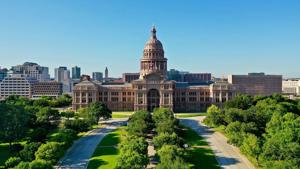
The Fifth Circuit Court of Appeals has handed Texas another win in a lawsuit brought by Chinese nationals challenging a state law banning foreign adversaries from purchasing land in Texas.
The law, which went into effect, Sept. 1, remains in effect.
Earlier this year, Gov. Greg Abbott signed SB 17, filed by state Sen. Lois Kolkhorst, R-Brenham. It prohibits the purchase of certain private property in Texas by governmental entities, companies and individuals that are domiciled in a country named in three recent Annual Threat Assessment reports published by the Director of National Security. It applies to agricultural, commercial, industrial and residential properties as well as mines, quarries, minerals and standing timber; it includes civil and criminal penalties.
The bill took several years to pass after multiple hearings and a Chinese Communist Party campaign against it, in which reporting by The Center Square was highlighted.
This year, under House Speaker Dustin Burrows, R-Lubbock, the bill not only passed but additional measures were included targeting countries of foreign concern and their operatives as well members of transnational criminal organizations like Tren de Aragua and other organizations the Trump administration designated as foreign terrorist organizations this year.
“This is very simple. Hostile foreign adversaries like China, Russia, Iran and North Korea, as well as foreign terrorist organizations like Tren de Aragua, must not be allowed to own land in Texas,” Abbott said when signing the bill, The Center Square reported.
Two Chinese nationals, Peng Wang and Quinlin Li, backed by the New Jersey-based Chinese American Legal Defense Alliance, sued in July to stop the law from going into effect. They sued in U.S. District Court for the Southern District of Texas arguing the law is unconstitutional and discriminatory.
In response, Attorney General Ken Paxton filed a motion to dismiss the lawsuit. In August, Judge Charles Eskridge agreed, dismissing their case without prejudice.
Wang and Li next appealed to the Fifth Circuit. In September, the Chinese American Legal Defense Alliance also filed a class action lawsuit in the U.S. District Court for the Western District of Texas Austin Division, also arguing the law is unconstitutional.
This month, a Fifth Circuit panel of three judges affirmed Judge Eskridge’s dismissal, arguing that Wang and Li lacked standing and “did not demonstrate a credible threat of enforcement of the law.”
In response to the ruling, state Rep. Cole Heffner, R-Mount Pleasant, who cosponsored SB 17 in the Texas House, said the Fifth Circuit judges “delivered a major win for the people of Texas.” The goal of the law is “to ensure foreign adversaries like China, Russia, Iran, and North Korea cannot buy up Texas land – and this decision keeps those protections firmly in place.”
An issue that arose in the lawsuit stemmed from the F-1 student visa program.
Wang has lived in Texas for 16 years and is pursuing a Masters of Divinity degree at a seminary in Fort Worth through an F-1 student visa. Li, who entered the U.S. on an F-1 student visa, recently graduated from Texas A&M with an engineering degree. She then applied for an H-1B visa, lives in Austin and works as a water/wastewater treatment plant design engineer for a private company, according to court records.
Wastewater plants in Texas have been the target of cyberhackers. This year, Abbott signed cybercrime and counter-espionage bills into law to address threats posed by the CCP, The Center Square reported.
Wang argued that the student visa program requires him to leave the U.S. when it expires, meaning he could return to China and be banned from buying property under the law. The Fifth Circuit judges replied that when his visa expires he could leave the U.S. and “move to Bolivia,” “Botswana,” or “Berlin” and his claim that the law discriminated against him was unsubstantiated.
Earlier this year, the Trump administration announced changes to the F-1 visa system arguing foreign nationals have taken advantage of the system becoming “forever students.” Changes include limiting the program to the duration of academic studies not to exceed four years, implementing additional vetting measures, and enforcing removal of those who overstay their visas.
So far this year, the State Department has revoked 8,000 student visas, it told The Center Square, more than twice the number revoked in 2024.
DOJ says new files alleging Trump abused girl in 1990s ‘unfounded’
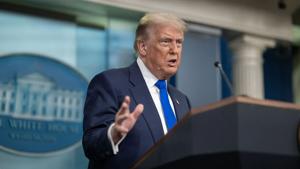
When the U.S. Department of Justice released 30,000 more pages of files on Jeffrey Epstein, it also dropped an unusual warning to Americans: some of the files contain false allegations.
“Some of these documents contain untrue and sensationalist claims made against President Trump that were submitted to the FBI right before the 2020 election,” the DOJ posted on X on Tuesday.
“To be clear: the claims are unfounded and false, and if they had a shred of credibility, they certainly would have been weaponized against President Trump already,” it added. “Nevertheless, out of our commitment to the law and transparency, the DOJ is releasing these documents with the legally required protections for Epstein’s victims.”
DOJ is in the process of releasing all documents related to sex trafficker Epstein and his close associate Ghislaine Maxwell after a legally-binding edict from Congress. The claims Bondi attacked are found within a three-page FBI report from 2020, which stands out from the rest of the trove for its allegations against Trump.
The report documents a call made on Oct. 27, 2020, to the FBI from a man who used to be a limo driver in the 1990s.
In the report, the man recalled how in 1997 he started dating a woman with whom he previously had a son with. The woman told him about a lady who had “invited her daughters to a fancy hotel and met Donald Trump and some of his friends.” The woman also often asked the man how to spell “Ghislaine,” he said, “implying Ghislaine had given her money and would give her additional money if needed.”
On a 1999 Christmas Eve visit to the woman’s house to visit their son, the man talked about his time as a limo driver, including the time in 1995 when he said he drove Trump to the Dallas Fort Worth airport.
He claimed he overheard Trump having a “very concerning” conversation over the phone during the ride, where the name “Jeffrey” was continuously stated and Trump made references to “abusing some girl.”
As he talked about that incident, the man said he noticed a change in one of the people present in the room, whose demeanor went “stone cold.” The person proceeded to tell him that “Donald J. Trump had raped her along with Jeffrey Epstein” and that some girl with a funny name “took me into a fancy hotel or building, that’s how it happened.”
Due to redactions, it is unclear whether the person mentioned was the woman with whom he had a son or one of her daughters previously mentioned in the report.
The man said he advised the person that Christmas Eve to call the police, which she did the next day even after voicing fear that she would be killed for doing so.
On Jan. 10, 2000, the man said he received a call notifying him of her death by a shot to the head, which officers at the scene believed could not have been the suicide that the coroner ruled it to be. The man concluded that he felt “the murder is a cover for Ghislaine.”
Ghislaine is serving a 20-year prison sentence. Epstein died in jail awaiting trial in 2019.
Trump administration officials have dismissed the document as unfounded, questioning why the man waited 20 years to tell the FBI, and then exactly a week before the 2020 General Election between Trump and Joe Biden.
Social media, however, has exploded, with more than 201,000 posts on social media platform X alone gathered under the header “DOJ Releases 30,000 Epstein Pages with Unfounded Trump Claims” only four hours after DOJ’s post.
Senate Minority Leader Chuck Schumer, D-N.Y., has already introduced a resolution to take legal action against the DOJ for failing to release all the files on time and heavily redacting many of them.
“The American people deserve full transparency,” Schumer said on X. “This Administration cannot be allowed to hide the truth.”
Expert says higher education must take new approach to AI

As American schools continue to turn to artificial intelligence, a new study by eLearning Industry highlights which states are showing the strongest interest in AI education.
The study analyzed data on the website searches with 28 AI education-related keywords across all 50 states. Virginia leads the nation in online interest in AI education with 60.87 searches per 100,000 residents. Maryland is second at 58.96, and New Jersey is at 54.67.
As the rise in AI continues to be a topic of interest in the education world, experts say the trend could play a significant role in shaping both the future of higher education and the readiness of the U.S. workforce.
Phillip Snalune, co-founder of the AI learning platform Codio, said in an exclusive interview with The Center Square that higher education must prioritize immersive, hands-on instruction over passive reliance on AI-generated answers.
His comments come as new data suggests employers are struggling to find workers who can effectively use and manage AI, despite widespread use among students. A study by the Digital Education Council shows that 80% to 90% of students now use AI regularly.
Yet Snalune highlights within a Codio survey that many executives and vice presidents at large U.S. companies found a disconnect between corporate ambitions for AI and the skills employees actually possess.
Executives reported difficulty finding workers with practical abilities in areas such as AI oversight, applied usage and data literacy.
“The No. 1 skill enterprises are looking for is AI oversight and governance,” Snalune told The Center Square.
But educators continue to express concern artificial intelligence could become a shortcut for cheating. They’re concerned current safeguards are insufficient. In response, Codio developed an AI assistant called Coach that explains errors in plain language and encourages students to work through problems rather than providing direct answers. Snalune said the approach is designed to ensure AI supports learning instead of replacing it.
“One clear signal is that I think the technology is clearly moving faster than curricula are being modernized,” Snalune said. “And that is probably the underlying source of anxiety on the teaching side.”
As the 2025-26 academic year continues, educators and employers are increasingly framing AI fluency as a core literacy.
Snalune said the focus must shift away from small pilot programs and toward building practical skills that are easily transferable into the workplace.
“The surge in AI-related education searches shows how Americans are embracing the future of work,” a spokesperson from eLearning Industry said in an email to The Center Square. “From online certifications to advanced degree programs, people are actively upskilling to stay competitive in an AI-driven economy.”
2025: Hundreds of TdA members indicted in 10 months, including on terror charges
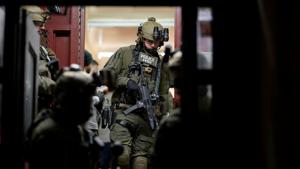
In the 10 months after President Donald Trump designated Tren de Aragua as a foreign terrorist organization, more than 260 of its leaders and members have been federally indicted.
This month, five U.S. attorneys unsealed multiple indictments, including for terrorism, against more than 70 TdA members in Colorado, Nebraska, New Mexico, New York and Texas, the DOJ announced.
Trump designated TdA as an FTO for the first time in U.S. history in February and directed the Department of Justice and other federal agencies to eradicate it from the U.S.
TdA, which means, “Train from Aragua,” referring to the Venezuelan state of Aragua, initially operated out of Tocorón Prison in Aragua. Its operatives have spread worldwide including into the United States under the Biden administration.
Trump made the FTO designation after more than one million Venezuelans illegally entered the U.S. and TdA crime expanded in at least 22 states under the Biden administration, The Center Square exclusively reported.
TdA members are committing terrorist acts, extortion, kidnapping, robbery, murder, drug trafficking, prostitution, sex trafficking, trafficking weapons and ammunition and partnering with a notorious cocaine trafficking organization and committing a range of financial crimes, the indictments allege.
Two major indictments were unsealed in New York and Texas charging TdA cofounders and top leaders with terrorism – the first charges of their kind, The Center Square reported.
In the Southern District of New York, alleged TdA mastermind Hector Rusthenford Guerrero Flores, 42, of Venezuela, was indicted on charges include racketeering, providing material support to terrorists, using and carrying firearms, machine guns, and destructive devices to commit drug trafficking. According to the indictment, he issued orders from Tocorón Prison, including “acts of violence and terrorism transcending national boundaries,” The Center Square reported.
Guerrero Flores escaped Tocorón Prison in 2012 and is currently at large. A reward of up to $5 million has been offered leading to his arrest and/or conviction.
In the Southern District of Texas, four Venezuelans, including two top leaders and two high-ranking members, were indicted on terrorism charges and on charges they orchestrated an international gold and narcotics smuggling enterprise using extortion and murder, The Center Square reported.
One has been arrested; three remain at large. Giovanni Vicente Mosquera Serrano, 37, a top TdA leader, is on the FBI’s 10 Most Wanted Fugitives List. Yohan Jose Romero, 48, another top TdA leader, and Juan Gabriel Rivas Nunez, 44, are fugitives. Rewards of up to $5 million have been offered for information leading to their arrest and/or conviction.
In the District of Nebraska, one major TdA leader was indicted: Venezuelan entertainer Jimena Romina Araya Navarro, accused of helping Guerrero Flores escape from Tocorón Prison. She’s been sanctioned by the U.S. Treasury Department and charged with providing material support to TdA, including related to a TdA ATM jackpotting scheme involving stealing from multiple ATMs in Nebraska.
A federal grand jury in Nebraska returned two indictments charging 54 people with using malware to steal millions of dollars in the TdA ATM jackpotting scheme. Nearly half indicted, 22, were charged with conspiracy to provide material support to terrorists, bank fraud, money laundering and other crimes. In a separate indictment, 32 people were charged on 56 counts on bank fraud charges.
In the District of New Mexico, 11 alleged TdA leaders and members were indicted on racketeering charges, accused of “kidnapping, brutally interrogating, and strangling a victim in an Albuquerque apartment, before burying his body in a remote desert grave.”
The indictment describes in detail the brutal nature of the crimes, including ordered assassinations, strangling victims, taking pictures of bodies to confirm deaths, stuffing bodies in suitcases to transport them to be buried in the desert, and cleaning crime scenes attempting to eliminate evidence.
Some of the defendants were also involved in a 2024 shootout at an Aurora, Colorado, apartment complex killing one, according to the indictment. Charges also include a range of weapons and narcotics offenses, including possession of cocaine, ketamine, methamphetamine, MDMA, fentanyl, marijuana and materials used to manufacture tusi, a popular narcotic in Venezuela.
In the District of Colorado, two alleged TdA leaders were indicted by a federal grand jury, charged with committing racketeering, robbery, extortion, kidnapping, money laundering, cyberstalking, using a firearm to commit the crimes, and controlled substance offenses. Others were charged in a jewelry store robbery in Denver. One defendant was sentenced to 240 months in prison on Dec. 17 after pleading guilty to charges including Hobbs Act Robbery and using a firearm during a June 2024 robbery.
The indictments stem from investigations led by the DOJ’s Joint Task Force Vulcan. The task force was created in 2019 by the first Trump administration to eradicate MS-13. It expanded this year to target TdA.
Information about TdA fugitives may be reported to the FBI via WhatsApp or Telegram at 281-787-9939 or online. Texas is also offering rewards for information about TdA.
Former U.S. Sen. Sasse announces terminal cancer diagnosis
Former U.S. Sen. Ben Sasse anounced Tuesday on social media that he has terminal pancreatic cancer.
“This is a tough note to write, but since a bunch of you have started to suspect something, I’ll cut to the chase: Last week I was diagnosed with metastasized, stage-four pancreatic cancer, and am gonna die,” the Republican posted on X.
“Advanced pancreatic is nasty stuff; it’s a death sentence. But I already had a death sentence before last week too – we all do.”
Sasse served in the Senate from 2015 to 2023, when he resigned to become president of the University of Florida.
“I’m blessed with amazing siblings and half-a-dozen buddies that are genuinely brothers. As one of them put it, ‘Sure, you’re on the clock, but we’re all on the clock.’ Death is a wicked thief, and the bastard pursues us all,” Sasse wrote. “Still, I’ve got less time than I’d prefer. This is hard for someone wired to work and build, but harder still as a husband and a dad. I can’t begin to describe how great my people are.”
Sasse then discussed his family.
“During the past year, as we’d temporarily stepped back from public life and built new family rhythms, Melissa and I have grown even closer – and that on top of three decades of the best friend a man could ever have. Seven months ago, Corrie was commissioned into the Air Force and she’s off at instrument and multi-engine rounds of flight school. Last week, Alex kicked butt graduating from college a semester early even while teaching gen chem, organic, and physics (she’s a freak). This summer, 14-year-old Breck started learning to drive. (Okay, we’ve been driving off-book for six years — but now we’ve got paper to make it street-legal.) I couldn’t be more grateful to constantly get to bear-hug this motley crew of sinners and saints.”
Read the full post here.
Brown University faces federal probe over security lapses
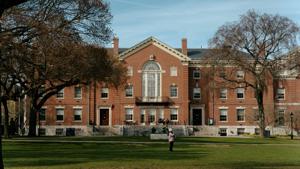
The Trump administration is probing whether Brown University violated a federal law that requires colleges to meet campus security standards in the wake of the recent mass shooting on campus.
The U.S. Department of Education announced Monday that the Office of Federal Student Aid will be conducting an investigation to determine if the Ivy League school violated Section 485(f) of the Higher Education Act, also known as the Jeanne Clery Campus Safety Act, which requires colleges and universities to meet certain campus safety and security-related requirements as a condition of receiving federal student aid.
The probe comes after two students were killed and nine others injured on Dec. 13 when a lone gunman burst into an engineering building where students were taking exams. The shooter, later identified as former Brown graduate student Claudio Manuel Neves Valente, went on to kill a Massachusetts Institute of Technology professor at his home before turning the gun on himself in a storage facility in neighboring New Hampshire, authorities said.
Education Secretary Linda McMahon said the department investigation will determine if Brown “upheld its obligation under the law to vigilantly maintain campus security.”
“Students deserve to feel safe at school, and every university across this nation must protect their students and be equipped with adequate resources to aid law enforcement,” she said in a statement. “The Trump Administration will fight to ensure that recipients of federal funding are vigorously protecting students’ safety and following security procedures as required under federal law.”
In a statement about the investigation, the department cited eyewitness accounts from students and staff that Brown’s campus surveillance and security system “may not have been up to appropriate standards” which “allowed the suspect to flee while the university seemed unable to provide helpful information about the profile of the alleged assassin.”
The federal agency said other accounts by students and staff suggested that the university’s emergency notifications about the active shooter were delayed, “raising significant concerns about their safety alert system.”
“If true, these shortcomings constitute serious breaches of Brown’s responsibilities under federal law,” the agency said.
Brown President Christina Paxson announced Monday that the university is convening a special commission to investigate campus safety and security, the events leading to the shooting and the overall response to the attack.
More security cameras will be installed across the Providence campus, including at the Barus & Holley engineering building where the shooting occurred, she said in a letter to students, parents, faculty, and staff.
Authorities say the six-day manhunt for the shooter had been hampered by a lack of usable surveillance video footage in the building, despite security cameras in the neighborhood.
In the meantime, Brown University Police Chief Rodney Chatman has been placed on leave, Paxson said.
“For our students, staff, faculty, parents and alumni — I understand the anxiety, fear and stress following the shooting. I understand the gravity of the concerns about safety that follow a tragedy of the magnitude that Brown has suffered,” she said in a statement. “I want to assure you of Brown’s deep commitment to take every possible action to increase the safety and security of our campus, with the goal of protecting our community from future harm.”
U.S. economy expands 4.3%, beyond expectations

The U.S. economy’s gross domestic product expanded by 4.3% annual rate from July 2025 to September 2025, according to the most recent report from the U.S. Department of Commerce.
Consumer spending, exports and government spending drove most of the economy’s expansion in the third quarter of 2025.
Heather Long, chief economist at Navy Federal, said the quarterly report is the “best quarterly growth in two years.”
“Consumption is the key driver right now,” Long said. “Americans [especially] wealthy Americans are spending across almost every category.”
In the April-June quarter, spending stayed around 3.8%, the Commerce Department said.
Long said the quarterly report saw “artificially” low imports and a high amount of exports. Imports were at -4.7% and exports were stable at 8.8%.
President Donald Trump said the trade brought in from tariffs is responsible for the better-than-expected economic numbers.
“The TARIFFS are responsible for the GREAT USA Economic Numbers JUST ANNOUNCED,” Trump wrote on social media Tuesday. “AND THEY WILL ONLY GET BETTER!”
Record holiday travel expected across the U.S., in Southwest
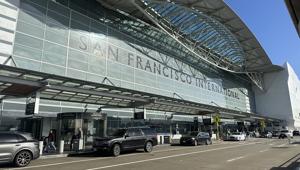
Motorists can expect long security lines and backed-up highways as Americans get on the move for some of the year’s biggest travel days.
More than one-third of Americans will travel for Christmas this year, with the Southwest a top destination, according to AAA.
“AAA is predicting record travel this year – about 400,000 more Americans than we saw last year over the holiday season,” AAA Mountain West Senior Communications Specialist John Treanor told The Center Square Monday. “Which means if you’re flying, the airports are going to be busy, and if you’re driving, the roadways are going to be busy.”
The Southwest is expected to be one of the busiest regions this year as much of the country escapes harsh winter weather. Los Angeles ranks fourth for destination cities within the U.S. this year; Las Vegas, 10th.
“The Southwest, particularly around the wintertime, is a big destination for people who are deciding to use this as a vacation week, and certainly a lot of people are,” said Treanor.
“Southern California and Las Vegas are very popular destinations, as they are every year in the wintertime when people want to escape some winter weather in the Northeast,” he added. “That’s good news for tourism sectors, but it also means it’s going to be very congested.”
AAA projects 122.4 million Americans will travel between Dec. 13 and Jan. 1. The vast majority, 89%, will be on the road. In Colorado, where a Christmas to New Year’s snowstorm is projected, Treanor warned travelers for additional precautions.
In the air, people should consider traveler’s insurance, and for those traveling by car, additional time for the possibility of weather delays, he said.
“Be flexible with your travel because it will make you more adaptable to really bad situations,” said Treanor. “We’re going to have a lot of tow trucks out this week, and we want people to be aware that you should really prepare your car and pack for the destination you’re going to, not necessarily the one you’re leaving from.”
On the flip side for drivers, the national average for gas prices dropped below $3 this month, for the first time in four years.
“That’s a really welcome relief for travelers,” said Treanor, adding later, “That’s going to help people as they take their trip out because they’re saving a considerable amount.”
Treanor advises motorists to drive safely.
“Really think about your passengers, and think about the other cars on the roadway,” said Treanor. “We want to ensure a safe holiday this year.”
At airports, Americans are expected to travel in record numbers, despite a 7% increase in ticket prices from 2024.
“We’ve seen cost increases, but it has not deterred people from traveling,” said Treanor. “When people do take trips, they might change what they do on their trip … But getting to their destination has not changed, regardless of cost.”
In the post-pandemic era, cruises are expected to be more popular than usual this holiday season, as people put more emphasis on value deals.
“It’s become a really attractive thing, and we are seeing record numbers of cruises this year,” said Treanor.
Record school spending fails to reverse decline in test scores

As national education spending per pupil rises, student enrollment is dropping and test scores across the United States are falling, which raises concern over how effectively taxpayer dollars are being used in public schools.
Since 2002, K-12 public school spending has increased by more than 35%, yet enrollment has dropped 2.1%, which is over a million students over the past five years. Student achievement has also declined, with only one-third of students nationwide scoring at or above the proficient level on the National Assessment of Educational Progress in reading, according to the National Assessment Governing Board.
Currently, 40% of fourth graders are working below the NAEP basic level in reading, the highest percentage since 2002.
These declines continue despite record per-pupil spending. In 2024, New York leads as the highest per-pupil spending state, at $32,284. California is also among the highest, currently at $25,941. The lowest spending states include Utah, Idaho and Mississippi.
According to the National Center for Education Statistics, average reading scores fell three points, while eighth-grade math dropped eight points. These declines were largely due to the COVID-19 pandemic, while total nationwide school district debt rose more than 2.1% from $532.5 billion in 2021 to $543.9 billion in 2022, according to the U.S. Census Bureau.
An increase in teacher and administrator salaries and benefits is a primary cause of rising school spending. Among the 50 states, California maintains the highest average starting teacher salary at $58,409. The average salary for teachers in California is $101,084, according to a WalletHub report.
School spending has risen amid concerns over test scores.
“The continued declines in reading scores are particularly troubling. Reading is foundational to all subjects, and failure to read well keeps students from accessing information and building knowledge across content areas,” National Assessment Governing Board member Patrick Kelly said in a news release.
Now, American public schools are nearing $1 trillion in annual spending, a 35% increase between 2002 and 2023, according to a report by Reason Foundation. During that period, the average per-student spending rose from $14,969 to $20,322.
Since the pandemic, a range of factors has contributed to declining enrollment and test scores, yet states have seen minimal broad improvement in educational outcomes as states continue to increase spending per pupil.
California continues to see rising spending per pupil and uneven performance.
The state spends $25,941 per pupil for a total of over a billion dollars annually.
Despite U.S. News & World Report ranking California 37th in Pre-K-12 education because of high school graduation rates, the National Assessment of Educational Progress reading and math scores are falling, along with college readiness test scores such as SATs.
In 2024, California’s fourth- and eighth-grade math performance on the NAEP was below the national average, with 35% of fourth graders and 25% of eighth graders proficient in math, respectively.
The Los Angeles Unified School District, the nation’s second largest district, has seen student enrollment significantly decrease in the past two decades from 747,009 in 2003-04 to 387,152 students this year.
In June, LAUSD board members unanimously approved the 2025-26 budget of $18.8 billion, which put the district at a $2.9 billion deficit with its projected revenue for the next fiscal year at $15.9 billion.
“Los Angeles Unified has not experienced a decline in test scores since 2020,” an LAUSD spokesperson told The Center Square. “The district continues to deliver historic academic gains, outpacing both the state and other large districts.”
In 2024, the average NAEP score for eighth graders in Los Angeles was 260 out of 500, compared to 262 in 2022. Only 18% of LAUSD students performed at or above the NAEP proficient level in 2024.
In New York, the nation’s highest spending state, per-pupil funding has continued to rise as enrollment declines. New York City public schools, which make up the nation’s largest school district, spent about $25,810 per student in 2019. That rose to more than $32,284 in 2025, with projections nearing $34,717 in 2026.
District enrollment fell from 955,490 students in the 2020-21 school year to 906,248 in 2024-25, with 2026 preliminary estimates showing further declines to 884,400 students.
“For the 2025-2026 school year, we are keeping all of our schools’ budgets stable, investing in all of our students, and ensuring our educators have the resources they need,” former New York Mayor Eric Adams said in a statement sent to The Center Square. “Amidst shifts in enrollment and funding, our educators should only have to focus on one thing: our students.”
Compared to the states, test scores in New York City have improved. In the 2024-25 school year, 56.3% of students in third through eighth grade met the state proficiency standard in English language arts, a 7.2 point increase from the prior year. Math proficiency rose to 56.9% a 3.5 point gain.
Yet these improvements, when compared to other states, show New York has continued to rank below the national average in fourth and eighth-grade performance from 2019 to 2024, according to the National Report Card.
States on the other end that have lower spending per pupil are also seeing enrollment shifts.
Mississippi has increased per-pupil spending from about $9,189.61 in the 2019-20 school year to nearly $12,998 in 2025. Over the same period, enrollment declined from roughly 466,002 students to about 424,534.
In Idaho, per-pupil spending in 2024 was $10,246, and test scores still reflect the national decline but remain near or above national averages. Numbers show Idaho is doing better with its test scores than states with higher spending per pupil.
NAEP data show eighth-grade reading performance fell from about 74% proficient in 2018-19 to roughly 66.7% in 2023-24, which is still successful compared to the 2024 national average of eighth-grade reading performance of 56% proficient.
“In spite of current challenges, public education in Idaho remains strong. Over the last three years, we have seen marked achievement gains and the state continues to show measurable returns on its investments in student success,” Maggie Reynolds, public information officer for the Idaho Department of Education, told The Center Square.
U.S. Department of Education Secretary Linda McMahon continues to voice concerns over the steady national decline of student performance levels in K-12 education despite increased taxpayer-funded spending per pupil.
“American students are testing at historic lows across all of K-12 … nearly half of America’s high school seniors are testing at below basic levels in math and reading,” Secretary of Education Linda McMahon said in a statement when the 2024 NAEP reports came out. “Despite spending billions annually on numerous K-12 programs, the achievement gap is widening, and more high school seniors are performing below the basic benchmark in math and reading than ever before.