National News
Bill would add restrictions to importing guns to California

Those bringing guns into California would have to jump through more hoops if the Legislature passes a new bill.
Senate Bill 948, introduced by state Sen. Jesse Arreguin, D-Oakland, would require more paperwork for gun importers.
A personal firearm importer trying to import a gun into the state would have to get a firearm safety certificate, which would have to be accompanied by a report on the gun owner and the firearm itself. The report is already required by law.
Under the new legislation, anyone trying to bring a gun into the state would have to acquire the certificate within 60 days of coming into California.
The bill would also require an applicant for a firearm safety certificate to take an eight-hour training course that covers firearm safety and handling. The course includes live-fire shooting exercises at a range. This would apply to anyone bringing a gun into California after July 1, 2028.
Antique firearms would not be included in the new regulations as proposed by SB 948.
“With the constitutionality issues that this bill brings up, it is definitely one we are opposing,” Adam Wilson, director of legislative affairs at Gun Owners of California, told The Center Square on Wednesday. “We take the position that any additional restrictions are onerous and burdensome, especially ones that put regulations on what is a constitutional right.”
Other organizations that advocate for Second Amendment rights said they oppose the bill.
“FPC opposes all unconstitutional and immoral restrictions and burdens on the right to keep and bear arms,” said a spokesperson from the Firearms Policy Coalition, a pro-Second Amendment organization, in a written response emailed to The Center Square.
Arreguin was not available this week to talk to The Center Square about his bill. Other Democratic lawmakers in California also did not respond to The Center Square’s request for comments.
According to reports from Everytown for Gun Safety and the gun safety organization Giffords, California has the strongest gun laws in the country. A report published earlier this year by Everytown for Gun Safety states that California has some of the lowest rates of gun ownership and gun-related deaths in the country and that California was the first state to enact firearm consumer safety standards.
Giffords, which was founded after former U.S. Rep. Gabby Giffords, D-Arizona, was shot in the head in a 2011 Tucson shooting, issued its own report in 2023 crediting California with enacting the country’s first assault weapons ban in 1989. The organization also points to California being one of the first states to pass laws instituting protections for victims of gun violence, mandating waiting periods to cut down on rates of suicide and violence against others and passing other laws to increase gun safety.
After the shooting that killed six other people and wounded 12, Giffords survived, ultimately stepping down from her seat in the U.S. House of Representatives to focus on recovery and start her namesake organization, according to the Giffords website.
Gun safety organizations like Project Child Safe, Moms Demand Action, Giffords and Alliance for Gun Responsibility did not respond to The Center Square this week.
WATCH: WA lawmaker, trade and business groups react to SCOTUS tariff ruling
A Washington lawmaker, trade and business group are reacting to Friday’s ruling from the U.S. Supreme Court against President Trump’s tariffs.
In an historic 6-3 decision today, the high court said the tariff tax increases unilaterally imposed by the executive branch under emergency powers are unconstitutional. The ruling reaffirms that the power to tax is exclusively reserved to the legislative branch.
“The ruling from the U.S. Supreme Court on the tariffs was not a complete surprise,” said GOP Chairman Jim Walsh, R-Aberdeen, in a Friday interview with The Center Square. “Tariffs, when they’re used properly, are a scalpel. They’re not sledgehammers. And when you use tariff policy correctly, it should be used precisely in a narrow and focused way.
Walsh said as a free market person, and a fiscal conservative he’s “not crazy about tariffs as a trade policy tool.”
The Washington Council on International Trade emailed a statement to The Center Square calling the ruling “an important step forward for the Northwest’s businesses, workers, and consumers.”
WCIT President Lori Otto Punke further noted in the statement that the tariffs caused “serious harm.”
“For more than a year, these tariffs have caused serious harm triggering retaliatory duties on key agricultural exports, eroding markets for goods and services, increasing construction and production costs, disrupting cross-border supply chains, and reducing price competitiveness,” she was quoted in the statement. “From apples to wine, from advanced manufacturing to wood products to technology and innovation, the Supreme Court has now affirmed that trade policy of this magnitude must rest on proper legal authority, wrote Otto Punke.
The National Federation of Independent Business Washington State Director Patrick Connor said the ruling will help with affordability.
“Main Street small-business owners paying attention to the tariff controversy may feel some relief and optimism that as more goods start flowing through our state’s ports, supply chain problems will ease, and prices will start to drop,” Connor wrote in a statement to The Center Square. “They are more likely to worry though that Olympia’s push for a new Millionaire Tax will hit their bottom lines as an income tax on business earnings, not take-home pay.”Walsh told The Center Square said the mostly favorable response to the decision from Washington business and trade groups was not a surprise. “It is likely to be applauded by the major players in Washington state with industrial groups, software companies, tech companies, things like this,” Walsh said. “But the administration still can apply more narrowly tailored tariffs to specific circumstances and may do that right quick. I think in general, this will be perceived as something that the Washington business community likes, both the tech industry and the transportation trade organizations that operate out of our ports and other places.”The Association of Washington Business emailed a statement to The Center Square applauding the SCOTUS decision against Trump’s tariffs.“As one of the most trade-driven states in the country, the tariffs imposed last year have significantly impacted Washington employers,” wrote AWB President Kris Johnson. “Although some Washington businesses have benefited from tariffs, the majority have experienced negative impacts in the form of higher costs on business inputs, supply chain disruption, lost or reduced export markets and canceled orders.“In the most recent Association of Washington Business employer survey, more than half of all respondents (54%) reported that tariffs have hurt their business, with the largest percentage (60%) reporting higher costs….In many cases, employers have been unable to absorb the higher costs without passing them on to their customers,” the statement said.The Center Square Washington State Editor Brett Davis contributed to this story.
California officials applaud ruling against Trump tariffs
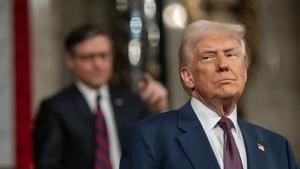
Editor’s note: This story has been updated since its original publication to include additional comments.
In the hours after the U.S. Supreme Court struck down much of President Donald Trump’s tariffs, legislators and state officials in California applauded the decision.
“There’s no secret that I have been critical of the tariff policy, both from a personal, as well as from a public policy, perspective,” state Sen. Roger Niello, R-Fair Oaks, told The Center Square on Friday. “I have never been able to understand how the authority that he has used to impose the tariffs was constitutional, so I certainly agree with what the Supreme Court has ruled.”
The big question, Niello added, is how the effects of this decision could play out.
“That could be a rather messy process,” Niello said. “Perhaps that might take an act of Congress, short of which the administration or the government would have to refund all of the tariffs that were collected. It remains to be seen exactly how all of that is going to work out.”
However, even within the Golden State’s Republican Party, there seems to be some disagreement on what the International Emergency Economic Powers Act enables the president to do.
“I do believe that the power of the president, under the emergency executive order he was using, actually grants him that justification,” Assemblymember David Tangipa, R-Fresno, told The Center Square on Friday. “But there is truth and validity to the power of the purse belongs to Congress, and I do believe that tariffs should be codified. This falls back on [Congress] to actually grant the president those extra powers to make sure we can have balanced and reciprocal tariffs when needed to make sure the United States isn’t losing on an international level.”
As reported by The Center Square, the U.S. Supreme Court early Friday ruled that a 1977 law, the International Emergency Economic Powers Act, doesn’t give the president authority to impose tariffs – running counter to the Trump administration’s interpretation of that law. In the majority opinion written by Chief Justice John Roberts, the court took the position that the framers of the Constitution did not give the power to issue tariffs to the executive branch. Justices said the Trump administration’s tariffs violated the major questions doctrine.
A news release from California Attorney General Rob Bonta’s office said Friday’s decision on the constitutionality of the tariffs ended an “unlawful and chaotic” tariff regime.
“Today, the highest court in the country has agreed with arguments put forth by California, our sister states, and the dedicated businesses that decided to fight for their livelihoods and for what was right,” Bonta said. “While this is great news, we must not forget the chaos that sent businesses, consumers, and global economies reeling. California celebrates today’s tremendous win and remains committed to tackling Donald Trump’s agenda to fuel the unaffordability crisis.”
Gov. Gavin Newsom, when asked at a press conference at the San Quentin Rehabilitation Center on Friday about the U.S. Supreme Court ruling, remarked that the tariffs were illegal from the beginning.
“It was shocking to me that three members of the Supreme Court actually agreed with Trump,” Newsom told reporters. “He should return that money immediately. Even his hand-picked Supreme Court said what he was doing is lawless.”
Newsom said gross domestic product and manufacturing have gone down during the Trump administration while unemployment has risen. He added that the tariffs are “the most aggressive sales tax” in the country’s history.
“Pay us back,” Newsom said. “Put that back into the pockets of American families.”
Newsom noted he was the first governor to sue the Trump administration over the tariffs.
In the hours after Newsom’s comments, Democratic lawmakers in California mirrored the governor’s remarks, calling the president’s tariff policies “punishing.”
“The president’s sweeping tariffs have now been halted by the Supreme Court, despite his attempts to erode the independence of the judicial branch,” Assemblymember Mia Bonta, D-Oakland, told The Center Square in a written response on Friday. “Today’s decision offers meaningful relief for California families and businesses. But it is not a signal to stand down. We must remain vigilant and prepared for further attempts to raise costs on working people in the service of corporate and billionaire interests.”
Bipartisan support for the ruling came Southwestern members of Congress, although one Republican Arizonan congressman expressed opposition to the ruling, as reported earlier by The Center Square.
Shortly after the Supreme Court issued its decision on the Trump administration’s tariffs, Trump announced a new round of tariffs that would see a 10% charge on imports from around the world, The Center Square reported on Friday.
Southwestern congressional members applaud tariffs ruling
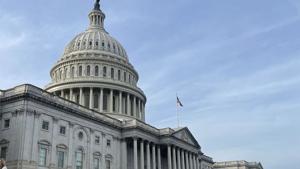
Members of Congress from the Southwest on Friday voiced bipartisan support for the U.S. Supreme Court’s 6-3 ruling against President Donald Trump’s tariffs.
The justices said the power to set and change tariffs belongs to Congress, not the president. Chief Justice John Roberts wrote the majority opinion.
U.S. Rep. Kevin Kiley, R-California, who voted to overturn Trump’s tariffs on Canada, said checks and balances are the foundation of American government. He added that the nation’s founders understood the tendency for each branch to test the limits of its authority in pursuit of even well-intentioned policy goals.
“Their ingenious solution was a dynamic power-sharing arrangement, a give-and-take among the branches, that would preserve the constitutional design over time,” Kiley told The Center Square. “Last week’s vote by Congress and today’s Supreme Court decision represent precisely that give-and-take envisioned by the founders.”
Kiley said he looks forward to working with his colleagues in the House to address the questions raised by Friday’s decision as members carry on their constitutional responsibilities.
U.S. Rep. Jeff Hurd, R-Colorado, also voted for overturning the tariffs on Canada, alongside most House Democrats.
“Major trade decisions should rest on clear statutory authority, not expansive emergency interpretations,” said Hurd.
California Democrats, including U.S. Sen. Adam Schiff, applauded the Supreme Court’s ruling.
“Today, the Supreme Court reaffirmed what we’ve been saying for the past year,” Schiff posted on X. “Trump’s haphazard and reckless tariff policy is illegal and unconstitutional.”
It is a similar story with U.S. Sen. Mark Kelly, D-Arizona.
In an X post, Kelly called this “a huge win for American families and small businesses.” Kelly said Arizonans were being hurt by the tariffs, and he applauded Arizona Attorney General Kris Mayes for challenging the tariffs.
Like Kelly, U.S. Sen. Jacky Rosen, D-Nevada, said people in her state were being “squeezed by high prices.” In a news release, Rosen said Trump “intentionally and illegally bypassed Congress” to implement his tariffs.
“It should be a wakeup call for Trump that the rule of law still applies to him,” said Rosen.
Nevada’s other U.S. senator, Democrat Catherine Cortez Masto, said she welcomed the Supreme Court ruling.
“Over the past twelve months, Trump’s trade policies have led to rising costs of food, housing, and fuel while hardworking families suffered,” Cortez Masto said in a statement. “Our businesses, large and small, have felt the squeeze of rising prices, particularly those reliant on tourism. Unfortunately, President Trump is already looking for new ways to levy harmful tariffs on the American people and businesses.”
Justices Samuel Alito, Brett Kavanaugh and Clarence Thomas dissented.
Speaking to reporters at a White House press briefing, Trump said the Supreme Court’s ruling is deeply disappointing. The president also expressed his shame at certain justices for not doing what he said is right for the nation.
“The Democrats on the court are an automatic no,” said Trump. “Just like in Congress, they’re an automatic no. They’re against anything that makes America strong, healthy and great again. They are also, frankly, a disgrace to our nation, those justices.”
Trump also said this is the product of foreign influence. If that is the case, U.S. Rep. Abe Hamadeh, R-Arizona, said it is unacceptable. A former Maricopa County prosecutor, Hamadeh does not agree with the Supreme Court ruling.
“It is clear that some members of the court have little regard for the American people, do not support his America First policies, and are far too concerned with criticism from the fake news,” Hamadeh told The Center Square.
While Democrats and other critics of tariffs claim tariffs hurt people, Hamadeh said his district is “thriving” under the Trump administration.
“My team met with representatives of Taiwan Semiconductor Manufacturing Co. to discuss their plans for future jobs in Arizona, which I have made clear should focus on tapping into our veteran workforce,” said Hamadeh. “They are committed to assisting President Trump’s America First Manufacturing agenda, bringing high-paying employment opportunities to our district, which will dramatically increase the quality of life for our residents.”
When asked whether he would support future efforts by the president to impose tariffs, Hamadeh said yes, adding that he does not think Trump needs to rely on Congress.
“As he made clear in his presser, there are many alternatives available to him,” said Hamadeh. “For my part, I will continue to work with the administration on ensuring President Trump’s tariff policy continues, whether through existing executive action or through Congress.”
During Friday’s White House briefing, Trump announced that he will sign an executive order to enact a 10% global tariff.
AGs urge removal of climate science section from National Academies’ manual

Following the victory of removing a climate chapter from the Federal Judicial Center’s manual, 21 state attorney generals are urging the National Academy of Sciences to remove a climate science section from the academies’ manual, expressing their concern over tax money promoting various partisan ideology in the organization.
Montana Attorney General Austin Knudsen – who is leading the charge of his 20 fellows – told The Center Square: “It is unacceptable that the National Academies continue to allow the climate science chapter to remain in circulation, especially when taxpayer dollars are used to support their work.
“When biased theories are presented to judges as fact and neutral reference tools, it compromises judicial impartiality and can tip the scale on pending litigation,” Knudsen said.
“I expect a clear explanation for why it has not been withdrawn and how they plan to prevent biased ideologies in future editions,” Knudsen said.
Knudsen was joined by attorney generals from Alabama, Alaska, Arkansas, Idaho, Indiana, Iowa, Kansas, Kentucky, Louisiana, Mississippi, Nebraska, North Dakota, Ohio, Oklahoma, South Carolina, South Dakota, Tennessee, Texas, West Virginia, and Wyoming in sending a letter to the National Academy of Sciences (NAS).
The attorney generals wrote to NAS President Marcia McNutt and NAS President-Elect Neil H. Shubin that the climate agenda found in the manual as well as the organization’s general promotion of DEI and left-wing ideology is “especially troubling since taxpayer money provided by the federal government is the largest source – more than $200 million – of the National Academies’ budget,”
“Taxpayer money should not be used for political causes, particularly by an entity that Congress created to provide independent and objective scientific reports,” the attorney generals wrote.
The NAS was founded in the 1860s to “advise the government on issues related to science and technology.”
NAS has not yet responded to The Center Square’s request for comment.
Executive director of consumer advocacy group Consumers’ Research Will Hild told The Center Square that “taxpayer dollars should not be used by the National Academy of Sciences to push a woke agenda, yet that is exactly what the organization is doing.”
“The Academy has gone all in on the woke agenda by promoting radical climate policies, hosting DEI workshops, pushing implicit-bias ideology into the legal system, and even publishing guidance that treats the First Amendment as an obstacle to censoring speech it dislikes,” Hild noted, as the attorney generals’ letter likewise did.
“That is not objective science; it is woke politics funded by taxpayers,” Hild stated.
Hild said that “Consumers’ Research applauds the Attorneys General for demanding that the National Academy of Sciences pull this biased climate chapter and stop using taxpayer resources to push a radical political agenda.”
“We will continue to support elected officials who push back against woke politics and protect consumers,” Hild said.
This letter comes on the heels of a similar letter sent by 22 state attorney generals to chairmen of the House and Senate Judiciary Committee, requesting a probe into climate activists’ influence on the Federal Judicial Center’s science manual.
The climate chapter was removed; however. CEO of the American Energy Institute Jason Isaac told The Center Square that “the Federal Judicial Center’s decision to ‘omit’ the climate chapter is not the same as rescinding it.”
“The full guide remains publicly hosted by the National Academies under the FJC’s name, and the activist framing embedded throughout the Manual has not been removed,” Isaac said.
“Judicial education must explain scientific method, not normalize litigation strategies or launder contested theories as settled fact,” Isaac said.
Trump plans to replace tariffs, salvage trade deals after ruling
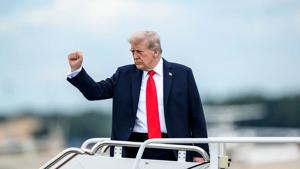
President Donald Trump switched to his backup tariff plan after the U.S. Supreme Court said he couldn’t use a 1977 law to impose sweeping tariffs.
Trump announced a fresh round of tariffs hours after the high court invalidated his use of the 1977 International Emergency Economic Powers Act to impose tariffs worldwide. Recent economic research found that Americans paid more than 90% of those import duties.
Trump said he would use other laws to keep the existing tariffs in place and that he would add a 10% global tariff.
“Today I will sign an Order to impose a 10% GLOBAL TARIFF, under Section 122, over and above our normal TARIFFS already being charged,” Trump wrote in a social media post after the ruling.
Trump said that the other tariff laws he plans to use were mentioned in the Supreme Court decision.
“It’s a little more complicated, the process takes a little more time, but the end result is going to get us more money,” Trump said.
The Supreme Court, divided 6-3, held that the 1977 law didn’t give Trump expansive tariff powers to tax goods entering the country. Justices Clarence Thomas, Brett Kavanaugh and Samuel Alito dissented.
The president criticized the decision, but said the ruling won’t stop his tariff plans.
Phillip Magness, senior fellow at the Independent Institute, said Section 301 of the Trade Act of 1974 would be the safest path forward, but the law comes with limits and restrictions.
“Section 301 has much stricter requirements that Trump must now follow to impose tariffs,” he told The Center Square.
Trump said Friday he plans to launch multiple trade investigations under Section 301.
Magness said Trump has other options as well. Another path would be Section 338 of the Smoot-Hawley Act of 1930. Treasury Secretary Scott Bessent and Jamieson Greer have hinted at this option in recent months. However, Section 338 could also face legal challenges.
“The Supreme Court majority apparently did not find this line of argument to be convincing, as only the three dissenters mentioned Section 338,” Magness said. “This suggests that Trump would likely be overturned again in a future decision, setting into a pattern reminiscent of the Biden Administration’s legal jockeying to reinstate student loan forgiveness after the Supreme Court overruled them.”
Magness said Friday’s ruling gives Congress an opening.
“The ball is certainly in Congress’s court now,” he said.
Until earlier this month, the Republican-controlled House had given Trump wide leeway on tariffs. However, House Speaker Mike Johnson failed to extend a rule that had prevented Congress from taking up tariff matters when three members of his party joined Democrats to block the rule.
Rep. Jodey Arrington, chairman of the House Budget Committee, said Congress needs to step up to support the president.
“Congress should immediately codify the President’s reciprocal trade agreements, which would make these deals more durable, entorceable, and effective in the long run,” he said in a statement. “If this can’t be done in a bipartisan fashion, Republicans should use reconciliation – the most potent legislative tool in our toolbox-to safeguard our economic and national security interests.”
Virginia Democrats appeal ruling, legislatively pass 10-1 congressional map
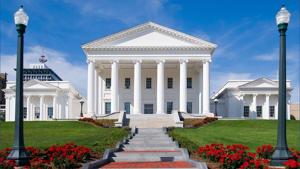
Democrats in Virginia need an appeal to their favor within two weeks to keep alive hopes of redrawing congressional districts that could potentially give them four more seats in the U.S. House of Representatives.
On Friday, the new congressional map proceeded through the Legislature in Richmond. A day earlier, Tazewell County Circuit Judge Jack Hurley Jr. granted an emergency injunction sought by the Republican National Committee effectively blocking voters from choosing on April 21.
March 6 is the start of early voting, and Hurley’s action doesn’t allow preparation for the referendum through March 18.
Democrats appealed. The state Supreme Court has an earlier appeal where Hurley ruled the planned voter referendum was rushed. The high court has allowed it to move forward while litigation also proceeds.
Success on the referendum by Democrats would allow a redraw of maps that have sent six Democrats and five Republicans to a U.S. House divided 218-214 in favor of Republicans with three vacancies. With the 2030 census, the process would return to decennial census redraws.
The U.S. House of Representatives was a 220-215 Republican majority following the 2024 election.
The state is one of 20 that doesn’t require voters to affiliate with a party when registering. In the 2024 presidential race, Democrat Kamala Harris won 51.8% of the more than 4.5 million votes and Republican Donald Trump 46.1% – a difference similar to today’s representation.
Trump announces new tariffs with ‘certainty’ after Supreme Court ruling
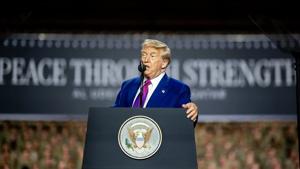
President Donald Trump announced a new round of tariffs on Friday after the U.S. Supreme Court invalidated most of the tariffs underpinning his economic agenda.
Hours after the Supreme Court reined in Trump’s use of a 1977 law to impose tariffs on imports from around the world, the president said he would use other laws to impose a 10% global tariff. He also said the ruling could allow for even higher tariffs under those other laws.
“Their decision is incorrect,” he said. “But it doesn’t matter because we have very powerful alternatives.”
The 10% levy on imported goods would be significantly lower for many countries that negotiated deals with Trump. The only country that got a 10% tariff was the United Kingdom. All other nations negotiated deals for 15% or higher. In return, those nations promised to invest in U.S. projects.
The president spent months warning that an adverse ruling would have sharp economic consequences. He changed course on Friday and said the new round of tariffs would keep most of his trade deals in place through other laws that allow more limited tariffs.
Treasury Secretary Scott Bessent said the administration will restructure the sweeping import taxes under other legal authorities.
“This administration will invoke alternative legal authorities to replace the IEEPA tariffs,” he said. “We will be leveraging Section 232 and Section 301 tariff authorities that have been validated through thousands of legal challenges.”
Trump also said he wasn’t looking for help from Congress. Instead, he will lean on executive authority to issue the next round of tariffs. He said several times that those tariffs would be certain. Asked whether the new tariffs would be limited to 150 days by law, Trump didn’t directly answer the question.
The high court decision effects Trump’s tariffs enacted under the 1977 International Emergency Economic Powers Act. Trump had used the law to impose tariffs on nearly every imported product from every country.
Americans ended up paying billions of dollars in taxes on those imports, according to recent research.
The Supreme Court, divided 6-3, held that the law didn’t give Trump expansive tariff powers to tax goods entering the country. Justices Clarence Thomas, Brett Kavanaugh and Samuel Alito dissented. The majority ruled that Trump’s tariffs violated the major questions doctrine, which holds that Congress must speak clearly when it grants significant powers.
“The Framers gave ‘Congress alone’ the power to impose tariffs during peacetime,” Roberts wrote for the majority.
Trump admin throws cold water on ICE masks ban as shutdown talks stall
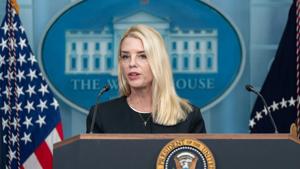
Nearly a week into the partial government shutdown, the Trump administration continues to oppose certain immigration enforcement reforms that Democratic lawmakers are demanding in exchange for their votes to reopen the Department of Homeland Security.
In a social media post Thursday, U.S. Attorney General Pam Bondi lauded a court-ordered pause of California’s mask ban on Immigration and Customs Enforcement agents, part of the state’s No Secret Police Act.
The 9th U.S. Circuit Court of Appeals also granted Thursday a temporary injunction on California’s requirement that every ICE agent display ID, a stipulation in the state’s No Vigilante Act.
“Law enforcement officers risk their lives for us, only to be doxxed by radical anti-police activists. Unacceptable,” Bondi said on X. “This crucial ruling protects our brave men and women in the field. We will not stop fighting bad laws like these in California and across the country.”
The administration’s praise underscores the unlikelihood of Democrats ending the partial shutdown on their own terms.
Democratic leaders in Congress have unrelentingly pushed for any DHS funding deal to incorporate their all-or-nothing list of demands — including a face mask ban and ID requirement mirroring California’s policies.
Demands for greater accountability in DHS erupted after an ICE agent fatally shot 37-year-old Alex Pretti in January, the second killing that month of a U.S. citizen protesting in Minneapolis.
Republicans previously expressed openness to some of the proposed reforms, such as mandating ICE agents wear body cameras, but have labeled most as “ridiculous.”
They have also pointed out that however long the shutdown lasts, ICE operations will feel no impact, unlike other critical DHS services such as disaster support and transportation security.
“Here’s why Democrats’ logic in forcing this partial government shutdown doesn’t hold up,” Rep. Steve Womack, R-Ark., posted on social media Friday. “If last year taught us anything, it is that shutdowns don’t work and only hurt the American people.”
This is the second time in less than six months that Democrats have forced a shutdown over policy demands, with the most recent centering around health care subsidies.
The record 43-day, full government shutdown from October to November 2025 caused food stamp insecurity, mass flight delays and cancellations, millions of dollars in GDP lost, and withheld paychecks for millions of federal workers.
Supreme Court’s tariff ruling could alter 2026 election
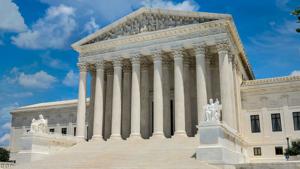
The 2026 midterm elections could now be shaped around candidates’ response to the U.S. Supreme Court striking down the bulk of President Donald Trump’s tariff authority. The ruling could have a significant effect on the makeup of Congress heading toward the midterms.
On Friday, justices of the high court said a 1977 law doesn’t give the president broad authority to issue tariffs. Across the country, Democratic candidates have campaigned on affordability and railed against Trump’s tariff policies.
“In [the International Emergency Economic Powers Act’s] half century of existence, no President has invoked the statute to impose any tariffs, let alone tariffs of this magnitude and scope,” Chief Justice John Roberts wrote. “That ‘lack of historical precedent,’ coupled with the breadth of authority that the President now claims, suggests that the tariffs extend beyond the President’s ‘legitimate reach.’ ”
U.S. Sen. Chuck Schumer, D-New York, who is up for reelection in 2028, praised the Supreme Court’s decision and called it “a victory for for the wallets of every American consumer.”
House Majority PAC, a political action committee supporting House Democrats’ campaigns, said it will continue to pursue Trump’s tariffs as a focal point in the 2026 midterms.
“Vulnerable House Republicans repeatedly voted to enable Trump’s tariffs, which raised prices and wreaked economic havoc on American families and businesses,” the organization said in a statement.
Several outspoken Republican critics of Trump’s tariff policies have also praised the Supreme Court’s decision.
“The Supreme Court makes plain what should have been obvious,” said Sen. Rand Paul, R-Kentucky. “This ruling will also prevent a future President such as AOC from using emergency powers to enact socialism.”
On Feb. 11, six Republicans joined Democrats in a vote to overturn Trump’s tariffs on Canada, a sign that the economic policy left some in the GOP weak with upcoming competitive elections.
U.S. Reps. Kevin Kiley, R-California; Thomas Massie, R-Kentucky; Don Bacon, R-Nebraska; Brian Fitzpatrick, R-Pennsylvania, and Jeff Hurd, R-Colorado, voted for overturning the tariffs on Canada, alongside most House Democrats.
Bacon praised the Supreme Court’s decision on Friday. Bacon plans to retire from Congress after the 2026 midterm elections. The Cook Political Report favors a Democratic challenger to take over Bacon’s seat after his retirement.
“I feel vindicated,” Bacon said. “Besides the Constitutional concerns I have on the administration’s broad-based tariffs, I also do not think tariffs are a smart economic policy.”
Hurd also praised the court’s decision. His race in Colorado is considered to be likely Republican in favor of his reelection. However, his vote last week is a crucial indicator of divisions among the GOP about tariff authority.
“Today’s decision underscores the need for Congress to play its proper role in trade policy,” Hurd said. “Major trade decisions should rest on clear statutory authority, not expansive emergency interpretations.”