National News
Everyday Economics: Has the labor market cooled enough to justify more cuts?
This week is light on major economic releases and heavy on Federal Reserve speeches. That shifts the spotlight to the question markets actually care about right now:
Has the labor market cooled enough to justify additional rate cuts, even though inflation – and inflation expectations – remain closer to 3% than 2%?
The latest inflation data argues for caution. At the same time, trade policy is back in the headlines: after the Supreme Court struck down the administration’s prior tariff program, the President responded by reinstating a temporary 10% global tariff (under Section 122 authority), adding a fresh dose of uncertainty to the inflation outlook and the growth path.
Inflation moved the wrong way at year-end
The Fed’s preferred inflation gauge firmed in December:
Headline PCE inflation rose to 2.9% year over year in December, up from 2.82% in November. Prices rose 0.4% month over month in December, up from 0.2% in November. Core PCE (excluding food and energy) also increased 0.4% m/m and is running around 3.0% y/y – still meaningfully above the Fed’s 2% goal.
That doesn’t mean inflation is re-accelerating permanently. But it does mean the Fed lacks a clean “all clear” signal – and it makes the case for cutting based purely on labor-market cooling harder to defend.
A ‘balanced Taylor rule’ suggests policy isn’t obviously too tight
One way economists translate inflation and labor-market data into a policy-rate benchmark is the Taylor rule, a simple formula that links the recommended short-term interest rate to:
how far inflation is from the central bank’s target, andhow much slack exists in the labor market.
A balanced Taylor rule typically puts similar weight on inflation and economic slack. It matters because it offers a transparent, back-of-the-envelope way to ask: Is the current fed funds rate far above what the economy “needs,” or broadly in the right neighborhood?
Using late-2025 conditions, a balanced Taylor-style framework pointed to a policy rate around the mid-3% range when inflation was cooler and labor slack had widened. But December moved the wrong way for cuts: inflation firmed while the unemployment rate edged lower. In plain English, that combination pushes the implied policy rate up, meaning the inflation/labor mix at year-end raises the threshold for future cuts rather than lowering it.
Labor market cooling: yes—but the composition is a warning sign
At first glance, the unemployment rate has drifted lower. But it’s happening alongside a labor-supply story that is changing too. Recent research and official estimates suggest immigration flows have cooled sharply, which can reduce labor force growth even as demand slows.
More importantly, the “low-hire” dynamics are becoming harder to ignore:
Job openings have fallen to about 6.5 million (December), while the number of unemployed/job seekers is about 7.5 million. That’s a meaningful reversal from the post-pandemic period when openings far exceeded job seekers. Hiring is also narrow in breadth. Job growth has increasingly been concentrated in a handful of sectors – health care and social assistance in particular – while other sectors are flat or down.
That mix – openings below job seekers plus concentrated hiring – is exactly the kind of labor-market cooling that can look “fine” in the unemployment rate until it suddenly isn’t.
What Fed officials are likely to emphasize this week
With the data giving mixed signals, Fed speeches become the story because they reveal which risk policymakers are prioritizing.
Christopher Waller (Fed governor): has argued that tariff-driven price increases can be treated as temporary and not over-weighted in policy decisions, saying the Fed can “look through” those effects when expectations are anchored. Lisa Cook (Fed governor): has emphasized that risks remain skewed toward inflation staying too high and that she wants stronger evidence inflation is on a sustainable path back to target. Austan Goolsbee (Chicago Fed): has said additional cuts are possible, but conditional on inflation clearly moving back toward 2%. Raphael Bostic (Atlanta Fed): has pointed to stronger growth as a reason inflation pressures could persist, strengthening the case for patience on cuts. Tom Barkin (Richmond Fed): has framed the policy challenge as risks on both sides of the mandate – protecting the labor market without letting inflation expectations become embedded. Jeff Schmid (Kansas City Fed): has argued it’s too soon to rely on productivity improvements (including from AI) to solve inflation, implying policy should remain restrictive until inflation clearly cools.
The data that matter this week
Case-Shiller home price index: Zillow’s data already pointed to cooling
Home-price growth cooled into the end of 2025, and Zillow’s home value index and market reporting offered a useful preview of what Case-Shiller is likely to confirm for December. Zillow noted December was notably soft – home values failed to rise month-over-month in any of the 50 largest metros.
Moderating price growth is good news for future homebuyers. Even though affordability remains stretched, the direction has improved: income growth outpaced home-price growth in 2025, and the combination of flatter prices and lower mortgage rates has made affordability less restrictive heading into spring.
Producer price inflation: the pipeline check
After December’s firmer PCE report, this week’s PPI release matters because it helps answer whether upstream price pressures are building again or whether December was a bump.
Construction spending: strong overall, but nonresidential is doing the lifting
Construction spending has been supported by nonresidential activity, including investment tied to the AI buildout. Residential construction, by contrast, has remained subdued: builders are cautious when homes take longer to sell and concessions pressure profit margins – and the forward pipeline softened, with 2025 permits down 3.6% from 2024.
Bottom line
The Fed is trying to thread a needle. Inflation remains closer to 3% than 2%, and December’s PCE print moved higher, not lower. At the same time, the labor market is cooling in ways that don’t show up cleanly in the unemployment rate: job openings are now below job seekers, and hiring is narrowly concentrated – a classic “low-hire” warning sign.
That’s why speeches dominate this week: they will signal whether policymakers think labor-market cooling is sufficient to keep cutting or whether inflation’s stubbornness (and trade uncertainty) keeps the Fed in “hold and verify” mode a little longer.
U.S. Supreme Court to hear foreclosure case Wednesday
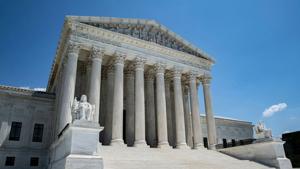
The U.S. Supreme Court will hear a case on Wednesday over whether tax foreclosure sales are constitutional.
Pung v. Isabella County involves the rights of a foreclosed upon homeowner to receive equity back when their home is sold over a tax foreclosure. The dispute comes between the Pung family and Isabella County, Michigan, over real estate taxes on a home the Pungs owned.
A judge determined that the Pungs owed about $2,200 in taxes and allowed the government to auction off their home for $76,000. An individual purchased the Pungs’ home from the government and later sold it for $195,000.
The Pung family sued the government and claimed the sales price was far below the house’s fair market value. Michael Pung, who brought the lawsuit against the county, argued the takings clause of the Fifth Amendment requires that he receive the monetary equivalent of the property that the state has taken from him.
“The deep history of the takings clause and property rights [comes from] the Magna Carta and early colonial practices and the Northwest Ordinance,” said Jay Carson, senior litigator at the Buckeye Institute. “All of them have the same concept that the government can’t take any more than what is actually owed to it.”
The case builds from Tyler v. Hennepin County, where the U.S. Supreme Court ruled unanimously against a Minnesota county for seizing a 94-year-old woman’s home due to her $15,000 tax debt. The county kept the $25,000 profit from the sale, in violation of the takings clause, according to the high court.
The key difference in Pung v. Isabella County is that the Pung family received their surplus proceeds after the sale of the house.
Lawyers for Isabella County argued that the Pungs’ home was sold for less due to the tax burden owed by the family during the process.
“Property that must be sold within those strictures is simply worth less and is not ground for objection by the former owner,” lawyers for the county wrote to the high court.
However, the Pung family and Carson argued the government should owe payments based on a property’s fair market value rather than the value assessed during a foreclosure sale. They argue the county assessed the property’s fair market value to be around $200,000 despite selling it for less.
“The facts in this case where the subsequent purchasers turned around and sold it for that approximate value shortly thereafter speaks volumes to the underlying equity in this,” Carson said.
Carson said the unanimous decision in Tyler v. Hennepin County makes him feel hopeful that the court will side with the Pung family. He said governments should award foreclosed upon homeowners based on fair market value.
He predicted the justices may not rule on what standard should apply for the government in determining foreclosure payments but argued the case should go in favor of the Pung family.
“In this case, fair market value sure looks like it might be the best or most appropriate test to use,” Carson said.
The justices will hear arguments in the consequential foreclosure case on Wednesday and will likely issue a decision by July.
High-profile Senate races to watch in 2026
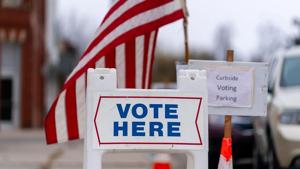
Several key U.S. Senate races are set to determine the balance of congressional power after the 2026 midterm elections.
The Senate is currently split 53-45 in favor of Republicans. Sens. Bernie Sanders and Angus King are independents but caucus with the 45 Democrats in the legislative body, making the split essentially 53-47.
In order to pass legislation that can withstand a filibuster, 60 senators must agree with it. Given the current partisan makeup, it has been difficult to pass meaningful legislation through the U.S. Senate.
However, several key races across the country this year could shift the Senate’s partisan balance. Here are some of those races.
Minnesota
U.S. Sen. Tina Smith, D-Minn., decided not to run for reelection. In her place, a crowded field of contestants on both sides of the aisle has emerged.
Democrats vying to replace Smith include U.S. Rep. Angie Craig, D-Minn., and Minnesota Lt. Gov. Peggy Flanagan.
Craig has served as a U.S. representative from Minnesota since 2019. Before serving in the U.S. House, she worked as a journalist and a health care executive. She has focused her campaign on fighting against immigration and customs enforcement measures in the state and across the country.
Flanagan has served as lieutenant governor of Minnesota since 2019. She has focused her campaign’s attention on issues related to ICE throughout the state. Flanagan’s campaign has also focused on affordability issues and the adoption of Medicare for All.
Flanagan has received more endorsements from prominent Democrats than Craig, including that of Smith. Sens. Bernie Sanders, D-Vt., Elizabeth Warren, D-Mass., and Ed Markey, D-Mass., have all endorsed Flanagan’s candidacy.
“She is a ferocious fighter on behalf of working families,” Warren said in reference to Flanagan’s push to raise Minnesota’s minimum wage and achieve paid family leave.
“She takes no corporate PAC money,” Warren added. “To me, that gives me a lot of confidence that when Peggy Flanagan says she’s working for your family, it’s not just words.”
On the other side of the aisle, a hotly contested primary has also emerged for Republicans who aim to flip Minnesota’s senate seat.
Former NBA player Royce White and former reporter Michele Tafoya are among the crowd of Republican candidates who have declared for the state’s primary election.
Tafoya has focused her campaign on fraud scandals in the state and committed to providing more transparency in federal assistance programs.
“After years of asking tough questions on the sidelines, Michele Tafoya is stepping up to lead — determined to help restore integrity, reclaim Minnesota’s reputation, and show the nation what resilient, principled leadership looks like,” Tafoya’s website reads.
White previously ran for Minnesota’s open senate seat in 2024. He has focused his campaign on border security and tackling America’s $38 trillion debt.
Tafoya has received an endorsement from the National Republican Senatorial Committee.
The senate seat held by Amy Klobuchar will also be an important race to watch in Minnesota. While her term is not up, Klobuchar is running for governor in the state and a special election would need to be called for her senate seat if she were to win the governor’s race.
Minnesota’s primary election is Aug. 11.
Ohio
U.S. Sen. Jon Husted, R-Ohio, is looking to win his first election in the Senate and retain his seat. Husted was appointed to fill the senate vacancy left by Vice President JD Vance after he was elected alongside President Donald Trump in 2024.
Ohio’s race will count as a special election as it will serve to determine who fills out the remainder of Vance’s term, ending in 2028. A slew of Democrats have thrown their names into the ring attempting to challenge Husted.
Among the Democrats challenging Husted, former U.S. Sen. Sherrod Brown appears to be the frontrunner. U.S. Bernie Moreno, R-Ohio, defeated Brown in 2024, ending a tenure that began in 2007.
Brown has focused his campaign on attacking Husted’s voting record and calling for bans of stock trading in Congress. He has also called for lower health care costs and criticized Husted’s vote on the Big Beautiful Bill.
“Health insurance has become a luxury too many Ohioans can no longer afford,” Husted wrote in reference to an estimate that 120,000 state residents dropped Affordable Care Act coverage in 2025.
Last year, Trump offered Husted his “complete and total” endorsement for a senate bid in 2025.
“He is working hard to Create Jobs, Lower Costs, Promote Products and Services MADE IN AMERICA by our incredible Ohio Workers, Support our Great Farmers, Champion Innovation, Secure our Border, Stop Criminals, Strengthen our Military/Veterans, and Strongly Protect our always under siege Second Amendment,” Trump wrote on social media.
Ohio’s primary election is May 5.
New Hampshire
In New Hampshire, a fierce battle for the Senate is expected to take place. With Sen. Jeanne Shaheen, D-N.H., retiring, former Republican rival John Sununu has thrown his hat into the ring, along with former Massachusetts state Sen. Scott Brown.
Sununu defeated Shaheen in 2002 for a seat to the U.S. Senate. In 2008, Shaheen defeated Sununu. She has held the seat ever since. Shortly after announcing her retirement, Sununu joined the race to replace Shaheen.
Sununu, who also served as New Hampshire’s governor from 1983-1989, has focused his campaign on lowering taxes for Americans. He promised to oppose any middle-class tax hikes if elected. He has also campaigned on fighting against big technology companies’ surveillance.
“Today, as privacy is again under threat from government overreach and Big Tech, John will hold them accountable and defend every American’s right to be free from surveillance,” Sununu’s website reads.
Trump endorsed Sununu earlier this month. He said Sununu would help grow the economy, cut taxes and regulations and advance American energy dominance.
Democrats looking to replace Shaheen include U.S. Rep. Chris Pappas, D-N.H., and medical scientist Karishma Manzur. Pappas has represented New Hampshire’s first congressional district since 2019.
Pappas slammed Sununu’s endorsement from Trump. He said Sununu had a lackluster start to his campaign and poor fundraising quarter.
“Whether that’s toeing the line for an unpopular president or doing the bidding of corporate special interests, John Sununu is the same out of touch political figure New Hampshire voters rejected 18 years ago,” Pappas said.
New Hampshire’s primary election will be on Sept. 8.
Suspect killed after ‘unauthorized entry’ at Mar-a-Lago

U.S. Secret Service shot and killed an armed suspect following an “unauthorized entry” into President Donald Trump’s Palm Beach Mar-a-Lago estate early Sunday morning.
Trump, who remained in Washington, D.C. over the weekend and attended a dinner for governors at the White House Saturday evening, was unharmed.
USSS says the suspect, a male in his 20s, appeared to be carrying a shotgun and “fuel can” when he was confronted by agents and a Palm Beach Sheriff’s deputy.
Palm Beach County Ric Bradshaw briefed reporters Sunday morning, describing the events leading up to the suspect being shot.
“At 1:30 this morning, the security detail detected that an individual had made his way into the inner perimeter of Mar-a-Lago. A deputy and two Secret Service agents on the detail went to that area to investigate. They confronted a white male that was carrying a gas can and shotgun. He was ordered to drop those two pieces of equipment that he had with him. At which time, he put down the gas can, raised the shotgun to a shooting position at the point in time, the deputy and two Secret Service agents fired their weapons and neutralized the threat,” said Bradshaw.
No deputies or Secret Service agents were injured during the confrontation. The FBI is leading the investigation.
It is unclear if the suspect was targeting the president, any members of his family, or the property itself. Earlier this month, Ryan Routh was sentenced to life in prison for attempting to assassinate the president at Trump’s Palm Beach golf course in September 2024, two months following an assassination attempt on Trump in Butler, Penn., when he was grazed in the ear by a bullet.
This is a developing story.
U.S. Supreme Court to hear Cuban land claims cases Monday

The U.S. Supreme Court will hear arguments on Monday in two cases to determine whether decades-old losses from Cuba can be obtained by two U.S. businesses.
Havana Docks Corporation v. Royal Caribbean Cruises and Exxon Mobil v. Corporacion Cimex challenged laws that allowed U.S. citizens to bring lawsuits against anyone who trafficked in property that was confiscated by the Cuban government on or after Jan. 1, 1959.
The law also gives the president power to suspend the right to bring a lawsuit when he has concerns over national interests and the transition to democracy in Cuba. President Donald Trump decided not to suspend the lawsuit in 2019.
Jordan Von Borken, senior counsel at the U.S. Chamber Litigation Center, said President Barack Obama’s loosened restrictions and Trump’s decision not to renew lawsuit suspension allowed U.S. companies to pursue legal action against Cuba.
However, in 2016, several cruise lines began using a set of docks that the Havana Docks company had interest in. The Cuban government took over operations of the docks in 1960. The cruise lines argued that, even without the government takeover, Havana Docks lost its interest in the property in 2004.
Havana Docks argued that the U.S. Congress should have focused on punishing the Cuban government for its communist takeover rather than the companies in Cuba that suffered under it.
“Havana Docks relies heavily on a purpose argument that Cuban expropriation of property was bad and Congress meant to punish not just the Cuban expropriators but also people who then economically benefited from that expropriation,” Von Borken said.
Von Borken estimated damage claims against the cruise lines could reach into the hundreds of millions of dollars, depending on how the issue is sorted by the U.S. Supreme Court.
In Exxon Mobil v. Corporacion Cimex, the argument is over the Cuban government’s 1960 seizure of oil and gas assets owned by Exxon. The Cuban government never paid Exxon after the takeover.
The case is to determine whether Exxon has to satisfy its claim against the Cuban government under the Foreign Sovereignty Immunities Act. The act determines whether a foreign state or its agencies can be sued in federal court in the United States.
Generally, foreign states are considered immune from U.S. court jurisdiction. However, a key exception to this immunity is in cases involving expropriation, similar to what the Cuban government did in 1960.
“The broader question [is] if you have a statute that seems like it creates damages claims for people who would otherwise be immune due to sovereign immunity, do you have to also satisfy the FSIA, which is what the DC Circuit said, or do you have a waiver of sovereign immunity right there in the statute, which is what Exxon says,” Von Borken said.
After justices on the court hear arguments in the case on Monday, they are expected to issue a decision by July.
Republicans, split over SCOTUS tariff ruling, seek way forward
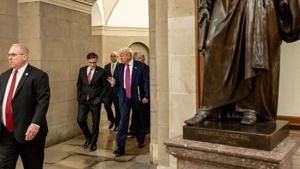
Republicans in Congress are sharply divided over whether to continue President Donald Trump’s tariff policies after the U.S. Supreme Court struck them down Friday.
The Supreme Court ruled 6-3 that the International Emergency Economic Powers Act does not enable the president to impose tariffs without congressional authorization, a decision that all Democrats – and multiple Republicans – praised.
Most Republican lawmakers who supported the ruling echoed House Financial Services Committee Chair French Hill’s, R-Ark., statement, which focused on the constitutional concerns rather than Trump’s tariff policy.
“I share in President Trump’s goal of securing fair and reciprocal trade agreements and holding bad actors accountable for their unfair trade policies,” Hill said. “While tariffs can be a useful tool when applied in a targeted way, today’s Supreme Court decision underscores the need for Congress to play a role in trade policy.”
Sen. Rand Paul, R-Ky., said the court had “defended the Constitution” by recognizing that tariffs “are taxes and the power to declare them belongs to the Congress,” while Sen. John Curtis, R-Utah, and others expressed relief that America’s “system of checks and balances remains strong nearly 250 years later.”
Other supportive Republicans, however, delivered much sterner rebukes of the Trump administration and the impact of tariffs on prices.
“As a matter of policy, the empty merits of sweeping trade wars with America’s friends were evident long before today’s decision,” Sen. Mitch McConnell, R-Ky., said in a Friday statement.
“Congress’ role in trade policy, as I have warned repeatedly, is not an inconvenience to avoid,” McConnell added. “If the executive would like to enact trade policies that impact American producers and consumers, its path forward is crystal clear: convince their representatives under Article 1.”
Yet many Republicans opposed the court’s decision and are now exploring legislative ways to codify Trump’s tariffs.
Rep. Greg Steube, R-Fla., will introduce a bill next week to make the president’s 10% global tariff permanent. He posted on social media that the “only people celebrating right now are the CCP and foreign governments that have spent decades ripping off American workers.”
Sen. Bernie Moreno, R-Ohio, who called the Friday ruling “outrageous” and a “betrayal,” called on his fellow Republicans to use another budget reconciliation bill as a vehicle to codify Trump’s trade agreements. House Budget Committee Chairman Jodey Arrington, R-Texas, agreed.
But leaders in the Republican party have responded to the ruling with caution and have made no promises as to whether Congress will take up such legislation. Regarding next steps, House Speaker Mike Johnson, R-La., said that “Congress and the Administration will determine the best path forward in the coming weeks.”
Democrats have already introduced legislation to return all tariff revenue to U.S. businesses within 90 days, which would reverse the deficit-reducing impact of the policies and likely spark extensive litigation.
Trump, however, does not believe the court’s decision constitutionally prevents him from implementing tariffs. Almost immediately after the ruling, Trump signed an Executive Order imposing a 10% global tariff under the Trade Act of 1974, rather than the emergency powers the Court ruled were illegal.
On Saturday, Trump said he would increase that to 15%.
Day after Supreme Court ruling, Trump says he will raise tariffs to 15%
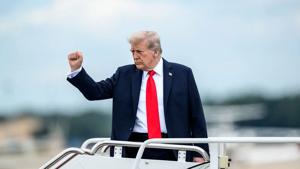
President Donald Trump on Saturday said he would raise global tariffs to 15%. The announcement on social media comes a day after the U.S. Supreme Court struck down his use of a 1977 law to impose tariffs on imports from around the world.
“Based on a thorough, detailed, and complete review of the ridiculous, poorly written, and extraordinarily anti-American decision on Tariffs issued yesterday, after MANY months of contemplation, by the United States Supreme Court, please let this statement serve to represent that I, as President of the United States of America, will be, effective immediately, raising the 10% Worldwide Tariff on Countries, many of which have been ‘ripping’ the U.S. off for decades, without retribution (until I came along!), to the fully allowed, and legally tested, 15% level,” Trump wrote Saturday on social media.
On Friday, after the Supreme Court ruled Trump did not have the authority to enact tariffs under the 1977 International Emergency Economic Powers Act, Trump said he would implement 10% tariffs using other laws. He said Saturday he was upping that to 15%.
“During the next short number of months, the Trump Administration will determine and issue the new and legally permissible Tariffs, which will continue our extraordinarily successful process of Making America Great Again,” Trump wrote.
Treasury Secretary Scott Bessent said Friday the administration will restructure the sweeping import taxes under other legal authorities.
“This administration will invoke alternative legal authorities to replace the IEEPA tariffs,” he said. “We will be leveraging Section 232 and Section 301 tariff authorities that have been validated through thousands of legal challenges.”
The Supreme Court, divided 6-3, ruled that the International Emergency Economic Powers Act didn’t give Trump expansive tariff powers to tax goods entering the country. Justices Clarence Thomas, Brett Kavanaugh and Samuel Alito dissented. The majority ruled that Trump’s tariffs violated the major questions doctrine, which holds that Congress must speak clearly when it grants significant powers.
“The Framers gave ‘Congress alone’ the power to impose tariffs during peacetime,” Chief Justice John Roberts wrote for the majority.
Many businesses are seeking refunds for the billions of dollars in tariffs they paid under the 1977 law that the Supreme Court ruled exceeded the president’s authority.
Groups file brief in support of ending post-Election Day ballot counting
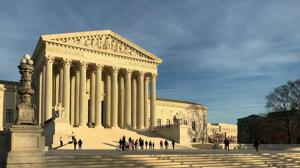
Four election integrity groups filed an amicus brief in support of a case that requests the U.S. Supreme Court not allow state laws that permit counting ballots arriving after Election Day, with experts saying that the recent normalization of late ballots negatively affects trust in and efficiency of elections.
Executive Director of Honest Elections Project Jason Snead told The Center Square that “this case is nothing more than a return to the norm and an enforcement of federal law against a novel scheme that illegally extends elections beyond Election Day.”
Late arriving ballots “[erode] confidence in the outcome,” and “mean that election results are delayed,” Snead said.
“We have seen long delays in declaring a winner and instances where late arriving ballots change the outcome,” Snead said.
Honest Elections Project was joined by the American Legislative Exchange Council (ALEC), the Center for Election Confidence (CEC), and Restoring Integrity and Trust in Elections (RITE) in filing the amicus brief in Watson v. Republican National Committee.
Snead told The Center Square that the case “is about a conflict between federal and state law.”
“Federal law sets Election Day,” Snead said. “The question for the court is whether accepting late ballots extends or alters Election Day.”
“A ruling in favor of the RNC would increase confidence in the outcome of elections,” Snead said.
Snead additionally told The Center Square that “routine, widespread mail voting only began in the last few decades, and laws accepting late ballots are even newer.”
“Thirty-six states do not allow late ballots, and historically that has been the norm,” Snead said. “Of the fourteen that allow late ballots, half only began during COVID, an emergency that has long since ended.”
President of RITE Justin Riemer told The Center Square that his organization is “pleased to stand alongside the Center for Election Confidence, Honest Elections Project, and ALEC in urging the Court to uphold the straightforward meaning of federal law.”
“The federal Election Day deadline isn’t just a legal mandate, it’s essential for maintaining order and building public trust in our elections,” Riemer said.
ALEC CEO Lisa B. Nelson told The Center Square that “federal law concerning Election Day is clear, and states have no obligation to continue to count ballots well beyond the close of polls.”
“If states want to ensure more confidence in their elections, ALEC’s model policy, the Deadline for Return and Receipt of All Ballots Act, is a good starting point,” Nelson said.
“ALEC is proud to stand with its partners on this important principle,” Nelson said.
Business groups seek quick tariff refunds after Supreme Court ruling

The U.S. businesses that paid billions in tariffs to the federal government want their money back.
After the U.S. Supreme Court found President Donald Trump exceeded his authority under a 1977 law, business groups quickly called for refunds of these tariffs.
The high court decision affects Trump’s tariffs enacted under the International Emergency Economic Powers Act. Trump had used the law to impose tariffs on nearly every imported product from every country.
Neil Bradley, executive vice president at the U.S. Chamber of Commerce, said the ruling was good news for U.S. businesses and consumers.
“Swift refunds of the impermissible tariffs will be meaningful for the more than 200,000 small business importers in this country,” he said.
The nation’s largest business lobby also asked for a full reset on tariffs.
“We encourage the administration to use this opportunity to reset overall tariff policy in a manner that will lead to greater economic growth, larger wage gains for workers, and lower costs for families,” Bradley said.
The Penn Wharton Budget Model estimated the Supreme Court ruling will generate up to $175 billion in refunds.
Getting that money won’t be easy. International Chamber of Commerce Secretary General John Denton warned that refunds could be challenging.
“Companies should not expect a simple process: the structure of U.S. import procedures means claims are likely to be administratively complex,” he said. “[The] ruling is worryingly silent on this issue and clear guidance from the Court of International Trade and the relevant U.S. authorities will be essential to minimize avoidable costs and prevent litigation risks.”
Trump sharply criticized the Supreme Court’s decision on Friday before announcing a new set of tariffs under different laws to replace the import duties invalidated by the high court. He also criticized the Supreme Court for its silence on the issue of refunds. He said that failure by the high court could mean refunds end up in court disputes for years.
Gary Shapiro, CEO of the Consumer Technology Association, a trade group, said “the government must act quickly to refund retailers and importers without red tape or delay.”
Some businesses filed for refunds even before the Supreme Court ruling.
Warehouse retailer Costco filed a lawsuit in December to hold its place in the refund line, where other companies were already waiting. Costco noted a separate lawsuit was needed because importers “are not guaranteed a refund for those unlawfully collected tariffs in the absence of their own judgment and judicial relief.”
The request hints at a complicated refund process for a share of the billions in tariffs the federal government collected in fiscal year 2025. Supreme Court Justice Amy Coney Barrett said refunds could be a “mess” during oral arguments in November.
U.S. Sen. Maria Cantwell, D-Wash., wrote a letter to Treasury Secretary Scott Bessent seeking a “detailed explanation” of how the refund process would work.
“Many American businesses, especially small and medium-sized businesses, have struggled to pay these illegal tariffs and, for some, the financial strain has placed them on the brink of bankruptcy,” she wrote in the letter. “It is essential [that the Treasury Department] implement an expeditious and transparent process to remediate the financial harm that resulted from these illegal tariffs.”
Illinois Gov. J.B. Pritzker, a Democrat with plans for higher office, demanded a refund of $8.6 billion for all families in his state.
“On behalf of the people of Illinois, I demand a refund of $1,700 for every family in Illinois,” the governor wrote, threatening further action if the White House failed to comply.
Recent economic research has found that Americans are picking up the cost of tariffs. A report from the Federal Reserve Bank of New York confirmed “U.S. firms and consumers continue to bear the bulk of the economic burden of the high tariffs imposed in 2025,” according to a report from the Federal Reserve Bank of New York. Other studies have reported similar findings on the impact of the tariffs. The Kiel Institute for the World Economy found that Americans are paying almost the entire cost of tariffs.
First lady’s style immortalized in American history
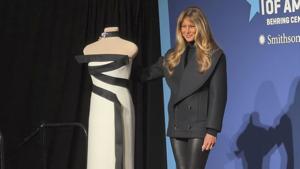
As tourists are expected to flock to the nation’s capital for spring break and America’s 250th birthday, there is a new attraction at the Smithsonian’s National Museum of American History – First Lady Melania Trump’s inaugural gown is on display.
The first lady made history Friday when she donated her Hervè Pierre-designed dress to the Smithsonian. The strapless, off-white crepe, floor-length gown is trimmed with two bands of black silk gazar in a zig-zag formation. Her ensemble was completed with a matching simple black choker, adorned with a floral diamond reproduction of a 1955 Harry Winston brooch.
While most first ladies find themselves thrust into fashion through their husband’s presidency, Melania Trump, a fashion model, brought her own passion for fashion and design to the White House. While Pierre designed her gown, she collaborated to bring the design to life.
During her remarks at the presentation ceremony, Trump briefly described her love for the process and the complexity involved in creating the garment.
“Personally, I relish the entire design process, from start to finish. It takes time, it’s slow, but the end result is always magical,” said the first lady. “It is no easy feat to construct such a complex garment. Behind every true couture piece stands a superior team of patternmakers, seamstresses, and artisans who transform a creative idea into reality.”
Trump argues that the dress’s design reflects the American spirit, while crediting the country’s fashion as a potential leader in the industry.
“This black and white masterpiece showcases America’s pure spirit of originality, superior engineering, and boundless creativity. It’s a testament as to why America’s fashion industry can lead the rest of the world,” said the first lady.
Trump is only the second first lady to have both inaugural gowns from the 2017 and 2025 inaugurations displayed at the Washington, D.C., museum as part of a popular exhibit on first ladies.
She joins Ida McKinley, the wife of former President William McKinley, from the inaugurations of 1897 and 1901.
Traditionally, the Smithsonian only collects inaugural gowns of first ladies worn during their husband’s first inauguration, but since President Donald Trump didn’t serve two consecutive terms, they broke the tradition for the first lady.
The tradition of displaying first ladies’ inaugural gowns began with Helen Taft in 1909, the wife of former President William Taft. Trump’s second gown marks 26 dresses on display in the First Ladies exhibit. The exhibit was established in 1912 and includes artifacts from first ladies dating back to America’s first First Lady, Martha Washington.
The Smithsonian Institution comprises 21 museums with a current federal appropriation of over $1 billion, providing 62% of its funding, allowing patrons to visit without paying admission.