National News
Poll: More than a third of American voters don’t trust U.S. power grid

Slightly more than half of American voters say they at least “somewhat trust” the American power grid, according to a new poll.
The Center Square Voters’ Voice Poll found that 55% of American voters said they completely or somewhat trust the American power grid. When that figure is broken down, 42% of voters said they only “somewhat trust” the power grid and 13% of voters said they “completely trust” the power grid. But 37% of voters say they don’t trust the grid, including 13% who “completely distrust” it.
The Center Square Voters’ Voice Poll was conducted by Noble Predictive Insights between March 2-5, 2026. The poll sample included 2,659 registered voters, comprising 1,177 Republicans, 1,270 Democrats, and 773 Independents, of which 330 do not lean toward either major party. The tracking poll is among the most comprehensive in the country.
Across partisan lines, Republican respondents had a greater overall level of trust in the U.S. power grid. About 66% of Republicans said they at least “somewhat trust” the U.S. power grid whereas only 45% of Democrats said the same.
However, 45% of Democrat respondents said they either somewhat or completely distrust the power grid.
Mike Noble, founder of Noble Predictive Insights, said this issue reflects general lack of trust in institutions across the country. He said independent voters are stuck between Republicans and Democrats in the midst of this increasing distrust.
Only 34% of independents respondents who do not lean toward either major party at least “somewhat trust” the power grid. About 20% of those independents said they “completely distrust” the U.S. power grid and 30% “somewhat trust the grid.
“There’s just overall lower confidence in general, and they have shaky confidence with it,” Noble said. “People just don’t really trust institutions or things that have just been around for a long time that have been really reliable.”
The U.S. Department of Energy has stressed the importance of greater reliance on the domestic power grid, especially as companies continue investing in artificial intelligence data centers. The department projected a 100 times increase in risk by 2030 if grid facilities continue to retire at the current rate.
The Energy Department’s models predicted as much as 800 outage hours per year. Recent winter storms have led Energy Secretary Chris Wright to call on grid operators to use backup generation resources at data centers across the country.
“President Trump and the Energy Department remain committed to doing everything in our power to mitigate blackouts and lower energy costs for the American people,” Wright said.
Power outages cost Americans roughly $44 billion per year, according to data from the DOE’s national laboratories.
Respondents with more education reported fewer concerns about the country’s power grid. About 59% of respondents with college degrees said they at least “somewhat trust” the power grid whereas 49% of respondents with some college experience said the same. About 63% of respondents with post-graduate degrees at least somewhat trust the grid.
Black and Hispanic or Latino respondents had the highest levels of distrust in the power grid. About 17% of Black respondents said they “completely distrust” the power grid and 19% of Hispanic or Latinos said the same.
About 14% of Black respondents “completely trust” the power grid and 16% of Hispanics or Latinos said the same.
“There’s this degradation in institutions and structures,” Noble said. “A decade or so ago, were any of your parents ever talking about, ‘Oh, how is the power grid doing?’ It just seems now there is more distrust.”
Harvard sued after Jewish students harassed

Harvard University found itself at the center of a federal discrimination lawsuit on Friday after the Trump administration said it failed to protect Jewish and Israeli students from harassment on campus.
Filed in federal District Court in Massachusetts, the lawsuit says university administration sat idle while “antisemitic mobs” assaulted, stalked and intimidated students following Hamas’ attack on Israeli citizens on Oct. 7, 2023.
“Since October 7th, 2023, too many of our educational institutions have allowed antisemitism to flourish on campus – Harvard included,” said Attorney General Pam Bondi. “Today’s litigation underscores the Trump administration’s commitment to demanding better from our nation’s schools and putting an end to discriminatory behavior that harms students.”
The administration wants to recover billions of dollars in support it sent to the university despite its purported violation of anti-discrimination laws. Another $2.6 billion in grants from the Department of Health and Human Services is slated to funnel to the university this year.
“Every student deserves to learn without fear of harassment or exclusion,” said Health and Human Services Secretary Robert F. Kennedy Jr. “When institutions take taxpayer dollars, they accept a duty to protect civil rights. We hold Harvard accountable on the principle that antisemitism has no place in any program funded by the American people.”
The lawsuit comes six weeks after Trump told officials that the institution needed to repay $1 billion it had received in federal support over the allegations. Former Harvard President Claudine Gay criticized that proposal, calling the amount arbitrary and unjustified.
Harvard has filed two lawsuits challenging the administration’s actions, arguing it is being penalized for declining to adopt the administration’s policy positions.
In December, a federal judge blocked the funding cuts, ruling that the administration had not adequately justified them.
In one year, U.S. military conduct tens of thousands of missions at southwest border
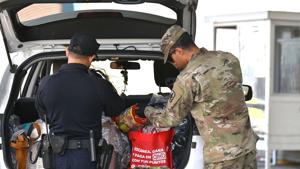
In one year, U.S. military conducted tens of thousands of detection, monitoring and security site missions at the southwest border.
More than 20,000 service members have served at the southwest border over the last year through Joint Task Force Southern Border (JTF-SB). The operation reached its one-year anniversary on March 14 and is ongoing.
“During this first year, Joint Task Force-Southern Border and partners have proven what a whole-of-government approach to our nation’s southern border can accomplish,” Army Maj. Gen. David Gardner, commanding general of the JTF-SB and 101st Airborne Division, said in a statement. “Our joint teammates and partners have strengthened border security through unity of effort, accelerated decision-making and enhanced detection capability. While the environment is complex, our mission is clear: to secure the homeland with precision, professionalism and respect for the rule of law.”
Soldiers assigned to the 10th Mountain Division in Fort Drum, New York, were deployed to Fort Huachuca, Arizona, to establish JTF-SB last March. Last October, the 101st Airborne Division from Fort Campbell, Kentucky, assumed control of the JTF-SB mission.
President Donald Trump established JTF-SB through several executive orders he issued on his first day and week in office. Trump was the first president to declare an invasion at the southwest border and directed the Department of Defense’s United States Northern Command (USNORTHCOM) to “seal the borders and maintain the sovereignty, territorial integrity, and security of the United States by repelling forms of invasion including unlawful mass migration, narcotics trafficking, human smuggling and trafficking, and other criminal activities.”
JTF-SB’s stated mission is to “safeguard U.S. territorial integrity and protect the American people.” It seeks to do this by increasing situational awareness across the 1,954-mile U.S.-Mexico border by “accelerating response capabilities and supporting federal law enforcement partners so they can focus on frontline duties.”
By last March, more than 10,000 U.S. troops were deployed to support southern border security efforts, The Center Square reported. That number has since doubled.
JTFSB service members began conducting enhanced detection and monitoring, including providing “mobile ground-based support to detect, track and monitor movements of suspected illegal activity using military tactical vehicles or foot patrols” in areas identified by U.S. Customs and Border Protection and Border Patrol. So far, five National Defense Areas (NDA) have been established and expanded along the southwest border including in New Mexico and Texas, The Center Square reported.
Over the past year, troops conducted remote and mobile detections, synchronized planning, rapid mobility and persistent presence along the Rio Grance River, in the air and in high traffic urban-to-urban corridors.
This involved roughly 22,000 enhanced detection and monitoring missions, including nearly 3,000 joint patrols with Border Patrol agents. Aviation assets executed nearly 1,600 aerial observation flight missions and 220 unmanned aerial missions last year.
Troops conducted more than 800 mirrored patrols on both sides of the southwest border, working with Border Patrol agents and the Mexican Secretariat of National Defense, according to Department of War data.
They also conducted more than 84,000 security site missions last year, providing continuous detection and monitoring across the southwest border using sensor-borne technology, fixed and mobile ground sensors and long-range systems. They tested new equipment and technology to conduct the operations, including: “the TRV-150C tactical resupply vehicle; an infantry squad vehicle Marines trained on for the first time in an operational environment; an unmanned surface vessel and solar-powered maritime detection device; and various kinetic and nonkinetic counter-unmanned aerial systems.”
JTF-SB troops also installed nearly 6,000 signs and 2,000 marine buoys along 656 miles of the southwest border to demarcate five new NDAs.
They delivered more than 51,000 rolls of concertina wire and erected wire barriers in key locations in conjunction with Customs and Border Protection. New barrier reinforcement measures represent “the largest of its kind in U.S. history, adding a layer of deterrence in areas most needed to deter and deny illegal crossings,” the DOW said.
Entering its second year, JTF-SB troops remain dedicated to their mission, to strengthening integration, advancing data-driven operations and providing support to CBP and Border Patrol, Gardner said. He added that JTF-SB operations are helping expand detection and monitoring and improve data sharing to enable federal, state and local law enforcement apprehend illegal border crossers, target drug and human smugglers and locate criminal elements in the interior of the U.S.
Supreme Court upholds preacher’s First Amendment lawsuit
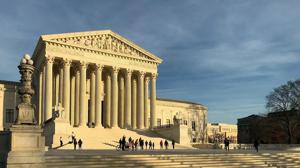
The U.S. Supreme Court, in a unanimous decision, upheld that a street preacher can sue over a city ordinance that prevented him from exercising free speech rights.
The case, Olivier v. City of Brandon, focused on Gabriel Olivier, a man who regularly preached in public outside an amphitheater in Brandon, Mississippi. In 2019, Olivier was restricted from speaking outside the theater and using signs or speakers during live events.
In 2021, Olivier was arrested for violating the town’s ordinance that placed restrictions on where he could publicly speak. He later sued, claiming the city violated his First Amendment free speech rights.
Olivier did not sue over the $350 fine he was charged. Instead, he sued to ensure the city ordinance would not block him or someone else like him from preaching outside the theater.
“Assuming a credible threat of prosecution, a plaintiff can bring a[n] action to challenge a local law as violating the Constitution and to prevent that law’s future enforcement,” Justice Elena Kagan wrote in the court’s majority opinion.
The case challenged precedent set by Heck v. Humphrey, where the Supreme Court determined an individual cannot proceed with a lawsuit to challenge a previous conviction.
Kagan said a lawsuit seeking future relief from an activity, like Olivier exercising his First Amendment rights, was valid under the court’s precedent. She compared it to a prisoner seeking a more fair trial in the future.
“Olivier’s suit merely attempts to prevent a future prosecution, so the Heck bar does not come into play,” Kagan wrote.
“There is no looking back in Olivier’s suit; both in the allegations made, and in the relief sought, the suit is entirely future oriented – even if success in it shows that something past should not have occurred,” Kagan continued. “His suit to enjoin the ordinance, so he can return to the amphitheater, may proceed.”
United, American clash at O’Hare as growth strains capacity

The Federal Aviation Administration is expected to scale back flights at O’Hare International Airport this summer as two major carriers rapidly expand service, raising concerns about delays, congestion and market imbalance.
This week, the FAA proposed flight reductions at O’Hare, capping daily operations at 2,608 takeoffs and landings. With the reductions, United stands to lose more flights compared to American Airlines. Ahead of the proposal, United aggressively added flights, adding more than 200 additional flights a day compared to last year (United planned about 750 O’Hare flights vs. 541 last year). By contrast, American sought to add about 45 flights a day, anticipating 525 daily flights during summer peak days compared to just over 480 last year.
Joe Schwieterman is a transportation expert at DePaul University.
“They’ve evolved into this big market share war that is pretty public and pretty emotional,” said Schwieterman.
Federal regulators are considering capping or reducing daily flights after airlines scheduled more than 3,000 peak-day operations this summer – far above what officials consider manageable.
The FAA has discussed limiting operations closer to about 2,600 to 2,800 daily flights to prevent widespread disruptions. Schwieterman said the move is unusual.
“This is pretty unprecedented for the federal government to come in and tell airlines what to do at a particular airport” outside of emergencies like staffing shortages or construction, he said.
The agency’s concern centers on a sharp ramp-up in flights this spring, combined with uncertainty about air traffic control staffing and gate capacity as the Transportation Security Administration remains unfunded and TSA workers aren’t getting paid.
If no FAA action is taken, Schwieterman warned travelers could face a difficult summer.
“The airport will just, in effect, be splitting from the seams in terms of what it can handle,” he said.
American CEO Robert Isom spoke strongly about United’s recent capacity boost at Chicago O’Hare, where American is seeking to restore its pre-pandemic capacity. Isom said he applauds the caps.
“Where we were headed due to the reckless scheduling of our competitor was going to be gridlock, plain and simple,” Isom said, according to Forbes. “It doesn’t help anyone to have Chicago in a situation not only where it can’t operate, but it impacts the entire country.”
Despite the tension, Schwieterman said maintaining two strong hub carriers in Chicago has clear benefits for travelers.
The competition helps keep ticket prices lower and improves scheduling options.
“That often means there’s more discount seats available,” he said. “They compete to have the best schedules, and that brings out the best in both airlines.”
The FAA is expected to require some level of cuts, potentially applied evenly across airlines to avoid favoritism.
“I don’t envy their position,” Schwieterman said. “No matter what they decide, there’s going to be controversy.”
Former Transportation Secretary and longtime Illinois congressman Ray LaHood weighed in on the issue in an op-ed in Crain’s Chicago Business.
“Chicago is the only city in America that enjoys the advantage of a true dual‑hub system, with a multitude of options for consumers from two global airlines, American Airlines and United Airlines,” :aHood wrote. “Together that creates competitive pricing, strong connectivity, and business development opportunities for the whole region … It is a balance that has kept both carriers strong and costs reasonable for consumers. But United’s scheduling surge is threatening that balance. If it continues, O’Hare’s dual‑hub model — and the economic advantages that come with it—are at risk.”
House members raise concerns about Islamic terrorist threats 25 years after 9/11
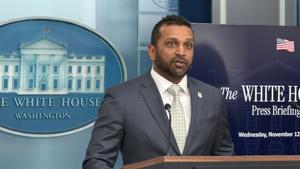
Several members of Congress raised concerns about Islamic terrorist threats now that the U.S. is approaching the 25-year anniversary of 9/11.
At a U.S. House Permanent Select Committee on Intelligence hearing on Thursday addressing an annual assessment of threats to national security, U.S. Rep. Elise Stefanik, R-New York, pointed to three high profile Islamic terrorist attacks that occurred this month alone.
They included an Islamic attack against Temple Israel Synagogue in Michigan by a naturalized citizen from Lebanon, a targeted shooting and killing of college students in Texas by a lawful permanent resident from Senegal, and an ISIS-inspired attack targeting protesters outside of the New York City mayor’s residence. The Michigan and Texas attackers were shot dead by police. Two Muslim men were arrested and charged in the New York case.
Stefanik excluded a shooting at Old Dominion University that also occurred this month that is being investigated as an act of terrorism. In this case, a Muslim man who pleaded guilty to attempting to provide material support to ISIS in 2016 was released from prison after receiving a light sentence and went on to kill one and injure two before he was shot dead.
When asked what her assessment of the increase in Islamic terrorism in the U.S. was, Director of the Office of National Intelligence Tulsi Gabbard said it “continues to be an extreme concern.” This is “not only because of the rise of these attacks but the mechanisms with which they’re carried out and the challenges that the intelligence community has in being able to try to detect some of these threats and attacks in advance,” she said.
Preventing domestic terrorist attacks has become more challenging because “many of the attackers don’t have contact with known foreign terrorist entities or individuals, … making it a much more challenging threat to deal with,” she said.
She also deferred to FBI Director Kash Patel, citing FBI and law enforcement agencies’ combined successful track record in thwarting numerous terrorist attacks in the last year.
Last year, the FBI made 2,300 arrests related to foreign terrorist organizations (FTOs), 700 counterterrorism arrests, and 640 counterterrorism disruptions, Patel testified. The arrests “stopped attacks on the homeland. In December, we stopped four terrorist attacks in an 18-day span,” Patel said.
Patel also said he wanted to work with Congress to amend laws on the books to increase sentencing for convicted terrorists, citing the Norfolk, Virginia, case. The Muslim shooter should have been in prison but wasn’t, he said.
In the first Trump administration, the Department of Justice sought a sentence of 240 months on terrorism charges, he added. In the Norfolk case, the judge issued a sentence of nearly half that. If he’d received a full 240-month sentence, the shooting “would not have occurred and that individual would still be in prison and a member of our uniformed military service would still be alive,” Patel said.
Patel also said he wants to work with Congress on the denaturalization process “for someone who should not be in this country who wants to attack and kill American citizens and American service members.”
This FBI is ready to work with lawmakers on tougher sentences for convicted terrorists as well as the denaturalization process – so that no one who shouldn’t be in this country can attack and kill American citizens. Thank you for the question @EliseStefanik. pic.twitter.com/a6BAbwff7w— FBI Director Kash Patel (@FBIDirectorKash) March 19, 2026
The U.S. House Committee on Homeland Security has also published a “Terror Threat Snapshot” highlighting recent terrorist acts in the U.S. It notes that more than 60 cases were reported between April 2021 and December 2025 related to individuals linked to or inspired by foreign terrorist organizations. This includes those who’ve provided material support to ISIS, Hezbollah and al Queda, who received military level training from Hezbollah and al Queda, and who claimed to commit attacks because they were inspired by foreign terrorist organizations, The Center Square reported.
It also cites terrorist cases that have been prosecuted by U.S. attorneys in at least 25 states.
Officials react swiftly to allegations about Cesar Chavez
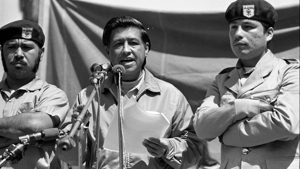
Political and civil leaders across California and the wider Latino community in the U.S. are reacting to several allegations of sexual abuse and rape by the 1960s farm worker and civil rights leader Cesar Chavez.
The United Farm Workers, which Chavez cofounded, has denounced his alleged behavior and canceled celebrations of Cesar Chavez Day on March 31, a state holiday in California.
“As a women-led organization that exists to empower communities, the allegations about abusive behavior by Cesar Chavez go against everything that we stand for,” said the UFW Foundation in a press release. “These disturbing allegations involve inappropriate behavior by Cesar Chavez with young women and minors. They are shocking, indefensible and something we are taking seriously.”
The Chavez family said the information about Cesar Chavez, who died in 1993 at 66 years old, came as news to them.
“This is deeply painful for our family,” wrote the Chavez family in a statement the Cesar Chavez Foundation sent to The Center Square. “We wish peace and healing to the survivors and commend their courage to come forward.”
Victims included two young girls and Chavez’s long-time protest co-leader Dolores Huerta, who cofounded UFW.
“I am nearly 96 years old, and for the last 60 years I have kept a secret because I believed that exposing the truth would hurt the farmworker movement I have spent my entire life fighting for,” Huerta wrote in a statement Wednesday.
Huerta said she was forced into two sexual encounters by Chavez, with both resulting in pregnancies that she delivered. The story was reported by a multi-year New York Times investigation. It included details of how Chavez allegedly drove her out to a secluded field in 1966 and raped her.
Huerta added that she did not know of the two young girls Chavez allegedly raped until the New York Times contacted her. “The knowledge that he hurt young girls sickens me.”
Chavez led the farmworker movement in California, which included the famous 1,000-Mile March by the UFW. The movement was a reaction to what the UFW called low living standards and second-class citizen treatment for immigrants and farmworkers in California.
Among other political and societal wins, the movement helped pass the landmark Agricultural Labor Relations Act of 1975, giving farmworkers the right to collective bargaining.
But at the same time, Chavez was seen by some people in the Latino community as a complicated figure, who did not fight for the same protections for illegal immigrant workers or fully acknowledge the Filipino workers who marched beside him.
Pedro Hernandez is the California state program director for GreenLatinos, a Latino-led nonprofit for environmental issues with chapters in California, Colorado, New Mexico, Texas and Illinois. He was raised in the same California farming valleys that Chavez organized for and said he met many people who marched with him and felt gratitude towards his work.
“At the surface level though, there is a perspective that he was a figure to be revered,” Hernandez told The Center Square during a phone interview Thursday. He added that he imagined many people would be disappointed by the news of the sexual abuse allegations.
Despite his complicated history, Chavez has been upheld as a protest, revolutionary and Latino rights hero across much of the U.S. In the wake of the allegations, widespread calls to rename schools, parks and holidays, originally named after Chavez, quickly spread. Southern California cities with large Latino populations have streets named after him, such as Cesar Chavez Avenue in Los Angeles, Cesar Chavez Drive in Oxnard and Calle Cesar Chavez in Santa Barbara.
Nine states – California, Colorado, Nevada, Texas, Arizona, Utah, Michigan, Wisconsin and New Mexico – celebrate Cesar Chavez Day as state holidays, according to the website timeanddate.
On Thursday morning, Los Angeles Mayor Karen Bass signed a proclamation to rename March 31 from Cesar Chavez Day to Farm Workers Day.
“Dolores and leaders like her inspired so many of us to activism,” said Bass at a press conference. “Mr. Chavez’s crimes do not diminish the courage of farm workers and workers everywhere who fight for their rights, equality for Latinos, and a stronger nation for everyone.”
In Arizona, where Chavez was born, Phoenix Mayor Kate Gallego said the city would start renaming facilities that were named after Chavez. She also said they would re-focus the holiday on his birthday to be about the wider workers rights movement.
In Northern Nevada, the Central Labor Council said it would rename the Cesar Chavez Celebration to the much longer name: Northern Nevada Member Assistance Program Solidarity Celebration Dinner.
“As long as the process is community-informed and continues to uphold that it was a farm worker movement and there was more than an individual contributing to this, then I think we have a really interesting opportunity to change the narrative from a cult of personality to more of a people’s history and a people’s narrative,” said Hernandez on the renaming efforts.
Hernandez also told The Center Square that the effort to rename facilities and holidays that were originally named in honor of Chavez had been much faster than for other controversial historical figures in the U.S. ”I think it’s something that is worth noting here.”
Lack of Homeland Security funding hits maritime workers

Employees of the Transportation Security Administration are not the only ones working without a paycheck during the partial government shutdown.
The same goes for Vessel Traffic Service operators, civilians who monitor and direct boat traffic. VTS is operated by the U.S. Coast Guard, which is overseen by the Department of Homeland Security. DHS has gone without funding during the shutdown.
Capt. John Carlier, president of the San Francisco Bar Pilots, commended the VTS operators. He called them a critical piece of the system, ensuring the safety of the San Francisco Bay and the many vessels navigating its waters.
“Protocols are in place for when VTS is operating at a reduced capacity, so there is not an absence of communication,” Carlier told The Center Square. “Pilots can still navigate commercial ships safely, but the system functions best when there is VTS in place coordinating between ships, ferries, and recreational traffic on the water.”
Bar pilots are mariners who navigate vessels through waters across the sandbar at the entrance of a harbor.
Carlier added that another crucial aspect of VTS is maritime domain awareness, something he said provides a wealth of knowledge about the regional maritime domain and items that could potentially impact the Bay Area’s security, economy or environment.
“We look forward to seeing this situation resolved with expediency so the San Francisco Bay and its associated waterways can continue to function safely and efficiently,” said Carlier.
Scott Humphrey, executive director of the Marine Exchange of the San Francisco Bay Region, would also like to see these workers get paid.
Humphrey said the Bay Area is expensive and “a lot of folks drive you know up to an hour or so to get to work.”
AAA has the state average for a gallon of regular gasoline at $5.16. California continues to have the highest prices in the nation, and gas prices have kept rising since the start of the U.S.-Israeli conflict with Iran. The national average on Thursday was $3.88.
“They’re driving up to an hour to get to work, and when they get to work, they realize they just burned an hour’s worth of gas,” Humphrey said.
Meanwhile, the shifts or watches are 12 hours long.
Today, there are approximately 8,000 TSA employees in California. The number of VTS operators in the Bay Area is around three dozen. Because they are a smaller group, Humphrey is concerned they might be overlooked.
“We need to get them paid before something happens,” said Humphrey. “They have to be stressed out.”
The partial government shutdown began Feb. 14.
Arizona legislators promote new gun rights and safety bills
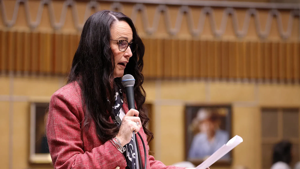
Women supporting gun rights and safety – self-described “warrior women” – spoke in favor of three new Arizona bills Thursday morning during a news conference in Phoenix.
“I want to be very, very clear. The Second Amendment is not a suggestion. It is a promise carved in stone: The right of the people to keep and bear arms shall not be infringed,” state Sen. Janae Shamp, R-Surprise, told reporters as she discussed Senate Bill 1012, her legislation to remove unnecessary notification requirements for gun owners.
Shamp and the bill’s supporters say those requirements treat gun owners like suspects. The legislation allows people with a concealed handgun to bring it into restaurants and other businesses, but Shamp noted it does not extend that right to bars and nightclubs.
Besides SB 1012, the new bills include House Bill 2076, which creates the Save Our Children Safety Program to provide employee training, crisis preparedness and optional certification for designated staff to carry guns on campus to protect students. The third bill is Senate Bill 1424, which requires schools to provide firearms safety instruction to prevent accidents without discouraging firearm ownership.
Shamp noted the Arizona Constitution stresses gun rights in language even stronger than that of the U.S. Constitution and said the right to bear arms is crucial to keeping families safe.
“Criminals do not disarm at the door. Threats don’t wait for dessert,” Shamp said. “Your children’s safety does not end at the restaurant door.”
She said her bill doesn’t expand where guns are allowed and doesn’t do away with the requirement of a conceal-carry permit.
After Shamp spoke, Sen. Wendy Rogers, R-Flagstaff, stressed the importance of her legislation, Senate Bill 1424, which emphasizes firearms safety training in schools.
“Most accidental shootings involving children happen – where? – at home,” Rogers, chair of the Senate Judiciary and Elections Committee, told reporters. “Firearms are one of the leading causes of death to children and teens in this country.
“SB 1424, my bill, takes a very straightforward approach,” Rogers said. “They require schools to provide age-appropriate firearms safety instruction focused on accident prevention and personal safety. …
“Students are taught what to do if they encounter a firearm,” Rogers said. “They’re told not to touch it, are told to leave the area and to tell a trusted adult. This is a 1, 2, 3 memory item. This is clear guidance that a child can remember and act on.”
Another speaker was state Rep. Selina Bliss, R-Prescott, who authored House Bill 2076 and chairs the House Health and Human Services Committee. Bliss presented a proclamation for gun rights to Cheryl Todd, president of Women For Gun Rights. Todd stood at the podium with other women and her granddaughters as she discussed three generations of her family who believe in gun rights and safety.
“We believe in something very simple,” the Arizona resident told reporters as she talked about her organization’s support for the three bills. “Education is the key to safety.”
The Center Square reached out to gun control organizations but did not get a response by press time.
Change in anti-drug policy consideration after bombing Venezuelan boats

U.S. officials are signaling a more aggressive approach to drug trafficking, with emphasis on expanding authority, overseas operations, and targeting criminal networks at their source.
The House Judiciary held a hearing on Wednesday to discuss the legal basis for bombing Venezuelan drug traffickers and the arrest of Nicolás Manduro.
“Together, these efforts restored deterrence in the region and helped protect the American homeland from transnational threats and criminals,” Rep. Jeff Van Drew, R-NJ, said. “The President had the authority to deploy military force to support the arrest operation.”
Republican argued the need to build a legal and institutional framework to normalize pre‑emptive, extraterritorial, and sometimes lethal operations against cartels.
“This mission was not regime change. This mission always was a law enforcement operation to apprehend indicted fugitives who spent decades, decades orchestrating criminal activity that harmed our American people,” Van Drew said. “If you can stop them at the borders before they come in, that would be a good thing.”
“The authority of the president under Article Two of the Constitution is sufficient to support action to address these threats from America’s neighbors,” Gina D’Andrea, general counsel at America First Policy Institute, said. “The administration’s recent executive order designating the cartel networks as foreign terror organizations recognizes that these are non-ordinary criminals and are instead paramilitary entities that pose a direct threat to the United States. Yes, this designation bolsters the President’s authority to take action in defense of the American people.”
Although Democrats criticized President Donald Trump for Maduro’s capture after he pardoned former Honduran President Juan Hernández, many others argued in favor of Maduro’s capture.
“The capture of Nicolas Maduro was not only justified, it was necessary for the security of the American people,” Franklin Camargo, political commentator at PragerU, said. “There is no doubt America will be safer, stronger, more prosperous with a free Venezuela.”
Democrats argued against bombing drug boats and for a return to investigative task forces, prosecutions, and treatment‑oriented responses, warning that until this happens, Americans will remain less safe.
“We are not going to be able to treat addiction to opioids in the crisis we have in overdoses by blowing up boats in the middle of the ocean,” Rep. Jamie Raskin, D-Mary said. “We’re not going to be able to bomb our way out of a fentanyl crisis.”
“This erratic and illegal foreign policy is now responsible for the death of 13 U.S. service members, and has made the Republicans cause economic crisis even worse,” Rep. Jasmine Crockett, D-Texas, said.
“Sinking boats and killing the crews and sending the evidence to the bottom of the sea is not an effective attack on drug cartels,” Thomas Padden, former deputy director of Organized Crime and Drug Task Forces, said. “Sinking those boats has no effect on the U.S. drug supply.”
As policymakers weigh next steps, the direction of U.S. anti-drug policy appears increasingly global and proactive with future efforts likely to combine enforcement, international operations, and broader geopolitical considerations.