National News
Everyday Economics: A quiet data week, but loud signals for the economy

With Christmas approaching, the coming week will be light on fresh economic data. That does not mean markets – or policymakers – are flying blind. Last week’s inflation and labor market reports, while noisy, still offer important clues about where the economy stands as the year comes to a close.
The picture that emerges is uncomfortable: inflation is likely to remain sticky even as the labor market shows clear signs of strain. That combination leaves the Federal Reserve increasingly stuck in the middle.
Start with inflation. The latest consumer price index (CPI) report appeared to show renewed progress, with headline inflation easing on a month-to-month basis. But that improvement deserves scrutiny. Part of the apparent disinflation reflects a downward bias introduced by the Bureau of Labor Statistics’ carry-forward methodology, which assumes unchanged prices when data collection is delayed or missing. When inflation is rising at the margin, that assumption mechanically understates price growth — and the longer it persists, the larger the distortion becomes.
Beneath the surface, inflation pressures remain uneven. Goods prices are no longer falling consistently, with energy prices and new and used vehicle prices moving higher in the latest report. Those increases were partially offset by easing shelter inflation, which continues to decelerate as market rents feed into official housing costs with a lag. Housing disinflation should continue to help in the months ahead, but it is unlikely to fully offset renewed pressure in goods prices. The result is inflation that is cooling, but still sticky, and not yet convincingly on a path back to 2%.
The labor market tells a similar story – noisy, but increasingly fragile, with job gains more likely to be revised downward than upward.
The most recent employment report showed payroll employment rising by 64,000, alongside an increase in the civilian labor force and a higher unemployment rate. On the surface, that looks acceptable: more jobs and more people either working or actively looking for work.
A closer look, however, suggests the labor market is late-cycle. Job gains remain positive, but they are becoming less evenly distributed. Several cyclical sectors – including manufacturing and parts of transportation and retail – are flat or shedding jobs, while gains are concentrated in a narrower set of industries. That pattern has appeared repeatedly in past expansions as growth slows.
The divergence between the two major labor market surveys reinforces that signal. Payroll employment comes from the establishment survey and counts jobs. The unemployment rate comes from the household survey and tracks people. The household survey is noisier month to month, but historically it has often detected turning points earlier – especially when unemployment begins to rise even as payroll growth remains positive.
That dynamic is now in place. The unemployment rate has climbed to 4.6%, its highest level in five years. At the same time, job openings have fallen below the number of unemployed workers – a configuration that becomes far more common late in the business cycle and in the 12 to 18 months preceding recessions. In prior cycles, similar conditions were followed by further slowing in payroll growth and downward revisions to earlier job gains.
Wage growth adds another piece to the picture. Average hourly earnings are rising at roughly 3.5% year over year, the slowest pace in four years and broadly back to pre-pandemic norms. That is welcome news for inflation, but it also signals diminishing labor market tightness.
Policymakers and markets appear to be taking these signals in stride. Following last week’s data, futures markets assign roughly a 22% probability to a rate cut at the Federal Open Market Committee’s January meeting, slightly lower than before the CPI and jobs reports were released. That cautious pricing aligns with the Fed’s own assessment that job gains have slowed, unemployment has edged higher, and inflation remains somewhat elevated, even as downside risks to employment have increased.
With little new data ahead, the focus now shifts from headline volatility to underlying trends. Those trends point to sticky inflation alongside a labor market that continues to loosen, making it difficult for the Fed to justify immediate action in either direction.
U.S. lays out terms for trade deal with Canada

U.S. leaders want American products, including whiskey and milk, on Canadian shelves as part of any deal between the neighboring nations.
U.S. officials have laid out demands for trade talks with Canada and Mexico, making clear that they won’t rubber stamp the existing free trade agreement for the three North American nations without changes. President Donald Trump signed that deal, known as the United States-Mexico-Canada Agreement, or USMCA, in 2020 to replace the North America Free Trade Agreement, or NAFTA.
Canada has long been a key U.S. trade partner. In 2024, Canada was the top destination for U.S. exports and the third-largest source of U.S. imports. However, that relationship has changed in Trump’s second term. Trump hit trade with Canada with a 35% import duty for goods that don’t fall under terms of the USMCA.
Those tariffs hit Canada’s economy hard. Canadian exports dropped, business investment slowed, and tariff uncertainty continues to drag the nation’s economy, according to a recent report from the International Monetary Fund.
U.S. Trade Representative Jamieson Greer told Congress last week that the USMCA contains provisions for a joint review that are unique to the deal and were put in place specifically to make sure the U.S. keeps its economic leverage.
Greer said the USMCA was “successful to a certain degree.”
“But at the same time, it is clear that we have not achieved all of our goals with respect to strengthening U.S. manufacturing capacity and creating good jobs, and nearly all stakeholders advocate improvements,” he said in his opening statement. “I don’t think we can say that USMCA is an unqualified success.”
Greer said he wants Canada to open its dairy market to U.S. farmers and change an online streaming law that U.S. officials say hurts American tech companies. Greer said the U.S. also wants Canadian provinces to lift bans on selling American spirits. Those bans were put in place in response to Trump’s tariffs.
Greer also pointed to “discriminatory procurement measures” in Ontario, Quebec, and British Columbia; complicated customs registration for Canadian recipients of U.S. exports; and “Alberta’s unfair treatment of electrical power distribution providers in Montana.”
The details come as leaders from the U.S., Canada and Mexico prepare for formal talks for a broader review of the USMCA next year.
Since Trump imposed tariffs on Canada, leaders in Ottawa have sought out trade deals with other nations around the world, hoping to take the sting out of U.S. import duties and reduce its reliance on the U.S.
Prime Minister Mark Carney said he plans to protect Canada’s economic interests in next year’s talks. He told provincial and territorial premiers on Thursday that the goal would be to secure the best deal for Canada.
EXCLUSIVE: Watchdog warns of national debt interest payments hitting $1 trillion
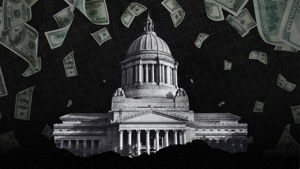
Budget watchdogs are sounding the alarm as the U.S. hit an unfortunate fiscal milestone in fiscal year 2025: government spending on debt interest payments alone topped $1 trillion this year.
The federal government added roughly $1.8 trillion to the now $38 trillion national debt in fiscal year 2025. While net interest on the debt totaled $970 billion, according to the Congressional Budget Office, the federal government’s net interest payments exceeded $1 trillion for the first time.
That’s more than the U.S. spends on national defense, almost as much as it spends on Medicare, and about two-thirds of what it spends on Social Security benefits.
Chris Towner from the Committee for a Responsible Federal Budget said historically high interest payments – which are projected to rise to $1.8 trillion in 2035 – could cause a debt spiral in the future if Congress does not reign in spending.
“If we were to get into a situation where we have to keep borrowing, and then the people who loan us money get worried that we’re not going to pay it all back, we could see higher and higher interest rates – which means we have to borrow more to pay the interest on the debt, which means that the interest rates go higher, and that turns into what we call a debt spiral,” Towner told The Center Square.
“I hope we’re far away from that, but right now, we’re pretty close to the highest the debt that has ever been as a share of the economy, and that’s how economists think about it – the debt is equal to about 100% of the economy right now.”
The highest percentage the national debt has made up of Gross Domestic Product was 106%, and that was immediately following World War II. If it continues current borrowing rates, the U.S. will hit that level again within the next five years.
“We don’t really know what happens after that,” Towner said. “And what I fear is already starting to happen is that the higher debt we have, the slower the economy is growing. Every dollar that the federal government borrows results in about 33 cents less of investment in the economy from the private sector.”
The ripple effects of slowed economic growth are many, Towner added.
“Fewer buildings, fewer machines, being invested in fewer workers, being hired, all of that. And then what could happen, too, is interest rates could rise pretty significantly, because interest rates throughout the economy are really directly tied to how much it costs the government to borrow.”
Unlike other government spending, the $1 trillion spent on debt interest payments alone produces no benefits.
“So it’s a lot of money, and it’s basically something that we don’t get anything out of. It’s just to service our past borrowing,” Turner noted. “At least with Social Security, we’re sending that into people’s pocketbooks, or with Medicare, we’re mostly spending that on seniors’ medical bills. But we’re not getting anything for this interest. We’re just paying it because we borrowed so much.”
While there are ways Congress can address rampant spending while still protecting costly entitlement programs, Turner said, “there’s almost never going to be a politically painful overhaul.”
“We could actually pay for anything we wanted by raising taxes or just cutting any other spending,” Turner said, referencing ways to finance Democrats’ wish to extend the enhanced Obamacare Premium Tax Credits and Republicans’ desire to expand Health Savings Accounts.
“There are myriad ways to pay for the priorities we want to do. It’s just that whenever you cut spending or you raise revenue, you’re hurting someone’s pocketbook, so you’re going to get some disinterest in that.”
If lawmakers have no appetite to comb over entitlement programs for savings, there are still ways Congress can immediately address federal spending and lower both government borrowing and interest rates.
“We should be putting caps on discretionary spending,” Turner said. “But we also need to put together some sort of bipartisan fiscal commission that brings together Republicans and Democrats to talk about what are the right ways to make our finances sustainable, and what are the right ways to shore up Social Security and Medicare, which are both in danger of going insolvent in the next seven years. We need to act now to prevent that from happening.”
Hegseth promises to fix barracks, but work could take time

Secretary of War Pete Hegseth has pledged to tackle longstanding issues with U.S. military barracks that have frustrated troops, lawmakers, and taxpayers for decades.
In a recent social media post, Hegseth flipped through a 118-page Government Accountability Office report from 2023 that detailed problems with military barracks, where the most junior enlisted service members reside.
“For far too long, this department has failed too many of our warfighters,” Hegseth said. “Every member of our joint force deserves housing that is clean, comfortable and safe.”
Update on the Barracks Task Force. pic.twitter.com/46KBNFTFz7— Secretary of War Pete Hegseth (@SecWar) November 26, 2025
The 2023 GAO report drew attention to sewage backups, mold, inoperable fire safety systems, broken heating and air conditioning systems, brown tap water, rodent infestations, and other issues at barracks where troops are required to live during training.
“This isn’t just about creature comforts. This impacts morale, readiness and our ability to recruit and retain the best warriors. Quality of life for our warriors is a critical component of reviving the warrior ethos and rebuilding our military,” Hegseth said.
Hegseth blamed the problems on the previous administration, but the GAO report said that such conditions had existed for decades despite past attempts to address them, including taxpayer-funded investments and privatization efforts.
The GAO report found that the Pentagon lacked oversight of the problems, did not know how much was spent on barracks, and that the department’s own assessments of the conditions in its barracks were unreliable.
Earlier this year, Hegseth created a barracks task force that reports directly to him.
“We’ve completed wall-to-wall assessments across the entire Navy, Marines, Air Force, Space Force, and the 18th Airborne Corps,” Hegseth said. “And inspections are underway in the Army Reserves and National Guard.”
Hegseth said those would be completed by the end of January 2026.
He didn’t say if the Pentagon had changed the way it evaluates barracks. The Pentagon did not respond to questions from The Center Square about its latest assessments. The GAO report found the Pentagon’s assessments of conditions within its facilities were faulty. Military services calculate a condition score, ranging from 0 to 100, for each facility. However, those scores don’t always align with the actual conditions.
“We observed barracks at seven of 10 military installations we visited that appeared to require significant improvement, despite condition scores above 80,” according to the GAO report. “The scores indicated that barracks were in fair or good condition. For example, at one installation, we toured a barracks facility that had been closed for renovation due to long-standing plumbing and electrical issues. According to installation officials, the barracks were uninhabitable. However, at the time the barracks closed, its condition score was above 90, according to service documentation.”
The GAO made 31 recommendations in the barracks report. The Pentagon agreed with 23 of those recommendations and partially concurred with eight more. As of December 2025, 16 of those recommendations remained open and unaddressed, according to the GAO report.
Hegseth decried bureaucracy, saying it was a “find and fix” mission rather than something that required additional study.
Hegseth said that the Department of War was investing $1.2 billion to improve conditions in the barracks. The task force has $400 million to direct immediate work and $800 million for critical renovations, Hegseth said.
U.S. Rep. Don Bacon, R-Neb., who serves on the House Armed Services Committee and chaired a hearing on problems in the barracks in 2023, said it was time to take action.
“I am optimistic that these funds will begin to address the long-standing and well-documented issues with our military barracks, and I hope that the Pentagon will continue to update its internal methodologies for assessing needs and listen more to outside groups that highlight areas for improvement they are missing,” Bacon told The Center Square. “The recently announced task force is a positive step, but I remain concerned that they are still studying the problem when there are clear needs that exist today.”
Bacon said he’s watching.
“We gave the Defense Department over a billion dollars in the reconciliation bill this year to address this issue. I led the Quality of Life panel that identified the needs, so I firmly believe that the time for studying is over and the time for action is now,” he told The Center Square. “These funds are only the first step in rectifying the issue of the abysmal conditions that we are forcing our all-volunteer force to live under, and I remain committed to providing oversight to make sure that Secretary Hegseth moves out as fast as he is saying to fix the problems.”
The GAO report found the Department of War had not fully funded its facilities program for years, resulting in a backlog of at least $137 billion in deferred maintenance costs as of fiscal year 2020, according to the report. That figure was spread across all facilities, not limited to barracks.
During testimony before the House Armed Services Committee in 2023, Elizabeth Field, director of Defense Capabilities and Management for the GAO, informed committee members that 20 years prior, the GAO had identified similar issues. Ten years ago, in a report to Congress, the Pentagon praised the progress it had made in modernizing barracks with more funding. It promised to maintain those barracks.
“Obviously, that didn’t happen,” Field said at the time.
Fields also told the committee the problems would require a sustained effort to fully address the issues.
“It will take years to reverse the chronic neglect and underfunding we uncovered,” she said.
She said the problem wasn’t with Congressional funding, but with how the Department of War chose to use that money.
“The department tends to only fund about 80% of sustainment needs and the facilities that most often lose out are things like barracks,” she said.
Another problem was the lack of accountability, Field said.
“I think there has been a cultural perspective within the department that part of being in the military is toughing it out and ‘this is just going to get them ready for the military’ and unfortunately that has gotten us, in part, to where we are today,” she said.
Hegseth rejected that attitude.
“Barracks, that’s where our warriors live, rest and recover. How can we expect them to be ready for anything on the battlefield when their own living space is a constant source of stress and frustration?” the Secretary of War said.
When asked how much it would cost to get the barracks up to par in 2023, Field said there wasn’t an easy answer, in part because the Department of War doesn’t know how much it spends on barracks and its assessments of the conditions of those barracks were unreliable.
The Department of War did not respond to questions from The Center Square regarding how long it would take to bring the barracks up to department standards or whether the $1.2 billion in the most recent budget bill would be sufficient to complete the work. The department also did not respond to a question on whether anyone would be held responsible for the longstanding problems.
‘Long overdue’: Praise for HHS’ action to bar taxpayer-funded sex-change procedures
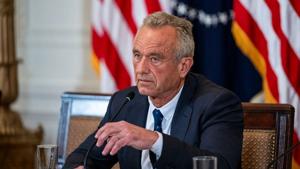
The U.S. Department of Health and Human Services’ action to bar “sex-rejecting” transgender procedures for minors has met with approval from groups that aim to protect children from harmful ideology, with some calling the move “long overdue,” stating that taxpayers should not be forced to pay for procedures that lack proven benefits.
President of family defense organization the American Principles Project Terry Schilling told The Center Square: “President [Donald] Trump and Secretary [Robert F.} Kennedy are providing long overdue protections to families across the country.”
“For too long, families have been left at the mercy of a medical establishment that seeks to disfigure vulnerable children for profit,” Schilling said.
Dr. Jay Richards, director of the DeVos Center for Human Flourishing and the William E. Simon senior research fellow at the Heritage Foundation, told The Center Square: “We’re delighted that Secretary Kennedy and HHS are taking such bold action to protect children who are struggling with the sexual aspects of their bodies.”
“The lack of evidence for benefits of sex-rejecting procedures (euphemistically called ‘gender affirming care’) is now well known,” Richards said. “And the recent HHS umbrella review underscores this fact.”
“Taxpayers should not have to pay for these ghoulish procedures, nor support hospitals that continue to perform them,” Richards said.
Richards said that Heritage hopes HHS’ move “will mean that fewer parents will be emotionally blackmailed by therapists or medical professionals [into] allowing their children to be subjected to these medical interventions, which can lead to permanent physical harm and sterilization.”
Chairman at Do No Harm – a medical group working to keep identity politics out of medicine – Dr. Stanley Goldfarb told The Center Square that “President Trump and HHS are taking another critical step to protect children from harmful gender ideology.”
“The proposed rule – banning hospitals from performing sex change interventions on minors as a condition for Medicare and Medicaid participation – is common sense, evidence-based, and morally imperative,” Goldfarb said.
“Many so-called gender clinics have already begun to close as the truth about the risks and long-term harms about these drugs and surgeries on minors have been exposed,” Goldfarb said.
“Now, hospitals that receive taxpayer funds from these federal programs must follow suit,” Goldfarb said, stating Do No Harm’s intention to “ensure American taxpayer dollars do not fund sex-change operations on minors.”
“This is just the beginning, but it marks a major step toward delivering a crippling blow to the child transgender industry,” Goldfarb said.
The Human Rights Campaign – an LGBTQ civil rights organization – sees the HHS’ move as “denying health care to this country,” as its president, Kelley Robinson, told The Center Square.
Kelley said that “these rules are proposals, not binding law,” and stated the Human Rights Campaign will fight alongside allies pushing back against the proposals.
“Families deserve the freedom to go to the doctor and get the care that they need and to have agency over the health and wellbeing of their children,” Robinson said. “These rules aim to completely cut off medically necessary care from children no matter where in this country they live.”
Do No Harm released a report this year that says the evidence behind sex trait modifications is “extremely weak,” and popular beliefs about “gender-affirming care” for minors have been debunked, such as the idea it improves quality of life and mental health or that it decreases suicide, The Center Square reported.
Additionally, the Heritage Foundation’s Richards told The Center Square that “the medical transition pathway from puberty blockers to surgery was always an experiment in search of confirming evidence.”
“As the HHS Report on pediatric gender medicine shows, the evidence now points strongly against this,” Richards said.
The American Principles Project (APP) told The Center Square it’s “important to note that the House passed the Protecting Children’s Innocence Act” this week, something that “would ban child sex changes nationwide.”
APP’s president Terry Schilling told The Center Square that “the American people gave Republicans a clear mandate in 2024 to end child mutilation.”
“Republicans in Congress and the White House are delivering on that promise while Democrats have been relentless in their defense of a multi-billion-dollar industry that preys on children,” Schilling said.
GBTQ advocate GLAAD did not respond to requests from The Center Square for comment.
This week, the U.S. Department of Health and Human Services (HHS) “unveiled a multi-pronged regulatory effort” that includes prohibiting surgical reassignment centers from receiving Medicaid and other funding as well as withdrawing Medicare and Medicaid funding from hospitals that perform sex-rejecting surgeries on minors, thereby ending such procedures, as The Center Square reported.
Colorado adopts first-of-its-kind water protections in U.S.

Colorado environmental leaders approved landmark water protections in reaction to a U.S. Supreme Court decision that they believed weakened regulations in Western states.
The bipartisan Water Quality Control Commission convened to pass stream and wetland protections that come as the Trump administration’s Environmental Protection Agency pushes for further federal deregulations.
“These rules create a robust program for protecting Colorado waters – including wildlife habitat, recreation opportunities, the role that waters play in flood mitigation, cleaning water and actually increasing water supplies,” said Joro Walker, senior attorney at Western Resource Advocates. She also represented wildlife hunting and angling groups in the WQCC process.
“All those values that Colorado waters bring to the citizens of the state are essentially being protected by this program,” Walker told The Center Square.
The WQCC meeting comes in the middle of a years-long scramble to address critical threats to the Colorado River’s supply. The river provides water to an estimated 40 million people between Colorado, California, Nevada, Arizona, New Mexico, Utah, Wyoming, Mexico and tribal nations. The water is used primarily for agriculture, as well as municipal needs.
The nine-person WQCC summit was organized by a 2024 state law, House Bill 1379, which passed the Arizona Senate unanimously with two excused votes and the House with 80% approval. The bipartisan mandate nearly fell apart after nearly 16 months of meetings and public hearings with industry leaders, water providers, farmers and environmental advocacy groups. Just days before the Dec. 8-10 meeting, industry leaders argued the environmentalists were trying to manipulate the law.
The new water regulations came in reaction to a landmark 2023 U.S. Supreme Court decision, Sackett v. EPA. It found that the 53-year-old Clean Water Act, foundational to water protections across the U.S., only applied to streams or wetlands that flowed year-round.
The specifically worded rule had huge impacts in Western states, such as Colorado, where most water flows seasonally, largely due to snowmelt.
“That understanding of the Clean Water Act promises to have a significantly profound effect on particularly western states, or let’s say states in the interior West, like Nevada,” said Walker.
Under Trump’s second term, the EPA has pushed to dissolve environmental regulations, putting Western water under further pressure. Walker told The Center Square that an estimated 97% of Colorado wetlands and 68% of stream miles will no longer be protected under the updated Clean Water Act.
But Colorado’s new state-level regulations would almost entirely cover what the federal government dropped.
“The Colorado legislature recognized how important it is to protect waters of the state,” Walker said.
Regulation exceptions for waters related to farming and industry, similar to existing regulations before the Sackett decision, will remain.
“By ‘protect,’ it does not mean that there’s no development allowed in these waters,” said Walker.
Despite the threat to states across the interior West, Walker said she was not too confident most states would follow Colorado’s lead.
“Some states won’t expand their permitting programs,” said Walker. “Some states don’t have the resources or the expertise to do that.”
New Mexico has begun the process to adopt similar state-level water regulations, with rule-making set for summer 2026.
“I hope that other states will follow suit when they recognize just how important this level of regulation is to the interests of its citizenry,” said Walker. “I mean, what kind of economic activity or quality of life can you have without water?”
While sometimes only seasonal, waterways connect. In Colorado, many find their way to the Colorado River.
“One of the things that this Colorado program is helping to secure is that the water that eventually makes its way into the Colorado River will be cleaner,” said Walker. She added later, “Wetlands also improve flows, not just water quality – but also water quantity. Colorado is doing its part to protect the Colorado River with this program.”
The Colorado River, as the region’s main water source, currently faces an historic 25-year drought that threatens many major Western cities. Roughly half of Denver’s water comes from Colorado River tributaries, according to Denver Water.
The drought has been characterized by low river flows – 30% lower than a century ago – and excessive water consumption by the seven states and Mexico that the river runs through.
One month prior to Colorado’s WQCC summit, the seven Colorado River states missed a federal deadline in November to submit a first draft plan for new, reduced water usage guidelines. The federal government has told the Colorado River parties they must now reach a preliminary decision by Feb. 14.
“We will find a way forward; long-term partners always do, but the path ahead may require us to evolve,” said Gene Shawcroft, president of the Colorado River Water Users Association.
Colorado River states met at the annual CRWUA conference this week in Las Vegas to work on the soon-approaching deadline. Again, no decision was made on the Colorado River’s future.
Epstein files redactions frustrate lawmakers
The U.S. Justice Department released thousands of documents on Friday related to the late convicted sex offender Jeffrey Epstein. However, many documents were heavily redacted, causing outspoken frustration and calls for impeachment proceedings among lawmakers.
The release follows passage of the Epstein Files Transparency Act by Congress in November requiring the Justice Department to make publicly available “in a searchable and downloadable format all unclassified records, documents, communications, and investigative materials” related to Epstein.
U.S. Rep. Ro Khanna, D-California and a co-sponsor of the Epstein Files Transparency Act, said the Department of Justice’s document release did not comply with his legislation. He called for the release of a draft indictment that implicates other powerful individuals associated with Epstein.
“The reality is, Pam Bondi has obfuscated for months,” Khanna said. “It is an incomplete release with too many redactions.”
Khanna said he and U.S. Rep. Thomas Massie R-Ky., another sponsor of the Epstein Files Transparency Act, are considering impeachments for individuals working at the Justice Department.
“It can be the impeachment of those at [the Justice Department], inherent contempt, or referring for prosecution those who are obstructing justice, we will work with the survivors to demand the full release of these files,” Khanna said.
While the law calls for a wide swath of documents to be released, it gives several notable exceptions. The attorney general is allowed to withhold or redact portions of records containing child sexual abuse material, personally identifiable information of victims, and documents that would interfere with active federal investigations or ongoing prosecutions.
President Donald Trump called for a probe into several top political figures and institutions before the Epstein Files Transparency Act was passed by Congress. He called for a probe into former President Bill Clinton, former Treasury secretary Larry Summers, Reid Hoffman and J.P. Morgan Chase.
It appears ongoing investigations, possibly including Trump’s probe, led to more redactions in the released files. Deputy Attorney General Todd Blanche said the full release of the files would be delayed until the end of the year.
The Justice Department said it included its own redactions in addition to information already redacted from the document.
“The redaction of victim names and other identifying information has been added by the Department prior to this production, as indicated by markings that read ‘DOJ Redaction,'” the DOJ’s website reads.
A 119-page grand jury document released with the public exposure of the Epstein files was entirely redacted. Additionally, six pages from documents provided by the FBI have no information, instead displaying “deleted page information.”
Massie said the DOJ’s document release “grossly fails” to “comply with both the spirit and letter” of the Epstein Files Transparency Act.
In a letter to Congress, Blanche said more than 1,200 people were identified as victims of Epstein. However, the names of these victims were redacted in compliance with the Epstein Files Transparency Act.
“In view of the Congressional deadline, all reasonable efforts have been made to review and redact personal information pertaining to victims, other private individuals, and protect sensitive materials from disclosure,” the Justice Department’s website reads.
Nine pharmaceutical companies agree to most-favored-nation pricing
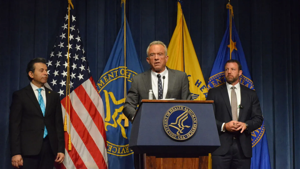
An additional nine of the world’s largest pharmaceutical companies have agreed to offer many of their most popular drugs at most-favored-nation pricing in the U.S.
This means that the U.S. will pay the lowest price for many prescription drugs among its economic peers. The initiative has been a major priority for President Donald Trump, according to top Health and Human Services officials, as he has sought to reduce prescription drug prices for Americans.
“We got a lot of calls from the president, and at one point in this negotiation, we just stopped answering our phones late at night because we couldn’t take it anymore,” said HHS Secretary Robert F. Kennedy, Jr.
The nine companies that joined the president and others from the Oval Office on Friday were the latest of a handful of pharmaceutical manufacturers that have done so over the past several months to announce similar deals with the administration. Fourteen of the 17 largest pharmaceutical companies in the world have now agreed to offer at least some of their drugs at most-favored-nation pricing in the U.S., according to Trump. Kennedy said it amounts to “95% of drugs” sold in the U.S.
For years, Americans have paid higher drug prices than their counterparts in other wealthy nations. Those higher prices help pharmaceutical companies fund their research and development, fueling innovation. Trump has argued that those companies have taken advantage of the U.S. and that America has essentially paid for innovation the whole world benefits from.
The companies present Friday were Amgen, Boehringer Ingelheim, Bristol Myers Squibb, Genentech (a part of Roche), Gilead Sciences, GSK, Novartis, Merck & Co. and Sanofi.
Congress leaves for holidays after zero progress on federal funding
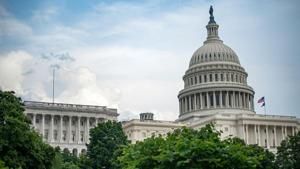
U.S. lawmakers have left town for the holidays without making any actionable progress on the long-delayed fiscal year 2026 government funding bills.
That means when Congress returns Jan. 6, lawmakers will have less than a month to pass the remaining nine out of 12 massive appropriations bills.
“The government runs out of funding on January 30th,” House Appropriations Committee Ranking Member Rosa DeLauro, D-Conn., warned Friday. “There is no plan to meet the January 30th deadline … Time is running out.”
Most of the delay since November has stemmed from a few Republican holdouts haggling over earmarks with head appropriators and chamber leaders. Senate Majority Leader John Thune, R-S.D., finally secured support for a five-bill minibus.
The bipartisan minibus includes fiscal year 2026 funding for federal agencies that handle Transportation and Housing and Urban Development; Defense; Labor and Health and Human Services; Commerce, and Justice, Science; and Interior.
Thune was unable to bring it to the floor for a vote Thursday, however, because two Democrats held up the package.
“I am disappointed that we will not be moving to our second package of appropriations bills tonight,” Thune told lawmakers. “Republicans were ready to go. But unfortunately, my Democrat colleagues are not there yet.”
Thune added that he “remain[s] committed to funding the government through the regular order process,” when Congress reconvenes.
But given the incredibly tight deadline and lawmakers’ strong aversion to another government shutdown, lawmakers likely will resort yet again to passing a Continuing Resolutions for at least some federal agencies.
Most federal government agencies are still running off of appropriations levels from fiscal year 2024. Congress never passed a real budget in fiscal year 2025, instead punting forward the shutdown deadline via three consecutive CRs.
The government then shut down Oct. 1, when Democrats refused to vote for a fourth CR due to Republicans’ refusal to extend the expiring enhanced Obamacare subsidies.
After a record long 43-day shutdown, enough Democrats voted to reopen the government by passing a CR. Congress also passed a three-bill minibus that same day.
EXCLUSIVE: New House committee report highlights increasing terrorism threat in U.S.

The U.S. House Committee on Homeland Security has released an updated report highlighting terrorism threats to Americans.
It did so after holding a hearing on Tuesday during which Director of the National Counterterrorism Center Joe Kent testified that the NCTC had identified at least 18,000 known or suspected terrorists who were released into the U.S. during the Biden administration, The Center Square reported. The NCTC has also added roughly 35,000 narco-terrorists to the federal Terrorist Screening Dataset since he’s been in office.
The unprecedented 18,000 KSTs exclude the 6,525 KSTs the NCTC helped prevent from entering the country as of October, The Center Square reported.
The committee’s “Terror Threat Snapshot” highlights recent examples of terrorist acts that have occurred in the U.S. over the past six months. It also notes that more than 60 cases were reported between April 2021 and December 2025 related to individuals linked to or inspired by foreign terrorist organizations. This includes those who’ve provided material support to ISIS, Hezbollah and al Queda, who received military level training from Hezbollah and al Queda, and who claimed to commit attacks because they were inspired by foreign terrorist organizations.
It cites terrorist cases that have been prosecuted in at least 25 states.
Examples of recent terrorist attacks include two National Guard soldiers from Iowa and an interpreter killed by an ISIS gunman in Syria and Afghan nationals released into the U.S. through a failed Biden administration parole program.
Afghans continue to be arrested for committing crimes in the U.S. Recent examples include three Afghan men charged in one week with terrorism-related crimes. One shot two National Guard members in Washington, D.C., killing one; another was apprehended by Texas Department of Public Safety officers in Fort Worth accused of plotting a 9/11 style terrorist attack; another was arrested in Virginia accused of supporting ISIS.
Last month, three Muslim men were arrested in Dearborn, Michigan, charged with conspiring to provide material support to ISIS and possessing firearms to commit a terrorist act on behalf of ISIS. The FBI also arrested two teenagers in New Jersey last month for their role in the alleged plot, the report notes.
In October, a Palestinian man was arrested in Lafayette, Louisiana, for his alleged role in the Oct. 7, 2023, Hamas terrorist attack against Israel. He’s a member of a Palestinian National Resistance Brigade, known as the Martyr Umar al-Qasim Forces, the Department of Justice said. He entered the U.S. on Sept. 12, 2024, providing “false information in his U.S. visa application relating to his involvement with a paramilitary organization, connection to Hamas, participation in a terrorist attack, and military training,” the Department of Homeland Security said. Under the Trump administration, a DOJ Joint Task Force found him and arrested him.
In September, a Pakistani man was sentenced to nine years in prison for attempting to provide material support to ISIS, including planning to attack New Yorkers on pedestrian bridges in Queens.
Also in September, two Muslim men were arrested in Salt Lake City, charged with aggravated arson, threat of terrorism and possessing weapons of mass destruction, in connection to an attempt to blow up a Fox 13 vehicle, which failed.
In June, an Afghan national living in Oklahoma City pleaded guilty to two terrorism offenses, including providing material support to ISIS and receiving firearms and ammunition to commit an Election Day terrorist attack on behalf of ISIS.
“Twenty-four years after 9/11, what we heard from Director [of the National Counterterrorism Center Joseph] Kent in our annual Worldwide Threats hearing last week should disturb every American,” Committee Chairman Andrew Garbarino, R-New York, said. He pointed to Biden administration vetting failures, open-border policies and the deadly withdrawal of troops from Afghanistan, as well as the Oct. 7 Hamas attacks for exacerbating terrorism threats.
Under the Biden administration, Islamic terrorist incidents increased in the U.S. and worldwide with a majority of Americans polled expressing concerns about terrorism, The Center Square reported.
The response is a “whole-of-government approach,” including continued congressional oversight and legislative action, Garbarino said. “Congress has an immense responsibility to ensure our local, state, and federal agencies have the resources and tools to succeed in this no-fail mission.”
The report also includes examples of domestic terrorism, including Americans who attacked U.S. Immigration and Customs Enforcement officers, increasing antisemitic and terrorist attacks worldwide.