National News
WATCH: Trump says D.C. ‘betrayals melted steel jobs away’
Six months ago, the mood in the Pittsburgh region was somber: after a year of waffling, former President Joe Biden dealt the final blow to U.S. Steel’s lucrative merger with a Japanese competitor, Nippon Steel.
After blocking the $14 billion deal over national security concerns, namely unfair trade practices on the foreign market, state and federal lawmakers from Pennsylvania had only one hope left: a change of heart from newly re-elected President Donald Trump.
Long opposed to the merger, the 47th president said Friday that Nippon agreed to make the largest investment in steel in history, while keeping the company under U.S. control.
It’s a triumphant moment for thousands of steel workers who fretted about the future of their jobs since 2023. In the intervening 18 months, labor unions and domestic competitors ratcheted up their own attempts to thwart the Nippon deal, alleging that the company would relocate Arkansas to avoid collective bargaining.
Late last year, U.S. Steel and Nippon filed joint lawsuits that claimed political influence tipped the scales against the merger.
In his comments Friday, Trump referenced decades of federal policy that contributed to the industry’s decline.
WATCH: Trump announces 50% tariff on imported steel

Imported steel and aluminum tariffs will double to 50% on Wednesday, says President Donald Trump.
He made the announcement just at Irvin Works, a U.S. Steel plant in West Mifflin, about 11 miles southeast of Pittsburgh, while celebrating the iconic company’s merger with Japanese-owned Nippon Steel.
CA legislators reject bill closing loophole on violent offenders
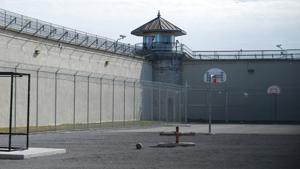
A legislative committee has rejected a bipartisan bill to end a loophole in California’s mental health diversion program that allows mentally ill individuals charged with domestic violence, human trafficking or assault of a child under age 8 resulting in the child’s death, to seek mental health treatment instead of facing criminal charges and prison time.
Assembly Bill 433, a bipartisan bill authored by Assemblywoman Maggy Krell, D-Sacramento, failed the Assembly Public Safety Committee when only Assemblymen Juan Alanis, R-Modesto, and Tom Lackey, R-Palmdale, voted to advance the bill.
Sacramento County Sheriff Jim Cooper, a former Democratic Assemblyman, testified in support of the bill. He shared a real-world situation in which the current diversion system resulted in no criminal record and no prison time for the killer of a child.
“Mark was taking care of his 1-year-old daughter, and at the same time, he got blackout drunk. He admitted to drinking a pint of vodka and several beers. Under his care, his baby girl suffered a fractured skull, broken ribs and a brain hemorrhage,” said Cooper. “She died of the horrific injuries inflicted by her father.”
“After he was arrested, Mark claimed he was too drunk to remember what he did, and prosecutors couldn’t prove his intent to kill. So, instead of murder, he faced only felony child abuse charges,” continued Cooper. “This made Mark eligible for mental health diversion instead of prison, which he was granted.”
As a result, Mark’s punishment was to “take a few virtual classes,” after which he “walked away with a clean slate,” Cooper said.
“The judge congratulated him, and the courtroom clapped for him,” the sheriff said. “Today, Mark has no criminal record. Mark is considered the victim for not remembering how he brutally killed his baby girl.”
Krell, while sympathetic to the apparent need for mental health diversions for some criminals, explained the current exemptions allow some more serious crimes to go unpunished.
“While there are certain cases where pretrial mental health diversion would be an appropriate alternative to criminal sentencing, this law fails to provide justice for victims who have been trafficked, abused as children, and individuals who have sustained great bodily injury,” wrote Krell in support of her bill to close the law’s loophole. “As applied to offenders who are dangerous and seek to continue to abuse their victims, this law creates a major public safety gap.”
The Assembly Public Safety Committee’s analysis of the bill noted the results of a 2019 study finding “more than 30% of the state’s prison and 23% of the jail populations have a mental illness,” and stated that “Promoting treatment over incarceration has shown positive results in reducing recidivism.”
While the bill was backed by law enforcement groups and anti-child-abuse advocates, the bill was opposed by a broad coalition including the American Civil Liberties Union and Smart Justice California — a project of George Soros-backed Tides Advocacy.
“AB 443 seeks to limit the discretion of judges to apply mental health diversion to candidates that are currently eligible,” wrote Smart Justice California in opposition. “Current law never requires courts to grant diversion, it merely gives the court the ability, where appropriate, to use its informed discretion to divert mentally disordered people out of the criminal system and into the mental health treatment system.”
After the bill’s failure, Cooper announced he is hosting an event June 4 in Sacramento to discuss the state’s mental health diversion program and its impact on the state.
Immigration experts: Tech workforce will not hurt from Trump immigration policies

A law firm specializing in injury and immigration matters is concerned about the effect of unspecified “Trump immigration laws” on innovation in technology, but immigration experts say the main workers that will be affected are in the U.S. illegally or brought in to be paid less than citizens – these workers don’t “drive innovation.”
In a study by Brooks Law Firm that details Trump immigration laws’ effect on various U.S. industries, it is stated that the information industry will be the most affected as it employs 416,000 “immigrant workers.”
For perspective, immigrants make up 1.4% of the information industry, according to the study.
Brooks Law Firm is based out of Massachusetts and focuses on injury and immigration matters.
The firm’s study additionally states that education and health services comes in at second most impacted and professional business services at third with 183,500 and 157,600 immigrant workers respectively potentially leaving.
In a statement obtained by The Center Square, founding attorney of Brooks Law Firm Arinda Brooks said of the study, “the rapid reshaping of America’s tech workforce through immigration policy changes threatens to undermine decades of competitive advantage in global innovation markets.”
“Silicon Valley’s success has been built on its ability to attract world-class talent, with immigrants representing more than 57% of STEM workers in the Bay Area and contributing disproportionately to patent filings and venture formation,” Brooks said.
“Without thoughtful policy recalibration that balances security concerns with talent acquisition, the U.S. risks ceding technological leadership to competing innovation hubs in Canada, Europe, and Asia,” Brooks said.
Those in immigration studies disagree with Brooks’ statements, however.
To start with, some of those the Brooks Law Firm’s report calls immigrants are actually illegal aliens, director of policy studies at the Center for Immigration Studies Jessica Vaughan told The Center Square.
“No one is talking about eliminating or reducing access to global talent in any field,” Vaughan told The Center Square. “What the Trump administration is doing is addressing illegal immigration, and addressing flaws in our guestworker programs that allow companies to replace U.S. workers with lower-paid foreign guest workers.”
“According to government data, these visa workers are not the cream of the crop or especially talented; most are ordinary, often entry-level or trainee workers who are brought in by staffing companies to reduce labor costs – not to drive innovation,” Vaughan said.
In a similar vein, director of research at the Center for Immigration Studies Steven Camarota told the Center Square that “Silicon Valley was created largely with a US-born workforce in the 1960s to the early 80s, which…was a period of relatively low immigration in American history.”
Camarota said that “allowing a huge number of such workers [into the nation] certainly reduces the incentives for business to pressure policy makers and the education system to produce more workers with these skills.”
Vaughan said she has not “observed any proposed changes to US immigration policy that would put American leadership in technology innovation at risk.”
“U.S. companies have access to top global talent, and these individuals are attracted to our country by its innovative and entrepreneurial culture and opportunities,” Vaughan said.
Brooks Law Firm does not specify which new Trump immigration laws it refers to in its report other than citing in its data – “potential Trump-era immigration enforcement policies” – and did not respond to a request for comment from The Center Square.
Vaughan sees Trump’s immigration policies as for the benefit and improvement of the nation.
“The first improvement is to make sure that the rules are followed and that the public can have confidence that our legal immigration system has integrity,” Vaughan said.
“In addition, Trump is ensuring that our visa programs serve American interests, do not disadvantage American citizens, and bring in immigrants who will be self-sufficient and hopefully become contributing Americans,” Vaughan said.
“That approach ensures that immigration will not be a drag on our economy or a threat to our security,” Vaughan said.
Vaughan also told The Center Square that “Americans should be skeptical of claims that we have a labor shortage or a dearth of talent in technology fields.”
“If we did, then salaries would be increasing and workers could be very mobile,” Vaughan said. “There is no evidence of this.”
“Instead we have witnessed the dumbing down of certain aspects of tech work, as employers have been able to substitute visa workers brought in by staffing companies for American workers,” Vaughan said.
Trump announces 50% tariff on imported steel
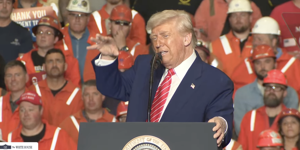
President Donald Trump announced higher tariffs on imported steel Friday.
The president made the announcement during a visit to Pittsburgh.
“That means no one is going to be able to steal your industry,” Trump said. “At 25%, they can sort of get over that fence. At 50%, they can no longer get over the fence.”
In February, Trump announced 25% tariffs on steel and aluminum imports. He doubled that on Friday to 50%.
Ruling awaited in South Carolina climate lawsuit

No ruling from a South Carolina judge was rendered Friday at the end of a two-day hearing in a climate change lawsuit brought by the city of Charleston against 24 oil and gas companies.
The oil companies want a dismissal.
In the lawsuit, Charleston seeks unspecified monetary damages from the oil and gas companies, claiming that they knew their products contributed to climate change but didn’t disclose that to the public.
Judge Roger Young asked lawyers in the case to submit draft orders to him by July 1.
“I hear a lot of arguments,” the judge said. “Sometimes I don’t find oral arguments to be helpful but this was extraordinarily helpful.”
Attorneys for Charleston argued Thursday that the oil and gas companies knew that their products contributed to climate change but kept that from the public in order to continue reaping profits from the sales.
“When I get into a car, or a train or a bus or a plane, we don’t really care what the energy source is that leads to the transportation,” one of the attorneys for Charleston, Matt Edling, told the judge. “We just care that it gets us from point A to point B and that if we’re paying for it, that’s it’s the most economic choice that is available to us.”
The oil companies intentionally created a market where energy choices were artificially limited to fossil fuels, he added.
“That’s the problem,” he said. “You guys, together, you knew all of this and you made herculean efforts to convince the world that it wasn’t a problem. You saw that it could be a calamitous problem, have benefit from it economically to extraordinary disadvantage of cities like Charleston.”
However, attorneys for the oil companies pointed out that the city of Charleston still uses fossil fuels today and that there are few affordable alternatives yet on the market.
They also pointed out that the oil companies have invested heavily in renewable energy and that one, BP, adopted a slogan, “Beyond Petroleum,” and began using the color green in its corporate logo.
“The city’s theory is that these actions are part of an effort to mislead consumers into believing that BP is becoming a sustainable energy company and that this effort is somehow to convince consumers to want to buy BP’s fossil fuel products,” BP attorney Merritt Abney told the judge. “That theory obviously makes no sense.”
A similar case in Bucks County, Pennsylvania, was dismissed earlier this month
WATCH: Trump, Musk hold press conference amid DOGE exit
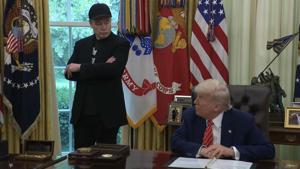
President Donald Trump was joined in the Oval Office Friday by top advisor Elon Musk, just two days after Musk announced his formal departure from the administration.
With Musk at his shoulder, Trump announced that the Tesla CEO is “really not leaving” and that he will likely “be back and forth.”
As the top staffer in the Department of Government Efficiency, Musk has been a powerful force in implementing Trump’s vow to reduce waste, fraud, and abuse in the federal government.
“Elon’s service to America has been without comparison in modern history,” Trump said.
However, as a special government employee, Musk’s limited 130-day tenure came to an end this week.
“I expect to remain a friend and an advisor and certainly, if there’s anything the president wants me to do, I’m at the president’s service,” Musk said.
Under Musk’s ambitious leadership, DOGE committed to finding $1 trillion in cuts to the federal budget. While DOGE’s cuts currently measure much lower than this goal, Musk reiterated that he still plans to meet the targeted $1 trillion “over time.”
“It’s just a lot of work going through the vast expenses of the federal government and just really asking questions,” Musk said.
Musk’s departure from the Trump administration has been marked by disagreements between himself and the president over the “One Big Beautiful Bill Act.” But the tone of the news conference gave the air of an amicable parting.
Trump presented Musk with a large gold key as a symbolic farewell gift. “As a presentation from our country. Thank you, Elon. Take care of yourself,” Trump said.
Trump was also asked about the debt ceiling and expressed interest in eliminating it, departing from his position during the Biden administration. Trump said that Sen. Elizabeth Warren, D-Mass., “happened to be right” about the need to cancel the debt limit, noting his differing viewpoint from most Republicans on the matter.
Watchdogs: New Montana law restricting foreign money in elections insufficient

Montana recently became the sixth state this year to pass a ban on foreign spending on ballot measures. Watchdog organizations, however, say the state’s new law is inadequate.
Montana’s new law bars non-U.S. citizens, foreign governments, foreign political parties and foreign-owned entities from contributing to campaigns surrounding ballot measures. The legislation passed mostly along party lines, with near-unanimous Republican support and limited Democratic backing.
The new law, however, carves out an exemption for U.S.-based companies with foreign ownership if they pay state taxes and use only domestically generated funds from citizens or permanent residents.
Additionally, the measure doesn’t stop American political advocacy groups that receive money from foreigners from taking sides in ballot questions, watchdogs say.
“The problem that Montana failed to address is that you can have these intermediary groups that act as essentially money launderers, like the Sixteen Thirty Fund, raising enormous sums from foreign nationals, while simultaneously spending money on ballot measures,” Honest Elections Project executive director Jason Snead told The Center Square in a Zoom interview. “That’s why some of the measures we’ve seen passed this year, like in Missouri, for instance, require groups that spend in support of or against ballot measures have to certify that they have not taken above a certain threshold of foreign money over a four-year period. And the reason for that is to avoid this money laundering type of activity. That’s what’s missing from the Montana law.”
The Sixteen Thirty Fund, an American progressive political advocacy organization, has received at least $280 million from Swiss billionaire Hansjörg Wyss since 2016, according to the New York Post.
The organization, for example, has actively participated in Montana’s politics. It spent over $3 million supporting a ballot initiative in Montana last year that made abortion a constitutionally protected right, according to Ballotpedia.
The Sixteen Thirty Fund has spent over $130 million on ballot questions in 25 U.S. states in the past decade, according to RealClearPolicy.
Since the Sixteen Thirty Fund is an American-based company that Wyss donates to – and doesn’t tell the organization how to spend its money – Montana’s new law won’t prevent it from spending on the state’s ballot questions.
Americans for Public Trust executive director Caitlin Sutherland said Montana should look to other states for model legislation.
“Yes, absolutely,” she told The Center Square in a Zoom interview. “Starting with Ohio last year, we have seen that foreign funding bans have really swept state houses across the country. They’re all slightly similar with the goal of banning foreign money – direct and indirect – on ballot issues. We saw that Wyoming passed a very strong ban, as did Kansas, Arkansas, Kentucky and Indiana all this year.”
Once Ohio’s ban on foreign funding of ballot initiatives took effect last year, the Sixteen Thirty Fund stopped spending on The Buckeye State’s ballot questions and turned its attention elsewhere, as RealClearPolitics reports.
Heritage Action for America Montana State Director Kristen Christensen said her group wanted Gov. Greg Gianforte to veto the measure
“Montana HB 818 was intended to safeguard Montana elections but unfortunately stopped short in protecting the integrity of elections in the Treasure State,” Christensen said. “Heritage Action urged Governor Gianforte to veto this weak legislation. It leaves loopholes open for foreign actors to pour millions of dollars into Montana’s electoral process, and leaves Montanans’ voices vulnerable to being drowned out by illegitimate and foreign influence.”
Snead also worries that foreign adversaries, like Russia and China, may one day capitalize on this campaign finance loophole and fund American ballot initiatives.
“Any loopholes that exist in our current laws or that we create with new laws can and probably will be exploited by adversarial foreign powers, like China, like Russia, that clearly mean the U.S. ill,” he said. “That’s why we should never risk playing with fire by allowing foreign powers to meddle in our politics. We need to build the protections now and make sure that money’s out of our state politics forever.”
Exclusive: Former USAID executive disputes reported impact of foreign aid cuts
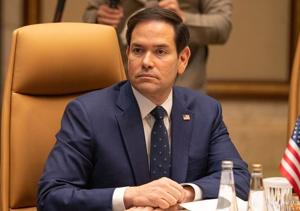
A former executive at the U.S. Agency for International Development is disputing claims by an international human rights organization that the Trump administration’s foreign aid cuts have caused mass suffering.
The administration’s cutting of 90% of USAID foreign aid contracts has sparked debate over whether American tax dollars have funded global humanitarian policies, or a giant organization rife with corruption and wasteful spending. A new report from Amnesty International suggests the cuts have threatened, stalled or shuttered life-saving programs across the world.
However, Max Primorac, who worked in the foreign aid sector for over 30 years, told The Center Square that “there’s a lot of problems” in the foreign aid sector and said claims that thousands are dying “have no credibility.” Primorac launched the Bureau for Humanitarian Assistance while at USAID and later served as its acting COO.
“It’s incredible to blame America for millions of people dying. Number one, they [Amnesty International] don’t have any documentation, any proof. And second, the primary responsibility of providing for citizens overseas are their own governments, not the American taxpayer,” Primorac said.
According to the report, dozens of impoverished and conflict-ridden countries have seen multiple aid services cut, creating “a life-threatening vacuum” that other governments and aid organizations “are not realistically able to fill in the immediate term,” according to Amanda Klasing of Amnesty International USA.
Anonymous sources interviewed by the organization said programs and clinics in Guatemala, Haiti, Afghanistan and Yemen that support sexual and gender-based violence survivors have been impacted by the cuts.
The cuts have also purportedly interrupted emergency nutritional support in Syria, Yemen, Haiti and South Sudan, as well as HIV prevention and treatment programs in Haiti and across east and southern Africa.
Refugee and migrant services in Thailand, Myanmar, Costa Rica, Mexico and other countries have also been partially suspended or scaled back.
“It is a false choice that the U.S. government has to choose between addressing the economic needs of Americans or the rising cost of living here in the U.S. and development and humanitarian assistance abroad,” Klasing said, noting how foreign aid represented about 1% of the total U.S. budget before the aid cuts.
“The U.S. has a global responsibility and interest in providing support to the most marginalized,” she added.
But Primorac dubbed the Amnesty International report “a progressive political hit job” on the Trump administration.
“The fundamental problem that we have is that the aid sector, number one, is politically very radical. Many of these organizations were supporting Hamas. And in terms of humanitarian assistance in the countries that they talk about, I know these countries very well — Afghanistan, Yemen, Syria, Gaza — and we have a very big problem in terms of diversion of aid to bad actors,” he said.
As The Center Square previously reported, Primorac has testified before Congress regarding corruption, waste and mismanagement he witnessed in the foreign aid system, including lobbying efforts to tank legislation that would have increased transparency in USAID spending.
USAID has come under fire for its involvement in coronavirus research in Wuhan, China, in 2019, its alleged funding of gender ideology initiatives in dozens of countries, and its sponsoring of armed terrorist groups, among other things.
“It is a self-interested foreign aid industrial complex that has no credibility,” Primorac told The Center Square. “Instead of using taxpayer money to help alleviate poverty, what they have done instead is create a permanent global welfare program that doesn’t help these people, that keeps them poor, keeps them hungry. This aid dependency has destroyed the ability of these countries to get off aid.”
Primorac called the report a “missed opportunity” to discuss how the U.S. can better administer aid to needy countries given the increasing amounts of foreign aid and “no progress.”
“These are the true ways in which to generate wealth and fight poverty in these countries, not welfare programs,” he said. “Under the leadership of Secretary Rubio, the United States has a unique opportunity to move away from these traditional welfare-based programs to promoting more trade and investments.”
Deporations of nearly 500,000 allowed to proceed

Deportation of nearly 500,000 people illegally in the country was cleared by the U.S. Supreme Court on Friday, handing a victory to the Trump administration.
The decision puts a hold on a lower court’s decision to allow people from Cuba, Haiti, Nicaragua and Venezuela to remain in the U.S. for two years through a Biden-era decision. The case will continue to play out in lower courts.
Judge Indira Talwani of the U.S. District Court for the District of Massachusetts blocked an executive order from President Donald Trump instructing Homeland Security Secretary Kristi Noem to “terminate all categorical parole programs,” which included the CHNV (Cuba, Haiti, Nicaragua and Venezuela parole program).
In the ruling from the Supreme Court, the court said that “parole is discretionary by statute.”
“DHS awards the parole status through a competitive and detailed application process that involves a rigorous, individualized assessment of the applicant’s circumstances,” the justices said.
In the complaint filed in the Boston court detailed in the Supreme Court’s ruling, Talwani said Noem “acted arbitrarily and capriciously, contrary to law, and in excess of her legal authority by prematurely terminating their parole.”
The court did not sign the order; however, Justices Sonia Sotomayor and Ketanji Brown Jackson dissented from the ruling.
The lawsuits were filed after the Trump administration terminated the Biden administration-era CHNV Parole program that was used to facilitate the illegal entry of more than 531,000 citizens from Cuba, Haiti, Nicaragua and Venezuela into the U.S., The Center Square exclusively reported.
Under the Biden administration, more than three million illegally entered the U.S. or attempted illegal entry from CHNV countries, The Center Square exclusively reported. They totaled more than the population of 20 individual U.S. states.
The ruling comes after the Supreme Court allowed the Trump administration to terminate temporary protected status for roughly 600,000 Venezuelans, The Center Square reported.