National News
Trump says no more ‘Mr. Nice Guy’ after short-term trade deal with China

President Donald Trump accused China on Friday of breaking a short-term trade deal with the U.S.
Earlier this month, the two countries reached a 90-day deal to reduce high tariffs on trade between the world’s two largest economies. The global superpowers agreed to slash tariffs that had been so high that nearly all trade between the two nations stopped. The U.S. reduced its tariffs on China from 145% to 30% while the two nations continued to talk. China cut its levies on U.S. imports from 125% to 10%.
“China, perhaps not surprisingly to some, HAS TOTALLY VIOLATED ITS AGREEMENT WITH US. So much for being Mr. NICE GUY!” Trump wrote on Truth Social.
U.S. markets retreated on the news in what has been a challenging month for investors.
Trump also lashed out at the three judges on the U.S. Court of International Trade who unanimously ruled on Wednesday that Congress did not give tariff authority to the president under the International Emergency Economic Powers Act of 1977. That court voided most of Trump’s tariffs, but the administration appealed the decision to a higher court, which paused the Court of International Trade ruling for now.
“Where do these initial three Judges come from? How is it possible for them to have potentially done such damage to the United States of America?” Trump wrote on Truth Social. “Is it purely a hatred of ‘TRUMP?’ What other reason could it be?”
The Court of International Trade said the International Emergency Economic Powers Act of 1977 didn’t give Trump “unbounded” authority to set tariffs. The ruling was a setback for Trump’s foreign and domestic policy agenda, which is underpinned by tariffs.
“Worldwide and Retaliatory Tariffs do not comply with the limitations Congress imposed upon the President’s power to respond to balance-of-payments deficits,” the Court of International Trade judges wrote. “The President’s assertion of tariff-making authority in the instant case, unbounded as it is by any limitation in duration or scope, exceeds any tariff authority delegated to the President under IEEPA.”
On Thursday, the Trump administration filed an emergency motion asking for a stay.
“The injunction threatens to unwind months of foreign policy decision-making and sensitive diplomatic negotiations, at the expense of the Nation’s economic well-being and national security,” DOJ attorneys wrote.
The appeals court granted the stay Thursday afternoon.
“The ruling by the U.S. Court of International Trade is so wrong, and so political!” Trump wrote. “Hopefully, the Supreme Court will reverse this horrible, Country threatening decision, QUICKLY and DECISIVELY. Backroom ‘hustlers’ must not be allowed to destroy our Nation!”
Trump made it clear he didn’t want to work with Congress on tariffs.
“The horrific decision stated that I would have to get the approval of Congress for these Tariffs. In other words, hundreds of politicians would sit around D.C. for weeks, and even months, trying to come to a conclusion as to what to charge other Countries that are treating us unfairly,” Trump wrote. “If allowed to stand, this would completely destroy Presidential Power – The Presidency would never be the same!”
Congress formally questions Nashville mayor about ICE-related order
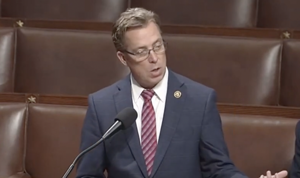
Two committees in the U.S. House of Representatives want more information on an executive order issued by Nashville Mayor Freddie O’Connell, which they say could “chill” the enforcement of federal immigration law.
O’Connell’s order required city of Nashville employees to report any encounters with federal immigration authorities within one business day. It was amended to include all departments after an operation conducted by U.S. Immigration and Customs Enforcement and the Tennessee Highway Patrol in early May netted 196 arrests. Some of those arrested had extensive criminal histories and some had removal orders, according to a release from ICE.
The joint letter from the Judiciary and Homeland Security committees and the Congressional Counter-Terrorism Caucus requests all documents related to the order since May 1, documents referring to the ICE operation and any documents and communications between Metro Nashville employees and others.
O’Connell has until June 12 at 5 p.m. to respond, according to the letter posted on social media by U.S. Rep. Andy Ogles, R-Tenn., chairman of the Congressional Counter-Terrorism Caucus.
“Instead of defending our state, Mayor Freddie O’Connell is sabotaging it,” Ogles said. “He’s weaponized his office to dox and surveil federal agents who are trying to stop violent criminals – and worse, he’s embraced those criminals by creating a taxpayer-funded program to aid illegal aliens. The recipients of these funds are untraceable. The purpose is crystal clear: help illegal foreigners evade the law.”
Nashville officials are publishing all encounters with immigration officers on a website. The names of some officers were listed on the site, Ogles said. The names are now redacted, according to a report from WSMV.
The Center Square was unsuccessful prior to publication of getting comment from the mayor’s office.
O’Connell also announced the “Belonging Fund” on May 5, described as a “new effort to support immigrants in Nashville during moments of crisis.” It is a partnership between the Community Foundation of Middle Tennessee and the Metropolitan Government of Nashville and Davidson County, according to a release.
Metro Council Member David Benton called for an audit of the fund at a Monday news conference with Ogles.
Trump admin identifies ‘sanctuary jurisdictions’ in 35 states, DC

(The Center Square) –The U.S. Department of Homeland Security has published a list of “sanctuary jurisdictions” in 35 states and the District of Columbia.
Illinois has the greatest number of counties listed of any state of 96, just a few shy of its 102 counties. All but one of Massachusetts’ 14 counties are listed. Washington is not far behind with 36 out of its 39 counties listed.
Fifteen states aren’t on the list, nearly all are run by Republicans: Alabama, Arizona, Arkansas, Florida, Iowa, Mississippi, Missouri, Montana, Oklahoma, South Carolina, South Dakota, Texas, Utah, West Virginia and Wyoming.
This is the first time DHS has published a sanctuary jurisdiction list. The list was published in accordance with an executive order President Donald Trump issued last month, “Protecting American Communities from Criminal Aliens,” The Center Square reported.
In it, Trump directs the attorney general and Homeland Security secretary to identify sanctuary jurisdictions that defy or obstruct federal immigration enforcement and are engaging in “a lawless insurrection against the supremacy of Federal law and the Federal Government’s obligation to defend the territorial sovereignty of the United States.”
“The prior administration allowed unchecked millions of aliens to illegally enter the United States,” the order states, which created “public safety and national security risks,” exacerbated by cartel, transnational criminal organizations and foreign terrorist organizations operating in the U.S. “who intend to harm … the American people.”
Because Trump declared the U.S. was under invasion, he said the federal government must “take measures to fulfill its obligation to the States.” He’s referring to the “Guarantee Clause,” (Article IV, Section 4) of the Constitution, which states the federal government “shall protect each state against invasion.” Fifty-five Texas counties cited it when they were the only ones in America that declared an invasion during the Biden Administration, The Center Square exclusively reported.
Because some state and local officials continue “to violate, obstruct, and defy the enforcement of Federal immigration laws,” committing “lawless insurrection against the supremacy of Federal law and the Federal Government’s obligation to defend the territorial sovereignty of the United States,” the president said he is taking action.
Trump’s order also says these jurisdictions are creating national security risks, violating federal criminal laws, including obstructing justice, “unlawfully harboring or hiring illegal aliens,” conspiring against the U.S., potentially violating the Racketeer Influenced and Corrupt Organizations Act, among others.
“Sanctuary cities protect dangerous criminal aliens from facing consequences and put law enforcement in peril,” DHS said. Each jurisdiction is being notified of non-compliance, instructed to comply, or face legal action and withholding of federal funds.
The initial list includes the District of Columbia and 35 states:
Alaska: AnchorageCalifornia: self-identifies as a sanctuary state; 48 of its 58 counties; 63 citiesColorado: self-identifies as a sanctuary state; 41 of its 64 counties; 14 citiesConnecticut: self-identifies as a sanctuary state; 6 citiesDelaware: self-identifies as a sanctuary state; New Castle County; Camden and NewarkGeorgia: four counties, Athens and AtlantaHawaii: HonoluluIdaho: BoiseIllinois: self-identifies as a sanctuary state; 96 of its 102 counties; 7 citiesIndiana: Monroe CountyKansas: Lawrence County, Douglas CountyKentucky: four counties, LouisvilleLouisiana: New Orleans/Orleans ParishMaine: two counties, PortlandMaryland: self-identifies as a sanctuary state; 8 counties; 10 cities, including Annapolis, where the U.S. Naval Academy is basedMassachusetts self-identifies as a sanctuary state; 13 counties; 12 cities. The list is missing Natick, whose officials voted for sanctuary status after an Iranian national was arrested there for his alleged ties to a terrorist attack that killed three U.S. service members, The Center Square reported.Michigan; six counties; Ann Arbor and East LansingMinnesota: self-identifies as a sanctuary state; 20 counties; Minneapolis and St. PaulNebraska: 10 countiesNevada: Las Vegas CityNew Hampshire: Hanover, LebanonNew Jersey: self-identifies as a sanctuary state; three counties; 18 citiesNew Mexico: 23 out of 33 counties; Albuquerque and Santa FeNew York: self-identifies as a sanctuary state; 15 counties; 12 citiesNorth Carolina: five countiesNorth Dakota: seven countiesOhio: three counties; Cincinnati and ColumbusOregon: self-identifies as a sanctuary state; 15 counties; four citiesPennsylvania: 11 counties; five citiesRhode Island: self-identifies as a sanctuary state; Central Falls and ProvidenceTennessee: Shelby County and Nashville, whose mayor is being investigated by Congress, The Center Square reported.Vermont: self-identifies as a sanctuary state; Burlington, Montpelier and WinooskiVirginia: 20 counties; 13 cities, including the state’s capital of RichmondWashington: self-identifies as a sanctuary state; 36 of 39 counties and five citiesWisconsin: two counties; Madison and Milwaukee
While Texas is not on the list, some county commissioners and some in law enforcement have expressed opposition to working with federal immigration authorities in Democratic strongholds, including in Houston and Harris County, The Center Square reported. The Office of the Texas Attorney General also provides millions of dollars in grants to nonprofits providing legal assistance to illegal foreign nationals fighting deportation through a legal defense fund. The Texas legislature allocates the funds as part of the AOG’s budget request.
Everyday Economics: Stagflationary policy – the economy at a crossroad
The U.S. economy finds itself at a curious intersection with mounting uncertainty as we navigate through the second quarter of 2025. Recent data shows encouraging signs of disinflation, but both the Federal Reserve and market participants remain cautious about several looming challenges.
Inflation: March Progress and April Expectations
March’s Consumer Price Index (CPI) data delivered welcome news as prices actually fell by 0.1% during the month. On a year-over-year basis, headline inflation eased to 2.4% from 2.8% previously. Core prices (excluding volatile food and energy) rose by just 0.06% for the month, with the annual core inflation rate moderating to 2.8% from 3.1%. This week, we’ll get April’s inflation numbers, with economists forecasting a modest 0.2% increase in headline inflation and a 0.3% rise in core CPI. On a year-over-year basis, headline inflation is expected to further ease to 2.3%.
The labor market’s cooling also points to lower inflation. Compensation increases have decelerated to levels consistent with price inflation falling below 2% – a key metric the Fed watches closely as a leading indicator of future price pressures.
The Fed’s ‘Wait-And-See’ Approach Is A Risky One
Despite falling inflation and a cooling labor market, the Federal Reserve opted to keep interest rates unchanged at their recent meeting. Fed Chair Powell cited two primary concerns that justify this cautious approach:
Tariff-Induced Supply Disruptions: Recently implemented tariffs could potentially create supply shortages that put upward pressure on prices, temporarily reversing some of the progress on inflation.Policy Uncertainty: The frequent policy changes from the federal government have created an unusually uncertain economic environment, leading the Fed to adopt a “wait-and-see” approach.
Powell explicitly acknowledged that risks have increased on both sides of the Fed’s dual mandate – higher unemployment and higher inflation both represent elevated threats to economic stability. However, he reassured markets that the Fed remains prepared to “act rapidly” should labor market deterioration accelerate.
Economic research supports the view that although higher tariffs could push prices higher initially, the negative demand effects are likely to offset the price pressure with growth and inflation falling below average for a few years after the policy change. Add to that proposed tax hikes along with government spending cuts, and aggregate demand could decline significantly.
Housing Market at a Pivotal Point
This week’s housing data releases will provide critical insights into whether the construction sector – a significant contributor to economic activity – is poised for a larger slowdown or continued resilience.
Building permits and housing starts will reveal whether builders anticipate sustained housing demand or are preparing to pull back. With rising housing inventory and anticipated declines in single-family home prices, construction companies may become more hesitant to break ground on new projects.
The implications extend far beyond the housing sector itself. Historically, declines in residential investment have often preceded broader economic downturns. A potential slowdown in construction would likely create drag on labor demand and overall employment growth – developments the Fed is undoubtedly monitoring closely.
Outlook: Balancing Optimism with Caution
The labor market remains balanced. However, several clouds remain on the horizon:
Tariff Effects: The full impact of recent tariffs has yet to be felt in supply chains, business profits, and the labor market.Housing Market Vulnerability: Given housing’s outsized role in economic cycles, any pronounced weakness in construction activity could have amplifier effects.Policy Uncertainty: Both fiscal and monetary policy appear to be in flux, complicating business planning and investment decisions.
Market participants should pay particular attention to this week’s inflation data, housing metrics, and Fed speakers, especially Christopher Waller and Chairman Powell, who may provide further clarity on the timetable for potential rate cuts if disinflation continues.
Foxx will seek 12th term in the U.S. House
Republican Rep. Virginia Foxx said Saturday she will seek to return for a 12th term in the U.S. House of Representatives representing North Carolina’s 5th Congressional District.
Victim of Hurricane Helene last fall, chairwoman in the 119th Congress for the Committee on Rules and in the 118th for the Committee on Education and the Workforce, the 81-year-old New York City native has more consecutive years (20) in Washington than any other from the state. Her conservative principles align with the Trump administration efforts almost perfectly, focusing on a halt to wasteful spending, encouraging economic growth and strengthening national security.
“I don’t know about you, but I am definitely not tired of winning!” Foxx wrote on social media late Saturday morning. “I am pleased to announce that I will be running for reelection in the 2026 midterms to continue fighting for North Carolina’s Fifth Congressional District and President Trump’s America First agenda!”
To date, there are no opponents for her.
The Federal Election Commission says her campaign cash on hand is $3.1 million. Foxx has won each of her 11 campaigns for House snagging 57% or more of the vote regardless of redistricting map authors.
State House Speaker Destin Hall, R-Caldwell, was among the early responders.
He wrote, “I’m so glad @foxxforcongress will continue representing us in Washington. She is a fierce advocate for NC and the America First agenda!”
The state’s worst natural disaster left the home of she and her husband cut off from the main road. In the days after the storm slammed the mountains of the Carolinas and Tennessee, Tom Foxx was stranded inside the home. Foxx was apart from him and remained proactive for storm victims, in particular keeping an eye on efforts by FEMA.
Helene killed 107 in the state and caused an estimated $60 billion in damage. Across seven states, 236 lost their lives because of the storm.
Following the Oct. 7, 2023, escalation of war between Hamas and Israel, college campuses became focus points for antisemitic protests. Foxx was among the most outspoken to quell the unrest and led congressional hearings that led to more probes and the separation from respective top leadership jobs for Dr. Claudine Gay at Harvard, Dr. Liz Magill at Penn and Dr. Minouche Shafik at Columbia. Dr. Martha Pollack resigned from the presidency at Cornell and said the decision was before headline-grabbing protests on campus.
In his Jan. 14 choosing of Foxx to lead the powerful Committee on Rules, Speaker Mike Johnson, R-La., said, “For two decades, Dr. Foxx has been a stalwart in the House and a leader in multiple policy areas. Her drive and personality have established her as among the most universally respected members of our Republican Conference. Dr. Foxx is an example of how members should serve, and our conference will benefit greatly with her at the helm of the influential Rules Committee.”
Foxx turns 82 on June 29. Her district is the northwestern region of the state that borders Tennessee and Virginia. The counties include a dip into northwestern Guilford, and all of Rockingham, Stokes, Surry, Alleghany, Ashe, Watauga, Caldwell, Alexander and Wilkes. Her congressional map was drawn by Democratic majorities in the Legislature for her first three terms, Republicans for seven, and judicial special masters for one (2022).
Foxx has won when presidential elections were won by Republican George W. Bush (second term), Democrat Barack Obama twice, Republican Donald Trump twice and Democrat Joe Biden. She’s won when gubernatorial elections were won by Democrats Michael Easley (second term) and Bev Perdue, Republican Pat McCrory, and Democrats Roy Cooper twice and Josh Stein.
Foxx’s wins have all been against Democrats. She in 2004 defeated Jim Harrell Jr. 58.8%-41.2%; in 2006 defeated Roger Sharpe 57.2%-42.8%; in 2008 defeated Roy Carter 58.4%-41.6%; in 2010 defeated Billy Kennedy 65.9%-34.1%; in 2012 defeated Elisabeth Motsinger 57.5%-42.6%; in 2014 defeated Josh Brannon 61%-39%; in 2016 defeated Brannon again 58.4%-41.6%; in 2018 defeated DD Adams 57%-43%; in 2020 defeated David Wilson Brown 66.9%-31.1% in a three-candidate race; in 2022 defeated Kyle Parrish 63.2%-36.9%; and on Nov. 5 defeated Chuck Hubbard 59.5%-40.5%.
CA’s estimated $10B deficit ‘precisely’ matches illegal immigrant health care cost

California legislators have been told to expect a deficit of $10 billion or more even if revenues do not fall due to higher than anticipated spending, reports Politico.
Critics note that the $10 billion figure matches estimated costs of the state’s expansion of eligibility for Medi-Cal, the state’s taxpayer-financed health care system, to all income-qualifying illegal immigrants.
“What a fiscal coincidence: precisely the estimated cost of Gavin Newsom’s plan to extend state Medi-Cal to illegal immigrants,” said Will Swaim, president of the conservative California Policy Center on X.
Earlier this week, the state-funded Legislative Analyst’s Office warned the state’s economy is “stagnant” and “fragile” and that the budget is reliant on an “unsustainable” stock market. Earlier Friday, the LAO urged lawmakers to consider the possible negative downturn that tends to but does not always accompany significant decreases in consumer sentiment.
“If hard economic data fall in-line with worrisome economic indicators, the state’s revenue outlook will turn more negative; however, recent history suggests this outcome is far from certain,” wrote the LAO. “As such, we urge policymakers to weigh the risks of both the possibility of a further downturn and of better than expected growth when making budget decisions.”
Last year, the state narrowly closed a $73 billion deficit through a combination of spending cuts, deferrals, shifts, and reserve withdrawals.
Now, even if state tax revenue remains steady, rising non-discretionary spending, such as from Medi-Cal, combined with possible cuts or funding withholding at the federal level could leave the state billions of dollars short yet again.
Federal spending in California is set to be $171 billion this year.
In February, state officials said California had spent $9.5 billion thus far on Medi-Cal services for illegal immigrants, The Center Square first reported, resulting in California Gov. Gavin Newsom requesting a $6.4 billion emergency bailout to fund the program for the remainder of the fiscal year.
In April, Newsom bragged about the strength of the California economy, sharing it’s now the world’ fourth-largest economy in U.S. dollars — due to the relative decline of the Japanese yen to the dollar. After accounting for the high cost of goods and services, California only barely edges out low-performing Italy, and the state has shed hundreds of thousands of private sector jobs amid lower projected sales and corporate tax revenue.
Judge sets resentencing hearing dates for Menendez brothers

Resentencing hearings for murderers Erik and Lyle Menendez have been set for Tuesday and Wednesday despite objections from the Los Angeles County District Attorney’s Office.
During a hearing Friday in a Van Nuys courtroom, Los Angeles County Superior Court Judge Michael Jesic set the hearing dates, which will also be in Van Nuys, a city outside Los Angeles.
And Jesic on Friday rejected District Attorney Nathan Hochman’s request to withdraw the resentencing petition filed in October by his predecessor, former District Attorney George Gascón.
Jesic, who ruled in April to go ahead with the resentencing hearings, said he saw nothing new that would make him cancel them, according to various media covering the hearings.
Also at Friday’s hearing, defense attorney Mark Geragos withdrew his request to bar the entire District Attorney’s Office from the hearings. The lawyer for the Menendez brothers previously accused the district attorney of bias against his clients.
Since their 1996 conviction for the 1989 murders of their parents Kitty and Jose Menendez, the Menendez brothers have been serving a life sentence without the possibility of parole at a San Diego prison. The brothers contended they killed their parents in self-defense after Lyle Menendez confronted their father about allegedly sexually abusing Erik.
Gascón said in October that the Menendez brothers’ rehabilitative progress had been reviewed and petitioned the court to reduce their sentence to 50 years with the possibility of parole. If that happened, they could be released.
But since taking office in December, Hochman has argued the two men, now in their 50s, have failed to take responsibility for the murders at the family’s Beverly Hills home. The district attorney, who was elected in November, has accused the brothers of lying about their claims of self-defense.
Hochman also said he can’t support resentencing because of the preliminary results of a forensic psychologist’s risk assessment for the brothers.
The report said Lyle Menendez broke prison rules by having a cellphone and that Erik Menendez communicated with someone outside of prison with his cellphone, traded drugs and committed tax fraud, according to TMZ.
Geragos told Mesic Friday that the brothers have been rehabilitated since their 1996 conviction and during their 30 years in prison.
The Menendez brothers are waiting for the full results of the risk assessment, which Gov. Gavin Newsom ordered to help him determine whether to grant clemency, which is a separate matter from the resentencing. The final hearing on the risk assessment is set for June 13.
Most of the extended Menendez family have said they forgive Erik and Lyle Menendez.
Lawsuit: UCLA med school discriminates against white, Asian applicants

A class action lawsuit from Do No Harm and Students for Fair Admissions alleges that the David Geffen School of Medicine at UCLA is illegally discriminating against white and Asian applicants by holding some applicants to a much lower admissions standard.
“(Jennifer) Lucero and the Admissions Committee routinely admit black applicants with below-average GPA and MCAT scores — even significantly below-average scores — while requiring whites and Asians to have near-perfect scores to even be seriously considered,” wrote the plaintiffs in their class action complaint.
Jennifer Lucero was appointed associate dean of admissions of David Geffen School of Medicine at UCLA in 2020. She also serves as vice chair for inclusive excellence — formerly called diversity, equity and inclusion — for the Geffen Department of Anesthesiology and Perioperative Medicine.
In 2020, UCLA was ranked by U.S. News and World Report as the sixth best medical school for research.
But UCLA fell to 18th by the time U.S. News and World Report stopped ordinal ranking of medical schools and eliminated reputational ranking of departments within medical schools after a large number of former top medical schools boycotted submitting data to USNWR over “equity” concerns.
The number of students failing exams has increased tenfold since 2020 for some subjects, according to reporting from the Free Beacon.
Under Proposition 209, passed by California voters in 1996, it is illegal for state entities to consider race in hiring, contracting and education. In 2023, the U.S. Supreme Court ruled in Students for Fair Admissions v. Harvard that race-based affirmative action policies for college admissions violate the Equal Protection Clause of the 14th Amendment.
The complaint details several notable incidents in which Lucero engaged in unusual behavior during admissions committee meetings.
“On one occasion when the Committee was deliberating on a black applicant with a significantly below-average GPA and MCAT score, Lucero stated: ‘Did you not know African-American women are dying at a higher rate than everyone else? We need people like this in the medical school,’ ” said the complaint.
“Lucero regularly bullies and berates members of the Admissions Committee who voice concerns about admitting below-average black applicants by labeling them as ‘privileged’ and implying that they are racist,” continued the complaint. “Another time when the Committee rejected a Native American applicant, Lucero berated the Committee and made the members sit through a two-hour lecture on Native American history taught by Lucero’s sister.”
UCLA has refused to submit to public records requests for complete admissions data, which will likely be forced to be provided in discovery for the case. Based on data it does have, Do No Harm noted major differences in admissions rates between white, Asian and black Geffen applicants between 2020 and 2023.
In 2020, white, Asian, and black applicants were 36.71%, 37.83%, and 7.06% of the applicant pool, and 30.29%, 35.43%, and 8% of students, respectively.
By 2023, three years into Lucero’s tenure, white, Asian and black applicants were 32.83%, 40.79%, and 7.86% of the applicant pool, and 24%, 29.71% and 14.29% of students, respectively.
Do No Harm Chairman Dr. Stanley Goldfarb told The Center Square that UCLA’s reluctance to share its admissions data suggests it is likely guilty of the illegal, discriminatory admissions practices challenged in the complaint.
“UCLA seems to think they can get away with stonewalling and secrecy while hiding their discriminatory admissions practices,” said Goldfarb. “If they aren’t skirting federal law by weighing race in medical school admissions, they should have no problem turning over this data.”
Do No Harm, a political and medical advocacy group, also maintains an open case against California’s required implicit bias training for physicians that it says “promotes the belief that whites are naturally racist.”
Las Vegas casinos unwilling to gamble with weakening economy

Las Vegas casinos are betting on tighter budgets for their operations as a post-pandemic boom slows and morphs into a trickle of layoffs.
Even as the country gambles at historic levels, casino employees are at risk of losing their jobs.
“This seems to be part of a long-term trend to try to keep leaner operations that began during the [Great] Recession,” Amanda Belarmino, an assistant professor at University of Nevada at Las Vegas’ College of Hospitality, told the Las Vegas Review Journal. “Casinos tend to try to find ways to make strategic cuts that will not impact service quality.”
But after the devastation the COVID-19 pandemic dealt the Las Vegas Strip, the area has experienced a rebound beyond the pre-pandemic economy since 2021.
While Nevada and the Las Vegas Strip’s gambling industry income declined in 2024, largely due to new union contracts and around 6,000 new employees state-wide, revenues reached a record high $31.5 billion.
Nationwide, the gambling industry grew for the fourth straight year in 2024 to $71.9 billion in revenue, but much of this growth has been attributed to the online gambling world.
The worry around the Las Vegas Strip is that human employees could be replaced as technology advances.
MGM Resorts has recently let go of several dozen employees in multiple rounds of layoffs, with concierge positions in six of the company’s nine Strip locations being fully removed. MGM Resorts reported that their digital concierge service oversees more than 70,000 conversations – monthly.
Artificial intelligence operations have also increased on the Strip. AI is being used to help design ideal floor plans in casinos and track gamblers, as Business Insider reported.
“In general, increases in revenue have outpaced increases in payroll,” wrote the UNLV Center for Gaming Research in an April 2024 report. “Casino resort employees produced proportionally more revenue now than they did in the past.”
As technology advances make casinos more efficient at a lower cost, employees are at risk of losing out on some positions, as the Strip has begun to see.
At the same time, the industry as a whole is shifting online. While the Strip is still the largest American gaming market, the rapid growth of the sports betting and online gambling world poses a potential threat to Las Vegas.
The Center Square did not hear back from a request for comment by the Nevada Resort Association.
Sen. Mark Kelly cosponsors bill to raise awareness about AI
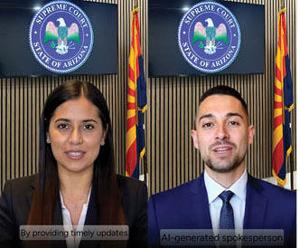
U.S. Sen. Mark Kelly, D-Arizona, is cosponsoring bipartisan legislation to raise awareness and increase public trust in artificial intelligence.
The Artificial Intelligence Public Awareness and Education Campaign Act is from U.S. Sens. Todd Young, R-Idaho, and Brian Schatz, D-Hawaii. It requires the commerce secretary to operate a campaign about the benefits and risks of AI. The campaign would also educate Americans on how much AI is involved in their daily lives.
Most Americans use something featuring AI, but a Gallup study this year found 64% of Americans do not realize that AI was involved.
“As AI becomes increasingly prevalent in our lives, it’s critical for consumers to learn about the opportunities and risks that come with using these technologies,” Kelly said in a press release. “Our bipartisan bill embraces innovation by giving Americans the tools to use AI technologies safely and responsibly.”
The press release said the Artificial Intelligence Public Awareness and Education Campaign Act will specifically ensure the commerce secretary’s campaign focuses on providing information that relates to things such as “the rights of an individual under law with respect to AI,” job opportunities involving AI, how AI would benefit small businesses and regional differences that impact AI.
The legislation also requires the commerce secretary to file a report no later than one year after beginning the campaign to brief legislators about its effectiveness.
This is not the first time that the Artificial Intelligence Public Awareness and Education Campaign Act has been introduced. Young and Schatz announced the measure in June. Since then, AI has become an even bigger household name. President Donald Trump issued an executive order in April that pushes for more coal production to power things such as “new artificial intelligence data.”
Endorsers of the Artificial Intelligence Public Awareness and Education Campaign Act include the American Association of Retired Persons, the National Technology Security Coalition and Go Daddy, the world’s largest domain registrar.