National News
Group: End tax dollars going to hospitals that promote DEI, minor transgender surgeries

An organization is calling for the end of federal funding to what it calls “woke” hospitals in the U.S. that use taxpayer dollars for diversity, equity and inclusion initiatives, gender surgeries on children, and climate activities instead of focusing on their mission to “provide high-quality care at affordable costs.”
In Consumers’ Research’s Consumer Warning report, five such hospitals are listed along with their so-called woke initiatives, the hospitals being Cleveland Clinic, Vanderbilt University Medical Center, Henry Ford Health, Memorial Hermann Health System, and Johns Hopkins All Children’s Hospital.
Consumers’ Research is an independent educational nonprofit as stated on its website.
The report says that “instead of lowering costs and passing savings onto patients, hospitals have spent considerable money, time and manpower pursuing a partisan agenda pertaining to Diversity, Equity, and Inclusion (DEI), radical gender ideology, and climate activism.”
Each of the five hospitals listed in the Consumers’ Research report “receive millions of dollars in federal funding, government-mandated savings programs, and tax exemptions,” meaning that taxpayers are often the ones paying for “various forms of progressive activism.”
Consumers’ Research executive director Will Hild told The Center Square that “hospitals should be focused on providing high-quality care at affordable costs, not peddling a woke agenda, which takes away vital resources that should be going to patient care.”
“The reason hospitals receive benefits like tax-exempt status is because they are supposed to be serving the community,” Hild said.
“Promoting discriminatory policies and performing sex-change procedures on kids does not enhance the communities hospitals are supposed to be helping,” Hild said. “Every hospital CEO should read this Consumer Warning and promptly end woke policies in their organizations and refocus on their core mission, which is providing the best quality patient care at affordable prices.
“Until then, their federal funding should be investigated to ensure taxpayers are not footing the bill for a political agenda,” Hild said.
The political agenda is evident at Cleveland Clinic in its commitment to embedding diversity and inclusion into every process and practice, pledge of over $7 million annually in 2016 toward “greening initiatives,” and its previous performance of hundreds of “irreversible” transgender treatments and procedures on minors, even lobbying against a 2023 Ohio bill prohibiting such procedures, according to the report.
Cleveland Clinic told The Center Square: “We are in full compliance with all state and federal laws and strongly refute the false and misleading assertions made in this report. The report intentionally shares information that is outdated.”
“For more than a century, Cleveland Clinic’s mission has been to care for life, research for health, and educate those who serve,” the hospital said. “Cleveland Clinic is a nonpartisan organization, and we neither have nor promote any political agenda.”
Vanderbilt University Medical Center is also involved in DEI initiatives and climate activism, according to the report, and provided “big money maker” gender transition surgeries to minors before Tennessee outlawed it.
According to the report, Henry Ford Health has “implemented extensive DEI training programs for its health system leaders” and still offers gender-affirming care to minors as of March 2025.
A Henry Ford Health spokesman told The Center Square that “Henry Ford Health respects and fully complies with all state and federal anti-discrimination laws.”
“For more than a century, Henry Ford Health has been fully committed to serving Michigan’s richly diverse communities, providing health care services and employment opportunities to everyone,” the spokesman said. “Our commitment to non-discrimination remains steadfast.”
Memorial Hermann Health System puts a large emphasis on the equity portion of its DEI initiatives and “maintains that ‘health equity’ is paramount,” according to Consumers’ Research.
Additionally, Memorial Hermann has “performed 15 sex-change surgeries on minors and prescribed puberty blockers or hormone therapy to three children.”
Meanwhile, Johns Hopkins All Children’s Hospital “considers ‘diversity and inclusion’ to be part of its founding value,” and prescribes to minors puberty blockers and hormone therapy, according to the report.
John Hopkins, Memorial Hermann and Vanderbilt Memorial Hermann did not respond to The Center Square before publication.
The report additionally states that these five hospital systems are “non-compliant” with “federal price transparency rules” – non-compliance meaning that a hospital actively refuses “to show patients full prices.”
Initiatives taken up by Consumers’ Research to combat woke ideology in hospitals include a letter to President Donald Trump, a letter to Congress, letters to the governors where the five hospitals in question are, and mobile billboards calling for the end of the funding of woke hospitals.
In a statement obtained by The Center Square, Hild said that “it is time to stop funding woke hospitals.”
“Until every hospital in America stops pushing discriminatory DEI policies, mutilating kids’ bodies, and promoting climate politics, their federal funding streams and other government benefits like tax-exemptions should be investigated to ensure taxpayers are not supporting any hospital’s reckless ideological activism,” Hild said.
Here’s how Senate committees changed Trump’s ‘one big, beautiful bill’

The last U.S. Senate committees have submitted revisions to the House-passed One Big Beautiful Bill Act, shoring up funding for big-ticket items while making further changes to Medicaid, SNAP, student loan options and more.
House committees worked for months to assemble the multitrillion-dollar budget reconciliation package implementing President Donald Trump’s tax, border, energy and defense priorities.
Senate committees have now put their stamp on the bill, most notably by raising the debt ceiling by $5 trillion rather than $4 trillion and by making key provisions from the expiring 2017 Tax Cuts and Jobs Act permanent, versus extending them for 10 years only.
As reported by The Center Square, that includes the boosted maximum standard deduction and across-the-board tax cuts; the 20% Qualified Business Income deduction; and $2,000 child tax credit, though the Senate Finance Committee reduced the House’s four-year $500 boost to $200.
Although the Finance committee keeps the House’s temporary nixing of taxes on tips and overtime, it caps deductions for tips at $25,000 and deductions for overtime at $12,500 for single filers.
The committee also expands the House’s charity deductions for un-itemized filers and the temporary tax cut for eligible seniors, boosting the senior $4,000 deduction to $6,000. As with the child tax credit, however, taxpayers would need a social security number to claim it.
Three key business tax credits would become permanent as well – full reimbursement for new capital investments like machinery and equipment, an expanded deduction for corporation’s interest on debt, and immediate deductions for companies’ research costs.
The cost of permanently extending the tax cuts will raise the OBBBA’s already enormous price tag, according to budget watchdogs. So Senate committees found even deeper savings than the House’s $1.7 trillion by further overhauling Medicaid and the Supplemental Nutrition Assistance Program.
Under the Senate plan, the amount states can tax Medicaid providers will cap at 3.5% by 2031, down from the House’s version of 6%. It softens the House’s new Medicaid work requirements, however, by exempting enrollees with dependents under the age of 14.
The Senate’s SNAP reforms expand on the House’s, which require states to cover 50% of administrative costs and 5% of their SNAP benefit cost share. But the Senate Committee on Agriculture, Nutrition and Forestry hikes the state administrative cost burden to 75%.
Additionally, under the House plan, states’ benefit cost contributions would increase the higher their payment error rates, with states having an average error rate of 10% paying 25% of SNAP benefit costs. The Senate version would exempt states with an error rate below 6% from this requirement and lower the 25% cost share cap to 15%
Financial aid and student loan repayment changes made by the House to extract more savings would see some edits as well. The Senate Health, Education, Labor, and Pensions Committee section keeps current Pell Grant eligibility standards in place, rather than keeping the House’s proposed restrictions, and proposes more limitations on graduate student borrowing.
It also keeps Subsidized Stafford loans — repealed in the House version — and scraps House changes to Income-Based Repayment for current borrowers.
Funding for homeland security and border initiatives remains disputed in the Senate’s version of the bill. The Homeland Security and Governmental Affairs committee, chaired by known fiscal hawk Sen. Rand Paul, R-Ky., allocates $39 billion in spending.
Dissatisfied with that amount, the Senate Budget Committee intervened, releasing its own border security funding package that allocates over $127 billion for border security activities.
Other changes Senate committees made include slowing phase outs of Inflation Reduction Act subsidies for energy projects, killing the House’s hard-fought quadrupling of the $10,000 SALT deduction cap, axing a proposed excise tax on private foundations, lowering a proposed 21% tax on university endowments to 8%, and relaxing licensing and registration requirements for certain guns and suppressors.
However, many House and Senate provisions could be stripped by the Senate parliamentarian in the coming weeks if they don’t meet the Senate’s Byrd rules, which limit budget reconciliation bills to fiscal matters.
Coalition warns cuts would be ‘devastating’ to food assistance

Colorado Gov. Jared Polis, a Democrat, is leading a coalition urging Congress to not cut federal funding for the Supplemental Nutrition Assistance Program.
The program provides food assistance to more than one in 10 low-income Coloradans.
“SNAP is a longstanding lifeline providing basic food assistance for the most vulnerable Americans and supporting our agricultural producers, and the proposals included in H.R. 1 would both erode the fundamental infrastructure of our food safety net and transfer an unanticipated and severe financial burden to states at a time of extreme budgetary constraints,” the coalition said in a statement.
The cuts are a part of the Republican-proposed One Big Beautiful Bill Act, the budget reconciliation measure already passed by the House. As it currently stands, Colorado could lose between $200 million and $360 million annually in federal funding for SNAP.
The coalition, which includes farming, local government, state agencies and hunger groups, said the cuts would have a “severe impact.” That impact could even mean cuts for those currently enrolled in SNAP.
“As Governor Polis noted, these proposed SNAP cuts would be nothing short of devastating for communities across Colorado, especially in rural areas,” said Joël McClurg, executive director of systems for the Colorado Blueprint to End Hunger. “Already operating on shoestring budgets, many of our counties would be forced to choose between absorbing new crushing costs or slashing critical services — and either path disproportionately punishes the very people who need support the most.”
The act includes a number of significant SNAP reforms targeted at saving the federal government money, with estimates that it could save up to $239 billion.
Under the reforms, states would be required to pay for more of its administrative costs and benefit payments, upward of a 20% match for Colorado.
“Since its inception, SNAP benefits have been covered 100% by the federal government, with states only paying for benefits administration,” said a report from the Colorado Fiscal Institute. “But for the first time in history, the proposal would have states pay for a share of SNAP benefits.”
Monthly, approximately 617,000 Coloradans receive at least $120 million in SNAP benefits. In 2024, almost one million individual Coloradans received SNAP.
According to the coalition, SNAP also has economic benefits. It injects over $486 million into the economy in wages, supports 21,500 grocery stores that accept it, and generates $70 million in state tax revenue from enhanced local economic activity.
“Not only is SNAP a valuable program for our communities, both rural and urban, it also provides a vital market for many of our farmers and ranchers,” said Chad Franke, president of Rocky Mountain Farmers Union. “The family farmers and ranchers we represent know the value of providing local food to local communities.”
Advocates for the cuts argue they will help fix a bloated government assistance program, especially as it adds a work requirement for able-bodied adults and bans all illegal immigrants from receiving SNAP.
According to a report from the Center on Budget and Policy Priorities, only 46% of Colorado SNAP recipients are from “working families.”
“States are taking advantage of loopholes that allow millions of people to receive SNAP,” said Sonny Perdue, a former U.S. secretary of agriculture, in 2019. “It is my job to ensure the people who truly need food stamps receive what they’re entitled to – but the waste must stop.”
Republicans continue to be motivated by those same sentiments.
While the U.S. Senate’s version of the One Big Beautiful Bill Act does not cut SNAP as much as the U.S. House’s version, it is likely the final version will shift some portion of SNAP’s financial burden to the states.
SCOTUS rules on transgender medical treatment for minors, four other cases

The U.S. Supreme Court handed down rulings on five cases Wednesday, most notably backing a Tennessee law that bans health care providers from offering transgender care to minors.
The court also ruled on nuclear waste storage licensing, prison grievance procedures and two Environmental Protection Agency cases.
Youth transgender medical care
U.S. v. Skrmetti
6-3 ruling
The justices upheld a Tennessee law blocking medical care for transgender youth, with all three members of the liberal bloc voting in dissent. The 2023 bill bars health care providers from prescribing hormone blockers to patients who are minors.
“This case carries with it the weight of fierce scientific and policy debates about the safety, efficacy and propriety of medical treatments in an evolving field,” Chief Justice John Roberts wrote for the majority. “The voices in these debates raise sincere concerns; the implications for all are profound.”
This decision by the nation’s chief court was one of the most-watched rulings of the current term. Transgender policy has been especially topical in recent months after President Donald Trump wrote in a day-one executive order that “sexes are not changeable and are grounded in fundamental and incontrovertible reality.”
Dissenting Justice Sonia Sotomayor wrote that the majority decision “abandons transgender children and their families.”
Nuclear waste storage in Texas
Nuclear Regulatory Commission v. Texas
6-3 ruling
The Supreme Court reversed a lower court’s decision that a private company could not store nuclear waste at a facility in West Texas. The lawsuit, brought forth by the state of Texas and a group of landowners, challenged the Nuclear Regulatory Commission’s authority to license the land.
Justice Brett Kavanaugh said that the plaintiffs “were not parties to the Commission’s licensing proceeding and therefore cannot obtain judicial review of the Commission’s licensing decision.”
The court’s ruling enables plans for the nuclear waste storage facility to resume.
Judicial venue of small oil refinery suits
EPA v. Calumet Shreveport Refining
7-2 ruling
The Supreme Court ruled that companies suing to be exempted from Clean Air Act renewable fuel standards will be dealt with in the D.C. Circuit.
Justice Clarence Thomas defended the opinion by saying that exemptions of this nature are of “nationwide scope or effect.”
This case brought into question whether lawsuits with both local and national implications should be heard in federal circuit courts or the D.C. circuit. Wednesday’s 7-2 decision ruled in favor of the D.C. circuit.
Judicial venue of “good neighbor” provision suits
Oklahoma v. EPA
8-0 ruling
In another case pertaining to the Clean Air Act, the Supreme Court unanimously came to the opposite conclusion. In Oklahoma v. EPA, the justices ruled that cases pertaining to air pollution should be heard in regional appeals courts.
Justice Thomas also wrote on behalf of the majority in this inverse opinion.
“The two state implementation plan disapprovals here are undisputedly locally or regionally applicable actions,” Thomas said. “A SIP is a state-specific plan, so an EPA disapproval on its face applies only to the State that proposed the SIP.”
Justice Samuel Alito did not participate in this case.
Prison grievance filings
Perttu v. Richards
5-4 ruling
The nation’s top court narrowly ruled that prisoners have the right to a jury trial to determine if they have exhausted all options within a prison’s grievance procedure. This opinion stays a lower court’s ruling.
The case concerns a Michigan inmate who filed a lawsuit against a prison on the grounds of being sexually abused by a correctional officer.
“Parties are entitled to a jury trial on Prison Litigation Reform Act exhaustion when that issue is intertwined with the merits of a claim protected by the Seventh Amendment,” Chief Justice Roberts wrote on behalf of the majority.
Justice Amy Coney Barrett wrote the dissenting opinion.
Supreme Court upholds Tennessee ban on transgender care for minors

The U.S. Supreme Court, in a 6-3 decision, on Wednesday upheld a Tennessee law banning minors from receiving transgender medical treatments.
In U.S. v. Skrmetti, the high court analyzed a state law that prevented healthcare providers from administering puberty blockers or hormones to minors with the intent of “enabling the minor to identify with, or live as, a purported identity inconsistent with the minor’s biological sex.”
Tennessee Attorney General Johnathan Skrmetti, defendant in the case, celebrated the high court’s decision.
“A bipartisan supermajority of Tennessee’s elected representatives carefully considered the evidence and voted to protect kids from irreversible decisions they cannot yet fully understand,” Skrmetti said. “I commend the Tennessee legislature and Governor Lee for their courage in passing this legislation and supporting our litigation despite withering opposition from the Biden administration, LGBT special interest groups, social justice activists, the American Medical Association, the American Bar Association, and even Hollywood.”
The law did not prevent minors from accessing the treatments in order to treat a congenital defect, precocious puberty, disease or physical injury.
Chief Justice John Roberts wrote the majority opinion for the court. In the opinion, Roberts addressed the 2020 Bostock v. Clayton County decision, which prohibited employers from discriminating against employees based on sexual orientation or transgender status.
Roberts said the 2020 ruling did not apply to this decision because the restriction for medical treatment is not based on sex, but rather age.
“Unlike the employment discrimination at issue in Bostock, changing a minor’s sex or transgender status does not alter the application of [Tennessee’s law],” Roberts wrote.
Roberts also pointed out Tennessee’s recognition of several negative consequences that occur from allowing minors access to transgender care.
“The [Tennessee] legislature found that minors lack the maturity to fully understand these consequences, that many individuals have expressed regret for undergoing such treatments as minors, and that the full effects of some treatments may not be known,” Roberts wrote.
Roberts argued state legislators representing constituents should make decisions regarding transgender care for minors based on the evidence.
“Questions regarding the law’s policy are thus appropriately left to the people, their elected representatives, and the democratic process,” Chief Justice John Roberts wrote.
Justices Clarence Thomas, Neil Gorsuch, Brett Kavanaugh, Amy Coney Barrett and Samuel Alito concurred with Roberts’ opinion.
“The Supreme Court’s strong decision today is a massive win in the fight to protect children from harmful gender ideology,” Kristina Rasmussen, executive director of Do No Harm, group of medical care professionals who oppose such procedures on minors. “Transgender treatments for minors is experimental medicine not backed by reliable evidence. Do No Harm is proud to have been in the fight to expose this ideology over the last several years and support Tennessee in this case. We will continue to work nationally and in other states to protect children from the harms of sex change treatments.”
Robertson referenced Justice Clarence Thomas concurring opinion. “Justice Thomas soundly put to rest the persistent sham that we should quiet down and ‘trust the science’ when it comes to life-altering experimentation on minors,” Roberston said.
“Today Tennessee secured a historic victory for common sense and the rule of law,” said Katherin Green Robertson, chief counsel for the Attorney General of Alabama.
Justices Sonia Sotomayor, Ketanji Brown Jackson and Elena Kagan dissent. Justice Sotomayor filed the dissenting opinion for the court.
“By retreating from meaningful judicial review exactly where it matters most, the Court abandons transgender children and their families to political whims,” Sotomayor wrote.
Tyler Hack, founder of the Christopher Street Project, a transgender rights group, criticized the decision and its impact across the country.
“Access to gender-affirming care is life-or-death for our trans siblings in Tennessee, and this ruling has just approved the transphobic legislation of 25 other states. It has greenlit a nationwide attempt to infringe on personal medical decisions and violate constitutional rights to privacy. The Supreme Court should know: this domino effect of suffering and more suffering is on their hands,” Hack said.
Sotomayor, in a dissent, took issue with Tennessee’s application of the law against puberty blockers and hormone treatments for transgender minors. She said the specific ban of treatment for minors seeking to identify with a sex different than their assigned at birth sex requires a heightened level of scrutiny in the court.
Sotomayor equated the Tennessee law to a hypothetical ban on minors attending religious ceremonies “inconsistent” with the minor’s religion.
“The majority’s choice to subject [the Tennessee law] to rational-basis-review, the most cursory form of constitutional review, is not only indefensible as a matter of precedent but also extraordinarily consequential,” Sotomayor wrote.
DOD sending 700 troops to support ICE operations in Florida, Louisiana, Texas
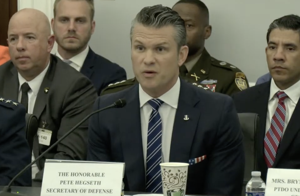
U.S. Defense Secretary Pete Hegseth has authorized the mobilization of up to 700 military personnel to support of U.S. Immigration and Customs Enforcement efforts in Florida, Louisiana and Texas. Hegseth also is encouraging service members in their last six months of service to transition to serving in federal border security roles.
More than 6,600 active-duty personnel have been deployed to the southwest border since President Donald Trump declared a national emergency there on his first day in office, The Center Square reported.
Service members are being drawn from all components and are operating under a Title 10 duty status, the DOD said. They are tasked with providing logistical support and conducting administrative and clerical functions to assist with processing illegal foreign nationals being detained at ICE facilities. “They will not directly participate in law enforcement activities,” the DOD said.
“In maintaining the sovereignty, territorial integrity, and security of the United States,” the DOD is working with the Department of Homeland Security to provide “critical resources to support ICE’s mission, freeing up law enforcement personnel to focus on law enforcement tasks and missions,” it said in a statement.
In an effort to expand additional opportunities for service members to help secure the U.S. borders, Hegseth also signed an agreement with DHS to enhance opportunities for those finishing their military service to transition to work for DHS, U.S. Customs and Border Protection or ICE through a SkillBridge career transition program. It applies to those in the last 180 days of their military service.
The SkillBridge program provides civilian professional training opportunities allowing for active-duty service members to still receive military compensation and benefits. Each branch of the U.S. military is authorized to encourage outgoing service members “to participate in industry training, apprenticeships or internships at an employer of their choice during their last six months in service,” a memorandum for secretaries of the military departments from Hegseth says. “SkillBridge lets our warfighters focus full-time on building their future career and gives employers access to the world’s most highly trained and motivated workforce at no cost to them.”
The directive also notes that “as an exception to policy,” all military departments are instructed to “prioritize and broadly advertise these critical DHS career opportunities to transitioning Service members. This is an exceptional opportunity to ensure the best of America can continue to serve and defend their country.”
To support the effort, the Under Secretary of Defense for Personnel and Readiness established agreements with CBP and ICE to enhance SkillBridge opportunities. The Defense Human Resource Agency is working with all branches of the military, “as an exception to policy, to prioritize and broadly advertise these critical DHS career opportunities to transitioning Service members,” the DOD says.
DHRA is also updating the SkillBridge website and advertising the program through social media channels. All military departments have been instructed to approve service member requests to participate in the SkillBridge program to work for CBP and ICE “to the maximum extent possible in the last 180 days of service,” Hegseth’s memo states. “Requests should be disapproved only where approval would impact the critical readiness and operational needs of the Military Service concerned.”
Apology by lawmaker central to Trump beheading post offered, accepted

Three days after her social media post related to the beheading of President Donald Trump went viral nationally, a North Carolina lawmaker has apologized.
Rep. Julie von Haefen, D-Wake, was given the time for a statement following Tuesday evening’s voting session in the House of Representatives. The session was the first since the Saturday posting in which the chamber was together for floor votes.
“This weekend, I shared a video montage on Facebook that included an image that was inappropriate,” she said. “I realized that quickly and took the post down,” said von Haefen. “And I want to apologize today.
“I apologize to members of the House, to my constituents, and to any North Carolinian who is offended by what I posted. I’m sorry. Every one of us needs to take accountability for when we make mistakes. I am taking that accountability today, and I appreciate the opportunity to do so.”
Speaker Destin Hall, R-Caldwell, thanked her for taking responsibility before colleagues and constituents. He cautioned about behavior and consequences for all, and said the highest standard of role model is expected by all 120 members.
Von Haefen on Saturday made a social media post picturing of a woman holding signage with the image of a bloody, used guillotine; the words “In these difficult times, some cuts may be necessary”; and a prop on one end of the handle representing a beheaded Trump. The other end also had a head, a German Nazi Party swastika scrawled across the forehead.
Later Saturday, the nation learned of the shootings in Minnesota that claimed the lives of a Democratic member of the House of Representatives and her husband, and injured a state senator and his wife.
Minutes after The Center Square on Sunday sought authentication from her office, von Haefen posted to Facebook, “Yesterday, I posted a video on social media containing crowd photos from the No Kings protest in Raleigh. One of the images of a protestor holding a sign was inappropriate, and I later edited the video to remove the photo.
“Let me be clear: I condemn political violence in all forms. My focus remains on bringing people together and fighting for the values that matter to North Carolinians. Like so many, I was horrified by the violence in Minnesota. There is no place for that kind of extremism in our democracy, no matter the target, no matter the party.”
Von Haefen did not offer an apology at the time. She terminated her X account. Calls for her resignation poured in from Republicans, including a U.S. senator from Utah and congressional members from North Carolina. Hall said he was consulting with attorneys for the chamber about the matter.
Her caption on Saturday morning said, “No Kings Protest in Raleigh. Amazing turnout all across the Triangle today, including this event at the Capitol hosted by Wake Democrats and North Carolina Democrats.” There were hashtags for an expletive, no kings and Raleigh.
The No Kings protests were held in rebuttal to Trump hosting a parade celebrating the Army’s 250th anniversary. More than 1,700 were scheduled, including 27 in the Tarheel State.
Von Haefen, certified Guardian ad Litem according to her campaign website, first won election to the state House of Representatives in the 2018 midterms. She’s been reelected three times and touts her work with the parent teacher organizations at the school, county and state levels.
She’s licensed to practice law in Ohio, Arizona and California.
Kaine calls for vote on Iran war powers resolution

U.S. Sen. Tim Kaine, D-Va., is calling for a Senate vote as early as next week on a resolution to prevent the U.S. from entering a war with Iran without congressional approval.
Kaine spoke on the Senate floor Tuesday in support of the resolution he introduced June 16 under the War Powers Act. The proposal would block any offensive military action against Iran unless it is explicitly authorized by Congress, while still allowing U.S. forces to defend against an imminent threat.
“There’s no part of the Constitution that’s more important than the Article One provision making plain that the United States should not be at war without a vote of Congress,” Kaine said.
“We owe it to the American people and our troops to make sure we’re not asking for the ultimate sacrifice without a debate and a vote.”
Kaine, who serves on the Senate Armed Services and Foreign Relations committees, has spent more than a decade pushing to rein in presidential war powers.
On the Senate floor, Kaine argued that the resolution qualifies as a “privileged motion” under the War Powers Act of 1974, allowing it to bypass committee and come up for a vote. He said the required conditions for triggering a debate have been met, citing the absence of congressional authorization and the presence of what he called “actual kinetic hostility” between U.S. and Iranian forces. “The U.S. is already using weaponry to knock down Iranian missiles,” Kaine said. “That’s more than imminence — that’s actual kinetic hostility.”
He led the bipartisan effort to repeal the 1991 and 2002 Authorizations for Use of Military Force, which were formally rescinded last year.
In his floor remarks, Kaine warned that another unauthorized conflict in the Middle East would be a “catastrophic blunder.”
“I’m asking my colleagues to support my simple resolution: No war without a vote of Congress,” Kaine said. “Let’s debate that in the full view of people whose spouses are in the military, or whose kids are in the military.”
The resolution, filed under the War Powers Act of 1973, would force Senate consideration once formally introduced.
Kaine has long framed the issue as a matter of constitutional accountability. In past years, he has introduced similar measures to restrict military action in Iran and prevent presidents of both parties from expanding conflicts without debate.
The resolution follows the recent escalation in regional tensions.
As previously reported by The Center Square, in the past week, Israel has conducted a series of strikes inside Iran, targeting military infrastructure linked to its nuclear program. Iran retaliated by bombing Israel, including civilian areas. President Donald Trump, speaking after a national security meeting and G7 travel, warned Iran’s leaders on social media and rejected the idea of a ceasefire, calling instead for a “real end” to Iran’s nuclear weapons program.
WATCH: Hegseth declines to answer public question on use of 30,000-pound bomb

U.S. Secretary of Defense Pete Hegseth said Wednesday that questions about U.S. plans for the Middle East, including the potential use of a giant bomb, shouldn’t be discussed in public.
Hegseth told the Senate Armed Services Committee that any such discussions should be held behind closed doors, rather than in a televised hearing on the Pentagon’s budget.
U.S. Sen. Jeanne Shaheen, D-N.H., asked Hegseth during Wednesday’s hearing if he had been asked to provide the president with options regarding a U.S. strike in the Middle East.
“If I had or had not, I wouldn’t disclose that in this forum,” Hegseth said.
Shaheen specifically asked about the U.S. “bunker buster,” a bomb that weighs as much as a semi-truck and can penetrate up to 200 feet underground.
Shaheen said the B-2 bomber was the only plane that could carry the giant explosive and that such a mission would require a U.S. pilot.
“That raises real concerns about about what retaliation might mean for the safety and stability of the entire region, our troops and Americans in the region,” she said.
The U.S. military spent about $400 million to design and produce 20 such bombs for the U.S. Air Force. The 30,000-pound bomb is called GBU-57, or Massive Ordnance Penetrator, or for short, simply MOP.
MOP was designed to “attack hard and deeply-buried facilities.”
U.S. Sen. Roger Wicker, R-Miss., noted that their would be classified session later in the day where such matters could be discussed in private.
The question comes as tensions mount between Israel and Iran. U.S. President Donald Trump said Wednesday at the White House that he wouldn’t answer questions about a potential U.S. strike.
“I may do it, I may not do it. I mean, nobody knows what I’m going to do,” Trump said. “I can tell you this: Iran’s got a lot of trouble and they want to negotiate.”
DOD looks to increase military housing, construction budget by $1.4B

The upcoming fiscal year’s proposed military construction and housing budget is large, representing a $1.4 billion increase over the previous year—a substantial request, especially for an area of department appropriations that is known for exceeding project budgets and timelines.
However, it also may be necessary, as heightened scrutiny in recent years has revealed that the quality of military barracks and even some military family housing have fallen short of acceptable standards for years.
A government watchdog report in 2023 uncovered rodent and pest infestations, mold, sewage and plumbing problems, broken windows and locks and inoperable fire safety systems in barracks on many military installations.
The Center Square previously reported that the problems with family housing are generally less widespread, as almost all military family housing construction is contracted out with the private sector, but the Government Accountability Office has also said that oversight of the DOD’s privatized housing program could be improved.
A Senate Appropriations subcommittee questioned relevant Department of Defense leadership about the $18.9 billion budget proposal Tuesday, noting some of the challenges it faces in its review this year.
As in many other recent budget hearings, committee members underscored that they received the proposal late and as a result, are working from only partial information.
“We on the subcommittee look forward to receiving the justification books and related exhibits, which still have not been delivered but are expected later this month,” Subcommittee Chairman Sen. John Boozman, R-Ark., said.
Subcommittee Ranking Member Sen. Jon Ossof, D-Ga., also pointed out that passing funding measures through a budget reconciliation process, which is what is happening now in Congress with the One Big Beautiful Bill, means less congressional oversight of funds.
“First of all, I note with concern that the White House has decided to circumvent the budget process and push $900 million of Milcon funding into the partisan reconciliation measure,” Ossof said.
The regular budget process allows for greater analysis and review of appropriations measures by lawmakers. Budget reconciliation is a fast-track approach to passing high-priority legislation and limits the kind of analysis members of Congress can do and the changes they can make.
Boozman also voiced concern over the amount officials were requesting.
“I’m encouraged to see another year of growth in the Milcon on request, [but] I remain concerned that we’re not necessarily buying more. We’re simply paying more,” Boozman said. “Some of these budget numbers are staggering. Not that long ago, hitting the $100 million dollar mark on a single project was significant. Now it has become routine.”
Military installations are requiring greater levels of technological and weapons sophistication – which is expensive in and of itself – but the challenge is compounded by inflation and other economic pressures, according to Boozman.
“The trajectory is not sustainable, and future budget requests cannot continue absorbing these rising costs,” he added.
In response, the officials testifying before the committee highlighted a dire need for installations to meet the operational demands of the day but also assured committee members that they’re doing everything they can to maximize funding.
“Our installations are under threat, not just from our adversaries, but from aging infrastructure, extreme weather and increasingly complex operational demands. To address these challenges, we’re focusing on an installation resilience approach that focuses squarely on military readiness and operational capacity,” said Dale Marks, assistant secretary of defense for energy, installations and environment.
“This ensures that our resources can directly support what matters most – maintaining ready forces and resilient installations that can operate effectively under any conditions.”
Most of the subcommittee senators’ questions probed into the kind of oversight federal funding would receive from the DOD officials in charge of installations and logistics for each military branch – that they wouldn’t overlook critical projects and allow funds to be directed toward less fundamental needs.
Officials emphasized a commitment to improving troops’ living conditions, despite the number and type of projects that require attention.
“Taking care of our soldiers and their families remains our number one priority, and their well-being is directly linked to the readiness and the ability of the army to accomplish its mission,” said Lt. Gen. David Wilson, deputy chief of staff for U.S. Army installations.
Despite the increase in funding from Congress and the warning from Boozman that such spending is not “sustainable,” officials repeatedly said that substantial funding commitments over a long period of time were what is needed.
“With strong support from Congress, we’re making progress, but this is going to require a sustained effort over a stained period. No one budget year is going to provide enough resources to overcome our existing challenges or eliminate the threats to our installations,” said Lt. Gen. Stephen Sklenka, deputy commandant for Marine Corps installations and logistics.