National News
First section of CA bullet train to connect two small cities
The California High-Speed Rail Authority has responded to the Federal Rail Authority’s plan to terminate $4 billion in federal funding for the Los Angeles-to-San Francisco high speed rail project.
Its response elaborates on its plans for continuing initial work on a 119-mile segment between Madera, which has a population of nearly 70,000, and Poplar Avenue in Kern County, which is near Shafter, a small city of just over 20,000 residents northwest of Bakersfield.
This segment is being expanded into the 171-mile “early operating segment” that will carry passengers all the way between Bakersfield and Merced by 2033.
According to CHSRA, the segment will cost between $32.7 billion to $36.3 billion, but is on track to be completed on time. The project has received enough re-authorized funding from California’s cap-and-trade program, which charges companies for carbon dioxide emissions, to cover its $6.5 billion shortfall by providing $1 billion per year.
It’s unclear whether the full, Los Angeles-to-San Francisco line will be able to offer costs and travel times that are competitive with air travel, which could complicate CAHSRA’s ongoing efforts to secure private financing for the project via public-private partnerships.
CHSRA also pushed back on federal claims that its ridership projections were overstated.
“FRA notes that CHSRA’s Phase I projection of annual riders exceeds Amtrak’s Northeast Corridor ridership and compares it to the number of Bay Area – Los Angeles airline passengers,” wrote CHSRA. “Those comparisons are inapt because California high speed trains will travel at over 200 mph and thus reach their destinations in far less time than the Northeast corridor’s average speed of well under 100 mph, and the trains will serve many more combinations of destinations than a Bay Area–Los Angeles trip.”
However, as earlier analysis from the Reason Foundation has found, CHSRA’s ridership projections assume Californians would use high speed rail at a higher rate than the Japanese use shinkansen, or the French use TGV.
CHRSA also responded to the FRA’s claims that CHRSA’s Office of the Inspector General said the early operating segment’s projected, and possibly optimistic, two million annual riders on the Bakersfield-Merced segment would not cover operating costs. Rather than dispute the claim, CHSRA said the OIG had never made such a claim.
Should the federal government withdraw $4 billion in funding, it’s unclear how money will be secured to fill in the gap. The state has narrowly avoided budget deficits through one-time measures and some cuts, and has, as reported by the state-funded Legislative Analyst’s Office “no capacity for new commitments.”
Trump refuses to commit to military involvement in Iran, won’t rule it out
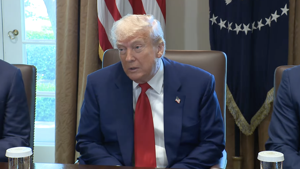
As the conflict between Israel and Iran closes in on a week since it began, President Donald Trump won’t say if U.S. will get involved in the conflict.
Despite dire warnings from Iran against the U.S. and its potential involvement, Trump told reporters in the Oval Office on Wednesday that Iranians want to meet, adding they want to come to the White House.
However, he appeared to throw water on the idea, adding the Islamic Republic should have made a deal.
Earlier Wednesday, Trump told reporters he isn’t “looking to fight.” However, he reiterated that Iran can’t have a nuclear weapon.
“I’m not looking to fight. But if it’s a choice between them fighting or having a nuclear weapon, you have to do what you have to do. And maybe we don’t have to fight,” the president told reporters.
When asked if he would order a strike on Fordow, Iran’s fuel enrichment plant, a key site for the country’s nuclear enrichment, the president didn’t rule out a strike.
“I may not do it. I mean, nobody knows what I’m going to do. I can tell you this, that Iran’s got a lot of trouble, and they want to negotiate,” said the president.
He was also asked about giving the Islamic Republic an ultimatum while reminding reporters that the U.S. hasn’t been engaging in the fight.
“You could say so. Maybe you could call it the ultimate ultimatum,” Trump replied. “Don’t forget, we haven’t been fighting. We add a certain amount of genius to everything, but we haven’t been fighting at all. Israel’s done a very good job today, but we’ll see what happens.”
The president stressed that he hadn’t made a final decision on involving U.S. forces in the conflict.
“I have ideas as to what to do. I like to make a final decision one second before it’s due,” Trump explained.
One of the sharpest debates, especially among Republicans, is the notion of regime change in the Islamic Republic. It has faced scrutiny and pushback from many conservatives, citing Afghanistan, Iraq and Syria as costly and failed attempts by the West to architect regime change.
Trump acknowledged that the current fighting could lead to a regime change, simply saying that “anything could happen.”
He added that if it were to fall, there is a “plan for everything, but we’ll see what happens.”
The president’s remarks come on the heels of the U.S. Embassy in Israel, which is beginning to offer American citizens evacuation out of the country through flights or by cruise ship. The Embassy also announced that it was closing for the remainder of the week.
Israeli cities continue to fight off missiles shot from Iran, but those have been notably reduced the last couple of nights due in part to Israel destroying several missile launchers and gaining complete air control over the Islamic Republic.
While the president won’t commit U.S. military support, specifically launching B-2 bombers to drop bunker busters on Fordow, a second aircraft carrier is en route to the region to provide support and security.
Tillis gets in moderate lane on Padilla-Noem dispute, Lander’s detainment
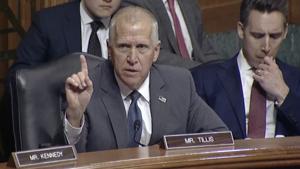
California Sen. Alex Padilla was in the wrong, and so too was the team safeguarding Homeland Security Secretary Kristi Noem, says arguably one of the nation’s most vulnerable U.S. senators in the 2026 election cycle.
U.S. Sen. Thom Tillis, R-N.C., took to the Senate floor a day after Padilla and nearly a week since the West Coast encounter that grabbed the news cycle briefly ahead of a hullabaloo weekend celebrating the Army and protesting the president’s administration. Tillis with clarity said his Democratic friend Padilla was in the wrong choosing a press conference as the avenue for confronting Noem, and said security was wrong to take him to the floor.
He also alluded to “a dustup in New York,” a reference to Brad Lander detained at a courthouse accused of obstructing federal lawmen making an arrest. Lander is comptroller of New York City and a candidate for mayor.
“We have to get to a point where elected officials have to take some responsibility for their actions,” Tillis said.
He gave the parallel of Senate media availability in two places in their building and said it would be wrong for him to interrupt Sen. Chuck Schumer, D-N.Y., there or “in the field” as did Padilla.
“Sen. Padilla should have found a better way to elevate his concerns to the secretary of Homeland Security,” said Tillis, senior-most of North Carolina’s 16 Beltway members behind only Reps. Virginia Foxx, R-N.C., and Alma Adams, D-N.C. “Having said that, there were people in that building who knew he was a U.S. senator. The minute he was removed from that situation in that briefing room, then they should have treated him with respect and allowed him to disburse.”
And then he most likely, in the wake of the No Kings protests on Saturday, provided fodder for potential political rivals.
“It was disgusting to see somebody – anybody, but particularly a U.S. senator in a federal building,” he said.
President Donald Trump’s authority as commander in chief and actions by people he is responsible for choosing – more than 1,000 positions require Senate confirmation – were the driver of the organized protests. Tillis immediately drew criticism for suggesting preferential treatment.
Tillis spoke on two subjects. The other involved a person in the country illegally who previously served as an interpreter to the U.S. military for three years while in Afghanistan. One of his family was murdered, he fled initially to Iran, then Brazil before making it to America. Tillis’ point, he said, was not all situations for deportation are the same, not that this particular case warranted a stay in the U.S.
If the senator’s speech is judged moderate, it falls in line with the trend of North Carolina voter registrations. Residents have fled both parties and chosen unaffiliated registration, growing that voting bloc to the state’s largest (37.8% unaffiliated, 30.7% Democrats, 30.4% Republicans).
Tillis’ seat is pivotal to majority in the chamber. It’s been 17 years since North Carolinians sent a Democrat to the Senate. Republican Susan Collins in Maine is considered the other most vulnerable.
Republicans have 53 seats in the Senate, Democrats 45, and two are independents caucusing with the minority party.
Tillis, with $5.6 million cash in hand for a reelection bid in 2026, has taken heat back home in western North Carolina for comments related to the embattled Federal Emergency Management Agency.
He has agreed in principle with Trump on reducing health care costs but not on the means to the end. Tillis was the last to agree for confirmation of Pete Hegseth to lead the Pentagon. And on a 12-10 GOP majority panel, it was Tillis in the Judiciary Committee who stalled Ed Martin’s confirmation route for a U.S. attorney seat in the District of Columbia.
Federal Reserve holds rates steady, but could cut them later this year
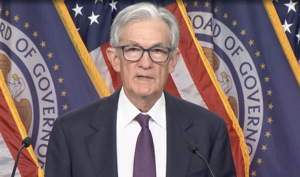
Federal Reserve officials agreed to hold interest rates steady on Wednesday but suggested they could cut them later this year.
“Despite elevated uncertainty, the economy is in a solid position,” Federal Reserve Chairman Jerome Powell said.
Earlier in the day, President Donald Trump again called Powell “not a smart person” and said Powell was “too late” to cut interest rates. The president also said he was looking forward to the end of Powell’s tenure at the Federal Reserve.
“Now we have a man who just refuses to lower the Fed rate – just refuses to do it,” Trump said Wednesday morning before Powell’s news conference. “And he’s not a smart person. I don’t even think he’s that political, I think he hates me, but that’s OK. He should. I call him every name in the book trying to get him to do something.”
Trump said he wanted rate cuts to make it easier for the U.S. Treasury to issue less expensive long-term debt.
The Federal Open Markets Committee kept the central bank’s federal funds rate at a target of 4.25% and 4.5%.
“For the time being, we’re well positioned to wait to learn more about the likely course of the economy,” Powell said during the news conference.
Trump has repeatedly called on the Federal Reserve to lower interest rates, but the president has limited authority over the independent agency.
Social Security, Medicare to run out of money earlier than expected
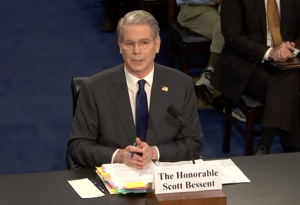
The Social Security program is nine years away from insolvency, the Social Security Board of Trustees said Wednesday.
This forecast moved up one year since 2024’s annual report, which projected the program to deplete its funding by 2035. Now that projection date is set at 2034.
Medicare’s hospital trust fund will fall short in 2033, when it will only be able to cover 89% of scheduled benefits. This date moved up three years since last year’s report, according to the Medicare Board of Trustees.
“As in prior years, we found that the Social Security and Medicare programs both continue to face significant financing issues,” the Treasury Department said Wednesday.
Tens of millions of Americans who rely on Social Security due to retirement or disabilities would see cuts to their monthly benefits.
If no changes are made, beneficiaries will only receive 81% of their benefits in nine years, the trustees’ report says.
“This data underscores the need for lawmakers to take action to support the long-term viability of these programs,” Treasury Secretary Scott Bessent said. “Under President Trump’s whole-of-government initiative, the administration will continue to root out waste, fraud and abuse across federal agencies to ensure quality service for beneficiaries and responsible stewardship of taxpayer funds.”
The Social Security trustees cited a recent law upping support for beneficiaries as the culprit for the insolvency drop from 2035 to 2034.
The bipartisan Social Security Fairness Act, which was signed into law earlier this year, added benefits for almost three million public sector employees, including teachers and firefighters.
The Committee for a Responsible Federal Budget, a D.C.-based think tank, responded to Wednesday’s Social Security and Medicare reports.
“Where is the sense of urgency?” President Maya MacGuineas said. “We are running out of time to phase in changes gradually and avoid harsh cuts, sharp tax increases or unacceptable borrowing.”
Legislation would codify more TCJA tax write-offs for American businesses

As Republican leaders in Congress work to renew key portions of the 2017 Tax Cuts and Jobs Act via the budget reconciliation process, two lawmakers have introduced a bill of their own to resurrect certain tax deductions for businesses.
The CREATE JOBS Act, sponsored in the House by Rep. Glenn Grothman, R-Wis., and in the Senate by Sen. Ted Cruz, R-Texas, would codify the TCJA’s 100% bonus depreciation, which allowed businesses to completely write off the cost of certain property – including manufacturing equipment and heavy machinery – acquired between 2017 and the end of 2022.
The bill would also make permanent a 2022 TCJA provision that required businesses that choose to fully deduct research and development costs from their taxable income do so over a period of five years, rather than annually.
Additionally, the CREATE Jobs Act would implement neutral cost recovery, which adjusts business tax deductions for rental units and commercial structures to prevent depreciation.
“As Congress considers extending immediate deductions for research and equipment, it’s long past time to give structures similar treatment. The 2017 tax cuts were a leap forward for investment, but they left buildings behind,” Cato Institute’s Adam Michel, who supports the bill, said Tuesday.
“By fixing that omission, the CREATE JOBS Act levels the playing field for all types of investment and unlocks capital for American manufacturing,” he added.
Wisconsin Manufacturers & Commerce, a business and manufacturers association, also expressed support for the bill, calling it a “common-sense policy that is positively pro-business and promotes job creation.”
According to the Tax Foundation, the bill could create over one million jobs and eventually increase GDP by 5.1%.
But if scored using the Congressional Budget Office’s method, which assumes that extending tax cuts costs the federal government money, the provisions could add to the federal debt and deficit in the long run as well, though economic growth might cancel that out.
FBI settles legal challenge over Covenant shooter’s manifesto

The FBI has settled litigation with a Tennessee newspaper over its previous refusal to release the manifesto written by the perpetrator of the March 2023 shooting at Covenant School.
The Tennessee Star and others sued the FBI for the release of Audrey Elizabeth Hale’s manifesto after the agency denied it during the Biden administration. Hale, a female who identified as a male, killed three children and three staff members in the shooting at the Nashville school before being shot and killed by responding officers.
Settlement negotiations over the release began after FBI Director Kash Patel took over the agency, according to the Wisconsin Institute of Law and Liberty.
The FBI released 120 pages of Hale’s writing in April. As part of the lawsuit settlement, the agency will pay $86,000 in legal fees to the law firm.
“Journalists everywhere should be willing to go to the mat to hold their government accountable, regardless of the story or who is in charge at the nation’s capital,” said Michael Patrick Leahy, CEO, editor-in-chief, and majority owner of Star News Digital Media. “We appreciate WILL for taking our case and fighting back against the Biden administration’s reckless and dangerous record retention policies.”
Matt Kittle, an investigative reporter with The Federalist, was also a plaintiff in the law firm’s suit.
“This settlement is a win for government transparency and efforts by real journalists to keep their government open and accountable,” said Dan Lennington, deputy counsel for the law firm.
Arrested Milwaukee County judge’s trial delayed

Judge Hannah Dugan will not go on trial in her immigration collusion case next month after the federal judge handling the case delayed the trial Wednesday.
Judge Lynn Adleman told the court he wants to make sure the case is “done right.”
Dugan is facing two federal charges, one of them a felony, after prosecutors say she helped sneak an illegal Mexican immigrant out of the side door of her courtroom in May.
Video shows Dugan leave the bench to speak with ICE agents outside of her courtroom. It also shows her return to court, then order the suspect through the jury room, and eventually into a side hallway.
Dugan’s legal team is claiming judicial immunity.
This week they filed another brief that said the case should be dismissed because all judges have wide latitude in managing their courtrooms.
Dugan’s lawyers have said from the beginning that she cannot be held accountable.
The U.S. Attorney’s Office in Milwaukee essentially has said Dugan overstepped her authority when she allowed the immigrant to use the non-public section of her courtroom to try and evade immigration authorities.
Dugan was indicted on May 13. She was originally set for trial July 21.
Adleman did not set a new trial date, instead he said “I don’t think this is going to get lost.”
Dugan is on paid leave from her job as a Milwaukee County circuit court judge. She has raised more than $130,000 for her defense through an online legal defense fund, though she has not publicly said who has donated, or how much.
She has pleaded not guilty.
If convicted, Dugan is looking at six years in prison and a $350,000 fine.
WATCH: Judiciary explores accountability options over Biden decline ‘coverup’

No obvious solutions emerged during a congressional hearing Wednesday on how to hold those accountable for the alleged cover-up of President Joe Biden’s mental and cognitive decline, but witnesses had some suggestions for how to prevent similar situations in the future.
Republicans have been adamant for some time that Democratic lawmakers, the prior administration, the legacy media and those closest to Biden conspired to hide the former president’s mental and cognitive decline from the American people. More recently, allegations have surfaced that some of Biden’s staff or potentially others may have used an autopen – a machine that can replicate signatures – to sign official documents for Biden without his knowledge or consent.
Wednesday’s witnesses agreed that further investigation needs to be done into these questions. Republicans also explored what can be done after the fact and how to prevent similar events from happening in the future. The Senate Judiciary Committee’s hearing into those questions Wednesday’s boycotted by all but one Democrat.
Republicans didn’t miss the opportunity to call them out for it. U.S. Sen. Eric Schmitt, R-MO, said Democrats’ absence and their failure to call any witnesses to testify was “deeply disappointing” but “not surprising.”
“Their absence speaks volumes – an implicit admission that the truth is too inconvenient to face,” Schmitt said. “This de facto boycott is not just a refusal to participate. It’s a refusal to serve the American people who deserve answers about who was truly leading their government.”
Much of the hearing’s discussion revolved around proper uses of the autopen, which witnesses testified can only be rightfully used when the president specifically delegates its use to the user. The committee also discussed Section 4 of the 25th Amendment to the Constitution, which talks about succession in the case of a president becoming unfit or unable to fulfill the role. The amendment authorizes the vice president and a majority of the president’s cabinet to declare the president unfit, though that declaration has to be validated by a vote from Congress in order to have any effect.
What’s missing, however, is a clear manner of recourse for lawmakers or the public if those around the president fail to act despite plain signs he is incapable of holding office. Republicans wanted to know what they could do to prevent the alleged conspiracy from simply fading into history without consequences for any involved.
“As a government, it is imperative that we have clear contingency plans when emergency strikes, and yes, it is an emergency when we have a sitting president who is unable to discharge the duties of that office,” said U.S. Sen. John Cornyn, R-TX.
He asked witness Theo Wold, a visiting fellow for law and technology policy with The Heritage Foundation and who worked in the previous Trump administration, if any criminal statutes could be applied to those who are found to have participated in the alleged cover-up.
“In this case, some have suggested that there may be potential crimes committed by members of the Cabinet for failing to act basically, suborning perjury, forging, forging government documents, impersonating a federal officer, making false statements, conspiracy to defraud the United States, obstruction of justice, wire or mail fraud… Do you think there’s any application of any of those criminal statutes to the circumstances of the Biden presidency?” Cornyn asked.
“There very well could be,” Wold said, but he added that it would be “a question for a prosecutor to take up in their discretion.”
While witnesses agreed that anyone participating in a cover-up should be held accountable, the solutions for doing so weren’t as clear as recommendations for how to prevent similar situations in the future.
John Harrison, James Madison Distinguished Professor of Law at the University of Virginia, didn’t see an obvious method of redress for what already happened but suggested that Congress perhaps require greater documentation of presidential actions going forward.
Wold provided additional suggestions, such as a revival of discussion around “other guardrails” that can be imposed on the 25th Amendment. There was lively debate toward the end of Ronald Reagan’s presidency about adding a mental health professional to the White House medical team or “whether the surgeon general should oversee the inclusion of medical reporting as part of… the 25th Amendment,” according to Wold. But he said there hadn’t been serious discussion since on how to improve the amendment. He also agreed with Sen. Katie Britt, R-AL, that some of the terms in the amendment, like “unable,” should be more clearly defined.
Treasury hits CJNG leaders with new counterterrorism sanctions

The U.S. Treasury hit top Cartel de Jalisco Nueva Generacion leaders with fresh sanctions on Wednesday as the Trump administration cracks down on illicit fentanyl trafficking.
“CJNG’s reign of terror across Mexico and its trafficking of fentanyl into the United States has destroyed countless innocent lives,” Treasury Secretary Scott Bessent said. “The United States remains strongly committed to leveraging all available tools to degrade the capacity of CJNG and other cartels to flood our streets with dangerous drugs and perpetrate heinous acts of violence against civilians.”
Treasury’s Office of Foreign Assets Control sanctioned five of CJNG’s Mexico-based leaders. OFAC said CJNG is a violent cartel responsible for “a significant share of fentanyl and other illicit drugs entering the United States.”
“It uses murder as a tactic to intimidate rivals, including sending messages to other cartels through the targeted killings of women,” according to OFAC. “The recent discovery of a CJNG recruitment camp, Izaguirre ranch – which was reportedly used to execute recruits that defy instructions – underscores the cartel’s brutal methods.”
OFAC designated CJNG leader Ruben Oseguera Cervantes (known as “El Mencho”), along with three other top cartel members. OFAC also sanctioned a CJNG commander, linked to El Mencho, who has been identified as the prime suspect in the recent murder of Mexican influencer Valeria Marquez during a live social media broadcast.
CJNG runs clandestine laboratories in Mexico to produce fentanyl, methamphetamine, cocaine, and other illicit drugs. The cartel effectively controls the deep-water port of Manzanillo in the Mexican State of Colima and runs fentanyl precursor procurement and other drug trafficking operations through the port.
“CJNG’s ruthless ambition to expand its operations has led the organization to deploy kidnappings, torture, bombings, and executions of civilians, Mexican politicians, and military and law enforcement officers,” OFAC noted.
It’s not the first time the cartel has faced sanctions. In 2015, OFAC designated CJNG pursuant to the Foreign Narcotics Kingpin Designation Act for the cartel’s role in international narcotics trafficking. In 2021, OFAC also designated CJNG pursuant to an executive order. In February, the U.S. Department of State designated CJNG as a Foreign Terrorist Organization and a Specially Designated Global Terrorist.
The sanctions essentially cut of cartel members and businesses controlled by them from the U.S. financial system.