National News
Former White House officials to testify at hearing on Biden’s fitness
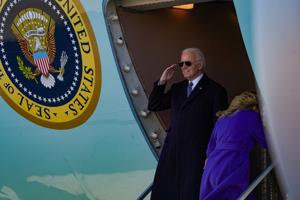
The Republican-led Senate Judiciary Committee plans to investigate an alleged cover-up of former President Joe Biden’s reported mental decline at a hearing Wednesday morning.
Democrats have called the hearing a waste of time, but Republicans plan to call several witnesses at the hearing, titled “Unfit to Serve: How the Biden Cover-Up Endangered America and Undermined the Constitution.”
Republicans plan to call John Harrison, a scholar from the University of Virginia School of Law who served during the former Reagan and Bush administrations; Sean Spicer, the former White House press secretary turned radio show host; and Theodore Wold, a visiting fellow for law and technology policy at The Heritage Foundation.
Democrats declined to call any witnesses and U.S. Sen. Dick Durbin called the entire hearing a waste of time.
“We have so many important topics to consider, and this is a totally political undertaking by several of my colleagues,” he said, according to a Fox New report. “It is a waste of the Senate Judiciary Committee’s time.”
A spokesperson from Durbin’s office said the retiring senator will offer opening remarks and then leave, the Washington Examiner reported.
“He does not plan to stick around to ask questions,” a spokesperson said. “At this time, I’m not aware of anyone on the [Democrats’] side planning to attend.”
The hearing is set for 10:15 a.m. Wednesday in the Dirksen Senate Office Building.
Republicans in the U.S. House are investigating the same issue. U.S. Rep. James Comer, R-Ky., chairman of the House Committee on Oversight and Government Reform, ordered Dr. Kevin O’Connor, former president Joe Biden’s physician, to appear for a deposition on June 27 as part of the investigation into Biden’s physical and mental fitness.
AZ legislative leaders blast fraud by ‘Medicaid millionaires’
Arizona is paying $6 billion in Medicaid benefits to more than 20,000 recipients who don’t need the help, legislative leaders said Tuesday at a news conference about a Patient First Coalition report.
About one-fourth of those people are “Medicaid millionaires,” who could have as much as $1 million in total assets, Senate Majority Leader Janae Shamp, R-Surprise, told reporters Tuesday in Phoenix.
As reported by The Center Square Monday, the Patient First Coalition report found tens of thousands of wealthy people across the U.S. are enrolled in Medicaid, a program designed to help low-income individuals and families, including seniors, children, pregnant women and people with disabilities.
After reading the coalition’s report, Shamp said she decided to submit a formal request Tuesday to Democratic Gov. Katie Hobbs for a full, across-the-board audit of Arizona’s verification of Medicaid recipients’ assets and income.
“We need to ensure our money is being spent wisely and in full accordance with the law,” Shamp said.
As the Arizona Legislature debates the state’s budget, Hobbs is seeking a 7.5% increase for spending for a Medicaid system “that is unaccountable and mismanaged,” Shamp said.
Shamp, who made a request of providers to find answers to her questions about income and asset verification, said she received help “by some remarkable work from the Patient First Coalition.” She called the findings a “wake-up call.”
A review shows that only 23% of Medicaid enrolles underwent proper verification, Shamp said.
“What that means is that more than three-quarters of Arizonans enrolled to receive this public benefit did not get the necessary review to determine if they’re qualified to receive it,” she said. “Let that sink in.”
The majority leader went on to note that there were over 5,000 enrollees with over $50,000 in liquid assets.
“Sometimes called Medicaid millionaires, these individuals are very likely to have total assets in excess of a million dollars,” Shamp said. “In other words, they should not be receiving Medicaid benefits.”
House Majority Leader Michael Carbone, R-Buckeye, spoke next at the podium and noted the Arizona Health Care Cost Containment System, which is the state’s Medicaid agency, and the Department of Health Services already have more than 1,100 full-time employees who could work on asset and income verification.
“We’re not talking about a new bureaucracy. It’s using existing resources,” Carbone said. “Arizona’s taxpayers deserve to know how their hard-earned money is going to be used.”
The issue isn’t a partisan one, Shamp said. She noted that allowing wealthy people to receive Medicaid ultimately hurts those who genuinely need the help.
CBO: GOP budget would boost deficit by trillions when considering growth

Republican’s massive tax and spending bill would increase the U.S. deficit by $2.8 trillion over 10 years when the economic growth of the bill is taken into account, the Congressional Budget Office says.
CBO previously projected that the budget reconciliation bill would increase the deficit by $2.4 trillion without taking the economic impact of the bill into account. Republicans argued that this analysis failed to consider the economic growth the bill’s tax cuts and other Trump administration policies would produce. The booming economy would thus make up for the $2.4 trillion deficit found in the bill, Republicans said.
These numbers by Congress’ nonpartisan scorekeeper undermine Republican arguments.
The Committee for a Responsible Federal Budget, a bipartisan think tank in D.C., released similar analysis Monday. They project that the One Big Beautiful Bill Act would add $3 trillion to the debt through 2034.
Speaker of the House Rep. Mike Johnson, R-La., dismissed previous CBO scores, saying that “they’ve always been off.”
The issue of how President Donald Trump’s domestic policy package might add or take away from the U.S. deficit has caused a rift between Democrats and Republicans during the 119th Congress. Democrats see Tuesday’s CBO analysis as a win for their argument.
“Today’s CBO score will disappoint every Republican who hoped tax breaks for billionaires would magically pay for themselves,” House Budget Committee Ranking Member Rep. Brendan Boyle, D-Pa., said Tuesday.
Concord Action, a fiscal grassroots organization, also weighed in on Tuesday’s CBO estimate.
“With our total debt greater than the size of our entire economy, Congress cannot continue business as usual,” Executive Director Carolyn Bourdeaux said. “There are many ways to pay for this bill or restructure it to be both pro-growth and deficit neutral.”
Differing priorities between Republicans in the two chambers of Congress are slowing down progress toward a final vote on their “big, beautiful bill” by Independence Day.
Vice President J.D. Vance told Republican senators in a closed-door meeting Tuesday that Congress’ August recess is a more likely goal for getting the bill to the president’s desk, according to Punchbowl News. Vance said July 4 should be the deadline for the Senate’s version to be finalized.
Trump shifts Greenland to U.S. Northern Command

President Donald Trump ordered the Pentagon to move Greenland into the U.S. Northern Command area of responsibility in a shakeup that comes as the president looks to acquire the Danish territory and the U.S. seeks greater control over Arctic regions.
On Tuesday, Chief Pentagon spokesman Sean Parnell said that the president recently ordered the change to the Unified Command Plan. The Unified Command Plan is a strategic document that establishes the missions, responsibilities, and geographic areas of responsibility for commanders of combatant commands.
The change shifts Greenland from the U.S. European Command area of responsibility to the U.S. Northern Command area of responsibility.
“Consistent with the President’s intent and the Interim National Defense Strategic Guidance, this change will strengthen the Joint Force’s ability to defend the U.S. homeland, contributing to a more robust defense of the western hemisphere and deepening relationships with Arctic allies and partners,” Parnell said.
Since returning to the White House in January, Trump has repeatedly called for U.S. control of Greenland. Trump previously said that U.S. economic security depends on controlling Greenland and suggested buying or otherwise taking control of the autonomous territory.
“One way or the other, we’re going to get it,” Trump said during a joint address to Congress in March.
Greenland, where about 57,000 people live, is a fully autonomous territory of the Kingdom of Denmark. Greenland’s economy is dependent on Danish subsidies and fishing.
Experts say as ice melts in the Arctic, more shipping and military ship routes could open in the region, changing the global trade and the defensive relationship between the U.S. and Russia. More mining and drilling exploration could also open up.
In 1867, when President Andrew Johnson bought Alaska, he also considered buying Greenland. The U.S. also tried to buy Greenland in 1946. The United States proposed to pay Denmark $100 million in gold to buy Greenland, according to documents in the National Archives. The sale never went through, but the U.S. got the military base it wanted on the island.
Pituffik Space Base, previously known as Thule Air Base, is located in Greenland. Pituffik SB is locked in by ice nine months out of the year, but the airfield is open and operated year round. Pituffik exists due to agreements between the U.S. and the Kingdom of Denmark, specifically addressing mutual defense, according to the Space Force.
Danish Prime Minister Mette Frederiksen previously said “Greenland belongs to the Greenlanders.”
Trump previously said that he wouldn’t rule out military intervention or economic penalties to achieve his goals on Greenland and the Panama Canal.
Trade talks take back seat with all eyes on Israel-Iran conflict

President Donald Trump’s efforts to reorder global trade took a back seat this week amid mounting tensions in the Middle East.
Trump started the week in Canada for the G7 Summit, where he was expected to talk with international leaders about trade and economic issues as his 90-day pause on reciprocal import duties nears an end.
As the summit’s first day came to a close, Trump appeared with United Kingdom Prime Minister Keir Starmer to announce the two nations signed a limited deal while talks continue.
Later that night, Trump left Canada to return to the White House amid mounting tensions in the Middle East as Israel continued a bombing campaign against Iran and Iran retaliated.
As Trump returned on Air Force One, he said the summit was a success and that his deal-making was coming to an end.
“We are very far down the line with a lot of deals,” he said during the flight back to Washington. “Look, we’re actually finished with every deal if you really think about it: All I have to do is say ‘this is what you are going to pay.’ But it’s nice to be nice.”
Trump said work remains with the European Union, a 27-nation bloc that he said wasn’t offering a fair deal. Trump also touted a “great conversation” with Japan’s Prime Minister Shigeru Ishiba. And the U.S. president complimented his host, Canadian Prime Minister Mark Carney, but said his trade proposal was “complex.”
“You get too complex on the deals and they never get done,” Trump said.
Trump’s deal with the United Kingdom didn’t cover all trade between the two nations. Under the terms of the U.K. deal, Trump will lower tariffs on the U.K. aerospace sector to zero. Trump also reduced tariffs on U.K. auto imports to 10% on the first 100,000 vehicles. U.S. imports of U.K. steel products will face a 25% duty, half of the 50% steel tariff he promised steelworkers near Pittsburgh two weeks ago.
Trump announced reciprocal tariffs on nearly all U.S. trading partners on April 2, which he dubbed “Liberation Day” for American trade. Seven days later, Trump suspended those higher rates for 90 days to give his trade team time to cut deals.
States and small businesses have challenged those tariffs in court. An appeals court ruled earlier this month that the “Liberation Day” tariffs can remain in place while the legal challenge over his authority to impose import taxes continues. The Federal Circuit Court of Appeals asked attorneys on both sides of the case for briefs by June 24.
Economists, businesses and some publicly traded companies have warned that tariffs could raise prices on a wide range of consumer products.
Trump has said he wants to use tariffs to restore manufacturing jobs lost to lower-wage countries in decades past, shift the tax burden away from U.S. families, and pay down the national debt.
A tariff is a tax on imported goods paid by the person or company that imports them. The importer can absorb the cost of the tariffs or try to pass the cost on to consumers through higher prices.
Trump’s tariffs give U.S.-produced goods a price advantage over imported goods, and they generate revenue for the federal government.
DOJ argues against judicial review of National Guard decision

A federal judge was wrong to second-guess President Donald Trump’s federalization of the California National Guard, attorney Brett Schumate argued Tuesday before the U.S. Court of Appeals for the 9th Circuit.
Schumate, an assistant attorney general, made the argument during an appeal of last week’s U.S. District Court for Northern California’s ruling transferring control of the guard back to Gov. Gavin Newsom. The Trump administration immediately appealed, and the 9th Circuit put a temporary stay on the ruling until justices rule on the appeal.
According to media reports, Shumate argued in the 9th Circuit’s San Francisco courtroom that U.S. District Court Judge Charles Breyer, a Biden appointee, improperly second-guessed the president’s judgment on protecting federal property and personnel and that courts had no role in reviewing the decision. Shumate contended Trump had the authority to call in the National Guard and cited Martin v. Mott, a U.S. Supreme Court case that allows presidents, not governors or a federal court, to make such decisions.
The counterargument came from Samuel Harbourt, a deputy solictor general representing California in its effort to retake control of the National Guard. Harbourt said the state’s sovereignty was at stake and that continuing to pause Breyer’s ruling would allow the Trump administration “to further escalate tensions and the risk of violence.”
In a Sunday brief filed by Harbourt, state Attorney General Rob Bonta and others, the California Department of Justice argued Trump’s decision to federalize a state’s national guard despite a governor’s objection was unprecedented. The state argued that the deployment came in “response to local protests and civi disobedience no different from what communities nationwide have experienced dozens of times since the enactment of Section 12406.” Trump invoked Title 10, Section 12406 to justify the deployment.
“And those federalized troops are not merely protecting federal facilities; on defendants’ orders, they are actively assisting ICE officers in the day-to-day enforcement of civil immigration laws on the streets of America’s second-largest city,” according to the brief.
Hearing both sides was a panel that consists of two justices appointed by Trump and one by former President Joe Biden.
Newsom and Bonta sued Trump early last week to take back control of the National Guard, which the president deployed in response to the protests and riots over mass U.S. Immigration and Customs Enforcement raids.
Breyer ruled Trump hadn’t properly followed Section 12406 by failing to notify Newsom of the deployment But Shumate argued Tuesday that was a mere “technical violation” of the statute. According to media reports, Defense Secretary Pete Hegseth told the adjutant general of the California Military Department to transfer control of the state’s National Guard to Trump.
Section 12406 allows the president to have sole discretion to federalize a state’s national guard when there’s a “rebellion or danger of a rebellion.” Newsom and Bonta have argued there’s been no rebellion or invasion in downtown Los Angeles.
The 9th Circuit Justices haven’t announced a timeline for their decision. Any decision by the three-justice panel can be appealed to the entire 9th Circuit slate of 11 justices. In the meantime, the justices have placed a temporary stay on the district court ruling until they rule on the appeal.
The court’s full panel is known for its history of liberal decisions. Ultimately the case could be decided in the U.S. Supreme Court, which has a 6-3 conservative majority that includes three Trump appointees. But the court doesn’t always side with Trump.
WATCH: State Department takes questions, gives few answers
When State Department spokeswoman Tammy Bruce took the podium Tuesday afternoon for a news briefing as people worldwide sought answers about what could happen next in the Middle East, she knew she was in a difficult spot.
Bruce said up front that she would take questions but couldn’t answer them all.
“There is always things I can’t say to you and yet we have a long back-and-forth, sometimes we have a little bit of debate – I won’t engage in that today,” she said. “There will be less that I can answer for you because of the circumstances we’re dealing with around the world.”
Israel has bombed Iran for the last five days as the U.S. ally seeks to destroy nuclear facilities and other military targets. Iran has retaliated by bombing Israel.
“This is something the State Department does when there is a situation that requires it and this is one of those times,” Bruce said.
Bruce went on to take questions from reporters representing news outlets around the world. Occasionally, she directed questions to other branches of the federal government, such as the Department of Defense or the White House. She also made it clear that President Donald Trump was taking the lead and she had no intention of getting ahead of the commander in chief.
One common refrain from Bruce: “I can’t speak to that.”
At another point, Bruce said: “I’m here to take questions, not necessarily always answer them.”
She did give an overarching answer to some of the many questions about what Trump wants to see happen with conflicts abroad.
Bruce said Trump seeks “durable ends” rather than short-term ceasefires in “forever wars” around the globe.
“That has been his posture, and that is his posture now,” she said.
Kansas senator wants to overhaul federal budgeting process, change CBO estimates
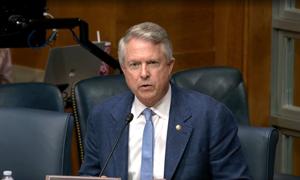
As lawmakers scramble to assemble the 12 appropriations bills providing money for federal agencies to spend on programs each year, one lawmaker is calling for major reforms to the process.
The Budget Reform Act of 2025, introduced Tuesday by U.S. Sen. Roger Marshall, R-Kan., would change the appropriations schedule from annually to every two years and establish strict, penalty-carrying budget deadlines for Congress and the president.
Even though the federal funding process is supposed to follow a regular schedule with specific deadlines, the last time Congress completed the process on time was in 1997.
“With the U.S. national debt exceeding $36 trillion, it’s clear that the federal budgeting process is a dysfunctional mess. Congress continues to lurch from crisis to crisis without any long-term vision or accountability,” Marshall said in a statement. “Rather than continue to repeat the same missteps that have burdened us and our grandchildren with debt they can never repay, we need radical change.”
Lawmakers in 2024 never passed a fiscal year 2025 budget, instead passing three consecutive Continuing Resolutions to keep government funding on cruise control until the end of the current fiscal year, Sept. 30.
Marshall’s bill also would require the Congressional Budget Office to publicly publish the fiscal models used for its budget forecasts, as well as revise its baseline.
Currently, CBO treats automatic renewal of federal spending as having no impact on the debt and deficit but does not use the same assumption for tax cut renewals. This creates a bias towards spending increases rather than spending cuts in budget projections, encouraging a fiscally irresponsible government, Marshall said.
Under the legislation, no federal program except Medicaid, Medicare, and Social Security would be able to use prior year funding as a baseline.
“These fundamental changes will hold the President, Congress, and federal agencies accountable, ensuring that taxpayer dollars are spent appropriately and transparently,” Marshall said. “At a minimum, this is what the American people deserve. It’s beyond time for a fix; it’s time for the Budget Reform Act of 2025.”
Los Angeles mayor lifts downtown curfew after crime falls

Los Angeles Mayor Karen Bass has lifted the dusk-to-dawn downtown curfew, effective immediately.
Bass announced the end of the curfew Tuesday. She started the nightly curfew June 10 after downtown L.A. experienced riots, vandalism and looting following protests against mass U.S. Immigration and Customs Enforcement raids. The protests began June 6.
After the curfews started, a decrease was reported in vandalism, violence and looting. Most of the nightly arrests were for curfew violations.
“The curfew, coupled with ongoing crime prevention efforts, have been largely successful in protecting stores, restaurants, businesses and residential communities from bad actors who do not care about the immigrant community,” Bass said in a news release Tuesday.
Bass added the city will continue to adapt “to the chaos” coming from Washington, D.C., and that she was ready to bring back the curfew if necessary.
“My priority will continue to be ensuring safety, stability and support in the Downtown neighborhoods,” Bass said.
Los Angeles Police Chief Jim McDonnell described the curfews as “an effective tool” in helping police maintain public safety.
“The LAPD will maintain a strong presence in the area and continue to monitor conditions closely to protect lives, uphold the right to lawful assembly, and safeguard property,” McDonnell said.
Bass, meanwhile, hasn’t explained why she didn’t call for the curfews sooner.
In Tuesday’s news release, the mayor’s office said more than 15 protests took place across Los Angeles on Saturday, which was dedicated to “No Kings” rallies across the U.S. More than 30,000 people protested peacefully against the Trump administration’s policies, according to the office.
New York City comptroller, mayoral candidate, detained by ICE at courthouse

Brad Lander, the comptroller of New York City and a mayoral candidate, was arrested Tuesday by federal immigration officials after he tried to block them from making an arrest at a courthouse.
Lander, a Democrat, reportedly tried to escort an individual past agents from federal U.S. Immigration and Customs Enforcement, the FBI, and the Treasury Department after their deportation case was dismissed in court.
Lander’s campaign manager and his wife both posted chaotic videos of him yelling “show me your warrant, show me your badge” as he was placed in handcuffs and wrestled down the hallway of the courthouse by ICE agents.
“You don‘t have the authority to arrest U.S. citizens asking for a judicial warrant,” Lander says in the video.
In a statement, Assistant Secretary of the Department of Homeland Security Tricia McLaughlin said Lander was arrested “for assaulting law enforcement and impeding a federal officer.”
“Our heroic ICE law enforcement officers face a 413% increase in assaults against them – it is wrong that politicians seeking higher office undermine law enforcement safety to get a viral moment,” McLaughlin said. “No one is above the law, and if you lay a hand on a law enforcement officer, you will face consequences.”
Lander, vying for mayor in a crowded field of Democrats, has been critical of ICE arrests at courthouses where individuals potentially facing deportation attend immigration hearings.
New York City officials and legal organizations quickly condemned Lander’s arrest, blasting the move as an “abuse of power” by ICE and other federal authorities.
Former Gov. Andrew Cuomo, the frontrunner in the mayor’s race, pointed the blame at Mayor Eric Adams, a fellow Democrat who is running for reelection as an independent, for part of Lander’s arrest.
“Make no mistake: this kind of conduct is the direct result of Mayor Eric Adams handing the keys of our great city over to Donald Trump,” the Democrat posted on social media. “Comptroller Brad Lander was doing absolutely nothing wrong when he was illegally detained and he must be released.”
Public Advocate Jumaane Williams demanded Lander’s release in a statement, condemning what he called ICE’s “increasingly aggressive” tactics.
Attorney General Letitia James, a Democrat, called Lander’s arrest “profoundly unacceptable” and criticized the Trump administration for targeting New Yorkers.
“Arresting Comptroller Lander for the simple act of standing up for immigrants and their civil rights is a shocking abuse of power,” James said. “No one should face fear and intimidation in a courthouse, and this is a grotesque escalation of tensions.”