National News
Aviation safety, cutting out financial opportunists embedded in proposal

Maintaining aviation safety and cutting out financial opportunists in the form of airports is the driving factor of legislation pending in both the U.S. Senate and House of Representatives.
Sen. Ted Budd, R-N.C., and Rep. Robert Onder, R-Mo., are shepherding bicameral efforts along with Sens. Dan Sullivan, R-Alaska, and Tim Sheehy, R-Mont., to stop what they call abuse of a safety technology more accurate than radar. The Pilot and Aircraft Privacy Act, known also as Senate Bill 2175 and House Resolution 4146, would limit use of the Automatic Dependent Surveillance-Broadcast and require enhanced transparency in airport fees for general aviation aircraft.
The congressmen say the technology is used in some airports “for the purposes of assessing landing fees and collecting revenue from pilots.” The technology identifies the aircraft, airspeed, heading and altitude and is used by air traffic controllers. They say it has helped avoid a number of collisions in the air.
“Abusing this technology to levy unfair, sometimes duplicative fees and threatening pilots with legal action will keep some general aviation pilots grounded, which is a loss for America’s economy, emergency response, and the aviation community at large,” Budd said.
Pilots sometimes do not use it for these reasons.
“Unfortunately, some third parties have taken advantage of this data to impose and collect exorbitant third-party landing fees and frivolous lawsuits targeted at general aviation pilots and travelers,” Onder said. “These uses of data for purposes other than air traffic safety act as a deterrent for pilots to equip their aircraft with this potentially life-saving technology.”
The bill says fees or charges using the ADS-B data is prohibited by government agencies and private entities. It says the date can be used by air traffic controllers for safety, efficiency or other purposes as approved by the Transportation Department secretary. Investigations cannot be originated on the data. And financial information and impact are protected.
U.S. Supreme Court rules for parents on LGBTQ storybooks
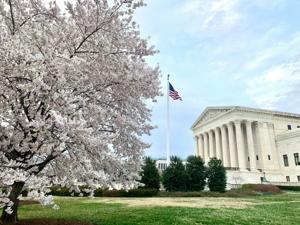
The U.S. Supreme Court, in a 6-3 decision Friday, sided with parents in opting-out their children from school curriculum with LGBTQ storybooks.
In the case Mahmoud v. Taylor, the court recognized parents have a constitutional right to opt their children out of, for religious reasons, content such as storybooks that push LGBTQ ideology.
“We have long recognized the rights of parents to direct ‘the religious upbringing’ of their children,” Justice Samuel Alito wrote in the court’s opinion. “And we have held that those rights are violated by government policies that substantially interfere with the religious development of children.”
Justice Brett Kavanaugh concurred.
“Given the novelty of its ‘LGBTQ+-inclusive’ curriculum and no opt-out policy, if any party is pressing a progressive child rearing process in this litigation, clearly it is the [School] Board,” Kavanaugh said. “Such an unprecedented curriculum cannot ‘overbalance’ the parents’ ‘legitimate claims to the free exercise of religion.’”
This issue arose in 2022 when Montgomery County, the largest school district in Maryland and one of the most religiously diverse counties in the country, reversed its policy on letting parents opt-out their children from LGBTQ-related lessons.
The seven books originally purchased for the 2022-23 school year were “Born Ready,” “Intersection Allies,” “Love, Violet,” “My Rainbow,” “Prince & Knight,” “Pride Puppy!” and “Uncle Bobby’s Wedding” – all with LGBTQ characters and themes.
The district’s associate superintendent for curriculum, Niki Hazel, explained the district decided to buy those books due to previous storybooks not fully representing all diverse families in their school district.
“The books used in its existing ELA curriculum were not representative of many students and families in Montgomery County because they did not include LGBTQ characters,” Hazel said in a U.S. Supreme Court declaration.
Following parents’ frustration with reversing this opt-out policy, the Montgomery County Board of Education claimed these opt-outs were too difficult to manage and that it was too hard to find alternative activities for the excused students.
In her dissent, Justice Sonia Sotomayor, joined by Justices Elena Kagan and Ketanji Brown Jackson, said this decision will isolate students from a diverse education.
“Today’s ruling threatens the very essence of public education … That decision guts our free-exercise precedent and strikes at the core premise of public schools: that children may come together to learn not the teachings of a particular faith, but a range of concepts and views that reflect our entire society,” said Sotomayor. “The reverberations of the Court’s error will be felt, I fear, for generations. Unable to condone that grave misjudgment, I dissent.”
Eric Baxter, senior counsel for the Becket Fund for Religious Liberty, the group representing the parents who were the plaintiffs in the case, said Friday’s decision restored common sense in America.
“This is a historic victory for parental rights in Maryland and across America. Kids shouldn’t be forced into conversations about drag queens, pride parades, or gender transitions without their parents’ permission,” Baxter said. “Today, the Court restored common sense and made clear that parents — not government —have the final say in how their children are raised.”
Sarah Parshall Perry, vice president and legal fellow at Defending Education, said the court’s decision should have been unanimous.
“In what should have been a unanimous decision, the Supreme Court in Mahmoud v. Taylor upheld by a 6-3 vote the rights of religious parents to opt their children out of LGBTQ themed curriculum,” Perry said in a statement to The Center Square. “In a straightforward application of its earlier decision in Wisconsin v. Yoder, the Court wrote that it had long recognized the rights of parents to direct ‘the religious upbringing’ of their children, and that policies that interfere with the religious development of children violate the Constitution. Storybooks like those at issue in Mahmoud convey normative messages on sex and gender, and those messages can and often do conflict with the beliefs of parents and their children.”
Maryland parents Friday praised the court’s decision.
“The Supreme Court sent a powerful message today: Parents do not take a back seat to anyone when it comes to raising their kids. I am deeply grateful to have been part of this historic triumph for parental rights nationwide,” said Grace Morrison, one of the Catholic plaintiffs.
‘Swamp bureaucrat’: Republicans rail as Senate parliamentarian butchers OBBBA
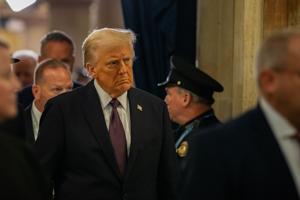
Republicans are facing setback after setback as the Senate parliamentarian continues to slash major provisions from the One Big Beautiful Bill Act, jeopardizing the megabill’s passage and angering lawmakers.
The House-passed OBBBA, a multitrillion-dollar budget reconciliation bill implementing President Donald Trump’s major policy priorities, is under the parliamentarian’s review after undergoing Senate committees’ alterations.
Several significant provisions in the bill, including some SNAP-related accountability measures and cost-cutting reforms to Medicaid, collapsed after Parliamentarian Elizabeth MacDonough determined they violated the Byrd Rule.
The Byrd Rule limits budget reconciliation bills to provisions with direct budgetary impacts. If the parliamentarian finds provisions that violate this rule, lawmakers must either strip them from the bill or lose the ability to pass the legislation in the Senate with a simple majority vote.
Republicans have been scrambling to rewrite some of the provisions into compliance, with some success. A section MacDonough struck that would have fully defunded the Consumer Financial Protection Bureau was rewritten by a Senate committee and later approved, though it authorizes only half the funding cut of the original provision.
But parliamentarian rulings nixing provisions worth hundreds of billions in spending offsets have followed in quick succession since Thursday, including major student loan and financial aid-related sections, one of which would have reduced student loan repayment plan options.
MacDonough also determined Friday that a federal fund for private school vouchers, the deregulation of gun silencers, and stricter verification requirements for Earned Income Tax Credit claimants violated the Byrd Rule.
While Senate Majority Leader John Thune, R-S.D., declined to overrule the parliamentarian’s authority, multiple Republicans vented their frustrations, viewing the slew of rulings as a partisan attack.
“How is it that an unelected swamp bureaucrat … gets to decide what can and cannot go in President Trump’s One Big Beautiful Bill?” Rep. Greg Steube, R-Fla., posted on X. “The Senate Parliamentarian is not elected. She is not accountable to the American people. Yet she holds veto power over legislation supported by millions of voters.”
In a Friday social media post, Rep. Eli Crane, R-Ariz., rhetorically asked his colleagues in the Senate why they are “allowing themselves to be bossed around by a democrat-appointed bureaucrat.”
But the parliamentarian’s rulings are just one of many obstacles to the OBBBA’s passage. Republican leaders are simultaneously negotiating with groups of GOP holdouts in both chambers, including Blue-state Republicans demanding a higher SALT deduction cap and fiscal hawks stipulating greater spending cuts.
Due to the cost of extending the expiring 2017 tax cuts — the greatest portion of the bill — the OBBBA could add anywhere between $2.4 trillion and $4.5 trillion to the federal deficit over the next decade alone, depending on whether or not the parliamentarian approves the Senate’s request for permanent tax cut extension.
Despite rioters and local opposition, DHS arrests violent felons in Los Angeles
Despite violent rioters and local officials claiming federal immigration enforcement officers are criminals for enforcing lawful orders, a U.S. Department of Homeland Security operation in Los Angeles led to the arrests of several violent convicted felons.
Recent arrests are all men, including confirmed gang members and watch-listed suspected terrorists, all in the U.S. illegally. They are citizens of Cuba, Colombia, El Salvador, Guatemala, Honduras, Russia and Vietnam. The majority are citizens of Mexico.
Their convictions include murder, pedophilia, fentanyl trafficking, spousal abuse, sexual assault, and armed robbery, according to a recent announcement by DHS. They remain in custody pending removal proceedings.
Cuban national Daniel Ofarril was arrested after violating a 2004 removal order and illegally living in the U.S. for more than 20 years. His criminal history includes arrests for murder, burglary, armed robbery, battery, driving under the influence, and transporting/selling narcotics, and convictions for possessing crack cocaine with the intention to sell, DHS says.
DHS also arrested Colombia national Cristian Vasco-Echeverry, whose criminal history includes drug trafficking and a 10-year prison sentence in Colombia.
Salvadoran national Oscar Juventino Ardon Landaverde, a known member of the foreign-terrorist gang MS-13, was arrested after illegally reentering the U.S. multiple times after being removed. He is also identified as a known or suspected terrorist, watchlisted on the U.S. Terrorist Screening Dataset, DHS said.
Guatemalan nationals arrested include Elder Orlando Esquivel, a gotaway convicted of “enticing away, keeping, withholding, or concealing away child from their lawful custodian;” Otto Fernando Godoy, convicted of international conspiracy to distribute cocaine and sentenced to 51 months in prison; Jacinto Roberto Mateo, a registered sex offender and aggravated felon convicted for lewd and lascivious acts with a minor in 2017 and sentenced to three years in prison.
DHS also arrested Honduran national Efran Omar Rosales-Serrano, who was convicted of attempting to molest a victim under 12 years old, received a removal order in 2021 and illegally reentered in 2023.
DHS also arrested Russian national Vladimir Dunaev, who was convicted last year for conspiracy to commit computer fraud and aggravated identity theft, wire fraud and bank fraud and sentenced to more than 10 years in prison.
DHS also arrested Vietnamese national Hung Nguyen, who has been convicted of 22 crimes, including indecent exposure, theft and more recently of inflicting corporal injury on a spouse/cohabitant for which he was sentenced to two years in prison.
The greatest number arrested were Mexican citizens, including:
Juventino Acevedo Rodriguez, a registered sex offender who illegally reentered the U.S. after previously being deported. He was convicted for having oral sex with an unconscious victim.Jesus Zamora-Lopez, a known MS-13 gang member, was ordered to be removed from the country by a federal judge in 1997. His convictions include assault with a deadly weapon, contributing to the delinquency of a minor and petty theft. He illegally reentered the U.S. at least two times after being deported, DHS said.Juan Diego Euan, a registered sex offender, convicted of sexual penetration of a minor under age 16.Cesar Zetina-Michua, convicted of attempted murder after illegally entering the U.S.Salvador Montar Morales, convicted of attempted sexual contact with a minor.Walter Jose Clarios, convicted of robbery, burglary, and two drug possession crimes; he illegally entered the U.S. at least three times after previously being deported.Cielo Vivar-Ubaldo, convicted of having sex with a minor, narcotics violations, and a hit and run. He illegally entered the U.S. at least four times, DHS said.Angel Francisco Ortega-Rodriguez, convicted of importing fentanyl and sentenced to 27 months in prison.Roberto Martinez-Torres, convicted of drug trafficking and sentenced to more than two years in prison; convicted of illegal reentry into the U.S. after having a removal order.Ignacio Soto-Fernandez, convicted of conspiracy to distribute methamphetamine, cocaine, and marijuana intended for importation; sentenced to 144 months in prison.Pedro Davalos Castellanos, convicted of domestic battery of a spouse, robbery, burglary, and forgery.Feliciano Castro-Sanchez, arrested in March on sexual battery and other sex crime charges.
They are in addition to violent convicted felons ICE agents continue to arrest in Los Angeles, The Center Square reported. U.S. attorneys statewide in California also continue to prosecute those assaulting federal agents, The Center Square reported.
DOJ files suit against CA county over noncitizen voters
The U.S. Department of Justice filed a lawsuit against the Orange County registrar of voters for refusing to provide records regarding the removal of noncitizens from voter registration lists, and for failing to maintain accurate voter lists.
According to the lawsuit filed by Assistant Attorney General Harmeet K. Dhillon, whose Civil Rights Division is handling the case, “the family member of a non-citizen in Orange County indicating that the non-citizen received an unsolicited mail-in ballot from the [the Orange County Registrar of Voters], despite lack of citizenship.”
After learning of this, the DOJ requested records showing the number of voter registrations canceled since January 2020 due to failures to satisfy the citizenship requirement and records relevant to each cancellation, including the voting histories associated with noncitizens.
OCR provided some of the requested information. But it redacted personal identifying information such as drivers’ license and state-assigned voter identification numbers, language preferences and images of signatures, citing California law.
DOJ responded by noting federal law pre-empts state law. The department said the only records exempt from the the 1993 National Voter Registration Act “relate to a declination to register to vote or the identity of the voter registration agency through which any particular voter registered.”
DOJ filed its lawsuit after OCR informed DOJ it would not provide the un-redacted information, citing the 2002 Help America Vote Act that authorizes civil action against jurisdictions to enforce the requirement that voter lists are accurate and current.
The complaint does not include the number of records in question, including how many noncitizens may have been registered to vote, were removed from the rolls, did vote and if so, in how many elections.
OCR stated it does “not comment on pending or ongoing litigation.”
In the consolidated city-county of San Francisco, noncitizens have been allowed to vote for school board elections since 2016. Last year, a third of the residents in Santa Ana, a city in Orange County, voted to allow illegal immigrants to vote in all municipal elections in a measure that ultimately did not pass.
House Budget Committee talks fraud, entitlement abuse during hearing
The House Budget Committee looked at ways to change entitlement programs during a hearing Wednesday.
Chairman Jodey Arrington and other lawmakers addressed concerns over government spending, entitlement program abuse, and other policies that they say threaten both the economy and dignity of American workers.
“Through the One Big Beautiful Bill Act, the House has advanced reforms to restore accountability and ensure our entitlement programs actually serve the vulnerable, not schemers,” Arrington said in his opening statement.
The hearing was titled: “Reversing the Curse: Rooting Out Waste and Fraud and Restoring the Dignity of Our Work.”
Brian Blase, president of Paragon Health Institute; Matthew Dickerson, xirector of budget policy at the Economic Policy Innovation Center; and Nick Stehle, of the the Foundation for Government Accountability testified.
They focused on the way improper payments, loopholes, and weak oversight increased government spending across programs like Medicaid.
“Federal Medicaid spending increased dramatically during the Biden administration – a result of policies that prioritized enrollment over eligibility, exacerbated state Medicaid money-laundering tactics, and produced excessive state payments to providers and insurers given states’ ability to disproportionately spend with federal money,” Blase said.
According to Stehle, “Medicaid reform is not a choice. It is a moral and fiscal imperative.”
“Choosing not to act is relegating the program to putting the truly needy last and fraudsters, illegal aliens, and able-bodied adults who sit at home first – all while taxpayers foot the bill for an ever-growing program,” he added.
Dickerson raised concerns about waste and improper payments in other programs like food assistance and unemployment insurance.
“In recent decades, enrollment has expanded significantly, benefit levels have grown faster than inflation, and taxpayer spending has surged,” he said.
Dickerson also talked about the importance of work in American society.
“It can instill ethics of integrity, honesty, respect, empathy, and accountability,” he said. “Work requires effort that is essential to earned success.”
LAUSD passes $18.8 billion budget for 2025-26 school year
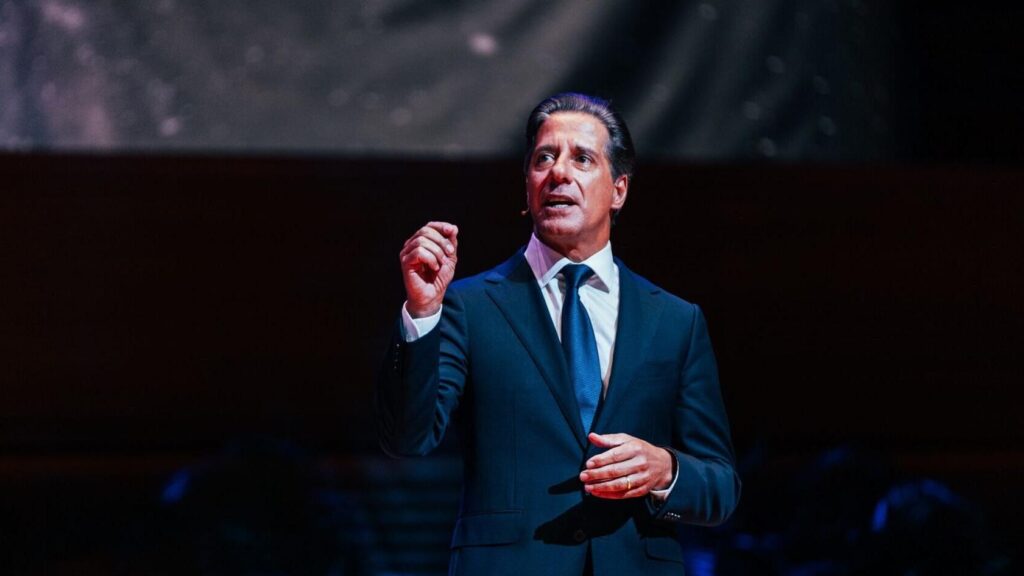
Los Angeles Unified School District board members unanimously approved the 2025-26 budget as they faced an almost $3 billion deficit.
The $18.8 billion budget puts the LAUSD at a $2.9 billion deficit with its projected revenue for the next fiscal year at $15.9 billion. Though there are clear spending gaps, board members are positive that the district will continue to have financial stability.
“Today I, and all of the Board members present, supported a budget that keeps our District on strong financial footing and reflects our shared commitment to students,” board member Nick Melvoin said in a press release. But he added he would like the district to consider more innovative ways to generate revenue to invest in students’ success.
“This budget reflects the gravity of our district’s current financial situation, investing equitably for both the short- and long-term,” board member Tanya Ortiz Franklin said in a press release.
During Tuesday’s board meeting, Superintendent Alberto M. Carvalho highlighted the new amended budget investments of almost $60 million to programs like the Black Student Achievement Plan, accelerated arts investment, protection and training toward supporting LGBTQ+ students.
“They (the budget) are above all ethical and moral priorities that our school district should embrace. Doing the right thing despite the opposition,” said Carvalho. “We are on the right side of history as we make these budgetary investments.”
Parents shared their concerns during the meeting.
“This system fails families,” Maria Palma told the board. “The focus that you continue to have, the only clear hard data that we ever see are the dollars that are budgeted — of which the largest expenditures of course are salaries and benefits. So the focus here is the dollars on their way out. But where in the bargaining agreements are student academic outcomes?”
“Now you continue to have decreasing enrollment due to dismal academic outcomes and poor fiscal management,” Palma said. “Your system that you created is rotting from within.”
Though LAUSD student enrollment has significantly decreased in the past two decades — from 747,009 in 2003-04 to 387,152 students this year — board members continue to support budget increases.
“The principles and values reflected in this budget uphold our promise to student equity,” Carvalho said. “While the structural deficit we face is unwelcome, our team has adopted a responsible framework with flexible guardrails that are adaptive to our economic reality. We will continue to monitor the budget throughout the year, preparing for future challenges while maintaining transparency.”
Questions remain as A’s stadium breaks ground in Las Vegas

Las Vegas has “broken ground” on the still unconfirmed $1.75 billion Athletics baseball stadium.
The city’s latest stadium project is drawing heavily on public funds — $380 million from Nevada and Clark County. That’s raising questions about whether taxpayers can expect a home run from their investment. For now, the A’s, who were previously in Oakland, are playing in Sacramento until a Las Vegas stadium is built.
“I have no doubt this is done in 2028,” Athletics President Marc Badain told The Associated Press. “You know the workforce here; they’re all here and ready to get going.”
The Las Vegas area has taken major steps to make this project a reality. This past October the 1950s mob-era Tropicana casino on Las Vegas Boulevard was blown up to make space for the nine-acre plot of the potential Las Vegas Athletics stadium. Plans call for the stadium to rise among casinos on the famous Las Vegas Strip, which is in an unincorporated area outside city limits.
But the groundbreaking ceremony Monday reflected the hesitations that Nevadans have around calling the Athletics their team. With the big names of Nevada politics present, the classic suit-clad, golden shovel-holding groundbreaking happened out of a baseball display filled with dirt, which was not on the ground. Heavy machinery dominated the photo shoot background, but they turned out to be props rented for the day.
Looking to find the funds for his $1.1 billion share of the stadium project, Athletics owner John Fisher has begun the process to sell his Major League Soccer team, the San Jose Earthquakes. The $600-million sale would plug some important holes but leaves a big price tag up in the air for Fisher. Meanwhile, Nevadan taxpayers have already been signed up to pay the sizable $380 million chunk of the total for the stadium.
The public funding was approved through the 2023 legislative session’s Senate Bill 1, mirroring the $750 million of public funds approved for the NFL Las Vegas Raiders Allegiant Stadium in 2016.
The $2 billion Allegiant Stadium has widely been considered a financial success, regularly being named the top stadium concert earner nationally, raking in over $119 million in 2024.
But like the Athletics’ potential future stadium, the vast majority of these earnings goes to the owners, who have made a good return on investment, while taxpayers can only hope to get their money back through increased tourism. Sports economists generally agree that stadiums shift money in an economy, not necessarily draw in new business to an area.
And all of this is happening amidst financial strains in Nevada, which saw a near $200 million state budget deficit earlier this year.
Seattle PD forwards felony assault charge to prosecutor 10 days after journalist attacked
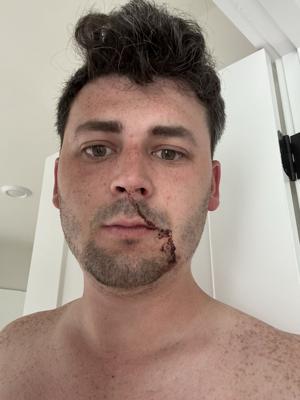
Seattle police detectives have identified the suspect and referred a felony assault charge to the King County Prosecuting Attorney’s Office against the alleged attacker in a brutal assault on an independent journalist covering anti-ICE protests in Seattle.
Cam Higby told The Center Square that Antifa members assaulted him as he attended the June 14 “No Kings Day” protests in Seattle at a Department of Homeland Security building.
“There is probable cause to believe that Assault 2nd Degree (RCW 9A.36.021) occurred,” Sgt. Patrick Michaud of SPD Public Affairs emailed The Center Square. “Detectives referred criminal charges to the King County Prosecuting Attorney’s Office (KCPAO).”
In a Wednesday interview, Higby said he is pleased that SPD is recommending charges against 33-year-old Jeremy Lawson of Monroe, but frustrated that it took so long and that the suspect has not been arrested.
“It has to be the slowest criminal justice system in the country,” he said. “If I [were] in my hometown in New York right now and I went and I walked down the street and punched somebody in the face, I’d be in handcuffs that day and facing charges the next day.”
Higby does not blame the Seattle detective assigned to his case for the delay.
“The detective wants to do something about it. He cares about the case, but the problem is the prosecutor,” he explained. “We have everything from this guy, who has a tattoo on his face. And it’s not sufficient evidence, right? We have the Amazon link to the shoes he was wearing during the attack, and I have linked those shoes back to pictures he has posted on Facebook.”
Higby continued: “I don’t know if there could be a more solid case outside of finding his fingerprints on my gas mask, but it’s really not the detective’s fault. It’s just that the detective has clearly been in this position before, where they have somebody dead to rights with irrefutable evidence, and the prosecutor still doesn’t seem to want to prosecute.”
The vicious attack was captured on video by Jonathan Choe, another independent journalist who on Wednesday told The Center Square that he, too, is skeptical the prosecutor will follow through with charges against the suspect.
“Honestly, I’m so cynical. I have very low expectations for anything to happen, especially since, you know, we’ve heard from not only the prosecutor’s office, but also from SPD they’re not going to even charge in these protest cases as we’ve seen unless it’s extremely serious, right? Unless someone gets shot or stabbed. So, you know, we’ll see what happens,” Choe said.
Choe also mentioned that the suspect has not been arrested.
“This guy’s still on the loose, and this happened way more than a week ago,” he said. “I think if it [were] any other context or circumstance, this guy would have been in handcuffs by now.”
Choe noted that he and other journalists who reported on the attack, including the victim, provided everything SPD needed to refer charges, including photos, videos, and the suspect’s name and address, but it took 10 days for the charges to be referred.
“I mean, what is it going to take in this day and age to get criminals off the streets, especially when we do the job for the cops?” Choe asked.
KCPAO Director of Communication Casey McNerthney responded to The Center Square’s email request for information on the case.
“That case referral will be reviewed individually by senior deputy prosecutors in our criminal division, which is the normal procedure for an assault referral such as that,” McNerthney responded via email. “I’m not familiar with what was received, but a senior deputy may request any available video and medical details if those are not yet submitted. I need to note that defendants are innocent until proven guilty in court.”
He added that video and medical records must be sent from the investigating police agency, not obtained from social media.
“In other words, the court won’t accept those if a prosecutor were to get them from an online post,” McNerthney said.
Higby provided those videos and photos to SPD, which he believes should be ample evidence to identify the attacker.
Higby told The Center Square he was grateful Choe stayed with him after the attack and convinced him to leave the area for his safety, even though Higby had called 911 and wanted to wait for police to show up.
“I told him this was not a high-priority case for them, especially when they’re dealing with Antifa militants,” Choe said. “They don’t even have enough time for that. So, I told him, just let me get you out of this place, to a safe place, and we can reassess, and I’m so glad we did because as I was driving him back, he wasn’t feeling well. And lo and behold, the next day, he got a severe bloody nose, and he went to the hospital, and they said he sustained a serious concussion.”
Six days after the attack – June 20 – Higby told The Center Square he was still suffering headaches and blurred vision from the concussion.
He was wearing a helmet, but believes the blows to his head, which left large dents and divots in the helmet, came from SAP gloves, which are weighted knuckle gloves, he said the attacker was wearing.
“It’s very likely that if I [weren’t] wearing a helmet, that I would have been either killed or critical,” Higby said. “They’re just brass knuckles basically.”
McNerthney did not indicate an expected timeline for a charging decision.
WATCH: Republicans, Democrats feud over Trump admin’s immigration policies
Members of the U.S. House Judiciary Committee sparred over President Donald Trump’s immigration policies during a hearing to examine the visa process Wednesday.
Democrats blasted the Trump administration for “torturing our laws and trampling our constitution,” while Republicans fired back by citing cases of Americans who were killed by undocumented immigrants.
Ranking Member Rep. Jamie Raskin, D-Md., accused Trump of initiating a “war on immigrants” since taking office in January. Raskin criticized Trump’s immigration approach, saying that the president has reformed the immigration system for his own political gain.
“President Trump has turned our visa system into a terrain of caprice and selective punishment he can wield against his chosen political enemies and use to demonize and scapegoat immigrants,” Raskin said.
Trump campaigned all last year on shutting down the U.S. border with Mexico and deporting violent criminal noncitizens. It was an issue most voters agreed with him and helped him win the election.
Under President Joe Biden’s administration, more than 14 million noncitizens entered the country illegally, The Center Square reported.
But Democrats also argued that the Trump administration’s immigration policies are a gateway to opposing all forms of immigration, including legal pathways.
“It cements us in the eyes of the world as a vindictive, isolationist and increasingly undependable and authoritarian country,” Raskin said.
Immigration Subcommittee Chairman Rep. Tom McClintock, R-Calif., defended the president’s reforms since taking office, arguing that these policies are intended to continue to support legal ways to immigration but hone in on rooting out “bad actors” who wish to commit immigration fraud.
“America has the most generous legal immigration system in the world,” McClintock said.
Republicans redirected criticism to Biden, saying that the Biden administration’s border policies led to a rise in violent crimes in the U.S. specifically committed by noncitizens in the U.S. illegally.
U.S. Rep. Chip Roy, R-Texas, cited the case of Jocelyn Nungaray, a 12-year-old girl who was sexually assaulted and killed by two undocumented immigrants in Houston, Texas.
“She’s one of dozens, hundreds, thousands of examples of Americans who are dead because of policies that were advocated for by the Biden administration,” Roy said.
U.S. Rep. Tom Tiffany, R-Wis., highlighted examples of crimes in his district, including an instance in which a father of three was killed in a car crash after a foreign national was driving recklessly while under the influence.
Witness Alex Nowrasteh, vice president for Economic and Social Policy Studies at the Cato Institute, rebutted Republicans’ arguments, saying these cases should not be taken as representative of the immigrant population as a whole.
“Every death and every murder is a tragedy, and those individual criminals should be punished to the fullest extent of the law,” Nowrasteh said. “But that is not a reason to punish other people who are not criminals.”