National News
AZ Legislature passes long-delayed $17.6 billion budget
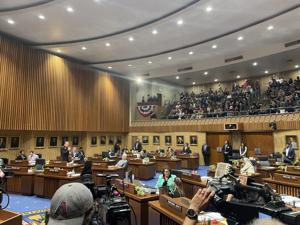
The Arizona Legislature Friday passed a budget that Gov. Katie Hobbs is expected to sign, with just days left to keep the government running.
“When it comes to the budget, it takes three to tango,” state Sen. John Kavanagh, the Republican who chairs the Senate Appropriations Committee, said on the floor before senators approved Senate Bill 1735, the General Appropriations Act, by a bipartisan vote of 21-8. He was referring to the Senate, the Governor’s Office and, as the last partner in the budget dance, the House.
“The only losers, in my opinion, are the reporters, who until January will be desperate for stories,” Kavanagh said, referring to the start of the next regular legislative session.
The House approved the newest version of the $17.6 billion budget Thursday night after Hobbs vetoed two of the House’s budget proposals Wednesday night, while noting she supported the budget the Senate passed June 20.
Senators from both parties noted Friday’s legislation, despite some changes by the House, is virtually identical to the earlier Senate budget.
Voting yes for the latest budget, Senate President Warren Petersen, R-Gilbert, criticized the House for its tardiness in passing a budget that Hobbs would sign.
“The more savvy media folks know what happened. We should have finished two months ago,” Petersen said, speaking calmly but with a serious tone. “For those who allowed this to happen, I would say, ‘Get your house in order,’ because I’m certain this body and the public won’t be fooled a second time.”
Without a budget signed by Hobbs, the Arizona government would shut down Monday for the first time in its history.
Republican and Democratic lawmakers largely agreed the budget was one they could live with in the face of a divided government. Republicans hold majorities in both houses of the Legislature, but lack enough seats to override the Democratic governor’s vetoes.
Sen. Lauren Kuby, D-Tempe, said on the floor that the budget wasn’t perfect and fails to fully reflect “the people’s proposals, the people’s values.”
But she said she would vote for the bipartisan budget.
“As it turns out, the third time is a charm,” Minority Leader Priya Sundareshan told senators.
“The House has finally come to the conclusion that this chamber landed on weeks ago,” the Democrat said.
“Despite the changes we’ve seen from the House, the budget we vote on today is nearly identical to” what the Senate approved June 20, Sundareshan said.
While noting she was still voting “no” on the budget, Sundareshan noted passage would keep the Arizona government operating.
“Arizona will not shut down,” she said.
Sen. Kiana Maria Sears, who’s been in the Senate for 90 days as of Friday, said she was grateful the budget includes money for the arts, which helps the economy to thrive. She added she was glad to secure an additional $2 million for the Commission for the Arts, $2 mllion more for the Area Agency on the Aging and $2 million for a program to encourage Supplemental Nutrition Assistance Program recipients to purchase fresh, farm-to-table Arizona food.
In a news release, the Democrat said she was proud of the work she and Minority Whip Rosanna Gabaldón did to prioritize spending for higher education and capital investments for state universities.
“I look forward to the day when we can fully fund education,” Sears said on the Senate floor.
DRC, Rwanda sign U.S.-brokered peace deal Friday
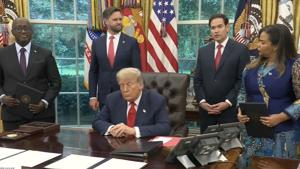
President Donald Trump hosted the leaders of the Democratic Republic of the Congo and Rwanda at the White House Friday afternoon after Secretary of State Marco Rubio presided over their signing of a peace agreement aiming to end decades-old unrest.
The countries border each other in the heart of Africa and have been at war for 30 years for reasons rooted in the Rwandan genocide. The violence between Rwandan and DRC militant groups, and at times other African states, has resulted in approximately six million deaths, according to some estimates. The U.S. mediated the agreement, which aims to end fighting in the eastern Congo while also securing access to more critical minerals for the U.S.
“We engaged with the two parties in early April, and within three weeks, they signed the declaration of principles. And now, within about two months from that, we have signed today the final peace agreement,” said Massad Boulos, the senior advisor for Africa at the U.S. Department of State.
The visit comes on the heels of Trump’s second declaration of a ceasefire between Iran and Israel that appears to be holding, even though both countries broke the first one Tuesday. Trump has taken credit for ending what he calls the ‘12-Day War’ between the two countries, citing both Saturday’s U.S. strikes on Iranian nuclear facilities and his calls for a ceasefire – and many of his supporters agree.
U.S. Rep. Buddy Carter, R-GA, nominated Trump for the Nobel Peace Prize earlier this week for his action in the conflict.
Pakistan also nominated the president for the prize for his intervention in its conflict with India. After an initial attack by Pakistan that left 26 dead in India, followed by retaliation from India, it appeared the two nuclear-armed countries were headed for war. But the two agreed to sign a ceasefire deal after diplomatic efforts from Trump, Rubio and Vice President JD Vance. An African reporter at the White House Friday told Trump that the DRC president is considering nominating him as well. Trump has been nominated before for the Abraham Accords but has not been selected.
Foreign affairs have played an outsized role in the first roughly five months of the president’s second term, as the Russia-Ukraine war rages on, Pakistan and India seemed headed for war, Israel and Gaza continue to fight, and most recently, Israel and Iran traded blows. The president has urged ceasefires in each case and appealed for a lasting end to all the conflicts.
SCOTUS ruling on universal injunctions to impact dozens of cases
The U.S. Supreme Court’s Friday ruling limiting the power of judges to block a president’s policies nationwide will have widespread implications for similar lower court decisions, an analyst says.
In a 6-3 decision in a case challenging President Donald Trump’s executive order ending birthright citizenship, the Supreme Court said a lower court’s issuance of an injunction could only apply to those who sue to block Trump’s orders, not the U.S. as a whole.
More than 300 lawsuits have been brought against the administration in its first five months, with federal judges issuing 40 universal injunctions against Trump’s policies, according to U.S. Attorney General Pam Bondi.
All of those universal injunctions likely face similar limitations, Carrie Severino – president of JCN, a group “dedicated to strengthening liberty and justice in America” – told The Center Square.
Severino called the court’s ruling “outstanding,” noting that lower courts have overstepped their bounds in issuing universal injunctions against the Trump administration.
“This is an issue that lower courts have tried to exploit,” Severino said. “It’s good to see that the [Supreme] Court pushed back so firmly. Any court that is worth its salt” should get the message.
Severino said Friday’s decision will directly impact the other cases against the Trump administration.
“Any case that has a universal injunction in it, they are all in different stages in court, but yes, this ruling sets precedent” and the lower courts have to take notice.
In most of those cases, she said, the Trump administration likely will quickly file motions demanding the lower courts reconsider their universal injunctions.
“I would think there will be a very swift action [from the Trump administration] because this decision clearly states that those injunctions were outside their authority,” Severino said. “In some instances, the courts themselves may say they will take a look” before any new filings, but in most cases, “you will have to at least ask before you receive.”
Even critics of the decision acknowledged its wide-reaching implications.
“The Supreme Court has green-lighted Trump to run roughshod over a critical constitutional right,” Analilia Mejia and DaMareo Cooper, co-executive directors of Popular Democracy, said in a statement. This is not a slide into authoritarianism – this is a one-way plummet.
“This ruling takes away the power of lower courts to block unconstitutional moves from the government on a federal level – allowing the government to act with impunity and apply law inconsistently across the country,” they wrote.
Severino compared Justice Amy Coney Barrett’s majority opinion to past rulings from the late Justice Antonin Scalia, an originalist and one of the most influential justices in Supreme Court history.
“Universal injunctions likely exceed the equitable authority that Congress has given to federal courts. The Court grants the Government’s applications for a partial stay of the injunctions entered below,” Barrett wrote in the decision for the majority. “But only to the extent that the injunctions are broader than necessary to provide complete relief to each plaintiff with standing to sue.”
“Justice Barrett’s decision was Scalia-esque. It was a very clear decision, very concise and to the point,” she said. “I’m excited the court was as clear as it was. … It’s instructive that the court did a very careful walkthrough of the history here.”
Severino also noted Justice Samuel Alito’s concurring opinion.
“Today’s decision is a victory for our constitutional separation of powers,” she said in a statement. “Justice Alito’s concurrence sounds the alarm that litigants have been attempting to abuse class actions and standing processes as well and shows that the Court is well aware of the problem and prepared to police those boundaries to shut down judicial activists.”
Rural Nevada sees $34 million federal payday
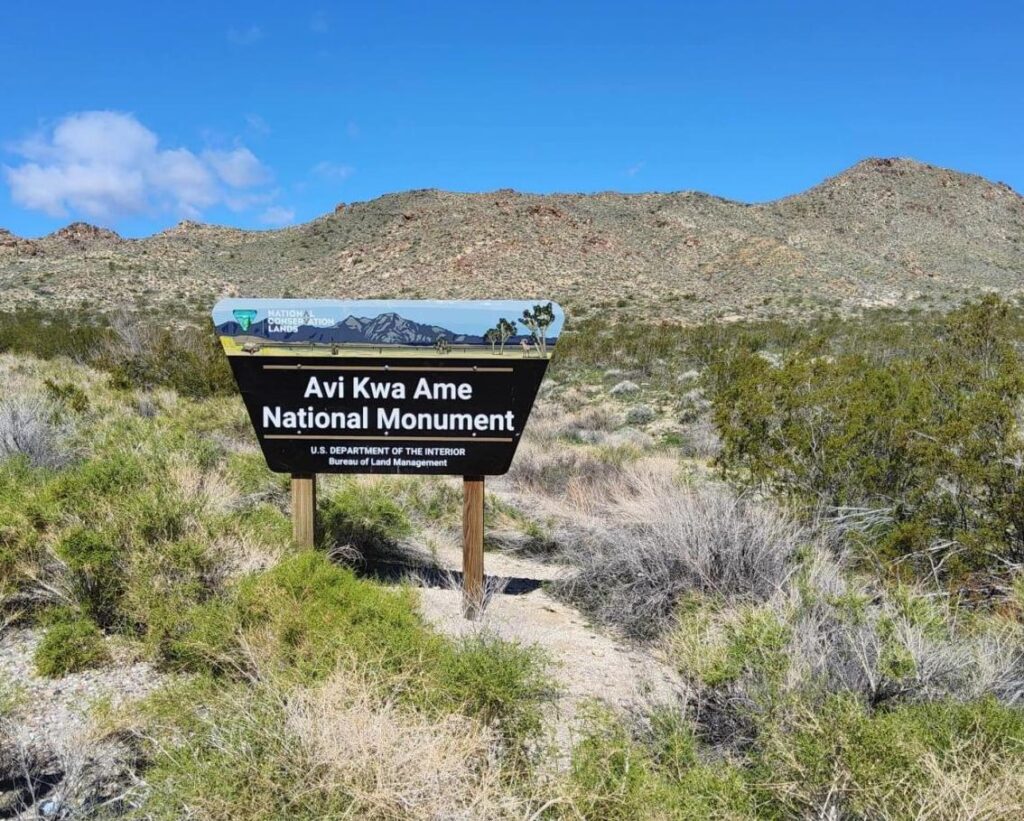
Nevada counties have received their annual federal land payments, or Payments in Lieu of Taxes, to the tune of nearly $34 million.
The federal PILT program paid counties across the United States to make up for funds lost by not being able to develop federally owned lands. Despite being the state with the largest portion of federally owned land, Nevada received less PILT money than nine other western states.
“PILT payments support vital services that help rural counties and towns thrive, from public safety to infrastructure and education,” said Secretary of the Interior Doug Burgum in a press release. “We recognize that local governments are the backbone of our nation, and we will continue working to support their efforts to grow local economies and serve their citizens.”
The 2025 PILT payment of $33,801,823 was more than the Silver State has ever received in a single year since the program began in 1977. The federal funding comes amidst efforts by the Trump administration to sell vast portions of western public lands to help fund tax cuts, a move that has faced resistance in Nevada.
“Nevada’s rural communities rely on PILT funding to complete projects and carry out critical services,” said U.S. Sen. Catherine Cortez Masto, D-Nevada, in a press release. “Close to a million more than last year — to ensure local governments across the Silver State can continue to deliver for families that call our rural counties home.”
Cortez Masto cosponsored the Small County PILT Parity Act to increase funding through the program for counties with smaller populations. The bill was introduced in March but has not been acted on since.
Four counties — Clark, Washoe, Elko and Nye — received over $4 million in PILT payments. Because the payment is curved by population, Clark County received nearly $1 per federally owned acre, with several other counties receiving a better ratio. With more than 2.2 million residents, Clark County is the state’s most populous county, and it’s where Las Vegas is located.
Storey County, with the least publicly owned land, was awarded the least amount of PILT funds at $50,033.
Unlike many federally funded programs, PILT money can be used for any reason by Nevada counties, but is most often put to operational costs such as infrastructure or public schools.
For information on how much PILT money a Nevada county received, click here for the U.S. Department of Interior website.
Senate Republicans rework SNAP reforms in ‘big, beautiful bill’ to skirt filibuster
Senate Republicans have finally found a way to include their SNAP reforms, worth $41 billion in federal savings, within the One Big Beautiful Bill Act.
The OBBBA – a massive budget reconciliation bill implementing the president’s tax, energy, border, and defense policies – could increase federal deficits anywhere from $2.4 to $4.5 trillion over the next decade, according to most budget experts.
To offset the cost, most of which stems from the bill’s extension of the 2017 Tax Cuts and Jobs Act, House committees found roughly $1.7 trillion in spending offsets, including tens of billions by reforming SNAP eligibility requirements and funding methods.
After the bill’s House passage, the Senate Committee on Agriculture, Nutrition, and Forestry revised the House’s SNAP provisions, which included closing work requirement loopholes and making all noncitizens aside from legal permanent residents ineligible for food stamps.
Most notably, the House-passed OBBBA included a provision incentivizing states to crack down on improper payments by making them shoulder a portion of the program costs. But the Senate’s SNAP changes expanded on the House’s — which required states to cover 50% of administrative costs and 5% of their SNAP benefit cost share — by hiking the state administrative cost burden to 75%.
Additionally, under the House plan, states’ benefit cost contributions would increase the higher their payment error rates, with states having an average error rate of 10% paying 25% of SNAP benefit costs. The Senate version exempted states with an error rate below 6% from this requirement and lower the 25% cost share cap to 15%
Plans changed, however, after the Senate parliamentarian ruled that the Senate’s state cost-sharing plan and immigrant restrictions violated the Byrd Rule, making the OBBBA ineligible to bypass the filibuster and pass with a majority vote.
After mild panic and a few social media rants, Republicans came back with an amended version of the SNAP reforms, which the parliamentarian approved. The updated Senate plan gives states some breathing room to states by revising which fiscal year payment error rate states can use for the cost-sharing plan. Beginning in 2028 and continuing onward, states can use their payment error rates from three fiscal years prior.
The new plan also expands both noncitizen eligibility for SNAP benefits and the populations who are exempted from work requirements.
Despite resulting in less savings than the previous legislation, the inclusion of some cost-cutting SNAP reforms left Republicans on a hopeful note.
“I’m proud of the legislation we’ve crafted that reflects Senate Republican policy priorities,” Senate ANFC Committee Chairman John Boozman, R-Ark., said in a statement. “This is a practical approach to improve SNAP by reducing waste, enhancing accountability, and encouraging recipients to move toward self-reliance through work and training.”
Trump suspends trade talks with Canada
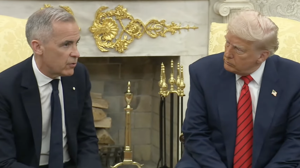
President Donald Trump said Friday that the U.S. was ending trade talks with Canada after months of back-and-forth between the neighboring trade partners.
Trump said the talks were over just days before his self-imposed 90-day deadline.
“We have just been informed that Canada, a very difficult Country to TRADE with, including the fact that they have charged our Farmers as much as 400% Tariffs, for years, on Dairy Products, has just announced that they are putting a Digital Services Tax on our American Technology Companies, which is a direct and blatant attack on our Country,” Trump wrote on Truth Social.
Trump said the digital services tax was a copy of a European Union proposal.
“Based on this egregious Tax, we are hereby terminating ALL discussions on Trade with Canada, effective immediately,” the president said. “We will let Canada know the Tariff that they will be paying to do business with the United States of America within the next seven day period.”
Earlier this month, the two nations seemed close to striking a deal.
Trump said he and Canada Prime Minister Mark Carney had different concepts for trade between the two neighboring countries during a meeting at the G7 Summit in Kananaskis, in the Canadian Rockies.
Asked what was holding up a trade deal between the two nations at that time, Trump said they had different concepts for what that would look like.
“It’s not so much holding up, I think we have different concepts, I have a tariff concept, Mark has a different concept, which is something that some people like, but we’re going to see if we can get to the bottom of it today.”
Shortly after taking office in January, Trump hit Canada and Mexico with 25% tariffs for allowing fentanyl and migrants to cross their borders into the U.S. Trump later applied those 25% tariffs only to goods that fall outside the free-trade agreement between the three nations, called the United States-Mexico-Canada Agreement.
Trump put a 10% tariff on non-USMCA compliant potash and energy products. A 50% tariff on aluminum and steel imports from all countries into the U.S. has been in effect since June 4. Trump also put a 25% tariff on all cars and trucks not built in the U.S.
Economists, businesses and some publicly traded companies have warned that tariffs could raise prices on a wide range of consumer products.
Trump has said he wants to use tariffs to restore manufacturing jobs lost to lower-wage countries in decades past, shift the tax burden away from U.S. families, and pay down the national debt.
A tariff is a tax on imported goods paid by the person or company that imports them. The importer can absorb the cost of the tariffs or try to pass the cost on to consumers through higher prices.
Trump’s tariffs give U.S.-produced goods a price advantage over imported goods, generating revenue for the federal government.
ICE provided medical care to pregnant woman wanted for homicide
Contrary to a local media report and claim by a Democratic congresswoman, medical care was provided to a Guatemalan woman detained by immigration authorities – and she was detained because she was wanted in connection to a homicide, the Department of Homeland Security said.
A local news outlet in Nashville reported that Guatemalan national Iris Dayana Monterroso-Lemu, who was illegally living in Lenoir City near Knoxville, miscarried after she was arrested and detained by U.S. Immigration and Customs Enforcement.
In response, U.S. Rep. Pramila Jayapal said, “A pregnant woman lost her baby after ICE refused to give her prenatal care. She begged for help and was denied. She was fed food full of cockroaches. She was forced to sleep on the floor. This is absolutely disgusting and we should all be outraged.”
After her arrest in March, Monterroso-Lemu was transferred to different detention facilities in Illinois, Tennessee, Alabama and eventually to the Richwood Correctional Center in Louisiana.
The Nashville Banner includes several quotes from Monterroso-Lemu, claiming ICE arrests are being conducted “in a cloak of secrecy.”
Monterroso-Lemu was twice arrested for child abuse/neglect by the Loudon County Sheriff’s Office.
She also had an active warrant charging homicide in Guatemala. She illegally entered the U.S. in 2018 under the first Trump administration and was deported to Guatemala on May 9, 2025, DHS said.
The outlet cites Monterroso-Lemu claiming federal officials “didn’t give me medical attention, nowhere, not in Louisiana, not in Alabama,” which DHS says is false. “She received prenatal care, including an ultrasound and OB-GYN visit, dental care, and medication. She was also admitted to a hospital and saw multiple nurses,” DHS said.
She also claims she “asked for ultrasound” but was “only tested for blood pressure and urine,” according to the news outlet.
DHS says this claim is also false and that she received “prenatal care including a fetal doppler ultrasound.”
The news outlet quotes her claiming she “thought she was having a stroke, but they didn’t give her medical exam.”
DHS said that “as soon as she identified the distress on April 29, ICE provided immediate medical assistance.”
The outlet also claims she “begged to go to the hospital, but was told no;” DHS says ICE officers “sent her to a hospital immediately to receive medical care” and has medical records to prove it.
The report also states that she claims she was sleeping on the floor at a facility in Alabama, which DHS refuted as false, saying she “had a bed in her cell.”
She is also quoted as saying, “She was starving and not getting the nutrients she needed. Spaghetti had cockroaches.”
Everyone detained in ICE facilities “are provided appropriate dietician cleared menus daily, per ICE Performance Based National Detention Standards,” DHS said.
The news outlet also cites her claiming she was mistreated and mocked by guards; DHS says there are no records of any grievance claims filed.
DHS says it has documentation to prove she was provided with a range of medical care. The care she received was at no charge to her. It was funded by U.S. taxpayers.
DHS agencies regularly report on the condition of those in detention, including those injured or who die while in federal custody.
Landry signs ‘Make America Healthy Again’ bill into law
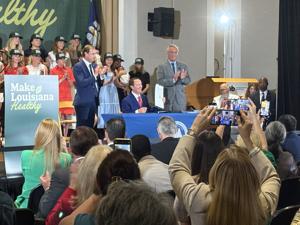
Gov. Jeff Landry, alongside U.S. Health and Human Services Secretary Robert F. Kennedy Jr., signed a sweeping new law aimed at reshaping how Louisiana regulates food, nutrition, and consumer health.
“A healthy independent population reduces reliance on Medicaid, freeing us from government dependence,” Landry said.
Senate Bill 14 bans schools from serving foods containing certain artificial dyes, preservatives, and sweeteners linked to health risks and requires schools to prioritize locally sourced food when possible.
It also mandates that restaurants disclose when they use seed oils like soybean, corn or canola in food preparation. Additionally, doctors and nurse practitioners in several specialties must now complete continuing education on nutrition and metabolic health every four years.
In his speech, Kennedy went on at length about the the public health crisis facing America.
“We have a chronic disease epidemic in this country now, and it is unlike anything humanity has ever faced,” Kennedy said. “We are literally the sickest country in the world.”
According to Kennedy, the U.S. spends $1.7 trillion fighting chronic disease.
Tim Moise, a farmer out of Sunset Louisiana, expects the legislation to put healthier foods on family tables.
“Pasture raised pork: That’s the T-Moise way,” the family farm’s website reads. Moise said in an interview that his hogs were “grass fed and grass finished” and raised with no preservatives or genetically modified organisms.
According to Moise, the shift from traditional, “all natural” animal fats to seed oils sent demand away from locally sourced foods to processed foods and helped cause the surge in heart disease among Americans.
For a long time, Moise said, he was unable to justify a slaughterhouse with the demand for locally-sourced meats so low. But that has recently changed, and he expects the newly established laws and attitude shift driven by the Make America Healthy Again movement to help.
“Did you know that McDonald’s used to use beef tallow to make their fries from 1940 until phasing it out in favor of seed oils in 1990?,” Kennedy wrote on X. “This switch was made because saturated animal fats were thought to be unhealthy, but we have since discovered that seed oils are one of the driving causes of the obesity epidemic.”
Kennedy’s “Make America Healthy Again” movement has garnered national attention, and Louisiana is the first state to pass legislation aimed at targeting “Big Food”.
“Despite fierce opposition among big food, we received not one single no vote on this bill,” Sen. Patrick McMath, R-Covington, said. “This bill is about transparency, both for restaurants and for food manufacturers, to disclose the types of ingredients that are serving us and the potential impact that those ingredients could have on our bodies.”
Moise was among several local farmers invited to the Pennington Biomedical Research Center, including Cyrus and Maggie Long, who run a small family mushroom farm in St. Francisville with their two children.
“We are passionate about mushrooms and about Louisiana farmers. We are a small family-run business growing our mushrooms from petri dish to your dish,” the Longs’ website reads.
The Longs said they were especially excited about the law’s requirement that doctors and nurse practitioners complete nutrition and metabolic health training.
They believe it could help legitimize the medicinal benefits of mushrooms, which are increasingly studied for their role in supporting immune function, reducing inflammation, and improving cognitive health.
The Longs were selling their homemade lion’s mane tincture. Lion’s mane is a type of mushroom that has a growing scientific literature to back its use.
Texas congresswoman files bills to financially penalize sanctuary cities, rioters

A north Texas congresswoman has filed bills to financially penalize sanctuary cities and rioters targeting law enforcement.
U.S. Rep. Beth Van Duyne, a Republican and former mayor of Irving, filed the Recouping Funds from Sanctuary Cities Act of 2025, to financially penalize city governments that actively work against federal immigration enforcement.
The bill applies to political subdivisions of a state that implement statutes, ordinances, policies or practices that prohibit or restrict government officials from cooperating with federal immigration officials. It addresses sanctuary policies that prohibit government officials from sharing information about illegal foreign nationals with federal authorities and refuse to honor detainer requests made with their jails. Local governments that violate the law will be compelled to return unobligated federal funds they received while they obstructed federal immigration enforcement. The time period for recouping funds is retroactive five years from the date the law is enacted.
“By actively harboring and protecting criminal illegal aliens, sanctuary cities create unnecessarily dangerous circumstances for both law enforcement and law-abiding citizens all across our country,” Van Duyne said. As the former mayor of Irving, she said she knows “first hand … how easy it is to coordinate local law enforcement with Immigration and Customs Enforcement (ICE) operations to apprehend and deport criminal aliens.”
While mayor and working with ICE, law enforcement “removed thousands of criminal aliens” in Irving. Under her tenure, Irving became the fifth safest city in America, “not only for American citizens but also for immigrant populations who are the most likely to be preyed upon by violent alien criminals,” she said.
The law also includes a grace period allowing for jurisdictions to notify the attorney general that they corrected their policies and are cooperating with federal immigration enforcement.
Van Duyne says the bill is “a commonsense reform” that has become necessary because of increased attacks against federal agents. In the past few months, attacks against ICE officers have increased by 500%, with federal prosecutors and law enforcement officers being attacked, The Center Square reported.
In the 118th Congress, Van Duyne introduced the No Congressional Funds for Sanctuary Cities Act, which would prohibit the use of federal funds for congressional earmarks targeting state or local governments that identify as sanctuary jurisdictions.
She also introduced the Stop Funding Rioters Act in response to the violent riots in Los Angeles targeting federal immigration officers. The bill would make those convicted of misdemeanor or felony assault of a law enforcement officer, or of a felony related to a riot that destroyed a small business, ineligible to receive aid or participate in Small Business Administration programs.
“Taxpayer dollars should never be used to support individuals who violently attack law enforcement or destroy the livelihoods of hard-working Americans,” she said. “I am committed to protecting law enforcement, supporting small businesses, and ensuring that federal programs serve those who contribute to, rather than destroy, our communities.”
Administration celebrates Supreme Court ruling against nationwide injunctions
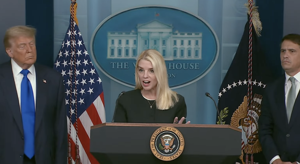
President Donald Trump and Attorney General Pam Bondi celebrated the U.S. Supreme Court’s 6-3 ruling against nationwide injunctions from federal courts at a joint news conference Friday.
More than 300 lawsuits have been brought against the administration in its first five months, with federal judges issuing 40 nationwide injunctions against its policies, according to Bondi. The administration has stood by its actions and the more than 160 executive orders from the president, arguing that its policies are lawful and that “rogue, activist judges” have allowed personal feelings and political leanings to interfere with the rightful interpretation of the law. An injunction temporarily blocks the implementation of the law or policy being challenged in court until either the conclusion of the lawsuit – which may take months or even years – or the lifting of the injunction by a judge.
“To put this in perspective, there are 94 federal judicial districts. Five of those districts throughout this country held 35 of the nationwide injunctions. Think about that… Thirty-five out of the 40 opinions with nationwide injunctions came from five liberal districts,” Bondi said.
A report from the Congressional Research Service that was updated May 16 lists 25 injunctions from Trump’s first 100 days in office in 2025. Among those were three injunctions issued against the president’s executive order reinterpreting birthright citizenship; two against the order ending diversity, equity and inclusion programs within the federal government; and two challenging the order prohibiting people identifying as transgender from serving in the military. The others countered orders suspending the U.S. Refugee Admissions Program, centering sex-based protections on biological definitions, withholding funds from foreign entities and requiring more proof of citizenship for elections.
“No longer. These injunctions have blocked our policies from tariffs to military readiness to immigration to foreign affairs, fraud, abuse and many other issues,” Bondi added.
The issue of nationwide injunctions came before the Supreme Court through a case challenging Trump’s birthright citizenship order, but Bondi said the legality of the order itself would be decided by the Court in October, at the start of its 2025-26 term.