National News
More than 80 dead, 51 missing as recovery efforts continue in Hill Country
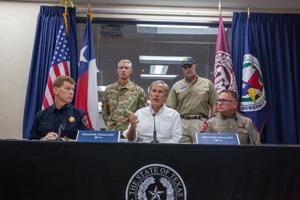
More than 80 people are dead and 51 are missing as a result of the July 4 flash flood event in Texas Hill Country, Gov. Greg Abbott said at a news conference Sunday night.
There are 59 confirmed deceased and 11 missing from Camp Mystic, in Kerrville and Kerr County, Abbott said. In the Central Texas area, there are confirmed 10 additional people deceased. Statewide, in all areas affected by flooding, there are 41 known missing.
But it’s unknown how many remain missing. Abbott said it was important to clarify that “there were so many people who were just camping out – not children in camps – but adults camping out near the river, people in RVs and things like that,” who are missing. “There are people who are missing, who are not on the known, confirmed missing because we don’t yet know who they are,” he said.
Authorities are involved in ongoing searches “throughout the entire river system to find anybody who may be missing,” he said. Abbott also called on members of the public to contact local Kerr County officials if they believe they know someone is missing who was camping in the area.
“Please contact the local officials in Kerr County and let them know that you have the name, identification and other information about a person who is suspected to be missing,” he said. “Call only if you have specific information,” otherwise calls could slow emergency response efforts, he said.
The state has deployed more than 1,500 personnel and more than 925 vehicles and equipment assets across 20 state agencies in response to the flood event.
Expected dangerous weather conditions continue, Abbott also warned, adding that “life threatening danger over the next 24 to 48 hours” exists. Flash flooding could occur in the regions of “the Big Country, Concho Valley, Central Texas and Kerrville,” he said.
“There are still public safety issues and lives to be saved in Kerr County, and all of these regions,” he said.
He urged Texans to remain vigilant and stay off the roads.
Texas Department of Public Safety Colonel Director Freeman Martin said three people have been reported missing in Williamson County, one has been recovered; the fire chief and a 17-year-old female are missing in Burnet County.
At least six people are confirmed dead and 17 are reported missing in Travis and Burnet counties as a result of flood waters, authorities confirmed to the Dallas Morning News.
Recovering operations are ongoing for everyone including “every single one of the children who were at Camp Mystic, as well as anybody else,” Abbott said. After visiting what’s left of the camp, he said, “it was nothing short of horrific to see what those young children went through.”
“We know that parents and families, they want information, they want closure, and we want them to know that we are working as swiftly as possible to get them accurate information that will provide that closure,” Abbott said.
More than 850 people have been rescued, the majority by the Texas Military Department.
Texas National Guard helped rescue/evacuate 525 people, 366 by air and 159 by ground; 20 were in San Sabo County and five in Burnet County, Texas Military Department Adjutant General Major General Thomas Suelzer said.
One single U.S. Coast Guard officer rescued a record 165 people.
U.S. Coast Guard rescue swimmer Petty Officer Scott Ruskin “directly saved an astonishing 165 victims in the devastating flooding in central Texas,” Department of Homeland Security Secretary Kristi Noem said. “This was the first rescue mission of his career and he was the only triage coordinator at the scene. Scott Ruskin is an American hero. His selfless courage embodies the spirit and mission of the USCG.”
The Trump administration is supporting recovery efforts, including the president already approving a major disaster declaration authorizing FEMA assistance.
Despite national, state warnings, Kerr County, Camp Mystic didn’t evacuate

As the death count in the Independence Day flooding in central Texas has now surpassed that of Hurricane Harvey, with dozens of children reported dead and missing who were camping at Camp Mystic in Kerr County, Texans are asking why a warning system wasn’t in place and why the camp didn’t evacuate when others did.
On Wednesday and Thursday, a series of emergency weather alerts were issued by the National Weather Service and Texas Division of Emergency Management. Despite a decades-long history of flash floods in the Texas Hill Country, and a 1987 flash flood that killed 10 teenagers at a Christian Camp in neighboring Kendall County, Kerr County didn’t have an emergency warning system in place.
This legislative session, a bill to create a coordinated emergency warning system and provide grant funding for rural communities died in the Republican-controlled Senate.
The NWS-Austin/San Antonio issued a Flood Watch Wednesday for several counties, including Kerr County; the NWS San Angelo also issued a flood watch for several counties.
Also on Wednesday, TDEM activated state emergency response resources through 10 state agencies anticipating increased threats of flooding in West and Central Texas ahead of the holiday weekend.
“According to the National Weather Service, heavy rainfall with the potential to cause flash flooding is anticipated across West Texas and the Hill Country beginning tonight and is expected to last a few days. Texans are encouraged to monitor local forecasts and avoid driving or walking into flooded areas,” TDEM said. The next day, it escalated state emergency operations readiness and activated additional resources.
At 1:14 am on Friday, the NWS Austin/San Antonio issued a “life threatening flash flooding” warning for Bandera and Kerr counties, stating, “Some locations that will experience flash flooding include, Kerrville, Ingram, Hunt, Waltonia, Kerr Wildlife Management Area and Lost Maples State Natural Area.”
The NWS also had five people on duty, more than the standard two, to deliver forecasts for its Austin/San Antonio office covering the region, Jason Runyen, a NWS meteorologist, said.
The Department of Homeland Security also said, “The National Weather Service executed timely, precise forecasting and warnings, despite unprecedented rainfall overwhelming the region.” It also published a timeline of NWS alerts.
“These warnings should have provided officials with ample time to evacuate camps such as Camp Mystic and get people to safety,” AccuWeather, which also issued reports on Thursday, citing NWS alerts, said.
By 4 a.m. on Friday, heavy rain caused the Guadeloupe River to rise by more than 26 feet in less than an hour resulting in a flash flood that tore through structures, wiped out RV parks, camper vans and cabins where vacationers or residents were sleeping.
At a news conference on Friday, Kerr County Judge Rob Kelly said he didn’t know why Camp Mystic and other camps in the county weren’t evacuated.
“Why weren’t these camps evacuated?” a reporter asked.
“I can’t answer that,” the judge replied. “I don’t know.”
“You’re the judge … the top official here in this county. … There’s kids missing. These camps were in harm’s way,” the reporter said.
The judge replied that no one knew “this kind of flood was coming. We have floods all the time. This is the most dangerous river valley in the United States and we deal with floods on a regular basis. When it rains, we get water. We had no reason to believe that this was going to be any anything like what’s happened.”
On Sunday, Kelly said that several years ago, county officials considered implementing a flood warning system that would function like a tornado warning siren, before he was elected, but never did.
KXAN first reported that county officials didn’t issue warnings until four hours after the NWS alerts, after 5 a.m. and 7 a.m., well after an untold number of people had already been swept away.
The Texas House, under former Speaker Dade Phelan, R-Beaumont, sought to address crisis communication failures at the local and state level last year.
After a disastrous state response to the Panhandle Wildfires, which destroyed more than 1.2 million acres and caused more than $1 billion in economic losses, the Texas House launched an investigation and proposed solutions. State Rep. Phil King introduced a bill to provide grant funding for rural community emergency alert systems and streamline and improve first responder communications. It passed the House with bipartisan support, with 16 Republicans voting against it, only to die in the Senate Finance Committee.
It remains unclear why Camp Mystic didn’t evacuate children on Thursday after the first NWS and TDEM warnings were issued. Mo-Ranch Camp near Hunt moved several hundred campers and attendees to higher ground; nearby Camps Rio Vista and Sierra Vista ended their summer session early on Thursday.
As of Sunday afternoon, authorities in Kerr County had found the bodies of 40 adults and 28 children; 10 campers are still missing.
Everyday Economics: Fed minutes in focus as stagflation concerns mount
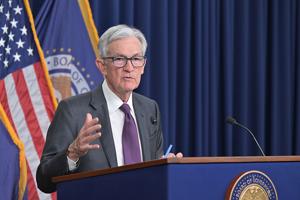
This week will be light on data releases, but heavy on Federal Reserve insights that could shape market expectations for the remainder of 2025.
Fed Minutes Take Center Stage
A couple of Fed president speeches and more importantly the minutes of the Fed’s Federal Open Market Committee meeting will likely steal the show. Expect to see highlights of the current discussion: weighing the risk of higher tariff-induced inflation versus a slowing labor market that is beginning to show serious cracks.
After the June meeting, the FOMC updated its expectations for economic growth and inflation in its Summary of Economic Projections (SEP). The median projection for the unemployment rate in 2025 was revised higher to 4.5% from 4.4%. However, inflation was also revised up to 3% from 2.7% in the previous SEP. All signs point to rising stagflation concerns among the FOMC.
Key Data Releases to Watch
1. The June NFIB Optimism Index
In May, business optimism recovered slightly on improving sales expectations. After the big tariff scare in April, the subsequent pullback by the administration coupled with an array of tax cuts in the tax bill helped improve business sentiment. So long as tax policy is expansionary and supports consumers, sales volumes should increase along with businesses’ ability to pass on any tariff costs to consumers.
However, despite this improvement, plans to increase employment continued to fall, suggesting the labor market will likely continue to slow. The latest jobs report showed the private sector only added 74,000 jobs in June, down from 137,000 jobs in May.
2. Consumer Credit Report
Consumer credit is expected to show a slowdown. In April, consumer credit increased at a seasonally adjusted annual rate of 4.3%. Given the mounting pressures on consumer finances from student loan delinquencies and tightening credit access, any deceleration in credit growth would signal further headwinds for consumer spending. The slowing labor market is also causing consumers to save a higher share of their income.
What It All Means
The Fed finds itself in an increasingly difficult position. Rising unemployment suggests the need for easier monetary policy, while persistent inflation pressures and tariff concerns argue for maintaining restrictive policy. The minutes will reveal how policymakers are weighing these competing forces.
For markets, watch for any signals about the Fed’s tolerance for higher unemployment in service of bringing inflation back to target – or conversely, any willingness to accept above-target inflation in the near term to support employment.
Trump declares major disaster in Texas as rescue operations continue

President Donald Trump on Sunday declared a major disaster in Texas as at least 67 people have died and dozens remain missing after torrential rainfall caused historic flooding along the Guadalupe River in the state’s Hill Country.
“These families are enduring an unimaginable tragedy, with many lives lost, and many still missing,” Trump posted on social media. “The Trump Administration continues to work closely with State and Local Leaders. Secretary of Homeland Security Kristi Noem was on the ground yesterday with Governor Greg Abbott, who is working hard to help the people of his Great State. Our incredible U.S. Coast Guard, together with State First Responders, have saved more than 850 lives. GOD BLESS THE FAMILIES, AND GOD BLESS TEXAS!”
Search and rescue crews continued to look for 11 girls and one counselor attending Camp Mystic in Kerr County, an all-girls private Christian camp.
Kerr County Sheriff Larry Leitha said during a Sunday news conference that 59 people have been confirmed dead in his county alone, including 38 adults and 21 children.
Leitha said 11 young girls and one counselor from Camp Mystic were still missing.
“We extend our sincerest condolences and prayers for every single family affected by this tragedy, and we continue to work around the clock and reunite these families,” Leitha said. “We will continue to search, our search efforts until everybody is found.”
In a statement posted on social media, Texas Gov. Greg Abbott also vowed to continue searching for the missing girls until they were found.
“It, and the river running beside it, were horrendously ravaged in ways unlike I’ve seen in any natural disaster,” Abbott said. “The height the rushing water reached to the top of cabins was shocking. We won’t stop until we find every girl who was in those cabins.”
The National Weather Service faced heavy criticism about the lack of notification prior to the floods.
U.S. Department of Homeland Security Secretary Kristi Noem said Saturday that the Trump administration is working to update what she called “neglected” and “ancient” systems.
Trump wants to set up a sovereign wealth fund. What is it?

President Donald Trump’s plan to create a sovereign wealth fund that’s the world’s envy remains undefined.
In the meantime, Norway’s Government Pension Fund Global is among the largest in the world, with more than $1.8 trillion in assets.
In February, Trump told Treasury Secretary Scott Bessent and Commerce Secretary Howard Lutnick they had 90 days to present him with a plan for a sovereign wealth fund. That time has passed and no plans have been released.
“Treasury and Commerce Departments have formulated plans for a Sovereign Wealth Fund, but no final decisions have yet been made,” White House spokesperson Kush Desai said.
Ana Nacvalovaite, a sovereign wealth funds research fellow at the University of Oxford’s Kellogg College, said the fund’s appearance depends on the details, including funding mechanisms, investment strategies, fund structure, and governance.
Nacvalovaite noted that relatively little information is known about the U.S. plans for a sovereign wealth fund. However, she said many other countries have established funds that the U.S. could follow, but the U.S. will likely face challenges.
Saudi Arabia’s Public Investment Fund, with $925 billion in assets, was established by royal decree in 1971. That could be one roadmap, but America has a different culture and government.
“There is a huge difference between a fund run by a country … where the Royals rule everything, versus an American system where it doesn’t quite work that way,” Nacvalovaite said.
Another question that remains unanswered is how the administration would seed the fund and whether it would need help from Congress, which traditionally allocates federal revenue. The U.S. has $36.2 trillion in debt and hasn’t had a surplus budget since 2001. The White House noted in February that the U.S. government holds about $5.7 trillion in assets. The administration said the U.S. holds far more in natural resources.
Trump also is bringing in new revenue through tariffs. Just how much that generates could vary based on the final terms of trade deals the White House initially hoped to complete by July 9. Tariffs are taxes on imported goods paid to the federal government by the company that imports the goods.
In Norway, the government declared it owned all offshore oil in the North Sea in 1963. Much of the money in the Government Pension Fund Global now comes from a mix of investments, including stocks and real estate. The fund reports it owns nearly 1.5% of total shares in the world’s publicly listed companies.
Most SWFs don’t report everything, which could raise concerns in the U.S.
“Any state-owned investment vehicle must have a focused mandate and a highly transparent and accountable governance structure,” Adnan Mazarei, Anna Gelpern and Edwin M. Truman wrote in a report for the Peterson Institute for International Economics after Trump’s executive order.
Nacvalovaite said some SWFs share more information publicly than others.
“Let’s not forget that there are some sovereign wealth funds which are not transparent,” she told The Center Square.
Four months ago, Bessent said the U.S. would have a fund “within the next 12 months.” That timeline could prove challenging.
Control in the U.S. would almost certainly be an issue. Some nations assign the task to a central bank or government agency.
Norway’s Ministry of Finance has overall responsibility for the fund. It also issues management guidelines. Norges Bank manages the fund.
Norway’s government gets some of the money to spend.
“The Norwegian government can spend only a small part of the fund, but this still amounts to almost 20% of the government budget,” according to the bank.
On average, the Norwegian government spends only the returns – estimated to be around 3% per year – not the fund’s capital.
The report from Peterson Institute for International Economics said the proposal carries risks, especially in absence of more information
“Without much greater clarity and a broadly shared understanding on these issues, a US SWF risks becoming a misplaced fiscal gimmick and an inefficient and potentially corrupt diversion of public resources that could do long-term damage to the US and global economy and financial markets,” it concluded.
Musk says he is forming new party to challenge Republicans, Democrats
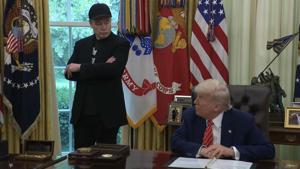
After his public break with President Donald Trump, Elon Musk, the world’s richest person, says he is now forming a new political party to challenge the long-standing two party system in the U.S.
“Today, the America Party is formed to give you back your freedom,” Musk wrote on X, the social media platform he owns.
Musk, who supported Trump with hundreds of millions of dollars in campaign donations during last year’s presidential campaign, was brought on to lead the new Department of Government Efficiency (DOGE) at the beginning to the new Trump administration.
But a very public dispute that erupted on social media led to their split, and Musk has been critical of the Trump-endorsed “one big beautiful bill” that passed the Republican-controlled Congress and was signed into law on July 4 by the president. Musk said the spending measure would “bankrupt” the U.S.
“By a factor of 2 to 1, you want a new political party and you shall have it,” Musk posted to X on Saturday, a day after launching an unscientific poll asking X followers if they were ready to break from the two-party system dominated by Republicans and Democrats. “When it comes to bankrupting our country with waste & graft, we live in a one-party system, not a democracy. Today, the America Party is formed to give you back your freedom.”
32 dead, 27 remain missing in Texas Hill Country flooding
At least 32 people are dead and dozens remain missing after flash floods overwhelmed communities along the Guadalupe River in Texas Hill Country.
The death toll climbed Saturday after several missing campers from Camp Mystic in Hunt, Texas, were found dead. Search and rescue teams continue to look for more than 20 girls from Camp Mystic, where they were attending an all-girls private Christian camp.
Fourteen of the 32 confirmed dead were children, 18 were adults, the Kerr County Sheriff’s Office said.
More than a foot of rain hit the region into Friday morning, pushing a 20-foot storm surge of water down the Guadalupe, according to the Kerr County Sheriff’s Office. The river rose 25 feet in less than an hour, officials said. More rain and flooding is expected in the region Saturday and Sunday, according to the National Weather Service.
“Heavy rainfall and flooding concerns remain for today across Central Texas and the Hill Country, with scattered thunderstorms expected this afternoon and evening,” the National Weather Service posted on its website.
“A Flood Watch has been issued through 7 PM Saturday. Additional rainfall amounts of 2-4 inches are possible with isolated pockets of 10 inches somewhere in the watch area,” NWS said. “It is very difficult to pinpoint where exactly the isolated heavy amounts will occur in this pattern.”
Video posted to social media shows helicopters lifting survivors from heavily flooded areas. Hundreds have been rescued so far, state and local officials said.
The Texas National Guard and U.S. Coast Guard were deployed to help with the search and rescue efforts.
Texas Gov. Greg Abbott declared a state of emergency for 15 counties, and more could be added to the llst.
“This is a time when we, as a state, need God more than ever,” Abbott said in a statement. “The one thing I hear the most are the prayers that are being sent for those who are in harm’s way. There is an extraordinary collaboration to make sure that we address everybody’s concern as quickly as possible. As part of this, I am signing a disaster declaration to ensure counties have access to every tool, strategy, and personnel that the State of Texas can provide to them, which will be limitless.”
President Donald Trump said he was ploying federal help to the region as well.
“Melania and I are praying for all of the families impacted by this horrible tragedy. Our Brave First Responders are on site doing what they do best,” Trump wrote on social media. “GOD BLESS THE FAMILIES, AND GOD BLESS TEXAS,”
Abbott’s emergency declaration includes the counties of Bandera, Coke, Comal, Concho, Gillespie, Kendall, Kerr, Kimble, Llano, Mason, McCulloch, Menard, Reeves, San Saba and Tom Green.
“The Red Cross is assisting with reunification after this devastating flood. If you are missing someone during this emergency, please call 800.733.2767,” the Kerr Country Sherrif’s Office said.
Reunification centers are set up at Ingram Elementary School, 125 Brave Run W, Ingram, and The Arcadia Live Theater, 717 Water St, Kerrville.
Alcohol limits at odds in upcoming dietary guidelines

The House Oversight and Government Reform Committee is investigating a study funded by the Biden administration on alcohol guidelines for Americans, as the U.S. Health and Human Services Department prepares to release its five-year dietary guidelines for Americans.
In January, the Interagency Coordinating Committee on the Prevention of Underage Drinking issued a draft report on its findings analyzing the impact of alcohol intake on overall health.
“The risk of alcohol attributable death increases linearly with alcohol consumption,” the report said.
The draft study found that even one drink a week poses a risk of alcohol attributable death for both males and females.
“Even at low levels of consumption, alcohol had a significant impact on the health of individuals 15 to 39 years of age,” the report said.
Rep. James Comer, R-Ky., chairman of the House Oversight and Government Reform committee, slammed the report’s findings and promised a further investigation.
Comer said the report “skewed widely available information about the effects of alcohol consumption on Americans to favor the Biden administration’s predetermined narrative.”
Comer said the study is “duplicative” of another conducted by the National Academies of Science, Engineering, and Medicine at the direction of Congress.
A 2023 World Health Organization report appeared to align with the Interagency Coordinating Committee’s draft report.
“When it comes to alcohol consumption, there is no safe amount that does not affect health,” the WHO report found.
The reports funded by the federal government were designed to contribute to the upcoming dietary guidelines for Americans, a set of recommendations released by the U.S. Department of Agriculture and the U.S. Health and Human Services Department. The guidelines come out every five years.
“The ICCPUD study’s formation outside the transparency of the typical Dietary Guidelines process raises scientific integrity and conflict of interest concerns,” Comer said.
HHS Secretary Robert F. Kennedy said in a May House hearing that the dietary guidelines could be released by August.
“It is imperative that the dietary guidelines are based on rigorous, sound, and objective scientific evidence, efficiently steward taxpayer dollars, and adhere to congressional intent,” Comer said.
The guidelines have been largely unchanged regarding alcohol consumption recommendations since 1990. However, studies limiting alcohol intake in 2020 were rejected by the first Trump administration for inclusion in the dietary guidelines.
The studies were brought back and funded by the Biden administration.
While Comer is pushing back on new recommendations, it remains unclear which alcohol consumption study will prevail for the final draft of the 2025 Dietary Guidelines for Americans.
Kennedy said his guidelines will be shorter than previous administrations and will “tell people, essentially, eat whole food, eat the food that’s good for you.”
Trump signs ‘big, beautiful bill’ during White House July 4 celebration
President Donald Trump used an Independence Day celebration at the White House to sign his ‘big, beautiful bill.’
Trump and Republican congressional members delivered on the president’s July 4th deadline for the bill. The bill signing was preceded by a spectacular flyover of military planes, including B-2 stealth bombers, as the White House hosted members of the military and their families on the South Lawn.
Trump kicked off the start of “America 250” on Thursday evening in Des Moines. He used the holiday to tout his historic legislation, which narrowly passed the House Thursday afternoon.
“As we approach the 250th anniversary of America’s founding exactly one year from now, we are creating an economy that delivers wealth for the middle class, a border that is sovereign and secure, and a military that is unmatched, unequaled anywhere in the world,” said the president Friday evening.
Trump argues that the “massive” bill will spur economic growth, a claim some in his own party have disputed.
“This bill will fuel massive economic growth and lift up the hardworking citizens who make this country run,” said the president. “Our country is going to be a rocket ship economically.”
During the signing, the president was joined by House Speaker Rep. Mike Johnson, R-La., several members of his cabinet and congressional members.
New law banning foreign ownership of Texas land goes into effect Sept. 1
As foreign espionage threats continue in the U.S. and in Texas, a new bill becomes law Sept. 1 that prohibits foreign ownership of Texas land.
SB 17, filed by state Sen. Lois Kolkhorst, R-Brenham, passed the Texas legislature with bipartisan support and was signed into law by Gov. Greg Abbott.
The Adversarial Land Ownership Act initially passed the Senate in March by a vote of 24-7. A watered-down version passed the House in May by a vote of 75-47 with Republicans and Democrats voting against it. Differences in the bill were ironed out in conference committee and each chamber voted to pass the bill with bipartisan support. Abbott signed the bill into law last month.
“For three years, I’ve worked to pass a bill to protect our land, homes, commercial buildings, water, timber, oil and gas and rare earth materials from being bought up by foreign adversarial nations like China, Russia, North Korea and Iran,” Kolkhorst said, adding that the final bill sent to the governor “is the strongest national security bill in the nation. Texas is not for sale to our enemy countries.”
As of Sept. 1, the new law will prohibit foreign governmental entities, companies, and individuals from purchasing private property in Texas if they are from or connected to countries listed in the latest Annual Threat Assessment report published by the Director of National Intelligence. To date, countries on the list are China, Iran, North Korea and Russia.
Prohibitions for real property includes agricultural land, commercial or industrial property, water rights, rare earth materials, groundwater, timber, and oil and natural gas.
The law gives the Office of Attorney General enforcement authority to investigate potential violations and initiate divestment proceedings against prohibited entities.
The prohibition “is a matter of national security,” Kolkhorst said, adding that during the interim session, her office proposed a stronger bill than in the last session, incorporating measures from a Florida bill that became law in 2023.
Once Kolkhorst’s bill becomes law, Texas will join 22 states that already enacted similar legislation. Between January 2023 and July 2024, at least 22 states enacted legislation regulating foreign ownership of real property, according to a Congressional Research Service analysis. Some states enacted multiple laws.
They include Alabama, Arkansas, Georgia, Florida, Idaho, Indiana, Iowa, Louisiana, Mississippi, Montana, Nebraska, New Hampshire, North Carolina, North Dakota, Ohio, Oklahoma, South Dakota, Tennessee, Utah, Virginia, West Virginia, and Wyoming.
The bill becoming law this year was the culmination of multiple years of dedication by Kolkhorst, including meeting with constituents, holding hearings, and surviving a wave of attacks during two legislative sessions by opponents claiming she and the bill were racist.
In the last legislative session, a coordinated effort to kill the bill used a social media platform with direct ties to the Chinese Communist Party, The Center Square exclusively reported.
One of the anti-Kolkhorst groups posted an article published by The Center Square about her bill that Abbott posted on social media on a WeChat platform. The platform was used by opponents of her bill who targeted Chinese Americans labeling them as Chinese traitors and spies, according to a Johns Hopkins expert on China who uncovered an alleged CCP-campaign on social media targeting her bill.
In 2023, her bill passed the Senate with bipartisan support but never made it out of the House State Affairs Committee chaired by state Rep. Todd Hunter, R-Corpus Christi.
Last year, Abbott issued multiple executive orders and directives to state agencies to increase security measures related to China, The Center Square reported. This year, the legislature passed bills incorporating those provisions related to cybersecurity, infrastructure and other public safety issues.
In Congress, U.S. Sen. Ted Cruz, a Republican from Houston, introduced a bill to protect military installations and training areas from America’s adversaries, including China, Iran, North Korea and Russia, as well as protecting energy projects, The Center Square reported.
The bills were filed after the Texas legislature unanimously passed the Lone Star Infrastructure Protection Act in 2021, banning Texas governmental entities and businesses from entering into contracts with companies owned or controlled by hostile foreign nations to gain access to Texas’ critical infrastructure.
They did so after learning that a Chinese billionaire and former Chinese People’s Liberation Army general bought over 130,000 acres of land just miles from Laughlin Air Force base in Val Verde County, the largest air force pilot training base in the U.S., The Center Square reported.
The bills were also filed as Chinese espionage threats continue nationwide, including CCP-secret police stations reportedly operating in Houston, Chinese spies being arrested in Houston and the greatest number of Chinese nationals illegally entering the U.S. in recorded history under the Biden administration, more than 176,000, The Center Square exclusively reported.