National News
State Department to proceed with ‘relevant and effective’ reorganization

The new leadership at the U.S. Department of State is moving full speed ahead on its mission to “rightsize” and reshape the department to serve its America First foreign policy vision, according to department spokesperson Tammy Bruce.
“We inherited a dynamic that needed reform, and we are taking and implementing reform,” Bruce said at a press briefing Thursday afternoon.
The briefing takes place two days after the Supreme Court issued a stay on a lower court’s decision challenging the administration’s sweeping personnel and staffing cuts, allowing the administration to proceed with mass layoffs and firings for now.
This effort “restores the department to its roots of results-driven democracy,” according to Bruce.
“This is about making sure that the State Department is able to operate in a manner that makes it relevant and effective. That is what the American people want. It’s what all of us want,” she said.
The emergency stay was issued Tuesday evening in an 8-1 decision in response to a request from the administration to enforce a February executive order and memorandum attempting to reform the federal workforce.
“Because the Government is likely to succeed on its argument that the Executive Order and Memorandum are lawful — and because the other factors bearing on whether to grant a stay are satisfied — we grant the application,” the justices wrote.
They added that the order does not represent an opinion from the Court on “the legality of any Agency [Reduction in Force] and Reorganization Plan produced or approved pursuant to the Executive Order and Memorandum.”
Justice Ketanji Brown Jackson dissented.
Bruce emphasized that the cuts were not to be taken as a reflection of those being laid off or terminated — calling her experience working at the State Department “life-changing” — but rather as a reflection of the structure and effectiveness of the organization as a whole.
“I do also want to make a note here as my experience at the State Department now moves into its six month [of] the remarkable experience, the life-changing experience, I’ve had getting to know the people who work in this building,” Bruce said. “In the midst of this, know that the people who have committed to the State Department and to diplomacy — that they know also — that this is not about them.”
The stay will remain in effect until the lawsuit concludes. It’s currently under review by the 9th U.S. Circuit Court of Appeals. If the court rules against the administration, the government will likely appeal to the Supreme Court.
New bill would eliminate federal tax on home sales
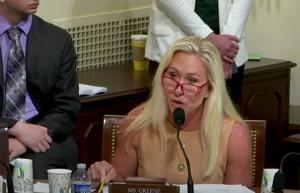
Real estate owners looking to sell their homes in the future may be able to avoid paying the federal capital gains tax if newly-introduced legislation passes.
The No Tax on Home Sales Act, introduced Thursday by U.S. Rep. Majorie Taylor Greene, R-Ga., would eliminate the federal capital gains tax on home sales if the home is the seller’s primary residence. This caveat would ensure that house flippers or real estate investors would not take advantage of the change.
Currently, if homeowners sell their property for more than they originally paid for it, the difference is called a capital gain. The federal government will usually tax the gain, depending on the home seller’s income, gain amount, and how long the home was owned. The capital gains tax falls into 0%, 15%, and 20% brackets.
Greene said her bill, by removing what amounts to a tax penalty on home selling, would increase housing market fluidity as well as housing inventory.
“Families who work hard, build equity, and sell their homes should not be punished with massive tax bills,” Greene said in a statement. “The capital gains tax on home sales is an outdated, unfair burden – especially in today’s housing market, where values have skyrocketed.”
The Internal Revenue Service does allow some homeowners to exclude gains up to $250,000 for qualifying single filers and $500,000 for joint filers. But that rule has not been updated since 1997, and housing prices have risen 119% since then, subjecting more and more Americans to a tax originally meant for the wealthy.
“Homeowners who have lived in their homes for decades, especially seniors in places where values have surged, shouldn’t be forced to stay put because of an IRS penalty,” Greene added. “My bill unlocks that equity, helps fix the housing shortage, and supports long-term financial security for American families.”
If the bill passes, the federal government would see a significant decrease in revenue. While the number of capital gains tax filers fluctuates from year to year, 26 million tax returns included some capital gains in 2019, amounting to billions of dollars in taxes.
The federal government is already set to lose at least $3.3 trillion in projected tax dollars over the next 10 years due to the passage of Republicans’ “big, beautiful bill,” which makes the bulk of the 2017 tax cuts permanent.
ICE arrests MS-13 gang members hiding in Nebraska

U.S. Immigration and Customs Enforcement’s Homeland Security Investigations arrested one of El Salvador’s most notorious MS-13 gang members in Nebraska.
The suspect, whose name has not been released, is a Salvadoran national. He was wanted by authorities because he had multiple violent charges against him including the killings of five people, unlawful detention, aggravated murder, and a connection to a terrorist organization.
He was arrested along with Rene Saul Escobar Ochoa, a 30-year-old MS-13 terrorist and foreign national who was residing with the suspect in the United States illegally.
Ochoa, also wanted in El Salvador, is alleged to be the ringleader of a network of gang members, directing them to carry out a series of violent crimes like murder, extortion, drug distribution, and imprisonment.
They were both taken into custody without any resistance during a focused operation. Their presence was known in Omaha and posed a severe threat to the community, according to ICE officials.
“These illegal aliens didn’t just sneak into our country; they brought with them a legacy of violence, terror and death,” HSI Kansas City Special Agent in Charge Mark Zito, said in a statement. “They thought they could hide in America’s heartland, but they were sadly mistaken.”
Federal officials are warning that any misinformation about immigration enforcement could have deadly consequences.
“When ICE agents move in to make an arrest, it is extremely important that the public not interfere,” ICE acting Director Todd M. Lyons, said in the release. “The misinformation, and sometimes blatant lies, being spread around the country could result in someone stepping into a federal operation and suddenly finding themselves face-to-face with a killer who has nothing to lose.”
The Trump administration is prioritizing finding and removing TdA members as well as others it’s designated as members of foreign terrorist organizations.
A Homeland Security task force is working to protect Americans “by eliminating criminal cartels, foreign gangs, and transnational criminal organizations operating in Nebraska and Iowa,” The Center Square reported.
One recent arrest was of a Venezuelan national and alleged TdA member charged with attempted murder of special agents in Bellevue, Nebraska, after throwing an ICE agent to the ground, slamming her head on the pavement, ripping off her body armor, and making “repeated and physical violent contact,” The Center Square reported.
This is after more than one million Venezuelans illegally entered the country under the Biden adminstration, including members of the terrorist organization Tren de Aragua, whose criminal activity has been confirmed in at least 22 states, The Center Square exclusively reported.
Retired Air Force generals raise concerns about F-35, E-7 Wedgetail cuts

A group of 16 retired U.S. Air Force generals is asking congressional leaders to increase the purchase of F-35 Lightning fighter aircraft and a replacement for the Air Force’s aging airborne warning and control system fleet.
The Air & Space Forces Association sent a letter on Monday to Congressional leaders, asking them to restore funding for a full purchase of 75 F-35s and to undo the termination of the Boeing E-7 Wedgetail AWACS program.
As part of the U.S. Department of Defense’s $961 billion funding request, the number of Air Force F-35 purchases was cut from 75 to 24, while the E-7 program was canceled.
Gen. Ronald R. Fogleman, the 15th chairman of the Air Force, said on a Zoom call with media that cutting the F-35 purchases could jeopardize the service’s operations if several of the four theaters of operation — the continental U.S., Europe, Asia and the Middle East — flare up simultaneously.
“And so 72 might not be the right number, but it’s, in my opinion, a minimum number to build back up the fighter force structure to deal with the threats that we face,” Fogleman said.
Air Force leaders have repeatedly said a minimum of 72 fighter aircraft need to be purchased annually to replace the service’s aging fleet. This year’s budget request would only purchase 45, with 21 of those F-15EX Eagle II aircraft.
The Air Force has already spent $2.5 billion on the Wedgetail program, which the retired generals said is a vital system. AWACS aircraft are flying air contact tracking and battle management platforms and have been essential in every U.S. conflict since the Vietnam War. The Wedgetails were intended to replace the service’s aging E-3 Sentry AWACS aircraft, which entered service in March 1977.
Defense Secretary Pete Hegseth told Congress in June that the E-7 is an example of a platform that isn’t survivable on a modern battlefield and that the service would pivot to space-based surveillance systems instead, along with a purchase of the Navy’s Northrop Grumman E-2D Hawkeye AWACS.
The 18th U.S. Air Force chief of staff, retired Gen. Michael Moseley, said space is no longer a free game, it’s a contested combat arena and putting all of eggs into orbit is a bad operational idea.
“But it was basically a notion of what can we move on to orbit, and what can we divest ourselves of?” Moseley said. “Divest ourselves of air breathing? Can we move (now retired E-8) J-STARS? Can we move AWACS? Can we move our sensors into orbit? We spent quite a bit of time on that, and I think we, with 100% agreement, came back and said, that would be a great idea, except for two realities: We don’t have the technology to migrate the air breathing sensors into orbit, and two, the vulnerabilities will eventually become severe.”
Gen. Michael Loh, the first commander of the Air Combat Command and a former Air Force vice chairman, said the vulnerability of the E-7 in contested air space isn’t an issue because Air Force has traditionally “sanitized” areas from both aerial and ground-based threats such as surface to air missiles.
“And that’s just a false assumption, but the Air Force seems to have taken up the fact that if an aircraft can’t operate in contested airspace, it can’t contribute to the battle,” Loh said. We can sanitize areas of operation. We’ve done it in every war. We’ll do it in every war. We can operate in contested airspace. We can clear it out when we have an air operation like we we’ve done very well in Desert Storm.
“We did it in Midnight Hammer. We did it every campaign we’ve been involved in, we can, we can operate in that airspace, with defense suppression, with overwhelming force and with smart tactics, and we’ve done it all the time. So we shouldn’t be afraid of contested airspace.”
The E-2 is designed to operate from the U.S. Navy’s aircraft carriers and has fewer on-board operators, decreased range and a smaller radar than the E-7.
Since the Hawkeye is designed to take off and land on carriers, this design would allow the aircraft to use shorter landing fields closer to the battlespace.
The E-2 also doesn’t use the Air Force’s in-flight refueling method which uses a “boom” flown by an operator into a receptacle on the receiving aircraft.
The Hawkeye can only be refueled via probe and drogue method as are other Navy and Marine Corps aircraft. This refueling method uses a probe on the receiving aircraft, which is flown by the pilot into a basket (known as a drogue) from the trailing aircraft.
The advantage of the boom method is a much greater fuel transfer rate, while the older probe and drogue method allows even fighter aircraft to be fitted with refueling gear (such as the Navy’s F-18 Super Hornet) to act as tankers.
The E-7 is operated by the Royal Australian Air Force, the South Korean Air Force and the Turkish Air Force and will be entering service with the Royal Air Force next year.
The E-7 also has the advantage of more operator stations, with Australian aircraft having 10 and space for four more, while the smaller fuselage of the E-2 only has three.
$35,000 in rewards offered for info leading to arrest of man involved in ICE attack

Rewards totaling $35,000 have been offered for information leading to the apprehension of a wanted man allegedly involved in a planned ambush of federal and local law enforcement officers at a U.S. Immigration and Customs Enforcement detention facility in North Texas.
Texas Department of Public Safety issued a Blue Alert as a manhunt continues for the suspect, Benjamin Song, 32, “wanted in connection to violence against a law enforcement officer,” DPS said.
Texas DPS also added Song to its 10 Most Wanted Fugitive List, stating, “Subject should be considered ARMED and DANGEROUS!”
DPS released photos of him describing him as approximately 5’6” tall, weighing 150 pounds, with brown eyes and black hair.
Song has ties to Dallas County, including Dallas and Addison, DPS said. On July 8, warrants were issued out of Johnson County for his arrest for “Aiding Terrorism, Aggravated Assault with a Deadly Weapon on a Public Servant, and Engaging in Organized Crime.” On July 9, a federal arrest warrant was issued in U.S. District Court, Northern District of Texas, Fort Worth, after Song was charged with “Attempted Murder of a Federal Officer and Discharging a Firearm During, in Relation to, and in Furtherance of a Crime of Violence.”
The FBI, which is leading the ongoing investigation, has asked members of the public to provide any information about the incident by calling 1-800-CALL-FBI. It’s also issuing a $25,000 reward for information that leads to his arrest, bringing the total reward to $35,000.
Anyone who sees Song is instructed not to approach him and to call 911, the FBI, DPS or Texas Crime Stoppers.
To be eligible to receive cash rewards, tipsters must call Texas Crime Stoppers at 1-800-252-TIPS (8477), submit a web tip through Texas DPS’ 10 Most Wanted website or Texas DPS online form.
Tips are anonymous and tipsters are given a number instead of using their name.
On July 4, the Alvarado Police Department announced that one of its police officers had been shot in the neck after responding to a call without stating the incident occurred outside of an ICE detention facility. What occurred was “a planned ambush with the intent to kill ICE corrections officers,” involving 10 to 12 people dressed in black, wearing tactical gear and body armor, who shot 20-30 rounds at unarmed corrections officers and the police officer, Acting U.S. Attorney for the Northern District of Texas Susan Larson said.
Ten individuals were each charged with three counts of attempted murder of a federal officer and three counts of discharging a firearm related to a crime of violence. Each defendant faces a mandatory minimum 10 years in prison and up to life in prison. One co-conspirator was charged with obstruction of justice and conspiracy for attempting to conceal and destroy evidence and faces up to 10 years in prison, The Center Square reported.
It was the first of two officer involved shootings outside of a federal immigration facility in Texas this week, The Center Square first reported. The second occurred on Monday after a Michigan man opened fire on a Border Patrol facility in McAllen, Texas, shooting a McAllen Police officer in the knee who responded to the call. The shooter was killed by Border Patrol agents and a multiagency investigation is ongoing.
Josh Johnson, acting field office director for ICE Enforcement and Removal Operations-Dallas said, “This type of vigilante lawlessness is emblematic of the dangers federal, state and local law enforcement officials face every day. Within ICE alone, our officers and agents are facing a 700% increase in assaults.”
That’s a 200 percentage point increase from three weeks ago when attacks were up by 500%, The Center Square reported.
California’s Newsom latest governor auditioning South Carolina audiences

Tim Walz and Wes Moore came to South Carolina earlier. This week it is Gavin Newsom. Andy Beshear is on the schedule, too.
The sitting governors are in the mix as candidates for the 2028 presidential election, and this state – politically red as it may be – was lifted in importance by former President Joe Biden. First he resurrected his primary chances ahead of the 2020 election, then he sought to make it the first stop in the calendar saying it was more representative of the nation’s voters.
“What we’re experiencing is America in reverse,” Newsom told the Kershaw County Democratic Party crowd. “They’re trying to bring us back to a pre-1960s world on voting rights. You know it well. Civil rights. LGBTQ rights. Women’s rights. And now just access to abortion but also access to simple reproductive care contraceptives.”
Newsom’s meet and greets have been a contrast to the Minnesota governor’s visit to the state party’s convention May 31. Walz told his audience, speaking of second-term Republican President Donald Trump, they should “bully the s— out of him back.”
His speech was laced with profanities in a state where Republicans are in both U.S. Senate seats, seven of eight U.S. House seats, seven of the eight state executive office seats including governor, and hold General Assembly majorities of 34-12 in the Senate and 88-35 with a vacancy in the House.
“Maybe it’s time for us to be a little meaner, a little bit more fierce,” said Walz, the vice-presidential half of the Kamala Harris ticket scrambled together following Biden’s July exit from the race.
Newsom was quizzed as he traveled about Harris, and if he would support her should she choose to run for president a second time. He was noncommittal.
And, for the record, the official purpose of his trip was to support local Democrats and disaster-torn communities. He was in many community settings, from county party gatherings to stops in small local businesses.
Still, Walz and Maryland’s Moore were definitely in front of audition audiences at the party state convention. Kentucky’s Beshear next Wednesday visits the University of South Carolina in Columbia, an AFL-CIO event in Greenville, a dinner with the Georgetown County Democratic Party, and Charleston.
Expect the same narrative as those before him.
Newsom targeted Trump at every turn, told his audiences the “legislative agenda is effectively over” because of voter power in the midterms, and called California “the most un-Trump state.”
It’s still two years before the Democratic National Committee confirms whether South Carolina, Iowa, New Hampshire or Nevada goes first in the primary schedule. That said, it’s never too early to prime the pump.
Next week is Beshear’s turn.
New Hampshire judge blocks Trump’s birthright citizenship ban
A federal judge in New Hampshire has again blocked President Donald Trump’s executive order ending birthright citizenship and expanded the injunction nationwide.
The bench ruling Thursday by U.S. District Court judge Joseph Laplante sides with immigration advocates seeking to certify plaintiffs facing a loss of citizenship as a class-action lawsuit, and set a preliminary injunction indefinitely blocking Trump’s order from being enforced against born and unborn babies. The ruling does not include parents.
Laplante, who was appointed by former Republican President George W. Bush, was expected to issue a written ruling later Thursday. He would stay the ruling for a week to give the Trump administration time to appeal.
The ruling came despite a 6-3 U.S. Supreme Court ruling that district court judges can’t issue nationwide injunctions unless the plaintiffs in the case had been certified as a nationwide class. Justices didn’t rule on the constitutionality of Trump’s order ending birthright citizenship. The executive order is set to go into effect on July 27 under the high court’s decision.
A Supreme Court ruling more than a century ago held that children born in the U.S. to foreign parents are U.S. citizens under the 14th Amendment. But the Trump administration claims the 14th Amendment has “never been interpreted” to give universal citizenship to everyone born in the country.
Trump’s executive order, signed during his first day in office in January, directs federal agencies to refuse to recognize U.S. citizenship for children born in the U.S. to mothers who are in the country illegally or here legally on visas, if the father is not a U.S. citizen or lawful permanent resident. The order denies U.S. citizenship to those children born in the U.S., if at least one parent isn’t an American citizen or green card holder, according to the Trump administration.
The lawsuit, one of dozens challenging Trump’s order, was filed by the American Civil Liberties Union’s chapters in Massachusetts, Maine and New Hampshire on behalf of an unidentified woman from Honduras who has a pending asylum application and is due to give birth to her fourth child and and a man from Brazil whose U.S. citizen wife gave birth to their first child earlier this year.
The ACLU argues that Trump doesn’t have the authority to end birthright citizenship and is “flouting the Constitution’s dictates, congressional intent, and long standing Supreme Court precedent.”
“Neither the Constitution nor any federal statute confers any authority on the President to redefine American citizenship,” the ACLU’s lawyers wrote in the 17-page complaint. “By attempting to limit the right to birthright citizenship, the Order exceeds the President’s authority and runs afoul of the Constitution and federal statute.”
Newsom unveils $101M to build Palisades low-income housing
Six months after the devastating Palisades and Eaton fires, California Gov. Gavin Newsom unveiled $101 million in funding Tuesday for “multifamily low-income housing development” that will “contribute to a more equitable and resilient Los Angeles.” The priority is for “geographic proximity to the fire perimeters of the Eaton, Hughes, and Palisades fires.”
Earlier this year, The Center Square broke news that California state law and a local Los Angeles ordinance require fire-destroyed rent-protected housing — which includes all apartments in the city built before October 1978 — be replaced with low-income housing. Because the affordability requirements use county-level income data, not more local incomes, definitions for “low” and “very low” income housing reflect much lower incomes than the norm for the affluent Palisades community.
“Thousands of families – from Pacific Palisades to Altadena to Malibu – are still displaced, and we owe it to them to help,” said Newsom in a statement. “The funding we’re announcing today will accelerate the development of affordable multifamily rental housing so that those rebuilding their lives after this tragedy have access to a safe, affordable place to come home to.”
The California Department of Housing and Community Development’s Notice of Funding Availability for the $101 pool details how funding will be awarded.
“The 2025 wildfires in Los Angeles County have intensified the region’s longstanding housing crisis, underscoring the urgent need for multifamily low-income housing development,” wrote Jennifer Seeger, the HCD deputy director of the Division of State Financial Assistance. “The Multifamily Finance Super NOFA – Los Angeles Disaster (MFSN-LA Disaster) makes funds more accessible to support the development of safe, fire-resilient multifamily low-income housing that will provide long-term stability, protect vulnerable populations, and contribute to a more equitable and resilient Los Angeles.”
The grant includes multiple funding streams, including the Multifamily Housing Program for low-income housing, taxpayer-funded supportive housing for those exiting institutional settings or homelessness, transit-oriented development that boosts density near transit stops for income-restricted housing, and veteran and homeless veteran housing.
It’s possible to stack funding, meaning a program could make use of multiple programs within the grant to increase the project’s portion of grant-funded low-income housing units.
The notice includes scoring preference for projects that are closer to the fire burn radius, have local government funding commitments, have an occupancy preference for wildfire victims, and are ready to start construction within 180 days of awarded funds.
To qualify as Supportive Housing Multifamily Housing, a project must provide at least 40% of its units for the homeless, or individuals who have spent at least 15 days in “jails, hospitals, prisons, and institutes of mental disease.”
Projects gain additional points for being a Transit-Oriented Development built within a quarter mile of a transit station, which includes qualifying bus stops. This program allows for a 50% to 80% density bonus based on the level of transit service, so long as at least 15% of units are set aside for very low- or low-income households.
Tariffs postponed another few weeks per latest executive order
In a late-afternoon executive order Monday, President Donald Trump postponed the reciprocal tariffs he announced on April 2 for a second time, to Aug. 1. The pause was announced less than 48 hours before the original 90-day extension was set to expire.
On April 2, the president announced new, higher tariffs that the U.S. was going to impose on many of its trading partners. One week later, Trump announced that he would be suspending enforcement of those tariff rates for 90 days, until July 9, to give countries time to negotiate new, mutually beneficial trade deals with the U.S. In the meantime, he instituted a universal 10% tariff on most goods from foreign countries. Countries that were able to negotiate a new trade deal with the U.S. could avoid their higher tariff rate on most goods that Trump had announced on April 2.
On Monday, Trump sent personal letters to 14 countries informing them that he would postpone the effective date for their tariffs to Aug. 1. Hours later came the executive order pushing back the July 9 deadline for all countries that had not yet reached a deal.
“I have determined, based on additional information and recommendations from various senior officials, including information of the status of discussions with trading partners, that it is necessary and appropriate to extend the suspension… until 12:01 a.m. eastern daylight time on August 1, 2025,” Trump said.
The tariff arrangements previously negotiated with China will remain in effect.
Since April 2, the administration has signed a trade deal with the U.K. and announced a trade deal with Vietnam on July 2. Others are reportedly in the works.
Trump originally dubbed April 2 “Liberation Day,” as he believes the U.S. has been hamstrung by unfair trade practices other countries have imposed on the U.S. for decades. Many of America’s trading partners have imposed high tariffs on American goods, when America’s tariffs on those partners have remained relatively low. These and other trade barriers have been “ripping off” the U.S. and have caused the outsourcing of American jobs, according to Trump. By instituting higher tariffs or negotiating new trade deals, Trump aims to reshore manufacturing jobs and restore economic fairness.
Here are the violent criminals Judge Murphy tried to block from deportation
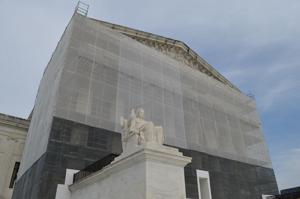
A federal district judge in Massachusetts, Judge Brian Murphy, sought to prevent deportation of violent criminals but was overruled by the U.S. Supreme Court.
On July 4, eight convicted felons, citizens of Burma, Cuba, Laos, Mexico, Vietnam and South Sudan, were deported to South Sudan. The country’s leaders have entered into an agreement with the U.S. to detain criminal foreign nationals, including those who aren’t their citizens. El Salvador and others have entered into similar agreements, with the U.S. government agreeing to pay for detention costs.
U.S. deportation efforts rely on diplomacy with foreign governments, many of which won’t accept their own citizens. Under previous administrations, federal efforts to deport criminal illegal foreign nationals failed because many countries wouldn’t take back their citizens. As a result, they illegally remained in the U.S. even though they had deportation orders from a federal immigration judge, authorities have explained to The Center Square. Under the Trump administration, this has changed.
Those deported to South Sudan were all men illegally in the U.S. with extensive criminal histories, including felony convictions and prison sentences in the U.S. They all received due process in federal immigration court and received final removal orders from federal immigration judges that were never enforced, including one dating back to 1999.
Burmese national Kyaw Mya was convicted of lascivious acts with a child-victim under age 12 and sentenced to 10 years in prison and paroled after four years. ICE- St. Paul officers arrested him; his final removal order was issued March 17, 2022.
Burmese national Nyo Myint was convicted of first-degree sexual assault involving a victim mentally and physically incapable of resisting and sentenced to 12 years in prison. He was also charged with aggravated assault-nonfamily strongarm and a registered sex offender. ICE- St. Paul officers arrested him; his final removal order was issued August 17, 2023.
Cuban national Enrique Arias-Hierro was convicted of homicide, armed robbery, false impersonation of official, kidnapping, and robbery strong arm. His final removal order was issued September 13, 1999. Due to Cuban authorities refusing to take him, he remained illegally in the U.S.
Cuban national Jose Manuel Rodriguez-Quinones was convicted of attempted first-degree murder with a weapon, battery and larceny, and cocaine possession and trafficking. ICE Miami officers arrested him in April; his final removal order was issued Dec. 4, 2012.
Laos national Thongxay Nilakout was convicted of first-degree murder and robbery and sentenced to life in prison. ICE Los Angeles officers arrested him in January. His final removal order was issued July 12, 2023.
Mexican national Jesus Munoz-Gutierrez was convicted of second-degree murder and sentenced to life in prison. ICE Miami officers arrested him in May. His final removal order was issued June 16, 2005.
Vietnamese national Tuan Thanh Phan was convicted of first-degree murder and second-degree assault and sentenced to 22 years in prison. ICE Seattle officers arrested him in May. His final removal order was issued June 17, 2009.
The only South Sudan national in the deportation group was Dian Peter Domach, who was first encountered by ICE in 2011 and received a final removal order on July 19, 2011. He wasn’t deported and remained in the U.S. illegally and committed a range of crimes. He was convicted of robbery and possession of a firearm, possession of defaced firearm, possession of burglar’s tools, and driving under the influence.
Murphy, born in 1979, a former public defender and a criminal defense attorney, was appointed by former President Joe Biden less than six months ago. Murphy argued a Supreme Court ruling didn’t apply to his injunction, seeking to keep convicted felons, including sex offenders and murderers, in the U.S. in violation of federal law. His order violated due process, critics argue, because the convicted felon illegal foreign nationals already appeared multiple times before federal immigration judges who issued judgements against them and final orders of removal.
Justice Elena Kagan chastised Murphy in the court’s July 3 ruling, affirming the Trump administration’s authority to deport illegal foreign nationals to third-party countries.