National News
Boulder attack suspect charged with murder after victim dies, family could be deported

Mohamed Sabry Soliman has been officially charged with first-degree murder, following the death of 82-year-old Karen Diamond.
Soliman, a 45-year-old Egyptian national illegally in the country, wounded Diamond and 14 others on June 1 at what authorities say was a terrorist attack at a pro-Israel demonstration in Boulder, Colorado. Diamond died from her injuries on June 25.
“This terrorist will be prosecuted to the fullest extent of the law. We are investigating to what extent his family knew about this heinous attack, if they had knowledge of it, or if they provided support to it,” said Tricia McLaughlin, assistant secretary for public affairs at the Department of Homeland Security.
On Wednesday, U.S. District Judge Orlando Garcia also ruled that Soliman’s wife and five children can be deported, officially dismissing a legal challenge filed by the family to halt their deportations.
U.S. Immigration and Customs Enforcement officials detained Soliman’s family just days after the attack. At the time of the arrests, the White House said the family members could be deported immediately.
Hours after the announcement of their potential deportations, a federal judge blocked their deportation order, citing due process. They remained in ICE custody at that time.
Garcia declared in his ruling that “the court finds that petitioners’ habeas proceeding and their claims in this case must be and hereby are dismissed without prejudice. This case is closed.”
The Trump administration applauded that decision, but has not yet announced formal plans to deport the family.
“This is a proper end to an absurd legal effort on the plaintiff’s part,” McLaughlin added. “Just like her terrorist husband, she and her children are here illegally and are rightfully in ICE custody for removal as a result.”
Soliman faces dozens of charges, both federal and state. Those charges include first-degree assault and committing a hate crime. If convicted on all charges, Soliman will likely spend the rest of his life in prison.
Soliman had long premeditated the attack at Boulder’s Pearl Street Mall, authorities said at a news conference in June.
“He had been planning this attack for a year,” said Acting U.S. Attorney J. Bishop Grewell for the District of Colorado. “He acted because he hated what he called ‘the Zionist group.’”
The attack started at 1:26 p.m. on June 1 when Soliman allegedly attacked more than a dozen people with Molotov cocktails and a homemade flamethrower.
According to reports, Soliman was heard yelling, “Free Palestine” during the attack.
Soliman told law enforcement that “he wanted to kill all Zionist people and wished they were all dead.” He also allegedly said that he had no regrets for his actions and would “do it again.”
Soliman has already appeared in court twice and his bond was set at $10 million. The next state hearing in Soliman’s case will occur on July 15.
Pennsylvania reacts to One Big Beautiful Bill Act

Politicos across Pennsylvania are reacting with a mix of triumph, anger and despair following the passage of the federal budget resolution.
Once enacted, the law will support a massive expansion of Immigration and Customs Enforcement, make sweeping cuts to programs like Medicaid and the Supplemental Nutrition Assistance Program, offer huge tax breaks and, many say, fundamentally change the nation while increasing the national debt.
Ahead of yesterday’s vote, the commonwealth’s highest elected official, Democratic Gov. Josh Shapiro, warned, “the bill Congressional Republicans are rushing to pass would have devastating impacts on Pennsylvania.”
Lt. Gov. Austin Davis shared his sentiment, calling the bill “absurdly cruel and unconscionable.”
The governor highlighted Republican-led districts, noting how many would lose health care coverage in each. In total, over 300,000 Pennsylvanians are expected to lose Medicaid and about half as many to lose SNAP.
In staunch Trump ally Rep. Scott Perry’s Central Pennsylvania district, the number exceeds 18,700. Perry did ultimately vote for the bill, despite initial misgivings about the increased debt it presents.
Perry’s fellow Republican House member Rep. Ryan Mackenzie issued a press release detailing the gains he saw for his constituents.
“As we began this term, we understood what the people of the Greater Lehigh Valley were counting on: lower costs, a stronger economy, secure borders, and policies that put America First,” said Mackenzie. “In the face of relentless opposition from those who advocated for the largest tax increase in American history and a return to open borders, we’ve passed a budget that holds firm and keeps our promise to the American people.”
Mackenzie’s colleague across the aisle, progressive Democrat Rep. Summer Lee of Pittsburgh, voted against the bill.
“This is a deliberate choice to make life harder for working families here in Western Pennsylvania and across the country, to strip dignity from our seniors, to push children and parents deeper into poverty and hunger,” wrote Lee. “I will continue doing everything in my power to mitigate the harm and fight back against this fascist regime.”
The state’s Republican U.S. Sen. Dave McCormick posted to X, “Congratulations to @POTUS for putting his vision into action and to Leader Thune and Speaker Johnson for putting so much of that agenda in one bill.”
McCormick highlighted tax relief, border security, “energy dominance,” defense, and school choice as wins in the bill, saying, “These are the policies I promised to pass and they’ll make a real difference for the people of Pennsylvania.”
In terms of energy dominance, recent claims that China has pulled away from the U.S. to become the global leader have roiled the states. Some believe the best answer is to double down on the nation’s wealth of fossil fuel resources, while others insist that Biden-era clean energy incentives were key to keeping up with competitors.
Pennsylvania state representative and Democratic National Committee Vice Chair Malcolm Kenyatta of Philadelphia posted to BlueSky, “The budget Republicans passed is a death knell to healthcare for 17 million Americans, will send kids to school hungry, hurt seniors, raise our energy prices and the list goes on. All to give a tax break to the ultra rich. And they are (expletive) celebrating it. VOTE THEM OUT!!!”
His account featured a screenshot of a since-deleted X post from Wisconsin Rep. Derrick Van Orden which seemed to cheer the loss of safety nets for millions.
Pennsylvania House Speaker Joanna McClinton, D-Philadelphia, wrote, “I am disgusted that on the eve of our nation’s celebration of independence and triumph over tyranny, that Republicans in Congress have risked American freedom by thrusting us back under the control of an authoritarian leader; pledging their allegiance to Donald Trump and ignoring the people they represent.”
Senate President Pro Tempore Kim Ward, a Republican, posted a graphic on X from the White House celebrating the tax breaks, defense spending, clean energy rollbacks, and immigration enforcement afforded by the bill.
Of the Medicaid cuts, she wrote, “Don’t let the media gaslight you. PA’s Medicaid programs are spiraling out of control — and taxpayers are stuck with the bill. Enrollment has more than doubled to over 3 million residents, despite the state experiencing out-migration & population growth.”
Her Democratic colleague from Philadelphia, Sen. Nikil Saval, wrote that the bill “is a legislative abomination.”
“People who would do this to their neighbors and fellow Americans cannot meaningfully be said to be ‘public servants.’ The divorce between what the American people want, and what their representatives delivered, is total, wrote Saval. “Americans across the country are opposed to this bill, on every count and every measure.”
Outside of the legislature, Americans have had a mixed but largely negative response to the bill. One poll from KFF, formerly the Kaiser Family Foundation, showed a majority of Americans viewed the bill unfavorably, including most non-MAGA Republicans.
Green officially resigns from Congress
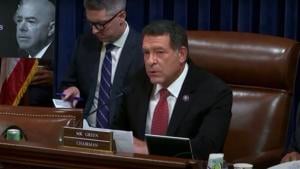
U.S. Rep Mark Green, R-Tenn., announced his official resignation on Friday, July 4, a date he said he selected on purpose.
Green, who chairs the House Homeland Security Committee, said in June he was stepping down from Congress for an opportunity in the private sector. He said in a video published Friday on X that he will start a new business.
“While I cannot give the details here, I will be doing something specifically designed to help America compete against the CCP (Chinese Communist Party), but this time in business,” Green said.
Green served in the Tennessee Senate from 2013 to 2018. He won Tennessee’s Seventh District Congressional seat in 2018 after incumbent Marsha Blackburn decided to run for Senate.
The vote on the ‘big beautiful bill” was his last, Green said in a post on X.
“My time here started with a fire to serve veterans, it continued with leading the historic impeachment of a cabinet secretary, and now it ends with achieving real border security. I am grateful my last vote was for the one Big Beautiful Bill,” Green said.
Candidates began lining up in June to replace Green. Matt Van Epps, who served as commissioner of the Tennessee Department of General Services, Tennessee state Rep. Jay Reedy, Montgomery County Commissioner Jason Knight and combat veteran Jon Thorpe have announced their intentions.
State Rep. Jody Barrett said on X that he is praying about a possible run and could make a decision as soon as next week.
Increases in price, inventory lead to $7B in homes for sale

Amidst a housing affordability crisis, Las Vegas reportedly has over $7 billion in home value on the market.
Redfin’s new report spelled out a record total value for the city’s real estate market.
“What I think has happened, we have very high prices,” said George Kiprios, president of the Vegas Realtors Association. “Our market is doing well, and the home prices are high. Inventory has grown, not a ton, but it has grown. When you combine higher home prices with more inventory, that’s how they got there.”
The median Las Vegas metro home price is currently $448,000, down $5,000 from a January high, but up over 106% from $217,000 just 10 years ago.
Las Vegas developers, meanwhile, have underbuilt homes over the last 15 years, according to a study by the University of Nevada at Las Vegas’ Lied Center for Real Estate. Researchers found that if construction rates had remained at pre-Great Recession rates, there would have been over 280,000 additional housing units in the area.
“Everybody’s looking for houses that are more affordable,” Kiprios told The Center Square. “I think there are lots of folks that want to buy that can’t afford the price.”
Despite the high prices, the Las Vegas housing market has shown some recent promise for buyers. Across the last year, sales have spent an average of 11 more days on the market, up to 46 days. Kiprios said sellers can get anxious and lower their asking prices when sales take longer.
While the Las Vegas real estate market may be at a near-record high to purchase a home, there are also many homes currently on the market, which gives buyers leverage to walk away from a bad deal, driving down prices across the board.
At the same time, Nevada Gov. Joe Lombardo has just signed the major housing bill he introduced for the 2025 session, worth over $180 million. The bill, AB 540, is designed to help speed up the building process and incentivize affordable housing projects.
Ultimately, Kiprios said, the $7 billion on the Las Vegas housing market can be read in multiple ways. Both potential buyers and sellers should be aware of the number, but both also have something to celebrate in its announcement, he said. For sellers, homes are being sold near an all time high, while buyers can relax, knowing they have options on the market.
Nearly 20,000 attend skilled trade student competition

Thousands gathered in Atlanta, Georgia, for an event focused on promoting students in skilled trades and that brings together these young tradesmen with industry leaders.
Each state’s top student tradesmen in over 100 different categories of skilled trades gather together at the annual National Leadership and Skills Conference put on by SkillsUSA, executive director for Skilled Careers Coalition Mark Hedstrom told The Center Square.
Skilled Careers Coalition is an organization dedicated to connecting America’s young students with skilled careers in an effort to help “close the skilled labor gap,” according to its website.
SkillsUSA’s executive director Chelle Travis described to The Center Square her organization and Skilled Career Coalition’s relationship as follows: “SkillsUSA, the nation’s leading workforce development organization for students, is a key partner of the Skilled Careers Coalition, collaboratively working to reimagine skilled careers and empower the next generation of America’s workforce.”
As The Center Square reported last year, Gen Z’s interest in skilled trades is on the rise, making SkilledUSA’s and SCC’s missions relevant to youth today.
This year at the National Leadership Skills Conference (NLSC), over 6,000 students competed against other youth in their trade categories to earn bronze, silver or gold, according to a press release. The event was attended by almost 20,000 people.
Included in the crowds at NLSC are industry leaders like John Deere and Yamaha, policymakers, and SkillsUSA partners, such as the Skilled Careers Coalition (SCC), SCC’s executive director Mark Hedstrom told The Center Square.
Hedstrom said that SCC’s goal at the National Skilled Leadership Conference is to “destigmatize skilled trades” and to “break down the challenges we see in that recruitment-placement ecosystem.”
“That continues to be our mandate and our mission,” Hedstrom said.
Skilled trades are “talented skilled careers” fulfilled by “talented skilled workers,” Hedstrom said.
Often, for students the focus for a future career choice “is on a four year degree or the military,” both of which can bring challenges, Hedstrom said. Particularly, the traditional college track takes years to reach one’s eventual career and can put young people in crippling debt, Hedstrom said.
What SCC aims to do is raise awareness for the third option: a skilled career, Hedstrom said.
“A lot of the stigma around skilled trades has always been they’re dirty, dark, dangerous jobs,” Hedstrom said. “They’re jobs that are low paying, they’re less educated.”
Hedstrom said that on the contrary, skilled careers are high-paying and highly educated.
Carpenter said television host Ty Pennington is an SCC partner and mentor. Pennington told The Center Square that “the trades are facing a serious gap, and we need a lot of workers.”
“We need to rely on the next generation to keep things running,” Pennington said. “Today’s toolbelt generation is just what we need.”
Like Hedstrom, Pennington noted to The Center Square some of the benefits of a skilled career, such as becoming an expert in one’s field, being on the fast track to owning a business, and avoiding college debt.
“So many young people are graduating from college with tons of debt and are unable to find a job in their chosen career,” Pennington said. “When it comes to the skilled trades, you will always be needed. That’s the beauty of the skilled trades.”
Pennington additionally told The Center Square that skilled trades cannot be replaced by AI. “Unlike other careers, technology, AI and robots can’t replace what human hands are able to create, as well as troubleshooting when something goes wrong.”
“The human touch and the experience that comes from making mistakes and learning from those mistakes cannot be replaced,” Pennington said.
SkillsUSA executive director Chelle Travis has similar sentiments to those of Hedstrom and Pennington.
“We’re seeing a real change in interest in youth and young adults, and a growing trend in interest in the skilled trades,” Travis told The Center Square.
Factors Travis identified for the change in sentiment toward skilled trades include high college tuition and the debt that follows, lack of job opportunity upon college graduation, as well as an improved perception of technical skills and good pay in the field.
“We have to normalize pursuing a skilled trade as a first choice not a last resort,” Travis told The Center Square when asked how young people could be encouraged to pursue skilled careers.
Poll: Fourth of July second only to Christmas as America’s top holiday

A majority of Americans say Independence Day is one of America’s top holidays.
Only Christmas (58%) tops the Fourth of July (52%) as the country’s top holiday, according to new polling from Napolitan News Service. Independence Day commemorates the signing of the nation’s Declaration of Independence from Great Britain on July 4, 1776. Next year will mark the 250th anniversary of the historic event.
Rounding out the top five American holidays are Veterans Day (47%), Memorial Day (44%) and Thanksgiving (31%), according to the poll of 1,000 registered voters conducted online June 25-26 by pollster Scott Rasmussen.
Nearly three in four Americans are likely to do something to celebrate Independence Day, according to the poll, with 46% very likely and 28% somewhat likely.
Among all voters surveyed, 56% said they planned to watch fireworks; 51% will participate in a cookout; 24% said they would set off firecrackers at home; 22% said they’d watch or participate in a parade; 17% will go to the beach or a lake; and 10% will sing patriotic songs.
The same poll asked those surveyed if they are proud to be an American, with 84% saying they are and 9% saying they are not.
When asked, “Are America’s best days still to come, or have they come and gone?”, 55% responded they are still to come, 27% said they have come and gone, and 18% were not sure.
Field work for the survey was conducted by RMG Research, Inc. The poll has a margin of error of +/- 3.1.
Trump rallies Iowa State Fair for kickoff of ‘America 250’

Fresh off the heels of the passage of President Donald Trump’s ‘big, beautiful bill,’ he kicked off the start of the nation’s 250th birthday in Iowa.
The Iowa State Fair is prominently known in political circles as the litmus test for presidential candidates, but Thursday night’s rally in Des Moines struck a celebratory tone.
The president touted his ‘big, beautiful bill,” claiming “there could be no better birthday present for America.”
“With this bill, every major promise I made to the people of Iowa in 2024 became a promise kept,” Trump told the crowd. “The country is on a winning streak.”
The president highlighted several provisions in the bill, including no tax on tips, increasing border security and eliminating the “death tax.”
“Just as I promised, we’re making no tax on tips, no tax on overtime and no tax on social security…very importantly for Iowa, this bill rescues over 2 million family farms from the so-called estate tax, or the death tax,” the president told the crowd.
Trump touted a record low number of border crossings while addressing the issues of migrant farm workers, indicating Homeland Security Secretary Kristi Noem will come up with a solution. The president added that his administration would put “farmers in charge.”
“The golden age is upon us,” said Trump.
“We are officially launching ‘America 250’—an enormously, year-long, nationwide celebration of our heritage, our flag, and our glorious American freedom,” the president announced, teasing the crowd that more details will be released in the coming weeks on the nation’s 250th birthday.
Trump announced the “Great American State Fair,” which will include a large celebration next year on the National Mall featuring all 50 states.
The president highlighted a few events as part of the celebration, including a UFC fight on the grounds of the White House—the first of its kind at the president’s house. In addition, he announced the “Patriot Games,” which will be comprised of top high school athletes from all 50 states.
Trump also said foreign tourists will be charged more to enter national parks in an effort to fund improvements.
The president concluded his speech by telling the crowd to “fight, fight, fight” while underscoring his promise to ‘Make America Great Again.’
Trump’s kickoff for “America 250” comes ahead of a huge celebration for the Fourth of July in Washington, to include flyovers featuring B-2 Stealth Bombers like the ones used to target Iranian nuclear facilities. As part of the celebration, the president will also sign the ‘big, beautiful bill’ at the White House, prior to a large fireworks show over the National Mall.
‘One big, beautiful bill’ passage evokes praise, doomsday predictions
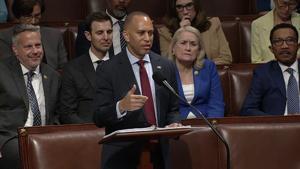
The Thursday passage of President Donald Trump’s multitrillion-dollar ‘big, beautiful bill’ drew both praise and panic from lawmakers and budget organizations.
The massive budget reconciliation bill, which will add an estimated net $4.1 trillion to the primary deficit over the next decade, implements the bulk of the president’s policy agenda, including the codification of his 2017 tax cuts.
It also hikes the debt ceiling by $5 trillion, implements cost-saving reforms to Medicaid and SNAP, funds construction of a southern border wall, phases out solar and wind subsidies from the Inflation Reduction Act, and boosts fossil fuel energy production, among other things.
House Budget Committee Chairman Jodey Arrington, R-Texas, called the bill “the most comprehensive and consequential set of conservative reforms in modern history.”
“This Big Beautiful Bill delivers the greatest single investment in border security and national defense; the largest tax cuts for families and small businesses; the most significant commitment to unlocking America’s energy resources; and the largest reduction in spending in the history of the United States,” Arrington stated, referring to the bills’ $1.7 trillion in savings.
Republican leaders had a difficult time getting all Republicans on board with the bill, particularly the House Freedom Caucus, who objected to the Senate’s controversial and unprecedented use of the current policy baseline that papered over the cost of permanent tax cut extension.
The Senate-amended bill eventually passed the House in a 218-214 vote, as The Center Square reported. Rep. Thomas Massie, R-Ky., was the only Republican to vote no on the bill.
“Although there were some conservative wins in the budget reconciliation bill (OBBBA), I voted No on final passage because it will significantly increase U.S. budget deficits in the near term, negatively impacting all Americans through sustained inflation and high interest rates,” Massie posted on X.
The majority of budget watchdogs share Massie’s concerns, particularly over the use of the current policy baseline to score the cost of the tax cuts – a move that forever changes budget reconciliation precedent.
“Congress has put our country’s economic well-being in great danger and raised the risk of a serious debt crisis,” Carolyn Bordeaux from Concord Action said in a statement. “In the process of passing this bill, Congress has broken the budget process and shattered vital, longstanding norms designed to ensure a sober, responsible approach to policymaking.”
The national debt is currently $36 trillion and is projected to surpass $50 trillion in 10 years.
Democrats, all of whom voted against the bill, unleashed criticism on social media following the legislation’s passage.
Rep. Angie Craig, D-Minn., called the bill “a grave turning point” for the country and “a disgrace.” Rep. Jimmy Panetta, D-Calif., dubbed it “the largest self-inflicted wounds to working families and to our economy in our nation’s history.”
“They’ll regret this vote,” Rep. Frank Pallone, D-N.J., said, referring to his Republican colleagues.
The bill now heads to Trump’s desk for his signature on Friday, July 4, meeting Republicans’ self-imposed Independence Day deadline.
“Congrats to everyone. At times I even doubted we’d get it done by July 4!” Vice President J.D. Vance posted on X. “But now we’ve delivered big tax cuts and the resources necessary to secure the border. Promises made, promises kept!”
CA data: just one Palisades brush clearance before fire
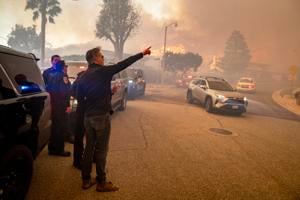
State data shows the California Department of Forestry and Fire Prevention carried out only one brush clearance operation in the Pacific Palisades before the deadly Palisades Fire killed 12 Americans and destroyed 6,837 structures, highlighting the state’s slow progress in forest management.
This single Cal Fire-funded fuel reduction operation in Cal Fire’s database covering 2023 to the present involved mastication of 184 acres of scrubland across the over 75,000-acre Mountains Recreation and Conservation Authority between November and December 2024. This operation focused on the border between the coastal community of the Pacific Palisades and the slightly more inland Brentwood community in MRCA’s Westridge-Canyonback Park along Mandeville Canyon Road, and along the Bel-Air, eastern side of the San Diego Freeway.
The 23,488-acre Palisades Fire never made it to the San Diego Freeway, and was stopped on the western side of Mandeville Canyon, suggesting the operation may have played a role in stopping the fire from spreading further east through the Santa Monica Mountains.
But within the immediate Palisades area, however, CalFire’s MCRA mastication operation was only conducted on a thin sliver in Temescal Gateway Park immediately around the base of Temescal Fire Road, but not to the east or west, or even further up the road, leaving the entire Palisades community vulnerable to fire — including the treated area, which ultimately completely burned.
Gov. Gavin Newsom, meanwhile, claims California is doing its fair share and urging the federal government to step up its fire prevention efforts.
“It’s time for Trump to put his money where his mouth is. California has done more than our fair share of ‘raking’ the forests, now the federal government has to do its part to Make America Rake Again,” said Newsom in a July 1 statement. “We’re doing all we can to protect communities from catastrophic wildfire, will President Trump?”
Southern California’s coastal areas are characterized by the chaparral ecosystem, which is defined by winter rains that produce spring blooms that dry out over the summer and feed fall fires. These fires leave nutrients for post-rain blooms in a cycle that dominated California until European development and adoption of fire suppression as fire policy.
Researchers estimate approximately 1.8 million acres of California land burned every year before 1800. With the state 42.2 million hectares large, this means the entire state’s equivalent of land burned every 23 years.
Historians note that the indigenous populations adopted prescriptive burn tactics of their own, with the North Fork Mono Tribe adopting 30-year burn cycles in which three or more burns are conducted in an area during the first 10 years, with just one burn over the next 20 years.
As a result of practices like these and natural occurrences like lightning strikes that were able to unfold, California forest density was approximately half of what it is now, resulting in fewer but larger trees. These larger trees were not only more fire resistant due to their size, but refrained from drying out due to less competition and limited erosion. They were also less likely to spread fire from treetop to treetop, making the land more resilient to fire overall.
While prescribed burns are considered most effective for managing overgrowth, mastication, or the feeding of brush and smaller trees into mulching machines, can also reduce fire spread and intensity as part of a broader fuels management strategy.
According to the state of California, approximately one-third, or a million acres, of state-managed land is at “high risk from uncontrolled wildfire.” The state said as many as 15 million acres of land in California is in need of treatment.
Cal Fire’s project dashboard shows it funded 141,061 acres of fuels reduction between July 2023 and June 2024, and 123,488 acres between July 2023 and May 2024. (June data is not yet available.) At this rate, it would take about seven years to clear the forest management backlog on state lands, not including the new lands added to the state’s backlog each year.
Cal Fire’s reports note that treated acres do not denote the total number of acres that have been successfully cleared, but that “there can be multiple discrete Treatment Areas within a Project, and Treatments may contain multiple overlapping activities.” That means if one area is thinned, then pruned, then piled, then burned, an area can contribute multiple times its size toward the treatment total.
Thus, while the state reports it has completed 51,286 acres of prescribed burns — a milestone exceeding the state’s 50,000-acre goal — and 68,347 acres of fuels reduction in the 2024-2025 fiscal year, it’s likely many of those acres have been counted more than once, obfuscating the real scale of the state’s brush clearance efforts.
California Gov. Gavin Newsom’s then-record $298 billion budget for the 2024-2025 fiscal year notably cut $3 million from Cal Fire’s Forest Health Program, $35 million from stewardship programs of state-managed land, $5 million from prescribed fire and hand crews, and $28 million from conservancy projects, which likely accounted for some of the apparent forest treatment decline between the the 2023-2024 and the 2024-2025 fiscal years.
When Newsom came into office in 2019, the state was spending $200 million per year on wildfire prevention. The 2020-2021 budget increased funding to $536 million, and the 2021-2022 budget increased funding again to a record $988 million. Since then, however, funding has declined, with funding falling to $600 million in the 2022-2023 fiscal year, remaining steady for the 2023-2024 fiscal year, then declining to $543 million in the 2024-2025 fiscal year, and now to just $210 million for the 2025-2026 fiscal year.
This $210 million represents a relative decline since 2019 due to inflation — to keep up with inflation, the state would have had to have allocated $250 million this year.
Republican leaders have advocated that the state maintain a new wildfire prevention baseline of $1 billion per year, which a new working paper from Resources For the Future, whose lead author is a former U.S. Forestry Service senior researcher, suggests could eliminate the state’s highest-risk backlog in just five years.
Resources For the Future, an independent research institute, estimates it would cost approximately $17 billion to treat all of California’s lands at high risk of wildfire, finding mechanical thinning costing an average of $577 per acre, and prescribed burns $170 per acre based on U.S. Forestry Service data.
Should the state focus only on the highest-risk areas at the wildland-urban-interface where the risk of death and destruction from wildfire is the highest, RFF says treating these highest-risk 8.7 million acres would cost $5 billion.
RFF notes that these costs are based on national data, and do not count costly permitting or environmental review costs, or factor that significant scaling, and thus increased demand for labor and equipment, could raise treatment costs.
With the University of Chicago estimating the state’s 2018 record blazes caused $148.5 billion in losses, and the UCLA estimating the January fires cost as much as $164 billion, treating every acre of at-risk land in California could still cost significantly less than one catastrophic blaze.
Nonetheless, with the state starting to face budget pressures despite a record $321 billion budget, it’s unclear what other programs the state might be willing to cut to prioritize wildfire prevention.
Gabriel Kirkpatrick Mann, a seasoned wildfire documentarian who embedded with Cal Fire’s elite hotshot unit for six years to produce Hotshot, emphasizes the critical role of strategic fuel clearance in protecting communities.
“The entire forest could turn to moon dust, but if we have good fuel clearance around our neighborhood, it won’t matter,” Mann told The Center Square. “We saw this clearly on the Silverado Fire in 2020, which had the same conditions as the Palisades Fire, when 85 mile per hour winds pushed the fire straight into Orchard Hills, but because they had a 200-foot greenbelt of mulch and succulents, the fire fell to its knees.
“Contrast that with the Palisades, where you have a rats’ nest of fuels right up against people’s homes,” continued Mann. “Far different outcome.”
While the Silverado Fire in coastal Orange County burned 13,390 acres — a little less than half the size of the Palisades Fire — only five structures were destroyed, and no civilians died.
Despite the state’s wildfire prevention challenges, Newsom has leaned on the state’s efforts to go on the media offensive, hosting a “Make America Rake Again” press conference on Tuesday to unveil a model executive order for President Donald Trump to sign to improve national wildfire prevention efforts.
The model order calls for the federal government to match state and local forest management and firefighting capabilities, and reallocate funding to achieve this objective.
California Republican leaders responded by noting the state’s minimal fire prevention efforts relative to its budget — and the state’s challenge — and the decreases in fire prevention funding since the 2021-2022 fiscal year.
“Gavin Newsom has cut wildfire prevention funds every year since 2021. In 2021, myself and many other members of the legislature had to damn near shame him into a record investment of a billion dollars — this was in the aftermath of the Dixie Fire that devastated my district,” said Assembly Minority Leader James Gallagher, R-East Nicolaus. “Every year since then, in Gavin’s budgets, he has slashed the funding, including in this year’s budget, in 2025, where he allocated only $200 million toward wildfire prevention while he’s allocating $12 billion for health care for illegal immigrants.”
“In the aftermath of these devastating fires in Los Angeles and these devastating fires that have hit my area, that have hit many parts of California, $200 million out of a $321 billion budget,” continued Gallagher. “And he still has not met the [joint federal and state] goal of 500,000 acres treated a year — he committed to that under the first Trump administration … he hasn’t met that goal at all.”
According to CalFire, 96,994 acres have burned this year, with 3,290 wildfires, 30 fatalities, and 16,306 structures destroyed across the state, with 17 fires still ongoing at the start of the summer fire season.
America celebrates 249 years of independence

Fireworks, parades, and military flyovers will happen across the country in celebration of 249 years since America declared its independence from England through the Declaration of Independence.
In Washington, D.C., the B-2 bomber pilots who carried out the strike against nuclear missile facilities in Iran are expected to fly over the White House as part of celebrations for the holiday.
President Donald Trump confirmed the bomber pilot’s appearance in a Fox News interview.
Celebrations in the nation’s capitol will also include a parade down the heart of the city, capped off by a fireworks display on both sides of the Lincoln Memorial reflecting pool at the National Mall.
Across the country, festivities are also taking place to celebrate 249 years of American independence.
In South Dakota, presidential reenactors gather at Mount Rushmore to honor Presidents George Washington, Thomas Jefferson, Abraham Lincoln and Teddy Roosevelt. The reenactors will sign autographs, answer questions and interact with visitors throughout the day.
New York City boasts Macy’s 49th annual fireworks show with 80,000 shells of fireworks planned to be launch over the Brooklyn bridge in this year’s festivities.
On the West Coast, Huntington Beach, California, hosts a celebration that brings together more than 500,000 people annually.
In what is dubbed “the largest Independence Day west of the Mississippi,” the town sets up a 2.5 mile route down the Pacific Coast Highway for visitors to enjoy. The celebrations conclude with a fireworks display over the ocean.
Independence Day celebrations in Jackson Hole, Wyoming, start with a pancake breakfast in the town square, followed by a parade featuring music, horses, roller skaters and classic cars. The day wraps up with music and fireworks overlooking the Teton Mountains.
In downtown Nashville, artists from across the country celebrate America’s independence while fireworks are coordinated to a live performance from the Nashville symphony.
Philadelphia’s parade starts at Independence Hall, where the second Continental Congress met to sign the Declaration of Independence. 249 years later, the city honors American independence with a parade through the heart of downtown.
The parade features marching bands, dance performances and the debut of the first parade float set for the 2026 parade, celebrating 250 years of American independence.