National News
Analysis: Biden’s use of autopen likely legal, other questions remain
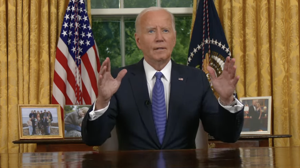
The use of autopen for executive actions, including pardons during former President Joe Biden’s presidency, has been questioned throughout the congressional investigation into his mental fitness, with some Republican lawmakers questioning the validity of those actions due to the use of the device.
President Donald Trump has described the Biden administration’s use of the autopen, a mechanical device used to place an individual’s signature on documents or other surfaces, to carry out executive actions, as “one of the biggest scandals” the country has seen in 50 to a hundred years.”
Some Republicans have suggested that some of the executive actions could be voided, pointing to the use of the autopen. However, there is already precedent for presidents using the device to carry out executive action.
The House Committee on Oversight and Government Reform, led by chairman Rep. James Comer, R-Ky., is currently leading the investigation and may have difficulty proving Biden didn’t approve the executive actions himself.
Attorney and legal scholar John Shu explained to The Center Square that “the president may authorize” his staff to “use the autopen to sign presidential documents, including pardons and clemency grants,” with the caveat that “the president is mentally competent.”
“If the pardon covers a group of people, there doesn’t have to be a separate, signed pardon for each individual. Instead, a specific description of the pardon’s applicable criteria is sufficient,” he added.
Shu cited historical precedents when presidents carried out mass pardons and did not sign individual documents.
“For example, Presidents Lincoln and Johnson pardoned secessionists who fought against the Union in the Civil War in order to heal the nation and bring it together. Similarly, President Carter pardoned a group of more than 250,000 Vietnam-era draft dodgers,” according to Shu.
The legal scholar explained that the crux of the autopen debate is Biden’s direct orders and the ability to prove he was not in sound mind when ordering the pardons.
“If a staffer or someone else decides on his own that someone should be pardoned without the president’s actual authorization, that would very likely be a criminal act, and the pardon’s validity would be in serious doubt. This isn’t merely because of autopen use, it’s because someone who is not the president committed a presidential act without the president’s knowledge or authorization and used the auto pen to essentially forge the president’s signature,” said Shu. “This would be even more true if the president was not of sound mind for any reason, because he would not be capable of authorizing or doing anything in that situation. In the case of President Biden, the Committee would have a challenge proving his mental status because it is unlikely that he was of unsound mind every moment of every day.”
The committee’s current challenge, however, is getting the witnesses to talk. So far, three key Biden witnesses in the investigation have invoked their Fifth Amendment right against self-incrimination in less than two weeks, with more likely to come.
As previously reported by The Center Square, the committee could potentially grant certain congressional witnesses immunity, a common tactic that would require them to testify because they no longer could self-incriminate and be subject to prosecution.
Questions regarding Biden’s mental fitness were raised well before the 2020 presidential election. Republicans and many in the conservative media continued to raise questions regarding the former president’s health throughout his presidency.
However, the White House claimed Biden received regular medical exams, showing a healthy, competent president.
The House committee announced in early June that it was expanding its investigation into the “cover-up” of Biden’s “mental decline.”
Comer sent letters to five former senior Biden White House aides, “demanding they appear for transcribed interviews.” Comer’s committee is investigating “potentially unauthorized issuance of sweeping pardons and other executive action.”
The investigations have been fueled in part by a book written by Jake Tapper and Alex Thompson, “Original Sin,” which the congressman quoted as claiming, “Five people were running the country, and Joe Biden was at best a senior member of the board.”
Karine Jean-Pierre, who served as Biden’s press secretary; Ian Sams, former assistant to the president and senior advisor in the White House Counsel’s Office; Andrew Bates, former deputy assistant to the president and senior deputy press secretary; and Jeff Zients, Biden’s former chief of staff, have also been called to testify in front of the committee.
Republicans applaud removal of 2.8 million duplicative Medicaid enrollees
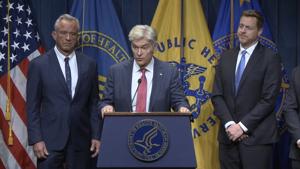
In the latest move by the Trump administration to root out government waste, the Centers for Medicare and Medicaid plan to remove duplicative health insurance coverage from 2.8 million Americans improperly enrolled in taxpayer-funded healthcare plans.
CMS analyzed Medicaid enrollment data from 2024 and found that each month, roughly 1.2 million individuals were enrolled in Medicaid or CHIP in multiple states while roughly 1.6 million people were enrolled in one of those programs as well as a subsidized Affordable Care Act (ACA) Exchange plan.
The erroneous enrollments have cost the federal government and taxpayers approximately $14 billion per year in duplicate payments. CMS says it will partner with states to end the inappropriate payments while ensuring that those 2.8 million Americans retain correct healthcare coverage.
House Energy and Commerce Committee Chair Brett Guthrie, R-Ky., praised CMS’s actions in a Monday statement, saying it “builds upon work by House Republicans” in the recently passed One Big Beautiful Bill Act, which “gives tools to CMS and the States to prevent wasteful spending like this from happening again.”
Even though federal regulations require ACA exchanges, or marketplaces, to regularly inspect data for improper enrollments via the Medicaid Periodic Data Matching process, the Biden administration temporarily halted these examinations to ensure continuous enrollment during the COVID-19 pandemic.
“Our health care safety nets should serve the most vulnerable Americans—not be an open tab for fraud and abuse,” House Budget Committee Chairman Jodey Arrington, R-Texas, said in a statement. “I’m encouraged to see CMS moving fast to fix this problem – but make no mistake: this is just the tip of the iceberg when it comes to waste, fraud, and abuse in our government.”
Beginning in early August, CMS will provide states with lists of people enrolled in multiple states or in multiple plans and require states to confirm these enrollees’ eligibility. CMS will also notify individuals who are dual enrolled in Medicaid or CHIP and an ACA Exchange plan and ask them to either disenroll in the program(s) or end their subsidy.
“We are going to work with states to identify individuals enrolled in multiple programs and fix the duplicate enrollment problem to save taxpayers billions of dollars, while minimizing inappropriate coverage loss,” CMS Administrator Mehmet Oz promised.
“This is exactly why we fought for stronger tools in the One Big Beautiful Bill Act – to go after this type of waste and finally put a stop to paying twice for the same person’s health coverage,” he said.
Kennedy to overhaul organ transplant systems after ‘disturbing practices’
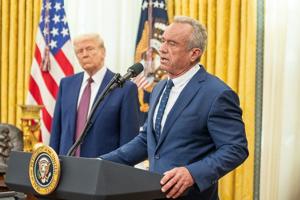
The Department of Health and Human Services plans to overhaul an organ transplant system after an investigation found what federal officials called “disturbing practices.”
HHS Secretary Robert F. Kennedy, Jr. announced an initiative Monday begin reforming the organ transplant system following an investigation by its Health Resources and Services Administration.
“Our findings show that hospitals allowed the organ procurement process to begin when patients showed signs of life, and this is horrifying,” Kennedy said in a statement. “The organ procurement organizations that coordinate access to transplants will be held accountable. The entire system must be fixed to ensure that every potential donor’s life is treated with the sanctity it deserves.”
HRSA directed the Organ Procurement and Transplantation Network, or OPTN, to reopen a case involving potentially preventable harm to a neurologically injured patient by the federally-funded organ procurement organization serving Kentucky, southwest Ohio, and part of West Virginia.
The OPTN’s Membership and Professional Standards Committee closed the same case without action during the Biden administration.
Under Kennedy, HRSA demanded an independent review of the OPO’s conduct and the treatment of vulnerable patients under its care. HRSA’s independent investigation revealed clear negligence after the previous OPTN Board of Directors claimed to find no major concerns in their internal review.
HRSA examined 351 cases where organ donation was authorized, but ultimately not completed.
It found:
103 cases (29.3%) showed concerning features, including 73 patients with neurological signs incompatible with organ donation.At least 28 patients may not have been deceased at the time organ procurement was initiated – raising serious ethical and legal questions.Evidence pointed to poor neurologic assessments, lack of coordination with medical teams, questionable consent practices, and misclassification of causes of death, particularly in overdose cases.
Vulnerabilities were highest in smaller and rural hospitals, indicating systemic gaps in oversight and accountability.
In response to these findings, HRSA has mandated corrective actions for the OPO and system-level changes to safeguard potential organ donors nationwide. The OPO must conduct a complete root cause analysis of its failure to follow internal protocols – including non-compliance with the five-minute observation rule after the patient’s death – and develop clear, enforceable policies to define donor eligibility criteria, according to a news release. Additionally, it must adopt a formal procedure allowing any staff member to halt a donation process if patient safety concerns arise.
HRSA also took action to ensure that patients across the country will be safer when donating organs by directing the OPTN to improve safeguards and monitoring at the national level.
Under HRSA’s directive, data about any safety-related stoppages of organ donation called for by families, hospitals, or OPO staff must be reported to regulators, and the OPTN must update policies to strengthen organ procurement safety and provide accurate, complete information about the donation process to families and hospitals.
Sen. Kelly announces wins for Arizona, U.S. in intelligence bill
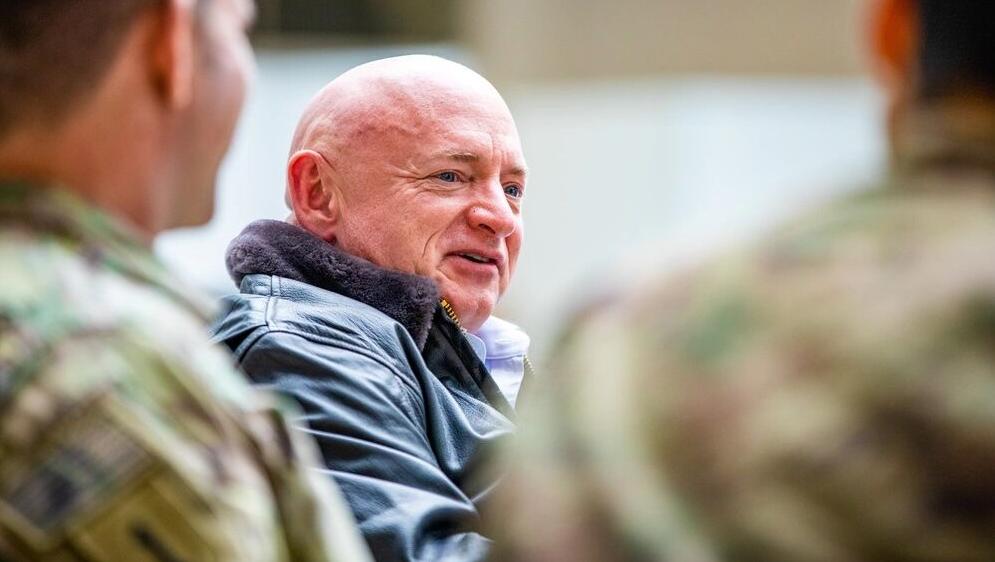
U.S. Sen. Mark Kelly, D-Arizona, has secured what he calls state and national security priorities in the annual intelligence bill.
Kelly said the Intelligence Authorization Act includes measures to strengthen counterintelligence briefings for military personnel, improve coordination between the U.S. and Mexico to combat drug trafficking, ensure emerging technology is provided to the U.S. intelligence community, and improve oversight of classified access decisions across administrations.
“For Arizona, I worked to protect the border against cartel drone surveillance and strengthen coordination with Mexico to counter drug trafficking,” said Kelly in a press release.
Arizona is no stranger to drug overdoses, especially those that involve fentanyl. The Focus on Fentanyl website from Maricopa County says “fentanyl is now the deadliest drug in Arizona” and points out that even a few grains of fentanyl are strong enough to kill an adult male. While fentanyl may be manufactured elsewhere and shipped to places south of the border, special interest groups and members of Congress say fentanyl is coming into the United States through Mexico.
The Senate Select Committee approved the IAA with bipartisan support. The vote was 15-2.
Kelly-led provisions in the IAA include the No Work with Adversaries Act, the Counternarcotics Enhancement Act, the Intelligence Community Technology Bridge Act and the Drone Threat Assessment Act.
“These are the kinds of smart, forward-looking investments that keep our country safe and give us an edge over our adversaries,” said Kelly.
Introduced by the senator and others in 2023, the bipartisan No Work with Adversaries Act prevents China and Russia from acquiring U.S. military knowledge.
“The United States military is the best in the world not just because of our technological advantage, but because our training and tactics are second to none,” said Kelly in a 2023 press release. “Our enemies know this and are targeting American servicemembers and veterans to gain insights into that training. This must be stopped.”
The Intelligence Community Technology Bridge Act is another bipartisan measure that Kelly introduced in June 2025, along with U.S. Sen. Mark Warner, D-Virginia, and Republican Sens. John Cornyn of Texas and James Lankford of Oklahoma. As reported by The Center Square, the measure will enable the intelligence community to streamline acquisition processes and prioritize small businesses and nontraditional defense contractor solutions.
“By cutting unnecessary red tape and accelerating innovation, we can better support small businesses and innovators, get cutting-edge technologies into the hands of the intelligence community faster, and strengthen our national security advantage,” said Kelly in June.
The Counternarcotics Enhancement Act and Border Drone Assessment Act are also bipartisan.
Economist: Philadelphia hotel occupancy decreased hosting ’17 NFL Draft

Philadelphia had a decrease of 1,700 hotel room nights and a $1 million increase in hotel revenue when it hosted the 2017 NFL Draft, according to a new academic paper studying draft host cities.
The data comes despite claims that the draft led to nearly 19,000 additional hotel nights from event organizers.
The paper from economist E. Frank Stephenson of Georgia’s Berry College, shared with The Center Square, examined hotel data from NFL Draft hosts since the draft moved from New York City to Chicago in 2015 heading into Pittsburgh hosting the event in 2026.
Stephenson examined data from the three nights of the draft along with the night before and after the draft, showing a hangover effect that economists often see as fewer visitors than normal visit a city in the days after a large event. The Philadelphia draft coincided with that year’s Penn Relays.
Pittsburgh event organizers have said the draft will lead to an influx of spending and more than $120 million in economic impact. Stephenson’s data, however, showed the draft consistently leads to meager hotel revenue increases and diverted spending from local residents.
The night before the Philadelphia draft, there was a $750,000 increase in hotel revenue and rooms (1,562) along with a larger first-night increase of 2,600 and $870,000 before a third-night dropoff and 2,500 less hotel rooms occupied in the city the day after the draft.
“The total effect is a decrease of about 1,700 room nights so the results do not support claims that the draft led to over 18,000 room nights of additional hotel occupancy,” Stephenson wrote.
The Philadelphia impact was compared to that of an Eagles’ home game, which leads to 1,800 more rooms and $570,000 in additional hotel revenue.
Similar results were in the other draft host cities outside of Las Vegas, which had nearly 20,000 less hotel rooms rented but at much higher prices during the 2022 draft.
“While economic impact claims about hosting the draft are unrealistic, choosing to host the draft might well be a sensible decision for many cities,” Stephenson wrote. “News reports suggest cities typically spend about $3 million to host the draft since it uses existing facilities and does not require large capital outlays such as a new stadium or arena.”
Economist J.C. Bradbury has told The Center Square that extensive academic study on the impact of hosting an NFL Draft has not been conducted previously, but studies on other large sporting events show that “we know that these events largely just replace existing tourist spending and represent a small share of the local economy.”
Pittsburgh has agreed to send $1 million to an $11 million fund to pay for marketing and other services related to the draft. Visit Pittsburgh and corporate contributions will also go to the fund.
Victor Matheson, an economist from the College Holy Cross in Worcester, pointed out that if fans don’t come from across the country for the draft – like Stephenson’s data shows – then it is simply diverted spending.
“If it is just a big block party, there is no real economic impact because it’s just locals spending their money one place rather than another,” Matheson told The Center Square.
Stephenson pointed out that the average city has at least a 10% hotel tax, so modest increases can lead to a modest increase in collections of that and sales tax in a city.
But cities and event hosts would be better served discussing more accurate and modest numbers instead of the incorrect claims that are currently used, he wrote.
“While research finds modest amenity values associated with sports event, even a small amenity value to local attendees might well exceed the portion of hosting cost not recouped from hotel or sales tax revenue,” Stephenson wrote. “Having policymakers take such an approach to justifying their cities hosting the NFL Draft would be economically sounder than peddling exaggerated and unsupported economic impact claims.”
FDA to consider warning against antidepressants
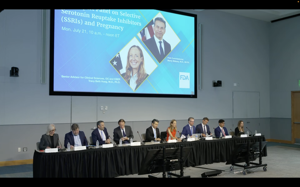
Doctors on Monday urged the U.S. Food and Drug Administration to issue warnings to pregnant women against the use of certain medications to treat depression, obsessive compulsive disorder and anxiety.
In a panel discussion Monday, doctors across the medical field and officials at the FDA said women taking selective serotonin reuptake inhibitors to treat illnesses like depression can negatively impact the development of a child in the womb.
“SSRIs may be unique because serotonin may have an interaction with the physiology of a woman and a woman who is pregnant,” said FDA director Commissioner Marty Makary. “Serotonin may play a crucial role in the development of organs of a baby in utero, specifically heart, brain and even the gut.”
Several experts on the panel said the FDA does not adequately warn pregnant women about the negative effects of SSRIs on a baby’s development.
Adam Urato, chief of maternal fetal medicine at MetroWest Medical Center in Massachusetts, said there is widespread scientific support for the dangers of SSRIs on the development of a baby in its mother’s womb.
“When a pregnant mom takes an SSRI chemical, that chemical enters the mom, crosses the placenta, goes into the developing brain and has chemical effects,” Urato said.
“Ultrasound studies show SSRI-exposed fetuses have different movement and behavior patterns,” Urato said.
Urato said the newborn babies can experience jitteriness, breathing difficulties and higher rates of admission to the neonatal intensive care unit if their mother used SSRIs.
A 2023 study from the National Institutes of Health partly agreed with Urato, but didn’t directly link a mother’s SSRI intake to long term health outcomes for a child.
Some experts on the panel said SSRIs are still necessary to treat a mother’s depression and prevent a child from inheriting the same illness.
Kay Russos-Ross, a gynecologist at the University of Florida’s women’s health center, said mothers with mental health issues who do not have access to SSRIs face a greater risk than those continuing the medication throughout pregnancy.
Russos-Ross said women who are not treated for mental health conditions during pregnancy risk suicide, overdose and inadequate bonding with children. She said lack of treatment can cause decreased socialization, IQ issues, behavioral disorders like attention deficit hyperactivity disorder and depression in children.
“The risks of untreated mental health conditions are significant and SSRI should be considered as one of the treatment options with shared decision making with our patients,” Russos-Ross said.
A study from the National Institutes of Health found that a mother’s preexisting psychological condition has more of an effect on the child’s outcomes than exposure to SSRIs in the womb.
Regardless of the proposed risks, experts across the panel urged the FDA to implement more warnings for pregnant mothers on SSRIs.
“We should take pride in informing the people who live here, our citizens, about the risks of these medications and we can do a better job,” said Josef Witt-Doerring, a psychiatrist and former FDA medical officer.
“A big part of compassionate care is giving patients the proper information about risks and benefits of treatment and then supporting their choices,” Urato said.
WATCH: DHS officials blame ‘sanctuary’ city policies for shooting of ICE agent

A weekend attack on an off-duty New York Immigration and Customs Enforcement agent would never have happened if not for the Biden administration’s harmful border policies and local policies protecting illegal aliens, said Department of Homeland Security and ICE officials at a news conference Monday.
“What did we think was going to happen from policies like that? When you take a dangerous individual and you allow them to never face consequences for the acts that they’re perpetuating against the public and then you end up in a situation that could have been prevented,” said DHS Secretary Kristi Noem.
A noncitizen in the U.S. illegally who previously had been arrested and released in New York City four times is accused of shooting the agent in the face and arm as the agent was enjoying an evening out in Manhattan Saturday.
New York City is a sanctuary city, meaning it is committed to limited cooperation with ICE when noncitizens are arrested on suspicion of having committed a crime or are charged with committing a crime. When ICE discovers that someone who has been apprehended by the police is in the country illegally, it may issue a detainer to the correctional facility to hold the individual until ICE can take custody. Institutions in sanctuary cities often defy ICE detainers so ICE is not able to obtain the individual from local law enforcement.
“Sanctuary cities are sanctuaries for criminals. Hard stop,” said Trump border czar Tom Homan.
The NYPD and the New York Department of Correction are “barred from honoring ‘detainer requests’ from ICE, UNLESS that person has been convicted of violent or serious crimes, is on the federal terrorist watch list, and when ICE officials have a judicial warrant,” as of March 1, 2025, according to Legal Services NYC.
“I’ve been doing this since 1984; I’ve never seen a situation where I see it today,” Homan said. “You see the polls. Everybody agrees we should be arresting public safety threats, illegal aliens, but the city council here has locked us out of Rikers Island. Are you kidding me?”
Homan reiterated his promise that ICE would “flood the zone” by sending more ICE agents to sanctuary cities. Noem promised they would continue to push to remove noncitizens from the country.
“We’re going to double down,” Noem said, “and make sure that… once again, America can be a country where the rule of law matters.”
Economist: Hotel data shows hosting NFL Draft has minimal positive effect
Cities that host the NFL Draft have seen small increases in hotel revenue in recent years but those gains are far smaller than what is claimed by teams, the National Football League and the marketing and tourism departments in local government have claimed.
The first three cities to host the draft after it left New York saw insignificant changes in hotel stays during the event while host cities since 2019 have seen between $4 million and $6 million in hotel revenue increases due to the event, according to a new paper provided to The Center Square from economist E. Frank Stephenson from Georgia’s Berry College.
Green Bay hosted the event in 2025 while Pittsburgh will host in 2026 and Washington, D.C. in 2027. All three claimed that large economic impacts would occur when hosting the event.
“The net gain in room rentals in the 2019-2024 host cities varies greatly from a decrease of nearly 20,000 room nights in Las Vegas to an increase of about 9,000 room nights in Nashville, but in all cases is a small fraction of the claimed number of people attending draft-related events,” Stephenson wrote. “Thus, the overwhelming majority of visitors are local residents or day-trippers and much of their spending is likely redirected from other local entertainment or dining options rather than being economic gains for the host cities.”
Stephenson wrote the paper hoping to shed light on annual claims by entities involved of large economic impacts related to hosting the event, used to justify spending on the event.
The paper comes as Experience Greater Green Bay and the Green Bay Packers claimed last week that there was an economic impact of $73 million in Brown County and nearly $105 million statewide.
Green Bay relied on surveys from marketing firm Sportsimpacts, which claimed that 50% of those attending the draft were from Brown County or day-trippers while 31% of attendees were from outside Wisconsin and 24% paid for overnight lodging with 29% staying in Brown County and 21% in Outagamie County.
Stephenson’s hotel data analysis ran through 2024, when Detroit hosted the draft. But the data consistently showed smaller impacts despite claims that hosting the draft had more than a $200 million impact on the Detroit area.
Wisconsin leaders claimed the event would have an economic impact of $94 million in the state and $20 million in the Green Bay area when attempting to divert public funding to the event.
“Every year these bogus economic claims about the NFL draft come out,” economist J.C. Bradbury wrote about the Green Bay tourism estimates heading into the event. “Economists haven’t studied it directly because it makes no sense. But we really could use an actual serious study to counteract this BS PR.”
The Las Vegas decrease in hotel stays for the draft are similar to when the city hosted the Super Bowl and Formula 1 Las Vegas Grand Prix, when it saw an increase in hotel rates but not occupancy.
Kansas City saw an increase in hotel rates and stays for the night before the draft and first two nights of the draft but then saw drops in hotel stays the third night of the draft and the night after that, what economists call the hangover effect of deterring regular guests after a large event.
“The cumulative effects … indicate a net gain of 4,416 room rentals and $4.98 million in hotel revenue,” Stephenson wrote. “While the effects in Kansas City are relatively large compared to all other host cities except Nashville, they do not support claims of a $60 million increase in lodging spending.
“As for other events, the Kansas City Chiefs increase room rentals by about 8,900 rooms and hotel revenue by $1.9 million per home game.”
The Detroit draft, meanwhile, led to a net increase of 2,800 room nights and approximately $5 million in additional hotel revenue compared to an increase of about 900 room nights and $450,000 in hotel revenue for each home Detroit Lions game.
“While a few host cities—Nashville, Kansas City, and Detroit—experience positive hotel occupancy effects, they are far short of claims about the event’s economic impact,” Stephenson wrote. “Moreover, even the modest positive hotel occupancy increases found in some cities are subject to leakages and may not benefit the host city’s economic conditions.”
Everyday Economics: Fed policy crossroads: Patience vs. preparation
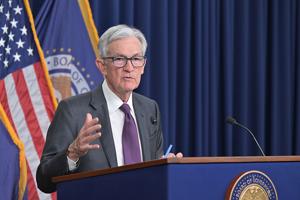
This week brings another opportunity for Fed Chair Jerome Powell to defend the central bank’s cautious stance as he addresses markets that increasingly question whether patience remains the right strategy. Recent data supports the wait-and-see approach: goods inflation has edged higher, and the labor market shows few signs of further deterioration. From this perspective, the cost of waiting appears manageable.
Yet cracks are emerging within the Federal Open Market Committee. Governor Christopher Waller has articulated a compelling alternative view that deserves serious attention. He argues that incoming tariffs will function more like a tax –hitting wholesalers, retailers, and consumers while potentially weakening aggregate demand. Any price uptick could be short-lived. Under this scenario, the Fed risks allowing unemployment to rise unnecessarily if it waits too long to act.
The employment data supports Waller’s concerns. Private sector job growth has slowed dramatically, with state and local government hiring accounting for more than half of last month’s gains – likely a temporary boost rather than sustainable momentum. This pattern suggests underlying weakness in the labor market.
At the same time, Congress deficit-financed tax cuts are expected to provide near-term economic stimulus, potentially offsetting some of the drag on aggregate demand. But it is also important to recognize that the latest tax bill has long-term costs – higher debt burdens that could prove more damaging than any short-term benefit.
Housing Market: Stuck In Neutral
Housing data takes center stage this week with both existing and new home sales reports. The sector continues its stubborn dance along multi-decade lows, offering little evidence of a meaningful recovery despite some encouraging signs.
May’s existing home sales managed a modest 0.8% monthly increase, but remained 0.7% below year-ago levels – hardly the stuff of recovery narratives. June’s data, reflecting contracts signed in late April and May, faces uncertain prospects. While newly pending listings showed slight improvement in early May, not all contracts translate to completed sales.
The market presents a paradox of opportunity within broader weakness. Inventory has expanded compared to last year, creating the first meaningful competition for builders in years and putting downward pressure on prices across all housing types. This dynamic is slowly improving affordability and shifting negotiating power back to buyers for the first time since the pandemic.
Zillow data reveals the extent of this shift: 27% of listings experienced price cuts in June – the highest June figure since at least 2018. Markets in Florida, Texas, Georgia, and Tennessee are seeing particularly aggressive price adjustments, with buyers wielding more leverage than they’ve enjoyed in years.
Yet structural headwinds remain formidable. Unlike last year when mortgage rates began falling ahead of aggressive Fed cuts, borrowing costs are expected to stay elevated relative to recent history. As the traditional slow season approaches, this rate environment creates additional drag on transaction volumes.
Without meaningful price corrections, home sales face an uphill battle to exceed last year’s already-depressed levels. While modest improvement remains possible, expectations for 2025 should remain tempered. The housing market’s recovery will likely prove gradual and uneven, testing the patience of buyers, sellers and policymakers alike.
The week’s data will provide crucial insights into whether current trends represent stabilization or continued deterioration in this critical sector of the economy.
House committee could grant Biden witnesses immunity to get them to talk
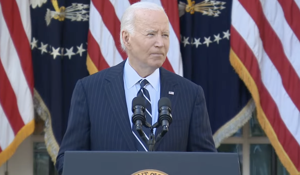
As key witnesses in the investigation into former President Joe Biden’s mental decline continue to evade U.S. House questioning by invoking their Fifth Amendment rights against self-incrimination, lawmakers could grant them immunity to encourage them to talk, according to a legal expert.
Three witnesses close to the former president pleaded the fifth during depositions before the House Committee on Oversight and Government Reform in less than two weeks, with more likely to come.
Committee chairman Rep. James Comer, R-Ky., said the witnesses, Annie Tomasini, who served as an assistant to the former president and deputy director of Oval Office Operations, former First Lady Jill Biden’s chief of staff, Anthony Bernal, and Dr. Kevin O’Connor, Biden’s physician, have pleaded the Fifth in “a pattern…seeking to shield themselves from criminal liability.”
Attorney and legal scholar John Shu notes that the committee could grant certain congressional witnesses immunity, a common tactic that would require them to testify because they no longer could self-incriminate and be subject to prosecution.
“Both the DOJ and Congress have been known to grant immunity. It would prevent witnesses from asserting the Fifth Amendment, because once you have immunity you can’t be prosecuted,” Shu said.
None of the witnesses, including those who have yet to appear, have been charged with any crime. However, echoing Comer’s assertion that the witnesses may be shielding themselves from criminal liability, Shu argues they could be pleading the fifth to avoid self-incrimination.
“Those witnesses will still want to avoid any kind of self-incrimination, even if they themselves didn’t commit a crime, because they may have been part of a conspiracy to commit a crime or they may have lied in some other setting. While we don’t know whether there was a criminal conspiracy, certainly a witness wouldn’t want to talk about his or her participation in it,” said Shu.
Biden opened the door for Congress to subpoena White House officials and aides. The former president waived executive privilege for Peter Navarro and Steve Bannon, who served during Trump’s first administration.
A House Select Committee investigating the Jan. 6, 2021, Capitol riots subpoenaed Navarro and Bannon. The pair refused to comply with the subpoenas and were subsequently imprisoned for Congressional contempt.
Shu noted, “What goes around, comes around…Executive privilege goes with the office, not the president” – meaning when Trump took office in January, he inherited the right to waive the same privilege for Biden officials, leading to the former president’s aides being subpoenaed.
“Annie Tomasini and Anthony Bernal know that, and that’s partially why they didn’t assert executive privilege and instead pled the fifth, because Trump waived their privilege,” said Shu.
Questions regarding Biden’s mental fitness were raised well before the 2020 presidential election. Republicans and many in the conservative media continued to raise questions regarding the former president’s health throughout his presidency.
However, the White House claimed Biden received regular medical exams, showing a healthy, competent president.
The House committee announced in early June that it was expanding its investigation into the “cover-up” of Biden’s “mental decline.”
Comer sent letters to five former senior Biden White House aides, “demanding they appear for transcribed interviews.” Comer’s committee is investigating “potentially unauthorized issuance of sweeping pardons and other executive action.”
The investigations have been fueled in part by a book written by Jake Tapper and Alex Thompson, “Original Sin,” which the congressman quoted as claiming, “Five people were running the country, and Joe Biden was at best a senior member of the board.”
Karine Jean-Pierre, who served as Biden’s press secretary; Ian Sams, former assistant to the president and senior advisor in the White House Counsel’s Office; Andrew Bates, former deputy assistant to the president and senior deputy press secretary; and Jeff Zients, Biden’s former chief of staff, have also been called to testify in front of the committee.