National News
Wind and solar energy will no longer receive preferential treatment

The Trump administration is ending preferential treatment for “unreliable” solar and wind energy, and the director of the Center for Energy, Climate and Environment at The Heritage Foundation is welcoming the move.
Director Diana Furchtgott-Roth told The Center Square that solar and wind are more costly forms of energy due to the need for backups.
“Solar and wind are reliable when the sun shines and the wind blows, but this does not happen all the time,” Furchtgott-Roth said. This makes backups necessary, “which adds to the cost of providing electricity from these sources.”
These backups as well as the fact that “connecting solar and wind to the grid is costly,” means “states that require solar and wind in their energy mix have higher electricity prices,” Furchtgott-Roth said.
“Higher electricity costs add to inflation and discourage manufacturing,” Furchtgott-Roth said.
As an example of higher electricity prices, Furchtgott-Roth told The Center Square that in 2024, “the cost of electricity in California was 32 cents per kilowatt hour, but it was 11 cents an hour in Utah, which does not require renewables.”
Furchtgott-Roth also told The Center Square about the impact solar and wind energy have on the environment.
“Solar and wind energy take more land to produce a unit of energy than does natural gas, and so land cannot be used for other purposes,” Furchtgott-Roth said. “Wind turbines kill birds.”
These reasons are “why communities across the country are voicing concerns, objecting to large-scale wind and solar developments that disrupt local land use, strain water resources, and alter rural landscapes,” Furchtgott-Roth said.
Furchtgott-Roth additionally mentioned to The Center Square that “components for wind turbines and solar panels are produced in China using coal-fired power plants and often forced labor.”
Furchtgott-Roth was responding to the Department of the Interior announcing Thursday that preferential treatment for solar and wind energy will be ending.
“By removing these artificial advantages, the Department is levelling the playing field for dispatchable, cost-effective and secure energy sources, such as clean coal and domestic natural gas, after years of assault under the previous administration,” a news release from Interior said.
“These actions mark a return to common-sense permitting standards that support national security, grid stability and American job creation.”
The Department of the Interior’s actions are in line with Trump’s Energy Dominance agenda and follows the signing of the executive order “Ending Market Distorting Subsidies for Unreliable, Foreign-Controlled Energy Sources” as well as the passing of the “big beautiful bill,” the release said.
“As part of this effort, the Department will address provisions in the One Big Beautiful Bill Act to eliminate longstanding right-of-way and capacity fee discounts for existing and future wind and solar projects, bringing an end to years of subsidies for economically unviable energy development,” the release said.
Acting Assistant Secretary for Lands and Minerals Management Adam Suess said in the release that the department’s actions “further deliver on President Trump’s promise to tackle the Green New Scam and protect the American taxpayers’ dollars.”
“American Energy Dominance is driven by U.S.-based production of reliable baseload energy, not regulatory favoritism towards unreliable energy projects that are solely dependent on taxpayer subsidies and foreign-sourced equipment,” Suess said.
The department explained that “all Department-related decisions and actions concerning wind and solar energy facilities will undergo elevated review by the Office of the Secretary, including leases, rights-of-way, construction and operation plans, grants, consultations and biological opinions.”
“This enhanced oversight will ensure all evaluations are thorough and deliberative,” according to the release.
Those displeased with the Department of the Interior’s actions to end preferential treatment of wind and solar energy include the American Council on Renewable Energy (ACORE), a group dedicated to “clean energy.”
When reached, ACORE referred The Center Square to a news release in which its president and CEO, Ray Long, said that “the only viable way to meet” the energy demand “reliably and affordably is by building all technologies, including wind and solar.”
“Moves like this inject new uncertainty throughout the entire energy sector, driving up costs for American homes and businesses, and leading to energy shortages, all within the next few years,” Long said.
Democrats seek federal ban on price gouging amid tariff rollout

Democrats are pushing a bill prohibiting price gouging at the federal level and giving the Federal Trade Commission another $1 billion and new tools to go after companies charging “grossly excessive” prices.
Democrats say such protections are needed as President Donald Trump rolls out higher tariffs on foreign nations as part of an effort to overhaul global trade. A tariff is a tax on imported goods that the importer pays to the federal government. That importer can then absorb the loss, or try to pass the added costs on to consumers through higher prices.
Critics say the measure could actually make shortages of key products worse.
A group of Democrats reintroduced the Price Gouging Prevention Act “to fight back against the corporate greed enabled by the Trump administration’s chaotic tariff policies,” they said. The bill would give the FTC and state attorneys general new tools to enforce a federal ban against “grossly excessive price increases.”
“Donald Trump’s reckless tariff policies are giving companies cover to squeeze families and raise prices more than necessary,” said U.S. Sen. Elizabeth Warren, D-Mass. “My bill is an opportunity for Congress to stand up for families by cracking down on price gouging and fighting back against corporate abuse.”
Ryan Bourne, of the Cato Institute, said the measure was just as bad as it was the first time it was introduced.
“This ‘anti-price gouging’ bill is a reheated version of Elizabeth Warren’s earlier misguided proposal. Back then, Democrats found it politically convenient to blame greedy corporations for an inflation overwhelmingly caused by excessive government spending and loose monetary policy,” he told The Center Square. “Now, the same politicians are using the price-inflating effects of Donald Trump’s tariffs to revive their anti-corporate legislation.”
Bourne said the measure could exacerbate shortages at critical times, such as after a natural disaster.
“The results of such a federal law would be disastrous. Capping prices below what people are willing to pay for goods would produce shortages and empty shelves during volatile periods,” he said. “Firms today face ever-shifting trade barriers, unpredictable demand conditions, and evolving supply chains – all factors that increase price volatility. This legislation would compound those problems by turning pricing decisions into legal liabilities. Firms fearing prosecution would hesitate to raise prices even when those higher prices accurately reflect genuine scarcity or increased risks. The price controls would thus risk making goods’ shortages far more severe and prolonged.”
Democrats first introduced the measure in 2024, but it failed to advance. During the COVID-19 pandemic, Democrats proposed similar measures to prevent price gouging.
The bill would clarify that price gouging is an unfair and deceptive practice under the FTC Act. The measure would allow the FTC and state attorneys general to stop sellers from charging a grossly excessive price, regardless of where the price gouging occurs in a supply chain or distribution network, according to a news release.
“Greedy corporations are using the economic turmoil the Trump Administration has created to gouge the American people on everything from groceries to consumer goods,” said Congresswoman Jan Schakowsky, D-Ill. “While these large corporations rake in record profits, families in my community and across the country are struggling to put food on the table.”
The bill would give the FTC an additional $1 billion in funding to do the work. It would establish when price gouging occurs during a significant shift in trade policy. It lists a set of market shocks – including an “abrupt or significant shift in trade policy” – and outlines a standard for a presumptive violation of the price gouging prohibition during such a shock, such as when companies brag about increasing prices, according to Democrats.
The measure would also create an affirmative defense for small businesses acting in good faith. Sponsors noted that “small and local businesses sometimes must raise prices in response to crisis-driven increases in their costs because they have little negotiating power with their price-gouging suppliers.” That affirmative defense protects small businesses earning less than $100 million from frivolous litigation if they show “legitimate cost increases.”
The bill would further require public companies to disclose costs and pricing strategies.
“During periods of exceptional market shock, the bill requires public companies to transparently disclose and explain changes in their cost of goods sold, gross margins, and pricing strategies in their quarterly SEC filings,” according to the sponsors.
Warren and Schakowsky face an uphill battle in the Republican-controlled House and Senate. Republicans have been moving in the opposite direction. The Trump administration has worked to dismantle the Consumer Financial Protection Bureau, a federal agency created after the 2007-08 financial crisis to establish a single agency responsible for enforcing consumer protection laws.
Former Vice President Kamala Harris promised to introduce a federal anti-price-gouging law during the 2024 presidential campaign.
Gabbard: Obama conspired to ‘usurp’ Trump’s 2016 election mandate
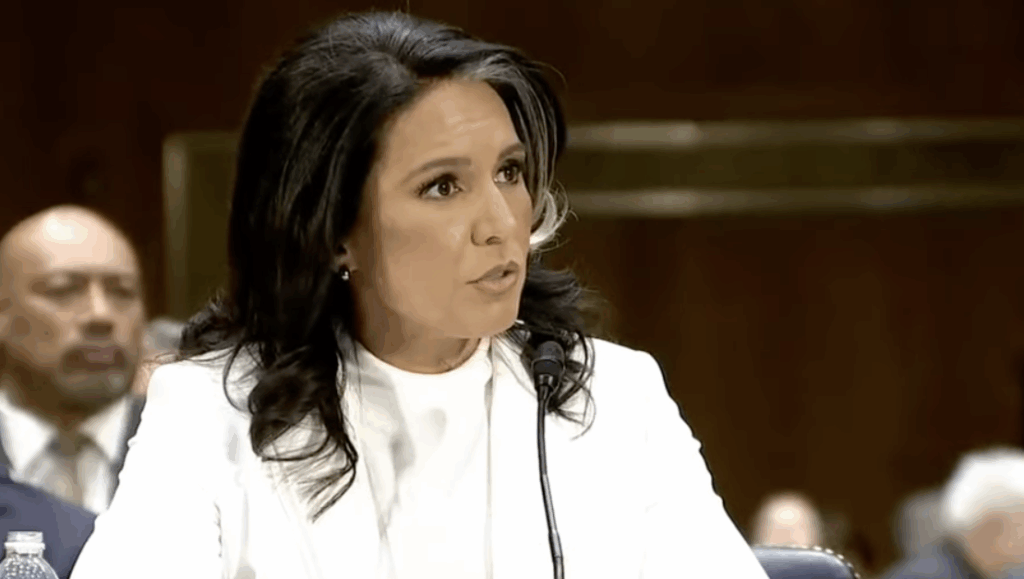
Director of National Intelligence Tulsi Gabbard wants the U.S. Department of Justice to investigate what she says is a “treasonous conspiracy” by former President Barack Obama and his senior advisors to concoct evidence that Russia interfered in the 2016 election.
Gabbard on Friday declassified documents that she said provides “overwhelming evidence” that Obama and his national security advisers conspired to create “a politicized piece of intelligence” to launch a years-long investigation into the now debunked Trump-Russia collusion claims.
“These documents detail a treasonous conspiracy by officials at the highest levels of the Obama White House to subvert the will of the American people and try to usurp the President from fulfilling his mandate,” Gabbard wrote on X.
Trump defeated Hillary Clinton in the 2016 presidential election.
In a news release, Gabbard said the intelligence community had concluded prior to the 2016 election that Russia was “probably not trying … to influence the election by using cyber means.”
After the election in early December, “talking points were prepared for DNI James Clapper stating, ‘Foreign adversaries did not use cyberattacks on election infrastructure to alter the US Presidential election outcome,’” the news release said, but after a top meeting of key Obama advisers, a new intelligence assessment was prepared, “per the President’s request,” that “directly contradicted the IC assessments that were made throughout the previous six months.”
Gabbard said she is referring the matter to DOJ for further investigation.
“After months of investigation into this matter, the facts reveal this new assessment was based on information that was known by those involved to be manufactured i.e. the Steele Dossier or deemed as not credible,” the news release said. “This was politicized intelligence that was used as the basis for countless smears seeking to delegitimize President Trump’s victory, the years-long Mueller investigation, two Congressional impeachments, high level officials being investigated, arrested, and thrown in jail, heightened US-Russia tensions, and more.”
The long-debunked Steele dossier alleged that Trump worked with Russie to interfere in the 2016 presidential election.
Report: Some medical schools still racially discriminate in admissions

American medical schools may still be participating in racial discrimination in their admissions even after the U.S. Supreme Court ruled that affirmative action is illegal, a recent report showed.
“The data we collected strongly suggests that medical schools continue to engage in racially discriminatory admissions, even after the Supreme Court ruled against that practice in 2023,” Do No Harm director of research and co-author of the report Ian Kingsbury told The Center Square.
Do No Harm is an organization of “physicians, nurses, medical students, patients, and policymakers focused on keeping identity politics out of medical education, research, and clinical practice,” according to its website.
Kingsbury told The Center Square that putting an end to discrimination in medical education “requires some combination of litigation from rejected students, action from state governments or the federal government to close loopholes, and the establishment of new accrediting bodies.”
“Unfortunately, at present, medical schools are encouraged by their accreditor to discriminate,” Kingsbury said.
Kingsbury said that “in the Supreme Court decision that ended affirmative action, John Roberts cautioned that ‘Universities may not simply establish through application essays or other means the regime we hold unlawful today.’”
“Unfortunately, that is exactly what happened,” Kingsbury said. “The fight for truly race-neutral admissions goes on.”
Do No Harm analyzed 23 public medical schools’ 2024 admissions data for its report, according to a news release.
“Accepted Asian and white applicants had higher MCAT scores than accepted black applicants at all but one school,” the release said.
“At 13 schools, the average MCAT score of rejected Asian or white applicants was higher than that of accepted black applicants,” the release said.
The report said that schools in its sample “thankfully” are “not making many exceptions for students with an MCAT score below 500.”
“What this analysis does show, however, is that some schools appear to exhibit a preference for black candidates with scores similar to or even lower than other applicants and an aversion to Asian candidates with scores similar to or even higher than other applicants,” the report said.
Out of the 23 medical schools analyzed, Eastern Virginia Medical School and University of Wisconsin School of Medicine and Public Health are “particularly problematic,” the report said.
Eastern Virginia “admitted 16.5% (69 of 418) of Black applicants with MCAT scores ranging from 500-517.11,” the report said. “Meanwhile, among the 2,983 white applicants with scores in that range, the school only admitted 128 (4.3%).”
“For Asian applicants in that range, the number falls to just 2.1% (51 of 2,399),” the report said.
“At Wisconsin – where administrators devised a ‘holistic admissions’ process in service of DEI goals – 21.6% of Black applicants (33 of 153) who scored between 500-517 were admitted,” the report said.
“Meanwhile, only 3.5% (98 of 2,813) of white applicants who scored between 500-517 were admitted and just 2.2% (36 of 1,626) of Asian applicants in that range were admitted,” the report said.
“Ultimately, federal officials and judges will have to decide which schools operate an ‘unlawful’ regime,” the report said. “These two schools seem particularly inclined to test those boundaries.”
Neither Eastern Virginia Medical School nor University of Wisconsin School of Medicine and Public Health have responded to The Center Square’s request for comment.
Lawyers fight gender secrecy policies in California schools
Thomas More Society attorneys are representing teachers and parents in a lawsuit over Parental Exclusion Policies on the gender identity of California students.
Under these policies, teachers and administrators are required to use preferred pronouns requested by a student and hide a child’s gender identity from parents. They use biological pronouns and legal names only when speaking with parents, if the child requests parents be kept in the dark.
In the case Mirabelli v. Olson, the Thomas More Society, a nonprofit law firm, is representing the plaintiffs in a federal lawsuit against the Escondido Union School District, the California Department of Education and California Attorney General Rob Bonta.
With a hearing set for Aug. 18, the case could lead to a federal court decision ending gender exclusion policies across California.
The suit began in April 2023 when two Escondido teachers, Elizabeth Mirabelli and Lori West, sued their school district in San Diego County and the CDE, after the district refused to grant them religious accommodation. In September 2023, U.S. District Court Judge Roger Benitez issued a court order blocking the EUSD from enforcing its Parental Exclusion Policy against Mirabelli and West.
In his decision, Benitez wrote that EUSD’s Parental Exclusion Policy: “… harms the child who needs parental guidance and possibly mental health intervention to determine if the incongruence is organic or whether it is the result of bullying, peer pressure, or a fleeting impulse. It harms the parents by depriving them of the long recognized Fourteenth Amendment right to care, guide, and make health care decisions for their children.”
The judge referred to the gender secrecy policies as a “trifecta of harm,” said Paul Jonna, special counsel at Thomas More Society and partner at LiMandri & Jonna LLP.
“Forcing teachers to hide a child’s gender identity from their own parents and compelling them to act against their faith is not only unconstitutional, but dangerous,” said Jonna. “Parents, not bureaucrats, are responsible for raising and caring for their children, and are the best equipped to protect their child’s well-being.”
Defendants have attempted to get the case dismissed, Jonna told The Center Square. “They filed serial motions to dismiss, all of which were denied, and they have done nothing to address the obviously dangerous and unconstitutional policies they’ve been promoting.
“EUSD has attempted to modify their policy to comply with the court’s rulings, but they are deferring to the state regarding how to proceed,” said Jonna. “Our team is leaving no stones unturned in our preparation for this consequential court hearing.”
Parent-plaintiffs Jane and John Poe’s child, “Child Poe” (all with names to protect their identity), had been identifying as a boy at school.
According to the state’s gender policies, the school was required to keep this information from Poe’s parents.
The parents said they first learned about their daughter’s gender preferences when doctors informed them about her attempted suicide.
“Child Poe’s story is a parent’s worst nightmare,” Jonna said.
Parents should be able to trust schools, yet the CDE and the attorney general are hiding foundational information about their children, the attorney added.
“Our fight is not political — it’s about upholding the Constitution, defending religious liberty, and protecting families from policies that endanger children like Child Poe,” said Peter Breen, executive vice president and head of litigation at Thomas More Society. “Parental Exclusion Policies are illegal, morally abhorrent, and belong in the dustbin of history.”
The Center Square reached out for comment, but the CDE said it cannot comment on pending litigation. And the California attorney general’s office didn’t respond to a request for comment.
Lawmakers define extreme heat as disaster in new FEMA bill
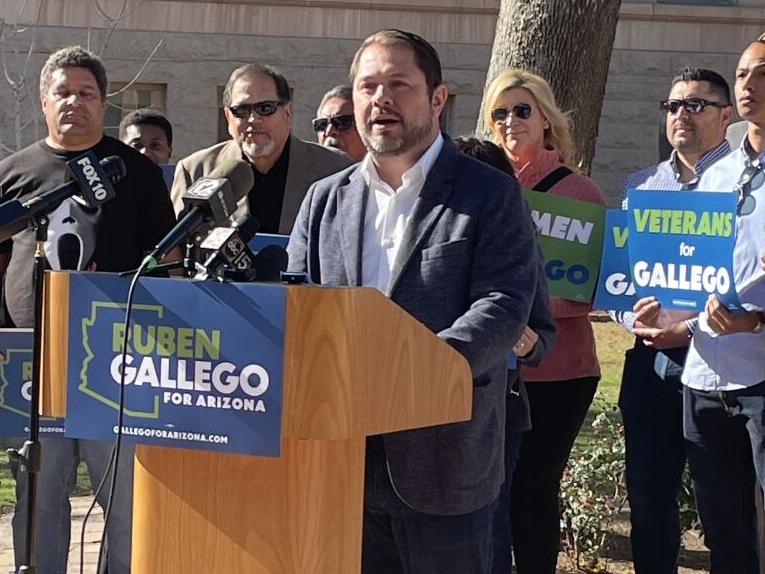
U.S. senators from Arizona and Nevada have introduced legislation declaring extreme heat a major disaster.
The Extreme Heat Emergency Act from Sens. Ruben Gallego, D-Arizona, and Jacky Rosen, D-Nevada, would “explicitly authorize extreme heat as eligible for a Major Disaster Declaration” by the president of the United States under the Stafford Act, a 1980s law relating to weather events.
In a press release, Gallego said “extreme heat kills more Americans” annually than every other form of extreme weather combined.
“But still, the federal government sits on the sidelines, leaving state and local governments to drain their funds trying to keep people safe,” said Gallego.
“By adding extreme heat to FEMA’s list of major disasters, we can unlock the funds and support our communities desperately need,” he said, referring to the Federal Emergency Management Agency.
Pointing to her home state, Rosen said more than 500 people died last year from heat-related illnesses, and that was just in one county. In 2025, at least 29 people in southern Nevada have died from health-related causes.
“Current federal policy ignores the physical and health risks that such extremely high temperatures have on our communities, which is why I’m introducing a bill to change that,” said Rosen. “By classifying extreme heat as a major disaster, our communities will be able to receive the federal funding needed to respond and prepare for future extreme heat events.”
According to Gallego’s office, 608 people in Maricopa County, Arizona, died in 2024 from extreme heat. This year, there are approximately 275 heat-related deaths under investigation, an increase from this time in 2024.
U.S. Rep. Sylvia Garcia, D-Texas, has a similar bill in the U.S. House.
Health and weather officials applaud the efforts. The list includes Dr. Eugene Livar, Arizona chief health officer; Hannah Safford, associate director of climate and environment at the Federation of American Scientists, and Phoenix Mayor Kate Gallego.
“This reform will save lives across the country, and I commend the sponsors of this bill for championing this effort,” said the mayor.
Sen. Gallego has also introduced weather-related measures.
His Excess Urban Heat Mitigation Act would fund community solutions to so-called urban heat islands, while the Extreme Heat Economic Study Act calls for research on the impact that extreme heat has on health, infrastructure, and the economy. Gallego’s LIHEAP Parity Act promises states such as Arizona would get their “fair share of federal energy assistance.”
Trump administration officially rejects pandemic-related WHO rules
One day before the deadline, the U.S. government has issued a refusal of new international health regulations that dramatically expand the World Health Organization’s international powers.
The WHO’s 2024 amendments to International Health Regulations – adopted by the organization’s highest decision-making body, the World Health Assembly – were set to become binding if not rejected by Saturday.
The revisions would have granted the WHO the power to order global lockdowns, travel restrictions, and any other measures deemed necessary to address “potential public health risks.”
The State department along with U.S. Health and Human Services issued the Friday rejection, arguing that the amendments would give the WHO “undue influence on our domestic health responses.”
“Terminology throughout the amendments to the 2024 International Health Regulations is vague and broad, risking WHO-coordinated international responses that focus on political issues like solidarity, rather than rapid and effective actions,” Secretary of State Marco Rubio said.
“Our Agencies have been and will continue to be clear: we will put Americans first in all our actions and we will not tolerate international policies that infringe on Americans’ speech, privacy, or personal liberties,” he added.
The WHO’s regulations also advised countries to assert greater control over public health information and would have required countries to adopt digital health documents.
HHS Secretary Robert F. Kennedy Jr. noted that the provisions ignore the international agency’s “susceptibility” to “political influence and censorship.”
“The proposed amendments to the International Health Regulations open the door to the kind of narrative management, propaganda, and censorship that we saw during the COVID pandemic,” Kennedy said. “The United States can cooperate with other nations without jeopardizing our civil liberties, without undermining our Constitution, and without ceding away America’s treasured sovereignty.”
Multiple Republican lawmakers expressed support for the move. President Donald Trump withdrew the U.S. from the WHO via executive order in January, but the new regulations would have applied to the nation regardless, unless rejected.
CA files lawsuit over $4B in canceled high speed rail funds
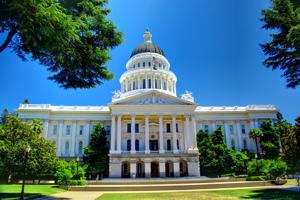
The California High Speed Rail Authority is suing the Trump administration over cancellation of $4 billion in federal funding for the $36.3 billion high rail project connecting two cities in the state’s sparsely-populated Central Valley.
“This is just a heartless attack on the Central Valley that will put real jobs and livelihoods on the line,” said California Gov. Gavin Newsom in a statement. “We’re suing to stop Trump from derailing America’s only high-speed rail actively under construction.”
Newsom’s office claimed the lawsuit comes as “the project enters the track laying phase,” but as recently as June federal authorities noted that “CHSRA has not laid any track.”
CHSRA maintains that it is meeting its obligations, but federal authorities say the state missed a key rolling stock procurement deadlines, and appears on track to fail to meet its obligation to have an early operating segment by 2033.
“Canceling these grants without cause isn’t just wrong, it’s illegal,” said CHRA in a statement. “These are legally binding agreements, and the Authority has met every obligation, as confirmed by repeated federal reviews.”
Federal authorities estimate California has spent $15 billion on the government-run high speed rail project, including $2.5 billion in spent federal funds. The project was first approved by voters in 2008 with a $10 billion bond and a 2020 completion date for a high speed rail line connecting Los Angeles to San Francisco.
While the state says it will complete the 171-mile, $36.3 billion early operating segment connecting Bakersfield and Merced by 2033, the Trump administration cited the program’s continued delays, ongoing $7 billion budget shortfall — from before the withholding of $4 billion in federal funds — and lack of “credible plan to secure additional funds” in its funding cancellation.
Bondi visits Alcatraz; Newsom’s office reacts with skepticism

California Gov. Gavin Newsom’s staff expressed skepticism about reopening Alcatraz as a federal prison following U.S. Attorney General Pam Bondi’s visit to the historic tourist attraction. Former House Speaker Nancy Pelosi called the idea “stupid.”
But President Donald Trump and his supporters said the San Francisco Bay island could hold America’s worst criminals again.
Alcatraz, which held infamous prisoners such as gangster Al Capone, closed in 1963 because of its high operating costs, including transporting fresh water and other supplies by boat. It was almost three times more expensive to operate than other federal prisons, according to the History Channel. In 1972, the site became part of the Golden Gate National Recreation Area, and the public began visiting it in 1973. The National Park Service oversees the island, where rangers have given talks and tourists have had their photos taken inside the cells in the aging facility. The 19th-century buildings are decaying, and nothing remains of the warden’s mansion but a concrete shell.
“Pam Bondi will reopen Alcatraz the same day Trump lets her release the Epstein files. So … never,” Newsom’s press office posted Thursday on X.
Ironically, after bipartisan pressure grew to release those files, Trump ordered Bondi to release grand jury documents in the sex-trafficking case against Jeffrey Epstein, whose death in 2019 at the Metropolitan Correctional Center in New York City was ruled a suicide by a medical examiner and the U.S. Justice Department inspector general.
Bondi, who said she would release the files, traveled to Alcatraz Thursday on a Coast Guard boat with Secretary of Interior Doug Burgum.
“A great morning at Alcatraz with @SecretaryBurgum,” Bondi posted on X with photos. “Under President Trump, we are Making America Safe Again.”
Bondi and Burgum toured the cell block that housed Capone and George “Machine Gun” Kelly and visited the dock, power station and industry building, according to a U.S. Department of Interior news release.
“The trip to California comes amid the Trump administration’s efforts to reverse the damage done by the Biden administration to The Golden State after residents experienced increases in violent crime, property crime, and robberies because of the policies of the previous administration and state officials that let criminals walk free,” the department said.
Bondi is using the visit as part of her review to determine whether Alcatraz could reopen as a prison after being rebuilt.
“This is a terrific facility,” Bondi said in a Fox News story. “It needs a lot of work, but no one has been known to escape from Alcatraz and survive.”
But Pelosi, a Democrat who continues to represent San Francisco in the U.S. House, strongly disagreed with the idea. She described the reopening of Alcatraz as the Trump administration’s “stupidest” idea, according to media reports.
Republicans in Congress are expected to introduce a bill to take away the National Park Service’s control of the site, with the goal of making Alcatraz a prison again. In May, Trump directed the Bureau of Prisons, the FBI, and the Homeland Security and Justice departments to reopen a rebuilt and expanded Alcatraz prison “to house America’s most ruthless and violent Offenders.”
“The reopening of ALCATRAZ will serve as a symbol of Law, Order, and JUSTICE,” Trump posted on his social media platform, TruthSocial.
In 1972, Alcatraz became part of the Golden Gate National Recreation Area, and the public began visiting it in 1973. The U.S. General Services Administration said over 1.4 million people annually visit the site.
Visitors take a ferry to reach the island, where the weather jumps back and forth between fog, powerful gusts and sunshine. Tourists can get an audio tour available in a dozen languages, according to the National Park Service. A photo on the park service’s website shows tourists taking a tram.
Alcatraz, which served as a military fort during the Civil War and was transformed into a prison in 1934, was seen as inescapable. But there were 14 escape attempts by 36 men, according to the FBI. “Nearly all were caught or didn’t survive the attempt.”
The final three inmates who escaped, back in the 1960s, were never found. But the FBI, while conceding the escapes remain a mystery, said its investigation concluded inmates John Anglin, Clarence Anglin and Frank Morris didn’t survive. (John and Clarence were brothers.)
Their attempt to escape inspired the 1979 movie “Escape from Alcatraz” (1979), starring Clint Eastwood.
Foreign aid groups, NPR respond to GOP-passed $9 billion rescissions package

Republicans have scored another victory for the Trump administration by passing the White House’s rescissions package clawing back $9 billion in foreign aid and public broadcasting spending.
Organizations impacted by the cuts, however, are warning that the bill will carry severe ramifications regarding global humanitarian progress and rural Americans’ access to critical news.
The rescissions bill, which President Donald Trump will sign Friday, cancels roughly $7.9 billion in foreign aid and $1.1 billion meant to fund the Corporation for Public Broadcasting, which finances over 1,000 NPR and PBS broadcasting stations across the country.
Republican leaders have argued that the bill helps tackle the federal deficit while reducing wasteful spending of taxpayer dollars on global aid deemed “woke” and public broadcasting organizations deemed “politically biased.”
Some examples of now-revoked foreign aid funding that GOP lawmakers have bashed include $21 million for wind farms in Ukraine; $18 million to promote gender diversity in the Mexican street lighting industry; $6 million for “Net Zero Cities” in Mexico; and $5 million to strengthen the resilience of “queer global movements.”
“We ought to learn that taxpayer dollars shouldn’t be treated like Monopoly money,” Rep. Ralph Norman, R-S.C., said on X after the bill’s passage around midnight Friday. “Accountability isn’t radical, it’s responsible.”
While all Republicans supported defunding global initiatives that promoted abortion, climate projects, LGBTQ movements and DEI, concerns over potential cuts to global AIDS prevention programs and rural emergency broadcasting systems caused two House Republicans to oppose the final measure.
Democrats and multiple impacted organizations railed against the rescissions, deeming them “reckless,” “arbitrary,” “cruel.”
Physicians for Human Rights director Tom McHale said in a Friday statement that the cuts “threaten to roll back decades of progress in global health.”
“Governments of course have the prerogative to withdraw aid,” McHale added. “But the sudden, arbitrary and capricious way that the Trump administration cut funding – without any warning or time for affected populations, humanitarian actors, or health workers to plan alternative arrangements for life-saving services – is having particularly cruel consequences around the globe.”
The Hebrew Immigrant Aid Society went a step further, with its Vice President of International Policy and Advocacy, Noah Gottschalk, saying that the bill “will have life-and-death consequences for millions of people around the world.”
The cuts to public broadcasting systems have elicited dire predictions as well, with NPR President Katherine Maher focusing on the bill’s implications for freedom of the press and the survival of local radio stations that provide emergency alerts for rural areas.
“Supporters of defunding are fixated on NPR and PBS, but in reality the cuts will be felt where these services are needed most,” Maher said in a Friday statement. “Public radio provides local programming that would otherwise be unavailable…[if] a station doesn’t survive this sudden turn by Congress, a vital stitch in our American fabric will be gone for good.”
Not all outside organizations oppose the bill, however. Fiscal watchdogs have tentatively praised the rare case of Congress reducing federal spending.
“Without endorsing any of the specific cuts in this package, we do believe it is important for Congress to take steps toward deficit reduction,” Concord Action executive director Carolyn Bourdeaux said in a statement.
“Reducing spending by $9 billion right now, however, remains a drop in the bucket compared to the trillions in deficit spending and tax cuts that Congress just advanced on top of our massive $36 trillion national debt,” she added. “Congress needs to take serious steps to address our unsustainable debt as they consider the FY26 budget.”
Congress, however, is facing tough odds when it comes to passing the fiscal year 2026 budget, as many Democrats are now refusing to work bipartisanly with Republicans on the 12 annual appropriations bills that must all pass by Sept. 30 in order to prevent a government shutdown.
Rep. Pramila Jayapal, D-Wash., said Friday that the passing of the rescissions package “calls into question the future of the broader appropriations process, if the President simply rescinds and Republican members go back on the agreements they made.”
With the House’s August recess approaching, and the chamber having only passed two of the 12 appropriations bills, making the September deadline seems an increasingly unlikely possibility.