National News
Cruz introduces bill to designate Muslim Brotherhood as terrorist organization
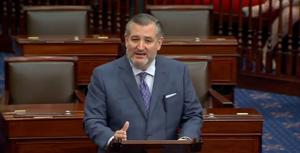
U.S. Sen. Ted Cruz, R-Texas, has introduced a bill to designate the Muslim Brotherhood as a terrorist organization.
Cruz introduced the Muslim Brotherhood Terrorist Designation Act again this year after doing so in 2015, 2017, 2020 and 2021. U.S. Rep. Mario Díaz-Balart, R-Florida, introduced companion legislation in the House, as he has also previously done. The bill has multiple cosponsors.
“The Muslim Brotherhood is a terrorist organization,” Cruz said, which is “committed to the overthrow and destruction of America and other non-Islamist governments across the world, and pose an acute threat to American national security interests. American allies in the Middle East and Europe have already labeled the Brotherhood a terrorist organization, and the United States should do the same, and do so expeditiously.”
The bill states the Muslim Brotherhood “functions as a global terrorist organization and provides material support to [its] branches in countries and territories by providing political support, financial resources, training, services, expert advice, and communications assistance.” Its branches have “sought to destabilize and undermine United States allies and partners throughout the Middle East, including in Bahrain, Egypt, Jordan, Saudi Arabia and the United Emirates, and have been outlawed as a terrorist group by the governments of those countries.”
The bill amends the Anti-Terrorism Act of 1987 to include banning all Muslim Brotherhood members from the U.S., making them ineligible for visas or admittance to the U.S. This includes revoking visas of all non-U.S. citizens who are confirmed Muslim Brotherhood members and removing them from the country. It also requires the Secretary of State to impose sanctions on any Muslim Brotherhood branch, charity or organization that is directly or indirectly controlled by the Muslim Brotherhood, including Hamas.
“The global Muslim Brotherhood has numerous regional branches, including terrorist organizations such as Hamas, and spreads violence and instability throughout the Middle East,” Díaz-Balart said. “For this reason, it is crucial to U.S. national security interests that we prohibit U.S. dollars from enabling the Muslim Brotherhood’s dangerous activities, and that we ensure Muslim Brotherhood members are blocked from entering the United States. This important legislation gives the Trump Administration the additional authority it needs to protect Americans, and our closest allies, from this insidious threat.”
The Muslim Brotherhood was founded by Egyptian politician Hassan al-Banna in 1928 as a Sunni Islamic militant group. Over the next few decades, it grew to have hundreds of thousands of followers in multiple countries in the Middle East and north Africa. After a failed assassination attempt of Egypt’s prime minister in 1948, the Egyptian government cracked down on Muslim Brotherhood members, arresting them, trying them for treason and executing them.
By the 1980s, the Muslim Brotherhood saw a resurgence in Egypt and multiple countries. In 1987, its Palestinian branch emerged as Hamas in Gaza, committed to the destruction of Israel. The preamble to the 1988 Hamas Covenant of the Islamic Resistance Movement includes the famous claim, “Israel will exist and will continue to exist until Islam will obliterate it, just as it obliterated others before it,’” made by al-Banna, The Center Square reported.
Since then, Hamas has taken credit for a range of terrorist acts, including the Oct. 7, 2023, terrorist attack against Israel, resulting in the death of more than 40 Americans and the kidnapping at least 53 Americans.
The bill was proposed after antisemitic incidents drastically increased nationwide, reaching their highest level on record last year of nearly 10,000, The Center Square reported. Cruz and U.S. Rep. Monica De La Cruz, R-Texas, have been targeted by pro-Hamas rioters and vandals, including at Cruz’s Houston home and at a U.S. Senate hearing, and at De La Cruz’s offices, The Center Square reported.
Hamas has been designated as a foreign terrorist organization by the U.S. government since 1997.
After the Hamas Oct. 7 terrorist attack, the U.S. House passed the Hamas International Financing Prevention Act, HR 340, In November 2023. Filed by U.S. Rep. Brian Mast, R-Florida, it would have required the executive branch to impose sanctions on foreign actors that provide certain types of support to Hamas or its affiliates. It went nowhere in the Democratic-controlled Senate.
Cruz has also repeatedly called on the president to designate the Muslim Brotherhood as a terrorist organization. Last month, U.S. Rep. Jared Moskowitz, D-Florida, called on the president to do so highlighting actions taken by other governments.
To date, the governments of Austria, Bahrain, Egypt, Jordan, Saudi Arabia, and United Arab Emirates have designated the Muslim Brotherhood as a terrorist organization.
Nonprofit calls out fitness company for DEI policies

Consumers’ Research in a new “Woke Alert” is criticizing a nationwide fitness company it says is heavily involved in diversity, equity, and inclusion practices such as mandatory DEI trainings and BIPOC-only scholarships.
BIPOC stands for Black, Indigenous, and People of Color.
Executive Director of Consumers’ Research Will Hild told The Center Square that “denying opportunities to applicants and services to customers based on their skin color, like CorePower Yoga did, is not only grossly immoral but also illegal.”
Consumers’ Research is an independent nonprofit organization dedicated to increasing “knowledge and understanding of issues, policies, products, and services of concern to consumers and to promote the freedom to act on that knowledge and understanding,” according to its website.
CorePower Yoga is a nationwide yoga studio chain, according to its website. CorePower has not responded to The Center Square’s two requests for comment.
Hild told The Center Square: “President [Donald] Trump has made it clear that discriminatory practices such as DEI are illegal and go against American values.”
“By allowing activists to dictate personnel and product decisions, businesses and brands are hurting consumers,” Hild said.
“Consumers overwhelmingly oppose race-based discrimination and don’t want to see signs of DEI when they walk into a store or business,” Hild said. “Companies need to focus on providing quality goods and services rather than peddling a woke, discriminatory DEI agenda.”
From offering a teacher scholarship exclusively for BIPOC individuals to requiring diversity and inclusion trainings for all employees, DEI has a large presence at CorePower Yoga, Consumers’ Research alert says.
Of its BIPOC-only scholarship, CorePower said: “As part of our dedication to building a more diverse yoga teacher community, we offer Teacher Training scholarships to our BIPOC students.”
Teacher Training is a program consisting of yoga-related lessons.
Consumers’ Research’s alert said that “CorePower Yoga sent an email pushing the scholarship and its DEI prioritization on its consumers,” and is a part of the company’s “Power Forward” agenda.
The alert details how this agenda of CorePower’s also involved implementing hiring quotas and a Diversity, Equity, Inclusion and Belonging (DEIB) council.
The DEIB council works “to create and support a diverse, equitable and inclusive environment for all employees and students who practice with CorePower Yoga,” according to its online description.
CorePower Yoga’s CEO Niki Leondakis has spoken of the company’s commitment to DEI, as well.
A year ago on LinkedIn, Leondakis said that “the values of diversity, equity, inclusion, and belonging are integrated into everything we do at CorePower Yoga.”
Hild told The Center Square that in response, “consumers should contact CorePower and insist the company fully abandon all its racist and outdated DEI practices and permanently stop discriminating policies such as race-based scholarships and mandatory DEI training.”
LA mayor talks about National Guard and former fire chief

Los Angeles Mayor Karen Bass started her week making headlines.
She talked about wanting to rid the city of all National Guard troops and saying she has no problem with the Los Angeles Fire Department lacking a permanent chief during the current wildfire season.
Bass held a news conference Monday morning at Los Angeles Mission College, calling for the removal of the remaining National Guard troops from the city.
The federal government sent thousands of National Guard troops and U.S. Marines to Los Angeles in early June to help protect U.S. Immigration and Customs Enforcement agents and the city amid immigration riots. Last week, half of the 4,000 National Guard troops who were deployed were sent home, leaving 2,000 guards as well as 700 Marines in the city.
Bass disapproved of President Donald Trump’s decision to deploy the National Guard and the U.S. Marines to Los Angeles and said the city never needed the National Guard, during an interview Sunday on “Face The Nation.”
“We never needed the National Guard in the first place,” Bass told anchor Margaret Brennan on the CBS News series. “This is a political stunt. A terrible use of taxpayers’ dollars.”
Shortly after Bass spoke at Los Angeles Mission College, she posted a video on X with California Sen. Caroline Menjivar, a Marine veteran and Democrat who represents Burbank and the San Fernando Valley.
The mayor said the Trump administration notified her that the remaining Marines in Los Angeles will be leaving the city. Bass called that a victory.
During her “Face The Nation” interview, Bass also said it is not a problem that the Los Angeles Fire Department has not had a permanent chief since she fired Chief Kristin Crowley on Feb. 21. Bass added that despite not having a permanent chief, the LAFD is still prepared this wildfire season.
“Our interim fire chief has 40 years of experience,” Bass said.
“In fact, he had just recently retired. I called him out of retirement,” she said, referring to her appointment of former Deputy Chief Ronnie Villanueva as the interim chief. He will serve in the role until a permanent chief is chosen.
Bass said her office is doing a national search for the best chief. She added that Villanueva, in the mean time, is “more than capable of managing” the department.
“We are doing a national search, and he [Villanueva] is certainly open to apply, but the nation’s second largest city needs to make sure that we search the nation for the best talent,” Bass said.
The mayor said she fired Crowley because the fire chief placed 1,000 firefighters off-duty the morning the Palisades Fire erupted, and she failed to complete an after-action fire report, according to a Feb. 21 press release from the mayor’s office.
“We know that 1,000 firefighters that could have been on duty on the morning the fires broke out were instead sent home on Chief Crowley’s watch,” Bass said in the news release. “Furthermore, a necessary step to an investigation was the president of the Fire Commission telling Chief Crowley to do an after-action report on the fires. The chief refused. These require her removal.”
Crowley appealed for reinstatement as fire chief to the Los Angeles City Council on March 4, saying Bass’s accusations were incorrect.
“On the morning of the fire, I did not send home 1,000 firefighters who could have hopped on fire engines and fought the Palisades Fire,” Crowley told the Los Angeles City Council. “Nor did I leave 40 available fire engines unstaffed.”
Crowley also said fire commissioners, following her recommendation, determined the Fire Safety Research Institute was best equipped to conduct the after-action report on the January fires. The institute was selected by Gov. Gavin Newsom’s office to conduct an independent analysis of the blazes, as explained on the institute’s website.
Crowley, who warned Bass about this year’s $17.6 million in budget cuts to the fire department in a letter in December 2024, also told the Los Angeles City Council that the lack of money led to the lack of staff and resources during the Palisades Fire.
“As for the 1,000 firefighters who were allegedly sent home prior to the fires, we did not have enough apparatus to put them on,” Crowley told council members. “Because of the budget cuts and lack of investments in our fleet maintenance, over 100 of our fire engines, fire trucks, and ambulances sat broken down in our maintenance yards, unable to be used to help during one of the worst wildfire events in our history.”
The council rejected Crowley’s appeal for reinstatement as fire chief in a 13-2 vote, with only council members Traci Park and Monica Rodriguez voting to reinstate the chief. Park represents the 11th District, where the Palisades Fire took place.
Crowley still works for the LAFD as the assistant chief of the Valley Bureau.
The Center Square reached out to Crowley and the LAFD for comment, but they did not reply.
States sue Trump administration over health care, education
California, Arizona, Nevada, Colorado and Washington are part of a 20-state coalition suing the Trump administration over restricting access to health, education and social service programs.
The lawsuit contends the federal government is going too far in requiring immigration and citizenship records.
Democratic attorney generals from the states warn the new rules are threatening the Head Start program for children 5 and younger, Title IX family planning, adult education, mental health and substance abuse programs, community health centers and shelters for at-risk youth and domestic violence survivors.
The lawsuit noted that hungry individuals were previously never required to show a government-issued ID to enter a soup kitchen or food bank and that parents never had to show their children’s citizenship or immigration records before enrolling them in Head Start.
“People facing homelessness or domestic violence have never needed proof of immigration status to walk into a shelter,” the suit said.
The U.S. Departments of Health and Human Services, Education, Labor and Justice on July 10 reinterpreted the Personal Responsibility and Work Opportunity Reconciliation Act to restrict federal funds for people who can’t verify their immigration status. Arizona Attorney General Kris Mayes’ office said the decision is a major change from previous Republican and Democratic administrations.
“This is yet another outrageous attempt by this administration to workaround the law and disrupt critical services Arizonans depend on every day,” Mayes said in a news release.
Rhode Island, Washington and New York are leading the lawsuit, which was filed Monday in the U.S. District Court for Rhode Island. Besides California, Colorado, Nevada and Arizona, the rest of the coalition consists of Connecticut, Hawaii, Illinois, Maine, Maryland, Massachusetts, Michigan, Minnesota, New Jersey, New Mexico, Oregon, Vermont, Wisconsin and the District of Columbia.
“Congress designed these services to be widely accessible to people in this country. But now the Trump administration wants to do an immigration check as preschoolers file into the classroom, ready to learn their ABCs,” Washington Attorney General Nick Brown said in a news release. “These notices impose unworkable requirements on state agencies and providers that are plainly intended to damage these vital support systems and intimidate vulnerable people.”
California Attorney General Rob Bonta warned the Trump administration’s “latest salvo in the President’s anti-humane anti-immigration campaign” would target working mothers and their young children. Bonta said the federal government is not going after waste, fraud and abuse, but programs delivering essential child care, health care, nutrition and education assistance.
“The Trump Administration’s abrupt reversal of nearly three decades of precedent — and decision to put at risk not just support for undocumented families, but ultimately families who rely on these programs nationwide — is cruel, but unfortunately unsurprising,” Bonta said in a news release. “So is its lack of regard for the law. Six months into the second Trump Administration, I’ll repeat a familiar refrain: We’ll see President Trump in court.”
Budd backs Israel’s rejection of statement from 25 countries

North Carolina congressional support of Israel in its Middle East war with Hamas was affirmed Monday evening by U.S. Sen. Ted Budd.
The Republican’s position was made clear on a social media post by Rev. Mike Huckabee, the ambassador to Israel for the Trump administration and former governor of Arkansas. They were responding to 25 Western countries – led by Britain, Canada, France, Italy and Australia – and the European Union commissioner issuing a joint statement calling for a ceasefire and assessing blame to both sides.
Budd said on social media, “653 days after October 7th, 50 hostages remain held captive by Hamas in Gaza. What was true on day one is still true today: Hamas is the impediment to peace and must release the hostages immediately.”
Huckabee called the statement “disgusting.” He said putting pressure on Israel “instead of savages of Hamas” and blaming America’s ally was “irrational.”
Israel rejected the statement.
The North Carolina Democratic Party, gathering this coming weekend for its annual convention in Raleigh, has through its executive committee on June 28 adopted a resolution declaring Israel of apartheid against Palestinians. It also said Israel is guilty of genocide in Gaza; and using American weapons in “self defense” against hospitals, schools, homes, refugee camps, mosques, churches, journalists and humanitarian aid workers.
The Center Square was unsuccessful getting comment, and has otherwise seen silence, on the statement from the governor, former Gov. Roy Cooper, four other Democratic members of the Council of State, and all four North Carolinians in the U.S. House of Representatives.
U.S. Rep. Valerie Foushee, D-N.C., said on Monday, “Trump’s aid plan for Gaza doesn’t work. Starving civilians are being met with gunfire at aid sites – it’s inhumane and unacceptable. I continue to call for a ceasefire to ensure the flow of aid to the region and safe return of the remaining hostages.”
The statement said 800 Palestinians have been killed seeking aid. “The Israeli Government’s denial,” it said, “of essential humanitarian assistance to the civilian population is unacceptable. Israel must comply with its obligations under international humanitarian law.”
The statement also said, “The hostages cruelly held captive by Hamas since 7 October 2023 continue to suffer terribly. We condemn their continued detention and call for their immediate and unconditional release. A negotiated ceasefire offers the best hope of bringing them home and ending the agony of their families.
“We call on the Israeli government to immediately lift restrictions on the flow of aid and to urgently enable the UN and humanitarian NGOs to do their life-saving work safely and effectively.”
The acronyms are for the United Nations and nongovernmental organizations, meaning typically nonprofits.
The statement also said, “The Israeli government’s aid delivery model is dangerous, fuels instability and deprives Gazans of human dignity.”
The countries making the statement, according to Global Affairs Canada, are the foreign ministers of “Australia, Austria, Belgium, Canada, Denmark, Estonia, Finland, France, Iceland, Ireland, Italy, Japan, Latvia, Lithuania, Luxembourg, The Netherlands, New Zealand, Norway, Poland, Portugal, Slovenia, Spain, Sweden, Switzerland, the United Kingdom, and the European Union Commissioner for Equality, Preparedness and Crisis Management.”
U.S. government gives some education money back to states
The Trump administration released $1.3 billion in education funding back to the states after bipartisan pushback.
After the U.S. Department of Education announced it would withhold $6.8 billion in federal education funding, lawmakers and education officials across the country took steps in demanding the funds be released.
Now $1.3 billion has been released with a caveat. The federal government said the funds must be allocated toward “allowable activities,” or the money will be revoked.
Each year on July 1, states receive their federal education funds for the upcoming school year. But on June 30, the U.S. Department of Education sent an email to state education departments across the country, stating it would not be “issuing obligating funds” to education programs.
The Office of Management and Budget at the White House told The Center Square that in its review, it found that states had “grossly misused” the grant programs to “subsidize radical leftwing agenda.”
As part of a coalition to release the funds, 24 states and the District of Columbia sued the Trump administration for withholding these education funds.
Two days following the lawsuit, a letter, led by U.S. Sen. Shelley Moore Capito, R-West Virginia, and nine other Republican senators, urged the administration to unfreeze the education money and send it to the states.
“We share your concern about taxpayer money going to fund radical left-wing programs,” the senators wrote to Russell Vought, director of the OMB. “However, we do not believe that is happening with these funds.”
The senators said the withheld money supported programs that had bipartisan support.
“These funds go to support programs that enjoy longstanding, bipartisan support like after-school and summer programs that provide learning and enrichment opportunities for school aged children which also enables their parents to work and contribute to local economies,” the letter stated.
Now, $1.3 billion has been restored to the states, yet education officials are calling on the administration to release the remaining $5.5 billion.
“While we’re pleased to see crucial dollars going to afterschool programs which are vital for students across the nation, the bottom line is this: Districts should not be in this impossible position where the Administration is denying funds that had already been appropriated to our public schools by Congress,” David Schuler, executive director of the Schools Superintendents Association, said in a statement. “The remaining funds must be released immediately — America’s children are counting on it.”
The California Department of Education told The Center Square that it is still waiting to receive the Grant Award Notification for this funding. The department did not say the amount.
CBO: ‘Big, beautiful bill’ will add $3.4 trillion to federal deficit by 2034
Republicans’ recently-passed One Big Beautiful Bill Act will add trillions to the federal deficit and debt over the next decade, according to the Congressional Budget Office’s final cost analysis.
The long-awaited CBO score, released Monday, estimates that the budget reconciliation bill will increase the federal deficit by a net $3.4 trillion over the 2025-2034 period. Most of the cost stems from the legislation permanently extending the 2017 tax cuts, which CBO calculates as lost federal revenue.
Using the CBO score, the Committee for a Responsible Federal Budget projects that the policies in the bill will also add $4.1 trillion to the national debt over the same time period, when accounting for interest.
“It’s still hard to believe that policymakers just added $4 trillion to the debt,” CRFB President Maya MacGuineas said Monday. “We’ll hear a lot of excuses, of course. Claims that economic growth will cover the costs or that spending cuts will wildly exceed expectations, or that they shouldn’t have to pay for extending temporary provisions in the law. None of these excuses pass muster.”
Republican leaders had promised deficit-wary constituents that they would pair any provisions in the bill resulting in lost revenue with dollar-for-dollar spending cuts or provisions boosting economic growth.
While House committees largely followed those promises by authorizing a ten-year tax cut extension with offsetting spending cuts, Senate committees leaped far out of the fiscal bounds established by the budget reconciliation’s original blueprint.
Because extending the tax cuts permanently would cost more than lawmakers could realistically cut, the Senate changed its accounting methods to paper over the entire cost. Under the current policy baseline, the OBBBA costs only $441 billion by 2034, as The Center Square reported.
This new fiscal framework allowed Republicans to permanently extend the tax cuts, as President Donald Trump wanted, while still theoretically complying with budget instructions. But the CBO, CRFB, and nearly all budget organizations denounced the tactic as a “gimmick.”
“[M]odelers from across the ideological spectrum universally agree that any sustained economic benefits are likely to be modest, or negative, and not one serious estimate claims this bill will improve our fiscal situation. Rather, positive growth effects are likely to be swamped by the effects of higher debt and interest rates,” MacGuineas said.
House Speaker Mike Johnson, R-La., has said that he wants to do a second budget reconciliation bill to codify even more of the president’s agenda. MacGuineas said that if Republicans do so, the bill “should focus entirely on deficit reduction.”
California, Nevada see second highest U.S. jobless numbers

California and Nevada are tied for the nation’s second-highest unemployment rate.
Each state saw a rate of 5.4% in June, according to the U.S. Bureau Of Labor Statistics. The number rose 0.1% from May in California and dropped by the same amount during that period in Nevada.
The highest jobless rate for June remained in Washington, D.C., with 5.9%. The bureau said nonfarm payroll employment was “essentially unchanged” since May in the nation’s capital and 35 states.
In California, the number of nonfarm payroll jobs dropped by 6,100, according to the state Employment Development Department. The decrease followed a job gain of 11,700 positions for May.
Four of the Golden State’s 11 industry sectors gained jobs in June. The highest increase was in “Private Education and Health Services,” which saw an increase of 9,900 positions, a gain for the 41st consecutive month. “Leisure and Hospitality” saw an additional 4,300 jobs.
The department said the largest decrease in jobs were 9,900 that were lost since May for “Professional and Business Services.”
Nevada’s rate trickled down to 5.4% in June – its lowest in over a year – but at only a small improvement from May’s 5.5%, according to the state Department of Employment, Training and Rehabilitation. Within Nevada, more government jobs were lost than any other sector, while questions remained about long-term trends.
“We’ve been through this growth phase, and I think we’re calming down,” David Schmidt, the department’s chief economist, told The Center Square. “When Nevada was growing by 6% [annually] in people, it made sense to be growing 6% economically.”
In the post-COVID-19 pandemic boom, population and economic growth soared in the Silver State, but in recent months, these trends have cooled.
“You can only sustain employment growth if you’re bringing in more people, or employing more of your people,” said Schmidt. “I think looking ahead, job growth at or around 1% is a lot more reasonable.”
Across the last year, nonfarm employment in Nevada has only increased by 0.3%. While some states have experienced job market declines, Nevada’s 5.5% in May still sat second-highest for national unemployment rankings, only behind Washington, D.C.
Jobs lost in the government sector were higher than any other in June at 4,100 seasonally adjusted. Despite headlines over federal cuts, Schmidt was not yet convinced those were to blame for the decline.
“It’s not federal. It’s state and local government,” said Schmidt, who added that most of the sector’s change was education-related. He noted many bus drivers and cooks in school districts see their jobs interrupted by the students’ summer break.
While those non-teacher education jobs often drop across the summer, the large dip may still be part of a larger trend.
“It could also just be something as simple as more teachers than usual retiring, and more will come in when the school year restarts,” said Schmidt. “It’s a larger than average swing, and when we get to data in November, we can see if this is a shift, but for now we can’t say … If we rebound to a lower level, then some of this is probably a response to federal cuts.”
Strains on the housing market were also reflected in the June unemployment report, with 1,500 construction jobs lost after seasonal adjustments.
“I do think that we’re seeing some tightness there, because of the housing market,” said Schmidt. “I don’t think it’s a bad housing market like you would have seen in 2009-2010, but it’s coming down a little bit.”
Across 2025 and likely for the foreseeable future, the state’s economic rebound has begun the transition to a slower pace of growth, with more stability. For Nevadans looking to find work or fill open positions, the DETR recommends employNV.gov.
The nation’s lowest jobless rate in June was in South Dakota with 1.8%, the U.S. Bureau of Labor Statistics reported. Eighteen states had rates lower than the national unemployment rate of 4.1%.
Lutnick: Americans will love Trump’s tariffs
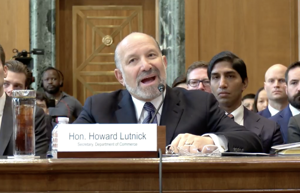
Polls show Americans are concerned about President Donald Trump’s tariff plans, worried that prices will increase, but administration officials hope to win over the public.
Polling shows Americans don’t think the administration is doing enough to lower prices. Americans are also concerned about higher prices as a result of tariffs.
Trump has set out to reorder global trade through tariffs to give American businesses a fair playing field in the worldwide economy. His on-again, off-again tariffs have rattled financial markets, small businesses and big-box retailers.
Commerce Secretary Howard Lutnick told CBS that Americans will come around on tariffs.
“Oh, they’re going to love the deals that President Trump and I are doing. I mean, they’re just going to love them. You know, the president figured out the right answer, and sent letters to these countries, said this is going to fix the trade deficit,” Lutnick told CBS News’ “Face the Nation” host Margaret Brennan.
“This will go a long way to fixing the trade deficit, and that’s gotten these countries to the table, and they’re going to open their markets or they’re going to pay the tariff,” he added.
President Donald Trump sent letters to dozens of countries warning of 20% to 50% tariffs, which will be imposed beginning Aug. 1, unless those foreign nations can reach better deals.
Last week, the Federal Reserve’s latest “beige book” found that businesses across the country reported passing the cost of tariffs on to U.S. consumers, something Trump warned them not to do. All 12 Fed districts reported price increases. Seven characterized price growth as “moderate,” and five called it “modest.”
“Many firms passed on at least a portion of cost increases to consumers through price hikes or surcharges, although some held off raising prices because of customers’ growing price sensitivity, resulting in compressed profit margins,” according to the Fed report.
In June, an appeals court ruled that Trump’s “Liberation Day” tariffs could remain in place while a legal challenge over his authority to impose import taxes continued.
That came after the administration appealed when a three-judge panel of the U.S. Court of International Trade unanimously ruled in May that Congress did not give the president tariff authority under the International Emergency Economic Powers Act of 1977. The appeals court ruling means Trump can continue collecting the taxes while the legal challenge moves ahead.
Economists, businesses and some publicly traded companies have warned that tariffs could raise prices on a wide range of consumer products.
Trump has said he wants to use tariffs to restore manufacturing jobs lost to lower-wage countries in decades past, shift the tax burden away from U.S. families and pay down the national debt.
A tariff is a tax on imported goods paid by the person or company that imports the goods. The importer can absorb the cost of the tariffs or try to pass the cost on to consumers through higher prices.
WA Democrat proposes 5-point plan for ‘world’s best weather forecasting system’
Hoping to create “the world’s best weather forecasting system,” U.S. Sen. Maria Cantwell, D-Wash., sent a letter to the Oval Office on Monday with her five-point plan attached.
She called it a “once-in-a-lifetime opportunity.” A shot to catch up to Europe’s weather modeling system as extreme events occur more frequently. While the United States used to track around nine extreme weather events annually, Cantwell says it’s now an average of 23, with 27 having occurred in 2024.
According to the National Oceanic and Atmospheric Administration, each event cost Americans at least $1 billion, and last year, the total hit $182.7 billion. Cantwell cited a recent study that put the number at $1.5 trillion over the next decade, and called the cost of her plan “minuscule” in comparison.
“We have a once-in-a-lifetime opportunity to create the world’s best weather forecasting system that would provide Americans with much more detailed and customized alerts days – instead of minutes – ahead of a looming extreme weather event,” Cantwell wrote to President Donald Trump.
Meanwhile, Trump recently proposed cutting NOAA spending by $2.2 billion, a 27% reduction.
Democrats argue that doing so would result in dramatic consequences for the National Weather Service, as the Department of Government Efficiency has already significantly reduced staffing.
NWS would receive a slight funding boost under the president’s budget proposal, but some say it will do little to offset mounting vacancies amid Trump’s current hiring freeze through October.
A few media outlets and Congressional Democrats suggested the Trump administration should bear some of the blame after more than 100 people recently died in massive flooding in Texas.
The Guadeloupe River rose over 26 feet in under an hour as most people were asleep in bed.
NWS issued warnings days in advance, but dozens of adults and children still didn’t evacuate.
“There is strong support for making the generational investments necessary to become a weather-ready nation that will empower Americans to get out of harm’s way,” Cantwell wrote.
Her five-point plan includes modernizing data collection, investing in supercomputing, bolstering NOAA’s research funding, expanding broadcast alert systems and passing bipartisan legislation.
Cantwell said NOAA needs more data and recommended upgrading the nation’s Doppler radar network, which dates back to the 1980s. Replacing Hurricane Hunter aircraft with C-130s, and expanding weather satellite and ocean-observing systems could also help collect more data.
Supercomputing could help the NOAA compete with the European Centre for Medium-Range Weather Forecasts, which often outperforms domestic forecasts. Pairing that with additional research, which only accounts for about 10% of NOAA’s budget, could increase that impact.
Upgrading broadcast alert systems and expanding that network to rural areas could save lives.
The last step in Cantwell’s plan includes passing the Weather Act Reauthorization Act of 2024.
She and U.S. Sen. Ted Cruz, R-Texas, introduced the bill last year to do much of what her letter proposes.
“Now is the time to take the tough lessons learned in the wake of the recent natural disasters and human tragedies in places like Texas,” Cantwell wrote, “and create the world’s best weather prediction system. We must meet the moment or the situation is only going to get worse.”