National News
Supreme Court to revisit transgender status, nationwide injunctions

The U.S. Supreme Court will most likely be revisiting issues of nationwide injunctions and transgender status in its next term.
The Federalist Society, a law and public policy nonprofit, hosted an expert panel on Thursday to discuss the Supreme Court’s recent term and predictions for future terms.
In the past term, the high court issued 56 majority decisions and 11 of those decisions were decided 6-3, along partisan lines.
The experts said the emergency docket applications were particularly staggering in the past term. The Trump administration filed 20 emergency petitions to the court since January, compared to 19 applications in the Biden administration and 41 applications across all four years of Trump’s first term.
One case of significance from the emergency docket was the court’s ruling against nationwide injunctions, based on a challenge to the Trump administration’s birthright citizenship executive order.
The court left open the possibility to challenge unlawful executive actions through class action lawsuits.
Kannon Shanmugam, partner at the law firm Paul, Weiss, Rifkind, Wharton and Garrison, said the court’s decision to allow class action lawsuits will have “limited practical consequences” for nationwide injunctions.
“If a court thinks that a class action might eventually be certified, presumably by engaging in some sort of quick look at whether or not this feels like a class, like a class action, the court can then proceed to grant nationwide relief,” Shanmugam said.
On Wednesday, the ninth circuit court of appeals upheld a lower courts nationwide injunction decision that prevented Trump’s birthright citizenship order from going into effect.
On July 10, a federal judge in New Hampshire certified a class action lawsuit against the Trump administration to protect the citizenship of children born in the United States to noncitizen parents.
Shanmugam said the courts can find people with “generalizable injuries” against Trump’s executive order and it will present “all the same litigation challenges” as nationwide injunctions.
Kristen Waggoner, CEO of the advocacy group Alliance Defending Freedom, also said the court’s decision leaving transgender care for minors up to states, is particularly consequential for the future definitions of transgender status discrimination.
In Skrmetti v. U.S., the high court allowed states to prevent minors from receiving transgender care. Liberal justices dissented from this decision, citing discrimination on the basis of sex since the law allowed certain children to continue to receive treatment like puberty blockers for issues like precocious puberty.
The court will take up two decisions on transgender athletes from Idaho and West Virginia in its next term. Waggoner said these decisions will force the court to decide what protections exist for transgender people.
“There’s no question that the physical differences will come to bear in the decision and will be front and center in oral argument,” Waggoner said.
Waggoner and Shanmugam said Chief Justice John Roberts, Justices Amy Coney Barrett and Brett Kavanaugh are emerging as “the center of the court.” They said the three justices joined the liberal majority almost as much as the conservative majority in split court decisions this term.
“We really have a 3-3-3 court nowadays,” Shanmugam said. “I think that is something that has taken place for long enough now that we can say that that is really a trend.”
Group wants Trump to intervene in fight over U.S. fish

A group of anglers got President Donald Trump’s attention in a long-running campaign to protect a lesser-known forage fish in the Chesapeake Bay.
The Virginia Saltwater Sportfishing Association posted a 4-minute video on YouTube that blames a reduction in menhaden in the bay on the Canadian company Cooke Seafood. A letter posted along with the video calls on Trump and Commerce Secretary Howard Lutnick to stop Cooke Seafood from removing menhaden from the Chesapeake Bay and other Virginia waters.
“Foreign companies profit off of industrial fishing for U.S. forage fish (aka bait fish) undermining American businesses and workers,” the group wrote in a Change.org petition. “By taking bold action to end industrial scale fishing for vulnerable bait fish, America can harness the full economic potential of our fisheries, create jobs, and secure a sustainable future for America’s fishing industry and coastal communities.”
The company involved in the menhaden operation, Ocean Harvesters, disputed the allegations in the video.
“Ocean Harvesters continues a long and proud tradition of menhaden fishing in Virginia’s Northern Neck region, where menhaden fishermen have operated continuously for over 145 years,” the company said in a statement. “Ocean Harvesters vessels are crewed primarily by American fishermen, many of whom are multi-generational, holding the same jobs as their fathers and grandfathers. The fishery employs hundreds of local workers directly, and hundreds more indirectly, and has long been one of the best sources of good-paying jobs in the region.”
The video casts the conflict as a battle between local anglers and a giant Canadian-owned conglomerate illegally fishing in U.S. waters. A federal judge dismissed a lawsuit against Cooke, Ocean Fleet Services and others in January.
The allegations started years after Cooke Inc., a New Brunswick company and parent of Cooke Aquaculture Inc., bought Omega Protein Corporation, which makes specialty oils and specialty protein products, for $500 million in 2017.
Two people sued Cooke, Omega Protein, Ocean Fleet Services, Ocean Harvesters and others in 2021 under the False Claims Act, alleging the companies falsely structured the acquisition and defrauded the government when they obtained U.S. fishing permits.
Ocean Harvesters said it abides by all U.S. laws.
“As required by U.S. law, all menhaden fishing is conducted by U.S.-owned fishing companies, and vessels are crewed primarily by American fishermen. Ocean Harvesters is an American company headquartered in Reedville, Virginia. It has additional operations in Abbeville, Louisiana and Moss Point, Mississippi.
Some of the defendants, including Ocean Fleet Services, wrote in a motion to dismiss that “stripped of the hyperbolic innuendo, this is a case about entities engaging in a routine business transaction, with the express authorization of a fully informed industry regulator, involving the purchase of fish processing facilities and the sale of fishing vessels.”
“The net result of the transaction, which is a U.S. citizen-owned fleet entering into an agreement to sell its catch to a foreign-owned processor, is expressly permitted under federal law,” defendant’s wrote in the motion to dismiss.
A judge dismissed that suit in January, ruling that neither fish nor a fishing license met the definition of property under the False Claims Act.
The complainants have since appealed that ruling, alleging, among other things, that defendants violated the American Fisheries Act’s citizenship requirement, which requires U.S. commercial fishing vessels to be owned and controlled by U.S. citizens.
A decision on the appeal is pending. A group of law professors wrote in a friend-of-the-court brief in the appeal that “the district court’s decision fails to recognize the substantial property rights States and the Federal Government historically had and today still have in wildlife in their lands and waters,” according to court records. That brief further argued that the “district court’s denial of those substantial property rights overlooks two hundred years of American history and weakens Federal and State protections of our Nation’s natural resources.”
Cooke Seafood told The Center Square it doesn’t own or operate the menhaden operation. Cooke directed comment to Ocean Fleet Services. Ocean Harvesters said it has a long-term supply contract with Cooke.
“Ocean Harvesters does have a long-term supply contract with Omega Protein, which, while owned by Canada-based Cooke Inc., is also headquartered in Reedville and operates exclusively in the U.S. Omega Protein purchases the menhaden caught by Ocean Harvesters and processes it into fish meal and fish oil for use in aquaculture, health supplements, and healthy food for pets,” the company said.
The Virginia Saltwater Sportfishing Association succeeded outside the court in getting Trump to post its video on his Truth Social platform. Trump’s post didn’t include any comment.
Conservatives for Fair Fishing, a group focused on the issues, wrote in a recent blog post that Trump should stop the practices highlighted in the video.
“The plundering of menhaden in U.S. waters only scratches the surface of foreign control over the American seafood industry. While menhaden serves as bait, other foreign conglomerates command tremendous control over the U.S. food supply,” the group wrote in a blog post.
FULL STATEMENT FROM OCEAN HARVESTERS:
A recent video that has been widely shared on social media repeats many false claims about the Atlantic and Gulf menhaden fisheries. Most notably, it recirculates claims about foreign ownership of the fisheries and the sustainability of menhaden that have been repeatedly debunked. The video also ignores the fact that Atlantic and Gulf menhaden fisheries are tightly regulated, responsibly managed and a source of good-paying jobs for hundreds of rural American fishermen and seafood workers.
At several points the video makes claims about “Canadian exploitation of U.S. natural resources” and fisheries “being pillaged by foreigners”—claims that ignore how the fishery actually operates and wrong about the companies that fish for menhaden. As required by U.S. law, all menhaden fishing is conducted by U.S.-owned fishing companies, and vessels are crewed primarily by American fishermen. Ocean Harvesters is an American company headquartered in Reedville, Virginia, with additional operations in Abbeville, Louisiana and Moss Point, Mississippi.
Ocean Harvesters continues a long and proud tradition of menhaden fishing in Virginia’s Northern Neck region, where menhaden fishermen have operated continuously for over 145 years. Ocean Harvesters vessels are crewed primarily by American fishermen, many of whom are multi-generational, holding the same jobs as their fathers and grandfathers. The fishery employs hundreds of local workers directly, and hundreds more indirectly, and has long been one of the best sources of good-paying jobs in the region.
Virginia holds the majority of the menhaden quota due to the post-Civil War migration of New England fishery operations to Reedville, where economic opportunity, access to abundant fish stocks, and a favorable climate for year-round processing led to the concentration of the reduction industry. Families and companies from the North moved south, establishing plants and infrastructure that anchored the fishery in the region. Over time, Reedville evolved into the national center of the menhaden reduction fishery, building a deeply rooted local economy around this industry. This type of concentration of quota is similar to how the majority of permitted lobster fishing effort is concentrated in Maine and Massachusetts.
Menhaden bait fishing occurs across the East Coast using the same gear—like purse seines—but only Virginia allows the catch to be processed into marine ingredients such as omega-3 oil and fish meal. Other states permit menhaden harvest for bait, which is used in Maine and Massachusetts’ lobster fisheries and Maryland’s crab fishery, among others. Despite identical fishing methods, these states ban the reduction fishery—a rare regulatory approach that targets end use rather than gear or harvest limits. Much of the bait doesn’t stay local, supplying fisheries as far as Alaska’s Bering Strait and crawfish farms across the Gulf of America.
While the video claims to want to “put America first,” it actually advocates against American fishermen and their communities by falsely attacking a fishery that is critical to rural America.
Ocean Harvesters does have a long-term supply contract with Omega Protein, which, while owned by Canada-based Cooke, Inc., is also headquartered in Reedville and operates exclusively in the U.S. Omega Protein purchases the menhaden caught by Ocean Harvesters and processes it into fish meal and fish oil for use in aquaculture, health supplements, and healthy food for pets.
The video badly misrepresents the current state of the menhaden population and the impact of the fishery on other species. While the video refers to the “pillaging of menhaden” by the fishery and claims that it “crushes” other fishermen in the Chesapeake Bay, this is not supported by any available science. The Atlantic States Marine Fisheries Commission (ASMFC), the interstate body that manages menhaden, has repeatedly found that the species is not overfished and that overfishing is not occurring—most recently confirming this finding in its 2022 stock assessment. The Gulf States Marine Fisheries Commission (GSMFC) similarly found in 2024 that Gulf menhaden is not overfished and overfishing is not occurring.
The sustainability of the Atlantic and Gulf menhaden fisheries has been internationally recognized as well. Since 2019, both fisheries have been certified as sustainable by the Marine Stewardship Council (MSC), the most rigorous and widely recognized seafood sustainability label in the world.
The video is also deceiving and flatly wrong about how the menhaden fishery affects the ecosystem, claiming that “striped bass are the ones that are most impacted by a reduction in menhaden,” and that there are “no croaker in the Bay, no trout in the Bay, crab populations are down,” because of the fishery. There is no available scientific data that supports these conclusions. Striped bass, unlike menhaden, are currently considered to be overfished by the ASMFC, and are in the middle of a rebuilding plan. Overharvest by recreational fishermen is by far the single most important factor affecting the striped bass population. There is no evidence that a lack of access to prey is responsible for the current overfished status of striped bass.
Croaker and trout have not been identified by the ASMFC as relying significantly on menhaden for food. Crabs do not eat menhaden at all, and in fact the food web relationship between the two species is the opposite: menhaden regularly feed on crab larvae.
Mentioning these species as negatively affected by menhaden fishing demonstrates a misunderstanding of Bay food web dynamics.
Atlantic menhaden are managed specifically to take into account the needs of predator species like striped bass. The system, known as Ecological Reference Points, sets the coastwide menhaden quota not just with the menhaden fishery in mind, but also to ensure there are enough menhaden left in the water to serve as a food source for predators. They were developed through a rigorous, multi-year process led by the Atlantic States Marine Fisheries Commission (ASMFC) in partnership with NOAA and other scientific bodies, and represent the most up-to-date science understanding predator-prey relationships on the Atlantic coast. This makes the menhaden quota inherently conservative, and contradicts the picture of an unrestricted fishery made by the video.
The video is misleading about the menhaden fishery’s impact on the Bay overall, criticizing the fishery by stating that “51,000 metric tons or 112,000,000 lbs. of menhaden [are] removed from the Bay every year.” But the current cap on menhaden harvests in the Chesapeake Bay is based not on science but on politics. The ASMFC originally implemented the Bay cap in 2006 at just over 109,000 metric tons (mt) as part of a political compromise—not due to any scientific finding or ecological necessity. In fact, the ASMFC clearly stated at the time that the cap was “precautionary and not based on a scientifically quantified harvest threshold, fishery health index, or fishery population level study.”
Despite this lack of scientific foundation, the cap has since been reduced to 51,000 mt, a figure that does not reflect historical harvest levels or the established norms of U.S. fisheries management. In nearly all federally managed fisheries, harvest allocations are based on historic landings, not arbitrary political negotiations. Under that standard,
Virginia would have been allocated at least two-thirds more than the current cap.
It’s also critical to recognize that the current harvest level is a fraction of what it used to be. From 1955 to 2010, the average annual harvest of menhaden from the Chesapeake Bay was 112,000 mt, and in some years reached as high as 170,000 mt. Today’s cap of 51,000 mt is less than half that long-term average, making clear that the industry is already operating at dramatically reduced levels—despite a lack of scientific evidence that such reductions are necessary.
If we truly want to “put America first,” we should be supporting the hardworking Virginians, Louisianans, and Mississippians who comprise the Atlantic and Gulf menhaden fisheries, not attacking them. This American industry has thrived for over 145 years thanks to the efforts of fishermen, scientists, and fishery managers. With strong collaboration, it can continue to thrive for the next 145 years to come.
Trump brings construction pros to tour Federal Reserve renovation project

President Donald Trump brought a team of allies and construction professionals to tour an over-budget renovation project at the Federal Reserve buildings in Washington D.C.
Trump met with Federal Reserve Chairman Jerome Powell at the site. The president brought along U.S. Sen. Tim Scott, R-S.C., U.S. Sen. Thom Tillis, R-N.C., Office of Management and Budget Director Russell Vought and Federal Housing Finance Agency boss Bill Pulte at the Federal Reserve project site. Also joining them were Trump’s appointees to the National Capital Planning Commission, the federal government’s central planning agency for the National Capital Region, James Blair and Will Scharf.
Trump also said “various other construction professionals” would be joining the tour of the renovation projects, which were estimated to cost $1.9 billion in 2023. The project now stands and $2.5 billion after issues with the high water table, asbestos and toxic contamination in the soil.
Trump put the figure even higher in a Truth Social post on Thursday.
“Getting ready to head over to the Fed to look at their, now, $3.1 Billion Dollar (PLUS!) construction project,” Trump wrote on his social media platform.
Powell said Thursday at the meeting that he doesn’t expect additional cost overruns on the project, which the Federal Reserve has defended as cost-conscious and responsible renovations to historic buildings located on the National Mall.
“Construction involving the preservation of historic spaces requires specialized processes and methods, which are generally more complex and have increased costs compared with new construction or renovation of spaces that are not historically significant or located on the National Mall,” according to the Federal Rerserve’s new frequently-asked-questions page that focuses on the remodel.
Powell said Thursday the project should be finished by 2027.
A reporter asked Trump, who made his name in real estate, what he’d do with a contractor who was over budget on a project. Trump said that normally he’d fire a project manger for going over budget. However, the president declined to comment directly on Powell.
“Well, I’m here just really with the chairman,” Trump said. “He’s showing us around, showing us the work. And so I don’t want to get into that. I don’t want to be personal. I just would like to see it get finished.”
Trump also said he’d like to see Powell lower interest rates during the meeting with Powell and reporters at the project site.
The visit comes amid Trump’s “nasty” pressure campaign to get Powell and the Federal Open Market Committee to lower interest rates. The Fed has taken a wait-and-see approach on interest rates, citing Trump’s broad-based reciprocal tariffs as a reason for caution.
Trump previously called Powell to the White House for a meeting. After that May meeting, Powell issued a rare statement saying that FMOC decisions would be based “solely on careful, objective, and non-political analysis.”
Since returning to the White House for his second term, Trump has called Powell every name in the book. One of the president’s favorites for Powell has been “numbskull.” He’s also given Powell the nickname “Too Late” for not cutting interest rates as fast as Trump would like.
Powell has largely ducked Trump’s criticism. When Trump criticized cost overruns on the remodel, the Fed Chairman referred the matter to the central bank’s inspector general.
Last week, Trump said he wasn’t planning to fire Powell, but kept the option on the table.
“We’re not planning on doing anything,” Trump told reporters at the White House.
Later, the president added, “I don’t rule out anything, but I think it’s highly unlikely, unless he has to leave for fraud.”
The fraud remark referred directly to the renovation project. The Fed is a self-funded, quasi-private institution. The president picks its members in staggered terms with Senate confirmation.
Trump has wanted to fire Powell for years, but hasn’t taken action.
Fight over birthright citizenship likely to return to Supreme Court

A federal appeals court blocked President Donald Trump’s executive order on birthright citizenship this week, setting the Supreme Court up to revisit the case as early as next term.
Two of the three judges on the 9th U.S. Court of Appeals deemed the executive order unconstitutional and upheld a lower court’s decision to halt its enforcement. The appellate court found that Trump’s executive order “contradicts the plain language of the 14th Amendment’s grant of citizenship to ‘all persons born in the United States and subject to the jurisdiction thereof.’”
The San Francisco court’s ruling is another legal obstacle for the Trump administration as it seeks to abolish the right to citizenship for any individual born on U.S. soil. After a day-one executive order outlining this policy was signed, the administration was met with a flurry of lawsuits by states and organizations, leading the execution of the policy to be put on pause.
The Trump administration appealed one of these cases to the Supreme Court and found victory in June when the justices ruled to limit the ability of lower courts to halt enforcement of executive orders. However, the justices did not rule on the constitutionality of Trump’s ban on birthright citizenship, meaning the case may find its way back in front of the Supreme Court as early as next term.
Wednesday’s appellate court ruling brings the issue to center stage again and calls for a final decision by the nation’s top court. The legal back-and-forth means the Supreme Court is likely to consider the case again in the future to determine whether Trump’s executive order on birthright citizenship is constitutional. This could occur as early as next term when the justices reconvene in October.
The Trump administration had not appealed the 9th Court of Appeals’ decision as of Thursday afternoon.
Department investigates alleged Title IX violation in Oregon
The Oregon Department of Education has been under investigation by the U.S. Education Department over an alleged violation of Title IX protections for allowing transgender athletes to compete in female sports.
Since March, the U.S. Department of Education’s Office for Civil Rights has launched multiple investigations into various states over Title IX violations for allowing males in female sports and intimate spaces.
California, a state that was found in violation of Title IX, is currently facing legal battles from the Department of Justice for not complying.
Craig Trainor, acting U.S. assistant secretary for civil rights, explained the Trump administration has been steadfast in its commitment to protecting women’s rights and that the Office for Civil Rights will use every lawful means to ensure female athletes are not denied equal opportunities.
“We will not allow the Portland Public Schools District (in Oregon) or any other educational entity that receives federal funds to trample on the anti-discrimination protections that women and girls are guaranteed under law,” said Trainor.
The OCR launched its investigation after receiving a civil rights complaint back in May by Leigh Ann O’Neill, the chief of staff for the Center for Litigation at the America First Policy Institute. The complaint blamed the Oregon Department of Education and the Oregon School Activities Association for allegedly allowing a transgender athlete to compete in girls track and field.
“AFPI has requested that the Office for Civil Rights investigate the ODE and OSAA, issue findings, and take all necessary action to bring Oregon’s K–12 athletics programs into compliance with federal law,” the AFPI statement said.
The civil rights office said it sent letters to Kimberly Armstrong, the superintendent of Portland Public Schools, and the OSAA informing them of the investigation.
Created in collaboration with the ODE, the OSAA states its gender identity participation policy “promotes harmony and fair competition among member schools by maintaining equality of eligibility” and allows all students a chance to participate in interscholastic activities.
“I stand firm in our legal responsibilities, and I deeply value every student’s right to be treated with dignity, safety, and respect,” said Armstrong. She noted this is a “complex legal landscape.”
The AFPI complaint noted a trans runner, Ada Gallagher from McDaniel High School in Northeast Portland, had won two female races, the 200-meter and 400-meter.
“Title IX was enacted to protect girls from this specific form of institutional discrimination now occurring in Oregon’s schools and athletic competitions,” the complaint concluded. “The Department of Education must take decisive action to end this unlawful practice and restore fairness, equality, and integrity to girls’ athletics in Oregon.”
U.S. House panel discusses California law’s impact on prices
Tension filled the room at the U.S. House Agriculture Committee hearing Wednesday morning as representatives debated the ramifications of California’s Proposition 12 on farmers and consumers nationwide.
The committee discussed the proposition’s national effects on the cost of pork, veal and eggs and agricultural production. The hearing comes after the Trump administration sued California for its regulations of eggs, claiming three state laws — Prop. 12 included — are contributing to the increase in prices.
Under Prop. 12, farmers nationwide face requirements for raising pigs, calves and chickens if they want to sell their products in California. The initiative was approved by voters in 2018 and went into full effect in 2024.
During the hearing, various Agriculture Committee members voiced opposition and support for Proposition 12.
Opponents on the panel claimed the law is raising prices nationwide because farmers in other states are spending money to rebuild their facilities to meet Prop. 12 standards. They also argue the state law has not achieved its main purpose: protecting animals’ health.
“When I visited family farms in my district, they noted that the system has caused increased stress, injury for the animal, mortality, while limiting individualized animal care,” U.S. Rep. Randy Feenstra, R-Indiana, said during the hearing.
Matt Schuiteman, a farmer and a board member at the Iowa Farm Bureau, told the House committee that Prop. 12 forces farmers to care for their animals in a way that leaves them worse off. He noted farmers have first-hand knowledge that the politicians who crafted the initiative lacked.
“What Proposition 12 does is it takes away our ability to act on what we know is for the best interest of the animal,” Schuiteman said. “Maybe it has been settled in other places, but it has not been settled in Iowa, and we would prefer to have the freedom to manage our animals the best way we can see fit, for the best possible outcome.”
The Center for Environment and Welfare, a private think tank involved with animal welfare and environmental issues, told The Center Square Wednesday it agreed with claims accusing Prop. 12 of harming animals.
“The animal activists say Proposition 12 would be better for the animals, but that’s not necessarily true in all cases,” William Coggin, the center’s research director, said. “It has taken tools away from farmers and veterinarians.”
U.S. Rep. Jim Costa, D-California, who supports Proposition 12, blamed tariffs and other elements for raising prices.
“Tariffs are a tax on American consumers, American producers, American agricultural producers, and that leads to higher food costs,” Costa said during the hearing.
Supporters of Proposition 12 noted the initiative was passed by California voters. Therefore, they said, if Congress tried to overrule the law by passing its own bill, that would interfere with the will of the people.
The Center for Environment and Welfare, however, released a poll that showed 44% of California voters, a plurality, said they would not vote for Proposition 12 if it were on the ballot tomorrow. A majority of the poll’s respondents — 60% — said they supportied the state Legislature modifying Prop. 12 to reduce prices. The survey polled 458 registered voters.
Farm Action Fund, a nonpartisan organization, supports Proposition 12 and sent a letter to the House Agriculture Committee Wednesday, thanking members who support the initiative and urging the panel to reject efforts to overturn it. The letter was signed by independent hog farmers from a Farm Action Fund network.
Farmers made a choice to comply with Prop. 12, Joe Maxwell, the president of Farm Action Fund, told The Center Square Wednesday
“Proposition 12 did not mandate a Missouri farmer, or an Illinois farmer, or an Iowa farmer, to comply,” Maxwell said. “It just said if your pork is going to be sold in California, it must comply. Farmers that voluntarily wanted to comply, spent the money to do so.”
The Center for Environment and Welfare, on the other hand, said it believes California has the right to pass regulations only affecting farmers in California, not those in other states.
Patrick Hord, vice president of the National Pork Producers Council, testified at the hearing that it was not a viable or wise decision for states to not supply pork to California. The state produces only 0.1% of the nation’s pork, but consumes 13%.
Therefore, producers in other states must sell pork in California to meet the demand, Hord said.
“It would be really detrimental to us as pork producers and the pork chain to not supply that,” Hord said during the hearing. “In reality, it’s forcing the rest of the states to comply in order to raise that product for California.”
Civil rights office pledges to ‘kill’ DEI initiatives in govt, business, schools
The Department of Justice will remain laser-focused on combating actions it believes violate civil rights laws, including initiatives promoting diversity, equity and inclusion.
That plan includes using subpoenas, prosecutions or revocation of federal funding, DOJ Assistant Attorney General Harmeet Dhillon said in a civil rights and DEI-focused Senate Judiciary Committee hearing Wednesday.
“The goal is clear — either DEI will end on its own, or we will kill it,” Dhillon told lawmakers, arguing that DEI, by pushing for equity-based outcomes rather than individual rights and opportunity, is “a form of group justice that is a Marxist concept” and equates to “invidious racial discrimination.”
Under the second Trump administration, the 368 attorneys have left the DOJ’s Civil Rights Division, which enforces federal statutes protecting Americans’ constitutional right to nondiscrimination on the basis of race, sex, class or religion.
But despite widespread agency cuts, the DOJ, Department of Education, Department of Homeland Security and other agencies have remained busy enforcing President Donald Trump’s civil rights agenda.
During Trump’s first six months in office, the administration has cut nearly all DEI-based federal contracts, frozen federal funding for higher education institutions that enable antisemitism or promote “woke” initiatives, redirected DEI-related funding for Smithsonian museums, and taken actions to ban transgender-identifying men from competing in women’s sports.
Dhillon said the DOJ is “taking our guidance from the priorities of this administration and the obvious violations that are occurring” by cracking down on any schools, businesses, and government programs that violate equal treatment under the law through affirmative action, social justice initiatives or other discrimination.
“Our responsibility toward the taxpayers requires us to focus on those big-ticket items, but we are also looking at offenders up and down the spectrum,” Dhillon added.
She referenced activities such as schools offering minority-only scholarships, admissions and hiring quotas, legal attacks on religious business owners, and minority-only taxpayer-funded grants as instances of “illegal discrimination.”
Rep. Eric Schmitt, R-Mo., praised Dhillon and the Trump administration for their recent actions, calling DEI an “illegal,” “fraudulent” and “cynical” ideology.
“For at least the last decade, America’s civil rights laws have been used not to prohibit discrimination, but to institutionalize it,” Schmitt said. “The modern civil rights machine, both inside and outside the government, has been wielded like a weapon.”
Democratic lawmakers, however, reversed the accusation, arguing that the Trump administration has weaponized civil rights laws against things it dislikes, rather than actual violations.
“What you’re doing to use the sledgehammer of federal funding with universities to try to coerce them [in]to accepting your right-wing agenda is disgraceful, and using that cudgel will have far-reaching implications,” Sen. Adam Schiff, D-Calif., told Dhillon.
“Out of all the years of criticism of ‘cancel culture,’ you seem to want to cancel any institution that has views that you disagree with,” he added.
Gabbard’s report questions intelligence community’s conclusions
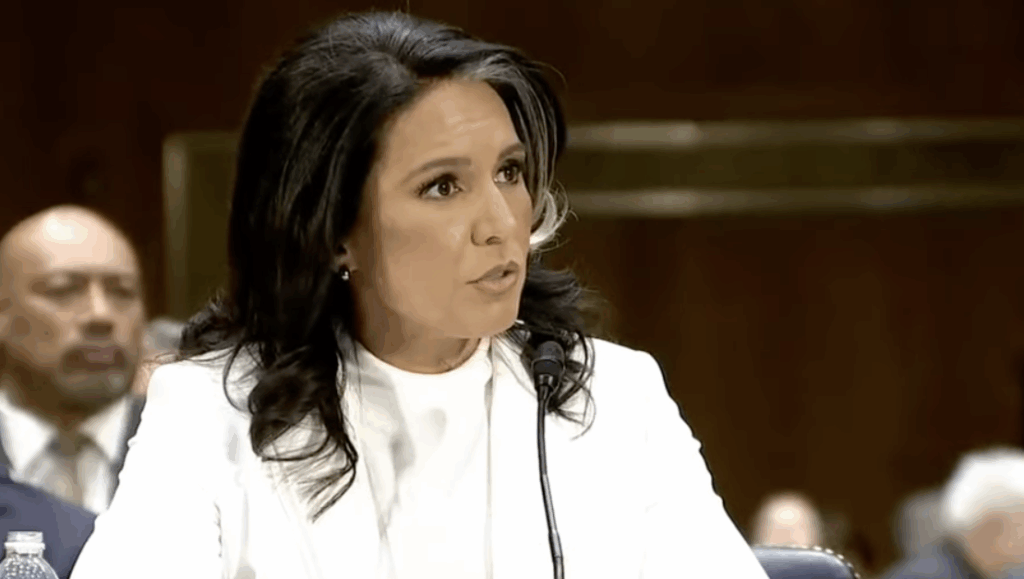
Director of National Intelligence Tulsi Gabbard’s accusations that former President Barack Obama conspired to “usurp” President Donald Trump’s 2016 election victory has drawn criticism to years-long conclusions in the investigative community.
On July 18, Gabbard released a 114-page document titled “Declassified Evidence of Obama Administration Conspiracy to Subvert President Trump’s 2016 Victory and Presidency.” She also published an 11-page memo highlighting documents from the larger release in a timeline.
The documents asserted that the former president and his top administration officials forced the intelligence community to claim Russia had interfered in the 2016 presidential election.
The release included communications before the 2016 election where Department of Homeland Security officials and FBI officials said they did not feel comfortable implying there was “definitive” evidence that Russia intended to disrupt the election.
However, Gabbard’s report says a meeting with Obama and top administration officials in December 2016 tasked the former director of national intelligence James Clapper with compiling evidence of Russia’s influence over the election, rather than whether it was involved at all.
The investigation reportedly tasked Clapper with compiling instances of Russia’s involvement with hacking, leaks, media spin and cyber activity against voting systems rather than whether it was involved at all. The investigation involved Clapper, CIA, FBI, Department of Homeland Security and National Security Agency officials.
Additionally, Gabbard’s report says intelligence officials leaked information to the media multiple times claiming that Russia was involved in hacking the election.
Ultimately, a 2020 Senate Intelligence Committee investigation assessed the efforts of the intelligence community’s efforts to document Russian intervention in the 2016 election. The report affirmed that Russia “directed extensive activity” from 2014 through 2017 “against U.S. infrastructure at the state and local level.”
Despite its findings, the committee concluded it found “no evidence that any votes were changed or any voting machines were manipulated.”
Rep. Jim Himes, D-Conn., ranking member of the House intelligence committee, called Gabbard’s report a “dangerous lie.”
Himes affirmed the 2020 senate intelligence committee’s findings. He also said Russia bought “reams of Facebook ads to discredit Hillary Clinton.”
“The intelligence community is full of very, very good people who do their jobs every single day and now they’re watching their leader do something that each and every one of them knows is dishonest,” Himes said.
Despite criticism over Gabbard’s methods, Trump affirmed Gabbard’s report on Monday.
“Obama himself manufactured the Russia, Russia, Russia HOAX. Crooked Hillary, Sleepy Joe, and numerous others participated in this, THE CRIME OF THE CENTURY!. Irrefutable EVIDENCE. A major threat to our Country!!!” Trump wrote on social media.
U.S. set to withdraw from UNESCO in 2027

The U.S. is withdrawing from UNESCO, the United Nations’ Educational, Scientific and Cultural Organization, saying that the organization has “strayed from its founding mission.”
State Department spokeswoman Tammy Bruce announced the U.S. withdrawal from the organization, saying it is “not in the national interest of the United States.” However, the U.S. will remain a full organization member until Dec. 31, 2026.
In a statement from the State Department, it accused the organization of being globalists, highlighting anti-Israeli “rhetoric.”
“UNESCO works to advance divisive social and cultural causes and maintains an outsized focus on the UN’s Sustainable Development Goals, a globalist, ideological agenda for international development at odds with our America First foreign policy. UNESCO’s decision to admit the ‘State of Palestine’ as a Member State is highly problematic, contrary to U.S. policy, and contributed to the proliferation of anti-Israel rhetoric within the organization,” according to the statement.
State added that moving forward, the U.S. “participation in international organizations will focus on advancing American interests.”
This isn’t the first time President Donald Trump has withdrawn from the organization. During his first administration in 2017, the administration made the same move, prompting the organization to prepare for a possible second withdrawal.
Audrey Azoulay, director-general of UNESCO, released a statement, calling Trump’s decision to withdraw “regrettable” but “anticipated.” The head of the organization warned that the decision may impact its relationship with its partners in the U.S.
“This decision contradicts the fundamental principles of multilateralism, and may affect first and foremost our many partners in the United States of America – communities seeking site inscription on the World Heritage List, Creative City status, and University Chairs,” Azoulay stated.
Azoulay assured its members of its financial stability, underscoring that since 2018, the organization has “diversified” its funding sources to offset its reliance on U.S. dollars.
Azoulay addressed accusations of antisemitism, highlighting its work to fight against antisemitism while promoting education on the Holocaust.
“UNESCO is the only United Nations agency responsible for these issues, and its work has been unanimously acclaimed by major specialized organizations such as the United States Holocaust Memorial Museum in Washington DC, the World Jewish Congress and its American Section, and the American Jewish Committee (AJC). UNESCO has supported 85 countries in implementing tools and training teachers to educate students about the Holocaust and genocides, and to combat Holocaust denial and hate speech,” the statement added.
Israel’s minister of foreign affairs, Gideon Sa’ar, celebrated the decision in a social media post, calling it a “necessary step, designed to promote justice and Israel’s right for fair treatment in the UN system.”
“Singling out Israel and politicization by member state must end, in this and all professional UN agencies … Israel thanks the US for its moral support and leadership, especially in the multilateral arena which is plagues with anti-Israel discrimination. The United Nations requires fundamental reforms in order to remain relevant,” Sa’ar posted to X.
Guetlein to head Trump’s ‘Golden Done’ missile defense office

Gen. Mike Guetlein will be the inaugural Golden Dome for America Direct Reporting Program Manager as President Donald Trump looks to quickly set up a multi-layered missile defense system that protects Americans from a range of foreign threats.
The Senate confirmed Guetlein last week. Guetlein will report directly to Deputy Secretary of Defense Steve Feinberg. Guetlein will be responsible for developing the Golden Dome “portfolio of capabilities,” according to the Defense Department.
“Golden Dome is President Trump’s bold vision to build a layered defense of the Homeland to provide for the common defense of the American People against ballistic, hypersonic, advanced cruise missiles, and other next-generation aerial attacks from near-peer and rogue nations,” according to the Defense Department.
Earlier this year, Trump outlined plans for a $175 billion missile defense shield. The system Trump envisions would protect the U.S. and Canada using multiple layers of defense against diverse potential attacks, making it much more complex than previous proposals. The Golden Dome would also include space-based sensors and interceptors that the president said would be able to intercept missiles “even if they are launched from other sides of the world and even if they are launched from space.”
The president said the missile defense system would be operational before he leaves office in 2029. Trump’s plan is loosely modeled after Israel’s Iron Dome – but on a much larger scale. Israel’s Iron Dome defends a nation the size of New Jersey against short-range missiles built in underground tunnels. Trump’s system would protect a much larger area – North America – against more challenging threats, including intercontinental ballistic missiles and hypersonic weapons.
The Office of Golden Dome for America “will establish partnerships with industry, academia, national labs, and other government agencies to develop an objective architecture and to rapidly develop and field defensive capabilities,” according to the Defense Department.
The Pentagon said the government plans to “socialize this objective architecture as it is developed within the next 60 days.”
“Golden Dome for America requires a whole-of-nation response to deter and, if necessary, to defeat attacks against the United States,” the Pentagon said. “We have the technological foundation, national talent, and decisive leadership to advance our nation’s defenses.”