National News
AOC broke ethics rules with ‘improper’ gifts, panel finds
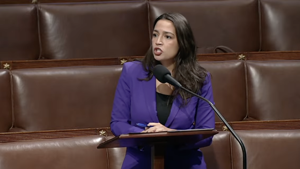
Rep. Alexandria Ocasio-Cortez broke House ethics’ rules by accepting free tickets to the glitzy 2021 Met Gala benefit in New York City, and a designer gown emblazoned with “Tax The Rich” in red letters, a panel said Friday.
The House Ethics Committee released a report Friday saying an investigation determined that the New York Democrat and “Squad” members had flouted its rules by accepting the gratuities and ordered her to pay nearly $3,000 in personal funds to resolve the violations without sanctions.
That includes $250 to cover the attendance of her fiancé at the 2021 charitable event, Riley Rogers, and an additional $2,733.28 payment to Brother Vellies, the business that designed her gown.
“Based on its findings, the Committee determined that it would be appropriate for Representative Ocasio-Cortez to make additional payments of personal funds to compensate for the fair market value of certain expenses,” the panel’s report stated. “Upon confirmation of the completion of those payments, the committee will consider this matter closed.”
An Ocasio-Cortez spokesperson issued a statement saying the lawmaker accepts the committee’s findings and will make the payments to resolve the matter.
“The Congresswoman appreciates the Committee finding that she made efforts to ensure her compliance with House Rules and sought to act consistently with her ethical requirements as a Member of the House,” the statement said. “She accepts the ruling and will remedy the remaining amounts, as she’s done at each step in this process.”
House ethics rules prohibit congressional lawmakers from accepting gifts such as “a gratuity, favor, discount, entertainment, hospitality, loan, forbearance, or other item having monetary value.”
During the September 2021 gala, Ocasio-Cortez was provided with “a couture dress, handbag, shoes, and jewelry,” the ethics report said. “She also received hair, makeup, transportation, and ready-room services.”
The ethics panel said its investigation found that Ocasio-Cortez eventually paid vendors for the rental value of the attire she wore to the event and for the goods and services she and her partner received, but not until after the ethics office contacted her for its review.
If it weren’t for the review, the ethics panel said, “it appears that Rep. Ocasio-Cortez may not have paid for several thousands of dollars’ worth of goods and services provided to her.”
“While the committee did not find that Representative Ocasio-Cortez’s violations were knowing and willful, she nonetheless received impermissible gifts and must bear responsibility for the other conduct that occurred with respect to the delays in payment,” the report concluded.
5 schools investigated for preferencing illegal aliens with scholarships, programs

Five universities across the nation face investigations from the Department of Education’s Office for Civil Rights for potentially discriminating on the basis of national origin in the DACA-only scholarships and programs they offer.
The University of Louisville, the University of Nebraska Omaha, the University of Miami, the University of Michigan, and Western Michigan University are those facing the national origin discrimination investigations, according to the Department of Education.
The investigations “will determine whether these universities are granting scholarships only for Deferred Action for Childhood Arrivals (DACA) or ‘undocumented’ students, in violation of Title VI of the Civil Rights Act of 1964’s (Title VI) prohibition against national origin discrimination,” a news release said.
University of Michigan director of public affairs Kay Jarvis told The Center Square: “The university has received a letter of notification relating to this matter. We have no further comment.”
Interim VP of communications and marketing at the University of Louisville John Karman similarly told The Center Square that, “the university was just notified of the investigation on Tuesday.”
“We are reviewing the claims,” Karman said.
None of the other three universities have yet responded to The Center Square’s request for comment, and neither has the Department of Education.
According to complaints submitted by the Legal Insurrection Foundation’s Equal Protection Project to the Department of Education, the University of Louisville offers the Sagar Patagundi Scholarship to “subsidize the cost of higher education … for undergraduate DACA and undocumented students,” the release said.
The University of Nebraska Omaha offers a Dreamer’s Pathway Scholarship for “students who are DACA or DACA-eligible and Nebraska residents who are seeking an undergraduate degree,” the release said.
Meanwhile, the U Dreamers Program at the University of Miami “is available to academically talented and admissible [DACA] and undocumented high school seniors and transfer students,” the release said.
The University of Michigan has a Dreamer Scholarship that “is intended to support undocumented students or students with DACA status.”
Lastly, Western Michigan University offers the WMU Undocumented/DACA Scholarship “for undergraduate students who are ineligible to receive federal student aid due to an undocumented or DACA status.”
“Discrimination against American-born students must not be tolerated,” founder of the Equal Protection Project William A. Jacobson said in the department’s release.
“Protecting equal access to education includes protecting the rights of American-born students,” Jacobson said.
“At the Equal Protection Project, we are gratified that the Department of Education’s Office for Civil Rights is acting on our complaints regarding scholarships that excluded American-born students,” Jacobson said.
Acting Assistant Secretary for Civil Rights Craig Trainor said in the release that “neither the Trump Administration’s America first policies nor the Civil Rights Act of 1964’s prohibition on national origin discrimination permit universities to deny our fellow citizens the opportunity to compete for scholarships because they were born in the United States.”
“On January 20, 2025, President Trump promised that ‘every single day of the Trump Administration, [he] will, very simply, put America first,’” Trainor said.
“As we mark President Trump’s historic six months back in the White House, we are expanding our enforcement efforts to protect American students and lawful residents from invidious national origin discrimination of the kind alleged here,” Trainor said.
In addition to investigating discrimination based on national origin, the investigations will examine other scholarships at the universities of Louisville, Nebraska Omaha, and Western Michigan “that appear to exclude students based on other aspects of Title VI, including race and color.”
Homeland Security task forces expand efforts targeting transnational crime

( The Center Square) – New Homeland Security Task Forces (HSTF) are launching nationwide to expand efforts to target transnational crime. A new HSTF launched in Houston this month, one month after a HSTF launched in the Midwest.
Although federal law enforcement partners have been targeting transnational crime for years, President Donald Trump directed the departments of Homeland Security and Justice to establish HSTFs to conduct targeted enforcement efforts in a Jan. 29 executive order.
The HSTFs are regional and led by U.S. Immigration and Customs Enforcement’s Homeland Security Investigations field offices and FBI field offices. Participating agencies include the DEA, ATF, U.S. Marshals Service, IRS’ Criminal Investigative Division, U.S. Postal Inspection Service, U.S. Customs and Border Protection’s Office of Field Operations, High Intensity Drug Trafficking Area directors, U.S. attorneys and others.
They are operating under Trump’s order, “Protecting the American People Against Invasion,” which directed the DHS and DOJ to create HSTFs to “end the presence of criminal cartels, foreign gangs, and transnational criminal organizations throughout the United States, dismantle cross-border human smuggling and trafficking networks, end the scourge of human smuggling and trafficking, with a particular focus on such offenses involving children, and ensure the use of all available law enforcement tools to faithfully execute the immigration laws of the United States.”
Task force members are conducting “intelligence-driven, multijurisdictional investigations targeting drug trafficking, money laundering, weapons trafficking, human trafficking, alien smuggling, homicide, extortion, kidnapping, child exploitation and other transnational crimes,” HSTF announcements state.
The Houston HSTF is being led by ICE HSI-Houston and FBI-Houston targeting all of southeast Texas.
HSI Houston Special Agent in Charge Chad Plantz said their goal is to find “transformative ways” to address sophisticated schemes being used by transnational criminal organizations, foreign terrorist organizations, drug cartels and gangs in the region. In Southeast Texas, “we face a myriad of unique border-related challenges and threats from transnational criminal organizations. By establishing this permanently integrated multiagency task force with dedicated personnel from federal, state and local law enforcement working side-by-side with a common mission, we will be better postured to detect and respond to any type of threat we might face,” he said.
Houston, the largest city closest to the U.S.-Mexico border, is considered a major trafficking hub and gateway for criminal activity into the rest of the U.S. It’s only a few hours drive from Brownsville, Eagle Pass, Laredo and other major crossing points used by cartels and transnational criminal organizations. From Houston, people, weapons and drugs are moved to other major hubs like Dallas, Chicago, Atlanta, Los Angeles, New York and Miami within a matter of hours and days, law enforcement officers have explained to The Center Square.
FBI Houston Special Agent in Charge Douglas Williams said the new task force was “a united front unseen before in Houston. For the first time, law enforcement and intelligence agencies are focused on hunting down and eradicating transnational criminals within Houston communities. Federal, state and local police will coordinate with the U.S. Intelligence Community and overseas partners to efficiently eliminate newly designated terrorists wreaking havoc in our neighborhoods.”
The Houston area task force was launched one month after the Kansas City HSTF, which is targeting transnational crime in Iowa, Kansas, Missouri and Nebraska. Its operations are headquartered in Kansas City (for all of Missouri), Wichita (Kansas), Des Moines (Iowa), and Omaha (Nebraska).
Its task force members have already arrested high profile targets in Nebraska including violent Tren de Aragua and MS-13 terrorist members, The Center Square reported.
In May, U.S. Attorney for the Central District of California Bilal Essayli launched a new task force that also includes federal partners from ICE, HSI, the FBI, DEA, and ATF. They are implementing a new approach he argues is a blueprint for other federal prosecutors to follow to combat sanctuary city policies. Their strategy involves filing complaints and arrest warrants with local jails to allow federal law enforcement officers to take into custody as many criminal foreign nationals as possible, The Center Square reported.
McNabb poised for veto override, next steps protecting women’s spaces
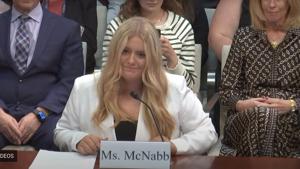
Perplexing as the North Carolina governor’s veto may be to her, Payton McNabb’s fight for women in North Carolina and across America remains girded in steely support with a vision for the future.
Even after the expected override Tuesday of Gov. Josh Stein on a bill defining men and women, her experiences at Hiwassee Dam High in Murphy and on the campus of Western Carolina University in Cullowhee will fuel her fight for protection of women’s spaces in sports, bathrooms, and at universities, particularly sororities.
“All of those I had to fight because of one guy,” she told The Center Square on Friday by phone from her home in Murphy in a 1-on-1 interview, speaking of the latter three, referring to an incident in college. “It got completely out of hand with the way things were being handled. It makes me more thankful for the outcome of the last election. I don’t know how it would have played out if it had gone another way.”
Voters on Nov. 5 sent Republican Donald Trump back to the White House for a second term. On Day 1, he included an order to restore “biological truth” in defining men and women by reproductive cells. The North Carolina General Assembly on June 27 sent legislation in part codifying the order to the desk of Stein, who on July 3 affixed a veto stamp.
Gender policy is in Prevent Sexual Exploitation/Women and Minors (House Bill 805). Three Democratic senators and one representative in the House favored it; no Republicans in either chamber was opposed.
To override, each chamber of the General Assembly needs three-fifths majority of those present. Republican majorities are 30-20 in the Senate and 71-49 in the House of Representatives.
Stein is married and has a 21-year-old daughter in addition to two sons.
“I will never understand his veto,” said McNabb, who turned 20 in March. “I genuinely do not understand how a father – it shouldn’t even be hard because he’s an elected official, elected to protect the women of his state. At the end of day, he’s a father and a husband. For him to fail so miserably … for him not to care what happened to me or the other women in his state, is incredibly sad.”
Her father, she said, “has common sense. Seeing how he responded and acts – I could just never ever, ever, ever, imagine my dad being on the wrong side of this issue. As a real man and father, who cares about his daughter, I could never see him not agreeing with what I am saying, and what 80 or 90% of the country is saying.”
Stein wrote in his veto message, “The General Assembly chooses to engage in divisive, job-killing culture wars. North Carolina has been down this road before, and it is a dead end. My faith teaches me that we are all children of God no matter our differences and that it is wrong to target vulnerable people, as this legislation does.”
Gender ideology gained momentum during the administration of Joe Biden. In North Carolina, however, Democrat Roy Cooper’s 2016 gubernatorial win over incumbent Republican Gov. Pat McCrory was helped significantly by what was known as House Bill 2, or the bathroom bill. The 2016 legislation said individuals using public restrooms must use the one matching their birth certificate.
McCrory signed it, Cooper led its repeal in 2017. Seven years later, McNabb had a restroom encounter at Western Carolina with a “trans-identified male” – meaning, a male at birth, known that day as Paige LeBlanc. Both filed complaints. The university threw out McNabb’s complaint and initiated a Title IX probe against her it eventually lost in acknowledging she did not harass the 27-year-old.
Still, Delta Zeta had kicked her out citing “anti-bullying” and “moral-prejudicial conduct.” She wrote on social media, “I was kicked out of my sorority for stating the simple truth: men don’t belong in women’s bathrooms.”
McNabb – in the process of transferring from Western Carolina as she pursues a communications degree – had physical and emotional pain from the spike of a player on the Highlands High girls volleyball team in a match Sept. 1, 2022. It ended her high school career and sparked her decision to speak out as an 18-year-old to the General Assembly on the Fairness in Women’s Sports Act of 2023.
“That’s a different kind of hurt,” she said. “That was a loss. I lost out on a lot of things. Senior year, it was such a highlight time of life.
“The feeling I felt at Western Carolina when all of the bathroom stuff happened – the things with the sorority, fighting harassment charges, the school I had loved, my family had loved. I found my community and friends and started to love going there. To betray me – that was a different kind of hurt. It was a slap in the face and betrayal. It pushed me to fight for every space. Sports are my No. 1, and I’ll fight for them to the end. This made me think it’s so much bigger. It’s every single category that women are having to face. Now I’m speaking on sports, bathrooms, universities and sororities.”
She’s alongside and close friends with the face of the effort – Riley Gaines, the 12-time All-American swimmer from Kentucky. And Paula Scanlan. She’s the swimmer at the University of Pennsylvania told along with teammates by school leaders to stay quiet regarding Lia Thomas, who swam for three years on the men’s team before transitioning.
“We’ve all experienced some kind of gender ideology,” McNabb said. “We wouldn’t have met otherwise. It’s the greatest thing I’ll take from this experience – such strong and courageous women.
“I think everyone is in it for the right reasons. Everyone just wants to see change. They’re trying to go at it in the most genuine way. All had a different life planned out. Riley was going to be a dentist, Paula was engineering. No one was politics. For all of us to come together, make it political, and we’re in the middle of it – it’s such a crazy shift. I couldn’t have asked for a better group to do it with, just for how positive and encouraging everyone is in front and behind the cameras.”
As she speaks, the warmth of these friends mixed with her family is evident as she meets the challenges of cold health realities nearly three years after the spiked volleyball. She describes the brain as the body’s computer, and navigation of a new normal. Cognition, headaches and fatigue remain concerns, along with the need for a chiropractor periodically.
“My family can see the difference in me, but it’s getting to the point I can’t – that’s scary,” McNabb said. “My good Lord and Savior is healing me every day. I couldn’t be more thankful for that.”
Maturity in her growth is also evident. When vandalism of the Our Bodies Our Sports “Take Back Title IX” Bus Tour happened two years ago in Chapel Hill, her first thought was, “Out of 30 states, it was my state. It was embarrassing for a second, but given where we were at, I wasn’t totally in shock.”
Today, she says, “It’s not changing anything. Everything we’re talking about, we’re going to talk about. And everything that happened, it happened.”
Disenfranchising – a word more often heard in the debate on voting integrity – means to deprive a right or privilege. The right to private spaces, McNabb assures, won’t end with the veto override.
“There’s definitely a lot more that should happen,” she said. “This is a step. The bathroom – it needs to be taken care of. There are girls still having to share the bathroom with boys, and locker rooms with boys. That’s the biggest next step. There’s so many other things to do in my home state. My full focus is putting the pressure on getting this sex definition bill passed. Biological distinction matters. If it had been there a little over three years ago, this wouldn’t have happened to me. I think this is a big step, but there’s plenty to still do.”
U.S., Mexico sign pact to solve Tijuana River sewage crisis
The United States signed a memorandum of understanding Thursday with Mexico, launching a permanent solution to end the Tijuana River sewage crisis.
Upon arriving in Mexico City on Thursday morning, Environmental Protection Agency Administrator Lee Zeldin met with Mexican officials to discuss what Zeldin called a 100% solution to end the crisis.
The Mexican government supported the solution and signed a detailed MOU with the U.S.
During the crisis, millions of gallons of raw sewage from Tijuana have continued to flow this year into San Diego, shutting down beaches and forcing the relocation of Navy SEAL training. In addition, a University of California San Diego study showed pollutants in the air and water.
Zeldin said the memorandum meets the Trump administration’s three top goals:
• Mexico will pay the $93 million in Minute 328 funds that they have not yet paid. Minute 328 is a 2022 agreement between Mexico and U.S. to complete projects to treat sewage.
• The timeline for completion of the remaining Minute 328 projects has been reduced.
• Mexico and the U.S. enter into a new Minute pact to achieve a 100% permanent solution.
“We wanted to come here [Mexico City], sign this agreement, and report back the great news to all the millions of concerned residents in Southern California,” Zeldin said during a Zoom press conference before signing the MOU Thursday.
The solution includes the remaining Minute 328 projects, plus additional projects that aim to permanently stop untreated sewage water from harming public health and the environment.
The MOU states the remaining Minute 328 projects are scheduled to be completed by December 2027, with six projects set for construction in 2026 and five more projects being built in 2027.
In the MOU, Mexico is committed to allocate its Minute 328 funds toward the completion of the remaining projects, with $46 million allocated for 2026 and another $47 million for 2027.
The MOU also stated both counties will enter into a new Minute agreement by December 2025, or sooner, which establishes additional projects.
Zeldin said creating a new Minute pact was necessary to achieve a 100%, permanent solution to the Tijuana River sewage crisis. He said Minute 328 was only an 80% solution.
“With the projects as is, we were looking at an 80% solution that as each month and year would pass, as infrastructure would get further stressed in Tijuana as population would increase, that last Minute, that last deal, would become further outdated faster,” Zedlin said.
Zeldin said the desire to establish a 100% solution came after he took a trip April 22 to San Diego, where he toured the South Bay International Wastewater Treatment Plant, met with Navy Seals and took a helicopter tour of the southern border. He also participated in a bipartisan roundtable with local elected officials.
Zeldin noted he saw firsthand the problems residents were facing.
“What the residents of Southern California need and deserve, what they have been waiting for for too long, isn’t just a solution that is a bandage for that moment, but a permanent 100% solution,” the EPA administrator said.
U.S. Olympic and Paralympic Committee bans transgender athletes from women’s sports

The U.S. Olympic and Paralympic Committee is changing its “athlete safety policy,” pledging to follow President Donald Trump’s executive order protecting “opportunities for women and girls to compete in safe and fair sports.”
The new policy, announced on Monday, did not come with fanfare, but with a quiet change on the USOPC’s website and a letter sent to national sport governing bodies.
Trump’s “Keeping Men Out of Women’s Sports” executive order was issued in February.
“In recent years, many educational institutions and athletic associations have allowed men to compete in women’s sports,” the executive order states. “This is demeaning, unfair, and dangerous to women and girls, and denies women and girls the equal opportunity to participate and excel in competitive sports.”
There are many states deemed to be out of compliance with Trump’s directive focusing on Title IX and the participation of transgender women in women’s sports. Title IX is a federal law that prohibits sex-based discrimination in any education program or activity that receives federal funding.
According to a July 15 post from Defending Education, a national organization that aims to combat the perceived politicization of education, states out of compliance and at risk of losing federal education dollars include California, Colorado, Connecticut, Delaware, Hawaii, Illinois, Maine, Maryland, Massachusetts, Michigan, Minnesota, New Jersey, New Mexico, New York, Oregon, Rhode Island, Vermont and Washington.
The 27-page USOPC “Athlete Safety Policy” now includes a section 3.3 which doesn’t overtly mention transgender athletes, but does say, “The USOPC is committed to protecting opportunities for athletes participating in sport. The USOPC will continue to collaborate with various stakeholders with oversight responsibilities, e.g., IOC, IPC, NGBs, to ensure that women have a fair and safe competition environment consistent with Executive Order 14201.”
Beth Parlato, senior legal advisor at the Independent Women’s Forum, did not see this coming.
“It did come as a surprise,” she said. “There was no notice; however, there was that mandate from the president’s executive order back in February, where he called them out specifically and other governing bodies to make their policies compliant with his executive order.”
Parlato applauded the policy change, telling The Center Square she and IWF members have been waiting and watching to see if USOPC would comply.
“And then it just happened so quietly,” she said. “They just updated their policy on the website, just saying that they’re not going to allow men to compete. That’s their policy.”
She explained that USOPC is putting the onus on governing bodies of different sports organizations to follow its lead.
“So the U.S. Olympic and Paralympic Committee [is] setting the policy, and now they’re asking everybody else, you know, each individual sport, which has their own governing body, their own federations [to comply],” Parlato said. “So, every individual sport has their own national governing body, so they are asking that all the various national governing bodies of all the different sports follow their lead.”
Parlato said details on how enforcement will work, or if there will be enforcement, are unclear.
“They basically just said that the various sports federations must change their policy,” she said. “As a lawyer, I’m just kind of figuring out why they would have done it that way.”
USOPC is a federally chartered organization, she noted, so there is congressional oversight.
“They are a private nonprofit entity, so they are basically a quasi-governmental entity, so they have to comply with federal law,” Parlato said. “So when President Trump’s executive order to keep men out of women’s sports was signed on February 6th, they had to comply with the EO.”
Fatima Goss Graves, president and CEO of the National Women’s Law Center, issued a statement in response to the USOPC policy change.
“The world is watching with alarm at the loss of freedom and opportunity in our country, especially as the United States is expected to host future Olympic events,” she said.
“The Committee will learn – as so many other institutions have – that there is no benefit in appeasing the endless, shifting, and petulant demands coming out of the White House.”
The USOPC move follows the NCAA’s recent decision to stop allowing biological males to compete in women’s sports.
WATCH: Analyst talks at Reagan Library about murders

America can no longer afford to be soft on crime through its laws, police budgets, and elections of leaders and prosecutors, according to a Fox News analyst whose brother was murdered.
“On June 24, 2022, my life was changed when my innocent baby, teenage brother Christian was murdered in Chicago,” conservative commentator Gianno Caldwell told an audience Wednesday evening at the Ronald Reagan Presidential Library and Museum. “Since then, I’ve been out for justice not just for him but for others who have experienced a very similar tragedy as my family.”
Caldwell discussed his recently published book, “The Day My Brother Was Murdered: My Journey Through America’s Violent Crime Crisis,” during his talk in Simi Valley, north of Los Angeles. That’s where Caldwell answered questions from Melissa Giller, chief marketing officer of the Ronald Reagan Foundation and Institute, and audience members.
Caldwell wrote that Christian, who was 18, died on Chicago’s South Side when a black SUV pulled up, and several unidentified men opened fire on a crowd.
The Fox News analyst said 150 people across the U.S. were murdered on the same day as his brother. For his book, he told the stories of eight of them, including his brother. He also interviewed Fox News host Sean Hannity and “America’s Most Wanted” host John Walsh. Additionally, Caldwell talked to Dr. Drew Pinsky, a TV host and addiction medicine specialist, about the nation’s mental health crisis and its impact on crime.
Caldwell said he felt inspired by the families he interviewed and their efforts to find justice for loved ones who were murdered.
In addition to writing the book, Caldwell started the Caldwell Institute for Public Safety and Caldwell Foundation for Public Safety, organizations that stress crime prevention.
“It can be preventable if you have the right people in charge,” Caldwell said as he answered Giller’s questions. “ ‘The Day My Brother Was Murdered’ is a manual for change.”
He noted he supported Nathan Hochman in his successful campaign to replace George Gascón as Los Angeles County district attorney.
“George Gascón was an absolute disaster,” Caldwell said, noting the district attorney did not recommend enhancements to get additional prison time on violent crimes.
Caldwell also warned against defunding police, something he said that Zohran Kwame Mamdani, a Democratic socialist candidate running for mayor of New York, wants to do.
During the 2020 Black Lives Matter protests, Mamdani advocated dismantling the New York Police Department. Fox News reported Mamdani is now backtracking those comments.
“A number of cities — Los Angeles, Chicago, New York — defunded police departments. What did that lead to, except for death and destruction? It’s insane to do that,” Caldwell said. “The most insane voices have become amplified.”
“In the most dangerous neighborhoods, the citizens there want more police, not less,” Caldwell said.
Caldwell, who warned about the failures of Democratic-led policies on crime, stressed the importance of electing officials who are tough on crime. He said people wanting a safer country voted for President Donald Trump instead of former President Joe Biden. In addition, Caldwell, who was in the Oval Office when Trump appointee Pam Bondi was sworn in as attorney general, praised her for supporting his efforts for stronger policies on crime.
“If you don’t have the right people in place, you might not be able to change much,” Caldwell said. “We saw that with four years of Biden.”
Trump executive order moves to get homeless off the streets
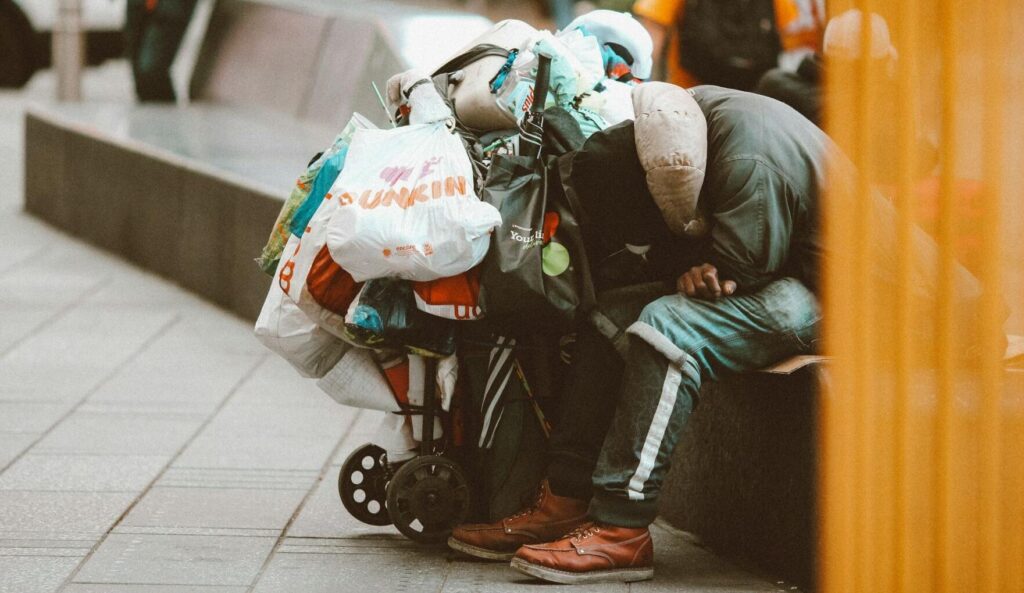
With the sight of homeless encampments plaguing cities nationwide, President Donald Trump has issued an executive order to get many of the homeless off the streets and into “long-term institutional settings.”
The announcement came as Trump toured the ongoing multi-billion-dollar Federal Reserve building complex construction project.
Citing addiction and mental health issues as leading causes for homelessness, Trump’s executive action argues that states and the federal government have failed to address homelessness’s “root causes,” adding that the problem leaves “other citizens vulnerable to public safety threats.”
The order targets safe injection sites and other community services that critics of those programs argue only enable drug use.
The president’s order outlines a plan to place homeless individuals in “long-term institutional” facilities for “humane treatment.” It underscores that the status quo is “neither compassionate to the homeless” or to others.
The White House claims there were 274,224 “individuals living on the streets” across the country “on a single night during the last year” of the Biden administration.
The order calls for the attorney general and the secretary of Health and Human Services to partner to “seek, in appropriate cases, the reversal of Federal or State judicial precedents and the termination of consent decrees that impede the United States’ policy of encouraging civil commitment of individuals with mental illness who pose risks to themselves or the public or are living on the streets and cannot care for themselves in appropriate facilities for appropriate periods of time.”
In addition, the federal government would be charged with offering assistance in the form of grants and “technical guidance” to provide institutional treatment for individuals who pose a risk to themselves or others and “cannot care for themselves.”
The order provides “priority” for grantees in localities and states actively cracking down on open drug dens, homeless encampments and squatting. It would restrict federal funds to support “harm reduction” or “consumption” sites, which the White House argues “facilitate[s]” drug use.
The order didn’t indicate a price tag for the president’s plan.
DHS says 233,000 unaccompanied children were lost during Biden presidency

More than 230,000 unaccompanied minors were released from immigration custody into the U.S. during the Biden administration and subsequently became unaccounted for, according to the Department of Homeland Security.
DHS Inspector General Joseph Cuffari testified in front of the House Oversight Committee on Wednesday. He said 31,000 children were sent to invalid home addresses in the U.S. and that sponsors were not properly vetted before the unaccompanied children were released to them.
The Oversight panel was called to review the findings of a March 2025 report by DHS that found that Immigration and Customs Enforcement is unable to track the status of all unaccompanied minors currently in the U.S. The report’s findings “reveal significant gaps” in ICE’s management of these children, Cuffari testified.
“This is not simply an administrative problem,” Cuffari said. “It’s a systemic breakdown that poses grave risks to unaccompanied alien children (UACs) and the integrity of our legal immigration system.”
DHS’s report found that more than 43,000 of these children failed to appear for court hearings and can no longer be tracked by ICE. The report said these children are “considered at higher risk for trafficking, exploitation or forced labor.”
“The findings are a double-edged sword,” Subcommittee Chairman Rep. Clay Higgins, R-La., said during the hearing. “While some vulnerable children have likely been trafficked, exploited and subject to forced labor, the report also found other older teens that were convicted criminals and gang members.”
Cuffari testified that a team of special agents was set up by ICE in February to locate and carry out welfare and health checks on unaccompanied minors who have been lost by DHS and the Department of Health and Human Services. With assistance from the FBI and U.S. Marshals, the unit has visited 50,000 homes so far to locate 200,000 children, Cuffari said.
Democrats on the panel pushed back against the Trump administration’s “reckless” immigration initiatives and argued that DHS has increasingly targeted children in its deportation efforts.
“Are these little kids the dangerous criminals Trump vowed to go after?” Subcommittee Ranking Member Rep. Summer Lee, D-Pa., said.
The panel’s meeting is the first in a series of hearings that will examine past shortcomings of DHS, determine how the U.S. immigration system can be reformed to locate and better monitor unaccompanied minors and establish how DHS and HHS can work together effectively on this issue.
Trump, Scott: Americans need lower interest rates to afford homes
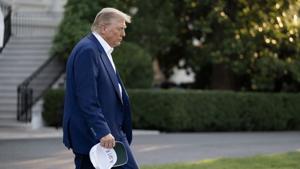
President Donald Trump and South Carolina Sen. Tim Scott, a Republican, used a visit to a Federal Reserve renovation site on Thursday to talk about the need to lower interest rates.
“So I met with the contractors, we toured it with the chairman, and we had a very good tour, and we’ll talk to you about it sometime, but Tim and I sort of understand what happened,” Trump said after a tour led by Federal Reserve Chairman Jerome Powell.
Scott said Americans need lower interest rates to become first-time homeowners.
“Americans deserve to become first time home buyers,” Scott said. “President Trump has created the best economy in the world. The one thing that would make it better is lower interest rates.”
Trump added: “The one thing we have to do is get housing prices down and the interest rates down so people can buy the house, because they’re all making money, but they can’t get the interest rate down.”
The comments came after Trump brought a team of allies and construction professionals to tour an over-budget renovation project at the Federal Reserve buildings in Washington D.C.
Trump met with Powell at the site. The president brought along Scott, R-S.C., U.S. Sen. Thom Tillis, R-N.C., Office of Management and Budget Director Russell Vought and Federal Housing Finance Agency boss Bill Pulte at the Federal Reserve project site. Also joining them were Trump’s appointees to the National Capital Planning Commission, the federal government’s central planning agency for the National Capital Region, James Blair and Will Scharf.
Trump also said “various other construction professionals” would be joining the tour of the renovation projects, which were estimated to cost $1.9 billion in 2023. The project now stands and $2.5 billion after issues with the high water table, asbestos and toxic contamination in the soil.
Trump put the figure even higher in a Truth Social post on Thursday.
“Getting ready to head over to the Fed to look at their, now, $3.1 Billion Dollar (PLUS!) construction project,” Trump wrote on his social media platform.
After the meeting Trump called it “luxurious,” but didn’t mention fraud.
Powell said Thursday at the meeting that he doesn’t expect additional cost overruns on the project, which the Federal Reserve has defended as cost-conscious and responsible renovations to historic buildings located on the National Mall. He also shook his head at Trump’s $3.1 billion cost estimate.
“Construction involving the preservation of historic spaces requires specialized processes and methods, which are generally more complex and have increased costs compared with new construction or renovation of spaces that are not historically significant or located on the National Mall,” according to the Federal Rerserve’s new frequently-asked-questions page that focuses on the remodel.
Powell said Thursday the project should be finished by 2027.
A reporter asked Trump, who made his name in real estate, what he’d do with a contractor who was over budget on a project. Trump said that normally he’d fire a project manger for going over budget. However, the president declined to comment directly on Powell.
“Well, I’m here just really with the chairman,” Trump said. “He’s showing us around, showing us the work. And so I don’t want to get into that. I don’t want to be personal. I just would like to see it get finished.”
Trump also said he’d like to see Powell lower interest rates during the meeting with Powell and reporters at the project site.
The visit comes amid Trump’s “nasty” pressure campaign to get Powell and the Federal Open Market Committee to lower interest rates. The Fed has taken a wait-and-see approach on interest rates, citing Trump’s broad-based reciprocal tariffs as a reason for caution.
Trump previously called Powell to the White House for a meeting. After that May meeting, Powell issued a rare statement saying that FMOC decisions would be based “solely on careful, objective, and non-political analysis.”
Since returning to the White House for his second term, Trump has called Powell every name in the book. One of the president’s favorites for Powell has been “numbskull.” He’s also given Powell the nickname “Too Late” for not cutting interest rates as fast as Trump would like.
Powell has largely ducked Trump’s criticism. When Trump criticized cost overruns on the remodel, the Fed Chairman referred the matter to the central bank’s inspector general.
Last week, Trump said he wasn’t planning to fire Powell, but kept the option on the table.
“We’re not planning on doing anything,” Trump told reporters at the White House.
Later, the president added, “I don’t rule out anything, but I think it’s highly unlikely, unless he has to leave for fraud.”
The fraud remark referred directly to the renovation project. The Fed is a self-funded, quasi-private institution. The president picks its members in staggered terms with Senate confirmation.
Trump has wanted to fire Powell for years, but hasn’t taken action.