National News
Op-Ed: No more CDL mills: Trump’s DOT puts safety back in the driver’s seat

As families prepare for the holidays, America’s truck drivers are doing what they always do – keeping promises to working people by delivering the goods that make this season possible. They are the backbone of our economy and the lifeline of Main Street. Yet, lurking behind this essential workforce are fraudsters and fly-by-night operators who cut corners and put lives at risk. Thanks to the Trump administration, that ends now.
Last week, U.S. Transportation Secretary Sean Duffy delivered one of the most sweeping enforcement actions in recent memory – removing nearly 3,000 fraudulent commercial driver’s license (CDL) training providers from the federal registry and putting another 4,000 on notice. These so-called “CDL mills” have churned out undertrained drivers for years, endangering families on the road and eroding trust in a profession built on skill and responsibility.
Training for an 80,000-pound truck isn’t a box to check – it’s a promise to every family sharing the road that safety comes first. Yet, for too long, shady operators looking to make quick buck have gamed the system for profit, while the Biden Administration looked the other way. With this crackdown, the Trump Administration is drawing a hard line: America’s highways belong to trained professionals – not to fraudsters selling shortcuts.
It’s a victory for millions of honest truckers who do things the right way. Chris Spear, president and CEO of the American Trucking Associations (ATA), representing thousands of patriotic trucking companies across the nation, put it bluntly: “If you’re issuing certificates to anyone who can fog a mirror, you’re on notice.” ATA has long demanded tougher enforcement to shut down sham training outfits that gamble with safety for profit. Now, those demands are being met.
And this isn’t a one-off. This crackdown builds on a clear record of decisive action by the Trump administration. Earlier this year, Secretary Duffy pushed states to purge thousands of illegal drivers from their rolls. That included more than 17,000 illegals in California alone – legions of people who should never have been behind the wheel of a big rig. No legal right to even be here, no obligation to follow the rules, and no business operating heavy machinery on American highways.
Trucking isn’t just a job – it’s a calling answered by millions of skilled Americans who keep our economy humming, our store shelves stocked, and our communities supplied. That’s why this profession must be protected from threats both inside and out. Internally, bad actors and fraudulent CDL mills undermine safety and tarnish the reputation of every honest driver. Externally, trial lawyers circle like vultures, turning accidents into jackpot justice schemes that bleed family-owned trucking companies dry and increase costs for everyone. If we allow these dual forces to erode standards and exploit tragedy, we don’t just endanger truckers – we endanger the entire supply chain that powers this country.
President Trump and Secretary Duffy deserve credit for taking bold action where previous administrations failed. This crackdown is a victory for highway safety, for American workers, and for every family who expects to travel our roads without fear. The message is clear: we’re taking back our roads and taking back our country.
Hochul weighs AI regulations as Trump sets federal rules
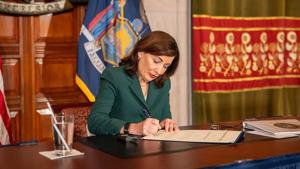
New York Gov. Kathy Hochul is weighing plans to regulate the state’s artificial intelligence sector, even as President Donald Trump seeks to restrict states from regulating the industry.
Hochul is reviewing a proposal approved by the state Legislature, called the Responsible AI Safety and Education Act, which would impose new safety regulations on major AI companies and require disclosure within 72 hours if a company believes harm may be imminent from one of their platforms.
Recent reports have suggested that Hochul is considering a complete rewrite of the bill to match a measure passed by California earlier this year. That law is considered more favorable to the industry.
On Thursday, Hochul signed legislation that her administration called the nation’s first AI regulations designed to both protect consumers and increase transparency in the film industry.
The measure requires anyone producing or creating an ad to provide a disclosure if it includes AI-generated synthetic performers. Another related bill signed by Hochul requires written consent from heirs or executors if a person wants to use the name, image, or likeness of an individual for commercial purposes after their death.
“By mandating transparency and securing consent, New York has drawn a bright line that puts human creativity, integrity and trust first,” Hochul, a Democrat, said in remarks Thursday. “This is smart, forward-looking legislation that will have national impact.”
But New York’s efforts to regulate the industry set the state up for an inevitable clash with the federal government, which is moving to scuttle state regulations it claims would cripple the burgeoning industry.
Trump signed an executive order Thursday seeking to limit states’ ability to regulate artificial intelligence and upend existing laws. Trump wielded his executive powers after Congress failed to pass a bill with similar regulations last month.
The order directs Attorney General Pam Bondi to create an “AI Litigation Task Force” to root out state laws that clash with the Trump administration’s “light touch” plans for regulating the industry.
Trump administration officials say they want to prevent a hodgepodge of regulations by states that could make it difficult for big AI companies to compete nationwide.
“We have over a thousand bills going through state legislatures right now to regulate AI, over a hundred of them have already passed, 25% of them are in California, New York and Illinois,” David Sacks, the White House’s AI and crypto czar, said in remarks Thursday.
Democratic California Gov. Gavin Newsom blasted the president’s order in a social media post accusing him of “running a con” by seeking to block states from setting regulations for the industry.
“President Trump continued his ongoing grift in the White House, attempting to enrich himself and his associates, with a new executive order seeking to preempt state laws protecting Americans from unregulated AI technology,” Newsom said.
EXCLUSIVE: First Nation police chiefs want to participate in border security efforts
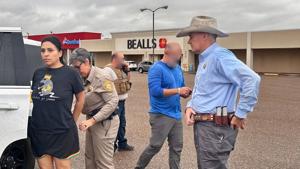
First Nation tribal police chiefs in Canada say want to participate in border security efforts. Many already are on the front lines, living at the U.S.-Canada border, they told The Center Square.
“National security doesn’t exist without First Nation policing at the border,” Dwayne Zacharie, president of First Nations Chiefs of Police Association, told The Center Square in an exclusive interview while participating in border security operations with Texas Operation Lone Star sheriffs. Zacharie also serves as Chief Peacekeeper of Kahnawake Peacekeepers located near Montreal.
One of the biggest problems First Nation communities face is a lack of funding and the Canadian government refusing to designate policing as essential services, he argues.
“We’re not regarded as essential service,” but considered “as an enhancement to” the Royal Canadian Mounted Police (RCMP) and other provincial police services, he said.
There are more than 630 indigenous communities in Canada and only 36 self-administered policing services, he says. The 35 serve roughly 150 indigenous communities; the RCMP and provincial police are supposed to serve the rest, he said. First Nation police receive roughly 40 percent less salaries than federal and provincial police organizations that “don’t share information with us, don’t provide us with opportunities for advanced training or resourcing commensurate with our needs,” he said.
As a result, he said he’s looking for help outside of Canada, including from U.S. federal, state and local partners to help him and First Nation police fight crime, including border crime.
“We’re going to find the partners that we need to have,” he said. He’s hoping new partnerships will help “because we do see the impacts in our communities as police officers. We see MS-13, the Sinaloa Cartel, Hell’s Angels and organized crime entities that come into our communities because in their minds, the picking is ripe because we don’t have the resources, we’re understaffed.”
President Donald Trump “has a different reality about the way he looks at things,” including telling Canadian authorities to improve border security, he said. Canada’s $1.3 billion border plan claims to surge resources to law enforcement but “First Nation policing didn’t see any influx of resources, didn’t see any upgrades in training,” Zacharie told The Center Square.
First Nation challenges are compounded by systemic underfunding and policies that led to multiple lawsuits. They’re using expired bullet proof vests, don’t have enough vehicles and safety equipment to perform their jobs, and can’t hire or retain personnel due to lack of resources, they say. Their working conditions “would never be accepted by the provincial police or the Montreal police or any other police department,” Shawn Dulude, president of the Quebec Association of First Nation and Inuit Police Directors, told City News.
In Quebec, 22 First Nation police officers filed a complaint against Public Safety Canada with the Canadian Human Rights Commission alleging “persistent underfunding of Indigenous police forces,” which has created serious security risks. This is after Pekuakamiulnuatsh First Nation sued Quebec officials arguing they underfunded their police for years. Canada’s Supreme Court ruled in their favor last year.
In British Colombia, the Heiltsuik Tribal Council also sued, arguing the RCMP aren’t protecting residents from organized crime, including drug trafficking and sexual violence. The region is dealing with cartel and CCP-related crime, The Center Square reported.
These problems are compounded by “a stigma attached to policing because of the old concepts and the way that the RCMP enforced the Indian Act, which created residential schools, which was a way to indigenous people and take their culture and their language and basically eradicate native people from the land,” Zacharie told The Center Square.
The 1876 Indian Act defined Indian status, created the reservation system and kept several colonial-era laws designed to “eliminate First Nations culture in favour of assimilation into Euro-Canadian society.” It “enabled trauma, human rights violations and social and cultural disruption for generations,” the Canadian Encyclopedia states.
Canadian police enforced a pass system regulating indigenous travel, a permit system regulating the sale of goods and farm equipment prohibitions on reservations.
From 1831 to 1996, more than 130 government-sponsored residential schools sought to “westernize” indigenous children. They were “overcrowded, underfunded, and rife with disease, leading to the deaths of many children, who were often buried in unmarked graves,” IndoCanada Professional explains. An estimated 150,000 children attended them; an estimated 6,000 died at them, the encyclopedia states.
In 1951, the Indian Act was amended to authorize the forcible removal of indigenous children. Now referred to as the “Sixties Scoop,” under the guise of “child welfare,” Canadian police accompanied “social workers” to forcibly take children from their parents, place them in non-indigenous foster care and adopt them out worldwide.
By the early 1980s, investigations were conducted; the Provincial Court of Manitoba detailed examples of “cultural genocide.” A class action lawsuit was filed by survivors, including those still searching for family members. In 2018, a settlement was approved.
The Indian Act also created an unequal legal status for women based on marital status. It was amended in 1985 to address the issue, which critics argue is still discriminatory.
Indigenous women were also forcibly sterilized in two provinces from 1928 to 1972.
Similar to the United States, thousands of indigenous women and girls suffer from violent crime and are missing, prompting national inquiries.
First Nation challenges are ongoing. In 2023, more than 100 First Nations sued the government for failing to provide housing and running water on reservations.
Zacharie is hoping with the help of Americans there’s a “chance for us to build a partnership … and educate people about the realities we are facing.”
Justice Department sues Fulton County over election records
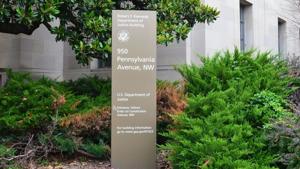
The U.S. Justice Department sued Fulton County, Ga. Clerk of Court Che Alexander on Friday, claiming her office failed to produce records from the 2020 general election.
The lawsuit filed in U.S. District Court said the Justice Department subpoenaed the records on Oct. 6 and sent a demand letter to the clerk’s office on Oct. 30.
The department also sued Colorado, Hawaii, Massachusetts, and Nevada for failing to produce records.
The Fulton County clerk’s office said in an Nov. 14 response, “the record sought are under seal and may not be produced absent a Court Order,” according to the Justice Department’s suit.
The clerk’s office has not responded to a Nov. 21, 2025, demand letter from the Justice Department, the suit said.
The State Election Board began requesting Fulton County’s election records in 2024. In a July 2025 resolution, the board asked the U.S. Attorney’s office for help.
The Justice Department is asking the court to rule that Fulton County has violated the Civil Rights Act and require the county to produce the records within five days.
“At this Department of Justice, we will not permit states to jeopardize the integrity and effectiveness of elections by refusing to abide by our federal elections laws,” said Assistant Attorney General Harmeet K. Dhillon of the Justice Department’s Civil Rights Division in a statement. “If states will not fulfill their duty to protect the integrity of the ballot, we will.”
The Fulton County Clerk’s Office had not responded to a request for comment by the time of publication.
EXCLUSIVE: Canadian groups, First Nation police support stronger border security
Despite Canadian officials arguing that the “Canada-U.S. border is the best-managed and most secure border in the world,” some Canadian groups and First Nation tribal police chiefs disagree.
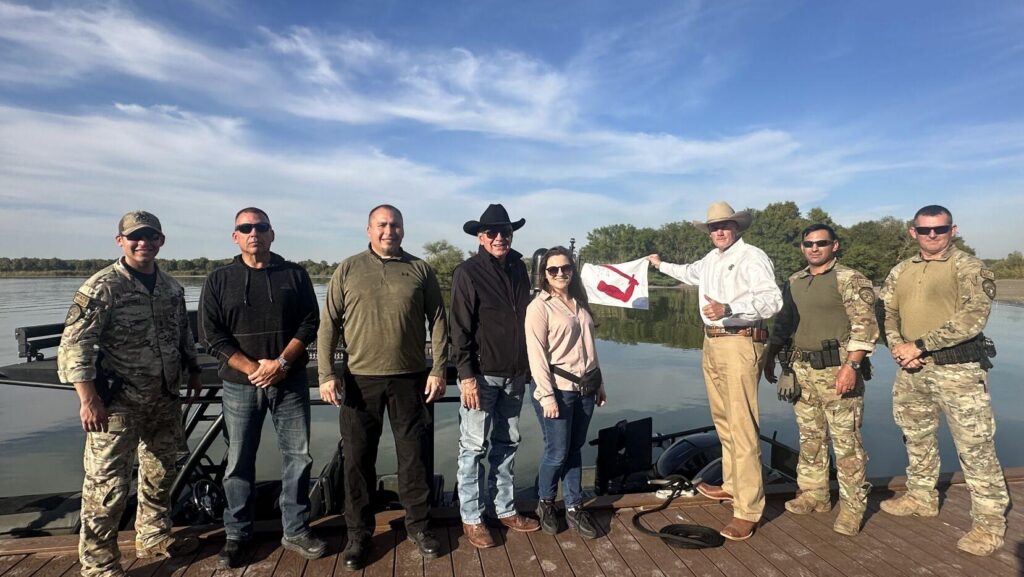
This week, First Nation representatives traveled to Texas for the first time in U.S.-Canadian history to find ways to implement stronger border security measures at the U.S.-Canada border, including joining an Operation Lone Start Task Force, The Center Square exclusively reported.
Part of the problem is getting law enforcement, elected officials and the general public to understand the reality that Mexican cartels and transnational criminal organizations are operating in Canada; another stems from Trudeau administration visa policies, they argue.
When it comes to public perception, “If you tell Canadians we have a cartel problem, they’ll laugh at you. They don’t believe it. If you tell them we have a gang problem, they will absolutely agree with you 100%. They don’t think that gangs and cartels are the same thing. They don’t see the Hells Angels as equal to the Sinaloa Cartel because” the biker gang is visible, wearing vests out on the streets and cartel operatives aren’t, Jamie Tronnes, executive director of the Center of North American Prosperity and Security, told The Center Square in an exclusive interview.
The center is a US-based project of the MacDonald-Laurier Institute, the largest think tank in Canada. Tronnes previously served as a special assistant to the cabinet minister responsible for immigration and has a background in counterterrorism. She joined First Nation police chiefs to meet with Texas law enforcement and officials this week.
Another Canadian group, Future Borders Coalition, argues, “Canada has become a critical hub for transnational organized crime, with networks operating through its ports, banks, and border communities.” The Sinaloa and Jalisco New Generation Mexican cartels control the fentanyl, methamphetamine and cocaine business in Canada, partnering with local gangs like the Hells Angels and Chinese Communist Party (CCP)-linked actors, who launder profits through casinos, real estate, and shell companies in Vancouver and Toronto, Ammon Blair, a senior fellow at the Texas Public Policy Foundation, and others said at a coalition event prior to First Nation police chiefs and Tronnes coming to Texas.
“The ’Ndrangheta (Italian Mafia) maintains powerful laundering and import operations in Ontario and Quebec, while MS-13 and similar Central American gangs facilitate human smuggling and enforcement. Financial networks tied to Hezbollah and other Middle Eastern groups support laundering and logistics for these criminal alliances,” the coalition reports.
“Together, they form interconnected, technology-driven enterprises that exploit global shipping, cryptocurrency, and AI-enabled communications to traffic whatever yields profit – narcotics, weapons, tobacco, or people. Taking advantage of Canada’s lenient disclosure laws, fragmented jurisdictions, and weak cross-border coordination, these groups have embedded themselves within legitimate sectors, turning Canada into both a transit corridor and safe haven for organized crime,” the coalition reports.
Some First Nation reservations impacted by transnational crime straddle the U.S.-Canada border. One is the Akwesasne Mohawk Reservation, located in Ontario, Quebec, and in two upstate New York counties, where human smuggling and transnational crime is occurring, The Center Square reported. Another is the Tsawwassen First Nation (TWA) Reservation, located in a coastal region south of Vancouver in British Columbia stretching to Point Roberts in Washington state, which operates a ferry along a major smuggling corridor.
Some First Nation reservations like the TWA are suffering from CCP organized crime, Tronnes said. Coastal residents observe smugglers crossing their back yards, going through the reserve; along Canada’s western border, “a lot of fentanyl is being sent out to Asia but it’s also being made in Canada,” Tronnes said.
Transnational criminal activity went largely unchecked under the Trudeau government, during which “border security, national security and national defense were not primary concerns,” Tronnes told The Center Square. “It’s not to say they weren’t concerns, but they weren’t top of mind concerns. The Trudeau government preferred to focus on things like climate change, international human rights issues, a feminist foreign policy type of situation where they were looking more at virtue signaling rather than securing the country.”
Under the Trudeau administration, the greatest number of illegal border crossers, including Canadians, and the greatest number of known, suspected terrorists (KSTs) were reported at the U.S.-Canada border in U.S. history, The Center Square first reported. They include an Iranian with terrorist ties living in Canada and a Canadian woman who tried to poison President Donald Trump, The Center Square reported.
“Had it been a priority for the government to really crack down and provide resources for national security,” federal, provincial and First Nation law enforcement would be better equipped, funded and staffed, Tronnes said. “They would have better ways to understand what’s really happening at the border.”
In February, President Donald Trump for the first time in U.S. history declared a national emergency at the northern border and ordered U.S. military intervention. Months later, his administration acknowledged the majority of fentanyl and KSTs were coming from Canada, The Center Square reported.
Under a new government and in response to pressure from Trump, Canada proposed a $1.3 billion border plan. However, more is needed, the groups argue, including modernizing border technology and an analytics infrastructure, reforming disclosure and privacy rules to enable intelligence sharing, and recognizing and fully funding First Nation police, designating them as essential services and essential to border security.
“National security doesn’t exist without First Nation policing at the border,” Dwayne Zacharie, First Nations Chiefs of Police president, told The Center Square.
More than 9,500 commercial truckers taken off U.S. roads nationwide

More than 9,500 commercial truckers have been taken off of U.S. roads for failing English-language proficiency checks, Transportation Secretary Sean Duffy said.
“We’ve now knocked 9,500 truck drivers out of service for failing to speak our national language – ENGLISH!” Duffy said in an X post. “This administration will always put you and your family’s safety first.”
The total includes combined enforcement actions taken nationwide since May, after Duffy signed new guidance to strengthen English language enforcement for commercial motor vehicle (CMV) drivers. It requires those who fail to comply with Federal Motor Carrier Safety Administration’s (FMCSA) longstanding English-language proficiency (ELP) requirements to be placed out-of-service.
“America First means safety first,” Duffy said when signing it. “Americans are a lot safer on roads alongside truckers who can understand and interpret our traffic signs. This common-sense change ensures the penalty for failure to comply is more than a slap on the wrist.
He implemented the policy after President Donald Trump signed executive orders declaring English as the official language of the United States and directing him to do so. The order also reversed an Obama-era rule that instructed inspectors to issue citations, not remove CMV drivers from service, who failed FMCSA English requirements.
“My Administration will enforce the law to protect the safety of American truckers, drivers, passengers, and others, including by upholding the safety enforcement regulations that ensure that anyone behind the wheel of a commercial vehicle is properly qualified and proficient in our national language, English,” Trump’s order states. “This is common sense.”
In August, Duffy warned Democratic-led states to enforce the English language proficiency requirements or lose federal funding. By September, he took emergency enforcement action against California for “gross negligence” after an FMCSA nationwide audit identified “a catastrophic pattern of states issuing licenses illegally to foreign drivers,” The Center Square reported.
It uncovered systemic non-compliance in several states, identifying California as the worst. Colorado, Pennsylvania, South Dakota, Texas and Washington licensing patterns were also “not consistent with federal regulations,” FMCSA found.
By December, Duffy had removed nearly 3,000 training providers for commercial driver’s licenses from the FMCSA’s Training Provider Registry. Those removed were cited for “falsifying or manipulating training data; neglecting to meet required curriculum standards, facility conditions or instructor qualifications; and failing to maintain accurate, complete documentation or refusing to provide records during federal audits or investigations,” The Center Square reported.
The actions were taken as state and local law enforcement agencies also implemented enforcement measures.
Earlier in the year, Texas Gov. Greg Abbott directed Texas Department of Public Safety to crack down on commercial driver’s licenses (CDLs). In four months, they took enforcement action against nearly 450 CMV drivers, The Center Square reported. Texas DPS also suspended issuing CDLs in several categories to comply with the federal rule.
In Oklahoma, more than 120 were arrested in an operation conducted on I-40 by U.S. Immigration and Customs Enforcement officers and Oklahoma Highway Patrol. Their criminal histories included convictions for DUI, illegal re-entry, money laundering, human smuggling, assault, conspiracy to distribute cocaine, and possession of a controlled substance, The Center Square reported.
Those arrested were from Tajikistan, India, Montenegro, El Salvador, Uzbekistan, Georgia, Kyrgyzstan, Kazakhstan, China, Pakistan, Russia, Belarus, Haiti, Ukraine, Türkiye, Meri Tamia, Cuba, Guatemala, Venezuela, Nicaragua, Honduras, Columbia and Mexico, Oklahoma HP said. They were issued CDLs from California, Washington, Pennsylvania, Illinois, North Carolina, Georgia, Florida, New Jersey, Texas, Minnesota, Ohio and New York, Oklahoma HP said. In another operation, another 70 foreign nationals from 15 countries were arrested who couldn’t speak English, The Center Square reported.
Also on I-40, in one day, Texas DPS and ICE arrested more than 30 illegal foreign nationals in the panhandle, The Center Square reported.
In Indiana, state police and ICE arrested 223 in one operation on Indiana highways near the Illinois state line, The Center Square reported.
In New York, Border Patrol agents working with ICE are arresting illegal CMV drivers, the majority of whom have out of state issued licenses, The Center Square reported.
The “alarming trend of illegal aliens who are unlawfully present in the United States operating commercial vehicles … raises significant safety concerns,” Acting Buffalo Sector Chief Border Patrol Agent James D’Amato said. “Drivers who are not fluent or with little to no ability to speak or read English pose a serious risk on our roadways, especially when operating large vehicles that require a high level of skill and understanding of traffic laws. The ongoing major accidents nationwide involving such drivers highlight the critical need for enforcement and vigilance to protect public safety.”
WATCH: ‘Unfortunate accident’: Miss. senator blasted for comment on Guard troop shootings
U.S. Rep. Bennie Thompson, D-Miss., faced heavy criticism Thursday after characterizing the recent shooting of two National Guard members blocks from the White House, killing one, as an “unfortunate accident.”
Thompson made the comment during a hearing of the U.S. House Committee on Homeland Security titled, “Worldwide Threats to the Homeland.”
Democrats attempted to focus the hearing on deportation efforts of the Trump administration when Thompson made his remark.
DHS Secretary Kristi Noem responded passionately, “do you think that was an unfortunate accident?” She went on to describe it as a “terrorist attack.” To which Thompson rephrased the shooting as an “unfortunate incident.”
To be sure, the Nov. 26 shooting hasn’t been officially ruled a terrorist attack; however, it is currently under investigation and the alleged shooter, an Afghani national allowed into the U.S. after the Biden administration’s deadly withdrawal of U.S. troops from Afghanistan in 2021, faces murder and other felony charges.
U.S. Rep. Andy Ogles IV, R-Tenn., also shot back: “That was a murder that took place in DC, it was not an unfortunate incident.”
Judge rules against Trump’s freeze on wind energy

Democratic attorneys general applauded a federal judge’s ruling this week that the Trump administration can’t halt development of all wind energy projects.
Proponents have long considered wind energy to be a clean, renewable energy source that produces electricity without burning fossil fuels. But opponents warn against turbines’ impact on wildlife and land. They also question wind power’s reliability and affordability.
On Jan. 20, President Donald Trump issued an executive order halting all federal approvals for development of offshore and onshore wind energy projects. Approvals were stopped pending an indefinite federal review of wind leasing and permitting.
Judge Patti Saris of the U.S. District Court for the District of Massachusetts ruled in favor of the 17 states and District of Columbia, who sued Trump to resume wind energy development. The ruling said Trump’s executive order was “arbitrary and capricious” and contrary to law.
Attorneys general praised Saris’ ruling and warned what the end of wind energy would have done to their states.
“Trump’s illegal wind order would have driven up energy costs on Arizonans already struggling with high utility bills,” said Attorney General Kris Mayes of Arizona.
Mayes noted in a news release that wind energy projects on state trust lands provide critical revenue for public schools.
“The Trump administration’s illegal freeze of these programs would have harmed Arizona and threatened our state’s economy and environment,” Mayes said.
California Attorney General Rob Bonta’s office noted wind energy is reliable and affordable and supports hundreds of thousands of jobs. The office noted the energy source, which supplies more than 10% of the nation’s electricity, creates billions of dollars in economic activity and tax revenues.
“Today, we celebrate another victory against the Trump Administration. A court has agreed with California and our sister states nationwide: The Trump Administration’s attempt to thwart states’ efforts to make energy more clean, reliable and affordable for our residents is unlawful and cannot stand,” Bonta said Monday in a news release.
Meanwhile, Wayne Winegarden, a senior business fellow at the Pasadena-based Pacific Research Institute, said he isn’t questioning the ruling against Trump’s executive order and understands states found themselves in a predicament with the executive order. “Often Trump does things without doing them the proper way.”
But the economist told The Center Square, “The more important point, the longer lasting point, is we’re over-investing in wind and under-appreciating its consequences.” He noted there are questions over wind power’s reliability and its burden on the energy grid. He noted it increases costs and that there’s uncertainty about how much power it actually generates.
“We want affordable, reliable, lower-emission energy infrastructure,” Winegarden said.
Wind power also threatens the environment, Winegarden said. “Offshore wind tribunes harm whales.”
And on land, wind tribunes create noise, he said.
“What do we do with these huge blades once they wear out?” Winegarden said. “That’s an environmental and costly issue that needs to be managed.”
Blades consist of high-tech composite materials that critics say are hard to recycle.
Other critics have noted turbines have killed birds and bats. They warn about the loss of large tracts for wind farms.
But if the land used for wind or solar power can be used for other purposes, the impact is minimal, according to the Our Worlds in Data website.
Proponents of wind power say modern turbines are safer for wildfire and setbacks can mitigate noise.
The Center Square reached out to the California Wind Energy Association for comment, but did not get a response.
In addition to California, Arizona and the District of Columbia, jurisdictions suing the Trump administration include Colorado, Connecticut, Delaware, Illinois, Maine, Maryland, Massachusetts, Michigan, Minnesota, New Jersey, New York, New Mexico, Oregon, Rhode Island and Washington.
WATCH: House Homeland Security hearing filled with tense exchanges
A U.S. House hearing on homeland security wasn’t void of drama Thursday as Homeland Security Secretary Kristi Noem engaged in several tense exchanges with Democrats, while Republicans praised her efforts.
The House Committee on Homeland Security hosted the hearing titled, “Worldwide Threats to the Homeland.”
Despite the hearing focusing on the Department of Homeland Security’s focus on combating terrorism, drug and human trafficking, and illegal immigration, it was overshadowed by finger-pointing and criticism of the administration’s immigration enforcement, as well as the deployment of National Guard members to quell crime.
Early in the hearing, a pair of protesters had to be removed after disrupting a portion of Noem’s remarks; however, those paled in comparison to the dramatic exchange between the secretary and Democratic members, with some calling for her resignation.
“Your incompetence and your inability to truthfully carryout your duties as secretary of homeland security, if you’re not fired, will you resign?” Rep. Shri Thanedar, D-Mich., asked Noem.
The secretary responded, “I will consider your asking me to resign as an endorsement of my work.”
At one point, Rep. Bennie Thompson, D-Miss., characterized the recent shooting of two National Guard members blocks from the White House, which killed one, as an “unfortunate accident.”
With Noem responding passionately, “do you think that was an unfortunate accident?” She went on to describe it as a “terrorist attack.” To which Thompson rephrased the shooting as an “unfortunate incident.”
To be sure, the Nov. 26 shooting hasn’t been officially ruled a terrorist attack; however, it is currently under investigation.
While Noem appeared to be on the defensive for half the hearing, fielding a range of questions, including about deportations and tactics used by Immigration and Customs Enforcement officers, the secretary at times turned the tables on Democrats critical of her role as head of the agency, especially those who have accused ICE agents of acting like “secret police” or “gestapo.”
“We are a nation of laws. If we are not a nation of laws, we’re no nation at all … if you guys don’t like the law, change it. That’s your job. You don’t complain. I was raised by a dad who said we don’t complain about things we fix them,” Noem told the representatives. “It you don’t like the law, quit belly aching. Quit hitting and attacking our ICE officers. Quit going out and protesting and screaming vile things at them. Quit calling them names … Go do something that matters by having an honest debate and changing the law. That’s your job. You all should be fired in my viewpoint.”
WATCH: Use of National Guard debated in U.S. Senate as Illinois case lingers
While the use of the National Guard remains on hold in Illinois, pending a legal challenge, the U.S. Senate is debating having troops on American streets.
In October, President Donald Trump ordered the National Guard to the streets of Illinois to assist in protecting federal personnel and property around enforcing immigration law after already deploying troops in Washington D.C. and Los Angeles and later in North Carolina and elsewhere. The state of Illinois sued and a district judge blocked the Guard’s deployment on preliminary grounds. The issue is pending in an appeals court. The Trump administration has asked the U.S. Supreme Court to intervene.
Illinois U.S. Sen. Tammy Duckworth, D-Schaumburg, told the U.S. Senate Armed Services Committee Thursday that using the National Guard in such a way sends the wrong message.
“We’ve seen [Department of Homeland Security] agents dressing in camouflage and wielding military style weapons,” Duckworth said. “They’re making it hard for Americans to tell the difference between abusive federal agents and professional troops.”
U.S. Sen. Eric Schmitt, R-Missouri, said there’s been a more than 1,000% increase in attacks against immigration enforcement officers.
“This is insane and the condoning people blocking off vehicles from enforcing the law, these [Immigration and Customs Enforcement] agents, this is a powder keg. It’s a powder keg,” Schmitt told the committee.
Court documents show the federal government justified the deployment of the guard in Illinois to protect federal personnel and property from protesters that turned violent around immigration enforcement.
Duckworth said it’s the immigration officials who are the threat to Illinois communities.
“It is not ICE agents that are being attacked,” Duckworth said. “ICE agents are the ones who teargassed over two dozen Chicago police officers. ICE agents are the ones who teargassed toddlers.”
Schmitt said the rhetoric against immigration enforcement has gone too far.
“The president of the United States has very clear authority to send them to protect federal buildings and to protect law enforcement, which is all that’s happening,” Schmitt said.
The hearing comes on the heels of two Virginia National Guard soldiers being shot blocks from the White House on the day before Thanksgiving, one of whom later died.