National News
Suspect in Charlie Kirk assassination makes first in-person appearance in court
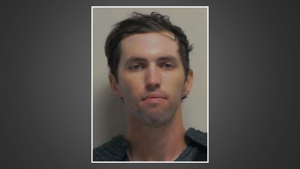
The Utah man charged with assassinating conservative activist Charlie Kirk appeared in person before a Utah court Thursday for the first time since his arrest.
Thursday’s hearing covered some evidentiary and procedural issues ahead of the trial of 22-year-old Tyler James Robinson, who has been charged with multiple felonies in connection with Kirk’s murder.
Robinson wore gray dress pants and a light blue button-down shirt with a softly patterned tie. In an earlier audio-only virtual hearing, the judge had agreed to allow Robinson to wear civilian clothing at pretrial hearings, as the defense had argued his jail attire could prejudice potential jurors.
Though in regular clothing, Robinson still had to wear handcuffs in court and even though the judge had earlier ruled that his shackles couldn’t be visible in any media photographs or video captured in the courtroom, they were visible on at least one livestream Thursday.
Robinson appeared fairly relaxed before the hearing started, even smiling some while talking quietly with some of his lawyers.
Judge Tony Graf Jr. of Utah’s Fourth Judicial Court began the hearing by listing the three issues they would be covering. The parties were to discuss which portions of the audio recording of an Oct. 24 closed hearing would remain sealed and which, if any, could be made public. According to a statement from the Utah County Attorney’s office, the portions in question concerned “the Defendant’s motion to appear at hearings in civilian clothing and without restraints.”
This part of the hearing was closed to the public.
Robinson’s lawyers asked Graf if the defendant’s parents and brother, who attended the hearing, could be present for that portion, but after the prosecution voiced a concern, Graf ultimately decided against it.
“My only concern with that, Your Honor, is that we’re going to be talking about court security measures, and I don’t know that we’ll have to go into a lot of detail about that, but I do have concerns about those issues being discussed in public,” a state attorney said.
“Given the nature and the sensitivity of it, I believe it is appropriate to treat all parties and all in the public equally, though I do recognize their relationship with Mr. Robinson,” Graf said.
After they concluded that part of the hearing, everyone reconvened in the courtroom and turned to two other matters Graf had mentioned: The state’s motion to amend or clarify the gag order and a motion filed by media lawyers that they would receive notice of any motions to close, seal or reclassify any evidence in the case.
The prosecution argued that the case’s gag order was vague and overbroad and asked that the term “witnesses” be clearly confined to just the prosecution team – not to any witnesses the state might call upon. Legally, there are strict rules about how a court can restrain the speech of non-attorney trial participants, and some people connected to the case should be allowed to speak rather freely about it, the prosecution argued.
“And I think the court also needs to note that there are several people associated with this case who have very significant interest in exercising their First Amendment rights and talking about how this case has affected them,” a state attorney said.
On the second point, the defense reiterated that they do not believe they should have to give media lawyers a copy of its pleadings in advance, citing concerns about leaks and media “chaos” being brought into the courtroom.
Media attorneys continued to push for limited party status in the case, so they could be kept abreast of important developments.
Graf said he would have a decision on the first issue soon and the parties scheduled another virtual hearing for Dec. 29, where he will issue rulings on the other two. The next in-person hearing will be Jan. 16.
Pro-life orgs call out FDA, Makary for not fulfilling promise to review abortion drug

Pro-life groups are holding the U.S. Food and Drug Administration and its commissioner Marty Makary accountable for leaving its promise to review the “dangerous” abortion drug mifepristone continually unfulfilled, with one organization calling for the commissioner to be fired due to his having “slow-walked” the review.
Director of Legal Affairs & Policy Counsel Katie Daniel at Susan B. Anthony Pro-Life America told The Center Square: “The FDA should be led by a commissioner who prioritizes women’s and children’s health over politics and who does not undermine the president’s position that states should have the right to enact and enforce pro-life protections.”
SBA Pro-Life America recently called for Makary to be fired due to reports of his having “slow-walked” the promised safety study on the abortion drug.
Daniel told The Center Square that “the new [FDA] commissioner should reinstate the safeguards that were in effect under the first Trump administration and stop upholding the dangerous Biden policy of abortion drugs by mail.”
“And the commissioner should be transparent about how and when they will fulfill the long-promised safety review of these drugs,” Daniel added.
Daniel said that “as long as the Biden mail-order abortion policy remains in place, untold numbers of babies are dying, women are being harmed, and abusers are empowered.”
“Look no further than today’s news headlines,” Daniel said, referencing the reports about “an Ohio doctor who’s been criminally charged after he bought abortion drugs online and forced them down his pregnant girlfriend’s throat.”
“His horrific action was possible because of FDA’s mail-order policy,” Daniel said.
When reached, HHS press secretary Emily Hilliard told The Center Square: “FDA takes the time necessary to conduct comprehensive scientific reviews, and that is what Dr. Makary is ensuring as part of the Department’s commitment to gold-standard science and evidence-based reviews.”
The American Association of Pro Life OBGYNs (AAPLOG) also finds issue with the FDA slow-walking its promised “urgent review of dangerous abortion pills,” stating: “No more empty promises.”
AAPLOG CEO Dr. Christina Francis told The Center Square that “despite promising a thorough review of the safety of mifepristone, [the FDA has] not only apparently stalled the process for political gain but also approved a second generic version.”
“It’s a clear case of speaking out of both sides of their mouth, breaking promises to the pro-life movement and to the American public,” Francis said.
“But women’s lives are on the line, and that’s something we cannot ignore as physicians who care deeply for our patients,” Francis said. “The FDA shouldn’t either.”
Francis explained that “chemical abortion pills have not only ended the lives of millions of preborn children but have also caused significant harm to women.”
“Physical complications are not uncommon and include hemorrhage, retained tissue, severe infections, and the need for emergency surgery,” Francis said.
“The mental health impact is equally alarming, as many women are never told, or are not prepared for the fact, that they will endure labor and then likely see their baby and sometimes even watch their baby die,” Francis said.
“This is leading to cases of PTSD and has the long-term impact of increasing rates of depression, substance abuse and even suicide,” Francis said.
“As a professional medical organization representing nearly 8,000 medical professionals across the country, AAPLOG hopes the FDA will stop making empty promises and do its job,” Francis said. “The health and safety of our patients depend on it, and they deserve better than political maneuvers.”
In October, the FDA faced criticism for approving a generic version of the abortion pill despite its promises to review data on the dangers of the drug mifepristone, as Christina Francise referred to.
Additionally, as SBA’s Katie Daniel pointed out, “The American people do not support unrestricted mail-order abortion.”
“A recent poll found 8 in 10 voters agree no one should be able to get abortion drugs online or from a foreign country and be able to give them to a woman without her knowledge or consent,” Daniel said.
Bill to extend enhanced Obamacare subsidies dies in Senate

As expected, lawmakers failed to pass either of the competing partisan health care bills in the Senate on Thursday.
The result all but ensures that the enhanced premium tax credits through legislation known as Obamacare will revert to prepandemic levels in 2026.
No Democrats supported the Health Care Freedom for Patients Act authored by Republicans. Among other reforms, the proposal would have replaced the enhanced premium tax credits with Health Savings Account contributions and funded cost-sharing reduction payments.
Four Republicans – Sens. Josh Hawley of Missouri, Dan Sullivan of Arkansas, Lisa Murkowski of Alaska and Susan Collins of Maine – also voted for Democrats’ Lower Health Care Costs Act, a three-year extension of the enhanced premium tax credits.
Both sides are now blaming each other for the premium hikes that millions of Americans will face in 2026.
“Senate Republicans just blocked our bill to stop health care premiums from skyrocketing,” Senate Appropriations Vice Chairwoman Patty Murray, D-Wash., wrote on social media. “This vote was Republicans’ last chance to do something before costs jump on January 1 – once again, they refused. This is health care sabotage and we will hold Republicans accountable.”
The Congressional Budget Office estimated that Democrats’ bill would have raised the deficit by $83 billion. Most Republicans opposed the legislation due to both the price tag and because it would merely “subsidize the broken system” – in the words of House Speaker Mike Johnson – that is riddled with fraud.
“Taxpayer-funded premium subsidies go directly to insurance companies and prop up proven examples of waste, fraud and abuse,” Sen. John Boozman, R-Ark., wrote on social media on social media. “Yet Democrats are insisting on no reforms while throwing more money at the failing system they created, without a single Republican vote.”
A recent bombshell Government Accountability Office report uncovered systemic fraud risk and confirmed fraud in the enhanced subsidies. More than 90% of office’s fake applicants received coverage, with GAO noting that “agents and brokers have a financial incentive to maximize enrollments” under the current tax credit system.
“I’ve never seen a party so committed to generating profits for insurance companies as what I’m seeing right now with the Democrats,” said Sen. Bill Cassidy, R-La., a cosponsor of the Republicans’ bill. “The status quo doesn’t work.”
‘Political conflict’ alleged over WA AGO’s involvement in initiative legal battle

The Washington State Attorney General’s Office billed more than 11,000 hours of attorney and staff work on lawsuits against the federal government in an eight-month period following the November 2024 election, according to records obtained by The Center Square.
More than a third of those hours were spent working on a lawsuit against President Donald Trump’s executive order regarding federal funding for medical providers who perform gender-affirming procedures on children.
The AGO’s legal arguments and time spent on the lawsuit has drawn concern from a state-based organization behind an initiative to prevent boys from participating in girl’s sports. The group is concerned about whether the AG will adequately defend the initiative’s ballot title, summary or legality if it passed and was legally challenged.
“Given the amount of legal work already being done at the direction of the AGO on a potentially contentious issue, Let’s Go WA has significant concerns about the myriad political conflicts that appear to be at play between a highly partisan AGO, his former firm that performs substantial work on behalf of the state at his direction, and our current ballot initiative effort that will likely be challenged in court once successful,” Let’s Go Washington Director of Communications Hallie Herzberg wrote in an email to The Center Square.
Between November 2024 and June, the AGO billed 11,010 hours on 22 lawsuits in federal court. Before Trump was inaugurated in January, 177 hours were billed in November-December 2024 on a lawsuit against a potential birthright citizenship executive order. The billing documents don’t show how much taxpayers paid for those staff hours.
On Jan. 28, Trump signed Executive Order 14,187, titled “Protecting Children from Chemical and Surgical Mutilation.” The order cut federal funding, such as research and education grants, to medical institutions that perform underage gender affirming procedures such as prescribing puberty blockers and cosmetic-style mastectomies on females.
In its lawsuit, the AGO argued that the EO “is a cruel and baseless broadside against transgender youth, their families, and the doctors and medical institutions that provide them this critical care. It is an official statement of bigotry from the President that directs agencies to openly discriminate against vulnerable youth on the basis of their transgender status and sex. It is also a blatant abuse of power. The Order usurps spending and legislative powers belonging exclusively to Congress, and seizes the States’ historic police powers to regulate the practice of medicine in violation of the Tenth Amendment.”
According to the records obtained by The Center Square, AGO attorneys and staff billed 2,800 hours in February alone on that lawsuit, which is still in federal court.
In Thurston County Superior Court, the AGO this year defended its draft ballot title and summary for Initiative No. IL26-638, which would prohibit boys from participating in girls’ sports, against a legal challenge by the Legal Counsel for Youth and Children, nonprofit organization based in Seattle. The initiative is being sponsored by Let’s Go Washington.
In an email to The Center Square, Let’s Go Washington wrote that “there has been deep suspicion with supporters of the initiative process going back to $30 car tabs about representation by the Attorney General’s Office on behalf of popularly ballot measures that are passed and then challenged. After the 2024 election, the feedback was overwhelmingly that voters were frustrated by confusing ballot title language chosen by the AGO, which is always a contentious process.”
Let’s Go Washington also noted in their email concerns about perceived conflicts of interests with a lawsuit involving an initiative regarding the use of natural gas use in buildings for heating and cooking. At the time the initiative was on the ballot, now-Attorney General Nick Brown was openly opposed to the initiative while a partner with Pacifica Law Group, which is now suing the state over the initiative despite having active contracts with the AGO that required its permission for Pacifica to sue its client.
AGO Deputy Communications Director Mike Faulk wrote in an email to The Center Square that “if the sponsor of a measure thinks we have written a biased title or summary, they have the opportunity to challenge it in court. Here, the sponsors of the measure (Let’s Go Washington) did not do that. In fact, a group opposed to the measure challenged the ballot title we wrote as too biased in favor of the measure, and Let’s Go Washington intervened in the case to help defend the title we had written. It is obvious we neutrally drafted the ballot title and summary for this measure.”
Regarding the ability of the AGO to defend the initiative if passed and then challenged, he wrote “we routinely defend state laws regardless of whether the policy may conflict with other views. We’ve done that effectively many times and there’s no reason to question our ability to do that here.”
As federal probe widens, Gov. Walz tells Seattle crowd he’ll welcome more Somalis

Minnesota Gov. Tim Walz, under fire for failing to prevent a massive welfare fraud scheme in his state, was in Seattle on Tuesday as the special guest at Gov. Bob Ferguson’s fundraising luncheon, telling those in attendance Somalis were being “demonized” and vowing to bring more into his state.
“These folks better not ever mistake our kindness for our weakness because we are going to defend our neighbors. These guys bring out the worst in me. I hate it when I get to that point where it’s petty and I hate it when that sense of anger comes up on you,” Walz said. “But the antidote to that is positive actions to improve lives that go against what they are trying to do. So instead of demonizing our Somali community, we’re going to do more to welcome more in.”
The event at the Washington State Convention Center drew more than a thousand supporters, including table sponsors who paid upwards of $2,500 to attend.
Walz drew a standing ovation upon his introduction, despite the fact he’s been under intense scrutiny and a federal investigation concerning massive fraud involving the Somali community in state social services programs under his watch, with allegations his administration enabled cover-ups and ignored whistleblower warnings for years.
“You came here for your governor, for someone who is super effective at improving lives,” Walz said in taking the stage while donors enjoyed lunch in the convention center’s large sixth-floor ballroom. “But you also came here because you love this state and you love the country and at this moment in time, gathering together with people who are willing to stand up and speak out for what’s right and stand behind leaders who put themselves out there to defend democracy and those without a voice; there’s probably nothing more important you could be doing, so thank you all.”
Walz wasted no time bashing President Donald Trump within two minutes of taking the stage.
“There’s just some people that really rub Donald Trump the wrong way and I’m guessing it’s people who are smart,” said Walz, referencing the fact Ferguson was a state chess champion.
The line drew applause and laughter from those in attendance.
Walz then jumped into the controversy he’s facing in Minnesota, by doubling down on his support for immigrants.
“We have in Minnesota per capita wise, more refugees than any other state,” he said once again eliciting cheers from the crowd. “Right now our neighbors are being demonized. Our neighbors are being terrorized and literally picked up off the streets.”
Walz then criticized U.S. Immigration and Customs Enforcement agents from Texas who were assigned to conduct raids on illegal immigrants in Minnesota.
“It was a good thing that it was really cold because there was a plus side that they sent these agents in from Texas and they were too cold to get out of their car,” Walz said. “The Minnesotans knew who they were and were standing out there without coats on taunting them.”
Before Ferguson took the stage, freshman Democratic Rep. Osman Salahuddin of Redmond then urged the crowd to take out their phones and scan a QR code to make immediate donations to Ferguson’s reelection campaign, reminding donors that in three days, the temporary halt to campaign contributions would take effect due to the coming legislative session.
Ferguson then took the podium to a standing ovation, touting his accomplishments as attorney general and the dozens of successful lawsuits against the Trump administration.
“We were the first state to take on Trump in 2017 and win, and the first state to take on Donald Trump in 2025 and win was Washington state,” said Ferguson, who urged a round of applause for his office staff and for the office of Attorney General Nick Brown.
Ferguson urged donors to support his continued efforts to resist the Trump administration, suggesting many of Washington’s budget troubles are the fault of the federal administration.
Among the many current and former state lawmakers in attendance were Seattle Mayor-elect Katie Wilson, newly sworn in King County Executive Girmay Zahilay, former State Sen. Mark Mullet, and dozens of other state and local politicians.
The Center Square spoke with several supporters ahead of the event and inquired if they had an opinion about Walz speaking at the luncheon given the fraud scandal is facing.
Nina Carter of Olympia who said she and her husband have hosted Ferguson in their home said they have no problem with Walz.
“We saw that on the news and I think that singling out some people in Minnesota who happen to be Somali and who happen to be connected with what would be a mafia, why aren’t we singling out the Italian mafia, or the Florida mafia or whatever? I think was just a way to portray a whole community and a whole culture from one country as being bad and there are criminal syndicates all over the world, so why are we singling out that one?” asked Carter who added that she’s Walz will be get the situation under control.
Another couple began to initially respond to the question about Walz, but then grew uncomfortable saying they “have learned not to trust reporters asking questions like that.”
This is a developing story.
Paramount Skydance makes $108B hostile bid to buy Warner Bros.

Paramount Skydance has made a hostile bid to buy Warner Bros. Discovery.
The bid is for $77.9 billion in equity value and has an enterprise value of $108.4 billion.
Paramount’s offer is the latest battle in a bidding war that appeared to end Friday when Netflix and Warner Bros. Discovery announced Netflix was buying Warner Bros., the iconic movie and TV studio in Burbank near Los Angeles.
The Netflix deal, which included Warner Bros.’ assets such as HBO, HBO Max, DC Comics and DC Studios, had an equity value of $72 billion and a total enterprise value of $82.7 billion. It involved Warner Bros. Discovery spinning off Discovery Global networks, including CNN, HGTV, Food Network and TNT, into a separate, publicly traded company.
Stockholders would receive nearly $28 in cash and stock per Warner Bros. Discovery share under the Netflix purchase.
Unlike Netflix, Paramount, which merged with Skydance in an $8 billion merger in August, is offering to purchase all of Warner Bros. Discovery for an all-cash offer of $30 per share in a “hostile bid.” The term means Paramount is making its pitch directly to stockholders with an offer that doesn’t require the approval of the Warner Bros. Discovery board.
Warner Bros. Discovery Monday said it plans to advise stockholders about Paramount Skydance’s offer within 10 business days.
Shareholders would have until Jan. 8 to vote on Paramount’s offer, according to media reports.
Paramount Skydance, which announced its offer Monday, did not respond Tuesday to The Center Square’s request for comment. But David Ellison, chairman and CEO of Paramount Skydance, said in an earlier statement that Warner Bros. Discovery shareholders deserve a chance to consider his company’s “superior all-cash-offer for their shares in the entire company.” He added Paramount Skydance believes its proposal is a “more certain and quicker path to completion.”
Paramount Skydance said its offer is more likely to clear regulatory hurdles.
The Center Square reached out Tuesday to Netflix with a request for an interview. A Netflix spokesperson responded by emailing comments made by Netflix’s co-CEOs.
“This deal makes strategic sense for Netflix, for Warner Bros. and all the stakeholders that we serve,” Co-CEO Greg Peters said. He noted Warner Bros.’ extensive library of movies and TV shows means “more bang for their buck” for Netflix subscribers.
Co-CEO Ted Sarandos said the deal would mean Netflix picking up three businesses that the streaming service has never operated: a major movie studio, a TV studio and the HBO brand.
Under Netflix, Warner Bros. would continue to release movies in theaters as it has in the past, Sarandos said.
Allowing stockholders to make the decision of Netflix or Paramount is a good direction to go as Hollywood grapples with the new world of streaming and entertainment, economist Wayne Winegarden told The Center Square Tuesday. He said federal regulators shouldn’t interfere.
“If we allow the shareholders to decide, we’re allowing a larger segment of people to put their brains around it,” said Winegarden, a senior business fellow at Pasadena-based Pacific Research Institute. “Perhaps it’ll be wrong. But allowing more people to make that decision allows us a better chance to get to the right place.”
Winegarden said the Netflix deal may prove to be better for stockholders because they could make money off Warner Bros. Discovery spinning off its cable networks such as CNN.
But Ellison of Paramount Skydance argued the Netflix deal involves “an uncertain future trading value” of Discovery’s Global Networks “and a challenging regulatory process.”
“We take our offer directly to shareholders to give them the opportunity to act in their best interests and maximize the value of their shares,” Ellison said.
Netflix said it will take 12 to 18 months for its deal, which requires approval by the Federal Trade Commission, to close.
Whoever loses in the attempt to buy Warner Bros. could decide to go to court, Winegarden said. “I think there’s a very good chance this gets ugly. To the extent it does, that’s not good for shareholders, not good for anyone. I hope it doesn’t come to that.”
The economist noted the Netflix deal may also be better for Warner Bros. employees because there wouldn’t be the redundancies that would exist if Paramount Skydance purchased Warner Bros. Paramount Skydance and Warner Bros. Discovery, which both operate major TV and movie studios, are more alike than Warner Bros. and Netflix.
Redundancies could make layoffs more likely if Paramount Skydance buys Warner Bros., Winegarden said.
“A good friend of mine works for MTV,” Winegarden said, referring to one of Paramount Skydance’s networks. “For her sake, I’m hoping for Netflix.”
EXCLUSIVE: HUD terminates Biden-era guidance, claiming it unfairly favors Afghans

Amid a national housing crisis, the Biden administration’s Department of Housing and Urban Development produced guidelines encouraging property owners to forgo some fair housing practices to favor Afghan refugees, the Trump administration argues in a new directive terminating previous guidelines.
The Center Square obtained a HUD directive from the Office of Fair Housing and Equal Opportunity rescinding the guidance document, “Operation Allies Welcome: Frequently Asked Questions (FAQs) on Fair Housing Issues” and withdrawing from a FHEO guidance document “Frequently Asked Questions (FAQ) Renting to Refugees and Eligible Newcomers,” which the agency claims violates the Fair Housing Act.
HUD Secretary Scott Turner argues the Biden-era guidelines prioritized nearly 200,000 Afghan refugees who were admitted following the 2021 pullout of American forces from Afghanistan by encouraging landlords and property owners to forgo credit checks, occupancy limitations, and engage in targeted marketing toward Afghans.
“After President Biden’s disastrous withdrawal from Afghanistan, his administration made a bad situation worse by prioritizing housing assistance for Afghan refugees, who we now know were unvetted and unchecked,” Turner told The Center Square. “Since day one, our mission has been clear: to serve the American people and end the misuse and abuse of American taxpayer-funded resources. That is why we rescinded this Operation Allies Welcome guidance, which encouraged landlords and property owners to violate federal civil rights law to protect Afghan refugees. Under President Trump’s leadership, the days of putting Americans last is over.”
The Biden-era guidance supported landlords and property managers to “forgo credit checks for Afghan refugees,” creating an exemption due to their immigration status. The guidelines noted “verification of ability to pay would appear unnecessary since the purpose of the credit check would be to provide a reasonable basis for believing that a tenant’s rent will be paid” in cases where a refugee agency would “provide full rent payments.”
Through the U.S. Office of Refugee Resettlement (ORR), most Afghan refugees and parolees were eligible to receive housing vouchers for HUD Public Housing and Section 8 programs.
When asked if those individuals are still receiving housing benefits, a HUD official told The Center Square that the department “is working in coordination with appropriate agencies to align the Department’s guidance related to immigration status to ensure taxpayer-funded benefits are not used for any unintended purpose.”
In addition to forgoing credit checks, the guidance allowed for landlords and property managers to make exceptions to occupancy standards or limits to allow “larger refugee or parolee families, or connected kinship groups to reside together.”
“Unreasonable occupancy limits on the number of persons who may occupy a unit may violate the Act’s prohibition on discrimination against families with children. HUD guidance advises that as a general rule, an occupancy policy of two persons per bedroom is reasonable under the Act, but that the reasonableness of such a policy may depend on specific facts and circumstances, including the size and configuration of the unit and sleeping areas. The guidance describes the factors that are used to determine whether a housing provider’s occupancy limits may discriminate because of familial status,” according to the Biden-era guidance.
The document also encouraged targeted marketing toward Afghan populations, arguing they may be among the “least likely to apply for housing without special outreach efforts.” The targeted advertising could include marketing materials in Dari and Pashto (prominent Afghan languages); however, “marketing to the Afghan population should be part of a larger non-selective advertising campaign to persons with a range of protected characteristics.” In areas with other large immigrant communities, such as Somali or Hmong, they should advertise in all languages “as part of a larger non-selective advertising campaign,” the guidance added.
The latest directive issued by Craig Trainor, assistant secretary of HUD’s FHEO office, claims the Biden administration’s Operation Allies Welcome Guidance invited “landlords and property managers to unlawfully favor Afghan refugees over native-born American rental applicants,” underscoring the credit check exemption for all immigrants.
Trainor argues the Biden-era guidance “emboldens housing providers to discriminate on the basis of national origin – namely, by giving preferential treatment to Afghan refugees over American citizens.”
“Interagency FAQ contains interpretations and conclusions of law inconsistent with the Fair Housing Act and Title VI. Accordingly, those documents never should have been issued,” Trainor concluded.
Report: Government unions spent $915 million on politics in 2024

Government unions across the country spent more than $900 million during the 2023-2024 election cycle, according to a new report.
The Commonwealth Foundation’s most recent report found the top four public sector unions: the National Education Association, American Federation of Teachers, Service Employees International Union and the American Federation of State, County and Municipal Employees spent over $915 million on politics during the 2023-2024 cycle.
The unions spent $755 million on federal elections and policies while their state affiliates spent $160 million on state races and policies. California, Illinois, Massachusetts, Pennsylvania and Washington saw the highest amount spent on state races with a total of $105 million of union spending.
Almost $650 million came from union members’ dues, which makes up more than 85% of what the unions spent on national politics. The remaining amount of money came from the unions’ political action committees.
“Union executives appear more willing than ever to use members’ dues money – not just voluntary PAC dollars – to get their friends elected and progressive causes funded,” said David Osborne, senior director of Labor Policy for the Commonwealth Foundation.
The report found that 95.8% of donations for state-level candidates went toward Democrats. On the federal level, 98.8% of union donations went to Democrats.
The four unions donated $5 million to President Joe Biden’s campaign, according to the report. Biden was eventually replaced by Vice President Kamala Harris.
When looking at the state breakdown, Illinois’ public sector union officials spent $29.9 million, more than what union officials spent in any other state. In 2023, Chicago Mayor Brandon Johnson received more than $5.5 million from the government employee unions, according to the report.
Followed by the spending in Illinois, union officials spent $25.8 million on political initiatives in California; $18.6 million in Washington; $17.9 million in Massachusetts; and $12.8 million in Pennsylvania.
“Workers deserve to know how their hard-earned money is spent by their union leaders. Union influence across the nation should be earned through member participation, not by shady back-door money shuffling through PACs and affiliated group contributions,” Osborne said.
The report also analyzed union spending toward causes and organizations not directly involved with elections. The unions donated $18 million to the For our Future Action Fund; $935,150 to the NAACP; and $100,000 to Protect Constitutional Abortion Rights.
“Now, union members are unwittingly propping up left-leaning candidates and progressive causes like abortion, critical race theory, and defunding the police,” Osborne said.
The Commonwealth Foundation used publicly available data, including federal and state finance reporting and union filings to compile the report.
“It’s due time that government unions’ hidden agendas face much-needed accountability as they try to win states through the wallets of unsuspecting workers,” Osborne said.
U.S. Supreme Court considers whether to take up ‘climate’ case against oil company
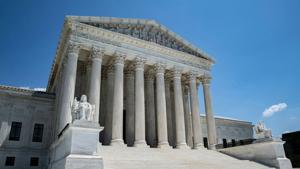
The U.S. Supreme Court will decide on Friday whether to consider a case allowing state and local governments to sue fossil fuel companies for alleged damages related to climate change.
The court will decide whether to hear arguments in Suncor Energy Inc. v. County Commissioners of Boulder County. The case, originating in Colorado, centers around a City of Boulder and Boulder County lawsuit in state court against Suncor Energy claiming it misled the public in its activities that led to climate change effects.
Lawyers for Suncor Energy argue that allowing a case like this one to play out goes against protections in the Clean Air Act that prevent lawsuits from occurring against emitters from across state lines.
“Seeking injury in the form of physical harms allegedly caused by global emissions, as petitioners do, is just an indirect method of regulating interstate and international emissions,” lawyers for the oil company wrote in a brief to the Supreme Court.
Christopher Mills, founder of Spero Law, said the lawsuit relies heavily on “nuisance laws” which are used to charge a neighbor who is doing something to lower the value of an individual’s property.
“They’re trying to use state and local tort law to affect policy change about climate change,” Mills said.
Mills said Congress should be regulating issues related to climate change and causing policy shifts instead of the court system.
“The reason these cases have been brought, other than just money, is because some people are frustrated that Congress hasn’t done something on climate change,” Mills said. “The goal here is to affect national policy rather than actually provide any sort of traditional remedy for a local nuisance.”
“Through their advertising, [petitioners] have for decades intentionally misled the public about the impacts of climate change and the role that [petitioners’] fossil fuel products have played in exacerbating those impacts,” a filing to the Supreme Court reads.
Lawyers for Boulder County and the City of Boulder argued that states and municipalities should be allowed to address harms caused by activities which exacerbated climate change.
“There is no constitutional bar to states addressing in-state harms caused by out-of-state conduct, be it the negligent design of an automobile or sale of asbestos,” the filing to the Supreme Court reads.
Cases against fossil fuel companies for alleged impacts of climate change have popped up across the country with varying results.
A South Carolina judge tossed a lawsuit the city of Charleston filed against two dozen oil and gas companies.
In October, justices on the Maryland Supreme Court appeared skeptical of a similar lawsuit seeking to go after fossil fuel companies.
The court considered three separate cases from the Baltimore, Annapolis and Anne Arundel counties against fossil fuel companies, including the British oil and gas company BP. The cases claim fossil fuel companies concealed information about their products’ contributions to climate change.
“It seems like your theory of injury and relief are all tied and necessary for relief on international emissions,” said Justice Brynja Booth.
The U.S. Supreme Court’s decision on Friday over whether to hear this case could have far reaching implications for various pieces of litigation across the country.
“I think the problem’s especially severe because courts would be asked to put a price tag on the cost of one energy company’s contributions to global climate change,” Mills said.
Some GOP lawmakers a ‘no’ on $901B Pentagon funding bill

Some U.S. lawmakers are already taking issue with the final negotiated version of the 2026 National Defense Authorization Act, the must-pass annual funding bill for the Pentagon that the House will vote on this week.
The $901 billion compromise legislation is $8 billion more than the White House requested, but $24 billion less than the Senate’s version of the bill. Some Republican House members still aren’t satisfied with the high price tag; and appropriators still have to approve the topline number.
“Funding foreign aid and foreign wars is America Last and is beyond excuse anymore,” Rep. Marjorie Taylor Greene, R-Ga., posted on social media. “I would love to fund our military but refuse to support foreign aid and foreign militaries and foreign wars. I am here and will be voting NO.”
The bill includes comparatively little spending on foreign conflicts, authorizing $120 million to support Israel and extending Ukraine aid by $400 million. It also repeals the 2002 Authorization for Use of Military Force for Iraq.
A significant portion, $142 billion, goes toward research and development of new technologies, including biotechnology, hypersonic weapons and artificial intelligence.
The NDAA also invests $38 billion for aircraft, $34 billion for nuclear defense, $26 billion for shipbuilding, $25 billion for munitions and $900 million to combat drug trafficking.
Military members would receive a 3.8% pay raise and $1.4 billion is set aside for the construction of barracks and family housing, while hundreds of millions are allocated for new childcare centers and schools. About $577 million will go towards renovating military hospitals and building new medical facilities.
Most of the NDAA’s content is bipartisan. In fact, some provisions — such as cutting $1.6 billion in climate change-related spending and directing the intelligence community to review, and if possible declassify, intelligence about the origins of COVID-19 — are explicitly Republican asks.
But three more Republicans have already come out against the bill because it fails to include a ban on Central Bank Digital Currency (CBDC), which they worry would give the federal government too much power over the spending and finances of Americans.
“Deeds not words. CBDC inserts the government between you and your money then sets conditions on your access to it to corrupt money into a tool for surveillance, coercion, and control,” Rep. Warren Davidson, R-Ohio, posted on social media Tuesday. “[W]e need and were promised a law.”
Rep. Chip Roy, R-Texas, reposted a statement from fellow Texan Republican Rep. Keith Self calling for GOP leadership to “fix this bill IMMEDIATELY.”
Self also submitted an amendment Tuesday to add a CBDC ban to the bill, which he says he will not vote for otherwise.
“Promises were broken to include this language in the NDAA,” Self announced on X. “My amendment would fix the bill. The House Rules Committee meets later TODAY to decide if it gets a floor vote. I hope they do the right thing.”