National News
Johnson calls drug smugglers ‘clear and present danger’
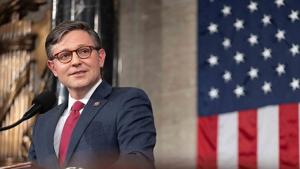
Republican House Speaker Mike Johnson said Tuesday drug smugglers off the coast of Venezuela pose a “clear and present danger” to the U.S. after a confidential briefing on Capitol Hill.
Johnson, R-La., defended the military strikes against suspected drug traffickers. He said drug overdoses were responsible for more deaths than all recent wars.
“Over the last four years alone, America has lost more lives to drug overdoses and other drug related deaths than we did to the enemy actions in World War II, Korea, Vietnam, Afghanistan and Iraq combined,” Johnson said. “This is a serious problem that a serious administration is addressing.”
Johnson spoke to reporters Tuesday after a confidential briefing from U.S. Secretary of State Marco Rubio and Secretary of War Pete Hegseth.
The House Speaker’s remarks came after U.S. Southern Command reported three additional military strikes on suspected drug boats on Monday. The three strikes killed eight people. Since June, the military has reported 25 strikes that have killed at least 94 people.
Johnson compared Trump’s military actions to President Barrack Obama’s strikes against overseas terrorists during his time in the White House. He said that Obama carried out more than 500 drone strikes that killed more than 3,700 people, including American citizens, from 2009 to 2015.
Democrats, a few Republicans, and human rights groups have criticized the strikes.
Trump says the strategy is working and saving lives. The U.S. president said each sunken boat has saved 25,000 American lives from overdoses.
The strikes come amid a pressure campaign against Venezuelan leader Nicolás Maduro, who has controlled the South American nation since 2013.
International election observers have accused Maduo of consolidating power through fraudulent elections. In 2024, his reelection was widely condemned as illegitimate, with allegations of vote tampering and intimidation of opposition leaders. Maduro is also facing allegations of human rights abuses, corruption, and involvement in illegal drug trafficking. U.S. prosecutors have charged Maduro with running a drug cartel using cocaine trafficking as a tool to run the regime and put a $50 million bounty on information leading to his arrest. Almost eight million people, more than a quarter of the population, have left Venezuela in recent years.
While U.S. officials have not publicly released detailed reports about the strikes, the boats appear to be smuggling cocaine.
Trump has focused his war on drugs against fentanyl, a powerful and deadly synthetic opioid. U.S. health officials have reported that synthetic opioids are the leading cause of overdose deaths in the U.S.
The U.S. Centers for Disease Control and Prevention reported provisional data found about 87,000 drug overdose deaths from October 2023 to September 2024. That’s down from about 114,000 the previous year and the lowest since 2020.
On Monday, Trump issued an executive order designating illicit fentanyl a weapon of mass destruction.
VA plans to overhaul nation’s largest integrated health care system
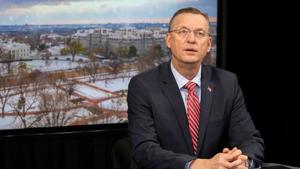
The Department of Veterans Affairs plans to reorganize the management structure of the Veterans Health Administration, the nation’s largest health system, to improve care.
The goal is to empower local hospital directors and eliminate duplicative layers of bureaucracy across all the administration’s 1,380 medical facilities. VA officials plan to announce details in early 2026, including organizational and personnel changes. Those changes are expected to take place over the next two years.
“The current VHA leadership structure is riddled with redundancies that slow decision making, sow confusion and create competing priorities,” VA Secretary Doug Collins said in a statement. “In other words, when everyone’s in charge of everything, no one’s in charge of anything.”
Staffing and operations at medical facilities won’t change, but the reorganization will include giving the VHA Central Office the responsibility to set policy goals and conduct financial management, oversight and compliance. Operations Centers and Veterans Integrated Service Networks, or VISNs, will take policy direction from VHA’s Central Office to develop operational, quality and performance standards.
“Under a reorganized VHA, policymakers will set policy, regional leaders will focus on implementing those policies, and clinical leaders will focus on what they do best: taking great care of Veterans,” Collins said.
House Committee on Veterans’ Affairs Chairman Mike Bost, R-Ill., said he supports the undertaking.
“I support the intent of Secretary Collins’ plan to break new ground and restructure the agency to meet the needs of today and tomorrow’s veterans, their families, and their survivors. Change can be a good thing. Veterans and their families gave us a clear mandate last November that business as usual is not cutting it and we must cut through the bureaucracy, remove the red tape, and push VA forward,” Bost said in a statement. “Congress looks forward to working with my friend, Secretary Collins, and the entire Trump administration in the coming weeks and months to learn more about the implementation of this plan to ensure it does one thing: benefit veterans.”
Reviews from VA’s Inspector General, the Government Accountability Office and others have underscored the need for reorganizing VHA.
“This initiative is not a reduction in force or an attempt to reduce staffing levels at VHA, and VA does not expect a significant change in overall staff levels once it’s complete,” according to the agency.
‘Grinch’ UPS sued over holiday pay for workers
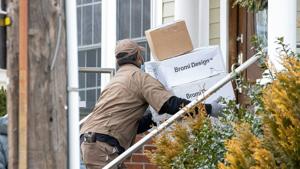
One of the nation’s largest delivery companies is accused of being a “Grinch” by chiseling its seasonal workers out of holiday pay.
In a lawsuit filed Monday in U.S. District Court, New York Attorney General Letitia James alleges that Atlanta-based United Parcel Service “stole” wages from seasonal workers last year, including “Driver Helpers” and “Seasonal Support Drivers” who assist full-time staff with package delivery around the holidays. The democratic AG said the company practices have “repeatedly” violated state and federal labor laws on seasonal pay.
“Each year, UPS commits wage theft against these workers in myriad ways,” James wrote in the 21-page complaint. “Seasonal Delivery Workers have worked off-the-clock before the beginning of the shift, after the ending of the shift, and at various other times, including at the beginning and end of employment, between shifts, and during meal breaks.’
“Additionally, UPS’s timekeeping practices and edits to records have introduced and compounded timekeeping errors,” the complaint reads.
The lawsuit claims that during its peak season, which runs from October to January, UPS hires thousands of temporary workers at at least 55 facilities in New York state. But the companies practices deprived those workers of millions of dollars in pay, according to the legal challenge.
James said she is seeking back pay for UPS workers in New York and a court order requiring the company to end off-the-clock work and to overhaul its timekeeping and payroll practices.
“UPS built its holiday business on the backs of workers who were not paid for their time and labor,” James said in a statement. “UPS’s seasonal employees work brutal hours in the cold to deliver the holiday packages families across the country count on. Instead of compensating these workers fairly for their labor, UPS has played the Grinch.”
The company, which employs nearly 500,000 people worldwide and reported more than $90 billion in revenue last year, issued a statement dismissing the claims in the lawsuit and saying it doesn’t underpay its seasonal workers.
“UPS takes all accusations of wrongdoing seriously and denies the unfounded allegation of intentionally underpaying UPS employees,” the company said. “We offer industry-leading pay and benefits to our more than 26,000 employees in New York, and we remain committed to following all applicable laws.”
Labor Department fines California grower for violations

The U.S. Department of Labor recovered $171,400 from a California agricultural employer for employment violations.
Lucky Growers Inc., based in San Marcos, Calif., charged 30 workers rent in unsafe housing conditions that did not comply with federal law, according to the Labor Department.
While investigating housing conditions, federal officials found that agricultural workers were living in housing with structural damage, mold, insect and rodent infestation and missing lighting. The investigation also found the housing did not have fire extinguishers, first aid kits or working smoke detectors.
The Labor Department’s wage and hour division recovered $171,400 that it will use to reimburse workers for the rent charged.
“Farmworkers provide essential labor that helps feed millions of Americans, and they have rights that are federally protected,” said Wage and Hour Division Assistant District Director Emily Eckstein in San Diego.
Lucky Growers Inc. has locations in San Marcos, Calif., and Portland, Ore. The grower employers 79 workers and operates 180 acres of land.
According to data from the U.S. Department of Agriculture, 42% of farmworkers in the United States do not have U.S. work authorization.
Jessica Vaughan, policy director at the Center for Immigration Studies, said a lack of legal status causes agricultural workers to face rights violations and poor housing conditions across the country.
In 2023, the Department of Labor debarred a farm labor contract agency in North Carolina for wage violations. The Department of Justice has also litigated numerous cases against migrant worker recruitment agencies.
Vaughn said states can take a more active role in policing these issues to protect migrant workers.
“I would like to see states,’” Vaughn said, “Setting standards, setting expectations.”
Rosemary Jenks, policy director of the immigration accountability project, said employers are required to follow strict regulations to provide housing and transportation to agricultural workers. She said growers should be more focused on using technological modernization instead.
“We should be, as a country, incentivizing growers to invest in capital, to invest in the machines that can pick the crops rather than relying on an imported slave class to pick them,” Jenks said.
The Department of Labor said it would continue to investigate other agricultural employers for workplace violations and safety concerns.
“Lucky Growers failed to meet its legal requirements for employing agricultural workers,” Eckstein said. “The Wage and Hour Division remains committed to protecting farmworkers and holding accountable employers who violate the law.”
In 45 years, nearly 70,000 Islamic terrorist attacks committed worldwide
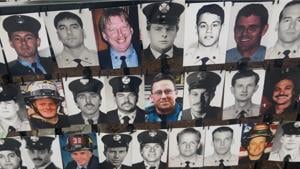
Twenty-four years after 9/11, and after multiple wars and U.S. military interventions overseas, the U.S. hasn’t stopped Islamic terrorist attacks from occurring at home or abroad.
While 9/11 was the greatest attack on U.S. soil since Pearl Harbor, Islamic terrorist attacks have been occurring worldwide since the seventh century.
Nearly 70,000 Islamic terrorist attacks occurred worldwide in the last 45 years, according to an analysis by the French think tank Fondation Pour L’Innovation Politique (Fondapol), which focuses on European integration and a free economy.
Fondapol’s data covers the timeframe after the Iranian Revolution ended in February 1979 through April 2024. It found that at least 66,872 Islamic terrorist attacks occurred during this period, killing at least 249,941 people.
The majority of attacks, 35.2%, occurred in Sub-Saharan Africa, causing 30% of deaths from Islamic terrorism worldwide, according to the analysis.
Nearly one-third of the attacks occurred in South Asia and the Middle East and North Africa, causing 33.7% and 33% of worldwide terrorism related deaths, respectively.
A fraction of the number of attacks occurred in North America of 0.1%, causing 1.3% of terrorism-related deaths worldwide. The remainder occurred in Sub-Saharan Africa, followed by Southeast Asia, Europe and Russia, Oceania and South America, according to the analysis.
The majority of Islamic terrorist attacks, 86%, occurred in Muslim countries, according to the data. The data isn’t exhaustive; not all countries compile Islamic terrorist attack data or allow access to it if they do. Likewise, not all who are murdered are reported. Fonapol evaluated accessible data from roughly 40 Muslim majority countries noting that Mozambique prohibited it from identifying attack targets.
The majority of attacks in Muslim majority countries occurred where U.S. military forces were involved in various conflicts.
Afghanistan has suffered the most from Islamic terrorist attacks, according to the data. More than 17,000 have been killed there, followed by nearly 11,000 killed in Somalia and more than 8,200 killed in Iraq.
Islamic terrorist attacks are ongoing in Muslim countries with U.S. troops who are stationed there continuing to be targeted. Two U.S. soldiers from Iowa were just killed in Syria.
After the U.S. fought the Taliban for 20 years, the Biden administration withdrew troops from Afghanistan in August 2021, leaving billions of dollars worth of weapons, equipment and cash with the Islamic terrorist organization. The Taliban not only controls Afghanistan but is the deadliest Islamic terrorist group in the world, killing at least 71,965 people, according to the analysis.
ISIS is identified as the second deadliest, killing at least 69,641, followed by Boko Haram killing more than 26,000, Al Shabaab killing nearly 22,000 and al Queda killing nearly 15,000, according to the analysis.
U.S. and Russian wars in Afghanistan directly led to Islamic terrorists targeting Americans and Russians on their own soil: 86 attacks in Russia killed 988, 60 attacks in the U.S. killed 3,121, including on 9/11, according to the data.
Since April 2024, total terrorist attacks and death totals have only gone up worldwide and in the U.S.
Between April 2021 and June 2025, there were more than 50 jihadist cases in 30 U.S. states, including dozens of attempts to provide material support to ISIS, Hizballah and al Queda, according to a U.S. House Committee on Homeland Security terror threat assessment report. According to Georgetown University’s Project on Extremism, 170 individuals have been charged in the U.S. since 2014 for offenses related to ISIS.
According to a Center for Strategic & International Studies analysis, there were “740 terrorist attacks and plots in the United States between January 1, 1994, and January 1, 2025, 140 of which were jihadist attacks and plots.”
U.S. military intervention in multiple countries hasn’t ended Islamic terrorism abroad or in the U.S.
Twenty-four years after 9/11, Republican committee members argue foreign jihadist networks and homegrown violent Islamic extremism cause a persistent terrorism threat to Americans.
“From the resurgence of foreign jihadist networks across the Middle East, North Africa, and Southeast Asia to the rise of homegrown extremists and online radicalization, the West is facing a dynamic and volatile terror threat landscape. This landscape has only intensified in the aftermath of the October 7 attacks, with a disturbing rise in antisemitic and anti-Israel violence on U.S. soil, as well as the reckless anti-enforcement, open-border policies of the Biden-Harris administration,” U.S. Rep. August Pfluger, R-Texas, argues.
Pfluger, who chairs the committee’s Subcommittee on Counterterrorism and Intelligence, fought ISIS as a U.S. Air Force fighter pilot in Iraq and Syria nearly 10 years ago.
He and other committee members have raised concerns about how many known or suspected terrorists were released into the country or illegally entered undetected during the Biden administration, The Center Square reported.
U.S. adds 64K jobs in November, unemployment steady

The United States added 64,000 jobs in the month of November, according to the most recent jobs report.
The U.S. Bureau of Labor Statistics provided the November jobs report more than a week late due to the federal government shutdown from Oct. 1 to Nov. 12. The bureau did not release a jobs report for October but said the U.S. lost 105,000 jobs, mainly due to federal government cuts.
November’s report acknowledges a slowdown in job additions, with 119,000 jobs added in September.
Heather Long, chief economist at Navy Federal Credit Union, said artificial intelligence, tariffs and cost-cutting are responsible for the slowdown in job creation.
“The US economy is in a hiring recession,” Long said in a post to social media on Tuesday.
The unemployment rate in November was 4.6%, a slight increase from the 4.4% reported in September.
“A good part of the slowing likely reflects a decline in the growth of the labor force due to lower immigration and labor force participation, though labor demand has clearly softened as well,” Federal Reserve Chair Jerome Powell said in a press conference last week.
The two main economic sectors where jobs increased were the health care and construction industries. The health care industry added 46,000 jobs in November and construction added 28,000.
November saw a decrease in the transportation and warehousing sector, with 18,000 jobs lost. The report said transportation and warehousing employment has declined by 78,000 since February.
The report found a decline of 6,000 federal government jobs in November. The decline follows a significant decline of 162,000 in October as federal employees who accepted deferred resignation offers were removed from federal payrolls.
Group launches campaign backing health-care price transparency push
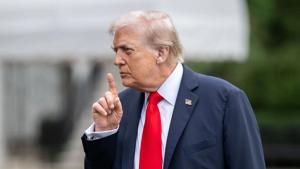
A national conservative nonprofit will launch a new television advertisement advocating for President Donald Trump’s efforts to reduce healthcare costs through price transparency, arguing that patients need clearer information about medical care costs.
Save Our States, a grassroots organization focused on federalism and regulatory reform, announced the ad will begin airing on Tuesday. The spot highlights Trump-era policies aimed at requiring hospitals and insurers to disclose prices in advance, allowing consumers to compare costs and plan expenses.
The ad launch follows the group’s recent “Show Us Your Prices” campaign, which calls on policymakers to expand healthcare cost transparency requirements.
The campaign argues that hidden pricing has contributed to rising costs for families and small businesses while protecting hospitals and insurers from competition.
The 30-second ad frames price transparency as a nonpartisan consumer issue. It criticizes hospitals and insurance companies for keeping prices hidden and urges immediate action to empower patients with clearer cost information before receiving care.
“Donald Trump is fighting to make healthcare affordable again,” the ad says. “Hospitals and insurance companies have kept prices hidden, charging anything they want. They win, you lose. Profits go up, patients get left behind. They won’t put America first. But President Trump will. Americans need price transparency now. More choices, more power, lower costs.”
Save Our States says the campaign builds on executive actions taken during the Trump administration that required hospitals to publicly post prices and insurers to provide advanced explanations of benefits through a provision in the No Surprises Act, which Trump signed into law during his first term but the Biden administration didn’t enforce. Supporters argue officials should strengthen these rules.
Andrew Bremberg, who served as assistant to the president and director of the Domestic Policy Council during the first Trump administration, said transparency reforms could deliver near-term relief if fully implemented.
“Americans are being crushed by hidden healthcare costs, and the fastest way to deliver relief is to implement real price transparency now,” Bremberg said. “When patients can see the actual price of care upfront, you unleash competition so prices fall and families can finally plan and budget with confidence.”
Bremberg said reforms like requiring advanced notice of what insurance covers and what patients will owe out of pocket would help restore accountability in the healthcare system.
“Americans shouldn’t have to wait years to feel a policy’s impact,” he said. “That’s why swift implementation of reforms like the Advanced Explanation of Benefits is so critical.”
Healthcare price transparency has gained bipartisan attention in recent years as costs continue to outpace wages. Advocates argue that without transparent pricing, patients cannot shop for care or avoid unexpected bills, especially for routine procedures.
Healthcare industry critics say opaque pricing benefits large institutions while leaving families vulnerable to surprise post-treatment charges. Transparency supporters argue that market pressure would push providers to lower prices once consumers have upfront access to costs.
The Save Our States ad directs viewers to a website supporting expanded transparency requirements and praising Trump’s approach to healthcare affordability. The group says the campaign focuses on immediate policy changes rather than long-term restructuring of the healthcare system.
Trump designates fentanyl a ‘weapon of mass destruction’
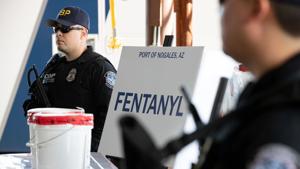
Following an alarming rise in fentanyl deaths in recent years, President Donald Trump is taking another step in cracking down on the deadly drug seeping its way onto American streets by designating it a weapon of mass destruction.
The president signed the executive order Monday during an event in the Oval Office, saying the illicit drug “is closer to a chemical weapon than a narcotic.”
The designation comes on the heels of the administration’s increasing military presence in the Caribbean, targeting narco-terrorists and “successful” meetings with Chinese leaders, who have vowed to crack down on the production of precursors of the drug.
Critics of Trump’s move want to address the fentanyl crisis through a different way. For example, a 2024 bill from attorneys general asking former President Joe Biden to do the same thing expressed concerns about political optics and the language akin to military. Overreach and blurred lines in domestic actions, such as rounding up users.
The order would provide the secretaries of the Department of War and Department of Homeland Security to “update all directives regarding the armed forces’ response to chemical incidents in the homeland to include the threat of illicit fentanyl.”
Trump said the fentanyl drug trade “threatens” national security by fueling “lawlessness” in the Western Hemisphere. This is the area of North America and South America, and the islands near each.
“The production and sale of fentanyl by foreign terrorist organizations and cartels fund these entities’ operations – which include assassinations, terrorist acts, and insurgencies around the world – and allow these entities to erode our domestic security and the well-being of our nation,” the order says in part.
Trump said two cartels are predominantly responsible. The Sinaloa Cartel and the Jalisco New Generation Cartel, known also as CJNG, are based in Mexico.
The Drug Enforcement Agency said last December that in 2023, more than 107,000 people died from drug overdoses, with nearly 70% attributed to opioids, like fentanyl.
In late February, the U.S. Centers for Disease Control and Prevention via its National Vital Statistics System predicted a 24% decline in drug overdose deaths for the 12 months ending in September. The finding was based on 87,000 drug overdose deaths from October 2023 to September 2024, down from 114,000 the year prior.
Trump declared opioid overdose a public health emergency in 2017 during his first term.
Two states designate Muslim group as terrorist, but other GOP governors mum
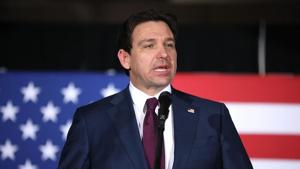
The governors of Texas and Florida have declared the nation’s largest Muslim advocacy group a foreign terrorist organization, but they may stand alone. None of their Republican counterparts in other states seem ready to follow suit.
The Center Square reached out to every other Republican governor whose state has offices of the nonprofit Council on American-Islamic Relations. Not one – from Alabama, Georgia, Missouri, Ohio, Oklahoma or Virginia – responded to inquiries about whether they plan to slap a terror label on the group, too.
“I don’t know why anyone wouldn’t want to designate CAIR a foreign terror organization,” Florida Republican Congressman Randy Fine, a fierce critic of the group, told The Center Square.
The 31-year-old, Washington-based civil rights organization strongly denies supporting terrorism, saying on its website it has “specifically opposed unjust violence perpetrated in the name of Islam.”
The U.S. State Department does not consider CAIR a foreign terrorist organization, though U.S. Rep. Fine introduced a bill this year that would direct Secretary of State Marco Rubio to review if it meets the criteria.
“Maybe other states are waiting to see how it goes,” Fine said of the governors’ non-responses. “CAIR is threatening litigation, which I think we all hope happens because that will require them to disclose the dark web of relationships that they have.”
Last month, Texas Gov. Greg Abbott issued a proclamation accusing the group of ties to Hamas and the Muslim Brotherhood, an international organization bent on establishing Islam’s “mastership of the world.” The designation prohibits CAIR from buying or acquiring land in Texas.
Florida Gov. Ron DeSantis issued his own executive order last week, also designating both CAIR and the Muslim Brotherhood terrorist groups. He called on state agencies to deny resources to them and directed the Florida Department of Law Enforcement and Florida Highway Patrol to keep tabs.
“CAIR was founded by persons connected to the Muslim Brotherhood,” DeSantis’ order says, “and was created, in the words of persons affiliated with CAIR, as ‘an official U.S. cover representing the Islamic community’ to conceal ties to Islamic extremist groups.”
CAIR and the Muslim Legal Fund of America have already sued in Texas, asking a federal judge to strike down Abbott’s order. CAIR has threatened to sue DeSantis, as well. The group says its pro-Palestinian stance has attracted the ire of “Israel-first” politicians.
“It seems to be a coordinated campaign to push back against anyone who spoke out against the genocide effectively,” CAIR spokesman Ibrahim Hooper told The Center Square.
In a letter to DeSantis last week, CAIR National Deputy Director Edward Ahmed Mitchell called the executive order “defamatory” with “no basis in law or fact.” The organization has never been an affiliate, offshoot, or subsidiary of any foreign group, he said.
“You do not have the constitutional authority to unilaterally declare any Americans or American institutions foreign terrorist groups, nor is there any basis to level this smear against our organization.” Mitchell told the governor. “We look forward to seeing you in a court of law, where facts and the law still matter.”
DeSantis said in an X post last week, “I look forward to discovery – especially the CAIR finances. Should be illuminating!”
According to its website, CAIR has chapters in Austin, Dallas and Houston. In Florida, it has a Tampa chapter.
At least 21 other states have chapters and satellite offices, six of which have Republican governors. There are branches in Birmingham, Ala.; Duluth, Ga.; St. Louis; Cincinnati, Cleveland and Columbus, Ohio; Oklahoma City; and Herndon, Va., the website says.
The Center Square contacted the offices of Alabama Gov. Kay Ivey, Georgia Gov. Brian Kemp, Missouri Gov. Mike Kehoe, Ohio Gov. Mike DeWine, Oklahoma Gov. Kevin Stitt, and outgoing Virginia Gov. Glenn Youngkin – asking if they’re planning to do anything similar to Texas or Florida or to comment on what Abbott and DeSantis did.
None answered.
“Most Americans recognize that Ron DeSantis is a failed politician,” Mitchell, of CAIR, told The Center Square, “who prioritizes the Israeli government over the people of Florida and is always looking for publicity stunts to stay relevant. I would not be surprised if other governors do not decide to take the leap with him and Governor Abbott, given they don’t want to end up in court and embarrassed.”
The Texas proclamation and the Florida order delve deep into the organization’s history to accuse it of ties to Hamas and the Muslim Brotherhood, a transnational Sunni Islamist network with no centralized leader that pushes for Sharia law in all aspects of life. The Muslim Brotherhood also has not been designated a foreign terrorist organization by the State Department, though President Trump issued an executive order last month launching a formal process that could see some of its chapters labeled as such.
The Texas and Florida actions both cited CAIR’s role as an unindicted co-conspirator in the 2007-2008 federal trial of the Holy Land Foundation, Its leaders were found guilty of funneling funds to Hamas.
“Internal documents plainly identified CAIR as a subsidiary of the Muslim Brotherhood and a federal court eventually found ‘ample evidence to establish’ that CAIR was associated ‘with Hamas,'” Abbott’s proclamation says.
The Texas document also lists a half dozen staffers and associates as being criminally convicted or deported for financing or supporting terrorist causes, including Al Qaeda, the Taliban and Saddam Hussein’s government.
Anti-Muslim activist Amy Mekelburg, founder of RAIR (Rise Align Ignite Reclaim) Foundation USA, has been urging other states to join Texas and Florida with designations of their own.
“ALL Red states with CAIR offices must act NOW – before CAIR’s influence becomes irreversible,” Mekelburg said in an X post last week. “Every red governor. Every red AG. Every red legislature.” She did not respond to The Center Square’s attempts to reach her, and CAIR has labeled RAIR a “hate group.”
While no governors have gone as far as Abbott and DeSantis, other state legislatures passed non-binding resolutions introduced over the past decade telling law enforcement and other state agencies to stop cooperating with CAIR.
When he was still a state representative last year, Fine introduced a resolution passed in the Florida House encouraging state and local governments to cut off contacts with the group, just as the FBI did more than a decade ago citing alleged ties to Hamas.
“They’ve made themselves out to be the NAACP for Muslims,” Fine said. “And I think it’s a very interesting thing, because if they’re the NAACP for Muslims, what does that say about Muslims?”
Last week CAIR called for Fine’s resignation over an X post where he said of mainstream Muslims, “I don’t know how you make peace with those who seek your destruction, I think you destroy them first.”
And Mitchell said the tactics being used against CAIR do hearken back to the NAACP, when southern states tried to shut it down in the 1960s by accusing its members of plotting with communists and seeking access to finance records and membership lists. He called the allegations in the Texas and Florida orders either factually inaccurate, or “a true fact that has been manipulated to sound nefarious and much worse than it is.”
The Holy Land Foundation trial was “one of the most notoriously-flawed and widely-criticized excesses of the post-9/11, War on Terror, Bush era,” he said. And of Abbott’s list of criminal convicts, “Some of those people did not work for CAIR at all whatsoever. None of them did anything criminal in relation to CAIR at all. And some of them were wrongly convicted of things they did not do.”
“CAIR is probably target number one for anti-Muslim bigots. They absolutely hate us because we defend the Muslim community, and we’re very, very good at it,” Mitchell said. “The NAACP was not a communist agent. We do not have any connection with any foreign entity. We’re an independent American organization, and Ron DeSantis is going to find that out.
Everyday Economics: A divided Fed heads into a critical data week
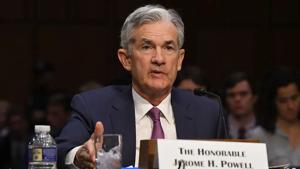
The Federal Reserve cut interest rates again last week, lowering the target range for the federal funds rate by 25 basis points to 3½–3¾ percent. The decision reflects a growing concern about downside risks to the labor market, even as inflation remains above the Fed’s 2% target.
A closer look at the Summary of Economic Projections (SEP) helps explain why the decision was far from unanimous. While the median projection for the unemployment rate is essentially unchanged from September, inflation in 2026 is now expected to be modestly lower than previously thought. The median projection for the fed funds rate path, however, was left unchanged relative to the September SEP.
What did change meaningfully was the degree of disagreement within the Committee.
At the December meeting, three policymakers dissented from the 25-basis-point cut – Austan Goolsbee and Jeffrey Schmid favored no change, while Stephen Miran argued for a larger 50-basis-point cut. That marks a notable increase in dissent from September, when only one participant dissented, also in favor of a larger cut.
The growing split is also visible in the Fed’s “dot plot.” The range of projections for the appropriate level of the federal funds rate at the end of 2026 widened to 175 basis points, up from 125 basis points in the September SEP. That wider dispersion signals rising disagreement over how quickly – and how far – policy should ease once inflation is clearly on a path back toward target.
Why the Fed Is Increasingly Split
The source of the division is straightforward: inflation is still too high, but the labor market is becoming harder to read.
Inflation has moved up modestly this year and remains elevated, according to the Fed’s own assessment, but there is limited evidence so far of a persistent re-acceleration. At the same time, the labor market appears to be losing momentum. Job gains slowed earlier this year, and the unemployment rate edged higher through September. Since then, a lack of official data – caused by the government shutdown – has increased uncertainty around current conditions.
That uncertainty puts more weight on the data arriving this week.
The Week Ahead: Jobs and Inflation Take Center Stage
This week brings two critical releases: the November jobs report and the November Consumer Price Index (CPI).
Private-sector indicators suggest further cooling in the labor market. ADP and Revelio Labs both point to a decline in employment in November, while Gusto reports that hiring among small businesses was flat over the month. Combined with ongoing declines in federal government employment, these signals raise the risk that overall job growth has stalled – and may now be turning negative – potentially resulting in a higher unemployment rate.
On inflation, the CPI report is expected to show continued pressure in goods prices and healthcare costs. However, housing inflation remains a key offset. Measures of shelter inflation have been steadily easing, reflecting a deceleration in market rents over recent months.
According to Zillow’s forecasts, Rent of Primary Residence inflation is expected to end the year up 3.0% year over year, before slowing sharply to 1.6% in 2026. In September, that measure was running at 3.4%. Owner’s Equivalent Rent (OER) is expected to end the year up 3.6%, down from 3.8% in September, and to decelerate further to 2.6% in 2026.
That continued cooling in housing inflation should help limit upside surprises in core CPI, even if other categories remain firm.
Why It Matters
The Fed’s December decision makes clear that policymakers are now navigating a narrower and more uncertain path. Inflation is still above target, but the balance of risks has shifted. With demand cooling, housing inflation easing, and labor-market momentum fading, the cost of keeping policy too tight for too long is rising.
This week’s jobs and CPI reports will go a long way toward determining whether December’s cut proves to be a cautious adjustment or the beginning of a more sustained easing cycle.