National News
Trump admin again claims Mexico will comply with water treaty
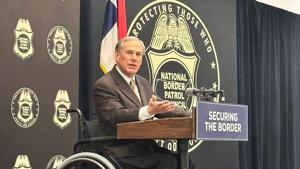
The Trump administration is again saying Mexico will comply with a water treaty after claiming it would earlier this year and seven months later it still hadn’t.
The U.S. Department of Agriculture announced water deliveries to Texas began this week.
Seven months after the initial claim that Mexico would comply, it hadn’t. Gov. Greg Abbott again demanded that Mexican authorities fulfill their treaty obligation, as he has repeatedly done, and pointed to a potential solution proposed by Texas U.S. senators, The Center Square reported.
At issue is a 1944 Treaty of Utilization of Waters, which governs water usage between the U.S. and Mexico, including from two international reservoirs, Lake Amistad and Falcon Lake in Texas along the international border. Mexico has historically released water storage from Lake Amistad to Mexican growers, not to Texas growers, and the U.S. federal government hasn’t enforced the treaty. Last year, Mexican officials killed any agreements to release water to Texans, even running ads in Mexico City to protest compliance, according to several news reports.
The Rio Grande Valley is among the most fertile agricultural regions in Texas and the U.S. Half of crop production acreage in the lower Rio Grande Valley is irrigated. In order to grow a wide range of crops, farmers rely on water from the Colorado and Rio Grande rivers. The agricultural industry in the valley contributes roughly $1 billion annually to the economy and provides roughly 8,400 full-time jobs, The Center Square reported.
Under the Biden administration, calls for Mexico to comply fell on deaf ears and systemic water shortages forced Texas’ last sugar mill to close, The Center Square reported.
Under the treaty, Mexico is obligated to deliver 1.75 million acre-feet over five years to the United States from the Rio Grande River; the U.S. is obligated to deliver 1.5 million acre-feet of water to Mexico from the Colorado River. The U.S. has consistently met its delivery obligations, according to International Boundary and Water Commission data.
The last five-year cycle ended in October with Mexico only having delivered approximately 885,000 acre-feet, less than 50% of its total obligation. Mexico’s delivery deficit was more than 800,000 acre-feet of water, equivalent to roughly 2.5 years of required deliveries, according to IBWC data.
Four days after The Center Square reported that Mexico still hadn’t complied seven months after the administration’s claim and Texas still hadn’t received its water, the State Department issued a statement saying senior officials met with Mexican officials to “discuss immediate and concrete steps Mexico would take” to comply. “The officials examined available water resources and the United States pressed for the maximum possible deliveries to Texas users. We have requested additional information and will reconvene to consider additional options,” it said.
It also said that under the Trump administration, “Mexico has delivered more water in the last year than in the previous four years combined. However, shortfalls in Mexico’s water deliveries have exacerbated water scarcity in Texas and contributed to hundreds of millions of dollars in crop losses for farmers.”
Secretary of State Marco Rubio has “been clear that Mexico must meet their obligations … including making up the approximately 865,000 acre-feet shortfall over the 2020-2025 five-year cycle and meeting delivery requirements under the 2025-2030 cycle,” it said.
His office is attempting to resolve the issue through diplomatic channels but is also evaluating “all available options to ensure Mexico complies with its water delivery obligations,” it says.
Three weeks later, U.S. Department of Agriculture Secretary Brooke Rollins announced an agreement had been reached, with new water deliveries beginning this week.
“Mexico has agreed to release 202,000-acre feet of water to the United States with deliveries expected to begin the week of December 15, 2025,” Rollins said. “Timely repayment of the outstanding deficit from the previous water cycle is understood by Mexico. The United States and Mexico are in negotiations to finalize a plan by the end of January 2026.”
“Although this is a step in the right direction, President Trump has been very clear: if Mexico continues to violate its commitments, the United States reserves the right and will impose 5% tariffs on Mexican products,” she added.
Rollins also said a “series of actions to meet the treaty obligations have been reviewed, including timely repayment of the outstanding deficit from the previous water cycle,” in accordance with the treaty.
Negotiations are ongoing; a plan is expected to be finalized by Jan. 31, 2026.
State officials urge Trump to revise Biden-era rule tied to Bloomberg

Fifteen state treasurers, auditors and comptrollers are urging President Donald Trump to revise a Biden-era proposed rule they say would disrupt financial markets while financially benefiting Bloomberg L.P., primarily owned by Democratic megadonor Michael Bloomberg.
In a letter dated Dec. 3, the state financial officers asked Trump to direct federal agencies to remove the Financial Instrument Global Identifier, known as FIGI, from a proposed rule issued under the Financial Data Transparency Act.
The rule, proposed in August 2024, has not yet been finalized. It would require market participants to use FIGI as the exclusive identifier for financial instruments. Bloomberg L.P. created FIGI, and it remains closely tied to the company.
Financial instrument identifiers are standardized codes used to identify securities and other financial products, letting transactions be processed and settled efficiently across markets.
In the letter, the state officials said the proposed rule would upend the current system. The lawmakers also said it would create unnecessary costs and confusion for market participants.
“The agencies overstepped the bounds of the Financial Data Transparency Act by issuing such an extreme and disruptive proposal despite the law requiring no such selection of an identifier,” the letter says.
The officials noted that the Committee on Uniform Securities Identification Procedures, known as CUSIP, has long been used to identify instruments like municipal securities. They warned that forcing a transition to FIGI could hurt market efficiency and increase the risk of errors.
The letter also expressed worries about Bloomberg L.P.’s influence in the financial services industry and the benefits the company could receive if the government mandates that companies use FIGI.
“All of this raises serious questions about how this rule could further empower Bloomberg L.P., a private company that already maintains extraordinary influence over the financial services industry,” the letter says.
The officials pointed to the timing of political contributions made by Michael Bloomberg, who contributed nearly $20 million to support President Joe Biden’s reelection effort in June 2024. The Biden administration proposed the rule selecting FIGI about two months later.
The letter cited public reporting that described Bloomberg L.P. as deeply embedded in the financial industry. The elected officials warned that the proposed rule could further strengthen the company’s data dominance.
O.J. Oleka, CEO of the State Financial Officers Foundation, said the proposal raises many concerns.
“This proposed rule raised red flags from the very beginning,” Oleka said. “The financial officers behind this letter are absolutely right to refuse to let it stand. It was clearly written with the wishes of a partisan mega-donor, not the health of our financial system, in mind.”
Oleka said he hopes the Trump administration will put a stop to it.
“I hope and trust that President Trump will take necessary action to protect our markets and the prosperity of everyday Americans,” he said.
The signers of the letter include financial officers from Arizona, Indiana, Kansas, Kentucky, Louisiana, Mississippi, Nebraska, Nevada, Ohio, Oklahoma, Pennsylvania, South Carolina, Utah, and Wyoming.
The officials asked the administration to remove FIGI from the final rule and allow continued use of existing identifiers.
It remains unclear when federal agencies plan on finalizing the rule.
Nick Reiner charged with parents’ murders, appears in court

An arraignment for Nick Reiner, the son of actor/director Rob Reiner and Rob’s wife, Michele Singer Reiner, was postponed Wednesday to Jan. 7.
Reiner, 32, appeared in court Wednesday morning in a Los Angeles courtroom. He waived his right to an immediate arraignment and “Yes, your honor” when Judge Theresa McGonigle asked him if he understood he had the right to a speedy trial.
Reiner is charged with two counts of first-degree murder with the special circumstance allegation of multiple murders. He also faces a special allegation that he personally used a dangerous and deadly weapon, a knife, according to the Los Angeles County District Attorney’s Office.
Alan Jackson, a high-profile lawyer who has previously defended famous clients, is Nick Reiner’s lawyer.
“We ask that during this process, we allow this system to move forward the way it was designed to move forward,” Jackson said during brief statements made outside the courthouse on Wednesday morning after the arraignment was postponed. “Not to rush to judgment, not to jump to conclusions, but with restraint, dignity and respect for the system.”
Jackson did not take any questions from the press after his statements outside the Clara Shortridge Foltz Criminal Justice Center building in downtown Los Angeles.
Reiner is in custody and is being held without bail. Los Angeles authorities previously said Reiner’s bail was set at $4 million.
The Center Square previously reported that the Los Angeles Police Department’s robbery-homicide division is handling the investigation into the death, and that police have concluded that Rob and Michele Reiner were both stabbed to death. They were both found deceased in their home by a member of their family. Police responded to the Reiners’ home in Brentwood, an upscale neighborhood of L.A., on Sunday afternoon.
Habib Balian, assistant head district attorney with the Los Angeles County District Attorney’s Office, did not make comments to the press on Wednesday morning.
But District Attorney Nathan Hochman commented on the case in a statement Tuesday.
“Prosecuting cases involving family violence are some of the most challenging and heart-wrenching we face because of the intimate and often brutal nature of the crimes,” Hochman said. “Rob Reiner was one of the greatest filmmakers of his generation. His murder and his wife of more than 35 years, Michele Singer Reiner’s murder, are shocking and tragic. We owe it to their memory to pursue justice and accountability for the lives that were taken.”
If convicted, Nick Reiner could face a maximum sentence of life in prison without parole or the death penalty, Hochman told reporters Tuesday, but said his office hasn’t determined which punishment to pursue.
But there has been a moratorium on the death penalty in California since Gov. Gavin Newsom, who’s termed out by the end of 2026, signed an executive order in 2019.
Rob Reiner, who was part of the “All in the Family” cast and directed movies such as “The Princess Bride” and “When Harry Met Sally,” was 78. Michele Singer Reiner was 68.
Shoppers return fewer purchases after Black Friday shopping spree

Shoppers returned fewer items after the start of the holiday shopping season rush, according to figures from Adobe Analytics.
Returns fell 2.5% from Nov. 1 to Dec. 12 compared to the same period in 2024. In the seven days after Cyber Week, returns were down 0.1%, according to Adobe Analytics’ first batch of return data for the season.
Adobe Analytics analyzed direct commerce transactions online and more than 1 trillion visits to U.S. retail sites over 100 million SKUs, and 18 product categories.
The figures show that consumers like to buy on mobile devices, but turn to desktop computers for returns. So far this season, 39.1% of returns were on a mobile device, while 52.4% of overall online spending was by mobile.
Returns are expected to peak in the final week of December after the Christmas holiday. From Dec. 26 to Dec. 31, returns are expected to rise by 25% to 35% compared to levels in the season. Returns are also set to remain elevated through the first two weeks of January, up 8% to 15%. That final week of the year is known for returns. Last year, 1 out of every 8 returns in the 2024 holiday season took place between Dec. 26 and Dec 31, according to Adobe Analytics.
More than half of Americans participated in the shopping blitz that began on Black Friday and continued through Cyber Monday, with consumers spending $16 million every minute during peak hours, according to Adobe Analytics.
The National Retail Federation reported a record 202.9 million consumers opened their pocketbooks during the five-day seasonal shopping spree, according to the annual consumer survey. That’s up from 197 million shoppers last year and above the previous record of 200.4 million set in 2023. The total also exceeds NRF’s initial expectations of 186.9 million shoppers over the holiday weekend.
The National Retail Federation has projected retail sales in November and December will grow between 3.7% and 4.2% over 2024, with total spending between $1.01 trillion and $1.02 trillion – a potential record. Last year’s holiday sales rose 4.3% over 2023 to reach $976.1 billion.
“American consumers may be cautious in sentiment, yet remain fundamentally strong and continue to drive U.S. economic activity,” NRF President and CEO Matthew Shay said. “We remain bullish about the holiday shopping season and expect that consumers will continue to seek savings in nonessential categories to be able to spend on gifts for loved ones.”
218 U.S. House members demand vote on extending Obamacare subsidies
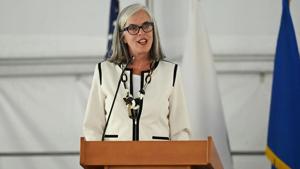
Hours before the U.S. House will vote on Republicans’ health care plan, Democrats secured enough signatures Wednesday on their discharge petition to force a vote on a three-year extension of enhanced Obamacare subsidies.
Four Republicans – Pennsylvania Reps. Brian Fitzpatrick, Rob Bresnahan, and Ryan Mackenzie, and Rep. Mike Lawler from New York – helped fulfill the 218 signatures needed to bring Democrats’ bill to the floor.
Democratic Whip Katherine Clark, D-Mass., urged House Speaker Mike Johnson, R-La., to bring the legislation to the floor for a vote immediately.
“We are ready to vote, Mr. Speaker. You have the power to bring that to the floor today,” Clark said Wednesday. “Let’s stop the premium hikes, extend the ACA tax credits, and get back to building a health care system that is worthy of the American people.”
Johnson, however, will likely push a vote on the legislation to January, when the enhanced Obamacare Premium Tax Credit will have reverted to its pre-pandemic version. The expiration of the enhanced subsidies will partially contribute to millions of Americans’ health insurance premiums rising in 2026.
Even if Democrats’ bill passes the House, it is unlikely to get the necessary 60 votes in the Senate. Republicans in the upper chamber just last week tanked a bill to extend the subsidies.
Republican leaders argue that extending the enhanced PTC merely patches up a broken system.
House Energy and Commerce Committee Chair Brett Guthrie, R-Ky., noted how Obamacare premiums have risen 80% since the Affordable Care Act was passed, calling the program “unaffordable and unsustainable.”
He also pointed out that Democrats were the ones who set the expiration date for the enhanced subsidies in question.
“Democrats funded temporary band aids to cover up unaffordable care, they set the expiration dates, and they chose to fund liberal priorities instead of making them permanent,” Guthrie told lawmakers Wednesday.
Guthrie and House Republicans are positing their Lower Health Care Premiums for All Americans Act – which will likely pass the lower chamber Wednesday but will also fail in the Senate – as a better alternative.
“The Congressional Budget Office estimates the Republican plan before us will lower premiums by 11%, compared to just 5% from continuing the Democrats’ subsidies,” Guthrie said. “These policies will also lower health care costs for all Americans, not just the roughly 7% percent of Americans enrolled in Obamacare.”
Lawler, one of the Republicans who signed Democrats’ petition, said his decision “is not an endorsement of the bill written,” but that Republican leaders’ refusal to consider any sort of bipartisan compromise bill forced him to take action.
“I continue to believe any [subsidy] extension should be targeted, fiscally responsible, and include income eligibility limits and safeguards against fraud, similar to the bipartisan discussions underway in the Senate,” Lawler posted on X “But when leadership blocks action entirely, Congress has a responsibility to act.”
Nevada sued by U.S. government for voter data
The lawsuit filed by the U.S. Department of Justice’s Civil Rights Division adds Nevada to a growing list of 18 states facing litigation over sensitive state voter data.
The suit comes after months of DOJ demands for complete state voting registration lists, which Nevada and other states have repeatedly denied and called intimidation in an effort to influence elections. President Donald Trump lost all 18 states in the 2020 election, with Nevada one of three states with Republican governors.
The Trump administration said in the filings that it would like to use the voting registrations to verify the states are following federal election law in an effort to strengthen voting security.
Article I, Section 4 of the U.S. Constitution says states administer elections and determine their “Times, Places and Manner.”
Nevada, along with most other states, had already denied a request to provide the sensitive voter data. The initial request by the DOJ Civil Rights Division in August called for complete voter registration lists – including Social Security numbers and information about driver’s licenses. Nevada Secretary of State Cisco Aguilar said at the time that the state needed more time to look over the “unprecedented” request.
“Despite our simple requests for information on how they’re going to keep this data secure, they’ve given us no clear answers,” Aguilar wrote in response to the suit filing announced Friday. “It’s my duty to follow Nevada law and protect the best interests of Nevadans, which includes protecting their sensitive information and access to the ballot.”
The DOJ Civil Rights Division announced similar suits in Colorado, Hawaii and Massachusetts on Friday. They also sued for 2020 voting records from Fulton County, Georgia after an ongoing election interference case against Trump and allies in the state was dismissed last month.
“At this Department of Justice, we will not permit states to jeopardize the integrity and effectiveness of elections by refusing to abide by our federal elections laws,” said Assistant Attorney General Harmeet Dhillon, who oversees the DOJ’s Civil Rights Division. “If states will not fulfill their duty to protect the integrity of the ballot, we will.”
Wyoming and Indiana provided complete voting registration lists with driver’s licenses and Social Security Numbers. Ten other states responded to the DOJ Civil Rights Division with publicly available versions of the voter registration lists, with the sensitive information redacted.
Nevada had previously responded with a publicly available copy of their voter registration list. The DOJ Civil Rights Division lawsuit questioned the validity of the “purported” registration list and noted that it did not “include all fields.”
“While these requests may seem like normal oversight, the federal government is using its power to try to intimidate states and influence how states administer elections ahead of the 2026 cycle,” said Aguilar. “The Constitution makes it clear: Elections are run by the states. Nevada will continue to run safe, secure and accessible elections, and I’ll always stand up for the rights of our voters.”
The Civil Rights Division suit accused Nevada of violations of the National Voter Registration Act, Help America Vote Act and the Civil Rights Act.
The American Civil Liberties Union of Nevada has in turn filed suit to intervene in the case on Sunday.
“Unchecked government power places us on a pathway to living under authoritarian rule,” ACLU Nevada Executive Director Athar Haseebullah said in a news release Tuesday. “ACLU of Nevada will continue to challenge these practices to ensure the privacy rights of our members and Nevadans more broadly. Our Constitution was designed to protect people from the government, not empower the government to undermine the rights of the people.”
Attorneys general challenge federal DEI oversight
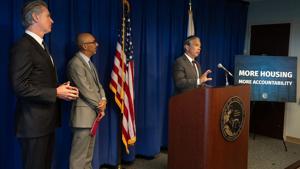
California Attorney General Rob Bonta and a coalition of 17 other Democratic attorneys general are urging the U.S. Department of Education to withdraw a proposed expansion of federal data collection on college admissions, arguing it would violate student privacy and distort civil rights law.
The coalition letter, sent Monday, urges the Education Department to withdraw its proposal, which would require colleges and universities to report detailed data to the federal government.
During a virtual news conference on Tuesday, Bonta criticized the proposed federal expansion of college admissions data collection, calling it an unjustified intrusion into privacy and a misrepresentation of civil rights law.
“We think their position is inappropriate and unjustifiable, so we’ll take one step at a time. I think our letter makes our position really clear,” Bonta said, answering questions from The Center Square.
“We think it’s an unnecessary intrusion into the privacy of Californians and is not an appropriate request,” Bonta added.
In August, President Trump directed the Department of Education to expand the Integrated Postsecondary Education Data System as part of greater efforts for the administration to expand its investigations into DEI policies.
The expansion would require institutions to report detailed admissions, financial aid and student data, including test scores, grade point averages, income, Pell Grant eligibility and graduation outcomes.
Bonta accused federal officials of distorting diversity, equity and inclusion efforts.
“Black is white, up is down when they look at DEI,” Bonta said. “They think programs that address historical discrimination and personal discrimination are the harassment.”
He said even foundational civil rights protections are being wrongly characterized as DEI violations, citing the 13th, 14th and 15th amendments, as well as the Civil Rights Act of 1964 and the Voting Rights Act of 1965.
“They’re not enforcing civil rights,” Bonta continued. “What they think is civil rights is actually undermining people’s civil rights.”
The U.S. Department of Education did not respond to a request for comment from The Center Square.
The coalition includes attorneys general from California, Colorado, Connecticut, Delaware, the District of Columbia, Hawaii, Illinois, Maine, Maryland, Massachusetts, New Jersey, New Mexico, New York, Nevada, Oregon, Vermont, Washington and Wisconsin.
Witnesses testify during second day of Prop. 50 lawsuit trial
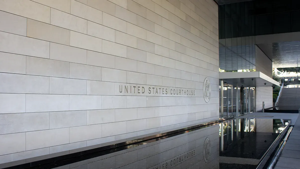
A Republican legislator behind California’s mid-decade redistricting lawsuit said the political consultant who drew the newly approved congressional districts isn’t showing up to defend them.
“He didn’t show up in the Elections Committee, he won’t show up in the Appropriations Committee, and now he won’t show up in court,” Assemblymember David Tangipa, R-Fresno, told The Center Square on Tuesday at the federal courthouse in downtown Los Angeles.
“If you’ve got something to hide, you’ve got to make sure you’re hiding,” said Tangipa, a member of the Assembly Elections Committee.
Tangipa, who filed a lawsuit last month in the U.S. District Court for Central California, made the statements about the main Proposition 50 consultant who drew the maps, Paul Mitchell. Tangipa spoke to The Center Square outside the Los Angeles courtroom where a three-judge panel Tuesday heard testimony from another mapping consultant and a Stockton-area resident who voted for Proposition 50.
The proposition, which created the congressional redistricting, passed in the Nov. 4 special election with nearly 65% of the vote. The lawsuit targets the proposition’s newly drawn districts that are designed to allow Democrats to pick up five more seats in the U.S. House during the 2026 midterm election.
In previous reporting by The Center Square, Tangipa said the Voting Rights Act mandates that certain standards be met when redrawing districts. He said those standards were not met.
Officials in Gov. Gavin Newsom’s office have said that Mitchell can’t be compelled to testify.
“We’re going to win on the merits,” Newsom said during a virtual press conference on Monday. “We’re very confident we will be successful.”
The Prop. 50 special election in California was in response to the five U.S. House seats Republicans may pick up in the 2026 midterm election because of mid-decade redistricting in Texas.
In November, a federal court blocked the redistricting campaign’s new maps from taking effect in Texas, stating that the Republican majority there ran afoul of voting rights laws by re-drawing districts that discriminated against voters of color, according to The Center Square’s previous reporting.
However, the U.S. Supreme Court upheld the new district maps in Texas, writing in a 6-3 decision that the Lone Star State was likely to win on the case’s merits.
Under Prop. 50, five California Republicans in the House – Kevin Kiley of Rocklin, Doug LaMalfa of Yuba City, Darrell Issa of San Diego County, Ken Calvert of Riverside County, and David Valadao of Bakersfield – all stand to lose their seats in the 2026 midterm elections next year.
Plaintiffs suing to stop the new congressional districts say the Prop. 50 maps were drawn to racially gerrymander the state. At the heart of that argument is a report on California’s districts written by researcher Sean Trende. The report, which was described in court testimony on Tuesday, contained various examples of how congressional districts could be drawn to prevent a racial gerrymander.
“Reviewing his report, he focused on only race and partisanship,” Anthony Fairfax, a demographic and mapping consultant, testified. “He didn’t consider the other factors that could cause district configuration, specifically, traditional redistricting criteria. Minimizing political subdivisions, in my opinion, wasn’t considered, as well.”
Trende also didn’t examine districts as a whole by examining population statistics for particular areas, among other considerations often used in drawing voting districts, Fairfax testified. Those district plans, Fairfax said, were all worse off than the 2025 plan in regards to three traditional redistricting criteria: equal population, contiguity and minimizing political subdivision splits. He also compared the 2021 maps, drawn by the California Citizens Redistricting Commission, and the 2025 maps using the three criteria.
“The takeaway is that both the 2021 and 2025 plans are very similar when it comes to traditional redistricting criteria,” Fairfax testified. “Race did not predominate in the creation of CD 13.”
A Stockton-area resident testified Tuesday that she voted in favor of the newly-redrawn district map that includes her community, which is now part of the 9th Congressional District. When asked in court if she favored electing more Democrats to assist low-income families, she answered yes.
“I think it’s very important to have representation in our community,” said Ines Ruiz-Huston, vice president of special programs and operations at El Concilio, a Stockton nonprofit that helps low-income families.
“We have a lot of families that really need support and help,” Ruiz-Huston testified. “I believe that what happens locally affects us nationally, and we need to have representation that will fend for us at a national level.”
Prop. 50, which gave California voters the chance to vote on newly-drawn Congressional district maps, took the responsibility of drawing district lines away from the California Citizens Redistricting Commission, which California voters approved the creation of in 2008. Voters gave the commission, which consists of Republicans, Democrats and independents, the task of drawing state legislative district lines in that 2008 vote. In 2010, voters chose to extend the commission’s duties to include congressional district lines, as reported previously by The Center Square.
The Citizens Redistricting Commission was not involved in the drawing of congressional district lines up for approval in the Prop. 50 special election. State officials, including Newsom, have said the new districts would be in effect for the 2026, 2028 and 2030 elections, but noted the independent redistricting commission would draw districts based on the 2030 census.
Attorneys general cite high rate of return on anti-Trump suits
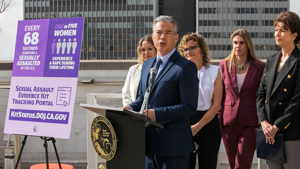
California’s litigation has resulted in $168 billion of federal funds staying in the state, Attorney General Rob Bonta told reporters Tuesday as he announced California’s 50th lawsuit this year against the Trump administration.
For every dollar spent on litigation, California gets back $33,000, a rate of return that would excite Wall Street investors, Bonta said during a virtual news conference that also included Colorado Attorney General Phil Weiser. Weiser said Tuesday’s lawsuit was Colorado’s 47th against the federal government.
Bonta, Weiser and Washington State Attorney General Nick Brown are co-leading the coalition of 17 Democratic attorneys general and Pennsylvania in the latest suit. Bonta and Weiser said they were suing the Trump administration to unfreeze federal funding that Congress allocated for electric vehicle charging infrastructure.
They said states were guaranteed federal funding under the Bipartisan Infrastructure Law.
During a question-and-answer period with reporters, The Center Square asked Bonta and Weiser about other issues ranging from education to a settlement with manufacturers of cars that allegedly lacked anti-theft technology, as well as the growing litigation against the Trump administration.
Bonta told The Center Square that he didn’t know the number of hours his staff had devoted to its 50 lawsuits against President Donald Trump’s administration. “I don’t have that off the top of my head, but we only sue when Trump breaks the law. We won’t sue if he follows the law. Every time he breaks the law, he hurts our people, and we’re going to sue him. That’s our duty. That’s our obligation.”
The Center Square reached out Tuesday to the White House, which commented on the large number of lawsuits.
“Instead of filing frivolous lawsuits against the Trump administration, left-wing politicians should focus on themselves and the problems they’ve created for millions of patriotic Americans,” White House spokeswoman Abigail Jackson told The Center Square.
Bonta noted California is winning 80% of its lawsuits against Trump.
“The returns on investment are orders of magnitude larger than the investment,” Bonta told The Center Square. “For a modest investment of attorneys who know the law and can gather and prepare the facets, we are literally securing billions of dollars. …
“Taxpayers should be very proud of their modest investments turning into huge returns,” Bonta said.
Bonta noted the results for California and Colorado represent the success that the 23 states in the broader Democratic coalition are seeing against Trump.
The Center Square asked Bonta if the litigation against Trump was distracting his office from other lawsuits and criminal prosecutions.
“Absolutely not,” Bonta said. “This is all additive, in addition to, on top of the work we always do. We continue to do the steady, important work of our office.”
Bonta said his office continues to work to protect civil rights as well as the rights of consumers and workers. He said his office also focuses on promoting housing, gun safety and ways to tackle the climate crisis.
“That work is not impacted. We continue to do that and deliver for Californians in every way,” Bonta said, noting his office received additional money for the Trump litigation.
Earlier during the news conference, he said his office spent $5 million of $25 million that the Legislature allocated during last fall’s special session for potential litigation against Trump and later received several millions of additional dollars. “I don’t have an exact number for you.”
Answering a question from The Center Square, Weiser said Colorado has secured over $1 billion in federal funds during its litigation against Trump. He noted the state managed that with “only three additional FTEs, full-time equivalents.”
“Colorado faced all sorts of threats to our funding, and we’ve been able to secure it, get access to it in face of illegal restrictions,” Weiser said. “It’s been very meaningful, very impactful stuff.”
“I’ve talked to people who are miracle workers who have their jobs because we took this action,” Weiser said, noting they included public health officials doing important work.
He said the Trump administration is acting outside the law in a way that is “egregious” and noted the administration is doing so to a worse extent than the first Trump term.
“During President Trump’s first term, I ran 11 cases overall, including cases from before I took office,” Weiser said. “My standards haven’t changed. Their behavior has.”
On another matter, The Center Square asked Bonta for more information on a settlement on a lawsuit with Kia America and Hyundai Motor Co. for allegedly lacking anti-theft technology in their cars. Thirty-five states, including California and Colorado, sued the manufacturers.
“Going forward, all of the cars made by Kia and Hyundai in the United States will have the appropriate anti-theft technology,” Bonta told The Center Square. “And there is a $4.5 million restitution to help drivers who had vehicles that were damaged by thieves.”
The settlement also pays $4.5 million to the states to cover their costs of investigating Kia and Hyundai. And the companies have agreed to offer free zinc-reinforced ignition cylinder protectors to owners or lessees of eligible vehicles, including vehicles that earlier were eligible only for software updates. Consumers can find more information at www.HKMultistateimmobilizersettlement.com.
On another topic, The Center Square asked Bonta about Democratic attorneys general’s efforts to fight federal requirements for data collection on diversity, equity and inclusion policies at colleges and universities.
“We think it’s an unnecessary intrusion into the privacy of Californians and is not an appropriate request,” Bonta said.
“They’re not enforcing civil rights,” he continued. “Their vision of civil rights is to undermine civil rights protection, to try to dismantle the key provisions that promote the civil rights of the American people.”
Trump tells Venezuela they are ‘completely surrounded’; issues warning to Maduro
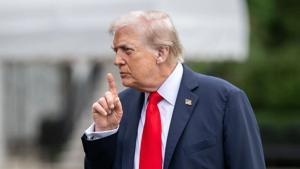
A day before President Donald Trump is set to address the nation, he releases an ominous social media post warning Venezuela, saying the country is “completely surrounded.”
The president noted that the South American nation is surrounded by the “largest armada ever assembled in the history of South America,” adding that it “will only get bigger, and the shock to them will be like nothing they have ever seen before.”
He followed the warning telling leaders of the country to “return to the United States of America all of the oil, land, and other assets that they previously stole from us.”
Trump called the Maduro regime “illegitimate,” accusing Venezuelan leadership of “using oil from these stolen oil fields to finance themselves, drug terrorism, human trafficking, murder, and kidnapping.”
The president said for those reasons he was designating the Venezuelan regime as a foreign terrorist organization.
“Therefore, today, I am ordering a total and complete blockade of all sanctioned oil tankers going into, and out of, Venezuela. The illegal aliens and criminals that the Maduro regime has sent into the United State during the weak and inept Biden administration, are being returned to Venezuela at a rapid pace,” Trump wrote. “America will not allow criminal, terrorists, or other countries, to rob, threaten, or any other assets, all of which must be returned to the United States, immediately.”
The post comes on the heels of the U.S. seizing an oil tanker off the coast of Venezuela, which U.S. officials claimed was transporting sanctioned oil. Trump indicated that, eventually, the U.S. would like to take possession of the oil ultimately.
The Trump administration, specifically the Department of War, has been increasing its military presence in the region, including deploying the USS Gerald Ford aircraft carrier and its carrier strike group in the Caribbean.
The Department of War has been conducting counter-narco operations in the region, striking more than two dozen suspected drug boats off the coasts of Venezuela and Colombia.