National News
November inflation at 2.7%, lower than expected

Consumer prices rose by 0.2% in the two month period between September and November.
In the past 12 months, overall prices rose by 2.7%, which marks a slowdown from 3% reported in September, according to the Bureau of Labor Statistics.
Due to the federal government shutdown, BLS did not collect survey data in October. Instead, BLS retroactively acquired nonsurvey data from October and resumed its data collection efforts on Nov. 14, after the government reopened.
The index for shelter rose by 0.2% and the energy index rose by 1.1% over the two month period ending in November. Food prices increased by 0.1% during the same two-month period.
The inflation index for energy prices over the past 12-months rose by 4.2%. Over the past 12 months, gasoline prices increased by 0.9%; fuel oil rose by 11.3%; natural gas rose by 9.1%; electricity increased by 6.9%.
Overall food prices increased by 2.6% over the last year with meats, poultry, fish and eggs rising by 4.87%; nonalcoholic beverages increased 4.3%; cereals and bakery products increased 1.9%; and fruit and vegetables rose 0.1%. Dairy and “related products” saw a decrease of 1.6% over the same 12-month period.
Heather Long, chief economist at Navy Federal, said inflation came in lower than expected in November.
“It’s hard to read too much into the data given how much the shutdown impacted data collection,” Long said in a social media post Thursday.
In an address to the nation Wednesday night, President Donald Trump said “inflation is stopped.”
Trump said if prices haven’t fallen, they will soon.
“Prices on electricity and everything else will fall dramatically,” Trump said.
In June 2022, the United States experienced a 40-year peak of inflation at 9.1%. It has fallen since then and remained around 3% over the last several months.
Trump touts accomplishments, future policies during primetime address
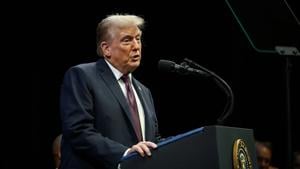
In what is likely his final address to the nation of the year, President Donald Trump touted what he said were his accomplishments, and previewed some policies to come in the new year.
The president began his address by taking aim at the Biden administration and Democrats by saying he inherited “a mess” when he came into office, highlighting the inflation and border crisis, high crime and men playing in women’s sports.
“Now you have a president who fights for the law-abiding, hard-working people of our country, the ones who make this nation run, who make this nation work. And after just one year, we have achieved more than anyone could have imagined,” Trump said.
The president spent a significant amount of time in his 18-minute address discussing affordability, which has taken center stage in recent weeks as he and Vice President JD Vance have been highlighting the administration’s policies trying to bring down costs, one of the central themes of his campaign.
The president used graphics to highlight the differences in the economy between the Biden administration and his own, as evidence that his policies are bringing costs down across the country.
Noting that he is just beginning, he claimed that “wages are going up much faster than inflation,” saying that the wages of “the typical factory worker” have increased by $1,300, and $1,800 for miners.
The president also announced that military members will be receiving a “warrior dividend” ahead of the Christmas holiday, rewarding every service member with $1,776 in honor of the country’s 250th birthday, while touting a record number of enlistments in the military branches.
Trump also promised to overhaul the health care system and bring down costs, reiterating his plan to give money directly to Americans to purchase their own health care insurance. He also outlined his plan to reduce the cost of drugs and pharmaceuticals by as much as 600%, arguing that his threat of tariffs has helped bring down those costs.
He touted lower energy costs by eliminating Democrats’ environmental policies, which he claims caused energy prices to skyrocket.
The president also briefly touched on interest rates, promising that his pick to lead the Federal Reserve will “believe in lower interest rates by a lot, and mortgage payments will be coming down even further early in the new year.”
In addition, he announced that in the coming year, he will unveil “some of the most aggressive housing reform plans in American history,” saying that a significant factor in driving up housing costs was “the colossal border invasion” during the prior administration.
He then segued into the border crisis, reiterating that it contributed to rising costs, including for housing because of a flooding of the rental market, while taking away American jobs and overwhelming the health care industry.
He said that “for the first time in 50 years, we are now seeing reverse migration, as migrants go back home, leaving more housing and more jobs for Americans. And the year before my election, all net creation of jobs was going to foreign migrants. Since I took office, 100% of all net job creation has gone to American-born citizens.”
He wrapped up his address by looking toward 2026, highlighting the nation’s 250th birthday and massive events such as the World Cup and Olympics.
“There could be no more fitting tribute to this epic milestone than to complete the comeback of America that began just a year ago. When the world looks at us next year, let them see a nation that is loyal to its citizens, faithful to its worlds, confident to its identity, certain to its destiny and the envy of the entire globe. We are respected again, like we have never been respected before,” the president said before wishing Americans a Merry Christmas and happy new year.
The address comes less than a year ahead of the 2026 midterm elections, as Republicans hold a narrow majority in both chambers of Congress.
Closing arguments made in congressional redistricting suit

Lawyers supporting and opposing California’s congressional redistricting maps made their closing arguments in the lawsuit Wednesday in federal court in Los Angeles.
The case is now in the hands of a three-judge panel, led by U.S. District Judge Josephine L. Staton. Judges will decide whether to grant plaintiffs’ request for a preliminary injunction that would keep the Proposition 50 maps from taking effect. Voters approved Proposition 50, which redrew congressional districts to pick up five Democratic House seats in the 2026 midterm election, by nearly 65% during a special election Nov. 4.
Lawyers representing the California Republican Party and the U.S. Department of Justice argued in front of the judges in favor of the preliminary injunction. The lawsuit cited race as the motivation in drawing new district boundaries.
Representing defendants, lawyers for the Democrat-led Proposition 50 said during closing arguments that, while they concede that the maps constitute a gerrymander, it is not a racial gerrymander. They said it’s a politically-partisan gerrymander.
“There is no direct evidence in this case that racial gerrymandering occurred,” said Jennifer Rosenberg, deputy attorney general for the California Department of Justice, during her closing arguments Wednesday. “Where the number of Democrats in a district decreased, the number of Hispanics also decreased. Where the number of Democrats increased, there was no pattern with respect to race, nor should there have been because this was a partisan gerrymander.”
Lawyers for the plaintiffs, which include Assemblymember David Tangipa, R-Fresno, and the U.S. Department of Justice, argued for three days in U.S. District Court in Los Angeles that the main person who drew the congressional district maps did racial gerrymandering to give Hispanic voters an advantage in certain right-leaning districts. The attorneys said that ran afoul of the Voting Rights Act of 1965.
In particular, the crux of the plaintiffs’ argument was whether racial gerrymandering was the motivation behind redrawing congressional districts such as the 13th, which includes Modesto, and the 9th, which includes Stockton. Both districts are near each other in Central California.
“The question is, was this particular district done with race as a predominant factor?” asked David Goldman, an attorney for the U.S. Department of Justice and one of the lawyers arguing for the plaintiffs.
“Our position here is that we believe that there is evidence that there is a racial gerrymander,” Goldman argued Wednesday in court.
Tangipa told The Center Square on Wednesday in a phone interview that he was optimistic about the outcome of the case.
“I am hopeful, and I put a lot of trust in the Department of Justice and the Dhillon Law Firm,” Tangipa said about the lawyers who represented the plaintiffs.
Tangipa also told The Center Square he expects the court will make a decision by Friday.
Rosenberg and other lawyers involved in the case declined to be interviewed after court adjourned on Wednesday.
In previous comments about the lawsuit, officials from California Gov. Gavin Newsom’s office called the case a “loser lawsuit” designed to silence California voters.
“We are confident that the court will see what every voter knew when Prop. 50 overwhelmingly passed last month,” Newsom’s office previously wrote to The Center Square via email.
Notably absent during the three days in the courtroom was Paul Mitchell, who drew the Prop. 50 maps. According to one of the judges, Kenneth Kiyul Lee, Mitchell could have appeared in court to defend the way the maps were drawn.
“Paul Mitchell didn’t show up,” Lee said in court Wednesday. “He asserted privilege over 100 times. You can’t have it both ways and say he’s not a state actor and he’s asserting legislative privilege.”
“The biggest thing that I think everybody should be asking is, if we all know that Paul Mitchell drew these maps, why is Paul Mitchell claiming legislative privilege when he’s not a legislator?” Tangipa told The Center Square Tuesday. “He can run around on podcasts and brag about drawing these maps, how he created more Latino districts, but he can’t get on the stand right now, put his hand up and swear that he’s telling the truth.”
The temporary U.S. House of Representatives district lines, which will be effect for 2026, 2028 and 2030 elections, were drawn in response to Texas’ own mid-decade redistricting effort earlier this year. The U.S. Supreme Court recently reversed a lower court’s decision to ban use of the Texas maps, which gave Republicans a five-seat advantage in the midterm elections. The Prop. 50 election in California was meant to give Democrats a five-seat advantage in Congress to offset Texas’ Republican influence in Washington, D.C., where the GOP currently holds a narrow majority in the U.S. House.
Other legislators have taken positions on the Prop. 50 lawsuit being heard in Los Angeles this week.
“Earlier this month, the Supreme Court issued a ruling allowing Texas to use new congressional districts that were enacted without voter approval,” Assemblymember Gail Pellerin, D-Santa Cruz and chair of the Assembly Elections Committee, told The Center Square via email during the first day of the case on Monday. “By contrast, California’s process empowered voters. I am confident that the court will rule in favor of the congressional maps that California voters overwhelmingly approved.”
In November, a federal court blocked Texas’ redistricting campaign, stating that the Republican majority there violated voting rights laws by redrawing districts that discriminated against voters of color, as reported previously by The Center Square.
If the new California maps are allowed to go into effect, five Republican lawmakers from the state stand to lose their seats in the House: Kevin Kiley of Rocklin, Doug LaMalfa of Yuba City, Darrell Issa of San Diego County, Ken Calvert of Riverside County and David Valadao of Bakersfield.
U.S. House passes GOP health care bill, sends to Senate

The U.S. House passed the Lower Health Care Premiums for All Americans Act in a party line, 216-211, vote Wednesday, sending the bill to its likely demise in the Senate.
The bill, which will almost certainly fail to reach the Senate’s 60-vote threshold, is Republicans’ alternative to extending enhancements to the Obamacare Premium Tax Credit. Congress temporarily expanded the PTC during the COVID-19 pandemic, and its reversion to original pre-pandemic levels will partially contribute to rising premiums in 2026.
“For too long, Democrats have forced hardworking American taxpayers to bail out big health insurance companies for hundreds of billions of dollars. Meanwhile, Americans are left paying for increasingly expensive care with fewer choices, lower quality, and worse health outcomes,” Republican House leadership said in a statement.
“The Lower Health Care Premiums for All Americans Act puts patients first,” they continued. “It does exactly what its title promises and more: lowers premium costs, expands access to affordable, quality care, gives every American more options and flexibility to choose coverage that is best for their needs, and brings greater transparency to the health care system.
Key reforms in the bill include increasing oversight and transparency requirements for pharmacy benefit managers, reforming health reimbursement arrangements, and excluding stop-loss policies from the definition of health insurance coverage.
Most notably, the bill would finally appropriate funding for cost-sharing reduction (CSR) payments, as well as loosen restrictions on which employers can form association health plans.
The Congressional Budget Office projects that unlocking CSR payments would lower gross benchmark premiums for all Americans by 11%, though 300,000 people annually could lose their existing health insurance between 2027 and 2035.
The new rules for health association plans, however, would provide insurance to 200,000 people who currently have none. Allowing small business owners and independent workers to band together across industries to form association health plans would increase the total number of people on those plans by an estimated 700,000.
Democrats widely condemned the bill following its passage.
“Instead of extending the ACA credits, Republican leadership pushed a health care scheme that does nothing to fix the very crisis they caused,” House Budget Ranking Member Brendan Boyle, D-Pa., said on X. “They are ignoring millions of Americans whose health care premiums are skyrocketing.”
The Senate is unlikely to vote on, let alone pass, the Lower Health Care Premiums for All Americans Act before lawmakers leave for Christmas break, meaning millions of Americans will see premiums spike in two weeks.
Tips solicited for Brown University still at-large shooter

Law enforcement officials continued their hunt for the suspect in the deadly shooting at Brown University on Wednesday as they doubled down on calls for help from the public identifying a man seen in videos pieced together by investigators.
Providence Police Chief Oscar L. Perez Jr. said the investigation is complex and is going to take time but expressed confidence that authorities will eventually track down the suspect.
“I believe that this is probably the most intense investigation going on right now in this nation,” Perez told reporters at a live-streamed briefing. “A person is going to get caught. We’re going to do our jobs and we’re not going to stop until we do.”
Authorities shared a timeline of when the videos were captured, most of which were obtained from private home security cameras in the neighborhood surrounding the university.
They also released a map showing the Providence streets where they say a person of interest is confirmed to have been on the day of the shooting. They hope to generate more videos from private cameras to help identify the suspect.
Providence Police are releasing a map showing the streets where the person of interest in the Brown University shooting is confirmed to have been present on the day of the incident.Streets marked in green indicate locations where footage confirms the person of interest was… pic.twitter.com/WQf1d72OD9— Providence Police (@ProvidenceRIPD) December 17, 2025
Perez also cautioned people from spreading misinformation and photos doctored by artificial intelligence on social media, which he said could hamper the ongoing investigation as it enters its sixth day.
“I want to urge you, the public, not to rely on AI-generated images that are currently being shared on social media,” he said. “The updates and information you’re getting will be provided exclusively through this department’s social channels.”
The attack occurred Saturday at the Ivy League school’s engineering building as students were taking final exams, authorities said. The victims included Ella Cook, a 19-year-old Brown sophomore and vice president of the Brown College Republicans club, and Mukhammad Aziz Umurzokov, who graduated from high school earlier this year.
But five days after the shooting, the suspect remains at large
The FBI has offered a $50,000 reward for information leading to the arrest of the suspect, described as being approximately 5-foot-8 inches tall with a “stocky build.” Photos and videos shared by police show a figure dressed in dark clothing, with a beanie and face mask, walking near Brown University about two hours before the shooting.
On Wednesday, Providence police also shared multiple photos of a person who was seen near the person of interest and asked the public to help identify them. The photos show the person standing outside wearing a grey hood, blue jacket and black pants, carrying a light-colored bag.
“Once we identify who this person is,” Rhode Island Attorney General Peter Neronha told reporters, “I believe we’ll be able to locate them.”
Providence Police are releasing a map showing the streets where the person of interest in the Brown University shooting is confirmed to have been present on the day of the incident.Streets marked in green indicate locations where footage confirms the person of interest was… pic.twitter.com/WQf1d72OD9— Providence Police (@ProvidenceRIPD) December 17, 2025
The Providence Police Department is urging anyone with information about the person of interest to call its tipline 401-272-3121 or the FBI’s tip line.
Senate passes $900 billion Pentagon funding bill, sends to Trump’s desk

The U.S. Senate passed the 2026 National Defense Authorization Act in a 77-20 vote Wednesday, sending the roughly $901 billion bill to President Donald Trump’s desk for his signature.
“This year’s NDAA ushers in the most significant acquisition reform in decades and helps the U.S. deter increasingly hostile nations,” Senate Armed Services Committee Chair Roger Wicker, R-Miss., said. “The American people voted for peace through strength, and this NDAA delivers.”
Among other provisions, the mammoth NDAA authorizes $38 billion for aircraft, $34 billion for nuclear defense, $26 billion for shipbuilding, $25 billion for munitions and $900 million to combat drug trafficking.
Military members will receive a 3.8% pay raise, and $1.4 billion is set aside for the construction of barracks and family housing. Hundreds of millions of taxpayer dollars are allocated for new childcare centers and schools, and $577 million will go toward renovating military hospitals and building new medical facilities.
A significant portion, $142 billion, goes toward research and development of new military technologies, including biotechnology, hypersonic weapons and artificial intelligence.
The bill provides $500 million for the U.S.-Israel missile defense cooperation and $1 billion for the Taiwan Security Cooperation Initiative. It also prohibits American taxpayer dollars from going to certain Chinese biotech companies.
While the majority of the NDAA’s content is bipartisan, both sides of the aisle made compromises in the bill.
Republican leadership allowed for $800 million in assistance to go to Ukraine over the next two years, repealed the 2002 Authorization for Use of Military Force for Iraq, and agreed to a provision limiting funding to the Secretary of Defense until he releases unedited footage of the strikes on Venezuelan drug boats.
Democratic leadership swallowed a $1.6 billion cut to climate change-related spending, an expansion of the Trump administration’s ability to enforce immigration laws via military force, and a directive to intelligence agencies to review – and if possible, declassify – intelligence about the origins of the COVID-19 virus.
The House passed the more than 3,000-page bill last week, also with bipartisan support.
Bongino to resign as FBI deputy director in January
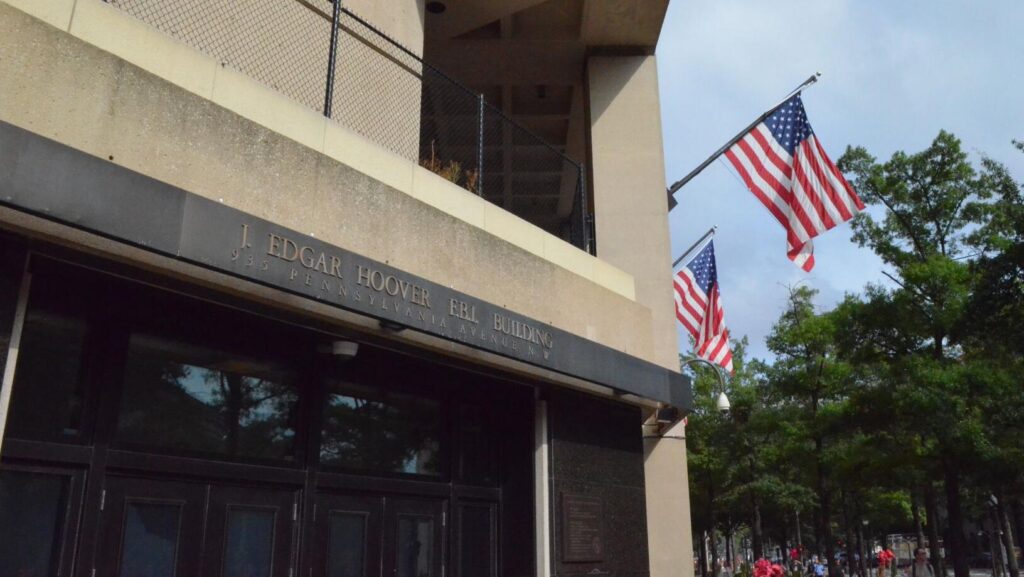
Dan Bongino, deputy director of the Federal Bureau of Investigation, will vacate his position in January.
Bongino gave no reason for his leaving in the Wednesday social media post announcing his decision.
“I will be leaving my position with the FBI in January. I want to thank President Trump, AG [Pam] Bondi, and Director [Kash] Patel for the opportunity to serve with purpose,” Bongino posted on X. “Most importantly, I want to thank you, my fellow Americans, for the privilege to serve you. God bless America, and all those who defend Her.”
Patel acknowledged Bongino’s resignation, calling him “the best partner I could’ve asked for in helping restore this FBI.”
“He brought critical reforms to make the organization more efficient, led the successful Summer Heat op, served as the people’s voice for transparency, and delivered major breakthroughs in long unsolved cases like the pipe bomb investigation. And that’s only a small part of the work he went about every single day delivering for America,” Patel said on X.
“He not only completed his mission – he far exceeded it. We will miss him but I’m thankful he accepted the call to serve. Our country is better and safer for it.”
Bongino’s departure comes as the FBI continues to hunt for the suspect in the deadly shooting at Brown University.
Additionally, the Department of Justice, which houses the FBI, is set to release all federal records on convicted sex trafficker Jeffery Epstein, who died in prison, and his associate Ghislaine Maxwell, who is serving a 20-year prison sentence.
Vance, Garrity stump for Trump agenda with midterms on the horizon

Keeping Pennsylvania’s scales tipped into the red ahead of the 2026 midterms was underscored again this week as Vice President J.D. Vance visited Allentown, stumping for his boss’s economic policies and bringing Republican hopefuls into the limelight with him.
While there, he told a crowd gathered at Uline Shipping Supplies in Alburtis that “his job every single day is to make it so that you guys can have a safe and prosperous life in this country that all of us love.”
“We inherited a mess, but I think that in 11 months, we have made great progress to making this a safer, a more secure and a more prosperous nation,” he said. “Let’s work for the next three years to do even more great work for the American people, and let’s rebuild this country together.”
While the city itself is a Democratic stronghold, the surrounding areas in the county – and the broader Lehigh Valley – contain more conservative suburbs and rural areas, making the overall region a crucial swing area for both major parties.
Vance acknowledged the still-high prices and affordability issues concerning many Americans, attributing them to the previous administration’s high deficits, energy costs, and inflation. He cautioned that fixing high prices would take time, but added that progress is being made.
It’s a familiar message President Donald Trump first gave when visited Monroe County last week to energeize the party’s base and put more Republicans into state and local offices.
Treasurer Stacy Garrity hopes to be one of them as she vyes to unseat Gov. Josh Shapiro next year, alleging he’s more focused on his rumored presidential ambitions casting him as an adversary who fights the administration in court instead of working with it.
But she faces an uphill battle. Shapiro is recognized as a formidable candidate with broad appeal who trounced his Republican challenger, Sen. Doug Mastriano, in the 2022 gubernatorial election by double digits.
According to a Quinnipiac University poll released in October, Shapiro’s 60% approval rating was a new record best since he took office in 2023. A hypothetical match-up with Garrity puts him ahead 55%-39%, while 7 out of 10 respondents said they don’t know enough about the treasurer to decide whether she’d get their vote.
Carr defends FCC actions, promises greater broadband
Leaders of the Federal Communications Communications Commission outlined goals for increased broadband access, spectrum development and rules deregulation on Wednesday.
In a hearing before the Senate Commerce Committee, FCC chairman Brendan Carr – who was appointed to lead the commission by President Donald Trump in January – said the commission has sought to reduce more than 1,000 rules and regulations that were previously on the books.
“Eliminating those costly regulations is part of our affordability war,” Carr said.
Carr also highlighted the efforts to release a large swath of spectrum by July 2027. He said this release helps the United States take back ground from China in spectrum, and make broadband internet more affordable.
“The data shows if we free up more spectrum we can allow providers, for instance, to compete for in-home broadband,” Carr said. “When they do that with fixed wireless, we’ve seen that cable modem prices dropped.”
Olivia Trusty, a commissioner on the FCC’s board, said the United States can have an expanded role over international conversations because of the greater release of spectrum.
“We can work with our international allies in advance to preempt those who are seeking to undermine U.S. interests,” Trusty said.
Senators across partisan divides both encouraged greater development of broadband for areas in their states with less connectivity.
Sen. Maria Cantwell, D-Wash., said she is concerned about a lack of competition in the spectrum industry that disincentivizes companies to provide broadband services to rural or hard-to-reach areas.
“They basically expand to the areas that they can have customers, but not to the hard-to-serve areas or again figuring out a price point that will allow them to deliver service so we can expand to the [about] 20 million Americans that don’t have broadband,” Cantwell said.
Sen. Jerry Moran, R-Kansas, stressed the importance of greater broadband networks to access local news, weather and sports. He called on Carr and the other FCC commissioners to produce updated information on the broadband map to help individuals who are in underserved areas.
“Continue your efforts to recover from the mapping process, that includes improvements in the ability for those in Kansas and across the country to make changes in the maps based upon actuality and the reality of what we actually provide in service to Kansans,” Moran said.
Carr said much of the issue with broadband coverage comes from a lack of coordination in which agencies handle broadband funding. He noted an April report from the Government Accountability Office that found the accuracy of broadband access maps to be “uncertain.”
Carr said the FCC has coordinated with the National Telecommunications and Information Agency, the National Economic Council and other agencies to address coordination issues.
Several senators sharply criticized Carr over his comments in reference to a controversial monologue from late night host Jimmy Kimmel.
“We can do this the easy way or the hard way,” Carr said. Executives at ABC temporarily paused broadcasting “Jimmy Kimmel Live!” The show has since returned to the air.
Sen. Amy Klobuchar, D-Minn., questioned whether Carr thought it appropriate to use his position to threaten companies that broadcast political satire. She also questioned him on investigations of NPR and PBS.
In January, Carr launched investigations into NPR and PBS for violations of commercial advertisements. Carr defended the investigations at the hearing.
“Any licensee that operates on the public airways has a responsibility to comply with the public interest standard,” Carr said.
Warner Bros. board opposes Paramount’s $108B hostile bid

The Warner Bros. Discovery board Wednesday advised shareholders to reject Paramount Skydance’s acquisition offer, calling Netflix’s offer superior.
But it’s still up to stockholders to make the final decision. They have until Jan. 8 to vote to accept or reject Paramount Skydance’s offer, which is called a “hostile bid” because it doesn’t require the Warner Bros. Discovery board’s approval. It’s pitched to shareholders.
“The WBD Board urges you to reject Paramount Skydance’s unsolicited, inferior and illusory tender offer,” the board wrote in a letter to stockholders.
“After a robust and highly competitive strategic review process, the WBD Board had already recommended the transaction with Netflix. Today they have reaffirmed that this transaction is the best and most certain path forward for WBD and its stockholders and therefore recommend you vote to approve the Netflix Merger when the WBD stockholder meeting is convened,” the board wrote.
Netflix on Wednesday said it welcomed the Warner Bros. Discovery recommendation, while Paramount Skydance reaffirmed its all-cash offer of $30 a share to buy the entire Warner Bros. Discovery company.
Netflix is offering $27.75 per share in a mix of cash and stocks for Warner Bros. and its assets such as HBO, HBO Max, DC Comics and DC Studios. Under Netflix’s offer, Warner Bros. Discovery’s cable networks, such as CNN, TNT, HGTV and Food Network, would be spun off into a separate, publicly traded company.
Paramount Skydance’s offer has an equity value of $77.9 billion and a total enterprise value of $108.4 billion. The Netflix deal has an equity value of $72 billion and an enterprise value of $82.7 billion.
Despite those numbers, the Warner Bros. Discovery Board and Netflix say the Netflix deal is better. In it letter to stockholders, the board noted shareholders will get the additional value of shares from Discovery Global, the newly separated company with the cable networks.
“The Warner Bros. Discovery Board reinforced that Netflix’s merger agreement is superior and that our acquisition is in the best interest of stockholders,” said Netflix Co-CEO Ted Sarandos in a statement Wednesday.
He noted Netflix, the world’s largest streaming service, remains committed to releasing Warner Bros. movies in theaters.
But David Ellison, chairman and CEO of Paramount Skydance, said he feels encouraged by the feedback his company has received from Warner Bros. Discovery shareholders “who clearly understand the benefits of our offer.
“We will continue to move forward to deliver this transaction, which is in the best interest of WBD shareholders, consumers and the creative industries,” Ellison said in a statement.
Paramount Skydance said its deal includes an equity commitment from the Ellison family trust, which contains more than $250 billion in assets. It also noted Warner Bros. Discovery shareholders could tend their shares now in favor of Paramount Skydance rather than having to wait for months to approve the Netflix offer at a special shareholder meeting.
But economist Wayne Winegarden previously told The Center Square that the Netflix offer could ultimately be better for Warner Bros. Discovery stockholders because they could make money from the company spinning off its cable networks.
The Netflix deal also could be better for Warner Bros. employees because the risk of layoffs would be less, said Winegarden, a senior business fellow at the Pasadena-based Pacific Research Institute. He noted there are more redundancies between Warner Bros. and Paramount Skydance than between Warner Bros. and Netflix.
Warner Bros. and Netflix differ from each other more than Burbank-based Warner Bros. and Hollywood-based Paramount, two of history’s longest operating movie studios.
Sarandos of Netflix sees his company and Warner Bros. as ideal partners.
“Netflix and Warner Bros. complement each other, and we’re excited to combine our strengths with their theatrical film division, world-class television studio, and the iconic HBO brand, which will continue to focus on prestige television,” Sarandos said.
Netflix Co-CEO Greg Peters said a Netflix acquisition of Warner Bros. would be “pro-consumer, pro-innovation, pro-creator and pro-growth.
“Together we will deliver an even broader selection of great series and films that audiences can watch at home and in theaters, while driving long-term value for our stockholders,” Peters said.