National News
Plaintiff in redistricting lawsuit predicts Supreme Court fight
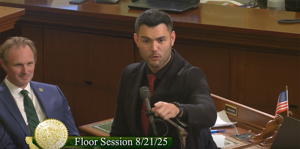
The lead California legislator heading up the federal lawsuit challenging congressional redistricting expects the case to land in the U.S. Supreme Court.
“If this has to go to the Supreme Court, we’re more than happy to take it to the Supreme Court,” Assemblymember David Tangipa, R-Fresno, and lead plaintiff in the case, told The Center Square on Thursday. “It probably will end up there either way, whether we appeal or Gov. Newsom’s team appeals.”
The case, heard this week in U.S. District Court in downtown Los Angeles, ended after two days of testimony and one day of closing arguments. The three-judge panel deciding the case – Josephine L. Staton, Kenneth Kiyul Lee and Wesley L. Hsu – adjourned the court early Wednesday afternoon.
Tangipa previously told The Center Square he believes the judges’ ruling could come by Friday.
During closing arguments on Wednesday, lawyers representing Tangipa and the U.S. Department of Justice, another plaintiff, said the Proposition 50 maps California voters approved in the Nov. 4 special election are illegal. Attorneys argued the newly-drawn maps constitute a racial gerrymander, which runs afoul of the Voting Rights Act of 1965.
Lawyers defending the maps on behalf of Gov. Gavin Newsom and California Secretary of State Shirley Weber said the maps constitute a gerrymander, but not a racial one. Rather, the maps constitute a politically-partisan gerrymander, which does not go against the Voting Rights Act, according to the attorneys.
California voters passed Prop. 50 on Nov. 4 with 64.4% of the vote, with 7,452,945 for and 4,116,810 against. Tangipa filed the lawsuit days later, alleging that the special election to re-draw California’s congressional districts amounted to a “rush-job rejiggering” of district lines. The mid-decade redistricting push was California’s response to Texas’ own mid-decade redistricting effort earlier this year. The Texas effort is designed to pick up five Republican seats in the U.S. House during the 2026 midterm election. The California map is meant to help Democrats gain five seats to counter that.
If the Prop. 50 maps are allowed to stand, the maps would be in effect for the 2026 midterm elections, the 2028 presidential election and the 2030 midterm election. Then the power to draw district maps would go back to the California Citizens Redistricting Commission. California voters approved the creation of the commission in 2008 to draw state legislative district lines before extending that power two years later to include congressional districts.
“In California, we should be able to trust that our elections are fair and transparent,” Assemblymember Alexandra Macedo, R-Tulare and a member of the Assembly Elections Committee, told The Center Square via email Thursday. “Proposition 50 disregards the California Independent Redistricting Commission’s maps and replaces them with new gerrymandered congressional lines that are now being challenged in federal court.”
Democratic legislators who sit on election committees in the California Assembly and state Senate did not respond before press time Thursday to The Center Square’s requests for comment.
Texas leaders propose solution for northern border, national security

A coalition in Texas, including law enforcement, policy experts and lawmakers, is working on solutions for northern border security.
The effort is being spearheaded by the Texas Public Policy Foundation, working with Canadian-U.S.-Future Borders Coalition, Canadian Center of North American Prosperity and Security, and others to develop national security solutions.
They’re doing so after President Donald Trump for the first time in U.S. history declared a national emergency at the U.S.-Canada border.
The longest international border in the world of 5,525 miles has been largely unmanned and unprotected with increased threats of terrorism and systemic lack of operational control, The Center Square reported. Unlike the 1,954-mile U.S.-Mexico border, there’s no border wall, significantly less technological equipment exists and far fewer agents are stationed there.
National security threats increased during the Biden and Trudeau administrations as the greatest number of illegal border crossers and greatest number on the terrorist watch list were apprehended by U.S. officials at the northern border, The Center Square first reported.
Some Canadians have expressed concerns about terrorism threats, pointing to visa policies facilitating entry to those with alleged ties to Islamic terrorist organizations, including granting citizenship to an Egyptian connected to ISIS who was arrested after planning a terrorist attack in Toronto.
Canada “has become a hotbed of radicalization, fanaticism, and jihadism,” after the Oct. 7, 2023, Hamas terrorist attack against Israel, although major Islamic terrorist incidents date to 2006, CNAPS argues. Last year, there were eight Islamic terrorism-related incidents in Canada or involved Canadians living abroad, CNAPS said. Nearly 6,000 antisemitic incidents were reported in 2023 alone, it notes, adding that “Canada’s antisemitic terrorism crisis should solidify the fact that Canada is a national security risk of the U.S.”
Getting border security right “is not optional – it’s essential,” Future Borders Coalition, which has proposed solutions, argues. “Canada and the United States share the longest undefended border in the world. Two-thirds of Canadians live within 100 kilometers of this border, more than 400,000 people and $3.6 billion CAD in goods move across it. The integrity of this border directly impacts the safety and prosperity of both nations.”
This month, CNAPS and First Nation police chiefs joined Texas sheriffs in the first international border security operation in south Texas, The Center Square exclusively reported. The police chiefs are on the front lines of border security, underfunded and understaffed, hoping the Trump administration will help them get the resources they need to combat Mexican cartels, MS-13 and transnational criminal organizations targeting their reservations. Reservations straddling the border are suffering from human, drug and weapons smuggling and trafficking, The Center Square reported.
Despite claims by the Canadian government to surge $1.3 billion for border security, First Nation police have received none of it, they argue. Canada’s Department of Public Safety plans to eliminate funding for some altogether in March, Dwayne Zacharie, president of First Nations Chiefs of Police Association, told The Center Square.
A lack of Canadian government resources has enabled organized criminal networks to infiltrate reservations, “taking advantage of our lack of resources, and that affects national security in Canada as well as in the United States,” Zacharie said.
“The Canadian government refuses to understand the threats” of transnational crime in Canada and on First Nation reservations, TPPF senior fellow Ammon Blair said at a TPPF event on northern border security. Blair, a 20-year Army veteran and 10-year Border Patrol veteran, is working with lawmakers on solutions. First Nation police organizations are being “left behind to deal with foreign terrorist organizations without giving them the resources. And that is all because Canada refuses to understand the threat,” he said.
It’s not just the government, but public perception, Jamie Tronnes with CNAPS said. “If you tell Canadians we have a cartel problem, they’ll laugh at you. They don’t believe it,” she told The Center Square. According to a recent survey, only 28% of Canadians cite immigration as a top concern; border security isn’t even listed as a topic.
“Organized crime is very agile; it adapts very quickly. When it sees a weakness, that’s what it exploits. It’s like water finding a crack. Right now, indigenous policing in Canada is a gap because we’re not properly funded and we’re not properly resourced,” Zacharie said. “There’s no such thing as national security without including all the partners, and that means First Nation policing is a huge part of the national security picture.”
Canadians and Americans need to understand that “we’re at war,” Blair said, similar to insurgents controlling territories that U.S. troops fight overseas.
Transnational criminal organizations are using “unconventional, hybrid warfare,” tactics former active duty Navy JAG Jonathan Hullian witnessed in Afghanistan, he told The Center Square. “In Afghanistan, insurgents didn’t wear national military uniforms. They waged irregular guerrilla warfare” like cartels are doing in the U.S., he says.
Transnational criminal organizations are taking over communities nationwide in the U.S., and placing bounties on federal agents, The Center Square reported. “Once an area is controlled, it’s controlled just like a foreign army” Blair said.
“They’re going to find an area where there’s very little law enforcement, including illegal alien enclaves to control, especially since we had a massive invasion over the last four years, well so did Canada,” he said.
Report: Phoenix, Salt Lake City top airports for holiday travel

Phoenix Sky Harbor International Airport and Salt Lake City International Airport rank as the nation’s top two airports for smooth travel during the holiday season, a new report says.
Travel by Luxe released a study earlier this month ranking the top 30 airports in America for the easiest holiday travel.
Phoenix Sky Harbor International Airport took the No. 1 spot on the list. Salt Lake City was No. 2.
The Phoenix airport has the fastest security wait times of two minutes, according to the report.
Monica Hernandez, a public information officer for the airport, told The Center Square by email that the Phoenix facility maintains “regular, ongoing communication with the Transportation Security Administration [TSA] to help them staff appropriately.”
She added that the airport works with “TSA on technology improvements and line management strategies, including programs like PHX Reserve, which allows passengers to reserve a place in line up to six days ahead of their trip.”
The Phoenix Sky Harbor International Airport had the third-lowest cancellation rate among these airports at 0.31% and the fourth-lowest flight delay rate at 18.98%, the report noted.
According to the report, Phoenix’s airport had the 11th-lowest average airplane fare at $379.86.
Last December, Phoenix Sky Harbor International Airport handled nearly 2.3 million passengers, ranking 20th for volume on the list, the report said.
However, Hernandez told The Center Square that the actual number was 4.7 million passengers last December. For all of 2024, the airport saw 52.3 million passengers, she added.
To deal with the holiday travel occurring this season, the airport staff meets “regularly to review passenger volumes,” which lets the airport “strategically deploy resources where they will have the greatest impact,” the public information officer noted.
“We also work closely with our business partners to identify areas where the airport can support their operations during peak travel periods,” she added.
Going forward, Hernandez said Phoenix Sky Harbor International Airport is “to improve existing infrastructure, like the new Terminal 3 North Concourse and crossfield Taxiway Uniform, and to add new capacity, such as a planned west terminal.”
The airport has “identified desired infrastructure improvements, such as adjusting the airport’s roadways to improve traffic flow,” she added.
In April, Arizona’s largest airport announced it was undertaking a $356 million construction project to expand its Terminal 3, The Center Square reported. Hernandez said the construction for the project is 15% complete.
For Salt Lake International Airport, the report found it had the lowest delay time of any airport at 17.15% and the lowest cancellation rate at 0.25%.
Heidi Harward, the airport’s operations manager, told The Center Square in a phone interview that “good planning, coordination and communication” between the airport’s airline partners helps “mitigate issues before they arise.”
Harward added that the airport also works closely with the Transportation Security Administration to communicate during peak travel times.
In the report, Salt Lake International Airport had a security wait time of 14 minutes, ranking 13th in that category.
The airport is streamlining security processing by coordinating with the TSA to ensure they have sufficient staffing,” Harward said.
The airport uses family lanes, which allow big families to enter a dedicated lane to get through security, Harward noted, adding that this makes the process smoother for those families and other travelers.
The airport is part of a new pre-check program called Touchless Identification Solution, Harward said.
This program allows people to be processed quickly by using facial recognition technology instead of having to pull out their identification and boarding pass, she explained.
Harward said the airport has one of these machines, but it plans to eventually get another one.
According to the report, the airport handled 1.1 million passengers and had average fares of $453.66, ranking 27th.
To accommodate more travelers and workers, the airport is building a new parking lot, Harward noted.
Besides Salt Lake City and Phoenix, others that rounded out the report’s top five were Washington Dulles International Airport, Tampa International Airport and Harry Reid International Airport in Las Vegas.
HHS takes sweeping action to reverse Biden-era policies on gender affirming care
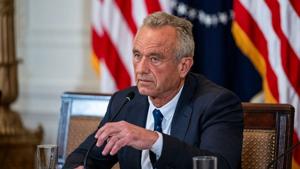
The U.S. Department of Health and Human Services unveiled a multi-pronged regulatory effort Thursday to curtail gender-affirming care for minors, including gender transition procedures at hospitals.
The Centers for Medicare & Medicaid Services has drafted a rule that would prohibit pharmaceutical or surgical gender reassignment procedures from receiving federal Medicaid or Children’s Health Insurance Program funding. It’s also proposing a rule that would allow it to withdraw Medicare and Medicaid funding from hospitals that perform such surgeries on minors. HHS is also working to “reverse the Biden administration’s attempt” to classify gender dysphoria as a type of disability. If gender dysphoria were to be defined as a disability, then health care providers who don’t want to perform what the department has dubbed “sex-rejecting” procedures could be in danger of violating anti-discrimination laws.
Health and Human Services Secretary Robert Kennedy, Jr., described gender affirming procedures as “unsafe” and “irreversible,” and framed the administration’s actions as “[protecting] America’s most vulnerable.”
“Our children deserve better – and we are delivering on that promise,” Kennedy told reporters Thursday.
The department is acting on directives from an executive order from President Donald Trump’s first few weeks in office. The Jan. 28 order called on government agencies to “[defund] chemical and surgical mutilation” of children, seemingly in the manner that HHS has proposed, as well as “rescind or amend all policies” relying on guidance from the World Professional Association for Transgender Health.
The Food and Drug Administration is also taking regulatory action against some organizations that market breast binders to minors.
“Illegal marketing of these products for children is alarming, and the FDA will take further enforcement action such as import alerts, seizures, and injunctions if it continues,” said Food and Drug Commissioner Marty Makary.
Kennedy signed a declaration Thursday that gender affirming procedures for minors “do not meet professionally recognized standards of health care” and the Assistant Secretary for Health and Head of the United States Public Health Service Commissioned Corps, Admiral Brian Christine, signed a public health message stating the same.
“Evidence shows sex-rejecting puberty blockers, cross-sex hormones, and surgeries are dangerous. Providers have an obligation to offer care grounded in evidence and to avoid interventions that expose young people to a lifetime of harm,” Christine said.
The House of Representatives passed a bill Wednesday that would criminalize the act of providing gender affirming care to minors.
Trump signs order reclassifying marijuana as Schedule III drug
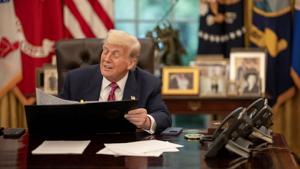
President Donald Trump signed an executive order to reclassify marijuana from a Schedule I to a Schedule III controlled substance, despite many Republican lawmakers urging him not to.
“I want to emphasize that the order I am about to sign is not the legalization [of] marijuana in any way, shape, or form – and in no way sanctions its use as a recreational drug,” Trump said. “It’s never safe to use powerful controlled substances in recreational manners, especially in this case.”
“Young Americans are especially at risk, so unless a drug is recommended by a doctor for medical reasons, just don’t do it,” he added. “At the same time, the facts compel the federal government to recognize that marijuana can be legitimate in terms of medical applications when carefully administered.”
Under the Controlled Substances Act, Schedule I drugs are defined as having a high potential for abuse and no accepted medical use. Schedule III drugs – such as anabolic steroids, ketamine, and testosterone – are defined as having a moderate potential for abuse and accepted medical uses.
Although marijuana is still illegal at the federal level, 24 states and the District of Columbia have fully legalized marijuana within their borders, while 13 other states allow for medical marijuana.
Advocates for easing marijuana restrictions argue it will accelerate scientific research on the drug and allow the commercial marijuana industry to boom. Now that marijuana is no longer a Schedule I drug, businesses will claim an estimated $2.3 billion in tax breaks.
Chair of The Marijuana Policy Project Betty Aldworth said the reclassification, which the Drug Enforcement Administration must approve, “marks a symbolic victory and a recalibration of decades of federal misclassification.”
“Cannabis regulation is not a fringe experiment – it is a $38 billion economic engine operating under state-legal frameworks in nearly half of the country that has delivered overall positive social, educational, medical, and economic benefits, including correlation with reductions in youth use in states where it’s legal,” Aldworth said.
Opponents of the reclassification, including 22 Republican senators who sent Trump a warning letter Wednesday, point out the negative health impact of marijuana use and its effects on occupational and road safety.
“The only winners from rescheduling will be bad actors such as Communist China, while Americans will be left paying the bill. Marijuana continues to fit the definition of a Schedule I drug due to its high potential for abuse and its lack of an FDA-approved use,” the lawmakers wrote. “We cannot reindustrialize America if we encourage marijuana use.”
Marijuana usage is linked to mental disorders like depression, suicidal ideation, and psychotic episodes; impairs driving and athletic performance; and can cause permanent IQ loss when used at a young age, according to the Substance Abuse and Mental Health Administration.
Additionally, research shows that “people who use marijuana are more likely to have relationship problems, worse educational outcomes, lower career achievement, and reduced life satisfaction,” SAMHA says.
This article was edited post-publication to clarify that DEA must approve the reclassification.
Poll: Americans back criminal and homelessness reform
This story has been updated since its initial publication.
Americans support stricter criminal measures and homelessness reform, according to a new poll by The Cicero Institute.
The overwhelming support for reforms transcend party and demographic lines, according to Stefani Buhajla, the Austin, Texas-based think tank’s senior director of communications.
“Folks want accountability. They’re tired of feeling unsafe,” Buhajla told The Center Square this week. “They see crime as increasing, and they want their states to do something about it.”
According to the poll, 75% of respondents said violent crime in America is “increasing/staying about the same.”
Buhajla noted 82% of respondents supported life in prison or the death penalty for people convicted of “aggravated murder, even if they have a mental illness.”
They think dangerous individuals “should be removed from the public so they can’t cause harm anymore,” she said.
The poll also found 61% of respondents supported having habitual criminals with a history of mental illness get court-ordered treatment and stabilization.
“People are worried that it could be their child, wife, or loved one [who is] next. They want assurances that the criminal justice system is going to do its job [and] they’re going to put these criminals away,” she said.
According to Buhajla, America’s justice system has been “letting the American people down for a long time.”
In Phoenix, violent crime from Jan. 1 to June 30 compared to the same time last year has seen slight decreases in homicide, rape, robbery and aggravated assault incidents, according to Major Cities Chiefs Association.
The association’s survey also found this trend occurring across 68 cities in America.
Regarding homelessness, the Cicero Institute poll found 64% of respondents said homeless people should be mandated to go to addiction and mental health treatment and job programs as part of them getting taxpayer-funded housing.
Research has shown that a large portion of “chronically homeless individuals” have mental health issues, Buhajla said.
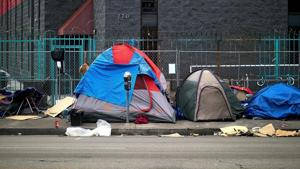
Sixty-four percent of respondents also opposed allowing homeless people to camp on public property.
Furthermore, 75% of respondents said they backed the idea of creating temporary camping areas away from residential and business areas that contain water, sanitation and police services.
“Voters are interested in compassionate solutions when it comes to general homelessness. People in communities really do want solutions that help these people get their lives back together,” Buhajla stated.
The Cicero Institute’s poll gathered responses from 2,102 likely voters from Sept. 20-25. The poll’s margin of error is plus or minus 2.18%.
U.S. troops to get $1,776 tax-free bonuses by Dec. 20

U.S. troops will get a bonus before Christmas this year that will cost taxpayers about $2.6 billion.
President Donald Trump announced a $1,776 tax-free “Warrior Dividend” bonus on Wednesday night during a national address. More than one million service members will get the bonuses.
Active duty service members and reserve service members with active-duty orders of 31 days or more will receive the bonuses by Dec. 20.
A Pentagon official confirmed to The Center Square that payments for each service member will be made “outside the regular pay cycle” by Dec. 20.
“The checks are already on the way,” Trump said. “Nobody deserves it more than our military, and I say, ‘congratulations’ to everybody.”
Funding for the bonus pay will come from the Basic Allowance for Housing funds, according to a Pentagon official. The “One Big Beautiful Bill Act,” signed in July, appropriated $2.9 billion to the Basic Allowance for Housing funds.
Typically, the Basic Allowance for Housing provides tax-free monthly payments for military members living off-base to cover housing costs. The funds are calculated based on housing market values where an individual lives and their pay grade.
Active duty service members in the pay grades from E-1 to O-6 as well as reserve members on active-duty orders of 31 days or more as of Nov. 30 are eligible for the bonuses.
“This Warrior Dividend serves as yet another example of how the War Department is working to improve the quality of life for our military personnel and their families,” Secretary of War Pete Hegseth said in a video posted to social media on Thursday. “All elements of what we’re doing are to rebuild our military.”
The War Department offers Basic Allowance for Housing to military service members every year. It estimated it will pay one million service members in 2026, for a total of $29.9 billion.
The “Warrior Dividend” payments will total $2.6 billion of the allocated funds in the One Big Beautiful Bill. This will leave $300 million remaining from the $2.9 billion afforded to the fund.
A senior White House official told The Center Square that the Warrior Dividend will compensate eligible service members who do not already receive basic housing allowance funds.
Approximately 1.28 million active duty service members and 174,000 reserve members will receive bonuses.
“To the American warrior,” Hegseth said, “we thank you for your service, and we thank you for your sacrifice, we love you and your families and we wish you a very merry Christmas.”
New action taken to strengthen US military chaplain corps
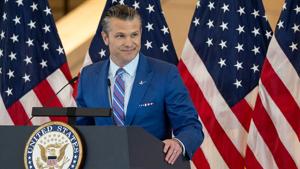
Secretary of War Pete Hegseth issued a new directive to revamp the U.S. military Chaplain Corps. The new directive was issued one week after a Department of Justice Religious Liberty Commission held a hearing and heard testimony about systemic deficiencies preventing service members from practicing their faith.
Changes are coming after the U.S. Army, Navy and Marine Corps, and the Army and Navy Chaplain Corps, all celebrated their 250th anniversaries this year. They were all established in 1775 by the Continental Congress and General George Washington.
At Washington’s request, the Continental Congress established the Army Chaplain Corps on July 29, 1775, authorizing one chaplain for each regular regiment, The Center Square reported. The U.S. Navy Chaplain Corps was established four months later.
The Chaplain Corps is the backbone of the United States military, Hegseth said, citing Washington’s general orders: ‘The blessing and protection are at all times necessary but especially so in times of public distress and danger.”
“For about 200 years, the Chaplain Corps continued its role as the spiritual leader of our service members, serving our men and women in times of hardship and ministering to their souls. But sadly, as part of the ongoing war on warriors in recent decades, its role has been degraded in an atmosphere of political correctness and secular humanism,” Hegseth said.
“Chaplains have been minimized, viewed by many as therapists instead of ministers. Faith and virtue were traded for self-help and self-care,” he said, pointing to the Army’s “spiritual fitness guide.” The roughly 100-page guide only mentions God once, feelings 11 times and virtue zero times, he said.
The guide also “relies on new age notions, saying that the soldier’s spirit consists of ‘consciousness,’ ‘creativity’ and ‘connection.’” It also says the majority of service members are religious but “alienates our war fighters and faith by pushing secular humanism.”
“It’s unacceptable and unserious so we’re tossing it,” Hegseth said.
Effective Tuesday, Hegseth eliminated the guide, saying its training materials “have no place in the War Department. Our chaplains are not emotional support options and we’re going to treat them as such.”
The DOW faith and belief coding system is also being streamlined, more reforms are expected, he said.
“There will be a top-down cultural shift putting spiritual well-being on the same footing as mental and physical health as a first step toward creating a supportive environment for our warriors and their souls,” Hegseth said. “We’re going to restore the esteemed position of chaplains as moral anchors for our fighting force.” He pointed to a 1956-era Army chaplain’s manual as a guide, which states, “The chaplain is the pastor and the shepherd of the souls entrusted to his care.”
Hegseth issued the directive one week after a Religious Liberty Commission held a hearing in Dallas to address challenges military chaplains are facing. It was the fourth hearing the commission has held this year, chaired by Texas Lt. Gov. Dan Patrick.
Patrick said the reforms were “much needed” to reverse the damage caused by past administrations that “sought to undermine the spiritual and strategic role of the military chaplaincy.”
He explained that President Donald Trump asked the commission to “evaluate areas of American life where religion has been attacked and targeted. We learned last week just how far this targeting has gone even in our own military, through powerful testimony from military chaplains.”
Chap. Maj. Gen. Doug Carver, Ret., Chap. Rabbi Col. Sanford Dresin, Ret., Monsignor Anthony Frontiero, S.T.D., Vicar General with the Archdiocese for the Military Services testified to the erosion of religious freedoms. Not being able to provide basic services has prevented service members from not fully practicing their faith, they said.
In response, Patrick said, “what all of you are talking about, you can’t deliver that opportunity to the soldiers if you’re not there. It would be like taking a community in America and removing all the churches and all the synagogues for what we might say are a part of the population, particularly at war, or even just away from their families that are very stressed individuals.
“In the area of some of the most stressed individuals we have in performing their duties, without a strong Chaplaincy, we have removed the church, we’ve moved the synagogue, we’ve removed all these opportunities from them. That only compounds the issue.”
The commission also heard from former Navy SEAL Blake Martin, military supplier Kenny Vaughan with Shields of Strength, and WallBuilders founder Dave Barton.
Federal judge blocks ICE policy on lawmaker visits
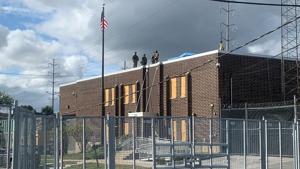
Members of Congress will be allowed to visit ICE facilities without notice and may inspect migrant detention areas under a new ruling by a federal court judge.
On Wednesday, U.S. District Court judge Jia Cobb ordered the Trump administration to rescind a July policy requiring members of Congress to give a week’s notice before they conduct official “oversight inspections” of U.S. Immigration and Customs Enforcement detention centers.
In the ruling, Cobb said the ICE policy had resulted in lawmakers being “barred from entering facilities” to which they are entitled access under federal law, saying the restrictions have caused “tangible harm” that interferes with Congress’ role in providing oversight of immigration operations. Before that policy, ICE had allowed members of Congress to visit ICE facilities without prior notice.
“Contrary to Defendants’ suggestion, [federal law] does entitle Members of Congress to access ICE facilities without being subject to a notice requirement,” Cobb, a Biden appointee, wrote in the 42-page ruling.
The order comes in response to a lawsuit filed against the Trump administration by New York congressman Dan Goldman and other Democrats, who claim they were barred from entering rooms where migrants awaiting deportation were being held during previous visits to an ICE facility in lower Manhattan.
Under federal law, members of Congress can make unannounced “oversight” visits to immigration facilities that “detain” immigrants. A policy set by the Department of Homeland Security in June requires lawmakers and their staff to request a visit at least 7 days in advance. The press and public are not allowed on those visits.
But lawmakers claim they have been denied access to ICE facilities as they try to conduct oversight visits, and some have been involved in high-profile clashes with immigration officials.
In June, the Justice Department charged Democratic Rep. LaMonica McIver of New Jersey with assaulting law enforcement agents during a clash at an ICE detention facility in Newark. McIver has denied the allegations and called the charges “politically motivated.”
The ICE facility at 26 Federal Plaza has become ground zero in Massachusetts Democrats’ push against what they say is unlawful overreach by federal immigration agents. It’s one of 25 ICE Enforcement and Removal Operation facilities across the country. Goldman and other Democrats have regularly held press briefings outside the building to criticize ICE enforcement tactics.
In a statement. Goldman praised the judge’s ruling vindicated claims by lawmakers’ that they have “statutory right to conduct oversight” inspections of the ICE detention centers.
“For months, masked, unidentified ICE agents have detained law-abiding immigrants in inhumane and unconstitutional conditions, while DHS has repeatedly and unlawfully blocked me and other Members of Congress from inspecting these facilities,” Goldman said.
There was no immediate response to the ruling from the Department of Homeland Security, which has previously defended limitations on visits to ICE facilities by congressional lawmakers.
Goldman, an attorney who served as lead counsel in the first impeachment of former President Donald Trump, has previously drawn criticism after calling on the NYPD to arrest and prosecute ICE agents who engage in “unlawful actions” during federal immigration crackdowns in the city.
D.C.’s power to challenge Trump in jeopardy after Guard ruling
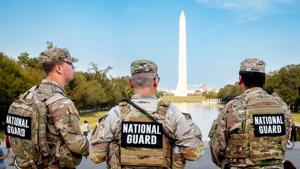
A federal court’s slapdown of the District of Columbia’s lawsuit against the Trump administration over the deployment of National Guard troops could have far-reaching implications over the power of the district’s left-leaning government to oppose federal policies.
A panel of the influential D.C. Circuit Court of Appeals kept in place a stay of an injunction blocking the Guard deployment, ruling the federal government was likely to prevail on arguments the district is a creation of Congress with no sovereignty of its own. The district sued the government in September, claiming the presence of the Guard violated a statute granting it “home rule” power over local affairs.
Not so, the court ruled.
D.C. is “a federal district created by Congress, rather than a constitutionally sovereign entity,” Judge Patricia Millett wrote in a Dec. 17 order. “The President’s order implicates a strong and distinctive interest in the protection of federal governmental functions and property within the nation’s capital.”
Judges Gregory Katsas and Naomi Rao went further in a concurrence, asserting D.C. doesn’t have standing to sue the President since it is a creation of the same government it is trying to sue. Unlike states, which were granted certain powers of sovereignty under the nation’s founding documents, the Constitution gave Congress sole “legislative power” over the capital district.
While Congress passed a law in 1973 allowing the district to elect a mayor and local government, the concurring justices said, there’s no precedent for D.C. to sue over injuries it claims it has suffered at the hand of the President.
“Such an injury is likely untenable as a matter of first principles and finds no support in our precedent or historical practice,” the justices wrote.
The concurrence, if adopted by the full court, could narrow the power of the D.C. mayor to engage in activities opposed by the executive branch, said Samuel Dewey, a litigator with the Oversight Project who wrote a brief supporting the broader arguments denying D.C. sovereignty. He said even the Trump Justice Department didn’t directly question D.C. sovereignty and power to sue.
“We were very surprised when DOJ didn’t make that argument because we think it’s obviously right,” Dewey said.
The Oversight Project’s brief stated simply: “One cannot sue oneself.” For almost a century, D.C. was governed by a three-person commission appointed by the President, but Congress abolished the commission in favor of home rule in 1973. Since then, the district has fought the federal government in court, including this year when D.C. Attorney General Brian L. Schwalb sued over pollution in the Anacostia River he blamed on the Washington Navy Yard.
With no sovereignty of its own, it is likely D.C. can’t persist with such lawsuits, Dewey said. The court’s reasoning also might undermine the city’s lawsuit against the oil industry over global warming, he said, at least to the extent D.C. claims sovereign harm to itself.
The city also might have trouble staying in lawsuits, typically involving Democratic states, against the federal government like a recent one targeting the Trump administration’s suspension of electric vehicle charging infrastructure funding.
The court order is not going to be popular within D.C., Dewey said. And if the reasoning expressed in it is ultimately upheld on appeal, it could trim the powers of whoever replaces current Mayor Muriel Bowser, who recently announced she isn’t running for reelection.
Whoever wins, “it will impact his room to do stupid things that impact the federal government,” Dewey said.