Posts by Newspaper Staff
Crete Township Solar Project Approved Despite Township Objections
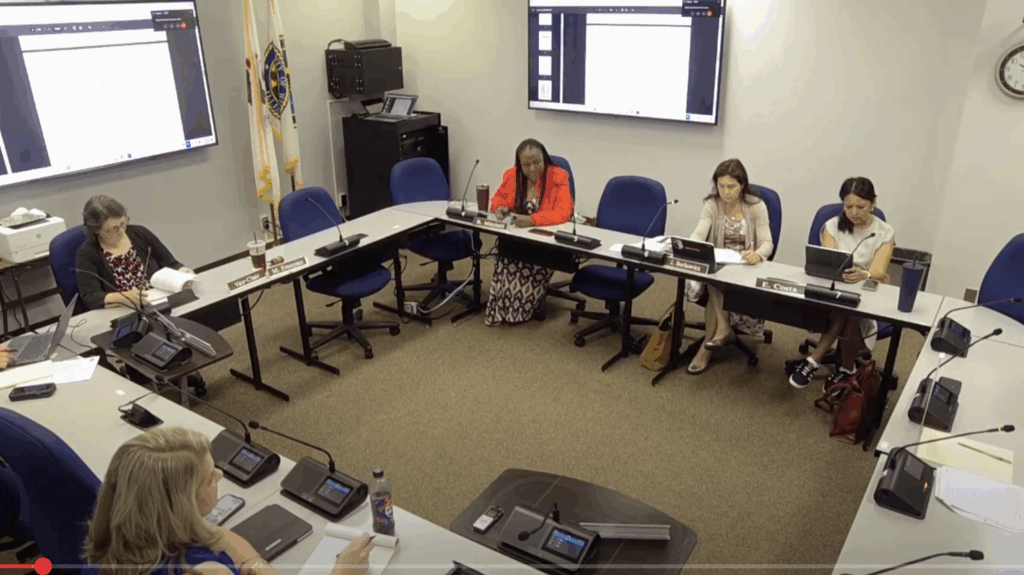
A 21-acre commercial solar project in Crete Township received a favorable recommendation from the Will County Land Use and Development Committee on Thursday, despite an official objection from the township. The project, proposed by agent Jeremy Price of RPIL Solar 17, LLC, is planned for a property on Bemis Road, approximately 1,780 feet north of…
Read MoreHealth Department Opens Second Breast Milk Depot in Bolingbrook
The Will County Health Department has opened its second breast milk depot in partnership with Mother’s Milk Bank of the Western Great Lakes, expanding access to donated breast milk for families in need. The new depot at the department’s Northern Branch Office in Bolingbrook held its grand opening June 13th, with the first donor contributing…
Read MoreLockport Township Solar Farm Gains Committee Approval
The Will County Land Use and Development Committee on Thursday approved a special use permit for a 25-acre commercial solar energy facility in Lockport Township. The project, proposed by Daniel Gorman of Enterprise Energy, will be located on a 45-acre property at 14910 and 14750 S. Archer Avenue. The four-parcel site is currently zoned A-1…
Read MoreHealth Department Plans Back-to-School Fair July 12
The Will County Health Department will host a Back-to-School Health Fair Saturday, July 12, from 10 a.m. to 2 p.m. at the Community Health Center, 1106 Neal Ave., Joliet. The event will provide school and sports physicals for $35 for uninsured families, dental school exams for $50, and various immunizations. Most insurance plans, including Medicaid,…
Read MoreMeeting Briefs: Will County Land Use & Development Committee for July 3, 2025

Green Garden Township Rezoning for Future Subdivision ApprovedThe committee recommended approval of a map amendment for an 81-acre property on South 88th Avenue in Green Garden Township. The applicant, represented by agent Gregory Clarke, requested changing the zoning from A-1 (Agricultural) to E-2 (Estate). The rezoning is the first step toward a future subdivision of…
Read MoreWill County Public Health & Safety Committee July 3 Meeting Briefs
Grain Dust Complaint Prompts Investigation: Will County resident Tracy Henning of unincorporated Peotone addressed the committee about health problems she attributes to grain dust from a neighboring facility. Henning, who has been diagnosed with lupus and toxic grain dust syndrome, reports debilitating symptoms when dust fallout occurs from the facility located 6-8 feet from her…
Read MoreU.S. Supreme Court allows Trump to send migrants to South Sudan

The U.S. Supreme Court on Thursday granted a Trump administration request to deport eight noncitizens to South Sudan, a country where they have no ties.
The high court stopped an order allowing the foreign nationals to appeal removals to “third countries” where they say they could be in danger of violence or harm.
They were initially headed to South Sudan in May when a federal judge in Massachusetts halted their flight. The migrants stopped on a naval base in Djibouti where they waited for an order from the court.
The Supreme Court said a lower court’s order halting the flight was “unenforceable.” On June 23, the court paused a ruling that would give them a chance to show they would face risk of torture if deported to a country other than their own.
Liberal Justice Elena Kagan concurred with the conservative majority’s opinion.
“I do not see how a district court can compel compliance with an order that this court has stayed,” Kagan wrote.
Justices Sonia Sotomayor and Ketanji Brown Jackson dissented from the majority opinion. Sotomayor wrote the dissenting opinion in which she criticized the majority decision and the Trump administration.
“Today’s order clarifies one thing: Other litigants must follow the rules, but the administration has the Supreme Court on speed dial,” Sotomayor wrote.
Bill’s route and 4-vote win runs through North Carolina’s 10-4 advantage
While passage Thursday afternoon and signing Friday of the budget reconciliation bill may have been in Washington, its road from and back to the desk of President Donald Trump ran through North Carolina.
That’s where special masters for the judicial branch created a 2022 congressional map intent on splitting the state’s 14 seats of the U.S. House of Representatives evenly. And where the 2024 maps drawn by the Legislature –as the General Statutes instruct – produced a 10-4 edge for Republicans in the nation’s ninth largest state (11 million) with 38% of voter registrations independent of both parties.
Thursday’s vote was 218-214. North Carolina congressmen were loyal to party, and a 7-7 division would not have delivered.
For the record, Republican senators from the state infamously split – Thom Tillis one of three nationwide in the party to object, Ted Budd saying yes. Republican representatives saying aye were Virginia Foxx, David Rouzer, Richard Hudson, Dr. Greg Murphy, Chuck Edwards, Rev. Mark Harris, Addison McDowell and Pat Harrigan.
Democratic Reps. Alma Adams, Deborah Ross, Valerie Foushee and Don Davis all said no.
Dramatic fallout involving all is expected, from Tillis having already said he won’t pursue reelection in 2026 to the opportunities his retirement will create. Next fall’s campaigns were given ammunition for what was done or not done this week.
This was a big one.
Aftermath, however, will be most prevalent to those impacted – the constituents. One final judgment will be their lives; another will be their vote at the ballot box.
The provider tax and state-directed payment provisions, said Tillis, will be the leading harm to North Carolinians. It’ll come through impact on the state budget that absorbs more share of Medicaid responsibility.
Tillis said he got analysis from seven angles, inclusive of those aligned with Democrats, Republicans and independents, in deciding how to vote. It included state lawmakers responsible for their budget, and independent of them from the health care industry. The estimate of negative impact over 10 years was $26 billion.
KFF, formerly the Kaiser Family Foundation, is a nonprofit focusing on health policy. Its research indicated a best-case scenario of $20 billion in impact and a worst-case of $33 billion, putting its projection at $27 billion.
Rural hospitals considered in peril include Blue Ridge Region Hospital in Spruce Pine; MH Angel Medical Center in Franklin; Chatham Hospital in Siler City; Person Memorial Hospital in Roxboro; and UNC Rockingham Hospital in Eden. A plan to reopen Martin General in Williamston on the strength of the Healthcare Access and Stabilization Program within North Carolina’s Medicaid expansion two years ago likely got tougher to accomplish.
Murphy, a 62-year-old practicing urologist, has multiple lens to see Medicaid and his constituents.
After the vote he said of Medicaid, “It desperately needs reform so that it can be a strong program for those who are eligible to receive the benefits. As the only individual in Congress who continues to see patients covered by Medicaid, I have firsthand knowledge of how this program impacts our communities. This bill protects Medicaid benefits for those who are most vulnerable in our society, not able-bodied individuals capable of participating in the workforce, illegal immigrants, and those ineligible for benefits. The $50 billion Rural Health Transformation Program, included in the package, ensures the sustainability of rural health providers with an immediate impact beginning next year.”
Dr. Dev Sangvai, secretary of the state Department of Health and Human Services, said full impact and consequences would clear in the future.
“We already know,” he said, “that it will result in billions of dollars being taken out of our state’s economy and will undermine the health of North Carolinians. This bill includes major changes to Medicaid and SNAP – programs that provide vital support to millions of North Carolinians. There will be a significant reduction in federal funding for services that are core to the well-being of individuals and families across North Carolina.”
Proponents, however, say the changes strengthen the programs because it protects those who are most vulnerable and in need. For example, there is a new work or volunteer requirement for the able-bodied.
“This is a once-in-a-generation win for North Carolian families, seniors and small businesses,” Hudson said. “The One Big Beautiful Bill Act is the most pro-worker, pro-family and pro-American legislation we’ve seen in decades. It means bigger paychecks for middle class families, secure borders, a stronger military, and more freedom for every North Carolinian.”
Senator proposes aid for areas strained by illegal immigration
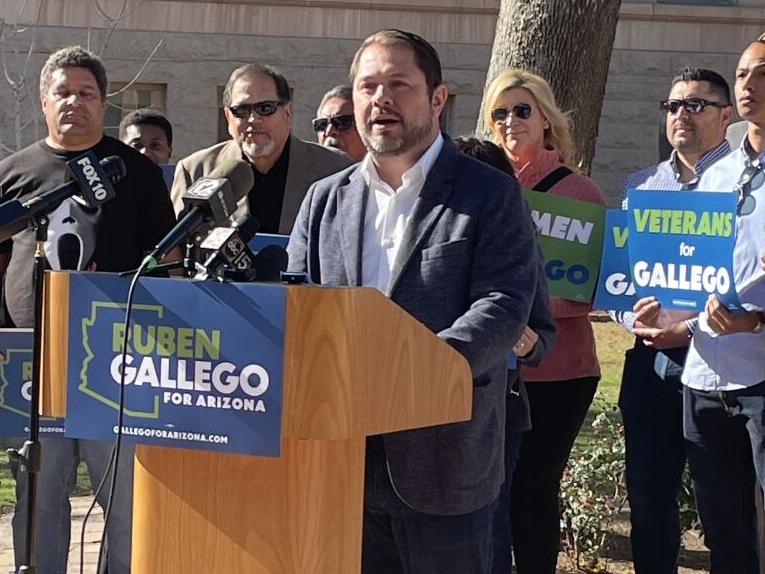
U.S. Sen. Ruben Gallego, D-Arizona, reintroduced a bill this week that aims to help areas affected by illegal immigration.
The First Responders Emergency Assistance Act would establish emergency grants for law enforcement and first responders in areas that receive a high volume of calls related to illegal immigrants.
According to Gallego’s press release, the Department of Homeland Security would administer the grant program. The program would be made available to cities, counties, tribes and states that need help with equipment, operations, staffing, law enforcement overtime costs, first responders and emergency operation centers.
The FREAA mandates that 25% of the grant funds be allocated toward border communities, which are heavily impacted by illegal immigration.
To illustrate, in Yuma, Arizona, which is around 30 minutes from Mexico, one of its major hospitals spent over $26 million in 2023 to treat illegal immigrants who came to their hospital.
As a state, Arizona was hit hard by illegal immigration during the Biden administration. According to the House Homeland Security Committee, nearly 11 million illegal immigrants entered America. Almost 10 million of these foreign nationals came to the United States through the southwest border.
Gallego said during the surges of illegal immigration at the southern border, Arizona communities felt the “brunt of it.”
“I’ve heard directly from local fire and police departments who are answering more immigration-related emergency calls without enough resources,” the first-time senator said.
“This bill helps reimburse fire and police departments for these costs and delivers the federal support our brave public safety and emergency response workers deserve,” he added.
As a member of the U.S. House last year, Gallego introduced this bill, but it did not make it out of the House.
For endorsements, the United States Deputy Sheriff’s Association, the National Association of Police Organizations, the Fraternal Order of Police and the International Association of Fire Fighters said they supported this bill.
Patrick Yoes, national president of the Fraternal Order of Police, said as the number of migrants crossing into America increased, law enforcement members of his order “struggled to keep up with the amount of border crossings.”
“By providing grants for first responders, this bill would help coordinate efforts between agencies to address migrant needs and ensure that our first responders have the tools necessary to do their jobs,” he explained.
Since President Donald Trump took office in January, border communities have had less illegal immigration.
According to the White House, the United States had 6,070 encounters at the southern border last month.
Pritzker warns 330,000 Illinoisans could lose Medicaid under Trump’s budget plan

Capitol News Illinois
Article Summary
The U.S. House gave final passage Thursday to a bill that will cut federal Medicaid spending in Illinois by an estimated 20%, or $48 billion, over 10 years.
Medicaid pays for about 40% of all childbirths in Illinois as well as 69% of all nursing home care, according to an independent analysis.
State officials estimate 330,000 Illinoisans could lose Medicaid coverage if President Donald Trump signs the bill into law.
The Illinois Department of Public Health said nine rural hospitals in Illinois would face closure or severe service reductions due to the cuts.
This summary was written by the reporters and editors who worked on this story.
SPRINGFIELD — The U.S. House gave final passage Thursday to a budget bill that will cut federal Medicaid spending by an estimated $1 trillion over 10 years.
All three Republican members of the Illinois congressional delegation voted in favor of the bill, despite a last-minute plea from Democratic Gov. JB Pritzker who warned the bill will result more than 330,000 Illinoisans losing Medicaid coverage and have a devastating effect on some rural hospitals.
“As those who are entrusted with protecting the health of all your constituents, I urge you to oppose these harmful Medicaid provisions and work to protect healthcare access for rural Illinois families, workers, and veterans,” Pritzker wrote in the letter addressed to GOP Reps. Mike Bost, Darin LaHood and Mary Miller.
The cuts would translate to about $48 billion in Illinois over that period, or about 20% of what the state would otherwise receive, according to an analysis by KFF, a nonpartisan health policy research organization.
That would be one of the largest percentage reductions in any state in the nation, according to KFF, a nonpartisan health policy research organization formerly known as the Kaiser Family Foundation. Louisiana and Virginia would each see cuts of about 21%, KFF said.
The state-level analysis is based largely on Congressional Budget Office estimates showing the bill would reduce federal Medicaid spending by $1 trillion nationwide over the next decade.
The KFF analysis does not include estimates of the number of people who would lose Medicaid coverage under the bill, noting how that will depend on how individual states respond to the policy changes contained in the bill. But overall, it estimates the number of uninsured Americans will grow by 11.8 million.
The bill, which includes many of President Donald Trump’s domestic policy priorities – including tax cuts and increased spending on border security – passed the Senate on Tuesday by a vote of 51-50, with Vice President J.D. Vance casting the tie-breaking vote. Both senators from Illinois, Democrats Dick Durbin and Tammy Duckworth, voted no.
The final vote in the House was 218-214.
“The One Big, Beautiful Bill is a once-in-a-generation victory for the American people,” Miller said in a statement after the House vote. “It delivers on President Trump’s America First agenda with bold, decisive, and immediate action. This is the most pro-worker, pro-family, pro-America legislation I have voted for during my time in Congress, and I was proud to help get it across the finish line for the hardworking Americans across my district.”
Medicaid and the health care marketplace
Medicaid, which is jointly funded by states and the federal government, provides health coverage for lower-income individuals and families. It was established in 1965 alongside Medicare, the federally funded health coverage program for people over 65.
Today, according to the Illinois Department of Healthcare and Family Services, the program covers about 3.4 million people in Illinois, or a fourth of the state’s population. At a total cost of $33.7 billion a year, it is one of the largest single categories of expenditures in the state’s budget. It pays for about 40% of all childbirths in the state, according to KFF, as well as 69% of all nursing home care.
But questions about its future loomed over the Illinois General Assembly during the just-completed legislative session as both Congress and the General Assembly were crafting their respective budgets for their upcoming fiscal years.
“This was a difficult year because of the unprecedented changes and cuts that are looming on the horizon in Washington,” state Rep. Anna Moeller, D-Elgin, said on the floor of the Illinois House during debate over a Medicaid bill on the final day of the session.
Read more: Amid uncertainty in Washington, Illinois lawmakers pass slimmed-down Medicaid package
Speaking with reporters at an unrelated event Tuesday, Pritzker predicted “hundreds of thousands” of people in Illinois will lose Medicaid coverage if the Senate bill is signed into law.
“This is shameful, if you ask me, and it’s going to be very hard to recover,” Pritzker said. “The state of Illinois can’t cover the cost – no state in the country can cover the cost of reinstating that health insurance that is today paid for mostly by the federal government, partly by state government.”
Policy changes under the bill
According to KFF, most of the reductions in Medicaid spending would result from just a few policy changes contained in the bill
Those include imposing a work requirement on adults enrolled in Medicaid through the Affordable Care Act, also known as “Obamacare.” That law expanded eligibility for Medicaid to working-age adults with incomes up to 138% of the federal poverty level. About 772,000 people in Illinois are enrolled under that program.
The bill also calls for requiring people enrolled through the ACA expansion to verify their continued eligibility for Medicaid twice a year instead of annually. That is expected to filter out enrollees whose incomes rise above the eligibility limit as well as those who simply fail to complete the verification process.
Another provision would limit the ability of states to finance their share of the cost of Medicaid by levying taxes on health care providers. Illinois imposes such taxes on hospitals, nursing facilities and managed care organizations that administer the program. Revenue from those taxes is used to draw down federal matching funds that are then used to fund higher reimbursement rates to health care providers.
The final version of the bill does not, however, include a provision penalizing states like Illinois that also provide state-funded health care to noncitizens who do not have lawful status to be in the United States. That provision, which was included in the earlier House version, was not included in the Senate bill, according to KFF.
Capitol News Illinois is a nonprofit, nonpartisan news service that distributes state government coverage to hundreds of news outlets statewide. It is funded primarily by the Illinois Press Foundation and the Robert R. McCormick Foundation.
The post Pritzker warns 330,000 Illinoisans could lose Medicaid under Trump’s budget plan appeared first on Capitol News Illinois.