Posts by Newspaper Staff
Musk says he is forming new party to challenge Republicans, Democrats

After his public break with President Donald Trump, Elon Musk, the world’s richest person, says he is now forming a new political party to challenge the long-standing two party system in the U.S.
“Today, the America Party is formed to give you back your freedom,” Musk wrote on X, the social media platform he owns.
Musk, who supported Trump with hundreds of millions of dollars in campaign donations during last year’s presidential campaign, was brought on to lead the new Department of Government Efficiency (DOGE) at the beginning to the new Trump administration.
But a very public dispute that erupted on social media led to their split, and Musk has been critical of the Trump-endorsed “one big beautiful bill” that passed the Republican-controlled Congress and was signed into law on July 4 by the president. Musk said the spending measure would “bankrupt” the U.S.
“By a factor of 2 to 1, you want a new political party and you shall have it,” Musk posted to X on Saturday, a day after launching an unscientific poll asking X followers if they were ready to break from the two-party system dominated by Republicans and Democrats. “When it comes to bankrupting our country with waste & graft, we live in a one-party system, not a democracy. Today, the America Party is formed to give you back your freedom.”
32 dead, 27 remain missing in Texas Hill Country flooding
At least 32 people are dead and dozens remain missing after flash floods overwhelmed communities along the Guadalupe River in Texas Hill Country.
The death toll climbed Saturday after several missing campers from Camp Mystic in Hunt, Texas, were found dead. Search and rescue teams continue to look for more than 20 girls from Camp Mystic, where they were attending an all-girls private Christian camp.
Fourteen of the 32 confirmed dead were children, 18 were adults, the Kerr County Sheriff’s Office said.
More than a foot of rain hit the region into Friday morning, pushing a 20-foot storm surge of water down the Guadalupe, according to the Kerr County Sheriff’s Office. The river rose 25 feet in less than an hour, officials said. More rain and flooding is expected in the region Saturday and Sunday, according to the National Weather Service.
“Heavy rainfall and flooding concerns remain for today across Central Texas and the Hill Country, with scattered thunderstorms expected this afternoon and evening,” the National Weather Service posted on its website.
“A Flood Watch has been issued through 7 PM Saturday. Additional rainfall amounts of 2-4 inches are possible with isolated pockets of 10 inches somewhere in the watch area,” NWS said. “It is very difficult to pinpoint where exactly the isolated heavy amounts will occur in this pattern.”
Video posted to social media shows helicopters lifting survivors from heavily flooded areas. Hundreds have been rescued so far, state and local officials said.
The Texas National Guard and U.S. Coast Guard were deployed to help with the search and rescue efforts.
Texas Gov. Greg Abbott declared a state of emergency for 15 counties, and more could be added to the llst.
“This is a time when we, as a state, need God more than ever,” Abbott said in a statement. “The one thing I hear the most are the prayers that are being sent for those who are in harm’s way. There is an extraordinary collaboration to make sure that we address everybody’s concern as quickly as possible. As part of this, I am signing a disaster declaration to ensure counties have access to every tool, strategy, and personnel that the State of Texas can provide to them, which will be limitless.”
President Donald Trump said he was ploying federal help to the region as well.
“Melania and I are praying for all of the families impacted by this horrible tragedy. Our Brave First Responders are on site doing what they do best,” Trump wrote on social media. “GOD BLESS THE FAMILIES, AND GOD BLESS TEXAS,”
Abbott’s emergency declaration includes the counties of Bandera, Coke, Comal, Concho, Gillespie, Kendall, Kerr, Kimble, Llano, Mason, McCulloch, Menard, Reeves, San Saba and Tom Green.
“The Red Cross is assisting with reunification after this devastating flood. If you are missing someone during this emergency, please call 800.733.2767,” the Kerr Country Sherrif’s Office said.
Reunification centers are set up at Ingram Elementary School, 125 Brave Run W, Ingram, and The Arcadia Live Theater, 717 Water St, Kerrville.
Alcohol limits at odds in upcoming dietary guidelines

The House Oversight and Government Reform Committee is investigating a study funded by the Biden administration on alcohol guidelines for Americans, as the U.S. Health and Human Services Department prepares to release its five-year dietary guidelines for Americans.
In January, the Interagency Coordinating Committee on the Prevention of Underage Drinking issued a draft report on its findings analyzing the impact of alcohol intake on overall health.
“The risk of alcohol attributable death increases linearly with alcohol consumption,” the report said.
The draft study found that even one drink a week poses a risk of alcohol attributable death for both males and females.
“Even at low levels of consumption, alcohol had a significant impact on the health of individuals 15 to 39 years of age,” the report said.
Rep. James Comer, R-Ky., chairman of the House Oversight and Government Reform committee, slammed the report’s findings and promised a further investigation.
Comer said the report “skewed widely available information about the effects of alcohol consumption on Americans to favor the Biden administration’s predetermined narrative.”
Comer said the study is “duplicative” of another conducted by the National Academies of Science, Engineering, and Medicine at the direction of Congress.
A 2023 World Health Organization report appeared to align with the Interagency Coordinating Committee’s draft report.
“When it comes to alcohol consumption, there is no safe amount that does not affect health,” the WHO report found.
The reports funded by the federal government were designed to contribute to the upcoming dietary guidelines for Americans, a set of recommendations released by the U.S. Department of Agriculture and the U.S. Health and Human Services Department. The guidelines come out every five years.
“The ICCPUD study’s formation outside the transparency of the typical Dietary Guidelines process raises scientific integrity and conflict of interest concerns,” Comer said.
HHS Secretary Robert F. Kennedy said in a May House hearing that the dietary guidelines could be released by August.
“It is imperative that the dietary guidelines are based on rigorous, sound, and objective scientific evidence, efficiently steward taxpayer dollars, and adhere to congressional intent,” Comer said.
The guidelines have been largely unchanged regarding alcohol consumption recommendations since 1990. However, studies limiting alcohol intake in 2020 were rejected by the first Trump administration for inclusion in the dietary guidelines.
The studies were brought back and funded by the Biden administration.
While Comer is pushing back on new recommendations, it remains unclear which alcohol consumption study will prevail for the final draft of the 2025 Dietary Guidelines for Americans.
Kennedy said his guidelines will be shorter than previous administrations and will “tell people, essentially, eat whole food, eat the food that’s good for you.”
Trump signs ‘big, beautiful bill’ during White House July 4 celebration
President Donald Trump used an Independence Day celebration at the White House to sign his ‘big, beautiful bill.’
Trump and Republican congressional members delivered on the president’s July 4th deadline for the bill. The bill signing was preceded by a spectacular flyover of military planes, including B-2 stealth bombers, as the White House hosted members of the military and their families on the South Lawn.
Trump kicked off the start of “America 250” on Thursday evening in Des Moines. He used the holiday to tout his historic legislation, which narrowly passed the House Thursday afternoon.
“As we approach the 250th anniversary of America’s founding exactly one year from now, we are creating an economy that delivers wealth for the middle class, a border that is sovereign and secure, and a military that is unmatched, unequaled anywhere in the world,” said the president Friday evening.
Trump argues that the “massive” bill will spur economic growth, a claim some in his own party have disputed.
“This bill will fuel massive economic growth and lift up the hardworking citizens who make this country run,” said the president. “Our country is going to be a rocket ship economically.”
During the signing, the president was joined by House Speaker Rep. Mike Johnson, R-La., several members of his cabinet and congressional members.
New law banning foreign ownership of Texas land goes into effect Sept. 1
As foreign espionage threats continue in the U.S. and in Texas, a new bill becomes law Sept. 1 that prohibits foreign ownership of Texas land.
SB 17, filed by state Sen. Lois Kolkhorst, R-Brenham, passed the Texas legislature with bipartisan support and was signed into law by Gov. Greg Abbott.
The Adversarial Land Ownership Act initially passed the Senate in March by a vote of 24-7. A watered-down version passed the House in May by a vote of 75-47 with Republicans and Democrats voting against it. Differences in the bill were ironed out in conference committee and each chamber voted to pass the bill with bipartisan support. Abbott signed the bill into law last month.
“For three years, I’ve worked to pass a bill to protect our land, homes, commercial buildings, water, timber, oil and gas and rare earth materials from being bought up by foreign adversarial nations like China, Russia, North Korea and Iran,” Kolkhorst said, adding that the final bill sent to the governor “is the strongest national security bill in the nation. Texas is not for sale to our enemy countries.”
As of Sept. 1, the new law will prohibit foreign governmental entities, companies, and individuals from purchasing private property in Texas if they are from or connected to countries listed in the latest Annual Threat Assessment report published by the Director of National Intelligence. To date, countries on the list are China, Iran, North Korea and Russia.
Prohibitions for real property includes agricultural land, commercial or industrial property, water rights, rare earth materials, groundwater, timber, and oil and natural gas.
The law gives the Office of Attorney General enforcement authority to investigate potential violations and initiate divestment proceedings against prohibited entities.
The prohibition “is a matter of national security,” Kolkhorst said, adding that during the interim session, her office proposed a stronger bill than in the last session, incorporating measures from a Florida bill that became law in 2023.
Once Kolkhorst’s bill becomes law, Texas will join 22 states that already enacted similar legislation. Between January 2023 and July 2024, at least 22 states enacted legislation regulating foreign ownership of real property, according to a Congressional Research Service analysis. Some states enacted multiple laws.
They include Alabama, Arkansas, Georgia, Florida, Idaho, Indiana, Iowa, Louisiana, Mississippi, Montana, Nebraska, New Hampshire, North Carolina, North Dakota, Ohio, Oklahoma, South Dakota, Tennessee, Utah, Virginia, West Virginia, and Wyoming.
The bill becoming law this year was the culmination of multiple years of dedication by Kolkhorst, including meeting with constituents, holding hearings, and surviving a wave of attacks during two legislative sessions by opponents claiming she and the bill were racist.
In the last legislative session, a coordinated effort to kill the bill used a social media platform with direct ties to the Chinese Communist Party, The Center Square exclusively reported.
One of the anti-Kolkhorst groups posted an article published by The Center Square about her bill that Abbott posted on social media on a WeChat platform. The platform was used by opponents of her bill who targeted Chinese Americans labeling them as Chinese traitors and spies, according to a Johns Hopkins expert on China who uncovered an alleged CCP-campaign on social media targeting her bill.
In 2023, her bill passed the Senate with bipartisan support but never made it out of the House State Affairs Committee chaired by state Rep. Todd Hunter, R-Corpus Christi.
Last year, Abbott issued multiple executive orders and directives to state agencies to increase security measures related to China, The Center Square reported. This year, the legislature passed bills incorporating those provisions related to cybersecurity, infrastructure and other public safety issues.
In Congress, U.S. Sen. Ted Cruz, a Republican from Houston, introduced a bill to protect military installations and training areas from America’s adversaries, including China, Iran, North Korea and Russia, as well as protecting energy projects, The Center Square reported.
The bills were filed after the Texas legislature unanimously passed the Lone Star Infrastructure Protection Act in 2021, banning Texas governmental entities and businesses from entering into contracts with companies owned or controlled by hostile foreign nations to gain access to Texas’ critical infrastructure.
They did so after learning that a Chinese billionaire and former Chinese People’s Liberation Army general bought over 130,000 acres of land just miles from Laughlin Air Force base in Val Verde County, the largest air force pilot training base in the U.S., The Center Square reported.
The bills were also filed as Chinese espionage threats continue nationwide, including CCP-secret police stations reportedly operating in Houston, Chinese spies being arrested in Houston and the greatest number of Chinese nationals illegally entering the U.S. in recorded history under the Biden administration, more than 176,000, The Center Square exclusively reported.
Boulder attack suspect charged with murder after victim dies, family could be deported

Mohamed Sabry Soliman has been officially charged with first-degree murder, following the death of 82-year-old Karen Diamond.
Soliman, a 45-year-old Egyptian national illegally in the country, wounded Diamond and 14 others on June 1 at what authorities say was a terrorist attack at a pro-Israel demonstration in Boulder, Colorado. Diamond died from her injuries on June 25.
“This terrorist will be prosecuted to the fullest extent of the law. We are investigating to what extent his family knew about this heinous attack, if they had knowledge of it, or if they provided support to it,” said Tricia McLaughlin, assistant secretary for public affairs at the Department of Homeland Security.
On Wednesday, U.S. District Judge Orlando Garcia also ruled that Soliman’s wife and five children can be deported, officially dismissing a legal challenge filed by the family to halt their deportations.
U.S. Immigration and Customs Enforcement officials detained Soliman’s family just days after the attack. At the time of the arrests, the White House said the family members could be deported immediately.
Hours after the announcement of their potential deportations, a federal judge blocked their deportation order, citing due process. They remained in ICE custody at that time.
Garcia declared in his ruling that “the court finds that petitioners’ habeas proceeding and their claims in this case must be and hereby are dismissed without prejudice. This case is closed.”
The Trump administration applauded that decision, but has not yet announced formal plans to deport the family.
“This is a proper end to an absurd legal effort on the plaintiff’s part,” McLaughlin added. “Just like her terrorist husband, she and her children are here illegally and are rightfully in ICE custody for removal as a result.”
Soliman faces dozens of charges, both federal and state. Those charges include first-degree assault and committing a hate crime. If convicted on all charges, Soliman will likely spend the rest of his life in prison.
Soliman had long premeditated the attack at Boulder’s Pearl Street Mall, authorities said at a news conference in June.
“He had been planning this attack for a year,” said Acting U.S. Attorney J. Bishop Grewell for the District of Colorado. “He acted because he hated what he called ‘the Zionist group.’”
The attack started at 1:26 p.m. on June 1 when Soliman allegedly attacked more than a dozen people with Molotov cocktails and a homemade flamethrower.
According to reports, Soliman was heard yelling, “Free Palestine” during the attack.
Soliman told law enforcement that “he wanted to kill all Zionist people and wished they were all dead.” He also allegedly said that he had no regrets for his actions and would “do it again.”
Soliman has already appeared in court twice and his bond was set at $10 million. The next state hearing in Soliman’s case will occur on July 15.
Pennsylvania reacts to One Big Beautiful Bill Act

Politicos across Pennsylvania are reacting with a mix of triumph, anger and despair following the passage of the federal budget resolution.
Once enacted, the law will support a massive expansion of Immigration and Customs Enforcement, make sweeping cuts to programs like Medicaid and the Supplemental Nutrition Assistance Program, offer huge tax breaks and, many say, fundamentally change the nation while increasing the national debt.
Ahead of yesterday’s vote, the commonwealth’s highest elected official, Democratic Gov. Josh Shapiro, warned, “the bill Congressional Republicans are rushing to pass would have devastating impacts on Pennsylvania.”
Lt. Gov. Austin Davis shared his sentiment, calling the bill “absurdly cruel and unconscionable.”
The governor highlighted Republican-led districts, noting how many would lose health care coverage in each. In total, over 300,000 Pennsylvanians are expected to lose Medicaid and about half as many to lose SNAP.
In staunch Trump ally Rep. Scott Perry’s Central Pennsylvania district, the number exceeds 18,700. Perry did ultimately vote for the bill, despite initial misgivings about the increased debt it presents.
Perry’s fellow Republican House member Rep. Ryan Mackenzie issued a press release detailing the gains he saw for his constituents.
“As we began this term, we understood what the people of the Greater Lehigh Valley were counting on: lower costs, a stronger economy, secure borders, and policies that put America First,” said Mackenzie. “In the face of relentless opposition from those who advocated for the largest tax increase in American history and a return to open borders, we’ve passed a budget that holds firm and keeps our promise to the American people.”
Mackenzie’s colleague across the aisle, progressive Democrat Rep. Summer Lee of Pittsburgh, voted against the bill.
“This is a deliberate choice to make life harder for working families here in Western Pennsylvania and across the country, to strip dignity from our seniors, to push children and parents deeper into poverty and hunger,” wrote Lee. “I will continue doing everything in my power to mitigate the harm and fight back against this fascist regime.”
The state’s Republican U.S. Sen. Dave McCormick posted to X, “Congratulations to @POTUS for putting his vision into action and to Leader Thune and Speaker Johnson for putting so much of that agenda in one bill.”
McCormick highlighted tax relief, border security, “energy dominance,” defense, and school choice as wins in the bill, saying, “These are the policies I promised to pass and they’ll make a real difference for the people of Pennsylvania.”
In terms of energy dominance, recent claims that China has pulled away from the U.S. to become the global leader have roiled the states. Some believe the best answer is to double down on the nation’s wealth of fossil fuel resources, while others insist that Biden-era clean energy incentives were key to keeping up with competitors.
Pennsylvania state representative and Democratic National Committee Vice Chair Malcolm Kenyatta of Philadelphia posted to BlueSky, “The budget Republicans passed is a death knell to healthcare for 17 million Americans, will send kids to school hungry, hurt seniors, raise our energy prices and the list goes on. All to give a tax break to the ultra rich. And they are (expletive) celebrating it. VOTE THEM OUT!!!”
His account featured a screenshot of a since-deleted X post from Wisconsin Rep. Derrick Van Orden which seemed to cheer the loss of safety nets for millions.
Pennsylvania House Speaker Joanna McClinton, D-Philadelphia, wrote, “I am disgusted that on the eve of our nation’s celebration of independence and triumph over tyranny, that Republicans in Congress have risked American freedom by thrusting us back under the control of an authoritarian leader; pledging their allegiance to Donald Trump and ignoring the people they represent.”
Senate President Pro Tempore Kim Ward, a Republican, posted a graphic on X from the White House celebrating the tax breaks, defense spending, clean energy rollbacks, and immigration enforcement afforded by the bill.
Of the Medicaid cuts, she wrote, “Don’t let the media gaslight you. PA’s Medicaid programs are spiraling out of control — and taxpayers are stuck with the bill. Enrollment has more than doubled to over 3 million residents, despite the state experiencing out-migration & population growth.”
Her Democratic colleague from Philadelphia, Sen. Nikil Saval, wrote that the bill “is a legislative abomination.”
“People who would do this to their neighbors and fellow Americans cannot meaningfully be said to be ‘public servants.’ The divorce between what the American people want, and what their representatives delivered, is total, wrote Saval. “Americans across the country are opposed to this bill, on every count and every measure.”
Outside of the legislature, Americans have had a mixed but largely negative response to the bill. One poll from KFF, formerly the Kaiser Family Foundation, showed a majority of Americans viewed the bill unfavorably, including most non-MAGA Republicans.
Green officially resigns from Congress
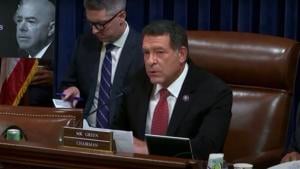
U.S. Rep Mark Green, R-Tenn., announced his official resignation on Friday, July 4, a date he said he selected on purpose.
Green, who chairs the House Homeland Security Committee, said in June he was stepping down from Congress for an opportunity in the private sector. He said in a video published Friday on X that he will start a new business.
“While I cannot give the details here, I will be doing something specifically designed to help America compete against the CCP (Chinese Communist Party), but this time in business,” Green said.
Green served in the Tennessee Senate from 2013 to 2018. He won Tennessee’s Seventh District Congressional seat in 2018 after incumbent Marsha Blackburn decided to run for Senate.
The vote on the ‘big beautiful bill” was his last, Green said in a post on X.
“My time here started with a fire to serve veterans, it continued with leading the historic impeachment of a cabinet secretary, and now it ends with achieving real border security. I am grateful my last vote was for the one Big Beautiful Bill,” Green said.
Candidates began lining up in June to replace Green. Matt Van Epps, who served as commissioner of the Tennessee Department of General Services, Tennessee state Rep. Jay Reedy, Montgomery County Commissioner Jason Knight and combat veteran Jon Thorpe have announced their intentions.
State Rep. Jody Barrett said on X that he is praying about a possible run and could make a decision as soon as next week.
Increases in price, inventory lead to $7B in homes for sale

Amidst a housing affordability crisis, Las Vegas reportedly has over $7 billion in home value on the market.
Redfin’s new report spelled out a record total value for the city’s real estate market.
“What I think has happened, we have very high prices,” said George Kiprios, president of the Vegas Realtors Association. “Our market is doing well, and the home prices are high. Inventory has grown, not a ton, but it has grown. When you combine higher home prices with more inventory, that’s how they got there.”
The median Las Vegas metro home price is currently $448,000, down $5,000 from a January high, but up over 106% from $217,000 just 10 years ago.
Las Vegas developers, meanwhile, have underbuilt homes over the last 15 years, according to a study by the University of Nevada at Las Vegas’ Lied Center for Real Estate. Researchers found that if construction rates had remained at pre-Great Recession rates, there would have been over 280,000 additional housing units in the area.
“Everybody’s looking for houses that are more affordable,” Kiprios told The Center Square. “I think there are lots of folks that want to buy that can’t afford the price.”
Despite the high prices, the Las Vegas housing market has shown some recent promise for buyers. Across the last year, sales have spent an average of 11 more days on the market, up to 46 days. Kiprios said sellers can get anxious and lower their asking prices when sales take longer.
While the Las Vegas real estate market may be at a near-record high to purchase a home, there are also many homes currently on the market, which gives buyers leverage to walk away from a bad deal, driving down prices across the board.
At the same time, Nevada Gov. Joe Lombardo has just signed the major housing bill he introduced for the 2025 session, worth over $180 million. The bill, AB 540, is designed to help speed up the building process and incentivize affordable housing projects.
Ultimately, Kiprios said, the $7 billion on the Las Vegas housing market can be read in multiple ways. Both potential buyers and sellers should be aware of the number, but both also have something to celebrate in its announcement, he said. For sellers, homes are being sold near an all time high, while buyers can relax, knowing they have options on the market.
Nearly 20,000 attend skilled trade student competition

Thousands gathered in Atlanta, Georgia, for an event focused on promoting students in skilled trades and that brings together these young tradesmen with industry leaders.
Each state’s top student tradesmen in over 100 different categories of skilled trades gather together at the annual National Leadership and Skills Conference put on by SkillsUSA, executive director for Skilled Careers Coalition Mark Hedstrom told The Center Square.
Skilled Careers Coalition is an organization dedicated to connecting America’s young students with skilled careers in an effort to help “close the skilled labor gap,” according to its website.
SkillsUSA’s executive director Chelle Travis described to The Center Square her organization and Skilled Career Coalition’s relationship as follows: “SkillsUSA, the nation’s leading workforce development organization for students, is a key partner of the Skilled Careers Coalition, collaboratively working to reimagine skilled careers and empower the next generation of America’s workforce.”
As The Center Square reported last year, Gen Z’s interest in skilled trades is on the rise, making SkilledUSA’s and SCC’s missions relevant to youth today.
This year at the National Leadership Skills Conference (NLSC), over 6,000 students competed against other youth in their trade categories to earn bronze, silver or gold, according to a press release. The event was attended by almost 20,000 people.
Included in the crowds at NLSC are industry leaders like John Deere and Yamaha, policymakers, and SkillsUSA partners, such as the Skilled Careers Coalition (SCC), SCC’s executive director Mark Hedstrom told The Center Square.
Hedstrom said that SCC’s goal at the National Skilled Leadership Conference is to “destigmatize skilled trades” and to “break down the challenges we see in that recruitment-placement ecosystem.”
“That continues to be our mandate and our mission,” Hedstrom said.
Skilled trades are “talented skilled careers” fulfilled by “talented skilled workers,” Hedstrom said.
Often, for students the focus for a future career choice “is on a four year degree or the military,” both of which can bring challenges, Hedstrom said. Particularly, the traditional college track takes years to reach one’s eventual career and can put young people in crippling debt, Hedstrom said.
What SCC aims to do is raise awareness for the third option: a skilled career, Hedstrom said.
“A lot of the stigma around skilled trades has always been they’re dirty, dark, dangerous jobs,” Hedstrom said. “They’re jobs that are low paying, they’re less educated.”
Hedstrom said that on the contrary, skilled careers are high-paying and highly educated.
Carpenter said television host Ty Pennington is an SCC partner and mentor. Pennington told The Center Square that “the trades are facing a serious gap, and we need a lot of workers.”
“We need to rely on the next generation to keep things running,” Pennington said. “Today’s toolbelt generation is just what we need.”
Like Hedstrom, Pennington noted to The Center Square some of the benefits of a skilled career, such as becoming an expert in one’s field, being on the fast track to owning a business, and avoiding college debt.
“So many young people are graduating from college with tons of debt and are unable to find a job in their chosen career,” Pennington said. “When it comes to the skilled trades, you will always be needed. That’s the beauty of the skilled trades.”
Pennington additionally told The Center Square that skilled trades cannot be replaced by AI. “Unlike other careers, technology, AI and robots can’t replace what human hands are able to create, as well as troubleshooting when something goes wrong.”
“The human touch and the experience that comes from making mistakes and learning from those mistakes cannot be replaced,” Pennington said.
SkillsUSA executive director Chelle Travis has similar sentiments to those of Hedstrom and Pennington.
“We’re seeing a real change in interest in youth and young adults, and a growing trend in interest in the skilled trades,” Travis told The Center Square.
Factors Travis identified for the change in sentiment toward skilled trades include high college tuition and the debt that follows, lack of job opportunity upon college graduation, as well as an improved perception of technical skills and good pay in the field.
“We have to normalize pursuing a skilled trade as a first choice not a last resort,” Travis told The Center Square when asked how young people could be encouraged to pursue skilled careers.