Posts by Newspaper Staff
Newsom unveils $101M to build Palisades low-income housing
Six months after the devastating Palisades and Eaton fires, California Gov. Gavin Newsom unveiled $101 million in funding Tuesday for “multifamily low-income housing development” that will “contribute to a more equitable and resilient Los Angeles.” The priority is for “geographic proximity to the fire perimeters of the Eaton, Hughes, and Palisades fires.”
Earlier this year, The Center Square broke news that California state law and a local Los Angeles ordinance require fire-destroyed rent-protected housing — which includes all apartments in the city built before October 1978 — be replaced with low-income housing. Because the affordability requirements use county-level income data, not more local incomes, definitions for “low” and “very low” income housing reflect much lower incomes than the norm for the affluent Palisades community.
“Thousands of families – from Pacific Palisades to Altadena to Malibu – are still displaced, and we owe it to them to help,” said Newsom in a statement. “The funding we’re announcing today will accelerate the development of affordable multifamily rental housing so that those rebuilding their lives after this tragedy have access to a safe, affordable place to come home to.”
The California Department of Housing and Community Development’s Notice of Funding Availability for the $101 pool details how funding will be awarded.
“The 2025 wildfires in Los Angeles County have intensified the region’s longstanding housing crisis, underscoring the urgent need for multifamily low-income housing development,” wrote Jennifer Seeger, the HCD deputy director of the Division of State Financial Assistance. “The Multifamily Finance Super NOFA – Los Angeles Disaster (MFSN-LA Disaster) makes funds more accessible to support the development of safe, fire-resilient multifamily low-income housing that will provide long-term stability, protect vulnerable populations, and contribute to a more equitable and resilient Los Angeles.”
The grant includes multiple funding streams, including the Multifamily Housing Program for low-income housing, taxpayer-funded supportive housing for those exiting institutional settings or homelessness, transit-oriented development that boosts density near transit stops for income-restricted housing, and veteran and homeless veteran housing.
It’s possible to stack funding, meaning a program could make use of multiple programs within the grant to increase the project’s portion of grant-funded low-income housing units.
The notice includes scoring preference for projects that are closer to the fire burn radius, have local government funding commitments, have an occupancy preference for wildfire victims, and are ready to start construction within 180 days of awarded funds.
To qualify as Supportive Housing Multifamily Housing, a project must provide at least 40% of its units for the homeless, or individuals who have spent at least 15 days in “jails, hospitals, prisons, and institutes of mental disease.”
Projects gain additional points for being a Transit-Oriented Development built within a quarter mile of a transit station, which includes qualifying bus stops. This program allows for a 50% to 80% density bonus based on the level of transit service, so long as at least 15% of units are set aside for very low- or low-income households.
Federal food assistance changes threaten benefits for thousands of Illinoisans

Capitol News Illinois
Article summary
The domestic policy law signed by President Donald Trump last week creates new work requirements that could jeopardize food assistance benefits for 360,000 Illinoisans.
Illinois will be required to cover a greater portion of the administrative costs and benefits of SNAP, which could cost several hundred million dollars.
The Congressional Budget Office estimates the changes will substantially reduce costs for the federal government while most states will have to pay significantly more.
This summary was written by the reporters and editors who worked on this story.
Hundreds of thousands of Illinoisans could lose benefits from a federal food assistance program while the state will be required to cover more costs under changes passed in the latest domestic policy plan.
President Donald Trump signed the “One Big, Beautiful Bill Act” into law on July 4, making sweeping changes to social services programs, including Medicaid. Among the programs being revamped is the Supplemental Nutrition Assistance Program, better known as SNAP. The bill institutes new work requirements for many people to remain eligible for benefits and shifts some costs for the program to the states.
Food stamps were first established in the 1930s during the Great Depression. Renamed to SNAP in 2008, the program provides monthly stipends for low-income Americans to purchase select foods at grocery stores. While states implement the program and pay a portion of administrative expenses, the federal government has historically covered the cost of the benefits.
Under the law, work requirements to qualify for SNAP benefits have been expanded to include people up to age 64, along with homeless people, veterans and young adults leaving foster care. Previously, only people age 18-54 had to meet work requirements.
Those populations didn’t previously have to prove they were doing a certain amount of work, but when the changes kick in, they will have to do 80 hours of paid, unpaid or volunteer work each month to qualify for benefits, according to the U.S. Department of Agriculture. The law continues to provide exemptions for people who are physically unable to work, such as for pregnancy.
The changes could leave 360,000 people in Illinois at risk of losing eligibility, according to the state.
“Trump and Republicans would rather children go hungry so their friends can receive tax cuts,” Gov. JB Pritzker said in a statement. “Here in Illinois, we have been working to combat food insecurity for years, and while no state can backfill these costs, the State of Illinois will continue to fight against these harmful impacts and stand up for working families.”
About 1.9 million people were using SNAP in Illinois as of March 2025, according to the USDA.
New costs for the state
Illinois and most other states will have to cover a greater portion of costs for SNAP under the law, including benefits based on the state’s error rate of over- and under-payments on benefits.
Beginning in federal fiscal year 2028, which begins in October 2027, the law requires states with an error rate greater than 10% as of at least FY25 to cover 15% of the cost of benefits. States with lower error rates would cover a smaller portion of the benefits. Illinois recorded an 11% error rate in FY24, according to the USDA.
More than 1.8 million Illinoisians received $4.7 billion of SNAP benefits in FY25, according to the state. If Illinois must pay 15% of the cost of benefits, it could leave the state on the hook for $705 million — or about 1.3% of the current-year budget.
Also beginning in federal fiscal year 2027, which begins in October 2026, states will have to cover 75% of administrative costs for SNAP, rather than 50%. This year’s state budget appropriates $60 million for administrative costs for SNAP — up $20 million from last year.
The changes are part of initiatives by congressional Republicans and the Trump administration to shift more responsibility for assistance programs to states. The nonpartisan Congressional Budget Office estimates changes to SNAP will reduce federal spending by $279 billion over 10 years but increase state spending on SNAP by $121 billion over the same time. The CBO predicts some states could abandon the program or choose to provide a lower level of benefits and not make up for reductions Congress made to the program.
Pritzker and 22 other governors sent a letter to Congress last month saying it’s possible states will have to leave or reduce the SNAP program because of the new cost requirements.
Capitol News Illinois is a nonprofit, nonpartisan news service that distributes state government coverage to hundreds of news outlets statewide. It is funded primarily by the Illinois Press Foundation and the Robert R. McCormick Foundation.
The post Federal food assistance changes threaten benefits for thousands of Illinoisans appeared first on Capitol News Illinois.
Tariffs postponed another few weeks per latest executive order
In a late-afternoon executive order Monday, President Donald Trump postponed the reciprocal tariffs he announced on April 2 for a second time, to Aug. 1. The pause was announced less than 48 hours before the original 90-day extension was set to expire.
On April 2, the president announced new, higher tariffs that the U.S. was going to impose on many of its trading partners. One week later, Trump announced that he would be suspending enforcement of those tariff rates for 90 days, until July 9, to give countries time to negotiate new, mutually beneficial trade deals with the U.S. In the meantime, he instituted a universal 10% tariff on most goods from foreign countries. Countries that were able to negotiate a new trade deal with the U.S. could avoid their higher tariff rate on most goods that Trump had announced on April 2.
On Monday, Trump sent personal letters to 14 countries informing them that he would postpone the effective date for their tariffs to Aug. 1. Hours later came the executive order pushing back the July 9 deadline for all countries that had not yet reached a deal.
“I have determined, based on additional information and recommendations from various senior officials, including information of the status of discussions with trading partners, that it is necessary and appropriate to extend the suspension… until 12:01 a.m. eastern daylight time on August 1, 2025,” Trump said.
The tariff arrangements previously negotiated with China will remain in effect.
Since April 2, the administration has signed a trade deal with the U.K. and announced a trade deal with Vietnam on July 2. Others are reportedly in the works.
Trump originally dubbed April 2 “Liberation Day,” as he believes the U.S. has been hamstrung by unfair trade practices other countries have imposed on the U.S. for decades. Many of America’s trading partners have imposed high tariffs on American goods, when America’s tariffs on those partners have remained relatively low. These and other trade barriers have been “ripping off” the U.S. and have caused the outsourcing of American jobs, according to Trump. By instituting higher tariffs or negotiating new trade deals, Trump aims to reshore manufacturing jobs and restore economic fairness.
‘We think about the state in the same way’: Mitchell ready to back up Pritzker

Capitol News Illinois
Article Summary
JB Pritzker’s new running mate Christian Mitchell has held several roles in state government, including lawmaker and deputy governor.
Pritzker said he trusts Mitchell is ready to take over as governor if required and Mitchell said he shares Pritzker’s vision for Illinois.
Mitchell spearheaded some of Pritzker’s top legislative accomplishments during his first term.
Affordability will be a top issue for Pritzker’s campaign, Mitchell said.
Mitchell said he’s willing to consider ethics reform after holding a top leadership position in the Democratic Party of Illinois under former Chair Mike Madigan.
This summary was written by the reporters and editors who worked on this story.
At 38 years old, Christian Mitchell has been inside most corners of state government as a top advisor on political campaigns, state legislator, deputy governor and civic engagement leader at a major university.
All those experiences make him ready to be Gov. JB Pritzker’s running mate next year in the governor’s campaign for a third term, Mitchell said.
“Bringing somebody who will continue to do the work, who with the governor, will go everywhere in the state of Illinois, advocating for the state of Illinois — that’s the thing I think I bring to the ticket. And I think we think about the state the same way,” Mitchell said in an interview with Capitol News Illinois.
Mitchell, a Black Bronzeville resident who currently works as vice president of civic engagement for the University of Chicago, was raised by his single mom and his grandfather and attended the now-shuttered St. Joseph High School in Westchester. He got an undergraduate degree in public policy from the University of Chicago, and while serving in the General Assembly, earned his law degree at Loyola University.
Mitchell represented a South Side of Chicago district in the Illinois House from 2013 until 2019 when Pritzker selected him to be one of four deputy governors, which serve a chief of staff-like role in Pritzker’s administration overseeing specific state agencies and policy areas.
Related: Pritzker selects former Deputy Gov. Christian Mitchell as running mate
He also joined the Illinois Air National Guard in 2023 shortly after leaving the governor’s office.
“It’s certainly not great for my free time, but your time is the most precious thing you have and the ability to give my time in service of my state and my country is very important to me,” Mitchell said.
Why Pritzker picked Mitchell
Pritzker told reporters in the days after he launched his campaign he was looking for a running mate who shared the same affinity for Illinois and was qualified to step in as governor if required. He said he picked Mitchell more than a week before announcing his reelection in late June, but he declined to say how many people he considered.
“He is somebody that I have grown to trust,” Pritzker said at an event in Peoria. “I’ve seen him usher enormous legislation through the legislature. … He’s a guy who knows how to get big things done and I’ve worked with him to get it done and I’m excited for the people of Illinois to get to know him.”
Lieutenant governors in Illinois have virtually no constitutional authority, other than to replace a governor who is impeached, resigns or dies in office. Pritzker’s running mate selection has received more attention as the governor is believed to be considering running for president in 2028 and would resign as governor if victorious.
Mitchell said he’s running to be Pritzker’s right-hand man for four years, but said Pritzker would make a good candidate for president.
“Illinois is the state most representative of the nation and it’s really exciting to see a governor who is considered for president and not for prison,” Mitchell said, referring to the fact that two of Illinois’ last five governors and four of the last 11 have served time in prison.
“I think he would be excellent. Having said that, that’s why I’m so excited he’s running for reelection to continue the progress of the last seven years,” Mitchell added.
Christian Mitchell, Gov. JB Pritzker’s running mate, listens during a conversation at Peach’s Restaurant in Chicago’s Bronzeville neighborhood on July 2. (Capitol News Illinois photo by Andrew Adams)
Though Mitchell hails from Chicago, Pritzker said he believes Mitchell can appropriately address the needs of all areas of the state.
“When you’re a state representative, you don’t just represent the people of your district; you are also voting on things that are good for people all across the state,” Pritzker told reporters last week after greeting Chicagoans at a Bronzeville coffee shop with Mitchell.
Policy goals
As deputy governor, Mitchell led some of Pritzker’s hallmark initiatives through the General Assembly during his first term: a $45 billion infrastructure plan, legalization of cannabis for recreational use by adults, and a climate initiative setting clean energy goals for the state.
Mitchell has a reputation as a hard-nosed negotiator, even among fellow Democrats. Though he has sometimes angered political allies, Mitchell said he’s open to listening to anyone’s ideas.
“For me, it’s build the biggest tent that you possibly can, ask people for their ideas and be willing to listen to them and change your mind when something is different than you thought it was,” Mitchell said. “That’s how Gov. Pritzker has always led, that’s how he has always directed me when I was deputy governor, that’s what we’ll do as partners in state government going forward.”
Christian Mitchell, candidate for lieutenant governor, speaks to former Democratic U.S. Rep. Bobby Rush at Peach’s restaurant in Chicago’s Bronzeville neighborhood on July 2. (Capitol News Illinois photo by Andrew Adams)
Economic affordability is a top concern for Pritzker, who has preached in national media interviews that Democrats must champion policies addressing cost-of-living concerns for Americans. Mitchell said he shares those goals.
“People want to know that you understand what’s going on in their lives, that you’re working on your behalf every single day and when you do things that they can see on their paycheck, in their pocketbook, that is how you inspire confidence and that is something I think we can do as statewide elected officials,” Mitchell said.
He acknowledged price concerns are a macroeconomic issue outside the state’s total control, but Mitchell said state lawmakers can promote policies that lower costs within the state’s control. Reducing the education system’s reliance on property taxes could be a priority in a third Pritzker administration.
“The governor has put … hundreds of millions of new dollars into education every single year to help drive down that burden,” Mitchell said. “We do now need to work with our local governments to make sure those savings are being passed along. That’s another way in which you touch people’s pocketbooks directly.”
Mitchell said he sees some of the same themes surrounding affordability concerns for voters playing out in the 2026 election that helped Democrats win big victories in Illinois in 2018 when he was executive director of the Democratic Party of Illinois. Democrats swept races for statewide offices that year and gained supermajorities in the legislature that have remained strong since then.
Madigan ties and ethics reform
Mike Madigan was chair of the state party while Mitchell worked as executive director. Madigan, the longtime speaker of the Illinois House until early 2021, was sentenced last month to 7 ½ years in federal prison for bribery and corruption.
Read more: Ex-Speaker Madigan sentenced to 7 ½ years in prison for bribery, corruption | Madigan: The rise and fall
Prosecutors accused Madigan of using his positions as House speaker, party chair and as partner in his real estate law firm as a “criminal enterprise” meant to maintain and increase his power while enriching his allies. He was not convicted of the overarching racketeering charge regarding the alleged “enterprise,” but was convicted on lesser bribery counts.
Mitchell took over the administrative reins of the party from Tim Mapes, Madigan’s trusted chief of staff who was accused in early 2018 of sexual harassment and bullying, who is now in prison for perjury.
A woman shakes Christian Mitchell’s hand at a campaign event hosted by Peach’s Restaurant in Chicago’s Bronzeville neighborhood on July 2. (Capitol News Illinois photo by Andrew Adams)
Like many other Democrats, Mitchell said Illinois has moved beyond Madigan’s era and brand of politics.
“I think it’s important to take the message that not just voters but now a jury has sent, which is let’s make Illinois the most ethical state in the nation,” Mitchell said.
Mitchell argued that work started with the Climate and Equitable Jobs Act – the 2021 clean energy policy he led for the governor’s office. In addition to setting decarbonization goals, it also ended the formula rate system that was at the center of bribery allegations against Madigan and the electric utility Commonwealth Edison.
State lawmakers passed other ethics legislation in 2021 months after Madigan left Springfield and nearly a year before he would ever be charged with a crime. But the legislature has largely not dealt with the issue since then, even after Madigan was convicted early this year.
Mitchell said he and Pritzker would be open to any ethics proposals in the future.
Capitol News Illinois is a nonprofit, nonpartisan news service that distributes state government coverage to hundreds of news outlets statewide. It is funded primarily by the Illinois Press Foundation and the Robert R. McCormick Foundation.
The post ‘We think about the state in the same way’: Mitchell ready to back up Pritzker appeared first on Capitol News Illinois.
Here are the violent criminals Judge Murphy tried to block from deportation

A federal district judge in Massachusetts, Judge Brian Murphy, sought to prevent deportation of violent criminals but was overruled by the U.S. Supreme Court.
On July 4, eight convicted felons, citizens of Burma, Cuba, Laos, Mexico, Vietnam and South Sudan, were deported to South Sudan. The country’s leaders have entered into an agreement with the U.S. to detain criminal foreign nationals, including those who aren’t their citizens. El Salvador and others have entered into similar agreements, with the U.S. government agreeing to pay for detention costs.
U.S. deportation efforts rely on diplomacy with foreign governments, many of which won’t accept their own citizens. Under previous administrations, federal efforts to deport criminal illegal foreign nationals failed because many countries wouldn’t take back their citizens. As a result, they illegally remained in the U.S. even though they had deportation orders from a federal immigration judge, authorities have explained to The Center Square. Under the Trump administration, this has changed.
Those deported to South Sudan were all men illegally in the U.S. with extensive criminal histories, including felony convictions and prison sentences in the U.S. They all received due process in federal immigration court and received final removal orders from federal immigration judges that were never enforced, including one dating back to 1999.
Burmese national Kyaw Mya was convicted of lascivious acts with a child-victim under age 12 and sentenced to 10 years in prison and paroled after four years. ICE- St. Paul officers arrested him; his final removal order was issued March 17, 2022.
Burmese national Nyo Myint was convicted of first-degree sexual assault involving a victim mentally and physically incapable of resisting and sentenced to 12 years in prison. He was also charged with aggravated assault-nonfamily strongarm and a registered sex offender. ICE- St. Paul officers arrested him; his final removal order was issued August 17, 2023.
Cuban national Enrique Arias-Hierro was convicted of homicide, armed robbery, false impersonation of official, kidnapping, and robbery strong arm. His final removal order was issued September 13, 1999. Due to Cuban authorities refusing to take him, he remained illegally in the U.S.
Cuban national Jose Manuel Rodriguez-Quinones was convicted of attempted first-degree murder with a weapon, battery and larceny, and cocaine possession and trafficking. ICE Miami officers arrested him in April; his final removal order was issued Dec. 4, 2012.
Laos national Thongxay Nilakout was convicted of first-degree murder and robbery and sentenced to life in prison. ICE Los Angeles officers arrested him in January. His final removal order was issued July 12, 2023.
Mexican national Jesus Munoz-Gutierrez was convicted of second-degree murder and sentenced to life in prison. ICE Miami officers arrested him in May. His final removal order was issued June 16, 2005.
Vietnamese national Tuan Thanh Phan was convicted of first-degree murder and second-degree assault and sentenced to 22 years in prison. ICE Seattle officers arrested him in May. His final removal order was issued June 17, 2009.
The only South Sudan national in the deportation group was Dian Peter Domach, who was first encountered by ICE in 2011 and received a final removal order on July 19, 2011. He wasn’t deported and remained in the U.S. illegally and committed a range of crimes. He was convicted of robbery and possession of a firearm, possession of defaced firearm, possession of burglar’s tools, and driving under the influence.
Murphy, born in 1979, a former public defender and a criminal defense attorney, was appointed by former President Joe Biden less than six months ago. Murphy argued a Supreme Court ruling didn’t apply to his injunction, seeking to keep convicted felons, including sex offenders and murderers, in the U.S. in violation of federal law. His order violated due process, critics argue, because the convicted felon illegal foreign nationals already appeared multiple times before federal immigration judges who issued judgements against them and final orders of removal.
Justice Elena Kagan chastised Murphy in the court’s July 3 ruling, affirming the Trump administration’s authority to deport illegal foreign nationals to third-party countries.
More than 80 dead, 51 missing as recovery efforts continue in Hill Country

More than 80 people are dead and 51 are missing as a result of the July 4 flash flood event in Texas Hill Country, Gov. Greg Abbott said at a news conference Sunday night.
There are 59 confirmed deceased and 11 missing from Camp Mystic, in Kerrville and Kerr County, Abbott said. In the Central Texas area, there are confirmed 10 additional people deceased. Statewide, in all areas affected by flooding, there are 41 known missing.
But it’s unknown how many remain missing. Abbott said it was important to clarify that “there were so many people who were just camping out – not children in camps – but adults camping out near the river, people in RVs and things like that,” who are missing. “There are people who are missing, who are not on the known, confirmed missing because we don’t yet know who they are,” he said.
Authorities are involved in ongoing searches “throughout the entire river system to find anybody who may be missing,” he said. Abbott also called on members of the public to contact local Kerr County officials if they believe they know someone is missing who was camping in the area.
“Please contact the local officials in Kerr County and let them know that you have the name, identification and other information about a person who is suspected to be missing,” he said. “Call only if you have specific information,” otherwise calls could slow emergency response efforts, he said.
The state has deployed more than 1,500 personnel and more than 925 vehicles and equipment assets across 20 state agencies in response to the flood event.
Expected dangerous weather conditions continue, Abbott also warned, adding that “life threatening danger over the next 24 to 48 hours” exists. Flash flooding could occur in the regions of “the Big Country, Concho Valley, Central Texas and Kerrville,” he said.
“There are still public safety issues and lives to be saved in Kerr County, and all of these regions,” he said.
He urged Texans to remain vigilant and stay off the roads.
Texas Department of Public Safety Colonel Director Freeman Martin said three people have been reported missing in Williamson County, one has been recovered; the fire chief and a 17-year-old female are missing in Burnet County.
At least six people are confirmed dead and 17 are reported missing in Travis and Burnet counties as a result of flood waters, authorities confirmed to the Dallas Morning News.
Recovering operations are ongoing for everyone including “every single one of the children who were at Camp Mystic, as well as anybody else,” Abbott said. After visiting what’s left of the camp, he said, “it was nothing short of horrific to see what those young children went through.”
“We know that parents and families, they want information, they want closure, and we want them to know that we are working as swiftly as possible to get them accurate information that will provide that closure,” Abbott said.
More than 850 people have been rescued, the majority by the Texas Military Department.
Texas National Guard helped rescue/evacuate 525 people, 366 by air and 159 by ground; 20 were in San Sabo County and five in Burnet County, Texas Military Department Adjutant General Major General Thomas Suelzer said.
One single U.S. Coast Guard officer rescued a record 165 people.
U.S. Coast Guard rescue swimmer Petty Officer Scott Ruskin “directly saved an astonishing 165 victims in the devastating flooding in central Texas,” Department of Homeland Security Secretary Kristi Noem said. “This was the first rescue mission of his career and he was the only triage coordinator at the scene. Scott Ruskin is an American hero. His selfless courage embodies the spirit and mission of the USCG.”
The Trump administration is supporting recovery efforts, including the president already approving a major disaster declaration authorizing FEMA assistance.
Despite national, state warnings, Kerr County, Camp Mystic didn’t evacuate

As the death count in the Independence Day flooding in central Texas has now surpassed that of Hurricane Harvey, with dozens of children reported dead and missing who were camping at Camp Mystic in Kerr County, Texans are asking why a warning system wasn’t in place and why the camp didn’t evacuate when others did.
On Wednesday and Thursday, a series of emergency weather alerts were issued by the National Weather Service and Texas Division of Emergency Management. Despite a decades-long history of flash floods in the Texas Hill Country, and a 1987 flash flood that killed 10 teenagers at a Christian Camp in neighboring Kendall County, Kerr County didn’t have an emergency warning system in place.
This legislative session, a bill to create a coordinated emergency warning system and provide grant funding for rural communities died in the Republican-controlled Senate.
The NWS-Austin/San Antonio issued a Flood Watch Wednesday for several counties, including Kerr County; the NWS San Angelo also issued a flood watch for several counties.
Also on Wednesday, TDEM activated state emergency response resources through 10 state agencies anticipating increased threats of flooding in West and Central Texas ahead of the holiday weekend.
“According to the National Weather Service, heavy rainfall with the potential to cause flash flooding is anticipated across West Texas and the Hill Country beginning tonight and is expected to last a few days. Texans are encouraged to monitor local forecasts and avoid driving or walking into flooded areas,” TDEM said. The next day, it escalated state emergency operations readiness and activated additional resources.
At 1:14 am on Friday, the NWS Austin/San Antonio issued a “life threatening flash flooding” warning for Bandera and Kerr counties, stating, “Some locations that will experience flash flooding include, Kerrville, Ingram, Hunt, Waltonia, Kerr Wildlife Management Area and Lost Maples State Natural Area.”
The NWS also had five people on duty, more than the standard two, to deliver forecasts for its Austin/San Antonio office covering the region, Jason Runyen, a NWS meteorologist, said.
The Department of Homeland Security also said, “The National Weather Service executed timely, precise forecasting and warnings, despite unprecedented rainfall overwhelming the region.” It also published a timeline of NWS alerts.
“These warnings should have provided officials with ample time to evacuate camps such as Camp Mystic and get people to safety,” AccuWeather, which also issued reports on Thursday, citing NWS alerts, said.
By 4 a.m. on Friday, heavy rain caused the Guadeloupe River to rise by more than 26 feet in less than an hour resulting in a flash flood that tore through structures, wiped out RV parks, camper vans and cabins where vacationers or residents were sleeping.
At a news conference on Friday, Kerr County Judge Rob Kelly said he didn’t know why Camp Mystic and other camps in the county weren’t evacuated.
“Why weren’t these camps evacuated?” a reporter asked.
“I can’t answer that,” the judge replied. “I don’t know.”
“You’re the judge … the top official here in this county. … There’s kids missing. These camps were in harm’s way,” the reporter said.
The judge replied that no one knew “this kind of flood was coming. We have floods all the time. This is the most dangerous river valley in the United States and we deal with floods on a regular basis. When it rains, we get water. We had no reason to believe that this was going to be any anything like what’s happened.”
On Sunday, Kelly said that several years ago, county officials considered implementing a flood warning system that would function like a tornado warning siren, before he was elected, but never did.
KXAN first reported that county officials didn’t issue warnings until four hours after the NWS alerts, after 5 a.m. and 7 a.m., well after an untold number of people had already been swept away.
The Texas House, under former Speaker Dade Phelan, R-Beaumont, sought to address crisis communication failures at the local and state level last year.
After a disastrous state response to the Panhandle Wildfires, which destroyed more than 1.2 million acres and caused more than $1 billion in economic losses, the Texas House launched an investigation and proposed solutions. State Rep. Phil King introduced a bill to provide grant funding for rural community emergency alert systems and streamline and improve first responder communications. It passed the House with bipartisan support, with 16 Republicans voting against it, only to die in the Senate Finance Committee.
It remains unclear why Camp Mystic didn’t evacuate children on Thursday after the first NWS and TDEM warnings were issued. Mo-Ranch Camp near Hunt moved several hundred campers and attendees to higher ground; nearby Camps Rio Vista and Sierra Vista ended their summer session early on Thursday.
As of Sunday afternoon, authorities in Kerr County had found the bodies of 40 adults and 28 children; 10 campers are still missing.
Everyday Economics: Fed minutes in focus as stagflation concerns mount
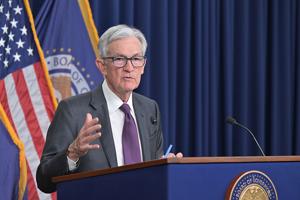
This week will be light on data releases, but heavy on Federal Reserve insights that could shape market expectations for the remainder of 2025.
Fed Minutes Take Center Stage
A couple of Fed president speeches and more importantly the minutes of the Fed’s Federal Open Market Committee meeting will likely steal the show. Expect to see highlights of the current discussion: weighing the risk of higher tariff-induced inflation versus a slowing labor market that is beginning to show serious cracks.
After the June meeting, the FOMC updated its expectations for economic growth and inflation in its Summary of Economic Projections (SEP). The median projection for the unemployment rate in 2025 was revised higher to 4.5% from 4.4%. However, inflation was also revised up to 3% from 2.7% in the previous SEP. All signs point to rising stagflation concerns among the FOMC.
Key Data Releases to Watch
1. The June NFIB Optimism Index
In May, business optimism recovered slightly on improving sales expectations. After the big tariff scare in April, the subsequent pullback by the administration coupled with an array of tax cuts in the tax bill helped improve business sentiment. So long as tax policy is expansionary and supports consumers, sales volumes should increase along with businesses’ ability to pass on any tariff costs to consumers.
However, despite this improvement, plans to increase employment continued to fall, suggesting the labor market will likely continue to slow. The latest jobs report showed the private sector only added 74,000 jobs in June, down from 137,000 jobs in May.
2. Consumer Credit Report
Consumer credit is expected to show a slowdown. In April, consumer credit increased at a seasonally adjusted annual rate of 4.3%. Given the mounting pressures on consumer finances from student loan delinquencies and tightening credit access, any deceleration in credit growth would signal further headwinds for consumer spending. The slowing labor market is also causing consumers to save a higher share of their income.
What It All Means
The Fed finds itself in an increasingly difficult position. Rising unemployment suggests the need for easier monetary policy, while persistent inflation pressures and tariff concerns argue for maintaining restrictive policy. The minutes will reveal how policymakers are weighing these competing forces.
For markets, watch for any signals about the Fed’s tolerance for higher unemployment in service of bringing inflation back to target – or conversely, any willingness to accept above-target inflation in the near term to support employment.
Trump declares major disaster in Texas as rescue operations continue

President Donald Trump on Sunday declared a major disaster in Texas as at least 67 people have died and dozens remain missing after torrential rainfall caused historic flooding along the Guadalupe River in the state’s Hill Country.
“These families are enduring an unimaginable tragedy, with many lives lost, and many still missing,” Trump posted on social media. “The Trump Administration continues to work closely with State and Local Leaders. Secretary of Homeland Security Kristi Noem was on the ground yesterday with Governor Greg Abbott, who is working hard to help the people of his Great State. Our incredible U.S. Coast Guard, together with State First Responders, have saved more than 850 lives. GOD BLESS THE FAMILIES, AND GOD BLESS TEXAS!”
Search and rescue crews continued to look for 11 girls and one counselor attending Camp Mystic in Kerr County, an all-girls private Christian camp.
Kerr County Sheriff Larry Leitha said during a Sunday news conference that 59 people have been confirmed dead in his county alone, including 38 adults and 21 children.
Leitha said 11 young girls and one counselor from Camp Mystic were still missing.
“We extend our sincerest condolences and prayers for every single family affected by this tragedy, and we continue to work around the clock and reunite these families,” Leitha said. “We will continue to search, our search efforts until everybody is found.”
In a statement posted on social media, Texas Gov. Greg Abbott also vowed to continue searching for the missing girls until they were found.
“It, and the river running beside it, were horrendously ravaged in ways unlike I’ve seen in any natural disaster,” Abbott said. “The height the rushing water reached to the top of cabins was shocking. We won’t stop until we find every girl who was in those cabins.”
The National Weather Service faced heavy criticism about the lack of notification prior to the floods.
U.S. Department of Homeland Security Secretary Kristi Noem said Saturday that the Trump administration is working to update what she called “neglected” and “ancient” systems.
Trump wants to set up a sovereign wealth fund. What is it?

President Donald Trump’s plan to create a sovereign wealth fund that’s the world’s envy remains undefined.
In the meantime, Norway’s Government Pension Fund Global is among the largest in the world, with more than $1.8 trillion in assets.
In February, Trump told Treasury Secretary Scott Bessent and Commerce Secretary Howard Lutnick they had 90 days to present him with a plan for a sovereign wealth fund. That time has passed and no plans have been released.
“Treasury and Commerce Departments have formulated plans for a Sovereign Wealth Fund, but no final decisions have yet been made,” White House spokesperson Kush Desai said.
Ana Nacvalovaite, a sovereign wealth funds research fellow at the University of Oxford’s Kellogg College, said the fund’s appearance depends on the details, including funding mechanisms, investment strategies, fund structure, and governance.
Nacvalovaite noted that relatively little information is known about the U.S. plans for a sovereign wealth fund. However, she said many other countries have established funds that the U.S. could follow, but the U.S. will likely face challenges.
Saudi Arabia’s Public Investment Fund, with $925 billion in assets, was established by royal decree in 1971. That could be one roadmap, but America has a different culture and government.
“There is a huge difference between a fund run by a country … where the Royals rule everything, versus an American system where it doesn’t quite work that way,” Nacvalovaite said.
Another question that remains unanswered is how the administration would seed the fund and whether it would need help from Congress, which traditionally allocates federal revenue. The U.S. has $36.2 trillion in debt and hasn’t had a surplus budget since 2001. The White House noted in February that the U.S. government holds about $5.7 trillion in assets. The administration said the U.S. holds far more in natural resources.
Trump also is bringing in new revenue through tariffs. Just how much that generates could vary based on the final terms of trade deals the White House initially hoped to complete by July 9. Tariffs are taxes on imported goods paid to the federal government by the company that imports the goods.
In Norway, the government declared it owned all offshore oil in the North Sea in 1963. Much of the money in the Government Pension Fund Global now comes from a mix of investments, including stocks and real estate. The fund reports it owns nearly 1.5% of total shares in the world’s publicly listed companies.
Most SWFs don’t report everything, which could raise concerns in the U.S.
“Any state-owned investment vehicle must have a focused mandate and a highly transparent and accountable governance structure,” Adnan Mazarei, Anna Gelpern and Edwin M. Truman wrote in a report for the Peterson Institute for International Economics after Trump’s executive order.
Nacvalovaite said some SWFs share more information publicly than others.
“Let’s not forget that there are some sovereign wealth funds which are not transparent,” she told The Center Square.
Four months ago, Bessent said the U.S. would have a fund “within the next 12 months.” That timeline could prove challenging.
Control in the U.S. would almost certainly be an issue. Some nations assign the task to a central bank or government agency.
Norway’s Ministry of Finance has overall responsibility for the fund. It also issues management guidelines. Norges Bank manages the fund.
Norway’s government gets some of the money to spend.
“The Norwegian government can spend only a small part of the fund, but this still amounts to almost 20% of the government budget,” according to the bank.
On average, the Norwegian government spends only the returns – estimated to be around 3% per year – not the fund’s capital.
The report from Peterson Institute for International Economics said the proposal carries risks, especially in absence of more information
“Without much greater clarity and a broadly shared understanding on these issues, a US SWF risks becoming a misplaced fiscal gimmick and an inefficient and potentially corrupt diversion of public resources that could do long-term damage to the US and global economy and financial markets,” it concluded.