Posts by Newspaper Staff
Expert blasts Illinois Congressman’s push to double H-1Bs as ‘tone-deaf’

A renewed push to double H-1B visas is touted as a talent win, but critics warn it could reshape the tech market by driving down wages and edging out U.S. grads.
Illinois Congressman Raja Krishnamoorthi, D-Schaumburg, reintroduced the HIRE Act to double the H-1B visa cap from 65,000 to 130,000.
“To build the jobs and industries of tomorrow, America must stay at the forefront of innovation by strengthening our own workforce while continuing to welcome top talent from around the globe,” Krishnamoorthi said in a news release.
Simon Hankinson, senior research fellow at The Heritage Foundation, called the proposal “tone-deaf,” given the current job climate.
“We’ve got unprecedented graduate unemployment,” he said, estimating that rates for new graduates run from 10% up to 25%. “And at the same time, this guy is saying, ‘no, we need to double the number of foreign workers who are going to compete with these kids.’ I don’t understand where that comes from.”
Hankinson was asked whether Krishnamoorthi’s Indian heritage influences his position on expanding the program.
“I don’t like to go there,” he said. “Nikki Haley’s son is one of the biggest opponents of H-1B and he’s of Indian heritage … We have Indian Americans on both sides of this debate.”
According to Hankinson’s research, about 72% of all H-1B recipients are from India, and another 11% come from China, giving the two countries a combined 85% share of the program.
Hankinson warned that doubling H-1Bs would expand what he calls a “mass labor replacement program.” He noted that spouses of H-1B workers also receive work authorization, meaning the real number of incoming foreign workers would rise far beyond the bill’s stated increase.
“I think it’s a very bad idea, especially in this economy. We’ve got artificial intelligence eating up jobs. We don’t even know exactly which ones yet, but companies are already slowing hiring as they wait to see what AI will replace,” said Hankinson. “On top of that, we’re dealing with a very high unemployment rate even before factoring in AI.”
Hankinson also raised national security concerns, noting that Chinese workers in particular may carry additional risks related to technology theft.
“Some are just coming here to get jobs and live here permanently, but there is a subset of Chinese students and workers, and we have ample proof of this, who are here to steal our technology,” Hankinson told The Center Square.
He said with India, it’s mostly economic competition.
“They want to eat our lunch. Many of our big tech companies have workforces heavily populated by people from India who are eager to advance in the tech sector and compete for jobs,” said Hankinson. “India and China are competitors in industry and high tech, that’s no surprise, and that’s fine. But if we give them an inside lane and a competitive advantage that disadvantages American workers, that is counterproductive and short-sighted.”
Safety Upgrades Planned for Wilmington-Peotone Road; Gas Line Proposal Rejected
Public Works & Transportation Committee Meeting | December 2, 2025 Article Summary: The Will County Public Works Committee approved a $1.9 million engineering contract for improvements to a dangerous stretch of Wilmington-Peotone Road. Officials confirmed the project will add safety features like passing lanes but rejected a suggestion to simultaneously run utility lines to spur…
Read MoreAfghans arrested by ICE released into the country by the Biden administration

Federal and local law enforcement officers have been arresting Afghan men since they were released into the country by the Biden administration in 2021.
Key arrests made major headlines this past week after one Afghan national was charged with shooting two National Guardsmen in Washington, D.C., killing one. The day before, a terrorist plot was foiled in Fort Worth where an Afghan man was arrested with the help of Texas Department of Public Safety. Not soon after, an Afghan man was arrested in Virginia, accused of providing support to the Islamic State of Iraq and al-Sham (ISIS), a designated foreign terrorist organization.
They were all released into the U.S. through Biden administration Operation Allies Welcome or Operation Allies Refuge in 2021, authorities said. The programs facilitated taxpayer-funded flights of many unvetted Afghan nationals into the U.S. after the Biden administration’s deadly withdrawal of U.S. troops from the country in August 2021. As the withdrawal occurred, an Afghan-ISIS attack killed 13 U.S. service members.
Despite the attack, more than 77,000 Afghans were released into the country who weren’t properly vetted, according to a 2022 Office of Inspector General report. The OIG warned the administration “may have admitted or paroled individuals into the United States who pose a risk to national security and the safety of local communities.”
Once in the country, multiple Afghan men were initially arrested on a range of sexual crime charges including at U.S. military bases where they were being held, The Center Square reported. As the border crisis worsened, Afghans also illegally entered through the southwest border, including those arrested by Texas authorities. An ISIS-linked terrorist attack was foiled in Houston, however an ISIS-connected attack successfully killed 15 in New Orleans, injuring an additional 50, this year.
“The Biden administration created one of the worst and most complex national security crises in American history, which the Trump administration has been working every day since January 20 to clean up,” the Department of Homeland Security said Friday.
DHS highlighted other recent ICE arrests of Afghan men released into the U.S. in 2021 through Operations Allies Refuge or Operation Allies Welcome.
Two recent arrests were in October, including Asirullah Khalid-Khan, whose criminal history includes a conviction on a kidnapping charge and an arrest on a sexual assault–rape charge; and Mansour Walizada, whose criminal history includes two convictions of sexual battery and an arrest on a child fondling charge.
In August, ICE arrested Qesmat Din Zafran, whose criminal history includes a conviction on a charge of lewd or lascivious acts with a minor under 16. In July, ICE arrested Said Mohammad Tanai, whose criminal history includes a conviction for assault with intent to commit sex abuse.
In May, ICE took custody of Javid Ghamgeen, who was incarcerated with the Iowa Department of Corrections. His criminal history includes convictions of two counts of possession of methamphetamine, burglary, and aggravated assault against a public officer.
“When Joe Biden let 190,000 Afghan nationals in, the [administration] didn’t do criminal background checks or vet social media, someone just vouched for them and they took the words as truth,” DHS Assistant Secretary Tricia McLaughlin said. “We are working around the clock to get these public safety threats out of our country.”
Officials: Stockton stands together after fatal shooting

In the days after the deadly Nov. 29 shooting in Stockton, the Northern California community is trying to pull together, local representatives told The Center Square this week.
The shooting killed three children and a 21-year-old at a child’s birthday party, attended by 100 or more people. Another 11 people were injured during the shooting in the city of more than 300,000 people east of San Francisco.
“I think right now, not only are people grieving, but they are actually concerned for the community,” Assemblymember Rhodesia Ransom, D-Stockton, told The Center Square. “There’s a lot of frustration, there’s a lot of serious concern about people’s safety, because people don’t want to be the next casualty in something they are not part of.”
Vigils and memorials for the four victims killed during the shooting have been held since Sunday, Ransom told The Center Square.
And local law enforcement have been encouraging members of the community to come forward with any information about the shooting. Stockton Crime Stoppers is offering an $80,000 reward for information that leads to arrests of suspects. People can provide anonymous tips by calling 209-946-0600 or visiting stocktoncrimestoppers.org, where they can leave a tip directly or download a Crime Stoppers app to do so.
Officials with Stockton Crime Stoppers were not available for comment on Friday.
“Right now, we’re trying to understand and solve this incident that took place so that we can get justice,” Ransom said.
No suspects have been arrested. The San Joaquin County Sheriff’s Office said the shooting, which started around 6 p.m. Saturday, was likely a targeted attack and may have involved multiple shooters.
“It’s a tragic incident that has not occurred in our community previously, and it’s been tough for the community dealing with this, especially given the circumstances of children being involved,” Lt. Andrew Theodore of the San Joaquin County Sheriff’s Office told The Center Square on Friday. “The investigation is still active, as it was a large scene with a lot of people involved. Our detectives continue to work the investigative leads that they have to try to put all the pieces together.”
Theodore added that some of those leads could include information about suspects, but could not answer questions about potential suspects.
While a violent crime, the shooting isn’t as much of a gun problem as much as it is a “people problem,” Ransom told The Center Square. “We don’t even know about the proliferation of the guns that are out there, but we also have a people problem. We have a generational violent issue that has plagued certain parts of the community for a very long time.”
Gang and violence prevention could play a role in reducing violent crimes like this, as well as laws that promote accountability, Ransom said.
“We need to make sure we’re not creating loopholes,” Ransom told The Center Square. “I’m all about restorative justice and making sure we’re not throwing away people, but ultimately, we have to keep the community safe first. That is the No. 1 priority, and we need to prioritize that in our legislation to make sure we are deterring folks from even doing something like this.”
Organizations that have previously spoken out about gun legislation and gun violence, including the National Rifle Association and the pro-gun laws organization Everytown for Gun Safety, did not respond to The Center Square’s requests for comment.
Officials with San Joaquin County Behavioral Health Services said they are offering their help to the community if anyone needs support during this difficult time. Those services are also offered to local schools.
“We’re actually really fortunate in Stockton and in San Joaquin County where our schools have very robust mental health services already embedded,” Fay Vieira, director of San Joaquin County Behavioral Health Services, told The Center Square on Friday. “Ultimately, they reported their teams had a good handle on the situation, and given that I’m very familiar with their mental health teams, I believe that they are very strong clinicians with a lot of experience working with children. I was not at all surprised to hear that they were well-equipped to handle a stressful situation.”
“Stockton is resilient,” Vieira noted. “The people who live in Stockton have gone through a lot, but the community is strong, and I know they’re going to heal together. My hope is that the community comes together and they can grow and heal together.”
Representatives from the Stockton Unified School District and the Stockton Police Department couldn’t be reached for comment Friday.
But in a statement Monday, Stockton Police Chief Stanley McFadden called the shooting “heartbreaking beyond measure.”
“The individuals who opened fire on a child’s birthday party showed no humanity,” McFadden said in a news release on Facebook. “That is evil, and we will not allow that kind of evil to go unanswered in Stockton. Our staff is working around the clock, and we are coordinating closely with the San Joaquin County Sheriff’s Office. Every tip and every piece of information we receive is immediately relayed to the Sheriff’s investigative team so it can be acted upon without delay.”
Stockton Mayor Christina Fugazi and the City Manager’s office did not respond to The Center Square’s requests for comment. The California Department of Justice, which has been assisting local law enforcement in the shooting investigation, did not respond to calls and emails before deadline on Friday. U.S. Rep. Josh Harder, D-Stockton, also did not respond to requests for comment.
According to a 2023 report from the California Department of Justice, the state has reduced homicide rates over the last 30 years. In 2022, California had the seventh lowest death rate by gun in the country, according to that report, and California’s gun homicide rate was 45% below the rate recorded in the rest of the country. A Johns Hopkins University report found California had 1,427 gun homicides and that the overall gun death rate increased by 8% between 2014 to 2023, although that includes gun deaths that are not classified as homicides.
As previously reported by The Center Square, California Attorney General Rob Bonta credited the state’s laws requiring background checks and a 10-day “cooling off” period during gun purchases, as well as bans on assault weapons and magazines, for helping to bring down mortality rates.
HHS: Pritzker ‘eroded public trust’ in public health

A U.S. Department of Health and Human Services spokesman says Illinois Gov. J.B. Pritzker eroded public trust and is trying to reinvent public health.
The governor thanked Democratic state lawmakers last week when he signed legislation to empower the Illinois Department of Health to circumvent the federal government and issue its own vaccine guidelines.
“I’d also like to acknowledge the folks who are debunking the federal government’s junk science, our public health leaders who advocated for this bill to protect the well-being of the people of Illinois,” Pritzker said.
State Rep. Bob Morgan, D-Deerfield, joined Pritzker’s criticism of President Donald Trump’s administration and U.S. Health and Human Services Secretary Robert F. Kennedy Jr.
“Illinois will go on the offense. We are not powerless. We can defend against the delusions stemming from RFK Jr.’s unfounded assertions that Tylenol causes autism or that vaccines fail to prevent illness,” Morgan said.
HHS Communications Director Andrew Nixon provided The Center Square with a statement after Pritzker signed House Bill 767 in Chicago on Tuesday.
“Democrat-led states that imposed unscientific school closures, toddler mask mandates, and vaccine passports during the COVID era destroyed public trust and should not be guiding policy,” Nixon said.
Nixon’s statement also included remarks about Pritzker.
“Now, the same governor who eroded public trust is trying to reinvent public health under the guise of ‘filling a void.’ The Trump Administration and Secretary Kennedy are rebuilding that trust by grounding every policy in rigorous evidence and Gold Standard Science – not the failed politics of the pandemic,” Nixon concluded.
On Friday, the U.S. Centers for Disease Control and Prevention’s Advisory Committee on Immunization Practices (ACIP) voted to change its hepatitis B vaccination recommendation for infants from birth to no earlier than two months if the mother tests negative for hepatitis B.
Illinois Department of Public Health Director Dr. Sameer Vohra responded with a statement.
“As a pediatrician and a parent, I am deeply concerned by this shift away from universal newborn vaccination, particularly in the absence of any new scientific evidence to support such a change. In Illinois, we remain committed to science-based public health policy and have recently enshrined into law vaccine access and a state-level structure to provide evidenced-based recommendations,” Vohra said.
The IDPH director said the current guidance in Illinois remains unchanged.
“Earlier this fall, the Illinois Department of Public Health adopted the CDC immunization schedules as revised on August 7, 2025, which continue to recommend hepatitis B vaccination for all newborns,” Vohra stated.
Before the ACIP voted, Morgan criticized the proposed change away from hepatitis B vaccination at birth.
“Something that saves 98% of those who get three shots of hep B,” Morgan said.
During Illinois House floor debate in October, state Rep. Bill Hauter, R-Morton, called Morgan’s legislation “a Trump Derangement Syndrome bill.”
As Morgan’s HB 767 gives Illinois state health officials more power, Florida is moving to give individual families more freedom.
Florida’s surgeon general, Dr. Joe Ladapo, told MAHA Media that his state is trying to end discrimination against patients and families who make different vaccine choices.
“This extends from every family who, for example, maybe doesn’t want a single vaccine to families who want all the vaccines but just want to take them on their own timetable,” Ladapo said.
During Friday’s ACIP meeting, committee vice chair Robert Malone said the public lost trust in vaccines during the COVID-19 pandemic. The panel voted 8-3 in favor of changing the hepatitis B recommendations.
Dr. Cody Meissner voted against the change, noting that the American Academy of Pediatrics did not participate in ACIP deliberations.
“The academy has a long history of working closely with ACIP to the betterment of vaccine recommendations for children,” Meister said.
Meister expressed concern that the academy would be seen as more focused on making a political statement instead of focusing on the health of children.
In the CDC statement announcing the change, the agency noted that it was recommending individual-based decision making for parents.
“ACIP also voted to recommend that when evaluating the need for a subsequent hepatitis B vaccine dose in children, parents should consult with health care providers to decide whether to test antibody levels to hepatitis surface antigen to evaluate adequacy of protection through serology results,” the statement said.
A recommendation from ACIP becomes part of the CDC immunization schedule once it is adopted by the CDC director.
The Illinois Immunization Advisory Committee will convene Dec. 16 to review the latest ACIP recommendation.
WATCH: House passes bills to block CCP’s influence on schools
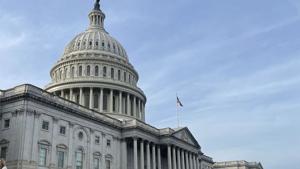
House representatives passed three bills this week aimed at protecting K-12 classrooms from the influence of the Chinese Communist Party.
The bills – PROTECT Our Kids Act, CLASS Act and TRACE Act – essentially prohibit funding from foreign sources and reinforce protections for American students and families. All three passed with bipartisan support.
U.S. Rep. Dave Joyce, R-Ohio, introduced H.R. 1005, PROTECT Our Kids Act, which prohibits public schools from accepting funds from foreign sources and requires the schools to disclose contributions over $10,000.
Joyce called the legislation a safeguard against foreign interference in the classroom.
“American classrooms and what is taught in them should be guided by Americans, not by foreign influences,” said Joyce.
U.S. Rep. Bobby Scott, D-Virginia, opposed H.R. 1005, calling it unnecessary during his closing statements on the House floor Wednesday.
“[T]here is absolutely zero credible evidence that K–12 schools are under threat from misinformation or covert influence by authoritarian foreign governments in any meaningful way,” Scott said in a transcript sent to The Center Square. “This bill does nothing to improve our schools, close achievement gaps, or increase teacher pay. Instead, it burdens schools with bureaucratic red tape due to imagined covert influence from foreign governments.”
Republican lawmakers disagree.
U.S. Rep. Kevin Hern, R-Oklahoma, introduced H.R. 1069, the CLASS Act, which blocks federal education funds from going to any public school that has received direct or indirect support from foreign sources.
“The threat of the CCP is real and growing, and we absolutely must do what we can to protect our children from anti-American brainwashing material funded by one of our greatest adversaries,” Hern told The Center Square in an email. “The 164 Democrats who voted against passing my PROTECT Our Kids Act and believe the CCP isn’t a threat to our education system are either willfully ignorant or too caught up in partisan politics.”
U.S. Rep. Aaron Bean, R-Florida, introduced H.R. 1049, the TRACE Act, which seeks to allow parents the right to request information about foreign influence in education.
“The TRACE Act puts parents back in charge, exposes foreign influence for what it is, and slams the door on hostile nations trying to reach America’s youth,” Bean said.
“The CCP uses our free and open society against us, bankrolling civil organizations … to sponsor exchange programs and curriculum that hide the truth about China,” Select Committee on China Chairman John Moolenaar, R-Michigan, said on the House Floor Wednesday.
House Republican Conference Chairwoman Lisa McClain, R-Michigan, said the measures reverse unchecked foreign influence under the Biden administration and emphasized that “federal funding is a privilege, not a right.”
New fiscal year begins with lowest border apprehensions in recorded history

Illegal border crossings continued an historic downward trajectory in October and November, representing the lowest numbers ever reported at the beginning of a fiscal year in recorded U.S. history. The fiscal year goes from Oct. 1 through Sept. 30.
In October, 30,573 illegal border crosser apprehensions/encounters were reported nationwide – a massive drop from 142,742 in October 2024, 309,605 in October 2023 and 278,317 in October 2022, according to U.S. Customs and Border Protection data.
According to preliminary data for November, illegal border crosser apprehensions and encounters nationwide were slightly lower – 30,367.
The numbers include apprehensions made by Border Patrol agents nationwide between ports of entry and by CBP agents at ports of entry.
“Our focus is unwavering: secure the border, enforce the law, and protect this nation,” CBP Commissioner Rodney Scott said. “These numbers reflect the tireless efforts of our agents and officers who are delivering results that redefine border security. We’re not slowing down. We’re setting the pace for the future.”
The total encounters in October and November – 60,940 – are lower than all of the first two months of any fiscal year to date. The next lowest number was reported in fiscal 2012 of 84,293, according to CBP data.
Notably, the total number of illegal border crossers apprehended in the first 10 months of the Trump administration were less than the number of foreign nationals who illegally entered the country under the Biden administration in one month.
From Jan. 21 through end of November, there were 117,105 total illegal border crosser apprehensions along the southwest border, 37% less than the monthly average of 185,625 during the Biden administration, according to the data.
Border Patrol apprehensions averaged less than 10,000 a month at the southwest border since President Donald Trump took office, “a level of deterrence unmatched in modern border history,” Scott said.
Average apprehensions along the southwest border totaled 245 per day, less than 11 people per hour. That’s 95% lower than the daily average under the Biden administration, which saw the highest numbers in recorded U.S. history. From February 2021 through December 2024, Border Patrol agents faced a minimum of 5,110 apprehensions a day along the southwest border, according to CBP data.
In December 2023, at the height of the border crisis, with December being a normally slow winter month, 336 illegal border crossers were apprehended every hour. That’s more than the daily total of apprehensions under the Trump administration.
Every month and every year the greatest number of illegal border crossers were single adults, followed by single adults claiming to be in a family unit, and unaccompanied children, according to the data.
The data excludes “gotaways,” the official CBP term for foreign nationals who illegally enter between ports of entry to evade capture. They don’t make immigration claims and don’t return to Mexico or Canada. The majority have been found to have criminal records or were previously deported, authorities have said.
CBP doesn’t publicly release gotaway data. The Center Square exclusively obtained it from a Border Patrol agent every month, revealing that more than two million gotaways were recorded by Border Patrol agents during the Biden administration. The total is expected to be much higher because not all gotaways were reported.
As record numbers of illegal border crossers poured through, Border Patrol agents were pulled from the field to process them into the country contrary to federal law, creating a national security crisis, they argued.
Retired San Diego Chief Border Patrol Agent Aaron Heitke testified before Congress that Border Patrol agents across the southwest border were taken out of the field to process everyone into the country, including “groups of hundreds and thousands coming into the United States and turning themselves in.” The result was “80% to 90%, sometimes 100% of the agents on duty [were taken] away from” the southwest border. Hundreds of miles of the border were left unstaffed, unprotected and unpatrolled where there was “no agent presence for weeks and months at a time,” he said, The Center Square reported.
Foreign nationals “who did not want to be caught could simply walk in. … We have no idea who and what entered our country over this time.”
Under the Trump administration, Border Patrol agents were put back in the field, Biden administration policies were reversed and illegal border crossers aren’t being released but processed for removal.
Debate over AI heats up as GOP scraps moratorium in annual Defense bill
Lawmakers are becoming increasingly concerned about the rapid expansion of AI technology and its impacts on cybersecurity, the power grid, and online safety.
While the Trump administration and some congressional Republicans like U.S. Sen. Ted Cruz, R-Texas, and Rep. Brett Guthrie, R-Ky., are pushing for a federal moratorium on state AI regulations, most other members of Congress are calling for a more prudential approach.
Democrats on the House Energy and Commerce committee asked the Federal Energy Regulatory Commission in a Friday letter to ensure that AI data center growth does not raise Americans’ energy bills.
The lawmakers urged FERC “to prioritize holding American families harmless from the costs imposed upon the nation’s grid by large loads, including data centers,” as the commission considers rulemaking proposals addressing the impact of increased electricity demand on the power grid.
“Ensuring that the buildout of a 21st century grid is fundamentally fair will take many stakeholders: Congress, the federal government, and state regulators,” the lawmakers noted.
“But we appreciate the need for expeditious FERC action in this case, which could help prevent a “race to the bottom” where data center developers would be incentivized to build in jurisdictions with the weakest regulations, and not in the best places to minimize the costs they impose upon the grid.”
Multiple states are attempting to lure data center developers with massive tax breaks, even as the majority of American voters don’t want energy-sucking data centers in their communities.
Communities with data centers often shoulder increased energy costs as electricity demand soars and utilities force American taxpayers to fund discounted rates for data centers, a recent study by Harvard Law School found.
As data centers nevertheless continue to pop up around the country, the Trump administration’s push for nationwide AI regulatory uniformity is meant to further both data center construction and AI innovation in general.
One federal AI standard – which the “One Big Beautiful Bill” initially included before senators stripped it – could prevent states from enacting AI-related online safety laws, zoning restrictions, taxation rules, and other regulations, depending on what form it takes.
Pro-AI moratorium Republicans tried again to insert a 10-year AI moratorium into legislation, this time within the 2026 National Defense Authorization Act, the annual must-pass Defense bill that will drop next week.
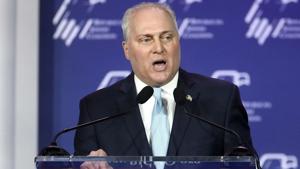
But due to strong pushback from both Democrats and Republicans alike, House Majority Leader Steve Scalise, R-La., indicated this week that a moratorium won’t be included in the NDAA, explaining that the must-pass bill “wasn’t the best place for this to fit.”
“Good. This is a terrible provision and should remain OUT,” Sen. Josh Hawley, R-Mo., responded on social media.
Scalise added, however, that “we’re still looking at other places, because there’s still an interest.”
Evers vetoes 9 bills, including block on illlegal BadgerCare enrollment

Wisconsin Gov. Tony Evers vetoed nine bills Friday, including a much-debated bill that would prevent tax money from going toward the health care of undocumented immigrants.
The bill had passed the Senate 21-12 and the Assembly 51-44 with bill sponsors saying it was aimed at preventing those who are unlawfully present in the country from receiving BadgerCare benefits.
Evers pointed to legislative debate on Assembly Bill 308 where a co-author stated that undocumented immigrants already cannot enroll in BadgerCare.
“I am vetoing this bill in its entirety because I object to Republican lawmakers passing legislation they acknowledge is unnecessary to prevent problems they admit do not exist, all for the sake of trying to push polarizing political rhetoric,” Evers wrote in his veto message.
Sen. Tim Carpenter, D-Milwaukee, was removed from the Committee on Licensing, Regulatory Reform, State and Federal Affairs after a dispute about the bill when Carpenter reached for the gavel of Committee Chair Sen. Chris Kapenga, R-Delafield.
Evers also vetoed bills regarding student teaching requirements, disputes with the Elections Commission, military recruiting access to schools, building codes, emotional support animals, the state smoking ban in tobacco bars, data from University of Wisconsin system schools and a ban on local guaranteed income programs.
“I am vetoing this bill in its entirety because I object to burdening institutions of higher education in Wisconsin with additional administrative requirements, most especially when the Wisconsin State Legislature imposes such mandates without providing the necessary resources to successfully implement those requirements,” Evers wrote in vetoing Assembly Bill 166. “Further, many of the mandated reporting as required under this bill will, according to the University of Wisconsin System, ‘overlap substantially’ with existing information that is already available and submitted to the federal government.”
Bull Moose Project criticizes Sen. Lummis over stalled crypto legislation

A conservative advocacy group is pressuring U.S. Sen. Cynthia Lummis, R-Wyo., over her handling of a major digital asset bill, arguing that she slowed progress on a measure backed by the White House and a bipartisan group of lawmakers.The Bull Moose Project released a football-themed AI video and statement criticizing Lummis, a Wyoming Republican who has positioned herself as a leader on cryptocurrency issues. The group said she “fumbled” the Digital Asset Market Clarity Act of 2025, a bill that passed the U.S. House earlier this year with bipartisan support.Lummis shifted her focus to the Responsible Financial Innovation Act, a separate proposal that has not advanced, according to a Bull Moose Project press release. The group argues that move stalled both measures.“The White House was clear that it wanted digital asset market legislation passed and on the President’s desk before Thanksgiving. The House did its job and the Senate was ready to pass it until Senator Lummis called an audible and fumbled the ball,” Aiden Buzzetti, founder of the Bull Moose Project, said in the release.The organization said the CLARITY Act would establish clearer rules for the digital asset market, including definitions for digital commodities, regulatory roles, and operational requirements for companies. Its supporters have described it as a way to provide stronger consumer protections and more certainty for investors.President Trump “declared digital asset market structure legislation a priority months ago,” the group said. The release warned that “thanks to Sen. Lummis’ poor play calling, that’s all at risk.” Lummis’ office did not immediately respond to a request for comment.The video, released alongside the statement, uses football analogies to criticize Lummis’ role in the process. “President Trump called the play. The industry set the formation. The House put it in motion. But Senator Cynthia Lummis fumbled the ball,” the narration said. It adds that her decision “surpris[ed] policymakers and spook[ed] crypto investors.”The video also states that “when it comes to legislating on President Trump’s biggest priorities, Senator Lummis is a liability and should be benched,” and urges viewers to “tell Senator Lummis to get on the right play for Wyoming and America. Pass the Clarity Act now.”The ad will run on social media during major college football games, the group says.
Read More