Posts by Newspaper Staff
Powerful Japan earthquake triggers tsunami warning
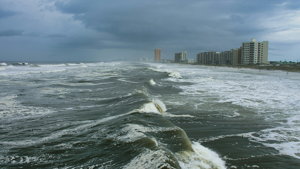
A magnitude 7.6 earthquake centered in the Pacific Ocean some 45 miles west of Misawa, Japan, shook the northern region of the archipelago around 11:26 p.m. local time.
Japan’s government issued a tsunami warning covering parts of the eastern coast with waves up to 9 feet in height for some prefectures closest to the epicenter.
But more than an hour after the initial quake, initial reports indicated waves were not as high as anticipated, according to Harold Tobin, director of the Pacific Northwest Seismic Network and Washington State Seismologist.
Tobin told The Center Square quakes of that magnitude, while very large, are not unusual for that region.
“That is one of the most active places on the entire planet and the same region off the coast of Northern Japan where the 2011 magnitude nine quake was. This was a subduction zone quake, that typically will trigger a tsunami, but I don’t see anything bad at this point,” said Tobin. “I’m relatively optimistic that damage won’t be high in Japan, but it’s early.”
The 2011 quake in Japan claimed nearly 20,000 lives.
Lilly Johnson lives just off the Misawa Air Base in Misawa City, approximately 400 miles north of Tokyo, on the northeastern part of the main island of Honshu. She said an alert went off on her phone and three seconds later the violent shaking began.
“Everything started shaking and going blurry. It was pretty violent and would almost come in waves where like the bottom would shake and then the top would shake and my feet were vibrating,” said Johnson in a phone interview with The Center Square about an hour after the quake. “I was crying and kind of freaking out, but my husband is like Superman so he was just making sure I was okay.”
Johnson said the area experienced several aftershocks measuring 5.6 and 3.6 in magnitude since the first shaking, which lasted about 30 seconds.
“We were able to see the fan moving back and forth, the blinds were shaking and our bathroom mirror opened and things fell out,” she said.
Johnson said she and her husband do not live near the coast, so any tsunami would not impact them.
Tobin said the Japan earthquake is another reminder for those who live in the Pacific Northwest that they live in earthquake territory.
“It just is another example of what can happen here [in the Northwest] and what will happen here at some point in the future and so we need to use this as a reminder to be prepared, both personally and as a government,” said Tobin. “I think it’s just another wakeup call of what will at some point happen here.”
Japanese Prime Minister Sanae Takaichi issued instructions for her cabinet following the quake:
“1. Provide timely and accurate information to the public regarding the tsunami, evacuation, etc., and take thorough measures to prevent damage, such as the evacuation of residents.
“2. Assess the state of affairs regarding damage as soon as possible.
“3. Act in close coordination with local governments and, under the principle of prioritizing human life above all else, spare no effort in our emergency disaster responses, including saving lives and rescuing disaster victims, with the Government working as one.”
More human smugglers arrested coming through Canada, this time from India
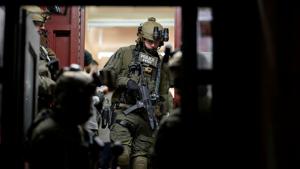
International human smuggling schemes at the U.S.-Canada border continue with the latest indictment of an upstate New York woman accused of facilitating Indian nationals being brought into the U.S. from Canada.
In the Northern District of New York, Plattsburgh resident Stacey Taylor was arraigned after a federal grand jury in Albany indicted her in October in an alleged international alien smuggling conspiracy. Taylor facilitated the illegal entry of Indian nationals into upstate New York from Canada, according to the U.S. Attorney’s Office.
The indictment comes after the greatest number of Indian nationals and Canadian nationals illegally entered the U.S. under the Biden-Trudeau administrations, The Center Square exclusively reported.
Border Patrol agents first arrested Taylor in January, accusing her of picking up Indian and Canadian nationals after they illegally crossed the border from Canada into upstate New York near Churubusco. Upon inspection, they said they found text messages in her phone indicating she had been involved in multiple smuggling operations. After she was arrested and charged, she was released and continued to engage in human smuggling, according to the indictment.
She was later stopped “in a suspected alien smuggling venture in August 2025, and was implicated in alien smuggling as recently as September 2025,” according to the indictment
Taylor has been charged with conspiring with others to engage in alien smuggling, and four counts of alien smuggling for profit, with three counts being second or subsequent offenses, according to the indictment. If convicted, she faces a mandatory minimum of five years in prison for each count of alien smuggling for profit, and additional time for second and subsequent offenses, the U.S. Attorney’s Office said.
U.S. Immigration and Customs Enforcement Homeland Security Investigations-Rouse’s Point, U.S. Custom and Border Protection and Border Patrol-Champlain Station agents are investigating the case with assistance provided by CBP’s HSI’s Human Smuggling Unit in Washington D.C. and CBP’s International Interdiction Task Force.
The investigation is an outworking of DHS Joint Task Force Alpha targeting transnational criminal activity, including human smuggling and trafficking. It includes U.S. Attorneys’ Offices from southwest border districts, the Northern District of New York, the District of Vermont, and the Southern District of Florida. Multiple federal agencies are involved, including the DOJ’s Criminal Division, DHS, FBI, DEA and others.
As of Dec. 5, JTFA’s efforts have led to “more than 425 domestic and international arrests of leaders, organizers, and significant facilitators of alien smuggling; more than 375 U.S. convictions; more than 325 significant jail sentences imposed; and forfeitures of substantial assets,” the DOJ says.
Taylor’s indictment is the latest among many after the northern border saw a record number of illegal border crossers under the Biden administration, with nearly half reported in New York. Nearly 364,000 illegal border crossers were reported in four years in New York, The Center Square reported.
While the numbers have dropped under the Trump administration, they remain higher than the pre-Biden era, according to CBP data.
CBP and Border Patrol officers have apprehended the greatest number of foreign nationals on the federal terrorist watchlist, a record 1,216 at the northern border, The Center Square exclusively reported. They also continue to apprehend human smugglers from Mexico, Central America as well as U.S. citizens living near the U.S.-Canada border, The Center Square reported.
In February, President Donald Trump for the first time in U.S. history declared a national emergency at the northern border, also ordering the U.S. military to implement border security measures there. The Trump administration has also prioritized increased funding, recruitment and hiring and investment in technological capabilities at the northern border.
EXCLUSIVE: Texas Operation Lone Star 2.0: pursuing domestic terrorist threats
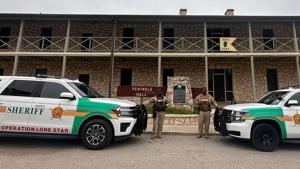
The border crisis is far from over despite the Trump administration implementing policies to reduce illegal border crossings to historic lows.
The hardest part has just begun: finding millions of criminal foreign nationals, including those on the terrorist watchlist and Special Interest Aliens (SIAs), released into the country by the Biden administration. They are believed to be among a minimum two million gotaways who illegally entered between ports of entry to evade capture, law enforcement officials have explained to The Center Square.
In Texas, Department of Public Safety law enforcement officers working with local and federal partners through Gov. Greg Abbott’s border security mission, Operation Lone Star, are on the front lines pursing domestic terrorist threats.
They are continuing to arrest gotaways, tracking them in rural areas using brush teams, mounted and K9 units, dismantle stash houses and human smuggling operations and engaging in high-speed pursuits in border communities, The Center Square reported.
Since Gov. Abbott launched OLS in March 2021, DPS OLS officers have apprehended or referred to Border Patrol more than 536,929 illegal border crossers. They’ve made more than 60,529 criminal arrests, with more than 49,280 felony charges reported, according to the latest data obtained by The Center Square.
They’ve also seized more than 841 million lethal doses of fentanyl – enough to kill the entire populations of Canada, Mexico and the United States, according to the data.
Now under “OLS 2.0”, DPS OLS operations are extending “into the interior of the state, where we work closely with federal law enforcement to disrupt transnational criminal organizations and the networks responsible for smuggling operations and threats to public safety,” DPS Lt. Chris Olivarez told The Center Square in an exclusive interview. They’re also apprehending numerous SIAs “who would have otherwise escaped into the interior of the U.S. had OLS officers not arrested them.”
OLS DPS personnel “are on the front lines every day – from river operations to criminal interdiction – stopping human smuggling, drug smuggling, and seizing fentanyl and other dangerous drugs before they reach Texas neighborhoods,” he said.
SIAs they’ve arrested are male citizens from countries of foreign concern, including Iran, a U.S. State Department designated State Sponsor of Terrorism. The male SIAs are also from Afghanistan, Egypt, the Democratic Republic of the Congo, the Republic of Mali, Syria and Turkey, among others, The Center Square reported.
In one case, OLS officers pulled over a driver in a border community and found a Syrian hiding in the trunk of the vehicle. In other cases, they caught Afghans, Iranians and other SIAs trespassing on private ranches in border communities.
The Iranians came through Mexico with plans to go to Florida, Las Vegas and San Francisco, they told OLS officers, The Center Square reported. Instead, they were arrested.
SIAs are noncitizens who, based “on an analysis of travel patterns,” are “known or evaluated to possibly have a nexus to terrorism” who “potentially poses a national security risk to the United States,” according to the Department of Homeland Security. At least 73,000 SIAs were arrested under the Biden administration, a U.S. House Committee on Homeland Security reported last year. The number excludes gotaways.
Understanding the threat, the Texas legislature created a new Department of Homeland Security within DPS and allocated funding for technology and other resources to continue OLS operations. The new division is providing intelligence support to “help us identify and combat domestic terrorism and threats to life” and taking “proactive action to combat domestic terrorism, transnational criminal activity, and the growing threat posed by SIAs.
“Today, we face more threats than ever before,” he said.
Within a few months of being operational, the new division has helped take down a Tren de Aragua foreign terrorist organization operation in San Antonio, located and arrested an Afghan making terroristic threats in Fort Worth and is investigating extensive alleged statewide Islamic terrorist threats, The Center Square reported.
The new division is also spearheading intelligence and surveillance, including managing Operation Drawbridge, “the program for the installation and monitoring of cameras and surveillance equipment along the Texas-Mexico border.”
OLS DPS officers are making roughly 100 criminal arrests along the Texas-Mexico border every week, “roughly the same as one year ago, as the criminal element crossing the border remains,” Olivarez said. “While our border is overall more secure today than it has been in years, the work of OLS is not yet complete.”
DPS South and West Region troopers are searching for human smugglers; brush teams are searching for camouflaged gotaways. All six DPS regions are searching for criminal foreign nationals many miles from the physical border.
So far, they’ve identified roughly 6,500 criminal foreign nationals with active felony warrants for a range of offenses, including murder, assault, sex crimes, human smuggling, drug and weapons among others.
Several have been added to Texas’ 10 Most Wanted Criminal Illegal Immigrants List, which was created in June 2024. This year, 13 were found and taken into custody, DPS said.
How Illinois’ Democratic U.S. Senate candidates plan to address economic issues
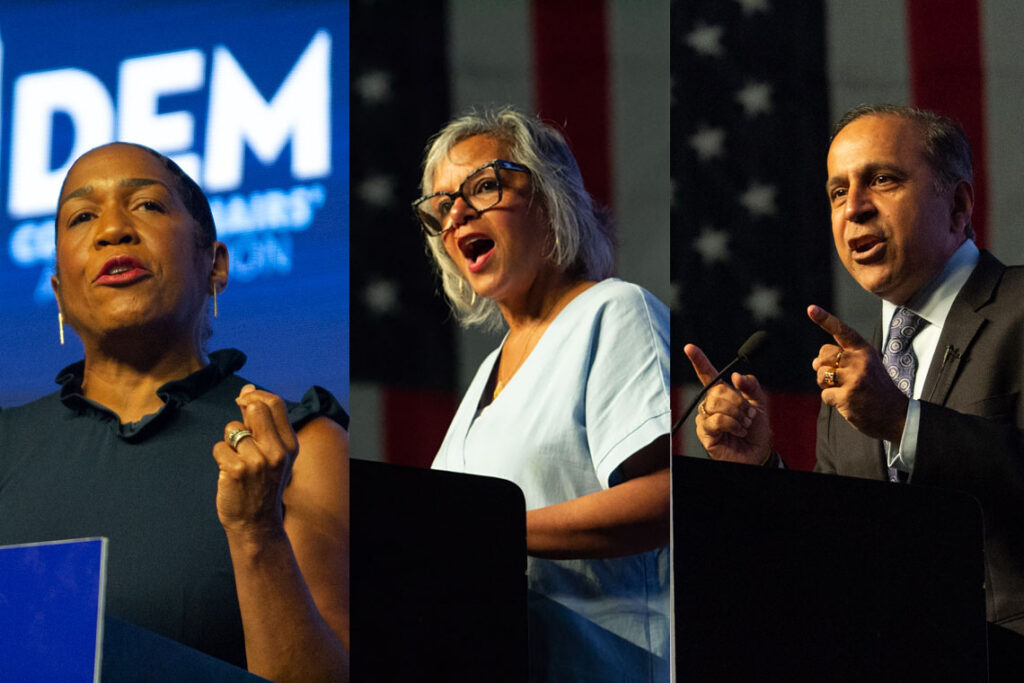
The top three Democrats running for U.S. Senate have released economic plans.
Read MorePeotone License Plate Camera Renewal Sparks Privacy Debate in Public Works Committee
Public Works & Transportation Committee Meeting | December 2, 2025 Article Summary: A renewal of an agreement allowing license plate reading (LPR) cameras in Peotone passed the Public Works Committee, but not without opposition. Board members split on the balance between municipal requests for safety tools and concerns over civil liberties. Peotone LPR Camera Key…
Read MoreAfter Kirk assasination, students less comfortable with ‘controversial’ events on campus

Following the assassination of Charlie Kirk, half of the nation’s college students report feeling less comfortable attending controversial public events on campus and nearly half are less comfortable voicing opinions on controversial subjects in class.
Chief Research Advisor Dr. Sean Stevens at the Foundation for Individual Rights and Expression told The Center Square that Charlie Kirk’s September assassination at Utah Valley University “has had a chilling effect — not just at UVU, but across the country.”
The Foundation for Individual Rights and Expression (FIRE) surveyed 2,028 undergraduates nationwide – including an “oversample” of 204 students from Utah Valley University – in order to “understand how the assassination is shaping student attitudes and behavior.”
Stevens told The Center Square that “some of the data from Utah Valley University students are encouraging – revealing signs of increased tolerance, and even relative trust in administrative protections for free speech.”
However, Stevens also said that the assassination of Kirk “appears to have deepened existing ideological fractures between liberals and conservatives on campus.”
A press release on the survey showed that following the assassination, “moderate and conservative students across the country became significantly less likely to say that shouting down a speaker, blocking entry to an event, or using violence to stop a campus speech are acceptable actions.”
“In contrast, liberal students’ support for these tactics held steady, or even increased slightly,” the release said.
Additionally, according to the survey, half of the participating students reported they are “less comfortable attending or hosting controversial public events on their campus.”
Forty-five percent of students surveyed are “less comfortable expressing their views on controversial topics in class,” with one in five students saying that “they are now less comfortable attending class” – all following the killing of Kirk.
Stevens told The Center Square that “the worst thing colleges and universities could take away from Charlie Kirk’s assassination is that open debate and controversy are too dangerous.”
“Instead, schools need to stop using ‘safety’ as a pretext for censorship, apply the same free-speech rules to everyone, and protect the speech rights of students, faculty, staff, and speakers better,” Stevens said.
Stevens outlined three ways in which schools can begin to accomplish this free speech initiative.
For one, schools can begin “emphasizing that violence and true threats are unacceptable no matter who the speaker is,” Stevens said.
Additionally, Stevens said schools can make “their policies viewpoint neutral so that the same procedures are applied regardless of the speaker’s ideological views.”
Furthermore, schools can begin “defending speech about the assassination regardless of how offensive or loathsome it may be, provided the speech is protected by the First Amendment,” Stevens said.
Everyday Economics: The case for a December rate cut

Last week brought the delayed September numbers on personal income, consumption, and the Fed’s preferred inflation gauge, the Personal Consumption Expenditures (PCE) price index. It’s backward-looking, but it’s the last clean read on inflation before the Fed meets in December.
Headline PCE prices were up 2.8% year over year in September, a touch higher than August’s 2.7%. Core PCE, which strips out food and energy, also rose 2.8% from a year earlier, down slightly from 2.9% in August. Goods prices moved higher as tariffs filtered through, while services inflation ticked down: prices for goods were up 1.4% from a year earlier in September (vs. 0.9% in August), while services inflation eased to 3.4% from 3.6%.So far, that’s a far cry from the worst-case fears that tariffs would send prices sharply higher. The September report instead shows a modest re-acceleration in goods prices layered on top of a slow, grinding disinflation in services.On the spending side, the consumer is cooling, not collapsing. Current-dollar personal consumption expenditures rose 0.3% in September, with services spending up 0.4% and goods spending roughly flat; after adjusting for inflation, real spending was essentially unchanged on the month. On a year-over-year basis, nominal PCE growth has downshifted from the mid-6% range late last year toward the mid-4% range in recent months – still positive, but clearly slower than the post-pandemic surge.High-income households, cushioned by strong balance sheets and stock-market gains, are still spending freely on services like travel, healthcare and dining out. Middle- and lower-income households are increasingly price-sensitive and pulling back on discretionary goods, a pattern echoed in recent private-sector card and bank data.That mix explains why the impact of tariffs on inflation has been muted so far. We’re seeing more of a squeeze on profit margins than a broad second wave of price hikes: businesses are absorbing part of the higher import costs rather than fully passing them on to customers. At the same time, high household wealth has helped prevent an outright collapse in demand. The result is a gradual downshift in spending growth, not a sudden stop.Why it matters for the Fed this weekFor the Fed, the September data confirm that the balance of risks has shifted. Inflation is still above the 2% target but looks relatively contained and is no longer clearly accelerating. The 12-month PCE inflation rate has edged up only gradually – from around 2.6% in early summer to 2.8% in September – while core PCE is effectively moving sideways in the high-2s.By contrast, labor-market risks are mounting. Recent official and private-sector indicators point to softer hiring, slower wage growth, and more caution from employers even as layoffs remain low – a late-cycle pattern of labor hoarding rather than aggressive expansion. That combination – a cooling, K-shaped consumer and a labor market that’s losing momentum – argues that the greater danger now is keeping policy too tight for too long.This week’s main event is the FOMC interest rate decision. The September report suggests inflation may not re-accelerate meaningfully from here, especially with demand already sluggish in large swaths of the economy – housing among them. The bigger risk is that further cooling in the labor market lands hardest on households that haven’t benefited from the AI- and asset-driven wealth boom and are already pulling back on discretionary spending.The Fed is widely expected to cut again in December, though a follow-up move in January is far from guaranteed. November labor-market data – whenever they finally arrive – will be crucial in determining whether this is a one-and-done insurance cut or the start of a more extended easing cycle.
Joliet Unity Movement Criticizes Board’s Handling of Cannabis Tax Revenue
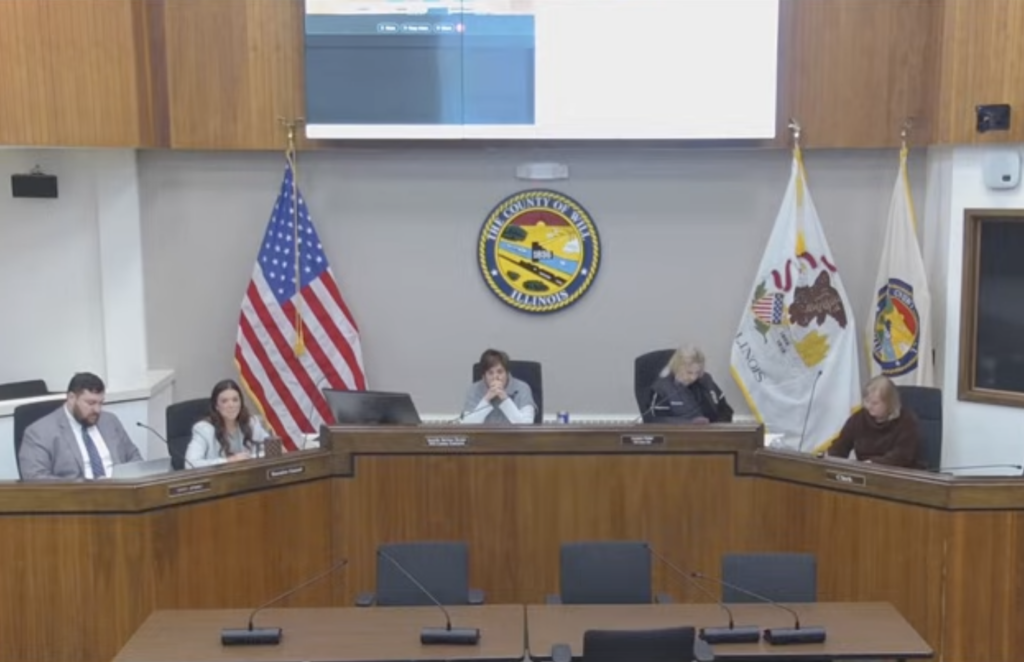
Will County Board Meeting | December 4, 2025 Article Summary: During public comment, the Joliet Unity Movement denounced a recent board vote that redirected cannabis tax revenue away from community reinvestment programs. Board Member Julie Berkowicz later echoed calls for greater transparency regarding how those funds are allocated. Cannabis Funding Dispute Key Points: Public Protest: Amy…
Read MoreRepublicans divided over how to address rising health care costs
The U.S. Senate will hold a doomed vote next week on Democrats’ bill to extend the enhanced Obamacare subsidies for three more years.
Senate Republicans, meanwhile, have not decided on an alternative health care bill, despite millions of Americans’ premiums set to spike after Dec. 31 when the enhanced Premium Tax Credits expire.
While House Republicans will drop the text of a health care policy bill as soon as Monday, individual Republican senators have introduced a hodge-podge of ideas via separate bills.
The No Taxes on Healthcare Act, put forward by U.S. Sen. Josh Hawley, R-Mo., would make all taxpayers, not just those who itemize their deductions, eligible for the medical-expense deduction. It would also enable taxpayers to deduct up to $25,000 in out-of-pocket medical expenses, as well as allow deductions for out-of-pocket spending on healthcare premiums.
“Why shouldn’t we make health care tax-free in this country?” Hawley asked during a committee hearing Wednesday. “We did no taxes on tips, no taxes on overtime earlier this year. How about no taxes on health care?”
Other proposed legislation to lower health care costs targets Pharmacy Benefit Managers, who have been accused of distorting health care markets by artificially inflating the list prices of drugs for low-income patients.
The Pharmacy Benefit Manager (PBM) Price Transparency and Accountability Act, introduced by U.S, Sen. Mike Crapo, R-Idaho, along with Sen. Ron Wyden, D-Ore., would increase pricing transparency and isolate PBM compensation from their negotiated rebates.
Crapo said the bill forms “a strong foundation for additional efforts to promote pharmacy access, demystify drug pricing and reduce costs.”
Other Republicans – including U.S. Sens. Bill Cassidy, R-La., and Susan Collins, R-Maine, – are hoping to build on the Affordable Care Act in the short-term and work on long-term reforms afterward.
Cassidy is pushing for Health Savings Accounts to replace the enhanced PTC. Americans who have insurance through the ACA Marketplace could then receive the subsidy directly and apply it to their premiums on the plan of their choice.
“By giving the money to the insurance companies, we’re not actually lowering the cost of the premium, we’re just papering over it with subsidies,” Cassidy told lawmakers Thursday. “The enhanced Premium Tax Credit doesn’t lower the cost of health care, but it is a Band-Aid on a broken bone … the actual premium never decreased, it’s just that the taxpayers were paying more of it.”
While Senate Majority Leader John Thune, R-S.D., has not confirmed whether GOP leaders are considering comprehensive legislation, many of the ideas put forward are likely to be included in Republicans’ House bill.
House Speaker Mike Johnson, R-La., is hoping for a floor vote on the legislation by the end of the month.
Obama-era ‘Welcoming Cities’ program overlaps with illegal border crosser crimes
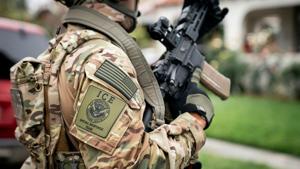
A program launched in partnership with the Obama administration more than a decade ago that certifies localities to “improve immigrant inclusion” overlaps with crimes being committed by illegal foreign nationals in those communities, according to crime reports, U.S. Immigration and Customs Enforcement operations and other data evaluated by The Center Square.
“Certified Welcoming is a formal designation for cities and counties that have created policies and programs reflecting their values and commitment to immigrant inclusion,” given by the nonpartisan nonprofit organization, “Certified Welcoming.” It says it partners with 300 nonprofits and local governments working “to build more inclusive and welcoming communities in the United States.”
It launched its “Welcoming America” initiative in 2014 to advance a strategic plan to “better integrate immigrants and refugees into American communities.”
The organization clarifies that the certification is not the same as having sanctuary city status. Instead, it indicates that communities have “committed to adhering to inclusive policies and practices [in its] ‘Welcoming Standard,’” to build trust and relationships with law enforcement and educate “immigrants about their rights and responsibilities under the law.”
So far, 36 cities and counties are Certified Welcoming: Boise, Idaho; Champaign and Oak Park, IL; Indianapolis and Allen County, IN; Emporia, KS; Louisville, KY; New Orleans, LA; Portland, ME; Baltimore, Anne Arundel and Montgomery counties, MD; Detroit, MI; Minneapolis, MN; Crete and Lincoln, NE; Nashua, NH; Charlotte, NC; Dayton, Cuyahoga Falls and Toledo and Cuyahoga and Lucas counties, OH; Tulsa, OK; Erie, Lancaster, Philadelphia and Pittsburgh, PA; Austin and Dallas, TX; Salt Lake City and Salt Lake County, UT; Roanoke, VA; and Seattle, WA.
Many have implemented sanctuary city policies identified by the Department of Justice, which is taking legal action against them. This is after ICE during the Biden administration arrested nearly 528,000 violent offenders, including in sanctuary jurisdictions.
Certified Welcoming is tied to multiple open border organizations that promote “diversity, equity and inclusion” and “climate migration,” funded by billionaire George Soros and others. Their partner initiative, Gateways for Growth, provides a “competitive opportunity for localities to receive research support and technical assistance” from the American Immigration Council and Welcoming America to advance “immigrant inclusion.”
The council claims to “fight against” state “anti-immigrant policies,” provide free legal services for asylum seekers, fund grants for cities and localities to “improve immigrant inclusion,” build local “resilience for resettlement infrastructure,” promote foreign workers obtaining a range of visas among multiple other programs and initiatives.
Since 2016, Gateways for Growth says it provided support to nearly 100 localities in 36 states, with Michigan, California, Ohio, Texas and Virginia receiving the most.
In Certified Welcoming Boise, ICE arrested a Honduran in the country illegally who killed an eight-year-old girl, The Center Square reported. In Gateways supported Des Moines, ICE arrested a Guyanese national and Des Moines Public School superintendent who’d been living and working in the country illegally for years. The district is being investigated for alleged discriminatory hiring practices. The Guyanan worked for public schools in the sanctuary city of and Certified Welcoming Baltimore and Gateways supported Baltimore County, The Center Square reported.
Regional Homeland Security task forces and federal partners are targeting transnational crime in Certified Welcoming and Gateway localities. In Los Angeles, violent assassin cartel affiliated gang and foreign terrorist organization (FTO) members were indicted as ICE officers continue to be attacked, The Center Square reported.
In Chicago, ICE is arresting cartel-connected gang members and FTOs, including Tren de Aragua and MS-13 members, while being targeted in drive by shootings. Chicago leads the U.S. with the most violent vehicular attacks against ICE agents; attacks have increased by 1,300% nationwide; death threats have increased by 8,000%, The Center Square reported. In Cook County, TdA crime has exploded.
Texas has experienced the most attacks against ICE facilities, including targeted shootings, bomb threats and mailed powdery substances in Welcoming City and Gateways supported Dallas.
In Certified Welcoming and Gateways supported Charlotte, ICE is targeting 1,400 criminal foreign nationals it says were released because of sanctuary policies; in Gateways supported Twin Cities and Lincoln, federal agents are uncovering massive immigration fraud.
ICE is also targeting human rights abusers, including ICE Detroit officers deporting a convicted Burkinabe coup leader illegally living in Cincinnati and arresting TdA members in Certified Welcoming and Gateways supported Detroit and sanctuary city of Denver.
Some sanctuary jurisdictions are reversing course. Earlier this year, Louisville’s mayor revoked the city’s sanctuary policies in the Certified Welcoming city after receiving legal threats from the DOJ. On Oct. 31, Baltimore County signed an agreement to cooperate with ICE and was removed from the DOJ’s sanctuary jurisdiction list.
Others aren’t. In September, the DOJ sued Minnesota, the cities of Minneapolis and St. Paul; earlier this year, it sued Boston, Los Angeles and New York. ICE continues to arrest thousands of criminal foreign nationals released onto the streets in these jurisdictions, including violent sex offenders and traffickers. This year, the first racketeering and sex trafficking charges were brought against TdA members in New York.