Posts by Newspaper Staff
U.S. Supreme Court to decide birthright citizenship case

The U.S. Supreme Court on Friday agreed to decide a case challenging President Donald Trump’s plan to end birthright citizenship.
On the first day of his second term, Trump signed an executive order directing federal agencies to refuse to recognize U.S. citizenship for children born in the U.S. to mothers who are in the country illegally or are here legally on visas if the father is not a U.S. citizen or lawful permanent resident. The order also called for denying U.S. citizenship to those children born in the U.S. if at least one parent isn’t an American citizen or green card holder.
A U.S. Supreme Court ruling more than a century ago held that children born in the U.S. to foreign parents are U.S. citizens under the 14th Amendment. However, the Trump administration said the 14th Amendment has “never been interpreted” to give universal citizenship to everyone born in the country.
Section 1 of the 14th Amendment states: “All persons born or naturalized in the United States, and subject to the jurisdiction thereof, are citizens of the United States and of the State wherein they reside.”
Several lower federal court judges blocked Trump’s attempts to end birthright citizenship in response to lawsuits filed by state attorneys general, mothers and others.
The Supreme Court already has heard arguments related to nationwide injunctions issued as a result of the legal challenges. Now it will decide the merits of Trump’s executive order.
A decision will is expected in 2026.
• Brett Rowland contributed to this report.
Polis calls on U.S. Treasury to extend free tax filing service

Colorado Gov. Jared Polis sent a letter this week to the U.S. Treasury Department calling on it to undo its suspension of the IRS Direct File tool, which he argues saves money for taxpayers.
The free, online tool was launched in 2024.
“I want to make it as simple as possible for people to file taxes and access the tax credits and deductions they’ve already earned but often miss out on,” Polis said in his letter. “I was disappointed to see the result of the Treasury’s report on Direct File, which announces the suspension of the tool and ignores how effective and accurate it was.”
The U.S. Treasury Department cited high costs and the many filing alternatives available to taxpayers as reasons for the program’s suspension.
“Direct File had low overall participation and relatively high costs and burdens on the federal government, compared to other free filing options,” it said in its October report on the service. “For tax year 2024, returns submitted using Direct File constituted less than 0.5 percent of the approximately 146 million returns filed. Direct File had a cost to the federal budget of at least $41 million for tax year 2024 returns, or a cost of at least $138 per return accepted through Direct File.”
Polis argued in his letter that the nearly $140 per tax return is still cheaper than the $290 the average American spends to file their return.
“Direct File offered a free, efficient alternative that saved taxpayers both time and money, making government more efficient and reducing taxpayer errors,” he said.
In 2024, 423,450 taxpayers across eight states logged on to Direct File. Of those, 140,803 submitted accepted federal returns.
This year, despite the service receiving no funding for marketing, that number increased to 751,235 taxpayers in 25 states, with 296,531 accepted returns. Already, four million taxpayers nationally used Direct File’s eligibility checker.
Polis said in his letter that the tool helped improve the taxpayers’ experience by addressing the “high cost and complexity of filing.”
“That’s why last year we were proud to partner with the IRS so starting next year, taxpayers in Colorado could use Direct File as a one-stop shop to fully file and get their money back,” he said.
Ultimately, Direct File cost the government annually $41 million, but saved the taxpayers an estimated $7.8 million in tax preparation fees this year.
While the department is considering alternatives to Direct File, it said the IRS’s efforts should be refocused to higher priorities.
“American taxpayers have access to a range of free income tax preparation and filing options delivered by the private sector, the IRS, and longstanding public-private partnerships,” it said. “This path forward aims to increase awareness of and access to free filing services in a cost-effective way that better serves taxpayers’ interests without imposing unsustainable burdens on the government.”
Tensions Flare as Board Members Clash Over Budget Process and Protocol
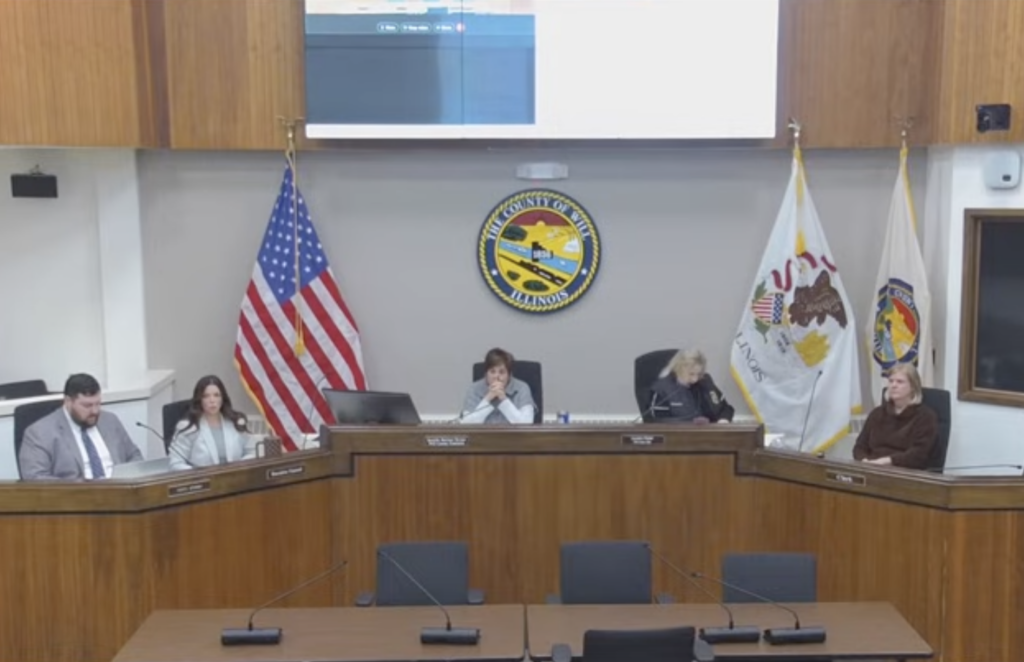
Will County Board Meeting | December 4, 2025 Article Summary: A special meeting intended to fix a budget error turned contentious as board members traded accusations regarding transparency, meeting conduct, and the political maneuvering behind the budget deficit. Board Member Destinee Ortiz was ruled out of order during a heated exchange with County Executive Jennifer…
Read MoreWill County Board Approves $2.7 Million Reserve Draw to Finalize 0% Tax Levy
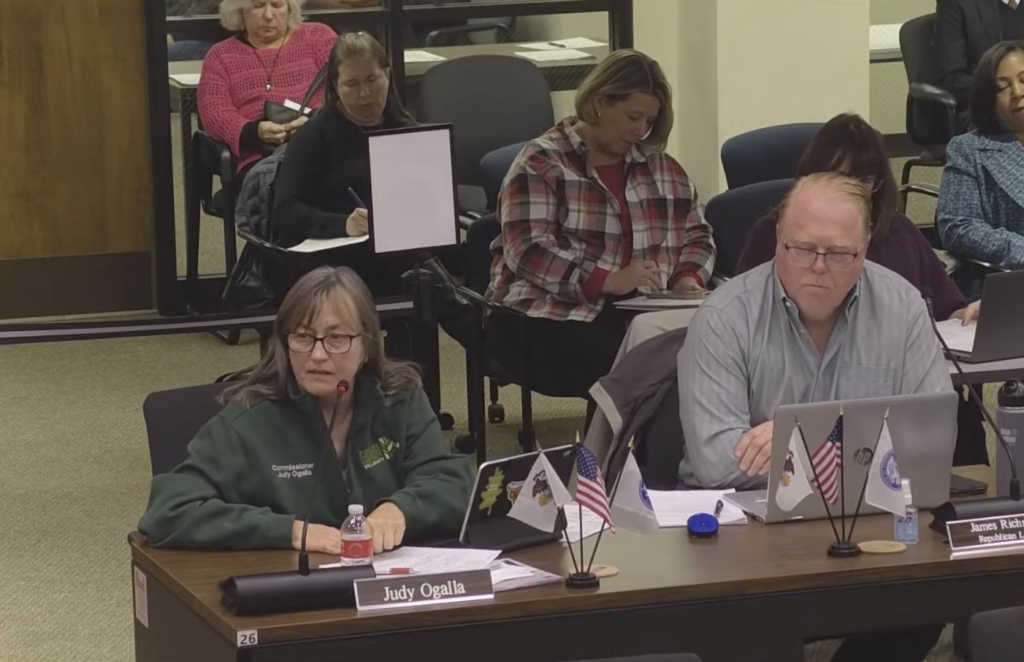
Will County Board Meeting | December 4, 2025 Article Summary: The Will County Board unanimously voted to transfer approximately $2.78 million from cash reserves to balance the fiscal year 2026 budget. The move resolves a deficit created when the board previously voted to keep the property tax levy flat at 0% without reducing the corresponding…
Read MoreNetflix buys Burbank-based Warner Bros. for $72 billion

The multibillion dollar question of who’s buying Warner Bros. was answered Friday when Netflix announced its purchase of the iconic Burbank studio.
After a weeks-long bidding war, the world’s biggest streaming service said it is buying Warner Bros., the studio known for everything from “Casablanca” and Bugs Bunny cartoons to the Superman and Harry Potter movies, for $72 billion. That’s the equity value. Netflix puts the total enterprise value at $82.7 billion.
The announcement ends bidding that last weeks after New York-based parent company Warner Bros. Discovery announced it was selling. Netflix offered nearly $28 per share, more than that offered by what was seen as the frontrunner: Paramount Skydance. The third bidder was Comcast.
Netflix expects the deal, which is subject to federal approval, to close in 12 to 18 months. It said it will continue to operate Warner Bros.’ movie and TV studios in Burbank, near Los Angeles, and release Warner Bros. movies in theaters.
The sale includes Warner Bros.’ film and TV studios, HBO Max and Max. The sale also includes Burbank-based DC Comics and DC Studios, which produces TV shows and movies including the recently released “Superman” film.
“Today’s announcement combines two of the greatest storytelling companies in the world to bring to even more people the entertainment they love to watch the most,” said David Zaslav, president and CEO of Warner Bros. Discovery, in a statement.
Under the deal, Discovery’s global networks division, Discovery Global, would leave Warner Bros. Discovery and become a separate publicly traded company, according to Netflix.
Netflix executives discussed the sale during a webinar Friday morning.
Netflix is better known as “builders, not buyers,” Ted Sarandos, co-CEO of Netflix, told viewers, which included The Center Square. But he added the Warner Bros. purchase was a rare opportunity to entertain the world with great stories.
Netflix has long realized it needed to take bold moves to evolve, Sarandos added.
“Remember, we started off as a DVD-by-mail company,” he said. “Then we moved to streaming, to producing original content, live programming from a U.S.-centric business to a global business.
“In a world where people have so many choices, more choices than ever, how to spend their time, we can’t stand still,” Sarandos said.
Netflix has the global reach to bring Warner Bros.’ content to a bigger audience, Sarandos said.
And Netflix will get a significant increase in its production capacity with Warner Bros.’ studios, Netflix co-CEO Greg Peters noted during the webinar.
“It’s going to mean more options for consumers. It’s going to mean more opportunities for creators, more value for our shareholders,” Peters said.
Illinois educators hope to tackle thorny issue of math competence

Students in Illinois, like their peers nationwide, tend to score lower in math than they do in reading and writing.
Read MoreU.S. Supreme Court takes up Michigan foreclosure case

A Michigan family’s decades-long fight over a property seizure will soon be before the U.S. Supreme Court, marking the latest high-stakes challenge to how counties nationally handle property tax foreclosures.
This week, the Pung family filed their opening brief in Pung v. Isabella County. Represented by attorney Phil Ellison and the Pacific Legal Foundation, the case asks the nation’s highest court to decide whether local governments must compensate homeowners based on fair market value.
The plaintiffs also argue that the government should not be allowed to seize properties worth far more than needed to satisfy a tax debt.
The Center Square spoke with PLF Senior Attorney Christina Martin in an exclusive interview regarding the case, which will be decided in 2026.
“If Isabella County can with impunity confiscate the Pung’s entire home over a small disputed tax bill, and force them into a decade of litigation to recover less than half of its value, any municipality could do it to anyone,” Martin said. “Tax sales should be a last resort.”
The plaintiffs argue that this was not a last resort for the county, but that, at the time, Michigan counties were using property foreclosures to make profits.
The dispute dates back to 1994, when Scott Pung received an exemption on a small local tax. Over a decade later, after Scott and his wife had both died, the local tax assessor said that the family should have reapplied for the exemption following Scott’s death.
“The tax assessor was wrong: State law says the exemption continues as long as family members continue to live in the home,” Martin said. “Scott’s son still lived there. No further paperwork was necessary.”
The Pung family fought the assessment and initially won. But as legal challenges continued, Isabella County launched foreclosure proceedings over a disputed 2012 bill. That led to the county seizing the home, just 10 days after the family prevailed in the Michigan Court of Appeals for earlier tax years.
“The home was worth nearly $200,000 and all the properly imposed taxes were paid,” Martin said. “The Pungs tried to get the home back, but the county fought them every step of the way, refusing to allow the Pungs to even pay the improperly imposed debt to recover the home.”
The county eventually auctioned the home for $76,000 – keeping all the money it profited. A federal court later concluded that Isabella County only needed to return the surplus proceeds from the auction, not the full value of the home the family lost.
The plaintiffs argue that the house being sold under its proper home value “destroyed” equity in an “unnecessary auction” and that they are due fair market value from the county, not just what is surplus from the auction.
“The Takings Clause [in the Fifth Amendment] requires just compensation when the government takes your private property,” Martin said. “While the government has an option to forcibly sell private property to collect unpaid taxes, it must act reasonably. It has to avoid unnecessary tax sales, which means it should never be forcibly auctioning homes to collect relatively tiny debts or improperly imposed debts.”
The Supreme Court will consider whether the government must pay fair market value, rather than auction surplus, when it takes property. It will also hear arguments about whether Isabella County imposed an excessive fine in violation of the Eighth Amendment, especially since plaintiffs argue the underlying tax debt should never have existed.
This case follows the foundation’s 2023 Supreme Court victory in Tyler v. Hennepin County, which barred the government from taking more than what is owed in tax foreclosures.
Now, this case asks the court to go even further, in a decision that will have broad implications for homeowners nationwide.
Martin is hopeful the court will decide in the plaintiffs’ favor, making it “more likely for states and local governments everywhere to be more thoughtful when seizing property for taxes and less careless when selling it.”
Oral arguments in the case are expected in early 2026.
Martin noted that the PLF has several other Michigan-related petitions pending before the Supreme Court, challenging counties’ continued attempts to keep more than what is owed in tax foreclosures despite a state statute.
“Thirty counties failed to remit a single penny,” Martin explained. “We are urging the court to grant review to hold that this failure to remit just compensation violates the Takings Clause and that the procedures themselves violate due process.”
Grand jury declines to re-indict Letitia James

The Justice Department has reportedly failed to secure a new indictment against New York Attorney General Letitia James in a blow to the Trump administration’s efforts to prosecute the top Democratic and vocal critic of the administration’s policies.
A federal grand jury in Norfolk, Va., on Thursday declined to indict James after DOJ prosecutors reintroduced previously dismissed charges of mortgage fraud, multiple news outlets reported, citing sources familiar with the secret court proceedings.
The grand jury’s rejection comes after a federal judge dismissed an earlier indictment against James, ruling that Lindsey Halligan, the federal prosecutor handpicked by Trump to handle the case, had been unlawfully appointed.
James’ attorney Abbe Lowell said the grand jury’s failure to indict is “a decisive rejection of a case that should never have existed in the first place.”
“A federal court threw this case out after President Trump illegally installed a U.S. Attorney to file baseless charges against Attorney General James that career prosecutors refused to bring,” he said in a statement.
“This should be the end of this case,” he added. “If they continue, undeterred by a court ruling and a grand jury’s rejection of the charges, it will be a shocking assault on the rule of law and a devastating blow to the integrity of our justice system.”
James took to social media to celebrate her latest legal win, saying she is “grateful to the members of the grand jury and humbled by the support I’ve received across the nation.”
As I’ve said from the start, these charges are baseless. It’s time for the weaponization of our justice system to stop,” James posted. “I will keep doing my job standing up for New Yorkers.”
The Justice Department declined to comment on the grand jury proceedings. Under federal law, DOJ prosecutors can re-present the charges to another grand jury if they choose.
James was indicted in October by a federal grand jury on one count of bank fraud and one count of making false statements to a financial institution. She denies any wrongdoing and claims the charges are politically motivated.
In the original indictment, prosecutors alleged that James falsely claimed on an application for a federally backed mortgage that she would be living in a Norfolk, Va., home she bought in 2020 for about $137,000 as a secondary residence but allegedly used it as an investment property. That allowed James to receive a favorable interest rate, saving her nearly $19,000 over the life of the loan, prosecutors allege.
Last week, U.S. District Judge Cameron Currie ordered the charges against James and former FBI director James Comey dismissed on the grounds that Halligan, a former White House aide, was unlawfully appointed to the job.
U.S. Supreme Court upholds Texas’ new congressional maps
The U.S. Supreme Court on Thursday handed Texas a win in a challenge to its new congressional redistricting maps, granting a stay of a lower court ruling blocking them from going into effect. The ruling allows Texas’ new congressional maps to remain in effect for the 2026 midterm election. The new maps could flip up to five seats currently held by Democrats to Republican, analysts say.
In a 6-3 ruling, the Supreme Court said Texas was likely to succeed on the merits of the case and the district court “committed at least two serious [legal] errors.” It also ignored Supreme Court warnings about redistricting lawsuits filed months before an election, the court said.
“This Court has repeatedly emphasized that lower federal courts should ordinarily not alter the election rules on the eve of an election.
“The District Court violated that rule here. The District Court improperly inserted itself into an active primary campaign, causing much confusion and upsetting the delicate federal-state balance in elections,” the high court said.
The justices also chastised the two lower court judges who issued the opinion for “failing to apply correct legal standards set out in case law.”
The high court’s ruling was expected after the lone dissenting Circuit Judge Jerry Smith expressed outrage over the process, alleging the chief judge engaged in “judicial misbehavior” and “outrageous conduct,” The Center Square reported. The ruling was issued in the U.S. District Court Western District of Texas El Paso Division, whose two majority judges have issued other decisions the U.S. Supreme Court later vacated, Smith said, adding that their ruling this time was no different.
In this case, two El Paso judges ruled that a new redistricting law that had already been on the books for more than 75 days couldn’t be used and Texas had to use a 2021 law, which the 2025 law repealed.
Smith argued the ruling was flawed and a “federal court cannot reinstate a statute that the legislature has explicitly repealed and voided.” He also said the majority judges engaged in judicial activism and ignored extensive case law.
Gov. Greg Abbott made a similar argument and the Attorney General’s Office filed an emergency appeal with the Supreme Court requesting a stay of the lower court ruling. Last month, the Supreme Court granted the request.
After hearing arguments on the case, the Supreme Court sided with Texas and chastised the lower court. The two majority district court judges “failed to honor the presumption of legislative good faith by construing ambiguous direct and circumstantial evidence against the legislature” and “failed to draw a dispositive or near-dispositive adverse inference against respondents even though they did not produce a viable alternative map that met the State’s avowedly partisan goals,” the justices said.
The Supreme Court upheld the Nov. 18 stay Justice Samuel Alito issued, effectively killing any chance of an appeal.
Justices Alito, Clarence Thomas and Neil Gorsuch issued a statement noting that the lower court based its findings on “a mistaken impression of applicable legal principles. … Neither the duration of the District Court’s hearing nor the length of its majority opinion provides an excuse for failing to apply the correct legal standards as set out clearly in our case law.”
Justices Elena Kagan, Sonia Sotomayor and Ketanji Brown Jackson issued a brief dissent, saying the ruling “disrespects the work of the District Court” and “disserves the millions of Texans whom the District Court found were assigned to their new districts based on their race.”
The district lines were redrawn according to demographic shifts and voting patterns where Hispanic-majority districts increasingly voted Republican, state lawmakers argued.
Abbott praised the ruling in a statement, saying, “”We won! Texas is officially – and legally – more red. The U.S. Supreme Court restored the redistricting maps passed by Texas that were based on constitutional principles and Supreme Court precedent. The new congressional districts better align our representation in Washington D.C. with the values of our state. This is a victory for Texas voters, for common sense, and for the U.S. Constitution.”
The new maps will go into effect, changing nearly every congressional district in Texas. Many incumbents are moved to new districts, opening up at least seven new seats in which at least five are expected to flip Republican, The Center Square reported.
DOJ lawyer says it’s ‘wrong to allege’ Operation Midway Blitz is over

Trump attorney called protesters’ motion to dismiss their own case over immigration agents’ use of force “procedural gamesmanship.”
Read More