Posts by Newspaper Staff
Witnesses testify during second day of Prop. 50 lawsuit trial
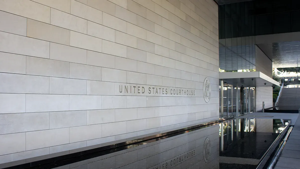
A Republican legislator behind California’s mid-decade redistricting lawsuit said the political consultant who drew the newly approved congressional districts isn’t showing up to defend them.
“He didn’t show up in the Elections Committee, he won’t show up in the Appropriations Committee, and now he won’t show up in court,” Assemblymember David Tangipa, R-Fresno, told The Center Square on Tuesday at the federal courthouse in downtown Los Angeles.
“If you’ve got something to hide, you’ve got to make sure you’re hiding,” said Tangipa, a member of the Assembly Elections Committee.
Tangipa, who filed a lawsuit last month in the U.S. District Court for Central California, made the statements about the main Proposition 50 consultant who drew the maps, Paul Mitchell. Tangipa spoke to The Center Square outside the Los Angeles courtroom where a three-judge panel Tuesday heard testimony from another mapping consultant and a Stockton-area resident who voted for Proposition 50.
The proposition, which created the congressional redistricting, passed in the Nov. 4 special election with nearly 65% of the vote. The lawsuit targets the proposition’s newly drawn districts that are designed to allow Democrats to pick up five more seats in the U.S. House during the 2026 midterm election.
In previous reporting by The Center Square, Tangipa said the Voting Rights Act mandates that certain standards be met when redrawing districts. He said those standards were not met.
Officials in Gov. Gavin Newsom’s office have said that Mitchell can’t be compelled to testify.
“We’re going to win on the merits,” Newsom said during a virtual press conference on Monday. “We’re very confident we will be successful.”
The Prop. 50 special election in California was in response to the five U.S. House seats Republicans may pick up in the 2026 midterm election because of mid-decade redistricting in Texas.
In November, a federal court blocked the redistricting campaign’s new maps from taking effect in Texas, stating that the Republican majority there ran afoul of voting rights laws by re-drawing districts that discriminated against voters of color, according to The Center Square’s previous reporting.
However, the U.S. Supreme Court upheld the new district maps in Texas, writing in a 6-3 decision that the Lone Star State was likely to win on the case’s merits.
Under Prop. 50, five California Republicans in the House – Kevin Kiley of Rocklin, Doug LaMalfa of Yuba City, Darrell Issa of San Diego County, Ken Calvert of Riverside County, and David Valadao of Bakersfield – all stand to lose their seats in the 2026 midterm elections next year.
Plaintiffs suing to stop the new congressional districts say the Prop. 50 maps were drawn to racially gerrymander the state. At the heart of that argument is a report on California’s districts written by researcher Sean Trende. The report, which was described in court testimony on Tuesday, contained various examples of how congressional districts could be drawn to prevent a racial gerrymander.
“Reviewing his report, he focused on only race and partisanship,” Anthony Fairfax, a demographic and mapping consultant, testified. “He didn’t consider the other factors that could cause district configuration, specifically, traditional redistricting criteria. Minimizing political subdivisions, in my opinion, wasn’t considered, as well.”
Trende also didn’t examine districts as a whole by examining population statistics for particular areas, among other considerations often used in drawing voting districts, Fairfax testified. Those district plans, Fairfax said, were all worse off than the 2025 plan in regards to three traditional redistricting criteria: equal population, contiguity and minimizing political subdivision splits. He also compared the 2021 maps, drawn by the California Citizens Redistricting Commission, and the 2025 maps using the three criteria.
“The takeaway is that both the 2021 and 2025 plans are very similar when it comes to traditional redistricting criteria,” Fairfax testified. “Race did not predominate in the creation of CD 13.”
A Stockton-area resident testified Tuesday that she voted in favor of the newly-redrawn district map that includes her community, which is now part of the 9th Congressional District. When asked in court if she favored electing more Democrats to assist low-income families, she answered yes.
“I think it’s very important to have representation in our community,” said Ines Ruiz-Huston, vice president of special programs and operations at El Concilio, a Stockton nonprofit that helps low-income families.
“We have a lot of families that really need support and help,” Ruiz-Huston testified. “I believe that what happens locally affects us nationally, and we need to have representation that will fend for us at a national level.”
Prop. 50, which gave California voters the chance to vote on newly-drawn Congressional district maps, took the responsibility of drawing district lines away from the California Citizens Redistricting Commission, which California voters approved the creation of in 2008. Voters gave the commission, which consists of Republicans, Democrats and independents, the task of drawing state legislative district lines in that 2008 vote. In 2010, voters chose to extend the commission’s duties to include congressional district lines, as reported previously by The Center Square.
The Citizens Redistricting Commission was not involved in the drawing of congressional district lines up for approval in the Prop. 50 special election. State officials, including Newsom, have said the new districts would be in effect for the 2026, 2028 and 2030 elections, but noted the independent redistricting commission would draw districts based on the 2030 census.
Attorneys general cite high rate of return on anti-Trump suits
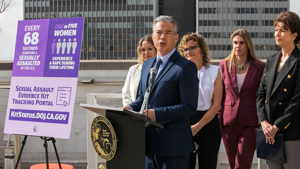
California’s litigation has resulted in $168 billion of federal funds staying in the state, Attorney General Rob Bonta told reporters Tuesday as he announced California’s 50th lawsuit this year against the Trump administration.
For every dollar spent on litigation, California gets back $33,000, a rate of return that would excite Wall Street investors, Bonta said during a virtual news conference that also included Colorado Attorney General Phil Weiser. Weiser said Tuesday’s lawsuit was Colorado’s 47th against the federal government.
Bonta, Weiser and Washington State Attorney General Nick Brown are co-leading the coalition of 17 Democratic attorneys general and Pennsylvania in the latest suit. Bonta and Weiser said they were suing the Trump administration to unfreeze federal funding that Congress allocated for electric vehicle charging infrastructure.
They said states were guaranteed federal funding under the Bipartisan Infrastructure Law.
During a question-and-answer period with reporters, The Center Square asked Bonta and Weiser about other issues ranging from education to a settlement with manufacturers of cars that allegedly lacked anti-theft technology, as well as the growing litigation against the Trump administration.
Bonta told The Center Square that he didn’t know the number of hours his staff had devoted to its 50 lawsuits against President Donald Trump’s administration. “I don’t have that off the top of my head, but we only sue when Trump breaks the law. We won’t sue if he follows the law. Every time he breaks the law, he hurts our people, and we’re going to sue him. That’s our duty. That’s our obligation.”
The Center Square reached out Tuesday to the White House, which commented on the large number of lawsuits.
“Instead of filing frivolous lawsuits against the Trump administration, left-wing politicians should focus on themselves and the problems they’ve created for millions of patriotic Americans,” White House spokeswoman Abigail Jackson told The Center Square.
Bonta noted California is winning 80% of its lawsuits against Trump.
“The returns on investment are orders of magnitude larger than the investment,” Bonta told The Center Square. “For a modest investment of attorneys who know the law and can gather and prepare the facets, we are literally securing billions of dollars. …
“Taxpayers should be very proud of their modest investments turning into huge returns,” Bonta said.
Bonta noted the results for California and Colorado represent the success that the 23 states in the broader Democratic coalition are seeing against Trump.
The Center Square asked Bonta if the litigation against Trump was distracting his office from other lawsuits and criminal prosecutions.
“Absolutely not,” Bonta said. “This is all additive, in addition to, on top of the work we always do. We continue to do the steady, important work of our office.”
Bonta said his office continues to work to protect civil rights as well as the rights of consumers and workers. He said his office also focuses on promoting housing, gun safety and ways to tackle the climate crisis.
“That work is not impacted. We continue to do that and deliver for Californians in every way,” Bonta said, noting his office received additional money for the Trump litigation.
Earlier during the news conference, he said his office spent $5 million of $25 million that the Legislature allocated during last fall’s special session for potential litigation against Trump and later received several millions of additional dollars. “I don’t have an exact number for you.”
Answering a question from The Center Square, Weiser said Colorado has secured over $1 billion in federal funds during its litigation against Trump. He noted the state managed that with “only three additional FTEs, full-time equivalents.”
“Colorado faced all sorts of threats to our funding, and we’ve been able to secure it, get access to it in face of illegal restrictions,” Weiser said. “It’s been very meaningful, very impactful stuff.”
“I’ve talked to people who are miracle workers who have their jobs because we took this action,” Weiser said, noting they included public health officials doing important work.
He said the Trump administration is acting outside the law in a way that is “egregious” and noted the administration is doing so to a worse extent than the first Trump term.
“During President Trump’s first term, I ran 11 cases overall, including cases from before I took office,” Weiser said. “My standards haven’t changed. Their behavior has.”
On another matter, The Center Square asked Bonta for more information on a settlement on a lawsuit with Kia America and Hyundai Motor Co. for allegedly lacking anti-theft technology in their cars. Thirty-five states, including California and Colorado, sued the manufacturers.
“Going forward, all of the cars made by Kia and Hyundai in the United States will have the appropriate anti-theft technology,” Bonta told The Center Square. “And there is a $4.5 million restitution to help drivers who had vehicles that were damaged by thieves.”
The settlement also pays $4.5 million to the states to cover their costs of investigating Kia and Hyundai. And the companies have agreed to offer free zinc-reinforced ignition cylinder protectors to owners or lessees of eligible vehicles, including vehicles that earlier were eligible only for software updates. Consumers can find more information at www.HKMultistateimmobilizersettlement.com.
On another topic, The Center Square asked Bonta about Democratic attorneys general’s efforts to fight federal requirements for data collection on diversity, equity and inclusion policies at colleges and universities.
“We think it’s an unnecessary intrusion into the privacy of Californians and is not an appropriate request,” Bonta said.
“They’re not enforcing civil rights,” he continued. “Their vision of civil rights is to undermine civil rights protection, to try to dismantle the key provisions that promote the civil rights of the American people.”
Trump tells Venezuela they are ‘completely surrounded’; issues warning to Maduro
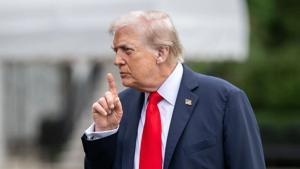
A day before President Donald Trump is set to address the nation, he releases an ominous social media post warning Venezuela, saying the country is “completely surrounded.”
The president noted that the South American nation is surrounded by the “largest armada ever assembled in the history of South America,” adding that it “will only get bigger, and the shock to them will be like nothing they have ever seen before.”
He followed the warning telling leaders of the country to “return to the United States of America all of the oil, land, and other assets that they previously stole from us.”
Trump called the Maduro regime “illegitimate,” accusing Venezuelan leadership of “using oil from these stolen oil fields to finance themselves, drug terrorism, human trafficking, murder, and kidnapping.”
The president said for those reasons he was designating the Venezuelan regime as a foreign terrorist organization.
“Therefore, today, I am ordering a total and complete blockade of all sanctioned oil tankers going into, and out of, Venezuela. The illegal aliens and criminals that the Maduro regime has sent into the United State during the weak and inept Biden administration, are being returned to Venezuela at a rapid pace,” Trump wrote. “America will not allow criminal, terrorists, or other countries, to rob, threaten, or any other assets, all of which must be returned to the United States, immediately.”
The post comes on the heels of the U.S. seizing an oil tanker off the coast of Venezuela, which U.S. officials claimed was transporting sanctioned oil. Trump indicated that, eventually, the U.S. would like to take possession of the oil ultimately.
The Trump administration, specifically the Department of War, has been increasing its military presence in the region, including deploying the USS Gerald Ford aircraft carrier and its carrier strike group in the Caribbean.
The Department of War has been conducting counter-narco operations in the region, striking more than two dozen suspected drug boats off the coasts of Venezuela and Colombia.
Pronoun policy in schools violates First Amendment, court finds

A federal appeals court reversed a lower court’s decision holding that an Ohio school district’s policy on student pronouns did not violate First Amendment rights.
Olentangy Local School District maintains a policy that bans individuals from referring to transgender and nonbinary students using pronouns that match their biological sex.
Mathew Hoffman, legal counsel for Alliance Defending Freedom, said this policy was put to the test by a parent who questioned whether their student could be punished for not obeying this rule.
“What the counsel for the school district said was that purposely referring to another student by using gendered language that that student knows is contrary to the other students identity would be an example of discrimination under board policy,” Hoffman said.
Defending Education appealed an initial ruling, which upheld the school district’s policy. A 17-judge panel struck down the lower court’s opinion 10-7 in November, holding that the school policies violated the First Amendment rights of affected students.
“[The school district] introduced no evidence that the use of biological pronouns would disrupt school functions or qualify as harassment under Ohio law,” the Sixth Circuit Court of Appeals opinion reads. “Our society continues to debate whether biological pronouns are appropriate or offensive – just as it continues to debate many other issues surrounding transgender rights.”
While the majority opinion held that the school’s policies violated First Amendment rights, a large coalition of judges dissented.
“The law delegates to our teachers and administrators the difficult work of defining, addressing, and, when possible, preventing bullying and severe harassment in public schools,” Judge Jane Stanch wrote in dissent of the majority opinion.
Stanch argued that there is a difference in expressing views on a subject and directly addressing or confronting an individual issue.
“Expressing views on immigration is different from telling a particular immigrant, ‘You don’t belong here,’ Stanch wrote. “By the same token, discussing sex and gender identity is different from using non-preferred pronouns to target or confront a particular student.”
Hoffman said schools can still regulate harassment and bullying while not forcing students to comply with an individual’s preferred pronouns. He also said governments are not allowed to censor an individual for certain speech in a particular area.
“The First Amendment leaves the choice of how we want to speak to the individual,” Hoffman said.
While the court’s majority found the school policy violated some students First Amendment rights, it affirmed the need to continue protecting transgender students from harassment and discrimination.
“Nothing we say here forecloses the district from enforcing its anti-harassment policies against the abuse of transgender students just as it enforces those policies against the abuse of all other students,” the majority opinion reads.
WATCH: J.D. Vance says he ‘believes in the wisdom of the American people’
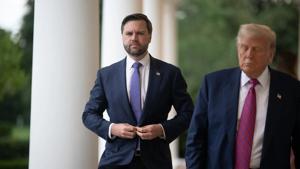
Vice President J.D. Vance returned to Pennsylvania on Tuesday to discuss the Trump administration’s economic policies to lower prices for everyday Americans.
The rhetoric comes six days after his boss, President Donald Trump, visited Allentown, where he touted tariffs and his support for the energy industry, of which Pennsylvania is a hub.
Vance didn’t miss the opportunity to remind the crowd gathered at a warehouse the Lehigh County town of Alburtis.
“So if we lower the price of energy, we lower the price of groceries, we lower the price of gasoline, and importantly, we bring good jobs back into this country so that wages go up, that’s how you give people a shot at the American dream again,” he said. “That is our job. That is what we ran on.”
DOJ Epstein files to be made public on Friday; Democrats say there are more
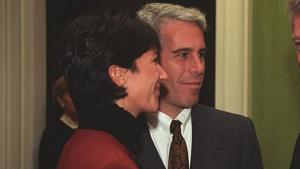
The Justice Department is required to make all of the Epstein files public by Friday, after months of back-and-forth between Congress and the Trump administration.
On Nov. 18, with almost unanimous support, Congress passed the Epstein Files Transparency Act. President Donald Trump signed the bill into law the next day. The law demands the department’s full release of the files into a downloadable, searchable PDF format within 30 days of its signing.
The files include thousands of pages from two criminal investigations into the deceased financier and sex trafficker, Jeffrey Epstein. In December, two judges also unsealed grand jury records from sex trafficking cases against Epstein and his associate, Ghislaine Maxwell.
Congress and the administration have been at odds for months, after Attorney General Pam Bondi signaled that large quantities of files were going to be made public and then a Justice Department memo in July abruptly ended their release. The memo said that investigators had found “no incriminating ‘client list’ and “no credible evidence…. that could predicate an investigation against uncharged third parties.”
Congress launched its own oversight inquiry into the handling of the Epstein files, through which a handful of news-making files have come to light – like an alleged bawdy 50th birthday letter from Trump to Epstein, which Trump denies sending; Epstein emails calling Trump “the dog that hasn’t barked,” and some photos of the president and other public figures at events with Epstein or multiple women.
One of those public figures was former President Bill Clinton. The House Oversight Committee subpoenaed Clinton and former Secretary of State Hillary Clinton to testify before the committee on Dec. 17 and 18, but those depositions were pushed back Tuesday to mid-January.
Democrats held a press conference Tuesday saying they expect the administration to only partially comply with the law on Friday, but that there would be consequences for anything less than full compliance.
“We fully expect Trump, Bondi and their minions to dodge, delay or partially release these files,” said Senate Minority Leader Chuck Schumer, D-NY. “Stop hiding, stop delaying. Come clean with the American people. And if you don’t, the question will only get louder and louder and louder.”
“If they abuse narrow exemptions to hide the truth, we will know and there will be serious legal and political consequences,” Schumer warned.
Sen. Ron Wyden, D-Ore., also said the Treasury Department has numerous files on Epstein transactions and financial operations that could hold important information, but that the Trump administration won’t release those. The Nov. 19 law only requires that the Department of Justice hand over its files.
“My investigators saw a large, large portion of these records in 2024, under the Biden administration, but the Trump administration is denying us the file today. It’s important for the American people to find out how all of this was financed, and that means getting our hands on the file to investigate further,” Wyden said.
Though called to release all of its files by Friday, the Justice Department can withhold or redact records that needlessly expose victims’ identity, show the sexual abuse of children or pertain to an active federal investigation.
Testimony: At least 18,000 suspected terrorists released into U.S. during Biden admin

At least 18,000 known or suspected terrorists (KSTs) were released into the U.S. during the Biden administration, Director of the National Counterterrorism Center Joe Kent told the U.S. House Committee on Homeland Security at a hearing in Washington, D.C.
The NCTC has also added roughly 35,000 narco-terrorists to the federal Terrorist Screening Dataset (TSDS) since he’s been the NCTC director. President Donald Trump appointed Kent to the position after he deployed 11 times overseas to fight Islamic terrorists while serving in the U.S. Army Special Forces.
The additional KSTs added to the TSDS include members of newly designated foreign terrorist organizations(FTOs), including multiple Mexican cartels and transnational criminal organizations like MS-13 and Tren de Aragua. The Trump administration made the FTO designations in February, The Center Square reported.
The unprecedented 18,000 KSTs excludes the 6,525 KSTs the NCTC helped prevent from entering the country as of October, The Center Square reported.
It’s a huge jump from the nearly 1,200 KSTs NCTC identified illegally in the U.S. within the first 100 days of the Trump administration, The Center Square reported.
“We have a persistent threat from the individuals that were allowed into this country by the previous administration. The number one threat that we have right now is the fact that we don’t know who came into our country in the last four years,” Kent said.
So far, the NCTC has identified 18,000 KSTs released into the country by the Biden administration “who, under normal circumstances, would never be allowed to enter our country because of their ties to Jihadist groups like ISIS and Al-Qaeda,” Kent said. “Yet, the Biden administration not only let them into the country, in many cases, facilitated their entry.”
They include the Afghan men who committed terrorist attacks and attempted terrorist attacks in Washington, D.C., Texas and Virginia in a one-week period, as well as others being arrested by U.S. Immigration and Customs Enforcement, The Center Square reported.
None of the 18,000 were properly vetted, Kent said. “The Biden Administration essentially used his tactical level vetting as a ruse to bring him here and to bring him into our communities, and we’ve seen the tragic results of that,” Kent said.
Of 88,000 Afghans released into the U.S., the NCTC has identified 2,000 who “have ties to terrorist organizations,” Kent testified.
Kent also said that it was impossible for the Biden administration to have vetted the Afghans released into the country.
“Prior to the Biden administration, these individuals, even ones who wanted to claim asylum, they had to go to the first safe third country,” he explained. “And it would take 18 months to two years to properly vet them. Biden threw all of that out the window.”
Now, the NCTC is working hand in hand with the Department of Homeland Security and the FBI “to run down this 2,000 — the Afghans who came here under Allies Welcome who have ties to terrorist organizations — and additionally, the other 16,000 individuals of ties to terrorist organizations that Biden let into our country,” to find and deport them, he said.
The 18,000 people with ties to terrorism present “the top terrorist threat that we face right now, and that doesn’t include the individuals who came here illegally through the open border,” he said, referring to millions of people released through parole programs as well as at least two million gotaways, those who illegally entered and evaded capture. “That number alarmingly remains unknown at this time. We’re trying to figure out who those individuals are as well,” he said.
The NCTC also issued a warning about heightened terrorism threats presented by ISIS and al-Queda.
The warning was issued as U.S. Customs and Border Protection updated the number of KSTs CBP and Border Patrol agents have apprehended at the northern and southwest borders. Due to the new FTO designations, KST apprehensions reached a record high under the Trump administration.
In fiscal 2025, a record 4,011 KSTs were apprehended, according to CBP data. So far in just the first 45 days of fiscal 2026, 1,949 KSTs have been apprehended, according to the data. The fiscal year goes from Oct. 1 through Sept. 30.
The greatest number of KSTs that CBP and Border Patrol agents ever apprehended in U.S. history was 1,903 during the Biden administration, according to CBP data.
The majority, 64%, totaling 1,216, were apprehended at the northern border coming from Canada between fiscal years 2021-2024, according to CBP data, The Center Square first reported.
Americans don’t trust feds in K-12 decisions, survey shows
While Americans continue to support expanding education freedom, a new national survey shows declining trust in the federal government’s role in K-12 education.
The poll, conducted by Yes. Every Kid. Foundation, asked voters nationwide about their thoughts on trusting the federal government to make the right decisions for K-12 education.
Since taking office in 2025, President Donald Trump has made efforts to dismantle the U.S. Department of Education. While education officials have pushed back, for concerns over potential federal funding cuts, the administration has continued taking steps to return more authority to the states.
According to the survey, 76% of respondents agree that K-12 schools should be held accountable to parents, with 89% of Republicans and 67% of Democrats in agreement.
Matt Fendeway, vice president of strategy at Yes. Every Kid. Foundation, said many Americans lack a clear understanding of the U.S. Department of Education’s role, which can lead to misconceptions.
The report indicates that 56% of respondents do not trust the federal government to make K-12 decisions for their communities. While 59% trust their state government, an overwhelming 87% said parents and families should have the primary role in education decision-making.
Once you explain to voters what dismantling the department would look like, the opposition shifts in support, pointing to low federal trust and a desire to shift power back to parents and states, according to the foundation.
Support stands at 56% when voters are informed that federal education protections would remain in place and funding would continue to flow directly to states, according to the foundation. Many respondents cited bureaucracy as a major concern.
“The more folks understand there is a plan in place to dismantle it and do so in a responsible manner, I suspect that you’ll see much more American support returning power to the states,” Fendeway told The Center Square during the briefing.
Voters described the Department of Education as bureaucratic and disconnected from classrooms, expressing a preference for a system that places greater control in the hands of families and local communities.
Republican health care plan would reduce premiums by 11%, CBO says

U.S. House Republicans’ five-point health care plan could reduce premiums by 11%, but could also increase the number of people without health insurance by 300,000 annually, according to a new Congressional Budget Office analysis.
House lawmakers will vote on the Lower Health Care Premiums for All Americans Act on Wednesday, which Republican leaders have been touting as an alternative to renewing the pandemic-era enhancements to the Obamacare Premium Tax Credit.
Congress temporarily expanded the PTC during the COVID-19 pandemic, and its reversion to original pre-pandemic levels after Dec. 31 will partially contribute to premium hikes for millions of Americans in 2026.
Extending the tax credit, a subsidy which goes directly to insurance companies, for the next 10 years would cost an estimated $350 billion. Republicans’ bill, by contrast, would reduce the federal deficit by $35.6 billion by 2035, per CBO’s report.
Key reforms in the bill include increasing oversight and transparency requirements for pharmacy benefit managers, reforming health reimbursement arrangements, and excluding stop-loss policies from the definition of health insurance coverage.
Most notably, the bill would finally appropriate funding for cost-sharing reduction payments, as well as loosen restrictions on which employers can form association health plans.
CBO projects that unlocking CSR payments would lower gross benchmark premiums for all Americans by 11%, though 300,000 people annually could lose their existing health insurance between 2027 and 2035.
The new rules for health association plans, however, would provide insurance to 200,000 people who currently have none. Allowing small business owners and independent workers to band together across industries to form association health plans would increase the total number of people on those plans by an estimated 700,000.
The Lower Health Care Premiums for All Americans Act will likely pass the House, given Republicans’ majority. But it will likely die in the Senate, given that 60 votes are needed for it to pass and Democrats staunchly oppose it.
“Over the next two weeks, millions will see skyrocketing premium amounts deducted from their bank account,” Senate Majority Leader Chuck Schumer, D-N.Y., posted on social media Tuesday. “All thanks to Donald Trump and Republicans who are refusing to extend the ACA tax credits.”
Trump to address nation Wednesday night
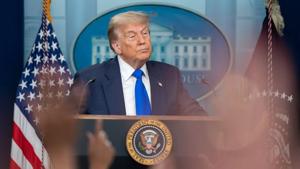
Closing in on his first year in office, President Donald Trump will address the nation Wednesday night.
The president announced the address via his Truth Social account Tuesday afternoon. White House Press Secretary Karoline Leavitt briefed reporters after the announcement, indicating that the president would be highlighting his “accomplishments” over the past year.
Trump will mark one year in office since he was inaugurated for a second term on Jan. 20.
The president and Vice President JD Vance have embarked on a rallying campaign to promote Trump’s economic agenda, touting lower gas prices, inflation and tariff revenue.
In recent days, the president has also highlighted immigration and the border, which he claims has dropped to zero illegal border crossings at the southern border during an event in the Oval Office Monday afternoon.
Trump could use the address as a springboard for the 2026 midterm elections, which his Chief of Staff, Susie Wiles, is vowing he will be active on the campaign trail, as Republicans hope to maintain their slim majority in Congress.
The address will come as the president prepares to depart Washington for the Christmas holiday.