Posts by Newspaper Staff
Carr defends FCC actions, promises greater broadband
Leaders of the Federal Communications Communications Commission outlined goals for increased broadband access, spectrum development and rules deregulation on Wednesday.
In a hearing before the Senate Commerce Committee, FCC chairman Brendan Carr – who was appointed to lead the commission by President Donald Trump in January – said the commission has sought to reduce more than 1,000 rules and regulations that were previously on the books.
“Eliminating those costly regulations is part of our affordability war,” Carr said.
Carr also highlighted the efforts to release a large swath of spectrum by July 2027. He said this release helps the United States take back ground from China in spectrum, and make broadband internet more affordable.
“The data shows if we free up more spectrum we can allow providers, for instance, to compete for in-home broadband,” Carr said. “When they do that with fixed wireless, we’ve seen that cable modem prices dropped.”
Olivia Trusty, a commissioner on the FCC’s board, said the United States can have an expanded role over international conversations because of the greater release of spectrum.
“We can work with our international allies in advance to preempt those who are seeking to undermine U.S. interests,” Trusty said.
Senators across partisan divides both encouraged greater development of broadband for areas in their states with less connectivity.
Sen. Maria Cantwell, D-Wash., said she is concerned about a lack of competition in the spectrum industry that disincentivizes companies to provide broadband services to rural or hard-to-reach areas.
“They basically expand to the areas that they can have customers, but not to the hard-to-serve areas or again figuring out a price point that will allow them to deliver service so we can expand to the [about] 20 million Americans that don’t have broadband,” Cantwell said.
Sen. Jerry Moran, R-Kansas, stressed the importance of greater broadband networks to access local news, weather and sports. He called on Carr and the other FCC commissioners to produce updated information on the broadband map to help individuals who are in underserved areas.
“Continue your efforts to recover from the mapping process, that includes improvements in the ability for those in Kansas and across the country to make changes in the maps based upon actuality and the reality of what we actually provide in service to Kansans,” Moran said.
Carr said much of the issue with broadband coverage comes from a lack of coordination in which agencies handle broadband funding. He noted an April report from the Government Accountability Office that found the accuracy of broadband access maps to be “uncertain.”
Carr said the FCC has coordinated with the National Telecommunications and Information Agency, the National Economic Council and other agencies to address coordination issues.
Several senators sharply criticized Carr over his comments in reference to a controversial monologue from late night host Jimmy Kimmel.
“We can do this the easy way or the hard way,” Carr said. Executives at ABC temporarily paused broadcasting “Jimmy Kimmel Live!” The show has since returned to the air.
Sen. Amy Klobuchar, D-Minn., questioned whether Carr thought it appropriate to use his position to threaten companies that broadcast political satire. She also questioned him on investigations of NPR and PBS.
In January, Carr launched investigations into NPR and PBS for violations of commercial advertisements. Carr defended the investigations at the hearing.
“Any licensee that operates on the public airways has a responsibility to comply with the public interest standard,” Carr said.
Warner Bros. board opposes Paramount’s $108B hostile bid

The Warner Bros. Discovery board Wednesday advised shareholders to reject Paramount Skydance’s acquisition offer, calling Netflix’s offer superior.
But it’s still up to stockholders to make the final decision. They have until Jan. 8 to vote to accept or reject Paramount Skydance’s offer, which is called a “hostile bid” because it doesn’t require the Warner Bros. Discovery board’s approval. It’s pitched to shareholders.
“The WBD Board urges you to reject Paramount Skydance’s unsolicited, inferior and illusory tender offer,” the board wrote in a letter to stockholders.
“After a robust and highly competitive strategic review process, the WBD Board had already recommended the transaction with Netflix. Today they have reaffirmed that this transaction is the best and most certain path forward for WBD and its stockholders and therefore recommend you vote to approve the Netflix Merger when the WBD stockholder meeting is convened,” the board wrote.
Netflix on Wednesday said it welcomed the Warner Bros. Discovery recommendation, while Paramount Skydance reaffirmed its all-cash offer of $30 a share to buy the entire Warner Bros. Discovery company.
Netflix is offering $27.75 per share in a mix of cash and stocks for Warner Bros. and its assets such as HBO, HBO Max, DC Comics and DC Studios. Under Netflix’s offer, Warner Bros. Discovery’s cable networks, such as CNN, TNT, HGTV and Food Network, would be spun off into a separate, publicly traded company.
Paramount Skydance’s offer has an equity value of $77.9 billion and a total enterprise value of $108.4 billion. The Netflix deal has an equity value of $72 billion and an enterprise value of $82.7 billion.
Despite those numbers, the Warner Bros. Discovery Board and Netflix say the Netflix deal is better. In it letter to stockholders, the board noted shareholders will get the additional value of shares from Discovery Global, the newly separated company with the cable networks.
“The Warner Bros. Discovery Board reinforced that Netflix’s merger agreement is superior and that our acquisition is in the best interest of stockholders,” said Netflix Co-CEO Ted Sarandos in a statement Wednesday.
He noted Netflix, the world’s largest streaming service, remains committed to releasing Warner Bros. movies in theaters.
But David Ellison, chairman and CEO of Paramount Skydance, said he feels encouraged by the feedback his company has received from Warner Bros. Discovery shareholders “who clearly understand the benefits of our offer.
“We will continue to move forward to deliver this transaction, which is in the best interest of WBD shareholders, consumers and the creative industries,” Ellison said in a statement.
Paramount Skydance said its deal includes an equity commitment from the Ellison family trust, which contains more than $250 billion in assets. It also noted Warner Bros. Discovery shareholders could tend their shares now in favor of Paramount Skydance rather than having to wait for months to approve the Netflix offer at a special shareholder meeting.
But economist Wayne Winegarden previously told The Center Square that the Netflix offer could ultimately be better for Warner Bros. Discovery stockholders because they could make money from the company spinning off its cable networks.
The Netflix deal also could be better for Warner Bros. employees because the risk of layoffs would be less, said Winegarden, a senior business fellow at the Pasadena-based Pacific Research Institute. He noted there are more redundancies between Warner Bros. and Paramount Skydance than between Warner Bros. and Netflix.
Warner Bros. and Netflix differ from each other more than Burbank-based Warner Bros. and Hollywood-based Paramount, two of history’s longest operating movie studios.
Sarandos of Netflix sees his company and Warner Bros. as ideal partners.
“Netflix and Warner Bros. complement each other, and we’re excited to combine our strengths with their theatrical film division, world-class television studio, and the iconic HBO brand, which will continue to focus on prestige television,” Sarandos said.
Netflix Co-CEO Greg Peters said a Netflix acquisition of Warner Bros. would be “pro-consumer, pro-innovation, pro-creator and pro-growth.
“Together we will deliver an even broader selection of great series and films that audiences can watch at home and in theaters, while driving long-term value for our stockholders,” Peters said.
Trump admin again claims Mexico will comply with water treaty

The Trump administration is again saying Mexico will comply with a water treaty after claiming it would earlier this year and seven months later it still hadn’t.
The U.S. Department of Agriculture announced water deliveries to Texas began this week.
Seven months after the initial claim that Mexico would comply, it hadn’t. Gov. Greg Abbott again demanded that Mexican authorities fulfill their treaty obligation, as he has repeatedly done, and pointed to a potential solution proposed by Texas U.S. senators, The Center Square reported.
At issue is a 1944 Treaty of Utilization of Waters, which governs water usage between the U.S. and Mexico, including from two international reservoirs, Lake Amistad and Falcon Lake in Texas along the international border. Mexico has historically released water storage from Lake Amistad to Mexican growers, not to Texas growers, and the U.S. federal government hasn’t enforced the treaty. Last year, Mexican officials killed any agreements to release water to Texans, even running ads in Mexico City to protest compliance, according to several news reports.
The Rio Grande Valley is among the most fertile agricultural regions in Texas and the U.S. Half of crop production acreage in the lower Rio Grande Valley is irrigated. In order to grow a wide range of crops, farmers rely on water from the Colorado and Rio Grande rivers. The agricultural industry in the valley contributes roughly $1 billion annually to the economy and provides roughly 8,400 full-time jobs, The Center Square reported.
Under the Biden administration, calls for Mexico to comply fell on deaf ears and systemic water shortages forced Texas’ last sugar mill to close, The Center Square reported.
Under the treaty, Mexico is obligated to deliver 1.75 million acre-feet over five years to the United States from the Rio Grande River; the U.S. is obligated to deliver 1.5 million acre-feet of water to Mexico from the Colorado River. The U.S. has consistently met its delivery obligations, according to International Boundary and Water Commission data.
The last five-year cycle ended in October with Mexico only having delivered approximately 885,000 acre-feet, less than 50% of its total obligation. Mexico’s delivery deficit was more than 800,000 acre-feet of water, equivalent to roughly 2.5 years of required deliveries, according to IBWC data.
Four days after The Center Square reported that Mexico still hadn’t complied seven months after the administration’s claim and Texas still hadn’t received its water, the State Department issued a statement saying senior officials met with Mexican officials to “discuss immediate and concrete steps Mexico would take” to comply. “The officials examined available water resources and the United States pressed for the maximum possible deliveries to Texas users. We have requested additional information and will reconvene to consider additional options,” it said.
It also said that under the Trump administration, “Mexico has delivered more water in the last year than in the previous four years combined. However, shortfalls in Mexico’s water deliveries have exacerbated water scarcity in Texas and contributed to hundreds of millions of dollars in crop losses for farmers.”
Secretary of State Marco Rubio has “been clear that Mexico must meet their obligations … including making up the approximately 865,000 acre-feet shortfall over the 2020-2025 five-year cycle and meeting delivery requirements under the 2025-2030 cycle,” it said.
His office is attempting to resolve the issue through diplomatic channels but is also evaluating “all available options to ensure Mexico complies with its water delivery obligations,” it says.
Three weeks later, U.S. Department of Agriculture Secretary Brooke Rollins announced an agreement had been reached, with new water deliveries beginning this week.
“Mexico has agreed to release 202,000-acre feet of water to the United States with deliveries expected to begin the week of December 15, 2025,” Rollins said. “Timely repayment of the outstanding deficit from the previous water cycle is understood by Mexico. The United States and Mexico are in negotiations to finalize a plan by the end of January 2026.”
“Although this is a step in the right direction, President Trump has been very clear: if Mexico continues to violate its commitments, the United States reserves the right and will impose 5% tariffs on Mexican products,” she added.
Rollins also said a “series of actions to meet the treaty obligations have been reviewed, including timely repayment of the outstanding deficit from the previous water cycle,” in accordance with the treaty.
Negotiations are ongoing; a plan is expected to be finalized by Jan. 31, 2026.
State officials urge Trump to revise Biden-era rule tied to Bloomberg

Fifteen state treasurers, auditors and comptrollers are urging President Donald Trump to revise a Biden-era proposed rule they say would disrupt financial markets while financially benefiting Bloomberg L.P., primarily owned by Democratic megadonor Michael Bloomberg.
In a letter dated Dec. 3, the state financial officers asked Trump to direct federal agencies to remove the Financial Instrument Global Identifier, known as FIGI, from a proposed rule issued under the Financial Data Transparency Act.
The rule, proposed in August 2024, has not yet been finalized. It would require market participants to use FIGI as the exclusive identifier for financial instruments. Bloomberg L.P. created FIGI, and it remains closely tied to the company.
Financial instrument identifiers are standardized codes used to identify securities and other financial products, letting transactions be processed and settled efficiently across markets.
In the letter, the state officials said the proposed rule would upend the current system. The lawmakers also said it would create unnecessary costs and confusion for market participants.
“The agencies overstepped the bounds of the Financial Data Transparency Act by issuing such an extreme and disruptive proposal despite the law requiring no such selection of an identifier,” the letter says.
The officials noted that the Committee on Uniform Securities Identification Procedures, known as CUSIP, has long been used to identify instruments like municipal securities. They warned that forcing a transition to FIGI could hurt market efficiency and increase the risk of errors.
The letter also expressed worries about Bloomberg L.P.’s influence in the financial services industry and the benefits the company could receive if the government mandates that companies use FIGI.
“All of this raises serious questions about how this rule could further empower Bloomberg L.P., a private company that already maintains extraordinary influence over the financial services industry,” the letter says.
The officials pointed to the timing of political contributions made by Michael Bloomberg, who contributed nearly $20 million to support President Joe Biden’s reelection effort in June 2024. The Biden administration proposed the rule selecting FIGI about two months later.
The letter cited public reporting that described Bloomberg L.P. as deeply embedded in the financial industry. The elected officials warned that the proposed rule could further strengthen the company’s data dominance.
O.J. Oleka, CEO of the State Financial Officers Foundation, said the proposal raises many concerns.
“This proposed rule raised red flags from the very beginning,” Oleka said. “The financial officers behind this letter are absolutely right to refuse to let it stand. It was clearly written with the wishes of a partisan mega-donor, not the health of our financial system, in mind.”
Oleka said he hopes the Trump administration will put a stop to it.
“I hope and trust that President Trump will take necessary action to protect our markets and the prosperity of everyday Americans,” he said.
The signers of the letter include financial officers from Arizona, Indiana, Kansas, Kentucky, Louisiana, Mississippi, Nebraska, Nevada, Ohio, Oklahoma, Pennsylvania, South Carolina, Utah, and Wyoming.
The officials asked the administration to remove FIGI from the final rule and allow continued use of existing identifiers.
It remains unclear when federal agencies plan on finalizing the rule.
Nick Reiner charged with parents’ murders, appears in court

An arraignment for Nick Reiner, the son of actor/director Rob Reiner and Rob’s wife, Michele Singer Reiner, was postponed Wednesday to Jan. 7.
Reiner, 32, appeared in court Wednesday morning in a Los Angeles courtroom. He waived his right to an immediate arraignment and “Yes, your honor” when Judge Theresa McGonigle asked him if he understood he had the right to a speedy trial.
Reiner is charged with two counts of first-degree murder with the special circumstance allegation of multiple murders. He also faces a special allegation that he personally used a dangerous and deadly weapon, a knife, according to the Los Angeles County District Attorney’s Office.
Alan Jackson, a high-profile lawyer who has previously defended famous clients, is Nick Reiner’s lawyer.
“We ask that during this process, we allow this system to move forward the way it was designed to move forward,” Jackson said during brief statements made outside the courthouse on Wednesday morning after the arraignment was postponed. “Not to rush to judgment, not to jump to conclusions, but with restraint, dignity and respect for the system.”
Jackson did not take any questions from the press after his statements outside the Clara Shortridge Foltz Criminal Justice Center building in downtown Los Angeles.
Reiner is in custody and is being held without bail. Los Angeles authorities previously said Reiner’s bail was set at $4 million.
The Center Square previously reported that the Los Angeles Police Department’s robbery-homicide division is handling the investigation into the death, and that police have concluded that Rob and Michele Reiner were both stabbed to death. They were both found deceased in their home by a member of their family. Police responded to the Reiners’ home in Brentwood, an upscale neighborhood of L.A., on Sunday afternoon.
Habib Balian, assistant head district attorney with the Los Angeles County District Attorney’s Office, did not make comments to the press on Wednesday morning.
But District Attorney Nathan Hochman commented on the case in a statement Tuesday.
“Prosecuting cases involving family violence are some of the most challenging and heart-wrenching we face because of the intimate and often brutal nature of the crimes,” Hochman said. “Rob Reiner was one of the greatest filmmakers of his generation. His murder and his wife of more than 35 years, Michele Singer Reiner’s murder, are shocking and tragic. We owe it to their memory to pursue justice and accountability for the lives that were taken.”
If convicted, Nick Reiner could face a maximum sentence of life in prison without parole or the death penalty, Hochman told reporters Tuesday, but said his office hasn’t determined which punishment to pursue.
But there has been a moratorium on the death penalty in California since Gov. Gavin Newsom, who’s termed out by the end of 2026, signed an executive order in 2019.
Rob Reiner, who was part of the “All in the Family” cast and directed movies such as “The Princess Bride” and “When Harry Met Sally,” was 78. Michele Singer Reiner was 68.
Shoppers return fewer purchases after Black Friday shopping spree

Shoppers returned fewer items after the start of the holiday shopping season rush, according to figures from Adobe Analytics.
Returns fell 2.5% from Nov. 1 to Dec. 12 compared to the same period in 2024. In the seven days after Cyber Week, returns were down 0.1%, according to Adobe Analytics’ first batch of return data for the season.
Adobe Analytics analyzed direct commerce transactions online and more than 1 trillion visits to U.S. retail sites over 100 million SKUs, and 18 product categories.
The figures show that consumers like to buy on mobile devices, but turn to desktop computers for returns. So far this season, 39.1% of returns were on a mobile device, while 52.4% of overall online spending was by mobile.
Returns are expected to peak in the final week of December after the Christmas holiday. From Dec. 26 to Dec. 31, returns are expected to rise by 25% to 35% compared to levels in the season. Returns are also set to remain elevated through the first two weeks of January, up 8% to 15%. That final week of the year is known for returns. Last year, 1 out of every 8 returns in the 2024 holiday season took place between Dec. 26 and Dec 31, according to Adobe Analytics.
More than half of Americans participated in the shopping blitz that began on Black Friday and continued through Cyber Monday, with consumers spending $16 million every minute during peak hours, according to Adobe Analytics.
The National Retail Federation reported a record 202.9 million consumers opened their pocketbooks during the five-day seasonal shopping spree, according to the annual consumer survey. That’s up from 197 million shoppers last year and above the previous record of 200.4 million set in 2023. The total also exceeds NRF’s initial expectations of 186.9 million shoppers over the holiday weekend.
The National Retail Federation has projected retail sales in November and December will grow between 3.7% and 4.2% over 2024, with total spending between $1.01 trillion and $1.02 trillion – a potential record. Last year’s holiday sales rose 4.3% over 2023 to reach $976.1 billion.
“American consumers may be cautious in sentiment, yet remain fundamentally strong and continue to drive U.S. economic activity,” NRF President and CEO Matthew Shay said. “We remain bullish about the holiday shopping season and expect that consumers will continue to seek savings in nonessential categories to be able to spend on gifts for loved ones.”
218 U.S. House members demand vote on extending Obamacare subsidies
Hours before the U.S. House will vote on Republicans’ health care plan, Democrats secured enough signatures Wednesday on their discharge petition to force a vote on a three-year extension of enhanced Obamacare subsidies.
Four Republicans – Pennsylvania Reps. Brian Fitzpatrick, Rob Bresnahan, and Ryan Mackenzie, and Rep. Mike Lawler from New York – helped fulfill the 218 signatures needed to bring Democrats’ bill to the floor.
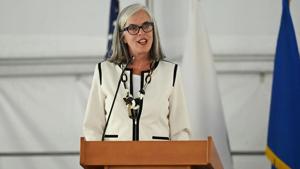
Democratic Whip Katherine Clark, D-Mass., urged House Speaker Mike Johnson, R-La., to bring the legislation to the floor for a vote immediately.
“We are ready to vote, Mr. Speaker. You have the power to bring that to the floor today,” Clark said Wednesday. “Let’s stop the premium hikes, extend the ACA tax credits, and get back to building a health care system that is worthy of the American people.”
Johnson, however, will likely push a vote on the legislation to January, when the enhanced Obamacare Premium Tax Credit will have reverted to its pre-pandemic version. The expiration of the enhanced subsidies will partially contribute to millions of Americans’ health insurance premiums rising in 2026.
Even if Democrats’ bill passes the House, it is unlikely to get the necessary 60 votes in the Senate. Republicans in the upper chamber just last week tanked a bill to extend the subsidies.
Republican leaders argue that extending the enhanced PTC merely patches up a broken system.
House Energy and Commerce Committee Chair Brett Guthrie, R-Ky., noted how Obamacare premiums have risen 80% since the Affordable Care Act was passed, calling the program “unaffordable and unsustainable.”
He also pointed out that Democrats were the ones who set the expiration date for the enhanced subsidies in question.
“Democrats funded temporary band aids to cover up unaffordable care, they set the expiration dates, and they chose to fund liberal priorities instead of making them permanent,” Guthrie told lawmakers Wednesday.
Guthrie and House Republicans are positing their Lower Health Care Premiums for All Americans Act – which will likely pass the lower chamber Wednesday but will also fail in the Senate – as a better alternative.
“The Congressional Budget Office estimates the Republican plan before us will lower premiums by 11%, compared to just 5% from continuing the Democrats’ subsidies,” Guthrie said. “These policies will also lower health care costs for all Americans, not just the roughly 7% percent of Americans enrolled in Obamacare.”
Lawler, one of the Republicans who signed Democrats’ petition, said his decision “is not an endorsement of the bill written,” but that Republican leaders’ refusal to consider any sort of bipartisan compromise bill forced him to take action.
“I continue to believe any [subsidy] extension should be targeted, fiscally responsible, and include income eligibility limits and safeguards against fraud, similar to the bipartisan discussions underway in the Senate,” Lawler posted on X “But when leadership blocks action entirely, Congress has a responsibility to act.”
Pace Expands I-55 Service and Launches ‘VanGo’ in Joliet

Will County Committee of the Whole Meeting | December 2025 Article Summary: Pace officials highlighted service expansions in Will County, including the recent launch of the “VanGo” reservation-based van service in Joliet. Mayor John Noak also reported increased ridership on Will County fixed routes and the addition of trips to the popular I-55 Bus on…
Read MoreNevada sued by U.S. government for voter data
The lawsuit filed by the U.S. Department of Justice’s Civil Rights Division adds Nevada to a growing list of 18 states facing litigation over sensitive state voter data.
The suit comes after months of DOJ demands for complete state voting registration lists, which Nevada and other states have repeatedly denied and called intimidation in an effort to influence elections. President Donald Trump lost all 18 states in the 2020 election, with Nevada one of three states with Republican governors.
The Trump administration said in the filings that it would like to use the voting registrations to verify the states are following federal election law in an effort to strengthen voting security.
Article I, Section 4 of the U.S. Constitution says states administer elections and determine their “Times, Places and Manner.”
Nevada, along with most other states, had already denied a request to provide the sensitive voter data. The initial request by the DOJ Civil Rights Division in August called for complete voter registration lists – including Social Security numbers and information about driver’s licenses. Nevada Secretary of State Cisco Aguilar said at the time that the state needed more time to look over the “unprecedented” request.
“Despite our simple requests for information on how they’re going to keep this data secure, they’ve given us no clear answers,” Aguilar wrote in response to the suit filing announced Friday. “It’s my duty to follow Nevada law and protect the best interests of Nevadans, which includes protecting their sensitive information and access to the ballot.”
The DOJ Civil Rights Division announced similar suits in Colorado, Hawaii and Massachusetts on Friday. They also sued for 2020 voting records from Fulton County, Georgia after an ongoing election interference case against Trump and allies in the state was dismissed last month.
“At this Department of Justice, we will not permit states to jeopardize the integrity and effectiveness of elections by refusing to abide by our federal elections laws,” said Assistant Attorney General Harmeet Dhillon, who oversees the DOJ’s Civil Rights Division. “If states will not fulfill their duty to protect the integrity of the ballot, we will.”
Wyoming and Indiana provided complete voting registration lists with driver’s licenses and Social Security Numbers. Ten other states responded to the DOJ Civil Rights Division with publicly available versions of the voter registration lists, with the sensitive information redacted.
Nevada had previously responded with a publicly available copy of their voter registration list. The DOJ Civil Rights Division lawsuit questioned the validity of the “purported” registration list and noted that it did not “include all fields.”
“While these requests may seem like normal oversight, the federal government is using its power to try to intimidate states and influence how states administer elections ahead of the 2026 cycle,” said Aguilar. “The Constitution makes it clear: Elections are run by the states. Nevada will continue to run safe, secure and accessible elections, and I’ll always stand up for the rights of our voters.”
The Civil Rights Division suit accused Nevada of violations of the National Voter Registration Act, Help America Vote Act and the Civil Rights Act.
The American Civil Liberties Union of Nevada has in turn filed suit to intervene in the case on Sunday.
“Unchecked government power places us on a pathway to living under authoritarian rule,” ACLU Nevada Executive Director Athar Haseebullah said in a news release Tuesday. “ACLU of Nevada will continue to challenge these practices to ensure the privacy rights of our members and Nevadans more broadly. Our Constitution was designed to protect people from the government, not empower the government to undermine the rights of the people.”
Attorneys general challenge federal DEI oversight

California Attorney General Rob Bonta and a coalition of 17 other Democratic attorneys general are urging the U.S. Department of Education to withdraw a proposed expansion of federal data collection on college admissions, arguing it would violate student privacy and distort civil rights law.
The coalition letter, sent Monday, urges the Education Department to withdraw its proposal, which would require colleges and universities to report detailed data to the federal government.
During a virtual news conference on Tuesday, Bonta criticized the proposed federal expansion of college admissions data collection, calling it an unjustified intrusion into privacy and a misrepresentation of civil rights law.
“We think their position is inappropriate and unjustifiable, so we’ll take one step at a time. I think our letter makes our position really clear,” Bonta said, answering questions from The Center Square.
“We think it’s an unnecessary intrusion into the privacy of Californians and is not an appropriate request,” Bonta added.
In August, President Trump directed the Department of Education to expand the Integrated Postsecondary Education Data System as part of greater efforts for the administration to expand its investigations into DEI policies.
The expansion would require institutions to report detailed admissions, financial aid and student data, including test scores, grade point averages, income, Pell Grant eligibility and graduation outcomes.
Bonta accused federal officials of distorting diversity, equity and inclusion efforts.
“Black is white, up is down when they look at DEI,” Bonta said. “They think programs that address historical discrimination and personal discrimination are the harassment.”
He said even foundational civil rights protections are being wrongly characterized as DEI violations, citing the 13th, 14th and 15th amendments, as well as the Civil Rights Act of 1964 and the Voting Rights Act of 1965.
“They’re not enforcing civil rights,” Bonta continued. “What they think is civil rights is actually undermining people’s civil rights.”
The U.S. Department of Education did not respond to a request for comment from The Center Square.
The coalition includes attorneys general from California, Colorado, Connecticut, Delaware, the District of Columbia, Hawaii, Illinois, Maine, Maryland, Massachusetts, New Jersey, New Mexico, New York, Nevada, Oregon, Vermont, Washington and Wisconsin.