Posts by Newspaper Staff
U.S. gas prices expected to rise amid Middle East conflicts

The Center Square) – U.S. consumers could soon see higher prices at the gas pump even as Iran looks to de-escalate its military conflict with Israel.
Israel launched preemptive airstrikes in the heart of Iran last week and attacks have continued. Oil prices jumped 8% on the news last Thursday and remain elevated. That could quickly translate into higher prices for U.S. motorists, said Patrick DeHaan, head of petroleum analysis at GasBuddy, which provides retail fuel pricing data.
“There’s still an increased cost that many stations have been paying as they resupply their underground storage tanks,” he told The Center Square. “So we likely still will see U.S. retail gas prices rising this week as stations pass along those increases.”
Trump said Monday that Iran wants to talk amid signs of de-escalation in the conflict.
A quick resolution could defuse rising gas prices.
“The recent potential de-escalation may limit those increases,” DeHaan said.
Israel’s destructive attacks on Iran’s nuclear sites weakened the nation. Israeli attacks also killed Iranian military leaders.
Moving forward, it’s possible that by the by the upcoming weekend, gas prices, after going up, may start to recede, but it’s obviously a pretty volatile situation,” DeHaan said. “I would hope that with today oil declining, it will limit the amount of increases that we’ll be seeing at the pump for the first half of this week.”
Some states may see gas prices spike faster than others, but the increases are likely to affect prices across the nation.
“We tend to see more pricing volatility, more sudden shifts in gas prices in areas like the Great Lakes, Michigan, Indiana, Ohio, as well as some markets like Texas and Florida, where gas prices tend to be a bit more fast-moving,” he said. “But everyone should see similar increases. Some folks may just seen them sooner than other regions.”
The average price for a gallon of gasoline in the U.S. stood at $3.14 on Monday, according to AAA.
GasBuddy noted that nation’s average price of gasoline increased for the first time since May, climbing 1.1 cents compared to a week ago. GasBuddy said the U.S. average stands at $3.08 per gallon. The national average is down 9.5 cents from a month ago and is 32.7 cents per gallon lower than a year ago, according to the company. The states with the lowest average prices were Mississippi ($2.64), Tennessee ($2.66), and Oklahoma ($2.68); the states with the highest average prices were California ($4.57), Hawaii ($4.44), and Washington ($4.31).
Fear tends to be a powerful motivator when it comes to gas prices, DeHaan said. That, along with a host of other complex factors, mean gas prices tend to rise more quickly than they fall, he added.
“Retail prices probably do move up a little faster than they go down, but a lot of the time, gas stations, often don’t fully raise their price as quickly as their own cost goes up and that also then causes them to lower prices at a slower rate,” he said.
Consumers can expect higher prices to last at least as long as the conflict between Israel and Iran.
“The impact to oil and gas prices will last as long as the conflict does,” DeHaan said. “Once the conflict shows the potential to die down or resolve, then we likely will start to see the impacts at the pumps start to fade away.”
Watchdog: Millionaires enrolled in Medicaid, costing America billions

It’s not just lower-income people or those with disabilities using Medicaid in the United States.
A new investigation led by the Patient First Coalition found that tens of thousands of wealthy people remain enrolled in Medicaid, the taxpayer-funded health insurance program meant for low-income and disabled Americans.
It’s an issue happening nationwide, the report said, though Ohio, Arizona, and South Carolina represent some of the more egregious examples. The issue is costing American taxpayers over $200 billion annually, the Patient First Coalition says.
Shannon Burns, a senior advisor with the group, told The Center Square in a phone interview that, “What we’re looking at is not reform. This is just simply asking the federal government to enforce the law.”
Burns is referring to the Medicaid Extenders Act of 2019. The bipartisan law requires states to verify people’s Medicaid eligibility.
In Ohio, the Department of Medicaid checked the assets of a sample of ABD (Aged, blind, and disabled) enrollees. However, it found that over 10,000 millionaires were improperly enrolled in the program, according to the Patient First Coalition. The same is true for around 8,000 people in South Carolina and over 20,000 in Arizona.
That’s the case even though Ohio and Arizona have Medicaid asset limits of $2,000. A Medicaid asset limit is the maximum value of assets an individual can own to qualify for Medicaid.
Additionally, Ohio only had its contractor, LexisNexis Risk Solutions, examine 56% of the files, according to Patient First Coalition. Only a quarter of enrollees were checked in Arizona and South Carolina — and only for liquid assets, as was the case in Ohio.
“This contractor only looked for the presence of liquid assets in U.S. bank accounts with routing numbers,” Burns said. “They didn’t look at second homes, luxury cars, or even stocks.”
So far, no members of Congress have launched a national oversight investigation into the matter. Yet, the Patient First Coalition is calling for one, and Burns said just one inquiry could expose a massive scandal.
“The #MedicaidMillionaires scandal clearly demonstrates an immediate need for congressional intervention,” Burns said in a statement. “The extensive systemic fraud identified in South Carolina and Ohio represents a unique opportunity to recover over $200 billion annually. Congress must act swiftly to eliminate this widespread abuse by throwing millionaires off Medicaid, ensuring Medicaid serves only those who truly need assistance.”
Burns added that some state Medicaid officials claimed the Biden administration discouraged disenrollment, keeping people on the rolls even if they didn’t qualify for Medicaid.
“This isn’t waste, fraud, and abuse,” Burns said. “This is a system that’s designed to steal the money from those that actually need it.”
The Patient First Coalition is urging Congress to take action.
It wants a full 50-state audit of Medicaid eligibility vendors, enforcement of the 2019 Medicaid Extenders Act, and hearings on the scope of the fraud. They’re also calling on the Congressional Budget Office to update its scoring to reflect the billions in potential savings so that recovered funds can be redirected to support Trump’s proposed “Big Beautiful Bill.”
WATCH: Trump says U.S., Canada have ‘different concepts’ for trade deal
President Donald Trump said Monday that he and Canada Prime Minister Mark Carney have different concepts for trade between the two neighboring countries but hope to reach an agreement soon.
Trump met with Carney at the G7 Summit in Kananaskis, in the Canadian Rockies. Trump dominated the brief news conference, and Carney essentially let Trump lead the conversation with reporters ahead of the meeting.
Asked what was holding up a trade deal between the two nations, Trump said they had different concepts for what that would look like.
“It’s not so much holding up, I think we have different concepts, I have a tariff concept, Mark has a different concept, which is something that some people like, but we’re going to see if we can get to the bottom of it today.”
Trump continued: “I’m a tariff person, I’ve always been a tariff person. It’s simple. It’s easy. It’s precise and it just goes very quickly. And I think Mark has a more complex idea, but also very good, so we’re going to look at both and we’re going to come out with something hopefully.”
Trump said a deal was “achievable” quickly, but didn’t give a more precise timeline.
Shortly after taking office in January, Trump hit Canada and Mexico with 25% tariffs for allowing fentanyl and migrants to cross their borders into the U.S. Trump later applied those 25% tariffs only to goods that fall outside the free-trade agreement between the three nations, called the United States-Mexico-Canada Agreement.
Trump put a 10% tariff on non-USMCA compliant potash and energy products. A 50% tariff on aluminum and steel imports from all countries into the U.S. has been in effect since June 4. Trump also put a 25% tariff on all cars and trucks not built in the U.S.
The tariffs have frustrated Canadian leaders and residents. Tensions between the two neighboring countries have been high.
Trump has repeatedly suggested that Canada join the U.S. as its 51st state. He previously called former Canadian Prime Minister Justin Trudeau “governor” regularly.
Economists, businesses and some publicly traded companies have warned that tariffs could raise prices on a wide range of consumer products.
Trump has said he wants to use tariffs to restore manufacturing jobs lost to lower-wage countries in decades past, shift the tax burden away from U.S. families, and pay down the national debt.
A tariff is a tax on imported goods paid by the person or company that imports the goods. The importer can absorb the cost of the tariffs or try to pass the cost on to consumers through higher prices.
Update: Federal charges brought against Minnesota shooter
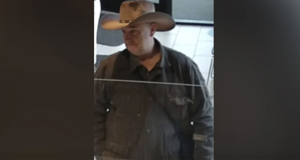
Federal stalking and murder charges have been filed against 57-year-old Vance Boelter in a 20-page charging document on Monday in what was described as the “stuff of nightmares.”
Boelter is expected to have a 1:30 p.m. Monday appearance in federal court in St. Paul.
The charges include firearms offenses, stalking using interstate commerce and murder for the stalking and killing of Minnesota House Speaker Emeritus Melissa Hortman and her husband along with the shooting of state Sen. John Hoffman, DFL-Brooklyn Park, and his wife. The Hoffmans are expected to make a full recover.
Murder charges from Hennepin County have also been filed.
Acting U.S. Attorney for District of Minnesota Joe Thompson said that, based on prior cases, he believes that the federal charges will be litigated first.
“Political assassinations are rare, they strike at the very core of our democracy,” Thompson said.
Thompson detailed many of Boelter’s action, including wearing a “hyper-realistic silicone mask” while knocking on the two politicians’ doors.
Thompson said that he “stalked his victims like prey.”
Boelter drove a black Ford SUV with emergency lights on and license plates marked as police while displaying a police badge and carrying a Beretta 9mm. Boelter allegedly repeatedly knocked on the doors, yelling “this is the police, open the door” before the door was opened.
“It is pretty clear from the evidence that he has been planning this for a long time,” Thompson said.
Further charges can be filed later and Thompson said that the death penalty is possible for some of the charges but “it is too early to tell.”
“We brought the charges that we thought are appropriate right now,” he said.
Boelter also stopped at the homes of two other Minnesota officials, one who was not home and another in New Hope where Boelter encountered a police officer, before proceeding to the Hortmans’ home in Brooklyn Park.
Minnesota state Sen. Ann Rest, DFL-New Hope, said in a statement that the shooter had also been near her home that morning.
“I have been made aware that the shooting suspect was parked near my home early Saturday morning,” Rest said in a statement. “I am so grateful for the heroic work of the New Hope Police Department and its officers. Their quick action saved my life.”
Police found “voluminous writings” in both Boelter’s vehicle and home regarding planning for the shootings and lists of names of targets.
Thompson said that there has been nothing like a “unabomber manifesto” that he has seen, but many were plans and surveillance of elected officials and not a “political screed or manifesto” that would identify the shooters motive other than “to go out and murder people.”
Officials said that 45 names of Minnesota officials were found in the writings along with other names out of state. There were names in multiple notebooks across multiple writings, they said, some of which were repeated names.
“According to the charges, the defendant had a list of possible targets and went to the homes of public officials to conduct violent attacks,” FBI Director Kash Patel said in a statement. “This type of violence is unacceptable, and the FBI stands united with our law enforcement partners to find and hold accountable anyone who commits such despicable acts. I commend all the law enforcement officers who worked throughout the weekend to find the defendant and take him into custody.”
A spokesman for Sen. Tammy Baldwin, D-Wisconsin, and Wisconsin U.S. Rep. Mark Pocan were both listed by the shooter, he wrote, are part of 11 Wisconsin lawmakers the Milwaukee Journal-Sentinel reported were listed by the shooter as targets.
• The is an updated versions of the story published earlier below:
———-
10:30 a.m. update
The Hennepin County Attorney’s Office plans to file first-degree murder charges against Vance Boelter, who was arrested by a group of 20 SWAT teams in Green Isle, Minnesota, on Sunday night after allegedly shooting two Minnesota lawmakers.
Hennepin County Attorney Mary Moriarty said that she filed second-degree murder charges in order to get a warrant for the arrest of suspect Vance Boelter, 57, that could be used nationwide. Moriarty said that those were the highest charges that could be filed at that time.
Federal charges against Boelter are expected to be announce later Monday morning while Boelter has his first scheduled appearance at 1:30 p.m.
Boelter is accused of dressing as a police officer and shooting and killing House Speaker Emeritus Melissa Hortman and her husband.
Boelter is accused of first going to the nearby home of State Sen. John Hoffman, DFL-Brooklyn Park, and shooting both him and his wife.
Boelter was booked into jail early Monday and was expected to be picked up by federal agents at 10 a.m. on Monday.
“Given the scale of this investigation, the review of evidence will take time,” Moriarty said.
Hennepin County Sheriff Dawanna Witt said that Hoffman and his wife, Yvette, are expected to make a full recovery.
Yvette said in a text message posted by Sen. Amy Klobuchar, R-Minnesota, that she was shot eight times and her husband was shot seven times.
“We are gutted and devastated by the loss of Melissa and Mark,” Yvette wrote. “We have no words. There is never a place for this kind of political hate.”
• The is an updated version of the story published earlier below:
———-
Police found three AK-47 style rifles, a 9 mm handgun and a list of names of public officials in the Ford SUV of murder suspect Vance Boelter, according to a warrant request that was under seal until Boelter was arrested late Sunday.
Police also say they found a ballistic vest, disassembled 9mm firearm, a mask and a gold police-style badge, according to the warrant.
That warrant was released after Boelter was detained in the woods near Green Isle, Minnesota, following what Minnesota Gov. Tim Walz called a “complex and dangerous manhunt.”
Boelter is accused of dressing as a police officer and shooting and killing House Speaker Emeritus Melissa Hortman and her husband.
Boelter is accused of first going to the nearby home of State Sen. John Hoffman, DFL-Brooklyn Park, and shooting both him and his wife.
The Hoffman’s daughter, Hope, had called 911 and reported the shooting.
Brooklyn Park Police then sent officers to the Hortmans’ home, where they saw the suspect, with the same Ford SUV, shoot Hortmans’ husband.
After exchanging fire with police, Boelter escaped the area and the manhunt began.
“Boelter exploited the trust our uniforms are meant to represent,” Minnesota Department of Public Safety Commissioner Bob Jacobson said in a Sunday night press conference.
Trump beheading post goes viral, scrutiny on von Haefen intensifies
Legislative attorneys are meeting with the speaker of the North Carolina House of Representatives to determine the next steps for a lawmaker who promoted a sign reflecting pursuit of the decapitation of President Donald Trump.
Speaker Destin Hall, R-Caldwell, spoke about the acts by Wake County Democratic Rep. Julie von Haefen in a statement Sunday evening. Members of Congress from coast to coast also weighed in as the news went viral.
“Her disgraceful behavior fails to meet the standards expected from House members and sets a dangerous precedent in an already volatile political climate,” Hall said in part. “I am examining next steps with our legislative attorneys to ensure this behavior does not continue.”
The state’s first-term Democratic Gov. Josh Stein, the North Carolina Democratic Party and the Democratic National Committee remained silent Monday morning, about 48 hours since the post first appeared.
The Center Square reached out to von Haefen’s office on Sunday at 2:51 p.m. At 3 p.m., she posted an explanation to her Facebook page. Increasing calls for her resignation followed, including the House speaker’s statement about three hours later.
U.S. Rep. Dr. Greg Murphy, R-N.C., says von Haefen “calls for the beheading of the U.S. president. These libs have lost their mind. The nation is not behind them.”
Using his personal account and not that tied to his U.S. Senate seat, Republican Utah Sen. Mike Lee said, “Calling for the president of the United States to be beheaded is un-democratic. It should also be un-Democratic. Tragically, it seems increasingly on-brand for today’s Democrats.”
The post by von Haefen was made Saturday morning. Her Facebook account remained active Sunday but her account on X was gone.
“Deleting your public profile isn’t accountability – it’s hiding,” said state Rep. Brenden Jones, R-Columbus. “North Carolinians deserve better.”
Monday morning, he added, “It has been over a day since Julie von Haefen posted a picture depicting the execution of the president and not a single North Carolina House Democrat has condemned her actions. Their silence speaks volumes.”
On social media, von Haefen is accused of posting an image of a woman holding signage with the image of a bloody, used guillotine; the words “In these difficult times, some cuts may be necessary”; and a prop on one end of the handle representing a beheaded Trump. The other end also had a head, a German Nazi Party swastika scrawled across it.
Minutes after The Center Square sought authentication from her office, she posted to Facebook, “Yesterday, I posted a video on social media containing crowd photos from the No Kings protest in Raleigh. One of the images of a protestor holding a sign was inappropriate, and I later edited the video to remove the photo.
“Let me be clear: I condemn political violence in all forms. My focus remains on bringing people together and fighting for the values that matter to North Carolinians. Like so many, I was horrified by the violence in Minnesota. There is no place for that kind of extremism in our democracy, no matter the target, no matter the party.”
Von Haefen did not offer an apology.
Her caption on Saturday morning said, “No Kings Protest in Raleigh. Amazing turnout all across the Triangle today, including this event at the Capitol hosted by Wake Democrats and North Carolina Democrats.” There were hashtags for an expletive, no kings and Raleigh.
The image, however, drew the criticism. Some was on von Haefen’s act itself, others said it was the timing of the shootings in Minnesota which took the lives of a state representative and her husband, and injured a state senator and his wife.
State Rep. Mike Schietzelt, R-Wake, called von Haefen’s actions “unconscionable.”
Trump survived an assassination attempt on July 13 of last year in Butler, Pa. On Sept. 15, he was golfing in Florida when a man with a rifle was found hiding adjacent to the property in what many believe was to be a second attempt on his life.
Accused shooter detained in Minnesota woods

The suspect in the shooting of four people, including two high-ranking Minnesota politicians, has been detained in the woods near Green Isle, Minnesota after a “complex and dangerous manhunt,” according to Gov. Tim Walz.
A number of SWAT teams were in the area after law enforcement received a tip before Vance Boelter, 57, was taken into custody, according to Minnesota Superintendent of the Bureau of Criminal Apprehension Drew Evans.
The suspect crawled to law enforcement teams and was ultimately taken into custody, according to Minnesota State Patrol Assistant Chief Jeremy Geiger. Boelter was armed, Evans confirmed.
“There is no question this is the largest manhunt in the state’s history,” Brooklyn Park Police Mark Bruley said.
Boelter is accused of shooting and killing House Speaker Emeritus Melissa Hortman and her husband in what Gov. Tim Walz called a politically-motivated assassination early Saturday.
State Sen. John Hoffman, DFL-Brooklyn Park, and his wife also were shot about 2 a.m., and Hortman and her husband were found about 90 minutes later.
“One man’s unthinkable actions have altered the state of Minnesota,” Walz said.
Walz said that Hoffman came out of his final surgery and is healing and the “heroic actions” of the Hoffmans and their daughter Hope saved many lives.
The gunman allegedly escaped through a back door of Hortman’s house following an exchange of gunfire with police. Media outlets reported that Boelter had a list of about 70 names in his vehicle which included the lawmakers who were shot, other lawmakers and abortion providers.
“Boelter exploited the trust our uniforms are meant to represent,” Minnesota Department of Public Safety Commissioner Bob Jacobson said.
• The is an updated version of the story published earlier below:
———-
Authorities on Sunday say they found the car of the man wanted in connection with the shootings of two Minnesota state lawmakers and their spouses, killing one of the couples. The suspect, Vance Boelter, 57, was not with the car.
Drew Evans with the Minnesota Bureau of Criminal Apprehension said Sunday authorities are seeking the public’s help locating Boelter, who is considered armed and dangerous.
“We are asking for the public’s help at this point in time in locating Vance Luther Boelter, who is a 57-year-old white male, 6 feet 1 inches tall, 220 pounds with brown hair and brown eyes,” Evans said. “We still don’t know if additional people are involved, but this individual is the one that we are looking as a person of interest now.”
Boelter’s wife was reportedly stopped near Onamia, Minnesota, on Saturday and found with a weapon, ammunition, cash and passports, according to KSTP Channel 5. KSTP reported that Boelter’s wife was the subject of a traffic stop at a convenience store located near Onamia late Saturday morning in a vehicle carrying at least three other relatives of the accused shooter.
Authorities also think Boelter is no longer in the area of the shootings and issued an alert to South Dakota authorities.
House Speaker Emeritus Melissa Hortman and her husband were shot and killed early Saturday in what Gov. Tim Walz called a politically-motivated assassination.
State Sen. John Hoffman, DFL-Brooklyn Park, and his wife also were shot about 2 a.m., and Hortman and her husband were found about 90 minutes later.
The gunman allegedly escaped through a back door of Hortman’s house following an exchange of gunfire with police. Media outlets reported that Boelter had a list of about 70 names in his vehicle which included the lawmakers who were shot, other lawmakers and abortion providers.
The shootings happened seven miles away from each other, and law enforcement officials have called both shootings “targeted.”
Boelter was appointed by Walz to serve on the Governor’s Workforce Development Board in 2019. Various media outlets reported that he is the director of Praetorian Guard Security Services, where he had access to police-like security equipment.
The FBI said it is offering a reward of up to $50,000 for information leading to the arrest of Boelter.
UPDATE: Minnesota lawmaker shooting suspect in custody
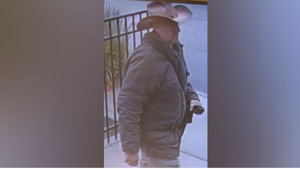
The suspect wanted in connection with the shootings of two Minnesota state lawmakers and their spouses, killing one of the couples, is now in custody, authorities said late Sunday.
Vance Boelter, 57, was apprehended Sunday after a nearly two day manhunt following the attacks.
—–
Authorities on Sunday say they found the car of the man wanted in connection with the shootings of two Minnesota state lawmakers and their spouses, killing one of the couples. The suspect, Vance Boelter, 57, was not with the car.
Drew Evans with the Minnesota Bureau of Criminal Apprehension said Sunday authorities are seeking the public’s help locating Boelter, who is considered armed and dangerous.
“We are asking for the public’s help at this point in time in locating Vance Luther Boelter, who is a 57-year-old white male, 6 feet 1 inches tall, 220 pounds with brown hair and brown eyes,” Evans said. “We still don’t know if additional people are involved, but this individual is the one that we are looking as a person of interest now.”
Boelter’s wife was reportedly stopped near Onamia, Minnesota, on Saturday and found with a weapon, ammunition, cash and passports, according to KSTP Channel 5. KSTP reported that Boelter’s wife was the subject of a traffic stop at a convenience store located near Onamia late Saturday morning in a vehicle carrying at least three other relatives of the accused shooter.
Authorities also think Boelter is no longer in the area of the shootings and issued an alert to South Dakota authorities.
House Speaker Emeritus Melissa Hortman and her husband were shot and killed early Saturday in what Gov. Tim Walz called a politically-motivated assassination.
State Sen. John Hoffman, DFL-Brooklyn Park, and his wife also were shot about 2 a.m., and Hortman and her husband were found about 90 minutes later.
The gunman allegedly escaped through a back door of Hortman’s house following an exchange of gunfire with police. Media outlets reported that Boelter had a list of about 70 names in his vehicle which included the lawmakers who were shot, other lawmakers and abortion providers.
The shootings happened seven miles away from each other, and law enforcement officials have called both shootings “targeted.”
Boelter was appointed by Walz to serve on the Governor’s Workforce Development Board in 2019. Various media outlets reported that he is the director of Praetorian Guard Security Services, where he had access to police-like security equipment.
The FBI said it is offering a reward of up to $50,000 for information leading to the arrest of Boelter.
Hundreds of immigration charges filed including against women assaulting officers
Hundreds of immigration charges were filed in the Southern District of Texas, including against a woman assaulting and threatening federal agents.
In one week, 332 people were charged; 205 people were charged with illegal entry; 109 with felony illegal reentry after previously being deported. Most arrested have prior felony convictions and charges; 10 cases involve human smuggling.
Among those arrested was Mexican national Maria Isabel Cruz-Salas, living in the border town of San Benito in the Rio Grande Valley. While authorities conducted a worksite enforcement operation at Taqueria El Mante, an ICE Homeland Security Investigations agent attempted to detain her and she kicked him in the face, according to the charges. If convicted, she faces up to eight years in federal prison and up to a $250,000 fine.
In another case, a San Antonio woman, Michelle Lee Varela, was taken into custody after allegedly threatening an ICE-HSI agent while performing his duties. According to the charges, while authorities were conducting an immigration action and requested information from Varela about her husband’s status in the U.S., she “allegedly used profanity and said if her husband was taken into custody, she would shoot them.”
Law enforcement officials “advised her to consider her remarks as she had just threatened a federal agent, but she continued in an elevated voice and a threatening tone,” according to the complaint.
The charges state that on June 4, she “influenced, impeded or retaliated against a federal officer by threat and used interstate communications to transmit a threat to injure another,” specifically threatening ICE-HIS agents on a cell phone.
If convicted, she faces up to 10 and five years, respectively, in federal prison for the threat and interstate communications charges and up to a $250,000 fine.
“The Southern District of Texas takes allegations of threatened violence against law enforcement very seriously,” U.S. Attorney Nicholas Ganjei said. “Immigration authorities must be able to carry out their lawful duties free from violence or threats, and those that attempt to obstruct or harm such agents will be held accountable.”
Also among those charged were Mexican nationals Paulina Lopez-Bello and Juan Eliud Calva-Lopez, who allegedly used fraudulent lawful permanent resident cards and Social Security documents to secure employment in the U.S. They allegedly paid $300 for the fake identification, investigators found. If convicted on fraud and misuse of visas, permits and other documents charges, they face up to 10 years in federal prison and a $250,000 fine.
Another Mexican national illegally living in the border town of Mission, Texas, Roberto Carlos Moncada-Pena, faces human smuggling charges. He was first encountered during a traffic stop when law enforcement officials discovered three illegal foreign nationals in his vehicle. After searching his apartment, another 10 illegal foreign nationals were found. If convicted, he faces up to 10 years in federal prison and up to a $250,000 fine.
In other cases, four Mexican nationals were sentenced for illegal reentry and other crimes. One of them, Josue Rodriguez-Rodriguez, was illegally living in Houston after having been sentenced to 41 months in federal prison and removed from the country 10 times. He faces an additional 69 months in prison and removal for the 11th time after his sentence is complete. His criminal convictions include aggravated assault-family violence and possession with intent to deliver or manufacture a controlled substance. He was first removed from the country 25 years ago.
The other Mexican nationals sentenced for felony reentry were previously removed and have felony convictions including evading arrest with a motor vehicle, methamphetamine distribution, possession with intent to distribute marijuana, and aggravated assault family violence. Their sentences ranged between 21 and 57 months in prison.
In another case, four men in Houston were found guilty of a large-scale mail theft and credit card fraud scheme. One of them was a 64-year-old Nigerian man illegally living in Houston. He and others involved contacted financial institutions to activate stolen credit cards sent through the mail and used them to purchase goods, services, gift cards, cash and merchandise at retail stores. They fraudulently activated at least 120 stolen credit cards, causing an estimated $1 million in losses to Chase Bank, according to the charges. The Nigerian faces removal after completing his two-year prison sentence.
Multiple authorities were involved in the cases, including ICE-HSI, ICE-ERO, Border Patrol, the DEA, FBI, U.S. Marshals Service, ATF, as well as state and local law enforcement partners.
Capital region gears up for protests during military parade
As Washington, D.C., gears up for an historic military parade coinciding with Flag Day and President Donald Trump’s birthday, with projected costs between $25 million and $45 million, the capital region is also mobilizing a protest response.
There are dozens of locations in Northern Virginia and Maryland within an hour’s drive of Washington where protesters can gather as part of the official nationwide ‘No Kings’ Day of Defiance.
No Kings is a movement supported by more than 100 partner organizations opposing Trump’s “authoritarian overreach” and gathering in “[defense] of democracy.”
There are over 2,000 cities and towns hosting No Kings events Saturday, where in some cases local or state leaders will speak, and “millions” that have RSVP’d, according to event communications.
Some events in the capital region were at capacity as of Friday evening. One event in Kingstowne, Va., was expecting 250 people, according to an email from an organizer.
The group is not holding a protest in the district itself, however.
“Real power isn’t staged in Washington. It rises up everywhere else,” its website reads. “Instead of allowing this birthday parade to be the center of gravity, we will make action everywhere else the story of America that day.”
However, the district is also in a state of heightened security, as the parade has been designated a National Special Security Event by the Department of Homeland Security. Extra security measures were installed throughout the week leading up to the event and some will be in place through the days immediately following the event, as well. The president also told reporters that any protests in D.C. during the parade would be met with “very big force.”
No Kings says it is committed to nonviolence.
“A core principle behind all No Kings events is a commitment to nonviolent action. We expect all participants to seek to de-escalate any potential confrontation with those who disagree with our values and to act lawfully at these events,” its website says.
The flagship event will be held in Philadelphia.
Ex-Speaker Madigan sentenced to 7 ½ years in prison for bribery, corruption
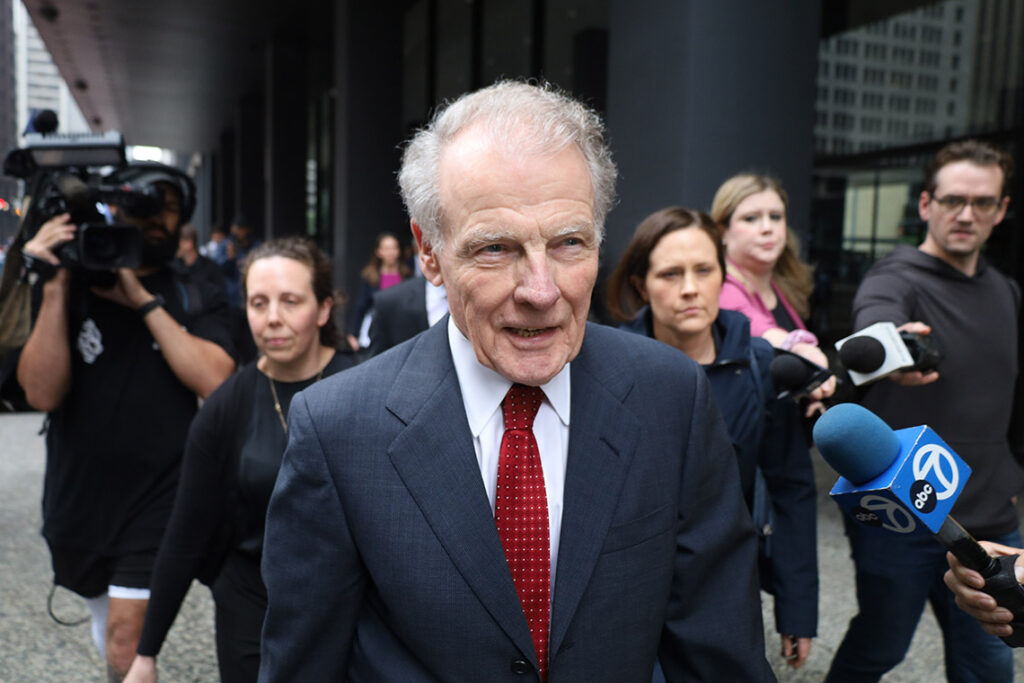
Capitol News Illinois
UPDATED: This story has been updated with a historical overview of Illinois corruption cases, new character letter details, and photos.
CHICAGO — The number of years former Illinois House Speaker Michael Madigan spent in Springfield has often been used as shorthand to explain his outsized impact on state government and politics. His political career spanned 50 years in the General Assembly, 23 years chairing the Democratic Party of Illinois, and 36 years as House speaker — the longest tenure of any state or federal legislative leader in U.S. history.
But on Friday, a new term was added to the former speaker’s list of legacy-defining terms when U.S. District Judge John Blakey sentenced Madigan to 90 months, or 7 ½ years, in federal prison.
The sentence, which also includes three years’ probation after his prison term and a $2.5 million fine, follows a jury’s split verdict in February. After a marathon two weeks of deliberation, jurors convicted him on 10 of 23 corruption charges, including bribery, but acquitted him on seven and deadlocked over another six.
Read more: Madigan guilty of bribery as split verdict punctuates ex-speaker’s fall | Madigan Trial in Review | Michael Madigan: The Rise and Fall
As Friday afternoon’s hearing passed the three-hour mark, Madigan accepted Blakey’s invitation to make a statement to the court. After taking a drink of water, putting on his glasses and blowing his nose as he approached the bench, the former speaker addressed the judge for less than two minutes, reading from a prepared script.
“I’m truly sorry for putting the people of the state of Illinois through this,” he began, noting that he “tried my best” to serve the people of Illinois. “I am not perfect.”
Later, when explaining how he was weighing Madigan’s continued insistence in his innocence, Blakey repeated Madigan’s words.
“The defendant says he’s sorry for putting the people of Illinois through this,” the judge said. “I guess that’s as close as we’ll get to remorse.”
Blakey spent a long time audibly weighing what he called “a tale of two different Mike Madigans,” calling the former speaker “a dedicated public servant” and “a good and decent person.”
“He had no reason to commit these crimes,” the judge said. “But he chose to do so.”
Blakey took particular umbrage with Madigan’s performance on the witness stand in January after he made the stunning decision to testify in his own defense. In siding with the government’s argument that the former speaker’s sentence should take into account his perjury on the witness stand, Blakey cited several examples of times Madigan’s statements conflicted with either evidence, the sworn testimony of others, or even his own testimony.
Read more: Madigan takes witness stand, denying he traded ‘public office’ for ‘private gain’
“The defendant’s testimony was littered with obstruction of justice and it was hard to watch,” Blakey said. “To put it bluntly, it was a nauseating display. … You lied, sir. You lied. You did not have to.”
Madigan, who was described by many witnesses throughout his four-month trial as difficult to read — and who attempted to explain the familial origins of his reserved personality as a defense while on the witness stand — was characteristically stoic as Blakey handed down his sentence.
After conferring with his attorney, he hugged and kissed his adult children in the front row of the courtroom gallery. A few minutes later, he and his entourage of lawyers and family quickly made their way out of the Dirksen Federal Courthouse, trailed by cameras.
True to form, the former speaker also made no statement to reporters, though he smiled slightly before getting on the elevator down to the courthouse lobby. Across the street, a man yelled to Madigan and his group, “You going to jail, buddy?”
Madigan was ordered to report to a yet-to-be-named federal prison on Oct. 13.
Madigan’s attorneys told the court he would seek a bond pending his appeal, which would allow him to remain free pending resolution of the appeal.
Prosecutors had urged a 12 ½-year sentence and a $1.5 million fine, while Madigan’s lawyers asked for five years’ probation, the first on home detention. After hearing arguments from attorneys earlier in the week, Blakey calculated the sentencing guidelines for Madigan’s convictions and other factors would dictate a prison term of 105 years, but the judge was under no obligation to follow that directive.
Read more: Prosecutors ask judge to sentence ex-Speaker Madigan to 12 ½ years in prison
‘I’m not a target of anything”
One of the last times the famously media-averse Madigan ever deigned to answer questions from journalists was in the fall of 2019, before the COVID-19 pandemic afforded the speaker an even larger buffer than usual from those outside his closed circle of staff and advisors.
The previous several months had yielded near-weekly developments in the public’s understanding of an unfolding federal corruption probe, including revelations about FBI searches executed on the homes of close Madigan allies. The intrigue only intensified after the indictment and midday FBI raids on two different Democratic state senators and the arrest of a member of Madigan’s own House Democratic leadership team on a charge that he bribed another Democratic senator, who happened to be cooperating with the feds.
Despite his name showing up on subpoenas for some of those search warrants, Madigan made a bold declaration that he was not in the feds’ crosshairs.
“No, I’m not a target of anything,” he told a gaggle of reporters in a crowded and noisy hallway of the state Capitol in Springfield in late October 2019.
Within the year, however, Madigan would be proven wrong as prosecutors filed the first in a series of bombshell charges alleging the longtime speaker had been the beneficiary of a yearslong bribery scheme from electric utility Commonwealth Edison. Prosecutors alleged ComEd officials agreed to hire Madigan allies, including a handful on no-work contracts, to grease the wheels at key times when the company was pushing for big and ultimately lucrative legislation in Springfield.
Read more: Madigan Trial in Review
In that July 2020 filing, Madigan’s status as a target of the feds’ widespread corruption investigation was marked by a new moniker: “Public Official A.”
But it wasn’t until March 2022 — more than a year after Madigan resigned from his biggest public roles after pressure from within the Democratic power structures he’d built over decades — that the former speaker was indicted.
Receiving top billing among the original 22 counts in the indictment, which was later bumped to 23, was racketeering. Prosecutors accused Madigan of using his positions as House speaker, chair of the state’s Democratic Party and as partner in his real estate law firm as a “criminal enterprise” meant to maintain and increase his power while enriching his allies.
Read more: ‘The Madigan Enterprise:’ Inside the federal indictment of the state’s former speaker
The indictment rehashed what had been already made public in July 2020 and again several months later when four former ComEd executives and lobbyists were charged with orchestrating the utility’s bribery scheme aimed at Madigan.
But it also revealed that former Chicago Ald. Danny Solis had worn a wire on the speaker and alleged the speaker had agreed to get him appointed to a lucrative state board position in exchange for introductions to real estate developers to woo them as potential clients of Madigan’s firm.
A final charge added later in 2022 alleged a tacit bribery agreement between Madigan and telecommunications giant AT&T Illinois like the ComEd scheme, albeit smaller — involving one no-work contractor hired in the months before AT&T-backed legislation passed in Springfield.
Jury delivers a split verdict
On the witness stand, Madigan repeatedly claimed that he was ignorant of the fact that the collective $1.3 million his allies earned from their ComEd contracts was for performing no work. Instead, the former speaker and his lawyers framed those contracts as the result of mere job recommendations, which they argued was a component of Madigan’s job as speaker.
Read more: ‘They were being paid as a favor to Mike Madigan’: Feds’ star witness takes stand | ‘Make it a federal court suit’: Jurors hear wiretap of McClain describing subcontracts alleged to be bribes | Madigan ally testifies he was rewarded with no-work contracts as ‘good soldier’ for speaker
Madigan’s attorneys, along with some of the government’s own witnesses, argued the ComEd-backed legislation passed after years of strategic and expensive lobbying efforts, and not because the speaker’s allies had gotten jobs and contracts with the utility.
But after a slew of witnesses, including a ComEd exec-turned-FBI cooperator and one of the former contractors, in addition to secretly recorded videos and wiretapped phone calls shown at trial, the jury was ultimately convinced on most ComEd-related charges. Madigan was convicted on seven of those charges, including four counts of bribery and conspiracy, though he was acquitted on two charges related to an effort to get his ally appointed to the utility’s board.
Watch/listen: View key secretly recorded videos admitted as evidence in Madigan’s trial | Listen to key wiretapped phone calls from the Madigan trial
The so-called “ComEd Four” were convicted in their own trial in 2023 and are scheduled to be sentenced this summer. They include Madigan’s formerly close friend and longtime Springfield lobbyist Mike McClain, who was also the speaker’s codefendant in the most recent trial. But after roughly 65 hours of deliberations over two weeks beginning in late January, the jury deadlocked on all six charges that named both the former speaker and McClain, including the feds’ marquee racketeering allegation.
The jury also deadlocked on the single count alleging Madigan’s participation in the alleged bribery scheme with AT&T, forcing Blakey to declare a mistrial on that count.
It was the second time in five months that charges alleging a bribe between AT&T and Madigan resulted in a hung jury; weeks before Madigan’s trial began, former AT&T Illinois President Paul La Schiazza’s bribery case ended in a mistrial on all five counts against him. He faces retrial in January 2026.
Read more: Jury deadlocks, mistrial declared in case of ex-AT&T boss accused of bribing Madigan | Judge won’t acquit former AT&T Illinois boss in Madigan bribery case after hung jury
Charges involving Solis, the former Chicago alderman, ended in a mix of convictions, acquittals and deadlock from the jury. While jurors convicted the former speaker on wire fraud and Travel Act violation counts related to the alleged scheme to help get Solis appointed to a state board, they acquitted him of the bribery charge pertaining to the same alleged scheme. As laid out in trial, Madigan never ended up recommending Solis to newly elected Gov. JB Pritzker.
The former speaker was also acquitted of attempted extortion and three related counts related to a real estate developer to whom Madigan wanted an introduction from Solis, who served as chair of the Chicago City Council’s powerful Zoning Board. Prosecutors alleged Madigan understood and tacitly approved of Solis’ made-up story that he’d condition the approval of a zoning change sought by the developer on whether it agreed to hire the speaker’s law firm.
At the FBI’s direction, Solis told the speaker ahead of the July 2017 introduction meeting that the developer understood “how this works, you know, the quid pro quo” — insinuating the company was under the impression that it would not get the zoning approvals it needed unless it hired the speaker’s law firm, though it wasn’t true.
A few weeks later, Madigan admonished Solis before the developer meeting, telling the alderman, “You shouldn’t be talking like that.”
The feds argued Madigan was urging Solis to not speak so brazenly about their alleged bribery agreement. But on the witness stand, the former speaker said the alderman’s use of the term “quid pro quo” caused him “a great deal of surprise and concern” to the point that he decided he needed to confront Solis about it face-to-face.
In Madigan’s contentious cross-examination, the lead prosecutor attempted to poke holes in the former speaker’s explanation of that key moment, but Madigan maintained Solis seemed to have recognized he’d “made a serious mistake” and that he considered the matter settled because “I was not going to connect a request for an introduction with anything else.”
Read more: In contentious cross-examination, prosecutor accuses Madigan of not telling ‘the whole truth’ | Madigan leaves witness stand expressing regret for ‘any time spent with Danny Solis’
The jury also deadlocked on four other bribery, wire fraud and Travel Act charges concerning a plan to get state-owned land in Chicago’s Chinatown neighborhood transferred to the city for eventual development into a mixed-use apartment building.
Read more: ‘There’s something fishy here, don’t you think?’: Wiretapped calls detail Madigan confidant’s confoundment over land deal
Prosecutors alleged Madigan intended to have his firm contract with the Chinatown developer in accordance with hints Solis had dropped on secret recordings. But Madigan’s former law partner and testimony from two former top lawyers in the speaker’s office indicated the law firm had strict conflict-of-interest rules that would have prohibited the developer from ever becoming a client.
Read more: Former Madigan aide testifies speaker had conflict of interest protocols
Sentencing factors
In the four months post-verdict, a period nearly as long as the grueling trial itself, Madigan turned 83 — a mitigating factor his defense attorneys noted in a pre-sentencing memo late last month, which asked for five years’ probation, including one on home confinement.
In another filing last week, Madigan’s lawyers painted a bleak picture of the sentence sought by prosecutors, accusing them of arguing in bad faith that ComEd’s investor profits should be considered as part of sentencing.
“The government seeks to condemn an 83-year-old man to die behind bars for crimes that enriched him not one penny,” defense attorneys wrote. “They demand that Mike Madigan spend his final years in a cell, though he spent decades as the consumers’ shield against ComEd’s predations.”
But much more emphasized was his role as caretaker to his wife, Shirley, who suffers from “a severe lung disease,” per a letter filed with the court last month from Madigan’s daughter, former Illinois Attorney General Lisa Madigan.
Instead of writing a letter, Shirley Madigan recorded a video pleading for leniency in sentencing. Clad in purple latex gloves with a medical mask hanging from her neck, Shirley praised her husband’s character as a father and grandfather but also detailed how Madigan has become her caretaker, especially since the COVID-19 pandemic hit.
“I really don’t exist without him,” she told the camera as B-roll of Madigan helping her up from a couch played over her testimonial. “I don’t know what I would do without Michael. I would probably have to find some place to live, and I’d probably have to find care.”
The former speaker and his lawyers echoed Shirley’s pleas Friday, with attorney Dan Collins telling Blakey that for Madigan, “mercy is justice,” and Madigan himself asking the judge that “you let me take care of Shirley and that you let me spend my final days with my family.”
Blakey said Madigan’s age was a factor, but said arguments that “any sentence” for an older defendant is tantamount to a life sentence are “not particularly helpful.”
But the judge said he carefully considered the nearly 250 character reference letters filed on Madigan’s behalf late last month, saying he “placed significant weight” on the support of the former speaker’s family and friends.
He even got emotional when discussing Madigan’s role as a husband, father and grandfather.
“Whatever his crimes — and he did do things wrong — but his relationship to his family? He got that right,” Blakey said, echoing words the former speaker told Solis during a secretly recorded meeting between the two in 2018.
Aside from family, faith leaders, longtime constituents and 40 former staffers, other notable letter-writers on Madigan’s behalf included prominent labor leaders and three dozen former elected officials, among them several Republicans like former Gov. Jim Edgar. Attorneys also included an op-ed in support of Madigan penned by former GOP Gov. Jim Thompson before his death in 2020.
Aside from family, other notable letter-writers on Madigan’s behalf included former U.S. Sen. Carol Moseley Braun; former Illinois Supreme Court Justice Tom Kilbride; Democratic mega-fundraisers Michael Sacks and Fred Eychaner, and Chicago Bulls and White Sox owner Jerry Reinsdorf. While many former Democratic allies of Madigan penned appeals to Judge Blakey, only a few currently hold office — among them state Reps. Marcus Evans, D-Chicago, and Curtis Tarver, D-Chicago, along with Auditor General Frank Mautino.
In determining sentencing guidelines, Blakey agreed with prosecutors’ contention that the value of the ComEd bribes should be based on testimony from utility leader Scott Vogt during trial. Vogt cited projections that the continuation of the “formula rate” contained in the first piece of ComEd-backed legislation passed during the eight-year bribery scheme was worth $400 million in increased shareholder value for the company.
The judge also agreed with smaller sentencing enhancements, for defendants who orchestrate bribery schemes, and for lying under oath while testifying in their own defense.
Blakey gave several examples of times in which Madigan perjured himself during his four days on the witness stand, including the former speaker’s attempt to “falsely minimize the close and regular relationship he had with McClain.”
Read more: McClain lawyer calls star witnesses liars as trial nears conclusion
“Other witnesses testified to their unique and close relationship, which spanned decades,” Blakey said. “In short, the evidence produced at trial showed McClain was one of Madigan’s most-trusted operatives, not merely one of many, as he falsely testified.”
Ultimately, though, the judge’s ruling in favor of sentencing enhancements for perjury and other factors is mostly symbolic, as the parties already agreed to a sentence far below the complicated calculation that would advise a 105-year prison sentence.
Sentences handed down to other convicted politicians in Illinois’ long history of elected officials caught up in corruption have varied widely.
Last year, a federal judge sentenced Madigan’s pseudo-counterpart in the Chicago City Council, five-decade Ald. Ed Burke, to two years in prison after his bribery conviction that also involved Solis’ FBI cooperation in bringing potential clients to Burke’s real estate law firm. The judge noted the number of character letters she received on the former alderman’s behalf were a strong mitigating factor in her sentencing decision.
On the other end of the spectrum, Gov. Rod Blagojevich was sentenced to 14 years in prison after his 2011 bribery convictions related to attempting to sell then-President-elect Barack Obama’s soon-to-be-vacated U.S. Senate seat in 2008. President Donald Trump commuted his sentence in 2020, and in February pardoned him completely — just two days before Madigan’s conviction.
Read more: Trump pardons Blagojevich 5 years after commutation cut prison time short | Little support in Springfield for Trump’s Blagojevich commutation
Illinois’ history of corruption
The long list of Illinois political figures who’ve been convicted on corruption charges in the last century was referenced more than once during Friday’s sentencing hearing, but Blagojevich was the only politician mentioned by name.
Blakey pointed to the former governor’s case when explaining his authority to enhance Madigan’s sentence for a bribe that wasn’t fully carried out. In Blagojevich’s case, “no one turned out to be willing or able to pay a bribe the defendant demanded,” the judge said of the U.S. Senate seat sale. In Madigan’s case, the former speaker never ended up recommending Solis for a state board position, but he and Solis discussed the $93,000-per-year pay for some of the appointments.
But Assistant U.S. Attorney Sarah Streicker’s reference to Blagojevich in her sentencing arguments went beyond pointing to legal precedent, making a direct — and deeply unflattering — comparison between the ex-governor and Madigan. During Blagojevich’s six years in office, he and Madigan were constantly at war with one another.
Streicker quoted the late U.S. District Judge James Zagel as he sentenced Blagojevich in 2011: “When it is the governor who goes bad, the fabric of Illinois is torn, disfigured and not easily repaired,” Zagel said. “You did that damage.”
The prosecutor posited that the damage from Madigan’s crimes may have been worse due to his longevity at the “highest levels of power” in state government.
“Governors? They came and went over the years,” Streicker said. “But Madigan? He stayed. His power and his presence remained constant. He had every opportunity to set the standard for honest government in this state. Instead, he fit right into the mold of yet another corrupt leader in Illinois.”
But while Blakey cited deterrence as a factor in deciding Madigan’s punishment, he said the former speaker “can only be sentenced for his crimes, not anyone else’s.”
“You can’t sentence a social problem and there’s no point in trying to do that,” the judge said. “Defendant is responsible for his public corruption, not public corruption in the state of Illinois.”
Blakey also responded to Collins’ arguments that the judge base his sentence not on the “myth” of Madigan — which he said included the feds’ contention that the former speaker was driven by greed — but on “the reality of Mike,” who has “lived a frugal life” and “takes care of his wife.”
The judge assured Collins he didn’t buy into the myth of Madigan as “The Velvet Hammer” or the “Wizard of Springfield,” references to a decades-old nickname for the former speaker and a sign that once sat on the desk of Madigan’s longtime chief of staff, who is himself serving prison time on convictions related to his ex-boss.
Read more: Ex-Madigan aide sentenced to 30 months in prison for obstruction of justice attempt, perjury | Jury convicts Madigan’s longtime chief of staff on perjury, obstruction of justice charges
“Working in the legal sausage factory in Springfield is a full-contact sport and people lie about you all the time,” Blakey said, promising he wasn’t taking into account “all that nonsense.”
In Springfield, Madigan’s name is still invoked during debates on the Illinois House floor, but the last 4 ½ years since his resignation from the legislature have seen significant turnover in the body he ruled over for all but one term, from 1983 to 2021. The political effectiveness tying Illinois Democrats to Madigan — a longtime tactic from Republicans who hold super minority status in the General Assembly — has also waned significantly since the former speaker’s departure from public office.
On one of the final days of the spring legislative session last month, a longtime GOP critic of Madigan even credited the former speaker as he was denouncing Madigan’s successor, Speaker Emanuel “Chris” Welch, for his approach to big bills.
But U.S. Attorney Anthony Boutros still claimed Madigan’s sentence as a victory for cleaning up corruption in Springfield.
“Corruption at the highest level of the state legislature tears at the fabric of a vital governing body,” he said in a statement Friday evening.
Boutros credited former Assistant U.S. Attorney Amarjeet Bhachu for leading the yearslong investigation and criminal case against Madigan and others in his inner circle, which “allowed this case to reach a jury and send a clear message that the criminal conduct by former Speaker Madigan was unacceptable.”
Capitol News Illinois is a nonprofit, nonpartisan news service that distributes state government coverage to hundreds of news outlets statewide. It is funded primarily by the Illinois Press Foundation and the Robert R. McCormick Foundation.
The post Ex-Speaker Madigan sentenced to 7 ½ years in prison for bribery, corruption appeared first on Capitol News Illinois.