Posts by Newspaper Staff
Politicians divided over federal plan to sell public lands

Colorado Democrats are leading the effort against legislation proposed by Senate Republicans that would sell off millions of acres of public lands.
The proposal is to add the provision to the One Big Beautiful Bill Act, the budget reconciliation measure passed by the House. It was detailed in a budget blueprint that was released last week by the Senate Energy and Natural Resources Committee.
The senators’ plan would require the government to auction off between 2.2 million and 3.3 million acres of land owned by the Bureau of Land Management and the U.S. Forest Service. The sales would generate between $5 billion and $10 billion of income between fiscal years 2025 and 2034.
In total, the federal government owns roughly 640 million acres throughout the United States, or nearly one in three acres. That means, at most, this legislation would sell only 0.5% of all the federal land.
Democrats are pushing back.
“Our public lands are our most cherished heirlooms. They are American treasures that we hand down to future generations,” said U.S. Sen. John Hickenlooper, D-Colorado. “Our public lands are not for sale now, or ever. We stopped a similar effort in the House — we’ll stop this one, too.”
U.S. Sen. Mike Lee, R-Utah and chair of the Senate Energy and Natural Resources Committee, is leading the initiative to sell the land. He said this move will help address a nationwide housing crisis, while providing more money to help the federal government pay off debt.
“I am proud to unveil this historic legislation that will power our country, unleash energy innovation and help countless American families prosper,” Lee said.
The land that would be sold are considered underutilized “isolated parcels.” Before deciding what land to sell, the bill stipulates that federal authorities should consult with state, local and tribal governments.
“The legislation specifically exempts national parks, national monuments, wilderness areas, national recreation areas and 11 other categories of federally protected land from sales to build much-needed housing for American families,” Lee said.
If the proposal is passed, land eligible for sale would come from 11 states: Alaska, Arizona, California, Colorado, Idaho, Nevada, New Mexico, Oregon, Utah, Washington and Wyoming.
Colorado Attorney General Phil Weiser, a Democrat who is also running for governor in the state, said he opposes the proposal.
“Colorado’s public lands should NOT be for sale to the highest bidder. I will always stand firm,” Weiser said. “That’s because public lands are for the public.”
Yet other leaders from those western states affected are in favor of the sale.
“These are important, commonsense policies for better energy and public lands strategy,” said Utah Gov. Spencer Cox. “Senator Lee deserves enormous credit for championing the use of certain federal lands for housing — especially in rural communities surrounded by federal land, and even in cases where federal land sits within city boundaries and could be better used for homes. I appreciate that the bill prioritizes bids from states and cities, includes strong safeguards, and puts some of the proceeds toward infrastructure to support new housing.”
The U.S. House has already voted against similar legislation this session, which would have sold federal lands in Utah and Nevada.
Congress asks Pentagon for progress report after 7 failed audits
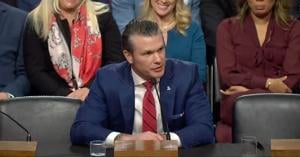
Leaders of a congressional subcommittee wrote to U.S. Secretary of Defense Pete Hegseth on Monday asking for an update on the Pentagon’s progress toward passing a financial audit.
The Department of Defense has failed to account for its spending for years properly. It failed seven consecutive audits and isn’t expected to do any better next year.
Subcommittee on Government Operations Chairman Pete Sessions, R-Texas, and Ranking Member Kweisi Mfume, D-Maryland, asked Hegseth for a bipartisan briefing on the DOD’s progress toward passing an audit by the end of the month.
“DOD spending comprises nearly half of the federal government’s discretionary spending and its physical assets make up more than 70% of the government’s physical assets,” they wrote in the letter. “The failure to fully account for these assets and spending results in gaps in DOD’s operational readiness and the financial strength of the entire federal government.”
The Pentagon is the only agency subject to the Chief Financial Officers Act of 1990 “that has never obtained an unmodified or ‘clean’ audit opinion on its financial statements, primarily due to serious financial management and system weaknesses,” Asif Khan, a director of financial management assurance at the Government Accountability Office, told the subcommittee in April.
Sessions and Mfume said they want an update to make sure the Pentagon’s progress is on track to meet the 2028 deadline.
“As stated in previous hearings, if DOD is to achieve a clean audit opinion by December 2028, significant progress must be made by fiscal year 2026,” they wrote. “Based on testimony before the Subcommittee, there is still a lot of work ahead for the Department.”
They asked for a briefing on DOD’s efforts by the end of June.
President Donald Trump previously proposed $1.01 trillion budget for the Pentagon in fiscal year 2026, a 13% increase over the previous year.
Each year, teams of independent public accountants audit the department’s $4.1 trillion in assets and $4.3 trillion in liabilities.
In January, the GAO, Congress’s research arm, said that the federal government must address “serious deficiencies” in federal financial management and correct course on its “unsustainable” long-term fiscal path. U.S. Comptroller General Gene Dodaro, head of the GAO, said many of the challenges result from financial management problems within the U.S. Department of Defense.
The report noted three major problem areas: “serious financial management problems” at the Department of Defense; the federal government’s inability to adequately account for intragovernmental activity and balances between federal entities, and “weaknesses in the federal government’s process for preparing the consolidated financial statements.”
Congress has run a deficit every year since 2001. In the past 50 years, the federal government has ended with a fiscal year-end budget surplus four times, most recently in 2001.
Trump vows to expand mass deportations, Newsom says he’s inciting violence
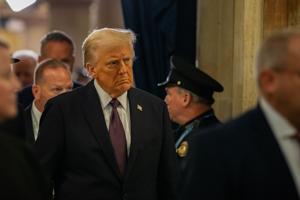
After President Donald Trump vowed to expand mass deportations of illegal immigrants, California Gov. Gavin Newsom accused Trump of inciting violence by enforcing federal immigration laws.
“We must expand efforts to detain and deport illegal aliens in America’s largest cities, such as Los Angeles, Chicago and New York, where millions upon millions of illegal aliens reside,” the president said in a post on his Truth Social website. “These, and other such cities, are the core of the Democrat power center, where they use illegal aliens to expand their voter base, cheat in elections, and grow the welfare state, robbing good paying jobs and benefits from hardworking American citizens.”
“The American people want our cities, schools, and communities to be safe and free from illegal alien crime, conflict, and chaos,” continued the president. “That’s why I have directed my entire administration to put every resource possible behind this effort, and reverse the tide of mass destruction migration that has turned once idyllic towns into scenes of third world dystopia.”
California Gov. Gavin Newsom, whose state is home to the nation’s largest population of illegal immigrants, said the president’s enforcement of federal immigration laws is tantamount to inciting violence.
“His plan is clear: Incite violence and chaos in blue states, have an excuse to militarize our cities, demonize his opponents, keep breaking the law and consolidate power,” said Newsom. “It’s illegal and we will not let it stand.”
White House Deputy Chief of Staff Stephen Miller responded to Newsom by calling the governor’s sanctuary state actions illegal and unconstitutional.
“You run a Sanctuary State that illegally harbors foreign terrorists and willfully perpetuates a criminal invasion of the United States,” said Miller in response. “The government of California does not recognize, but willfully and maliciously abrogates, the supremacy of federal and constitutional law.”
Newsom’s press office responded by calling Miller “Voldemort,” the villain from the Harry Potter children’s fantasy book series. Last week, Newsom’s press office controversially shared a picture of Miller, who is Jewish, photoshopped onto a gargoyle, leading Stop Antisemitism to declare the office’s sharing of the image a “grotesque display of antisemitism.”
Newsom and California Attorney General Rob Bonta have challenged Trump’s federalization of California National Guard units for deployment in Los Angeles amid the ongoing immigration-enforcement-related riots. While a federal district court initially issued a temporary restraining order in Newsom’s favor, a federal appeals court issued a stay on restraining order until a hearing can be held Tuesday.
Los Angeles Mayor Karen Bass, who did not order a curfew until the fifth night of rioting and destruction, said the president is “manufacturing a crisis” by expanding deportations of illegal immigrants.
“The Trump Administration is, once again, manufacturing a crisis,” said Bass. “Make no mistake: this is illegal, divisive, and flies in the face of everything we stand for in Los Angeles.”
According to statements earlier this year by Los Angeles City Council members, approximately 10% of Los Angeles residents are illegal immigrants. This means their removal or departure could have significant implications for local labor and housing markets, and impact the cost of many everyday goods and services that rely on all-cash compensation below the legal minimum wage.
DOJ seeks dismissal of ruling on race-based military admissions
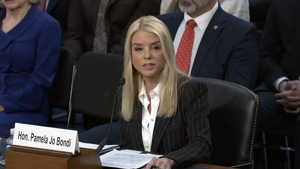
The U.S. Department of Justice wants to dismiss an appeal filed by a group suing over race-based admissions practices in the U.S. Naval Academy after the school changed its policies.
“This department is committed to ending illegal discrimination and restoring merit-based opportunity throughout the federal government,” Attorney General Pam Bondi said Monday.
A 2023 Supreme Court decision found that considering race as part of the college admissions process was unconstitutional, but did not address admissions at military institutions.
The nonprofit Students for Fair Admissions challenged the continued consideration of race in the United States Naval Academy after the high court’s ruling. A district court struck down the nonprofit’s challenge and said it “defers to the executive branch with respect to military and personnel decisions,” which include military academy admissions.
However, President Donald Trump’s Jan. 27 executive order upended the practice in military academies across the country, which led to the Naval Academy no longer considering race or ethnicity in its admissions process.
“The United States no longer believes that the challenged practices were justified by a compelling national security interest in a diverse officer corps in the Navy and Marine Corps,” a DOJ legal filing read.
The DOJ’s challenge asks the U.S Court of Appeals for the Fourth Circuit to vacate the district court’s decision, which upheld race-based admissions because it is now “moot.”
“The Naval Academy changed its admissions policy so that race and ethnicity are no longer considered in any way at any point,” the legal filing read.
“We are proud to partner with the Department of Defense to permanently end race-based admissions at the United States Naval academy and ensure that admission to this prestigious institution is based exclusively on merit,” Bondi said.
Trump says Iran ‘not winning the war’ as Iranian people offered hope from the West

The walls could be closing in on the Iranian regime as President Donald Trump says the country is looking to de-escalate the conflict with Israel.
Less than a week after Israel preemptively began its strike against the Islamic Republic, targeting its nuclear, military and government facilities, Iran appears to be showing signs that it is willing to return to the negotiating table over its nuclear program.
However, on Monday, the opening day of the G7 summit in Alberta, Canada, Trump told reporters that it may be too late for Iran to negotiate a deal.
“They’d like to talk but they should’ve done that before,” Trump told reporters. “They have to make a deal and it’s painful for both parties, but I’d say Iran is not winning this war.”
Trump is also showing no signs of signing a statement from the G7 summit calling for de-escalation between the two countries.
The president was asked about U.S. military involvement in the conflict but was unwilling to discuss it with reporters.
The comments come as a second U.S. aircraft carrier, the USS Nimitz, is en route to the Middle East ahead of schedule, according to U.S. Naval Institute News. The oldest carrier in the U.S. fleet is expected to join the USS Carl Vinson in the U.S. Fifth Fleet, operating out of Bahrain.
The carriers typically move with strike groups normally comprised of multiple guided missile cruisers, anti-aircraft warships and anti-submarine destroyers, in addition to aircraft.
While Israel has received several hits from Iranian missiles, the Jewish state is showing no signs of slowing its targeted attack. Despite Trump’s reluctance to commit to American involvement, western influences are targeting the Iranian regime from within, using non-lethal means to expand the wedge between the Iranian-Khomeinist regime and the Persian people.
Tesla and SpaceX founder Elon Musk announced that Starlink was activated in the Islamic Republic, allowing citizens to bypass the regime’s control and censorship on the internet.
In hopes that the Iranian people inside Iran can receive communications from the West, Reza Pahlavi, the exiled crown prince of Iran and son of the last Shah of Iran, living in the U.S., has sent messages to the Iranian people to resist the regime and to rise up. Pahlavi is one of the leading advocates for a secular, democratic Iran, advocating for freedom, especially women’s rights.
In April 2023, the deposed leader visited Israel, marking the most “prominent” Iranian figure to visit the Jewish state.
Pahlavi sent a video message to the leaders at the G7 summit supporting Israel, telling the leaders that regime change is the only answer.
“I think the world now has an opportunity to see that though Iranian people realize, and the world needs to realize, that the root cause of the problem has been the regime and its nature, and the only solution, ultimately that will benefit both the Iranian people as well as the free world is for this regime to no longer be there,” Pahlavi said.
“I’ve been arguing this point from the very beginning that the ultimate solution is regime change. Now we have an opportunity, because this regime is at its weakest point. There’s a window in which we can operate and hopefully liberate our country and the world can finally breathe a sigh of relief that they no longer have to fear nuclear threats, terrorism, radicalization,” said Pahlavi.
Trump’s attempts to punt a deeper involvement in the conflict could be a game of “wait and see” as the Iranian regime remains highly unpopular in Iran. A 2022 survey of Iranians by the Netherlands-based Gamaan Institute found that 81% of Iranians inside the country do not support the Islamic Republic. Only 15% responded with support and 4% were unsure.
Since Israel began its offensive on the Islamic Republic, it has eliminated several military leaders and nuclear scientists, in addition to key military and nuclear sites, handing a major blow to the regime.
Despite a reluctance to get involved militarily, the U.S. and Trump have warned the Islamic Republic not to target Americans, saying that if it did, it would be met with full force.
“If we are attacked in any way, shape or form by Iran, the full strength and might of the U.S. Armed Forces will come down on you at levels never seen before,” Trump wrote on Truth Social.
To be sure, neither the president or the administration have advocated for a regime change – rather keeping the door open for diplomatic resolve. In addition, according to reports, Trump vetoed plans by Israel to kill Ayatollah Ali Khamenei, Iran’s supreme leader.
Pritzker signs $55.1B state budget reliant on $700M of new taxes
Capitol News Illinois
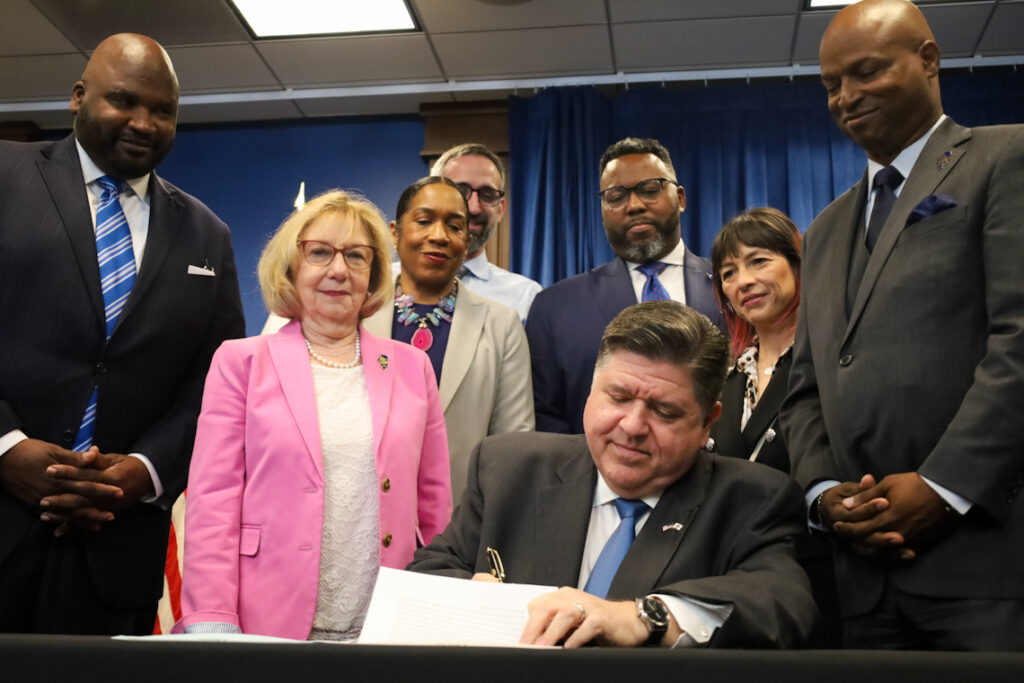
Gov. JB Pritzker signed Illinois’ fiscal year 2026 budget into law Monday, taking shots at President Donald Trump’s budget management to defend hard choices state lawmakers were forced to make this year.
The $55.1 billion spending plan set to take effect July 1 is the largest in state history and is supported by $55.3 billion in anticipated revenue, including more than $700 million in new taxes and more than $500 million in one-time revenues.
Democrats approved the budget shortly before midnight on May 31 with only a handful of Democrats opposing it and all Republicans unanimously voting against it.
The budget’s passage came after months of discussion about closing an initially projected $3 billion deficit and growing concerns about Trump’s treatment of state funding in Washington. Pritzker, a possible 2028 presidential candidate, used Monday’s budget signing ceremony in Chicago as an opportunity to draw a contrast between his and Trump’s budgets.
“While the Trump administration goes on Fox News lying about being fiscally responsible, Illinois is showing a better way: Balancing the budget while maintaining the programs that most people rely on,” Pritzker said.
“Congress is about to pass a federal budget that has one of the largest budget deficits ever in a year without a war or a pandemic. By contrast, Illinois is balancing its budget and prudently improving its fiscal condition,” he said.
Pritzker and other Democratic leaders acknowledged that crafting the FY26 budget was challenging but continues to make investments Democrats believe are priorities. Discretionary spending will increase by less than 1% in FY26, Pritzker said. Despite the minimal increase, the FY26 budget still spends about $2 billion more than FY25.
Democrats “ace the challenges and uncertainty head on, and the result is a budget that is truly balanced with no gimmicks,” House Speaker Chris Welch, D-Hillside, said.
But that’s not how Republicans view the budget’s fund sweeps and delayed transfers that free up hundreds of millions of dollars that can be used in FY26.
“This approach sets Illinois up for failure by FY27 and continues a pattern of short-term thinking,” House Minority Leader Tony McCombie, R-Savanna, said in a statement.
Senate Minority Leader John Curran, R-Downers Grove, condemned lawmakers for failing to deliver significant tax cuts since Pritzker took office in 2019 when Illinois’ budget totaled about $40 billion.
“You know it’s a bad budget when it’s based on nearly $1 billion in tax increases and enhancements,” he said in a statement.
The governor also used his broad authority to reduce a pair of technical errors in the budget. The changes lower spending by $161.2 million from what lawmakers passed.
Tax increases on tobacco and vape products, businesses
The tax plan will raise $709 million in new revenue through what House Majority Leader Robyn Gabel, D-Evanston, characterized as “smart new sources of revenue.” They include new taxes on businesses, sports betting and tobacco and vape products, according to a list provided by the Senate Democratic caucus.
The budget will not raise personal income, corporate income or sales taxes after Pritzker told reporters that he will veto any budget containing “broad-based” tax increases just days before the bill passed.
Sen. Elgie Sims, D-Chicago, discusses the state budget at a June 16 signing ceremony. Sims is the chief budget negotiator in the Senate. (Capitol News Illinois photo by Andrew Adams)
The largest sum of new taxes – $336 million – are on businesses outside of Illinois that lawmakers call “leveling the playing field” and will require businesses to pay more income tax to the state on their profits.
Consumers will face new taxes on specific items, including taxes on tobacco, vaping and other nicotine products, which are increasing to 45% to raise $50 million. An existing telecommunications tax will also rise from 7% to 8.65% and raise $49 million to fund the statewide 988 hotline.
A new tax on sports bets will charge betting sites 25 cents for the first 20 million wagers and 50 cents for each bet following that. It’s projected to raise $36 million. Sports betting sites FanDuel and DraftKings have both announced they will implement 50-cent transaction fees on Illinois customers in response to the tax.
Short-term rentals will have to begin paying the state’s hotel operator’s tax. The charge is already applied to hotels in the state, and Airbnb already pays it voluntarily, but more companies like Vrbo will now be required to pay the tax expected to raise an additional $10 million.
A pair of tax amnesty programs are expected to raise $228 million. Those programs are meant to incentivize taxpayers to pay overdue taxes.
Fund sweeps, delayed transfers free up more for spending
The budget deploys a series of tactics designed to free up more money for spending in the general fund in FY26 without repeating as a revenue source for the following year’s budget.
It suspends the monthly transfer to the “rainy day” fund for one year, freeing up $45 million for general fund use. Pritzker has taken pride in the fund’s increase in recent years as it’s grown to a balance of $2.3 billion, up from less than $60,000 when he took office. The fund is still estimated to grow by $161 million from interest and contributions from other funds in FY26.
Read more: Illinois’ $55.2B budget ‘incomplete,’ Civic Federation president says
The state will also pause the final transfer of motor fuel sales tax revenue to the road fund in order to free up $171 million. That scheduled transfer was set in motion by the state’s 2019 infrastructure plan, with the sales tax supporting bond debt taken out to complete road and bridge projects. This year was to be the final year of incremental transfers that took place over the past five years.
Gov. JB Pritzker speaks before signing Illinois’ fiscal year 2026 budget on June 16. Also pictured, from left to right: Sen. Elgie Sims, D-Chicago; Rep. Will Guzzardi, D-Chicago; Lt. Gov. Juliana Stratton; Rep. Kam Buckner, D-Chicago; House Speaker Emanuel “Chris” Welch, D-Hillside. Rep. Eva-Dina Delgado, D-Chicago, is not shown.
The budget package also establishes a new $100 million BRIDGE fund that the governor can tap into “in the event of unanticipated delays in or failures of revenues.” The measure, an apparent nod to the uncertainty of federal funding amid ongoing congressional budget negotiations, will come from money swept from 57 different funds.
When combined with the tax amnesty program, the fund sweeps and delayed transfers add up to at least $544 million of one-time revenue in this year’s state budget that will not be available in FY27.
Health and Human Services
The most notable change to health care funding is the elimination of the Health Benefits for Immigrant Adults, or HBIA, program that provided certain low-income noncitizens between ages 42 and 64 with state health care benefits akin to Medicaid. Eliminating the program saves the state $330 million, but the $110 million Health Benefits for Immigrant Seniors, or HBIS, remains in place.
“This was part of the challenge that we had to address,” Pritzker said. “It was a program that had been growing significantly in cost. I do believe that everybody should have health care. I also know that we have to live within our means in the state of Illinois.”
HBIA’s elimination comes after a recent audit found the two programs have cost the state at least $1.6 billion since their inception, far exceeding original estimates for the program. Last year, the state put new guardrails in place to limit enrollment into the programs and reduce costs through co-pays and other measures.
Read more: Audit finds Illinois’ noncitizen health care programs far outstripped original cost estimates
Gov. JB Pritzker speaks before signing Illinois’ fiscal year 2026 budget on June 16. (Capitol News Illinois photo by Andrew Adams)
HBIA’s elimination also comes as Congress debates a domestic policy plan that could reduce reimbursements to states that provide health care benefits to noncitizens.
In anticipation of broader reductions to health care and Medicaid reimbursements to the state, Illinois lawmakers also increased spending on other health care and social service programs:
$40 million for Federally Qualified Health Centers. These centers could provide care for people who lose coverage under HBIA turn.
$18 million from the General Revenue Fund for five safety-net hospitals in the state’s Medicaid managed care program. Another $100 million from Fund for Illinois’ Future will go to support the Medicaid managed care program at 12 other safety net hospitals.
$60 million for administrative expenses for the Supplemental Nutrition Assistance Program. That’s a $20 million increase from FY25 as Congress has proposed requiring states to cover half of administrative costs.
$263.7 million for HOME Illinois, a program created to reduce homelessness in Illinois. Housing advocates calculated that between Home Illinois and other housing line items, the budget includes $354 million in funding. That’s about a $14.6 million decrease from a year ago, which marks about double of what Pritzker proposed cutting in homelessness funding in February.
An 80-cent hourly wage increase for direct service professionals who service individuals with intellectual and developmental disabilities in community care settings. However, overall flat funding for the program means 305 positions in the program will be eliminated, according to the They Deserve More coalition. Community Care Program workers at the Illinois Department on Aging will receive a 75-cent hourly wage increase.
A new $25 million Prescription Drug Affordability Fund to support certain pharmacies in Illinois in competition against larger pharmacy benefit managers.
$15 million for the Medical Debt Relief Pilot Program that purchases medical debt from patients at a fraction of the total debt.
A $4 million increase for the Department of Children and Family Services aimed at hiring 100 additional staff members.
A child tax credit created in 2024 at 20% of the Earned Income Tax Credit will double to 40%.
Education
The state’s evidence-based funding model for K-12 schools calls for $350 million in additional funding each year, with a portion of that going to a property tax relief fund and the rest directly to schools. The proposed budget fully funds the K-12 education increase at $307 million but does not add $43 million in property tax relief funds.
Funding for higher education operational expenses is only going up 1%. Pritzker had proposed 3%. Democrat budget leaders have said the spending plan includes ways to increase funding by an additional 2% if there are significant cuts in federal funding for higher education, however.
Read more: Despite victories, major higher education policy bills stall in General Assembly
The budget also includes:
A $10 million increase to the Monetary Award Program grants for lower-income college students.
$8 million for a minority teacher scholarship program.
$2.9 million for the state’s Common App initiative to make it easier for high school students to apply to Illinois colleges and universities at one time.
$212 million for Pritzker’s Smart Start early childhood education program.
$21.7 million for the newly created Department of Early Childhood
Others spending areas
Part of the budget package created a new Tier 2 reserve fund that can be accessed if there are violations of what’s known as the federal “safe harbor” law. Lawmakers appropriated $75 million for the fund this year, in line with Pritzker’s proposal. Broader reform to Tier 2 was not considered this spring.
“With this fix going into effect, we’re protecting our taxpayers and state workers from future shortfalls that could cost the state much more,” Pritzker said.
Read more: ‘This issue isn’t going away’: Illinois lawmakers delay pension reform again
Lt. Gov. Juliana Statton, who is also running for U.S. Senate, speaks at a June 16 signing ceremony where Gov. JB Pritzker formally approved the state’s fiscal year 2026 budget. (Capitol News Illinois photo by Andrew Adams)
Attorney General Kwame Raoul is receiving a $15.7 million general fund increase as his office engages in a growing number of lawsuits against the Trump administration. Raoul told lawmakers he needs more attorneys to handle the cases and a generally growing workload in his office. However, because of declining revenue in other funds, total funding for the office largely remains flat in FY26.
Read more: Raoul’s office to receive $15.7M budget increase for operations
The budget sent to Pritzker included a 5% pay raise for state lawmakers, to $98,304. State law sets the pay for legislators to increase annually with inflation, and lawmakers took no action to stop it from occurring in FY26.
The budget also includes:
$500 million for the Department of Central Management Services and Department of Commerce and Economic Opportunity for the Surplus to Success program to prepare idle state properties for economic development.
$17.9 million for the Department of Financial and Professional Regulation to implement a new licensing system
$40 million for immigrant Welcoming Centers
$6.2 billion for Department of Transportation construction projects, including $4.5 billion for roads and bridges.
Capitol News Illinois is a nonprofit, nonpartisan news service that distributes state government coverage to hundreds of news outlets statewide. It is funded primarily by the Illinois Press Foundation and the Robert R. McCormick Foundation.
The post Pritzker signs $55.1B state budget reliant on $700M of new taxes appeared first on Capitol News Illinois.
9th Circuit to hear Trump’s appeal of National Guard ruling

An appeals court will hear arguments Tuesday on whether President Donald Trump can keep control of the California National Guard.
Ultimately the matter could be decided by the U.S. Supreme Court.
At noon, the U.S. Court of Appeals for the 9th Circuit will hear the Trump administration’s appeal of federal Judge Charles Breyer’s temporary restraining order Thursday transferring control back to Gov. Gavin Newsom. Later the same day, the 9th Circuit issued a stay, which temporarily keeps control with Trump.
Both the 9th Circuit and the U.S. District Court for Northern California, which issued the original ruling, are based in San Francisco. The 9th Circuit is known for its liberal decisions. If the 9th Circuit rules against the Trump administration, the U.S. Department of Justice could appeal to the U.S. Supreme Court, which has a 6-3 conservative majority. The six conservative justices include three appointed by Trump, but the court has ruled against him in significant cases.
Trump took control of the National Guard and deployed 4,000 of its members to Los Angeles after protests and riots broke out downtown on the June 6-8 weekend. The protests followed mass U.S. immigration and Customs Enforcement arrests. About 300 National Guard members arrived early June 8.
Trump has also deployed 700 Marines, who started to arrive Friday to guard the Wilshire Federal Building near the University of California at Los Angeles.
Newsom and California Attorney General Rob Bonta filed a June 10 motion for a temporary restraining order or preliminary injunction to prevent the National Guard and Marines from going onto Los Angeles streets for law enforcement purposes. They argued in their motion that local police could handle crowds without federal help and that law enforcement by the military would violate the Posse Comitatus Act.
“The evidence strongly indicates that the federalized National Guard and active duty Marines deployed in Los Angeles will engage in quintessential law enforcement activity in violation of the PCC,” according to Bonta and Newsom’s motion.
The Trump administration’s 324-page appeal argued the District Court ruling is “an extraordinary intrusion” on the president’s constitutional authority to deploy the National Guard to protect federal officials. It also cites U.S.C. 12406 as giving Trump statutory power to mobilize state National Guard into federal service when there’s a rebellion or danger of rebellion against the U.S. government.
Bonta and Newsom have argued there’s no rebellion or invasion in California.
In other developments, there were over 100 “No Kings” protests Saturday in California. The largely peaceful demonstrations ranged from one with an estimated 60,000 protesters at San Diego’s waterfront to a street corner with a small crowd in Simi Valley, just north of Los Angeles.
The protests were among about 2,000 across the U.S.
Some violence broke out late Saturday on the West Coast. In Los Angeles, protesters threw glass bottles, rocks and other objects at law enforcement, LA police said.
The Los Angeles Police Department reported 38 arrests Saturday night. Thirty-five of those were for violating the downtown curfew. The rest were for failure to disperse, resisting an arrest and resisting, obstructing or delaying a police officer.
Evening violence and looting has eased since Mayor Karen Bass on June 10 started the nightly dusk-to-dawn curfew. The seventh night of the curfew will start at 8 p.m. Monday.
The LAPD Monday morning said 575 arrests have been made since June 7.
Trump: Booting Putin from G7 was a ‘very big mistake’

President Donald Trump claimed Monday that the Russia-Ukraine war could have been avoided if Moscow was still a part of the G7 forum.
Trump called Russia’s 2014 expulsion from the group a grave mistake and suggested that Putin would not have invaded Ukraine had Trump been in the White House four years ago.
“If I were president, this war would have never happened,” Trump said during a bilateral meeting with Canadian Prime Minister Mark Carney on Monday.
Heads of state from the seven allied members of the G7 summit are congregating in Alberta, Canada this week for their annual meeting on geopolitical and economic affairs.
The group is made up of the U.S., Canada, France, Germany, Italy, Japan and the United Kingdom.
In his meeting with Carney, Trump argued that the conflict between Russia and Ukraine could have been averted entirely if Russia had not been ousted from the group after annexing Crimea in 2014.
“I think you wouldn’t have a war right now if you had Russia in,” Trump said.
The president maintained that resolving the ongoing conflict would be easier if Putin was still participating in G7 talks.
“You spend so much time talking about Russia and he’s no longer at the table, so it makes life more complicated,” Trump said.
Trump put blame on former President Barack Obama and former Canadian Prime Minister Justin Trudeau for leading the efforts to axe Russia from the group over 10 years ago. Trump criticized these two leaders and sided with Putin, saying that Moscow no longer engages in diplomatic conversations with the powerful members of the G7 because of this move.
“Putin speaks to me, [but] he doesn’t speak to anybody else because he was very insulted when he got thrown out of the G8, as I would be,” Trump said.
When asked by reporters if he’s open to adding China to the G7 membership, Trump said “it’s not a bad idea.”
The president also signaled Monday that Iran is willing to de-escalate its aggressions toward Israel. Trump said a nuclear deal with Tehran is still “achievable” but expressed frustration that the Iranians nixed the agreement he offered two weeks ago.
“They’d like to talk, but they should have done that before,” Trump said.
Trump doubled down on U.S. support for Israel and warned Iran of what further aggression against America’s ally might bring.
“Iran is not winning this war,” Trump said. “They should talk immediately before it’s too late.”
Senate expected to drop tax, Medicaid edits to ‘big, beautiful bill’
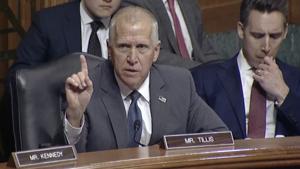
Senate Republicans are expected to reveal some of their revisions to the tax and Medicaid portions of the One Big Beautiful Bill Act, inching closer to a nail-biter floor vote.
The House-passed multitrillion-dollar budget reconciliation bill extends key portions of the expiring 2017 Tax Cuts and Jobs Act for the next 10 years. It also raises the debt ceiling by at least $4 trillion, finds $1.7 trillion in savings, and fulfills President Donald Trump’s energy, border security and defense agenda.
The Senate Finance Committee’s expected changes to the bill include making permanent three tax incentives for businesses – full reimbursement for capital investments, an expanded deduction for corporation’s interest on debt, and streamlined deductions for companies’ research costs.
The legislation will also cap the Medicaid provider tax at 3.5%, down from the House’s version which bans states from raising provider taxes higher than 6%. Other potentially controversial changes to Medicaid could be included, though the committee may leave some portions unfinished to allow for negotiations.
Other major provisions that will likely have placeholders are reductions to the state and local tax (SALT) deduction cap, which a group of House Republicans vehemently pushed for. Those lawmakers have threatened to tank the bill, assuming the Senate passes it, if the upper chamber touches the boosted $40,000 SALT deduction cap.
Senate passage is far from certain however, even though the budget reconciliation process allows the bill to pass via a majority vote.
Any changes announced Monday will likely spark opposition from at least one Republican faction. Fiscal hardliners have demanded greater spending cuts to offset the cost of the bill, while other Republicans warn they will withhold support if clawbacks of climate and energy subsidies or reductions to Medicaid spending are ramped up.
There’s also the looming question of whether the Senate Finance Committee will use an unconventional accounting method to make all the 2017 tax cuts permanent, rather than sticking with the House’s ten-year extension.
The House operated under current law baseline, which assumes that extending current tax cuts will result in trillions of lost revenue over the next decade.
But if the committee’s addition to the bill uses the current policy baseline – which would treat the 2017 tax cut extensions as a continuation of current law rather than new policy – they could paper over the cost of extension, authorizing tax cut permanence.
Republicans in both the House and the Senate have already warned they will not support a bill that uses the current policy baseline.
Supreme Court orders New York to reconsider abortion mandate
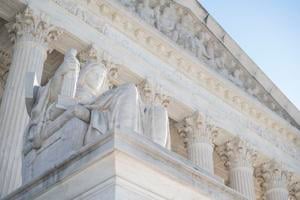
The Supreme Court ordered New York on Monday to reconsider its requirements for religious organizations to pay for medical abortions as a part of employer insurance.
“Today is a win for nuns in New York who are challenging having to pay for abortions,” said Lori Windham, senior counsel at the nonprofit Becket Fund for Religious Liberty.
Plaintiffs in Roman Catholic Diocese of Albany v. Harris argues that New York’s requirements “violate the constitution’s ‘fundamental’ requirement of ‘neutrality between religion and religion’” according to a petition by Becket Fund lawyers.
In 2017, New York required all employers to cover abortions in its employee health insurance plans. A group of religious organizations including Anglican nuns asked to be excluded from this requirement but were overruled.
In 2021, the religious groups appealed the state’s ruling to the Supreme Court when the justices asked New York to reconsider in light of a separate religious requirement decision.
The religious groups appealed yet again when the New York courts “refused to follow” the Supreme Court’s guidelines for reconsideration.
“For almost a decade now, New York’s facially unconstitutional religious discrimination has diverted them from worshipping, teaching, and serving with their faith traditions,” according to the petition. “Being ‘forced to defend themselves on matters of internal governance is itself a tax on religious liberty,’’” the petition read.
In the most recent appeal to the highest court, the justices vacated a lower court’s decision and required the New York Court of Appeals to further consider the case in light of a recent religious tax exemption decision out of Wisconsin.
The court’s verdict in Catholic Charities Bureau v. Wisconsin extended religious tax exemptions to organizations which do not proselytize one particular faith or particularly serve members of said faith.
Windham said the court’s unanimous decision to uphold the tax exemption status supports the nuns’ case as it extended rights to religious organizations that do not proselytize, like the nuns, when providing social services.
“New York state now acknowledges that its mandate is unconstitutional at least in part,” Windham said.
The court vacated the New York order even though petitioners said the issue would prevent members of the Catholic diocese from doing other work.
“Granting the petition to vacate the decision below for a second time and remanding for yet further consideration would needlessly prolong this matter, imposing significant burdens on Petitioners and other religious organizations,” the petition read.
Windham said there is still more work to be done in order to achieve a complete solution for New York’s religious organizations impacted by the insurance requirement covering abortion.
“These nuns and religious ministries want to focus on their work to serve others rather than being in court,” Windham said. “We are going to urge the New York courts to move quickly and resolve this once and for all.”