Posts by Newspaper Staff
Public transit agencies begin planning for ‘doomsday’ funding scenario
Capitol News Illinois
CHICAGO — Transit agency officials in Chicagoland met this week and formally began the process of planning for next year’s budget, including drawing up plans for major service cuts and potential layoffs.
It’s the latest chapter in an ongoing fight between public transit officials and state lawmakers over funding. Public transportation agencies’ federal COVID-19 relief funds are set to run out in 2026. Despite the funding, ridership on buses and trains still hasn’t reached prepandemic levels.
Now, transit agencies running buses and trains in northern Illinois are facing a $771 million annual combined budget gap — and lawmakers did not pass funding reform legislation by a critical May 31 deadline.
While House Speaker Emanuel “Chris” Welch told Capitol News Illinois last week that lawmakers “have time” to handle the situation, transit officials told a very different story at two meetings this week.
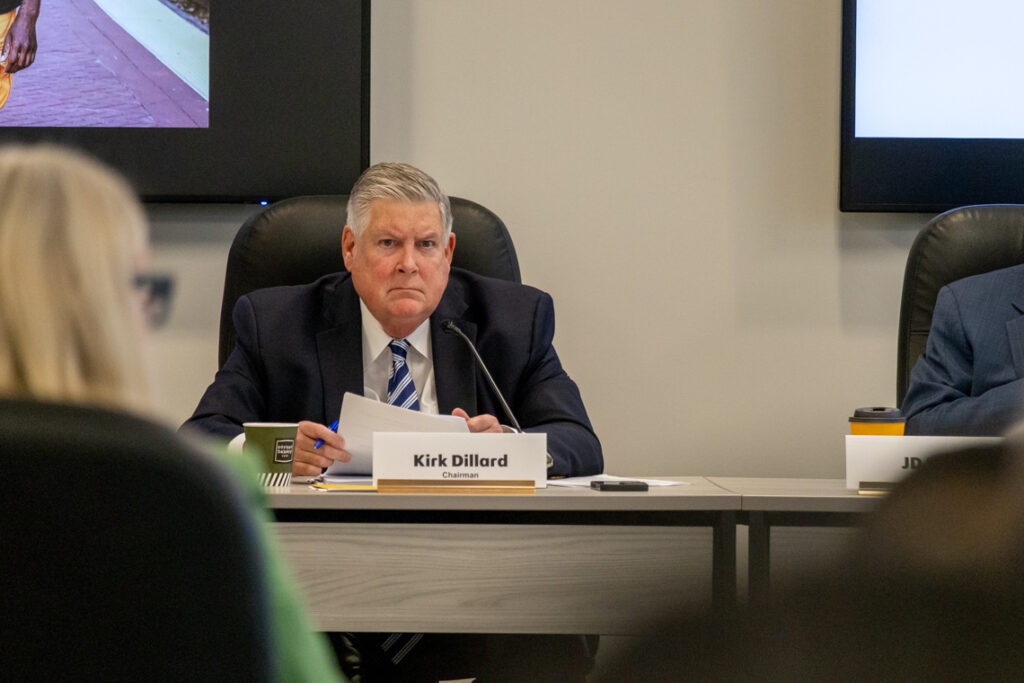
“We have told everyone they needed to act by May 31st or else,” Regional Transportation Authority board member Tom Kotarac said at a board meeting Thursday. “We are in the ‘or else’ phase.”
Officials at the RTA laid out a plan Thursday to handle the monetary uncertainty: create two budgets. In one scenario, budget planners assume the gap is filled, and agencies can move forward with the rough plan approved late last year.
“But we cannot operate on assumptions and pledges of good faith and promises. We just can’t, legally,” RTA government affairs director Rob Nash said.
Read more: Legislative leaders discuss next steps for failed transit reform push
The RTA board formally asked the agencies it oversees — the Chicago Transit Authority, Metra commuter rail and Pace Suburban Bus — to prepare a budget that assumes no new funding from Springfield before the end of the year. This means a roughly 20% reduction from what the agency expected.
Open interactive graphic in new tab
Multiple RTA officials called it the “doomsday” scenario. RTA Chief Financial Officer Kevin Bueso said it would require “catastrophic” cuts. CTA acting President Nora Leerhsen told the CTA board on Wednesday that it was “severe and sobering for all of us and hard to stomach.”
Under both plans, the RTA would institute fare increases in 2026 and administrative “efficiencies” to reduce costs in 2025. The RTA also plans to create an ad hoc task force to plan cuts and manage the year’s unusual budget process.
The austerity measures are not just a piece of political theater. The RTA, under state law, must tell service boards the amount of revenue that will be available to them by Sept. 15 each year and the boards must submit individual budgets based on that revenue. The oversight agency releases preliminary funding amounts for transit planners to use months earlier in July.
Leerhsen said the CTA will continue to operate with its current 2025 service plan, but that over the summer and into the fall, the agency will hold public hearings to “more specifically consider” the consequences of the fiscal cliff.
The September deadline is three weeks before the General Assembly’s fall session begins — the earliest that lawmakers are scheduled to meet.
But even if lawmakers meet in October and pass funding reform, officials said that missing their spring deadline has already guaranteed harmful effects.
“I don’t want to give anyone false hope that there is still any way to avoid some of these negative impacts,” RTA Executive Director Leanne Redden said. “The negative impacts are here, and now we’re going to have to all work together to mitigate the worst of those impacts for as long as possible while the legislature continues to do their work.”
Even if lawmakers pass a new funding mechanism, because of the time it takes to implement new policies, that money might not become available to transit agencies until next summer, either due to far off effective dates on any new laws or the delays of implementing new policies.
Delays in funding would, according to Nash, impose “costs, financial and otherwise, to the system and to riders.”
“We are likely to face a challenge in the first part of 2026 no matter what the General Assembly does at this point,” Nash said during the Thursday RTA board meeting.
What’s next in Springfield
Over the past year, several proposals have been pitched in Springfield to address problems in Chicagoland transit agencies.
Two major proposals came from a coalition of environmentalists and labor unions. On Thursday, representatives of the Illinois Clean Jobs Coalition and Labor Alliance for Public Transportation, two groups that have occasionally disagreed on how to address transit agencies’ woes, released a joint statement.
The groups said the RTA’s Thursday meeting “unveiled the disastrous consequences of Springfield’s inaction” and called for lawmakers to meet this summer to address the problem.
“We cannot wait any longer — the General Assembly needs to avert further disaster and address the transit fiscal cliff with reforms and dedicated revenue, while working with existing agencies to ensure that we are investing in the future of our transit systems. The time to act is now,” the groups said.
Read more: Senate’s transit funding, delivery tax proposal stalls in House
While no proposal received close to the support it needed this spring, one bill made it through the Senate in the final hours of lawmakers’ legislative session.
That bill would have instituted several reforms that had been broadly agreed on, although not unanimous. Certain provisions laying out the balance of power on various boards were opposed by local governments.
Its funding mechanism, however, ignited quick controversy. The provision that sparked the greatest opposition would have instituted a $1.50 tax on package deliveries except on orders of groceries and medicine.
That provision drew near-immediate opposition from businesses and interest groups with influential networks of lobbyists. The major tech lobbying group TechNet, along with Uber, Instacart, DoorDash, Chicagoland Chamber of Commerce and several retail industry groups, registered their opposition.
That bill was not considered in the House, and no bill with a similar funding mechanism was proposed in that chamber.
Paula Worthington, an economist and senior lecturer at the University of Chicago, told Capitol News Illinois that imposing a new tax like the delivery fee would be difficult.
“That is a heavy lift, procedurally, legally,” Worthington said. “You can’t just wave a magic wand.”
Worthington pointed to other states’ systems of transit funding that typically include “some elements of shared burden.” Other states have implemented a “commuter transportation mobility” tax on certain businesses, taxes on road users, or expanding taxes on ride sharing companies. Worthington said Illinois could consider those or other taxes during discussions over the summer to identify a solution.
“But those discussions now need to be out in the public,” Worthington said.
Capitol News Illinois is a nonprofit, nonpartisan news service that distributes state government coverage to hundreds of news outlets statewide. It is funded primarily by the Illinois Press Foundation and the Robert R. McCormick Foundation.
The post Public transit agencies begin planning for ‘doomsday’ funding scenario appeared first on Capitol News Illinois.
‘Granny flats’ may be the answer to affordable housing in Chicago — but they’re illegal
Capitol News Illinois
by Alex Nitkin for ILLINOIS ANSWERS PROJECT
CHICAGO — For most new parents, finding last-minute child care usually means an afternoon of frantic phone calls and around $100 dropped on a trusted babysitter.
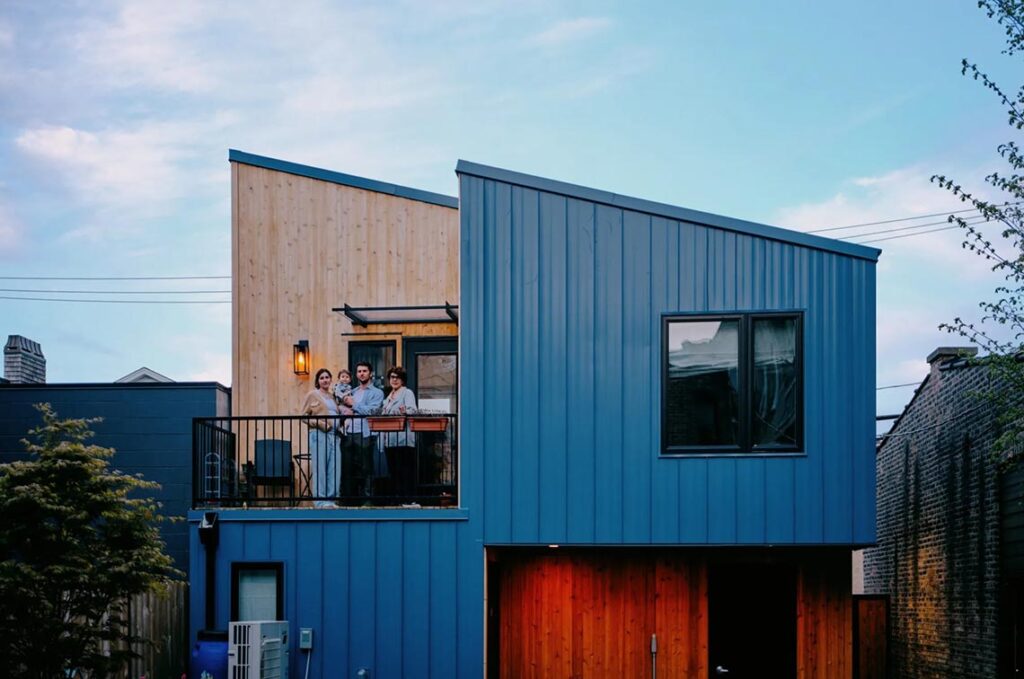
For Brian and Fiona Peterman, it means walking across their backyard.
In 2021, Fiona’s mother, Louise D’Agostino, was scanning pricey apartments near Brian and Fiona’s Lakeview home so she could live closer to them after she retired — until Brian learned about a new city program that would let the family build a second, smaller house on their own property.
After nearly two years of navigating regulatory red tape and approximately $300,000 in construction costs, D’Agostino was able to move into a 700-square-foot, two-bedroom house on top of Peterman’s garage in 2023.
After nearly two years of navigating regulatory red tape and approximately $300,000 in construction costs, Brian Peterman was able to build a “granny flat” on his property, allowing his mother-in-law to move in. “‘Life-changing’ is probably the cleanest way of saying it,” he said. (Akilah Townsend for Illinois Answers Project)
Nowadays, D’Agostino goes on walks with her 18-month-old granddaughter nearly every day. D’Agostino cooks the toddler recipes from her native Malta that she learned from her own mother, and she’s teaching her to speak Maltese.
D’Agostino pays rent to her daughter, Fiona, and son-in-law, Brian — much less than the cost of the mortgage at her previous home, but still a steady and meaningful source of income for the Petermans to supplement the salaries from their day jobs.
“‘Life-changing’ is probably the cleanest way of saying it,” Brian Peterman said. “By having her there, we always have that backup plan in case something goes awry in our normal lives.”
Homes like D’Agostino’s, typically called coach houses, carriage houses or “granny flats,” are illegal to build in most of Chicago. Their construction was banned in 1957 by city leaders who feared residential overcrowding. Chicago has since lost approximately 800,000 residents.
City officials under three mayors have been pushing for at least six years to unravel the prohibition of so-called accessory dwelling units, or ADUs — a term used to describe both coach houses and unused basement or attic spaces that are converted into apartments. In the legalization campaign, bureaucrats and policy researchers consistently highlight ADUs as a low-risk tool, free to taxpayers, that’s been proven to provide a limited but effective release valve for other cities’ affordable housing crises.
For D’Agostino, it meant finding an affordable home in an affluent neighborhood while providing extra income to offset child care costs for her daughter and son-in-law while keeping her granddaughter close.
A three-year pilot program that legalized the units in some areas showed that outcomes like the Petermans’ are widely replicable, opening up more housing options in neighborhoods where cheap apartments have become increasingly rare. But the burst of construction seen so far is a pittance compared to the more than 100,000 affordable units experts say it would take to satisfy demand.
“ADUs are our path to economic mobility,” said state Rep. Kam Buckner (D-Chicago), who sponsored legislation that would prohibit Illinois cities from banning the units. “They turn under-utilized space into income-generating property, which is a big deal.”
Many City Council members remain skeptical of ADU legalization, wary of any move that would limit their ability to guide new development in their wards.
That’s one reason why a proposal to legalize the units citywide has been sitting on the shelf for more than a year.
In the meantime, property owners inside the pilot zones, like the Petermans, are straining to build ADUs amid daunting costs and regulatory barriers.
City Hall discussions on how to expand and ease construction are clouded by a political stalemate over how far the program should reach, and by a little-understood federal complaint targeting Chicago’s housing segregation. And policymakers have struggled to craft an ordinance that would encourage ADU construction across the city — not just in wealthy, dense areas, where they’ve overwhelmingly been added during the pilot.
As Chicago leaders sit on their hands, proposals to permit ADU construction across Illinois are gaining support in Springfield, where lawmakers are pushing their own measures. Adding to the momentum is Gov. JB Pritzker, who recently endorsed ADUs as a tool to increase the state’s stock of affordable housing.
“Think about carriage houses,” Pritzker said in an April 30 episode of the Volts podcast after an interviewer asked the governor about his housing agenda. “We’ve got neighborhoods where people are not allowed to have those as separate dwellings — or just the idea that we can, if we make a few tweaks here and there, we can significantly increase the amount of housing with the existing housing stock.”
A pilot program to test the waters
Chicago planning officials under former Mayor Rahm Emanuel first promoted the idea of legalizing accessory dwelling units in 2018, saying they “can offer relatively affordable housing for tenants and can help moderate income families become homeowners with the additional income.” Researchers had taken note of new construction in Portland following the legalization of ADUs there years earlier, and a 2016 California law had already unlocked an explosion in construction of the relatively low-cost units across that state.
A 2019 study by the AARP found that in seven U.S. cities, ADU rents were hundreds of dollars lower than the rents of comparable one-bedroom apartments and could provide “a substitute for nursing home care, a means to age in community, an opportunity to live with other family members in multi-generational living arrangements, as well as a source of earning extra income to supplement fixed incomes in their retirement years.”
In 2019, the newly reconstituted Chicago Department of Housing recruited the Chicago-based Urban Land Institute to lead a task force with dozens of developers, architects, affordable housing advocates and lenders to draw up a list of recommendations for how Chicago could legalize ADUs.
The result was a 44-page report, published in May 2020, detailing the challenges of ADU legalization in other cities and ways Chicago could overcome them.
Within a month of the report’s publication, Chicago Mayor Lori Lightfoot had introduced an ordinance legalizing coach house construction and basement unit conversions in Chicago, incorporating some of the task force’s recommendations.
It got a chilly reception in the City Council.
“This will be a blanket approval … it will allow two-flats to become three-flats, three to become four and four to become five,” said then-Ald. Patrick Daley Thompson (11th), who represented the city’s Bridgeport and Chinatown neighborhoods. “If someone wants to change a two-flat to a three-flat, in my ward, we do a community meeting. All of my neighbors — the community comes out and has participation. Not a bureaucrat at City Hall making a decision for my community.”
South Side Ald. David Moore (17th) was more direct.
“I want some aldermanic control over this,” Moore said.
After months of negotiations, the council approved a test ordinance that legalized accessory dwelling ordinance in five “pilot zones” — two on the city’s North Side, one on the West Side and two on the South Side — all in areas represented by alderpeople who supported the initiative. However, the West and South Side zones were established with additional restrictions at local council members’ request, including a requirement that the new units could be built only on owner-occupied properties.
In May 2021, the Chicago Department of Housing began accepting applications for coach houses and basement unit conversions. The ordinance called on city officials to report back to the City Council three years later with data and insights.
Peterman, who had been following the ordinance closely, was among the first in line to apply.
It was a year before his coach house project would break ground.
Peterman became tangled in a weeks-long back-and-forth with zoning officials in the city planning department over the dimensions of his porch. Because the city requires homes like his to have at least one parking space, he needed to figure out how to build the coach house on top of his garage. And even after housing and planning officials gave him the go-ahead, he had to get a fresh approval from the Chicago Department of Buildings, which regulates all construction in the city.
After nearly two years of navigating regulatory red tape and approximately $300,000 in construction costs, Brian Peterman was able to build a “granny flat” on his property, allowing his mother-in-law to move in. “‘Life-changing’ is probably the cleanest way of saying it,” he said. (Akilah Townsend for Illinois Answers Project)
“It took us a very long time compared to a normal [housing] permit, which would have been one-tenth of the time if [the ADU] was already part of the zoning code,” he said.
Just as difficult, Peterman said, was financing. It typically takes between $50,000 and $100,000 to build a new unit in a basement or attic, but building a new coach house can run upwards of $250,000. Peterman and his wife had so much difficulty finding a loan package that they ultimately took out a new line of credit on their existing home to pay for the project, he said.
Despite the hurdles, more than 300 accessory dwelling units have been permitted for construction across the five pilot zones since 2021. They overwhelmingly comprised basement unit conversions, as opposed to coach houses — not surprising, observers said, considering how much cheaper it is to renovate than to build a new free-standing structure.
Open interactive graphic in new tab
More than 90% of the new units were located in one of the two North Side zones. City officials chalked up the disparity to the overwhelming demand for new housing in wealthier parts of the city — and to the added barriers placed on construction in the South and West Side zones.
‘We need them in our neighborhoods’
A May 31, 2024 memo sent to the City Council by commissioners of the Chicago planning and housing departments recommended expanding the pilot citywide. A review of data found that most of the new construction in the pilot program added garden units below existing walk-up apartment buildings. The below-grade units are typically less costly to rent.
Cook County faces a shortage of more than 150,000 affordable homes — in large part due to the disappearance of apartments in two- to four-unit apartment buildings that have either been demolished or converted into lavish single-family homes in recent years, according to the DePaul University Institute for Housing Studies.
As a result, a renter who earns the median income in Chicago today has sharply fewer housing options than they would have had 25 years ago, a WBEZ investigation found earlier this year.
Chicago’s ADU pilot has seen hundreds of units crop up in neighborhoods made up of squat two- and three-story apartment buildings, showing that their legalization has been “spurring investment in exactly the kind of neighborhood type where added housing options are most badly needed,” city commissioners wrote in their memo to the City Council.
The results of the ADU pilot were promising, but they were also underwhelming in the context of the city’s mammoth affordable housing crisis, said Daniel Hertz, who served as director of policy, research and legislative affairs for the Chicago Department of Housing from 2019 to 2024.
“It hasn’t completely transformed the face of any neighborhood,” Hertz said. “But I think 300 additional units that by and large are going to be moderately priced for the neighborhoods that they’re in … and having done that without basically any subsidy from the city — that’s a good thing.”
Ald. Daniel La Spata (1st), whose ward is inside the Northwest Side pilot zone, was an early supporter of accessory dwelling unit legalization. What he’s seen during the pilot has been “fantastic,” solidifying his position on the policy, he said.
Ald. Daniel La Spata (1st) at Chicago City Hall on Tuesday, June 20, 2023 (Victor Hilitski, for Illinois Answers Project)
“I’ve been in these units. They’re great. We need them in our neighborhoods,” La Spata said. “They’ve allowed families to develop and stay together intergenerationally.”
AARP Illinois, which supported Chicago’s ADU pilot ordinance, has since thrown its weight behind efforts to allow construction of the units statewide. A spokesperson for the seniors’ advocacy group said the housing type can provide an ideal option for older Illinoisans who want to live independently while downsizing to a smaller, more affordable home.
AARP found in its 2019 study that the average ADU in Seattle rented for $1,500, compared to nearly $1,900 for a comparable one-bedroom apartment in the same city. The price difference was even sharper in Oakland, Calif. and Washington, D.C.
Proponents argue the financial benefits of ADUs also apply to Chicago.
La Spata noted that the city spends millions of dollars each year to subsidize housing for people with low incomes. Legalizing basement unit conversions, assuming a $100,000-per-unit cost by private developers, represents an easy and efficient way to bring more affordable units into the market without spending taxpayer money, La Spata said.
“If I told someone tomorrow that we could develop 50 units of affordable housing for all of a $5 million investment, that would be the most efficient affordable housing development in the city,” he said.
La Spata supports a proposal from Ald. Bennett Lawson (44th), whose Lakeview ward straddles a pilot zone, to legalize the units across the city.
The addition of new ADUs in Lawson’s ward has “really worked out well,” Lawson said. The new units haven’t drawn any complaints from neighbors or worsened traffic or parking.
“A lot of them are legalizing spaces that were never properly permitted … and making that housing legal and safe for more people in my neighborhood,” the North Side alderperson added.
Lawson met some resistance to the proposal among his colleagues, but he tweaked the ordinance in April 2024 with a compromise that would add an additional hurdle to approval in low-density residential neighborhoods on the city’s outskirts.
Lawson said he believed the amended ordinance had ample support in the City Council and could pass easily if taken to the floor.
A year later, the ordinance remains on the shelf.
Delays and disputes gum up legislation
Lawson’s proposal can’t move forward until Ald. Walter Burnett (27th), who chairs the City Council Committee on Zoning, brings it to a vote.
Burnett is holding the proposal back. But not because he’s against the policy.
He said the hold-up is coming from Mayor Brandon Johnson’s administration.
The housing and planning departments under the mayor rejected Lawson’s proposal, saying its built-in hurdles for construction in less dense neighborhoods make it too restrictive. Instead, the Johnson Administration is pushing for zoning that allows ADU construction in every corner of the city.
“Allowing ADUs by right is essential to meaningfully addressing Chicago’s housing shortage and building on the success of the pilot program,” Chicago Department of Housing spokesperson Felicia Bolton wrote in a statement.
Burnett also blamed the delay on an obscure legal snag.
In 2019, a coalition of fair housing groups led by the Shriver Center on Poverty Law filed a legal complaint with the U.S. Department of Housing and Urban Development alleging that “aldermanic prerogative,” the unwritten rule that gives Chicago alderpeople vast power to dictate zoning changes and other approvals in their own wards, stymies proposals for new affordable housing in well-to-do neighborhoods. The case led federal officials in 2023 to send Chicago leaders a letter ruling that local aldermanic veto power violates federal civil rights law because it “perpetuates segregation” and “effectuates opposition to affordable housing based on racial animus.”
Nearly two years later, the plaintiff groups and city officials all declined to comment on the status of the legal complaint, saying they agreed to stay quiet while the parties negotiate a mutual resolution to the complaint.
Burnett blamed the grinding legal talks for freezing progress on citywide legalization of accessory dwelling units. City attorneys told the zoning committee chair that Lawson’s compromise ordinance, with its added regulations for low-density neighborhoods, would complicate the path to a legal resolution by opening a new avenue for the “aldermanic prerogative” that the plaintiffs are seeking to roll back.
“The law department were the ones that said, ‘hold off until we get past this lawsuit,’” Burnett said.
Chicago Department of Law spokesperson Kristen Cabanban wrote in a statement that city and federal officials are “negotiating a resolution to a complaint regarding the distribution of affordable housing throughout the city.” She declined to comment on the status of the negotiations or on Burnett’s characterization of them.
If city leaders delay on the ordinance much longer, their efforts could be eclipsed by pending state legislation that aims to allow coach houses and basement units across Illinois.
Buckner’s proposal, which would pair a ban on local prohibition of accessory dwelling units with a list of measures designed to boost their construction, missed a key deadline for consideration in the spring 2025 legislative session. But the legislator is also supporting a parallel legalization bill, backed by the powerful trade association Illinois Realtors, that cleared a key committee vote and remains in contention.
“I just hope we can put a little fire under them,” Buckner said of his counterparts on the Chicago City Council. “I want the city to lead this conversation — I really don’t want the state to have to do this. But we will, if we need to.”
After nearly two years of navigating regulatory red tape and approximately $300,000 in construction costs, Brian Peterman was able to build a “granny flat” on his property, allowing his mother-in-law to move in. “‘Life-changing’ is probably the cleanest way of saying it,” he said. (Akilah Townsend for Illinois Answers Project)
Peterman has become a vocal advocate for the legislation, even opening up his home to show Buckner and other state representatives how an ADU can work. He hopes statewide legalization of coach houses helps more families move closer together into affordable homes just like his mother-in-law did.
Legalizing the units in some parts of Chicago “has not changed the character of these neighborhoods,” Peterman said. “All it has done is given people more options for the property that they already own.”
This is a developing story. Check back for updates.
Making it in Chicago
The path toward upward economic mobility is increasingly out of reach for many in Chicago and Illinois. This series by Illinois Answers — the journalism arm of the Better Government Association — examines some of the obstacles, including child-care costs, skyrocketing student loan debt, medical costs and affordable housing. Stories on those topics are being reprinted here with permission from Illinois Answers. Visit Illinois Answers Project to read the entire eight-part series.
This article first appeared on Illinois Answers Project and is republished here under a Creative Commons Attribution-NoDerivatives 4.0 International License. PARSELY = { autotrack: false, onload: function() { PARSELY.beacon.trackPageView({ url: “https://illinoisanswers.org/2025/05/27/granny-flats-are-illegal-to-build-in-most-of-chicago-and-political-gridlock-is-keeping-it-that-way/”, urlref: window.location.href }); } }
The post ‘Granny flats’ may be the answer to affordable housing in Chicago — but they’re illegal appeared first on Capitol News Illinois.
Mental Health Board Awards $5 Million in Grants to Will County Organizations
The Will County Community Mental Health Board has distributed over $5 million in grants to 39 local organizations, marking the completion of its inaugural funding cycle since voters approved the mental health tax levy in 2022. The Will County Community Mental Health Board announced Wednesday that it has awarded $5,015,282 in grants to 42 programs…
Read MoreFrankfort Square Park District Adopts Budget and Appropriation Ordinance, Updates Financial Policy
The Frankfort Square Park District Board of Commissioners formally adopted its Budget and Appropriation Ordinance for the 2025-2026 fiscal year on Thursday, finalizing the district’s legal spending authority for the year. The board also approved an updated Fund Balance Policy to guide its long-term financial strategies. The ordinance was approved unanimously by the six board…
Read MorePritzker defends Illinois’ immigration laws in theatrical congressional hearing
Capitol News Illinois
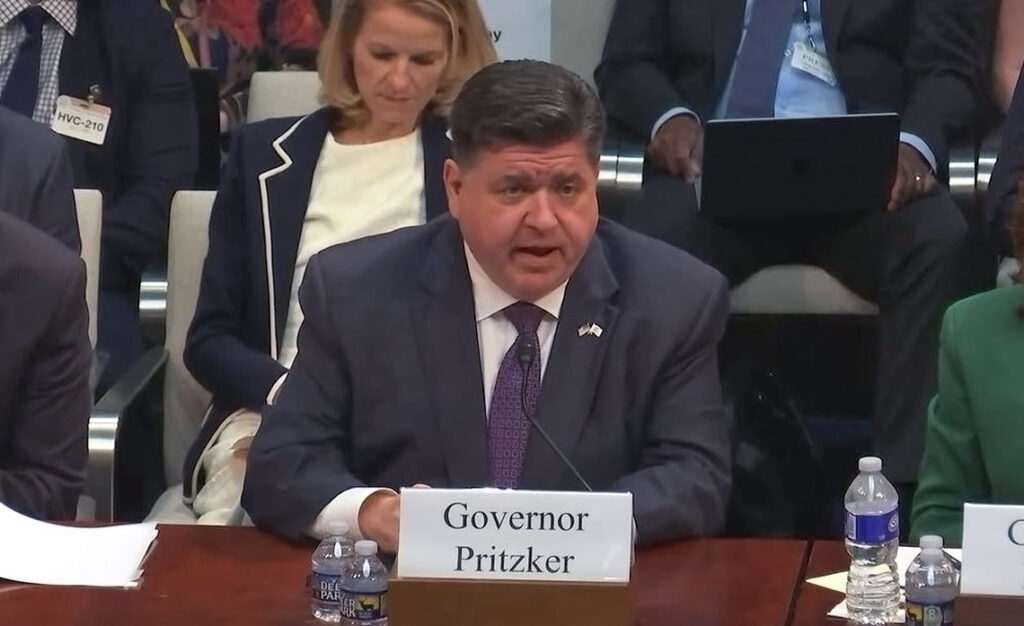
Gov. JB Pritzker spent hours Thursday defending his governing record and Illinois’ immigration policies as he was peppered with questions from members of the U.S. House Oversight Committee.
Pritzker and Democratic governors Kathy Hochul of New York and Tim Walz of Minnesota were summoned to Washington, D.C., by committee Chair James Comer, R-Ky., to answer questions about “sanctuary states.” The hearing mostly involved lectures from Republican members arguing immigration policies like Illinois’ diminish public safety while Democratic members blasted the Trump administration’s deportation raids.
“I invited these governors here today because as the chief executives of their states, they willfully ignore federal law, shield illegal aliens and pass the cost of free services onto their hardworking taxpayers,” Comer said. “It’s hard to figure out whose side these governors are on. They shield criminals while their own citizens pay the price.”
Pritzker countered by reiterating a point he has made publicly in Illinois several times since November’s election.
“As I have consistently said, violent criminals have no place on our streets, and if they are undocumented, I want them out of Illinois and out of our country,” Pritzker said. “And as we are reminded in Los Angeles this week, we can all agree that violence of any kind, whomever it is directed at, is unacceptable.”
Pritzker’s appearance before the committee came as nationwide protests grew over the Trump administration’s deportation tactics and increasing arrest numbers by Immigration and Customs Enforcement, especially in Los Angeles.
After protests and violence in that city last weekend prompted President Donald Trump to deploy hundreds of troops, thousands of people marched through the streets of Chicago this week protesting immigration raids. Some protestors briefly clashed with police, and 17 people were arrested, according to Chicago Police.
Dozens more protests are planned in Chicago and around Illinois on Saturday. Dubbed as “No King” protests, the gatherings are designed to contrast with a military parade planned by Trump in Washington on Saturday celebrating the U.S. Army’s 250th birthday. Saturday is also Trump’s 79th birthday.
Pritzker said if the Illinois National Guard ever needs to be activated to quell civil unrest, it’s done in coordination with local law enforcement. He criticized Trump’s deployment of the Guard in Los Angeles.
“It’s wrong to deploy the National Guard and active-duty Marines into an American city over the objection of local law enforcement just to inflame a situation and create a crisis,” Pritzker said.
Republicans on the committee alleged “sanctuary state” laws violate federal immigration laws. Illinois’ 2017 TRUST Act, signed by Republican Gov. Bruce Rauner, prohibits Illinois law enforcement from detaining people based on their immigration status and assisting in civil immigration enforcement. Law enforcement cannot hold people based on federal immigration warrants in most cases, but they can make arrests for federal criminal warrants.
Rep. Gary Palmer, R-Ala., suggested the three governors be criminally charged with obstruction because of their states’ laws. His comments follow Trump’s suggestion that California Gov. Gavin Newsom should be arrested.
“I have the highest duty to protect the people of my state, and indeed if Tom Homan were to come to my state and try to arrest us, me rather, I can say first of all that he can try,” Pritzker said of Trump’s border czar. “I can also tell you I will stand in the way of Tom Homan going after people who don’t deserve to be frightened in their community.”
Homan told CNN earlier this week Newsom hasn’t done anything to require an arrest.
Controversy over Illinois’ immigration policies
Pritzker blamed decades of federal government inaction on immigration and border security for exacerbating issues in the U.S. He also acknowledged to Comer that President Joe Biden inadequately handled immigration, particularly as 50,000 migrants were sent to Illinois mostly by the governor of Texas.
“We’re not in charge of the border in Illinois, I can tell you that,” Pritzker later told Rep. Pete Sessions, R-Texas. “We don’t have a border with a foreign country. … We had 50,000 people who came from Texas because they were shipped to us. And let me tell you, I was in favor of helping them.”
Read more: Pritzker to tell Congress ‘both parties are to blame’ for broken immigration system
Pritzker occasionally butted heads with Republicans throughout the hearing. Comer questioned the governor about the death of Katie Abraham in an Urbana car crash. She was killed in January by a suspected drunken driver illegally in the United States, according to WCIA. The GOP members mentioned several crime victims by name throughout the hearing.
Rep. Mary Miller, a Republican from Hindsboro, accused Pritzker of “rolling out the red carpet for illegal aliens,” adding “illegal aliens in our state have overwhelmed our communities.”
“I am not going to be lectured to by someone who extolled the virtues of Adolf Hitler,” Pritzker said, alluding to comments Miller made on Jan. 6, 2021.
Given multiple scenarios about what should happen to people who commit crimes while illegally in the country, Pritzker reiterated he supports deporting violent people but emphasized that must happen with due process. Democrats have argued Trump’s administration is deporting people without due process.
Republicans also criticized Illinois’ recent budgets for providing more than $1 billion of state health care benefits to people without documentation along with other programs for noncitizens. However, Pritzker is expected to sign a new state budget this month that eliminates a $330 million health care program for immigrants between ages 42 and 64.
“You do not keep track of any public service dollars in the state of Illinois that goes to illegal immigrants?” Rep. Byron Donalds, R-Fla., asked Pritzker after the governor didn’t offer specifics about exactly how much Illinois spends on “illegal immigration.”
And while Pritzker cast some blame on Republican-led border states for making Illinois part of recent waves of millions of migrants, Rep. Andy Biggs, R-Ariz., remarked that while “Illinois didn’t ask for this crisis” as Pritzker said in his opening remarks, “neither did Yuma, Arizona.”
The hearing’s message
The hearing veered off topic several times. Rep. Raja Krishnamoorthi, a Schaumburg Democrat, praised Pritzker’s work on the economy and spent time discussing Pope Leo XIV’s White Sox loyalty while Texas Republican Rep. Brandon Gill asked Pritzker whether he’s ever used a woman’s restroom.
“You’re admitting that this is just a political circus,” Pritzker responded to Gill.
Aside from Gill’s question about bathrooms, Pritzker largely avoided any immigration-related viral moments. The most intense grilling was reserved for Walz as the Democrat’s 2024 vice presidential nominee and Hochul over high-profile murders in New York.
Rep. Nancy Mace, R-S.C., remarked the hearing featured a possible preview of the 2028 Democratic presidential primary. Pritzker and Walz are both viewed as possible candidates in the next presidential election.
Pritzker’s appearance at the committee hearing is the latest opportunity to grow his national profile. His schedule throughout 2025 has been dotted with national media interviews and out-of-state speaking engagements where he has often called for more protests of the Trump administration.
Read more: Trump’s 100 days: Pritzker calls for mass mobilization as he grows his national profile
He echoed that message again Thursday.
“I encourage people to peacefully protest, and I have said that many times,” he said.
Pritzker said Trump “has created a situation where people are afraid.”
“They’re afraid they’re going to get targeted because that is what’s happening under this administration. People are getting individually targeted when they stand up and speak out,” Pritzker said.
Capitol News Illinois is a nonprofit, nonpartisan news service that distributes state government coverage to hundreds of news outlets statewide. It is funded primarily by the Illinois Press Foundation and the Robert R. McCormick Foundation.
The post Pritzker defends Illinois’ immigration laws in theatrical congressional hearing appeared first on Capitol News Illinois.
County Board Approves Major Code Updates, Discusses Employee Benefits
The Will County Board Executive Committee approved several ordinance updates Wednesday while engaging in detailed discussions about employee compensation and benefits. The committee passed ordinances updating three chapters of the county code, including revisions to personnel regulations, emergency management agency structure, and public records procedures. The updates include changing the Emergency Services and Disaster Management…
Read MoreMajor Park District Projects Advance as Hunter Prairie Park Gets Green Light

Work on the Frankfort Square Park District’s three major capital projects is hitting key milestones, with the long-awaited redevelopment of Hunter Prairie Park now officially underway. Executive Director Audrey Marcquenski announced at the June 12 board meeting that Will County granted the permit for the park’s redevelopment on June 9. The contractor, Innovation Landscaping, is…
Read MoreIllinois license plate cameras used illegally by out-of-state police, Giannoulias says
Capitol News Illinois
CHICAGO — The state of Illinois is investigating an automatic license plate reader system used in a northwest suburb after a Texas sheriff accessed the system to look for a woman who recently had an abortion.
This and hundreds of other searches, according to Secretary of State Alexi Giannoulias, violated Illinois law.
Law enforcement agencies seeking to access license plate reader data collected in Illinois would first have to attest in writing that they wouldn’t use it to enforce other state’s laws relating to abortion or immigration.
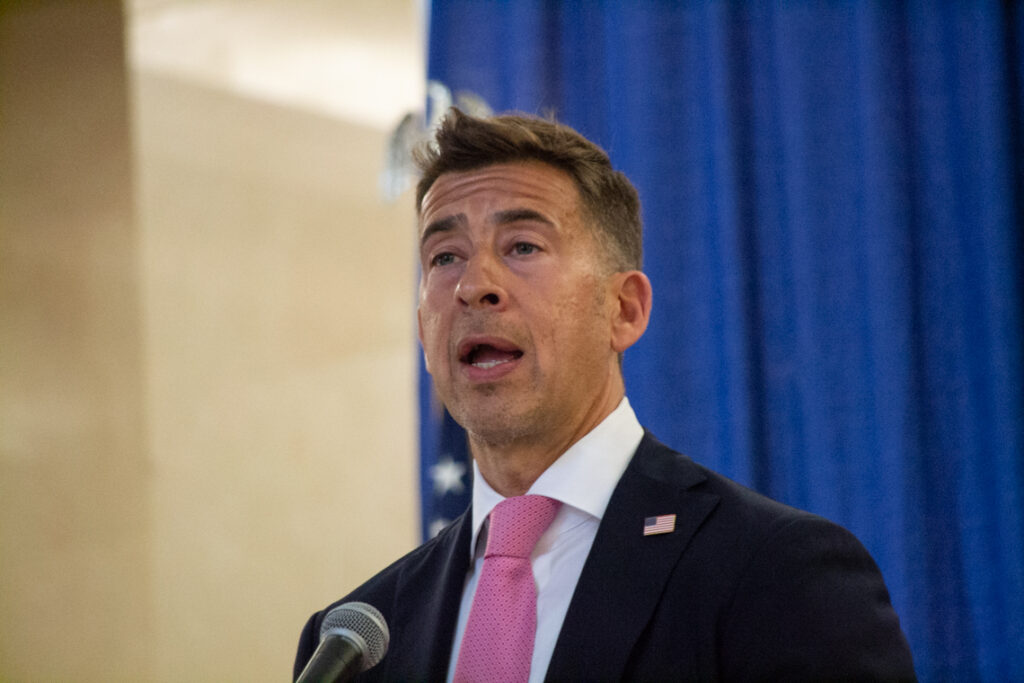
“There is concern that other law enforcement agencies are breaking the law, whether they’re doing it maliciously or unintentionally — that’s almost irrelevant,” Giannoulias said at a Thursday news conference.
Police in Mount Prospect, a village in suburban Cook County, set up a license plate reader system in such a way that allowed other law enforcement agencies to access data without providing written attestations. In addition to the Texas case, Giannoulias’ office said Mount Prospect’s system had been searched 262 times for immigration-related reasons between mid-January and the end of April.
The Texas case came to light after a report from the tech outlet 404 Media found the search impacted more than 83,000 license plate reader cameras in multiple states.
Giannoulias also noted that 46 out-of-state law enforcement agencies conducted searches of Illinois records that violated state law.
In response, Giannoulias’ office — which generally handles policy surrounding license plate readers and data sharing — announced it had instructed Flock Safety, a company that operates license plate readers in Mount Prospect, to shut off access to the system to out-of-state agencies. Giannoulias said he is also working with the Illinois attorney general to investigate further.
The secretary of state’s office said it will also establish an auditing system and additional safeguards.
“Automatic license plate readers are there to prevent violent crime, to prevent carjacking, to find stolen vehicles and to help when there’s a kidnapping, right?” Giannoulias said. “That’s what they are used for. When this data is being used to track people getting abortions or for ICE (Immigration and Customs Enforcement) to use to track down individuals based on immigration policy. That is a very slippery slope.”
Advocates for immigration rights and reproductive rights applauded the state’s move.
“Our statewide policies are only as strong as the counties, cities and municipalities that implement these policies across Illinois,” Illinois Coalition for Immigrant and Refugee Rights Executive Director Lawrence Benito said Thursday. “When we are not on the same page, the misalignment can harm those in Illinois who are merely seeking the dignity and respect not afforded to them elsewhere.”
Capitol News Illinois is a nonprofit, nonpartisan news service that distributes state government coverage to hundreds of news outlets statewide. It is funded primarily by the Illinois Press Foundation and the Robert R. McCormick Foundation.
The post Illinois license plate cameras used illegally by out-of-state police, Giannoulias says appeared first on Capitol News Illinois.
Executive Committee June 12 Meeting Briefs

Property Purchase Approved: The county authorized purchase of two parcels along Governor’s Highway in Monee for $545,000 to establish a roadway maintenance facility for the eastern end of the county. The properties will be purchased from Abel & Norma Rodriguez ($310,000) and the Estate of James Hampilos ($235,000). Detention Center Upgrades: The committee approved $316,000…
Read MoreDeveloper to Donate Land, Playground for New Park in Tinley Park
A new park is coming to a Tinley Park development thanks to a land and equipment donation from a local home builder. Frank Bradley, owner of Crana Homes, is donating land and purchasing playground equipment to construct a small park in the new Brookside Glen Villas development, located at 191st Street and 80th Avenue. Park…
Read More