Posts Tagged ‘JB Pritzker’
Amid uncertainty in Washington, Illinois lawmakers pass slimmed-down Medicaid package
Capitol News Illinois
SPRINGFIELD — Nearly every year, Illinois lawmakers pass a package of measures dealing with the state’s Medicaid program, the joint federal and state health care program that covers low-income individuals.
Known as the Medicaid omnibus bill, it sometimes includes bold components, like a 2021 initiative that made millions of dollars available to local communities to help them plan and design their own health care delivery systems. Other packages have focused on smaller changes like guaranteeing coverage for specific conditions and medications or adjusting reimbursement rates for different categories of health care providers.
And moThe Illinois General Assembly passed a scaled-back Medicaid package on the last day of the session Saturday.st years, the packages receive bipartisan support because they are negotiated, largely behind closed doors, by an unofficial, bipartisan Medicaid Working Group.
This year, however, lawmakers passed one of the narrowest packages in recent memory, due mainly to the Trump administration’s vows to make sweeping cuts in federal funding for the program while state lawmakers faced their own set of budget constraints.
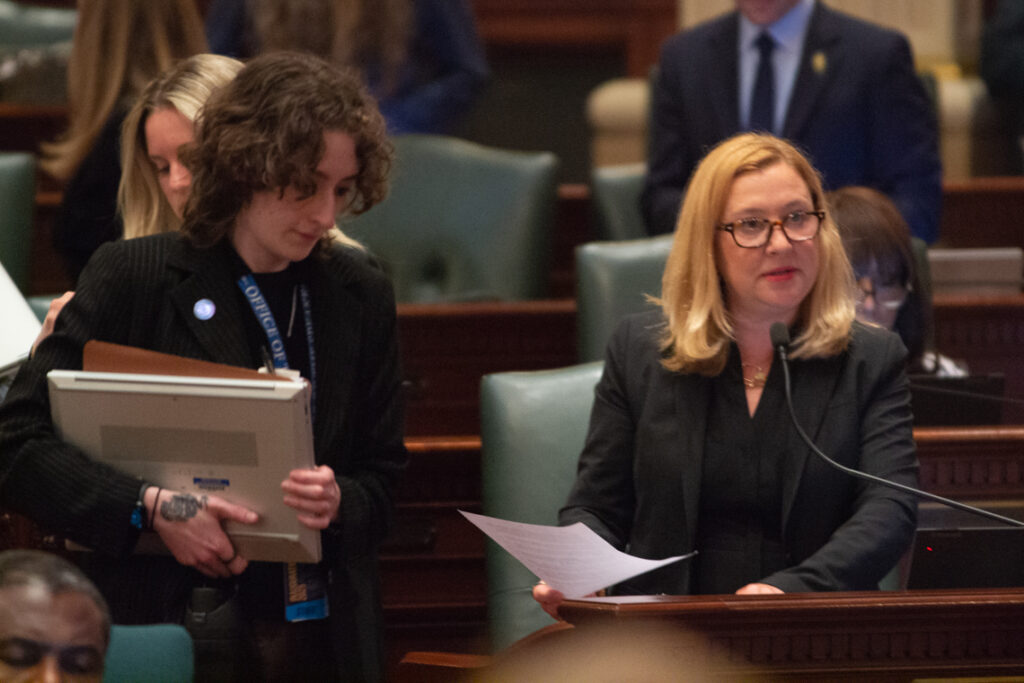
“There were many, many, very worthy program expansions, rate increases that we considered during this process that we were unable to include because of the uncertainty in Washington,” Rep. Anna Moeller, D-Elgin, the current chair of the Medicaid Working Group, said on the House floor Saturday.
The Illinois Medicaid program currently costs about $33.7 billion a year, according to the Department of Healthcare and Family Services. Of that, $20.9 billion, or about 62%, comes from the federal government while much of the state’s share comes from taxes levied on hospitals, nursing homes and managed care organizations – money the state uses to draw down federal matching funds.
The program covers nearly 3.5 million people in Illinois, or about a quarter of the state’s population. According to the nonpartisan health policy think tank KFF, the program pays for 40% of all child births in Illinois while covering 69% of all nursing home residents.
This year’s Medicaid omnibus bill, a 231-page amendment inserted into Senate Bill 2437, contains items that could be hugely beneficial to many Medicaid enrollees, but which don’t carry large price tags. In fact, the entire package is estimated to cost just under $1 million.
One of this year’s additions would make it easier for family members of medically fragile children who qualify for in-home nursing care to receive training to become certified family health aides, a designation that would enable them to administer medications, help with feeding and perform many of the same tasks as a certified nursing assistant.
Another provision would require all hospitals with licensed obstetric beds and birthing centers to adopt written policies that permit patients to have an Illinois Medicaid certified doula of their choosing to accompany them and provide support before, during and after labor and delivery.
Although those provisions enjoyed bipartisan support, another provision that extends coverage to certain categories of noncitizens drew Republican opposition Saturday, resulting in a partisan roll call vote.
The program covers noncitizens who meet the income requirements for Medicaid and have pending applications for asylum in the United States or for special visas as victims of trafficking, torture or other serious crimes. Those individuals can receive coverage for up to 24 months, provided they continue to meet the eligibility requirements.
Moeller said the language was not a new extension of health care benefits to noncitizens, but instead a “technical and administrative fix” to an existing program that had been requested by the Department of Healthcare and Family Services.
But for Republicans, the programs sounded too similar to the more controversial programs, Health Benefits for Immigrant Seniors and Health Benefits for Immigrant Adults, that extend health care to a large category of people who are not U.S. citizens, including some who are in the country illegally.
“For us on this side of the aisle, that is the poison pill,” said Rep. Noreen Hammond, R-Macomb, the deputy House minority leader. “So in spite of the fact that we have article after article in here, that is very worthy of a yes vote, I would urge a no vote.”
At Gov. JB Pritzker’s request, the budget bill lawmakers passed Saturday night cancels the program for immigrant adults, which had covered about 31,000 noncitizens age 42-64. But it provides $110 million over the next year, all in state funds, for the immigrant seniors program, which covers about 8,900 noncitizens age 65 and over.
The Medicaid bill passed the House late Saturday night, 76-39. It then passed the Senate shortly after midnight, 36-19.
It next goes to Pritzker’s desk for his consideration.
Capitol News Illinois is a nonprofit, nonpartisan news service that distributes state government coverage to hundreds of news outlets statewide. It is funded primarily by the Illinois Press Foundation and the Robert R. McCormick Foundation.
The post Amid uncertainty in Washington, Illinois lawmakers pass slimmed-down Medicaid package appeared first on Capitol News Illinois.
New taxes on sports bets, nicotine products as Democrats pass $55.2B budget
Capitol News Illinois
SPRINGFIELD – Giving almost no time for public review, Illinois Democrats pushed through a $55.2 billion budget for next fiscal year late Saturday, bolstering coffers with new taxes on sports bets, nicotine products and businesses.
The $55.2 billion spending plan is supported by $55.3 billion of revenue, including just over $1 billion in new taxes and revenue changes.
The four bills making up the budget and capital spending plan, were part of a flurry of thousands of pages of legislation that went from introduction to passage in the final 48 hours of the legislative session.
The budget marked a roughly 3.9% spending increase from the current year, while Republicans criticized it for containing few cuts. It raises about $500 million more in new revenue than what Gov. JB Pritzker proposed in February to make up for declining base revenues.
The minority party also aired frustration with supermajority Democrats for providing next to no time for public review of the massive spending plan and other major bills.
“We’re rushing this process like we always do. ‘Let’s hide this stuff. Let’s hide it so that the public doesn’t see it until it’s too late,’” Rep. John Cabello, R-Machesney Park, said.
Democrats said it was the best budget they could manage in a difficult year. To address potential uncertainties stemming from federal policy changes, they gave the governor authority over a new $100 million “emergency” fund. And they frequently lobbed criticisms at President Donald Trump and Republicans in Congress.
“I am very pleased to be able to present a balanced budget crafted to be fiscally and socially responsible, because we see the decisions made in Washington right now are neither,” House Majority Leader Robyn Gabel, D-Evanston said. “Erratic leadership in Washington has affected our economic outlook, our revenue projections, and even threatened federal funding for our most crucial services.”
The GOP also took issue with the tax increases, although the measure did not raise or create new sales, income or service taxes.
Instead, the measures expand state taxes on foreign and out-of-state income for businesses, raise tax rates on tobacco, vapes and sports gambling, and sweep fund balances from several lesser-known and utilized state funds.
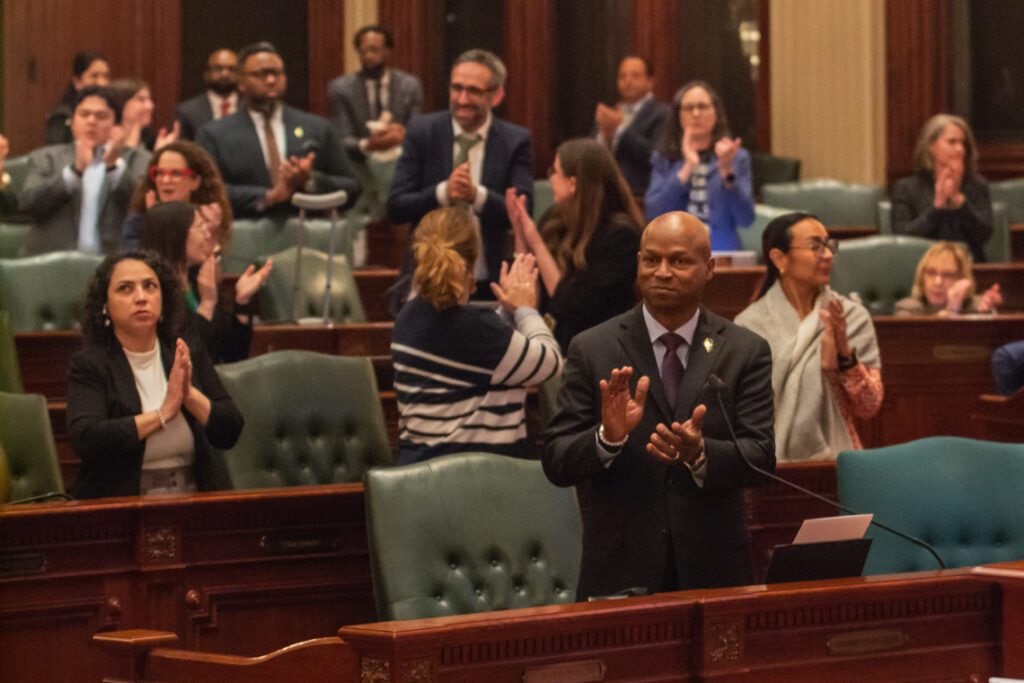
The spending measure, Senate Bill 2510, passed the House 75-41 just before 10 p.m. The Senate followed around 11:30 p.m. with a 34-23 vote. The revenue and tax changes, House Bill 2755, and the budget implementation bill, House Bill 1075, both passed with relative ease before the constitution’s midnight deadline and only Democratic votes as well. Gov. JB Pritzker issued a statement saying he would sign it.
Another spate of tax increases included in a transit governance overhaul bill surfaced late but sputtered. The failed measure would have added a $1.50 fee on food and package deliveries and taxed electric vehicle charging statewide among other changes. Talks on that bill could resume later this year.
New taxes on vaping, gaming, deliveries
The revenue bill creates a tax of 25 cents per wager for a sports betting licensee’s first 20,000 wagers accepted, and 50 cents per wager after that.
Consumers will also see new taxes on tobacco products. The tax rate will rise to 45% from 36%. Vape products and nicotine pouches would also now be included under the tax.
The revenue plan amends state law to tax sales from all businesses that transact in the state, rather than only businesses with a physical presence in Illinois. The plan also eliminates a “safe harbor” exemption for businesses that move money outside the state.
Businesses that move profits to other countries would also be subject to the state’s corporate income tax. The federal government currently taxes half of income moved offshore and Illinois would tax the other half under the revenue plan.
Businesses outside Illinois that sell $100,000 or more to people in the state must also collect Illinois sales taxes even if the business doesn’t have a physical location in Illinois. This would apply to businesses like Amazon.
“I will not support this betrayal of hard-working Illinoisans,” Sen. Don DeWitte, R-St. Charles, said. “And if you care about the people who sent you here, if you truly represent them, you’ll vote no too. Enough is enough. It’s time for this body to stand with taxpayers, not stand up against them.”
Another source of new revenue is a delinquent tax payment incentive program designed to help the state recuperate overdue tax payments. It will generate $228 million, Rep. Will Guzzardi, D-Chicago, said.
The state would also pause the final transfer of motor fuel sales tax revenue to the road fund in order to free up $171 million, according to the governor’s office’s estimate.
A separate bill designed to lower prescription drug prices calls for levying a fee on pharmacy benefit managers based on the number of patients they insure. Money from that fee would go into a fund for the Department of Commerce and Economic Opportunity to award up to $25 million a year in grants to independent pharmacies and pharmacies located in rural counties. The remaining money would go to the state’s general revenue fund.
The measure also extends the state’s Hotel Operators’ Occupation Tax to short-term rentals like Airbnb and Vrbo.
Immigrant health cuts
A controversial program that provides health insurance to more than 30,000 noncitizens between ages 42 and 64 will be cut in FY26. The program’s elimination saves the state $330 million, but a $110 million program for seniors will remain in place.
Together, the two programs have cost the state at least $1.6 billion, according to an audit released in February, far exceeding budgeted costs for the program.
“We had to make some tough decisions here. That program grew at greater rates, financially, than we thought it would, and we had to make some hard decisions,” Gabel said.
Federally Qualified Health Centers are set to receive $40 million in the budget. The centers provide health services to low-income and uninsured people. Democrats touted that increase to provide care for immigrants who would have qualified for the health care program.
Illinois still risks losing some Medicaid funding under a proposal in Congress that threatens to slash reimbursements for states that provide health insurance to people illegally in the United States. But Gabel noted it’s possible those reductions won’t take place until 2027.
The budget also increases funding for safety-net hospitals with federal Medicaid funding cuts possible.
Education spending
The state’s evidence-based funding model for K-12 schools calls for $350 million in additional funding each year, with a portion of that going to a property tax relief fund and the rest directly to schools. The proposed budget fully funds the K-12 education portion at $307 million but does not add $43 million in property tax relief funds, according to Democratic leaders.
Funding for the Illinois Community College Board would also decrease by $24 million, mostly because lawmakers reduced spending on a workforce development grant that Democrat leaders said was not being fully utilized.
Funding for state universities would only increase by 1%. Pritzker proposed a 3% increase for higher education even as most other areas of his budget would’ve increased by 1%. Senate Democrats’ budget leader Sen. Elgie Sims, D-Chicago, said the budget allows for an additional 2% increase in FY26 if the federal government eliminates substantial funding.
Pensions
Despite more than a year of discussions, Illinois lawmakers did not tackle pension reform this spring. Illinois’ Tier 2 pension system is likely out of compliance with Social Security’s “safe harbor” law that requires pension benefits to be at least equal to Social Security.
Part of the budget package created a new Tier 2 reserve fund that can be accessed if there are violations of the “safe harbor” law. Lawmakers appropriated $75 million for the fund this year, in line with Pritzker’s proposal.
‘Emergency’ fund, raises, more
Notably not in this year’s budget is an increase to the “rainy day” fund. Pritzker has taken pride in the fund’s increases in recent years, as it’s grown to a balance of $2.3 billion, up from less than $60,000 when Pritzker took office. The FY26 budget would suspend the monthly transfer for one year, freeing up $45 million for general fund use.
The budget package also establishes a new $100 million fund that the governor can tap into “in the event of unanticipated delays in or failures of revenues.” The measure, an apparent nod to the uncertainty of federal funding amid ongoing congressional budget negotiations, will come from money swept from other funds.
“That will allow us to respond to actions by the federal government and challenges that present themselves and costs that have been diverted from the federal government to the state government,” Sims said in a committee hearing.
The attorney general’s office would get $116 million from the general fund. Attorney General Kwame Raoul asked lawmakers to boost funding for his office as he engages in a growing number of lawsuits against the Trump administration. Raoul was hoping to receive $120 million in funding.
Direct service providers are in line for an 80-cent per hour wage increase, but Republicans said calling it a funding increase is “sleight of hand,” because the measure would also reduce work hours for DSPs by the hundreds of thousands. That makes the increase negligible, Sen. Chapin Rose, R-Mahomet, said in committee.
“It’s not a great budget, but it is a good budget and it is the budget we need for this very difficult moment,” Rep. Lindsey LaPointe, D-Chicago, said.
Lawmakers will see their salaries rise as part of the budget, going to a $98,304 base salary from roughly $92,000. That’s an annualized rate of increase that is set by law.
“You raised our pay, you gave yourselves hundreds of millions of dollars of our taxpayers funds to spend on your pet projects,” Rep. Amy Elik, R-Godfrey, said. “So I simply don’t believe you anymore that you ever intended to be fiscally careful.”
No Bears stadium funding
Lawmakers did not appropriate funding for the Chicago Bears to build a new stadium. But NASCAR would be the recipient of a $5 million grant ahead of the sport’s third downtown Chicago race in July, and the PGA Tour would receive a $1 million grant as part of hosting the 2026 President’s Cup in DuPage County. Those were two economic development measures criticized by Republicans during the Senate committee hearing.
The budget also contains $200 million to prepare unused state properties to be repurposed for development, Sims said. Lawmakers removed another $300 million that Pritzker had sought in spending aimed at offloading surplus property.
Gabel said the state’s employee management department has negotiated more than $100 million in health care cost savings as well.
Any remaining federal pandemic relief funding would also be sent to recipients that have not received payments in previous years before the funding expires in 2026.
Jade Aubrey contributed.
Capitol News Illinois is a nonprofit, nonpartisan news service that distributes state government coverage to hundreds of news outlets statewide. It is funded primarily by the Illinois Press Foundation and the Robert R. McCormick Foundation.
The post New taxes on sports bets, nicotine products as Democrats pass $55.2B budget appeared first on Capitol News Illinois.
Lawmakers unveil $55B spending plan with just 1 day left to pass it
Capitol News Illinois
SPRINGFIELD — Illinois Democrats introduced what a leading budgeteer described as a $55 billion budget Friday evening ahead of a Saturday deadline to pass the fiscal year 2026 spending plan.
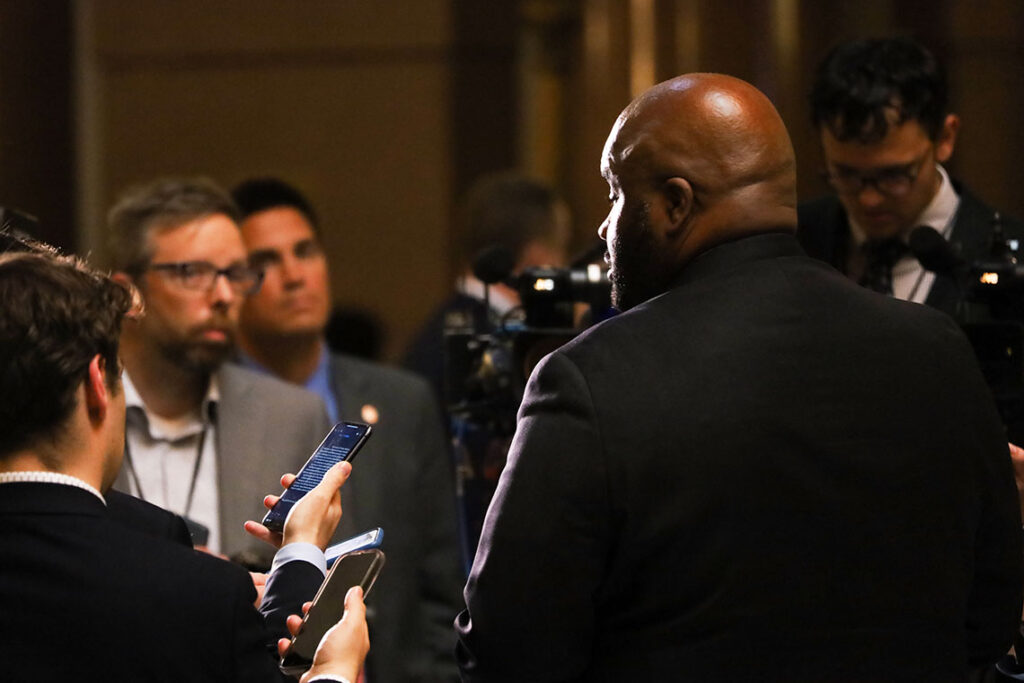
The 3,363-page spending proposal was unveiled after 6 p.m. At the time the Senate’s lead budget negotiator, Sen. Elgie Sims, D-Chicago, briefed reporters on the plan; an exact proposal for raising about $1 billion in revenue to pay for it had not been made publicly available.
But Sims said lawmakers are not using broad tax hikes to balance the budget, although the plan does call for specific tax increases in certain areas. Sims said the proposal includes new taxes on gambling as well as tobacco and vape products. He also hinted that some businesses will pay more under the plan – though Illinois’ constitution mandates that the state corporate income tax remain a flat rate.
“We’re trying to make sure that individuals pay their fair share, and corporations, who are the most prosperous are most profitable, also pay their fair share,” Sims said.
Later, in a House hearing on the spending plan, Democratic Rep. Robyn Gabel, D-Evanston, said it relies upon $55.4 billion in revenue with $55.2 billion in spending. But at several points the chamber’s budget leaders declined to talk about revenue, noting that proposal will come before the committee later, likely on Saturday.
The plan is roughly in line with what Gov. JB Pritzker proposed in his February budget address as budget talks in Congress have injected uncertainty in state finances.
“This budget recognizes that there are significant challenges that we have, that we will face, and it makes sure that the chaos that is coming out of Washington, we’re prepared for it,” Sims told reporters Friday night. “We’re not running away from our responsibility. We’re running towards it.”
A health care program that provides benefits to undocumented immigrants in Illinois between ages 42 and 64 also appears to be eliminated. Pritzker proposed eliminating the program to save the state $330 million.
“He did not include the HBIA (Health Benefits for Immigrant Adults) program in the budget,” Sims said. “But again, that’s in recognition of the challenges that we’re seeing coming out of Washington and the devastating effects that those proposals are having on our state and states across the country.”
Pritzker proposed a $55.2 billion spending plan in February, but revenue forecasts have declined since then. The latest estimate in early May from the governor’s office pegged FY26 revenue at $54.9 billion while the General Assembly’s independent Commission on Government Forecasting and Accountability projected revenue would come in at $54.5 billion – $1 billion below Pritzker’s February revenue estimate.
Expected declines in federal funding and a diminishing economic outlook have caused the downward revisions.
But the yet-to-be-filed revenue plan would make up a little over $1 billion in revenue, according to Sims.
Read more: Pritzker calls $55.2 billion budget ‘responsible and balanced’ | Governor’s office cuts revenue projection by $500 million
Another source of new revenue in the budget proposal is a delinquent tax payment incentive program. The program is designed to help the state recuperate overdue tax payments. The program was proposed by Pritzker and is estimated to generate about $198 million in revenue.
With Medicaid funding cuts possible from Congress, Sims said the budget makes “significant” increases for the state’s hospital systems, in particular safety-net hospitals. He said the plan also builds in wage increases for direct service providers.
The state’s evidence-based funding model for K-12 schools calls for $350 million in additional funding each year, with a portion of that going to a property tax relief fund and the rest directly to schools. The proposed budget fully funds the K-12 education portion at $307 million but does not add $43 million in property tax relief funds, according to House Democratic leaders.
Republicans prodding House Democratic budget leaders for details during a late-night hearing said pausing the grant fails to deliver benefits to property owners.
“The taxpayers are begging and pleading for tax relief and then we put a program on pause?” Rep. John Cabello, R-Machesney Park, said. “Maybe we should look at all the different programs going to Democratic districts and stop those for a little bit instead of telling the taxpayers that there’s not going to be property tax relief.”
Republicans pressed on why House Democrats are set to get $1.5 million of spending for their districts while Senate Democrats are expecting $3 million of spending on districting projects – although Democrats wouldn’t confirm or deny those numbers.
Lawmakers will also see their salaries rise as part of the budget, going to a $98,304 base salary from roughly $92,000. That’s an annualized rate of increase that is set by law.
Editor’s note: This story was updated with more information on the budget from an evening House committee hearing.
Capitol News Illinois is a nonprofit, nonpartisan news service that distributes state government coverage to hundreds of news outlets statewide. It is funded primarily by the Illinois Press Foundation and the Robert R. McCormick Foundation.
The post Lawmakers unveil $55B spending plan with just 1 day left to pass it appeared first on Capitol News Illinois.
Illinois criminal justice advocates tout ‘Clean Slate’ legislation as ‘economic boon’
Capitol News Illinois
SPRINGFIELD — Criminal justice reform advocates say legislation to seal criminal records for certain nonviolent crimes, which passed Friday in the House, would unlock economic opportunity for thousands of Illinoisans.
The so-called Clean Slate Act has failed twice before, but activists see renewed fiscal messaging as the key to reinvigorating the campaign. This time, the bill’s sponsor points to a “diverse coalition of stakeholders” and backing from business groups as signs Illinois could become the 13th state to enact similar legislation.
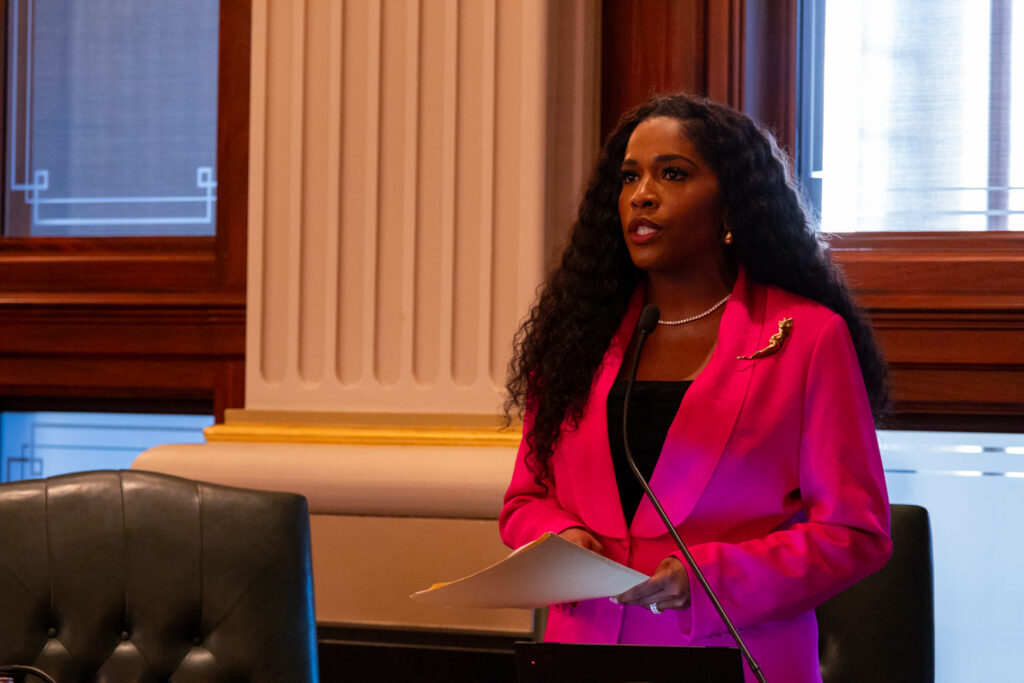
“This is something I’ve worked on for six long years, and now we have law enforcement and the business community — folks like the Illinois Retail Merchants Association, the Illinois Manufacturers Association — all on board,” Rep. Jehan Gordon-Booth, D-Peoria, said in an interview. “Not as a neutral party, but they are proponents. They want to see this bill passed.”
Like earlier proposals, Senate Bill 1784 would require law enforcement agencies to automatically seal records for nonviolent criminal convictions twice a year — Jan. 1 and July 1. The records would no longer be public, although law enforcement and state’s attorneys would retain access.
Gordon-Booth has sponsored Clean Slate legislation twice before — once in 2021 and again in 2023 — but neither bill progressed past committee.
Just a few days before the 2025 legislative session concludes, she filed it again. Within two days, it passed the House mostly along partisan lines, and is headed for debate on the Senate floor.
The session ends at midnight Saturday, although the bill could still pass after that deadline.
People convicted of certain violent offenses — including sex crimes against minors, DUI, reckless driving and violent offenses that require sex offender registration — would be ineligible to have their records sealed.
“I want to make this very, very clear: Serious criminal records are not eligible for automated sealing,” Gordon-Booth said during floor debate.
Gordon-Booth argued that conviction records trap formerly incarcerated individuals in a state of perpetual punishment, eclipsing access to employment, housing and educational opportunities. She said Clean Slate would remove these barriers, helping system-impacted people reintegrate into society instead of recidivating.
Paul Rothschild, managing director of operations for the Illinois Coalition to End Permanent Punishment — a group that advocates for the rights of people with criminal records — said he agrees. He said the justice system fails to follow through on its own promise: Once someone has served their time, they are entitled to a second chance.
“We believe that people should be accountable for the crimes that they commit. But we also believe there is an implied covenant that when they finish, they’re supposed to be returned to the world made whole, and that covenant is not being kept by society. They’re being forever subjugated in that lower caste, that lower class,” Rothschild said.
More than 3 million Illinoisans have arrest or conviction records, and an estimated 921,000 people are eligible for “sealing relief” — but only about 10% actually petition to have their records cleared, according to statistics from Live Free Illinois, a grassroots organization aimed at reforming the state criminal justice system and part of the Clean Slate Illinois steering committee, which coordinates the campaign’s messaging and advocacy efforts.
The bill would automate the process for individuals with nonviolent convictions to have their records sealed, once they have served their sentences, completed probation, and remained crime-free.
Many eligible individuals are deterred by steep fines, complex paperwork and long waiting periods, Gordon-Booth said. The “burdensome” process has contributed to massive court backlogs, according to Clean Slate Illinois.
“It’s going to automate the process, so this way we don’t have to go through that whole trying to get the paperwork, trying to go through all the rigmarole,” said Chauncy Stockdale, who was formerly incarcerated and is now a member of the Live Free Illinois Fellowship, a reentry program that supports returning citizens.
The measure passed the House 81-28, with five Republicans joining Democrats in support of the measure. No Democrats voted against the bill.
During debate on the House floor, Minority Floor Leader Rep. Patrick Windhorst, R-Metropolis, voiced concerns about the tentative $18 million price tag, and whether the state is capable of fully funding the policy in the years ahead, leaving counties to cover the cost.
“If this isn’t funded, we’re either going to be sending a large unfunded mandate to our counties, or we’re making a promise to 2.1 million people that will not be fulfilled without any funding,” he said.
Gordon-Booth detailed a three year “implementation ramp,” which would give the state time to identify funding sources for the local circuit clerks. She also said the Illinois State Police would absorb the initial costs and emphasized the state’s commitment to supporting circuit clerks in the rollout phase.
“It is our full intention to provide clerks with all that they need to implement this,” she said. “We are not going to send an unfunded mandate to our local governments.”
‘Workforce and economic policy’
On April 10, nearly 300 members, supporters and advocates from Live Free Illinois chapters gathered in front of the Abraham Lincoln monument in Springfield for Advocacy Day, calling on lawmakers to introduce the Clean Slate Act.
Live Free Illinois — a faith-based nonprofit focused on ending gun violence and mass incarceration — organizes Black congregations to push for systemic change. The organization is involved in the broad-based Clean Slate steering committee, which also includes the Fully Free Campaign, the Illinois Coalition to End Permanent Punishments, and Impact for Equity.
The day before, Muslim leaders also advocated for Clean Slate legislation at Illinois Muslim Action Day.
Beyond criminal justice reform, advocates pushed a new messaging angle this year to usher the legislation across the finish line: Clean Slate could boost Illinois’ economy.
As of April, Illinois has one of the highest unemployment rates in the country, at 4.8% — above the national average of 4.2%, according to the data from the U.S. Bureau of Labor Statistics.
Jerika Richardson, senior vice president for equitable justice and strategic initiatives at the National Urban League, said the act would open doors for thousands of people who have been barred from work because of background checks.
“There are so many employers and businesses across this country who are struggling to find the workers that they need, and part of the reason is because these records are barriers,” Richardson said. “If Illinois passes the Clean Slate Act, you won’t have to worry about businesses going to another state or leaving the country.”
An amendment to the Illinois Human Rights Act, signed by Gov. JB Pritzker in 2021, expanded legal protections for state workers by prohibiting discrimination based on criminal convictions, in addition to arrest records. Yet many say they continue to face employment hurdles despite the law.
People with conviction histories earn an average of 25% less than those with clean records — a gap the National Urban League says costs the state billions of dollars in lost wages. According to a news release from the National Urban League, the Clean Slate Act could generate more than $4.7 billion in lost wages for Illinois, easing economic disparities and addressing labor shortages.
Gordon-Booth echoed Richardson’s point, adding that her office frequently hears from constituents who are missing out on life-changing chances.
“I get calls from people saying, ‘I had an opportunity to get my dream job, and it fell through because of something that I did when I was 18 or 19.’ And we’re talking about folks that are in their 30s,” Gordon-Booth said. “They have not gone through the process of hiring a lawyer, going through the court-mandated process, and folks are losing out.”
Reilly Cook is a graduate student in journalism with Northwestern University’s Medill School of Journalism, Media, Integrated Marketing Communications, and a fellow in its Medill Illinois News Bureau working in partnership with Capitol News Illinois.
Capitol News Illinois is a nonprofit, nonpartisan news service that distributes state government coverage to hundreds of news outlets statewide. It is funded primarily by the Illinois Press Foundation and the Robert R. McCormick Foundation.
The post Illinois criminal justice advocates tout ‘Clean Slate’ legislation as ‘economic boon’ appeared first on Capitol News Illinois.
Immigrant health care programs boosted hospital bottom lines, study suggests
Capitol News Illinois
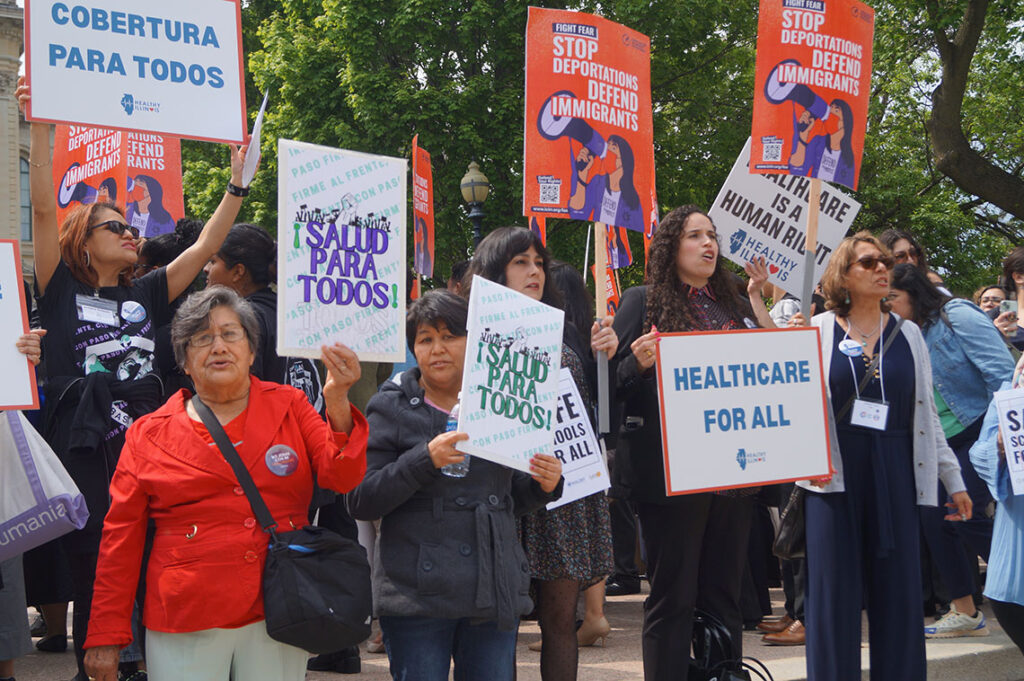
SPRINGFIELD – Two state-run health care programs that extend Medicaid-like coverage to noncitizens may have provided significant financial benefits for Illinois hospitals.
That’s according to preliminary results of an ongoing study at the University of Chicago that suggests the programs corresponded, at least in part, to a 15% reduction in the amount of bad debt Illinois hospitals incurred each year since the programs have been in full effect.
“The number that we find is a 15% reduction,” Aresha Martinez-Cardoso, an assistant professor and researcher at U of C’s Embodying Racism Lab, where the study is being conducted, said in an interview. “We think that that might be a high estimate, given what we know about perhaps other things that are going on that we can’t entirely rule out, but we do think that part of that reduction is associated with the policy.”
That translates to an average of $1.5 million per year, per hospital, according to the report, although the exact amount would vary greatly depending on a hospital’s size and the volume of patients it treats who are covered by the programs.
“Our early findings show that this landmark policy isn’t just about access — it also serves as a strategic investment in our hospitals and the health of entire communities,” Martinez-Cardoso said.
Those findings come as Gov. JB Pritzker’s administration is preparing to shut down the larger of the two programs as part of his budget proposal for the upcoming fiscal year. The Health Benefits for Immigrant Adults, or HBIA, currently covers more than 31,000 eligible noncitizens aged 42-64, at a cost of about $21 million per month, according to the most recent data from the Department of Healthcare and Family Services.
The other program, Health Benefits for Immigrant Seniors, covers eligible noncitizens aged 65 and over. That program currently covers about 8,900 individuals at a cost of about $10 million per month. Pritzker has not proposed eliminating it.
The programs were launched in 2020 and 2021, during the COVID-19 pandemic, as a means of extending health coverage to individuals who did not qualify for other publicly funded health care programs solely due to their immigration status. Those include individuals who are in the United States without legal authorization as well as certain legal permanent residents who have not yet been in the country long enough to qualify for Medicaid.
The programs have been controversial since they were first proposed. Republicans have been especially critical, saying the programs serve as an incentive for immigrants to cross into the United States illegally and settle in Illinois to receive taxpayer-funded health benefits.
With the state facing slow revenue growth and a projected budget deficit in the coming year, Pritzker surprised many of his supporters in February when he proposed closing the HBIA program.
Eliminating the program for middle-aged adults is projected to save the general revenue fund about $330 million, according to the governor’s office. Pritzker told reporters after his address in February he expects the federal government will stop reimbursing states for costs associated with programs providing services to noncitizens.
A week after the governor’s budget address, the Illinois Auditor General released a report that said enrollment in both programs and their eventual costs had far exceeded their original projection. The cost for the two programs, the report said, exceeded $1.6 billion over the course of four fiscal years.
Read more: Audit finds Illinois’ noncitizen health care programs far outstripped original cost estimates
Unlike Medicaid, which is jointly funded with state and federal funds, the health programs for noncitizens are funded almost entirely with state dollars.
The study looked at publicly available hospital financial reports to analyze changes in the amount of uncompensated care they provided from 2017 to 2023. It also looked at similar data from hospitals in Indiana and Wisconsin, neighboring states that do not provide health benefits for noncitizens.
“We tried to flip it a few different ways,” Martinez-Cardoso said in an interview. “There could be a lot of other things happening. But when we test a bunch of different models … we kind of see a consistent pattern that the policy timing is associated with bad debt.”
She said the results so far are only preliminary and that analysis of the data is continuing. But she said the analysis so far shows a strong link between the enactment of the programs and an overall reduction in uncollectable debt.
Capitol News Illinois is a nonprofit, nonpartisan news service that distributes state government coverage to hundreds of news outlets statewide. It is funded primarily by the Illinois Press Foundation and the Robert R. McCormick Foundation.
The post Immigrant health care programs boosted hospital bottom lines, study suggests appeared first on Capitol News Illinois.
Pritzker signs order to protect personal autism data in response to federal action
Capitol News Illinois
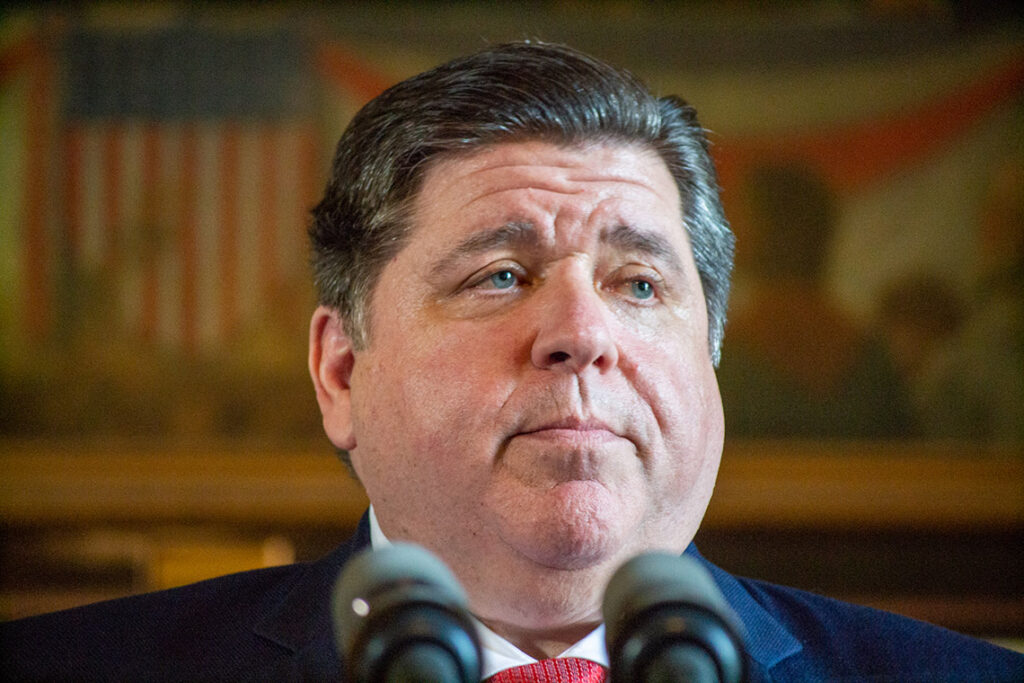
SPRINGFIELD — Gov. JB Pritzker issued an executive order Wednesday that bars state agencies from collecting and disclosing data about autism to the federal government unless it’s medically or legally necessary.
The order was in response to a move by the U.S. Department of Health and Human Services earlier Wednesday to research and create a national autism database.
In a statement, Pritzker called the project a “threat” to the rights of disabled individuals. The order stated that the project raises privacy concerns about the collection and use of data, as well as potential “discriminatory profiling or surveillance of individuals with disabilities.”
“Every Illinoisan deserves dignity, privacy, and the freedom to live without fear of surveillance or discrimination,” Pritzker said. “As Donald Trump and DOGE threaten these freedoms, we are taking steps to ensure that our state remains a leader in protecting the rights of individuals with autism and all people with disabilities.”
Executive Order 2025-02 also requires state agencies to follow strict privacy and data protection requirements when they do disclose such data, including making personal information anonymous where it’s practicable and only disclosing the minimum amount of personal information that’s legally necessary.
The move was prompted by an HHS announcement of a research project on Wednesday. The project will allow the National Institutes of Health and the Centers for Medicare and Medicaid Services to have access to data and medical records of Medicare and Medicaid enrollees diagnosed with autism in an effort to research autism, Newsweek reported.
It also directly responded to remarks made last month by U.S. Department of Health and Human Services Secretary Robert F. Kennedy Jr., who called autism an “epidemic” and said that President Trump has tasked him with finding a cause for the “epidemic.”
“Autism is a neurological difference—not a disease or an epidemic,” Pritzker’s order read. “People with disabilities, including individuals with autism, are too often stigmatized and underestimated, and public policy should never diminish the diverse strengths and potential of this community.”
This is not the first time Kennedy has touched on his beliefs about autism. During an interview in 2023, he confirmed that he believes that vaccines cause autism, a theory the U.S. Centers for Disease Control and Prevention and a wide body of research have long since debunked.
Read more: How RFK Jr.’s health proposals could affect Illinois
Executive orders aren’t often enacted by the Illinois governor, as last year he only signed three. This is the second order he has signed this year and is his latest action against the Trump Administration since his trade mission to Mexico this spring.
Read more: Pritzker hopes trade mission to Mexico sparks new investment despite tariffs
Capitol News Illinois is a nonprofit, nonpartisan news service that distributes state government coverage to hundreds of news outlets statewide. It is funded primarily by the Illinois Press Foundation and the Robert R. McCormick Foundation.
The post Pritzker signs order to protect personal autism data in response to federal action appeared first on Capitol News Illinois.