Posts Tagged ‘JB Pritzker’
Challenges persist for women, minorities breaking into Illinois’ skilled trades

Capitol News Illinois
PEORIA — For 60 years, SkillsUSA Illinois has held workforce development competitions for young people entering the trades. For 60 years, there has never been an all-female team competing in the architecture and construction team competition.
Until now, that is.
This April, students competed at the Peoria Civic Center in a bid to showcase their trades work skills, from barbering and cosmetics to house building and fixing cars. First-place winners in the Illinois competition earned eligibility to travel to Atlanta to compete in the national SkillsUSA Championships this week.
Amid the fanfare and cheer, however, the state competition highlighted some of the persistent challenges facing the Illinois workforce. As employers continue searching for skilled tradespeople to combat national worker shortages, entry into fields like construction remains strikingly low for women and people of color, particularly in higher paying and leadership positions.
SkillsUSA Illinois’ first all-girls team — Aubrey Levin, Kayhl Miles, Catelin Wesley and team captain Amyla Walls — did not know they were breaking boundaries until after they had finished their competition this spring in Peoria.
The team from the Bloomington Area Career Center reacted to the news with shocked laughter, followed by near immediate dread as they anticipated the heightened expectations and scrutiny of their work this title would bring.
“They’re going to be like, ‘You’re the first all-female team,’ and I’m going to be like, ‘Please don’t look at my electrical,’” Levin said, half laughing.
Although it may seem late for the existence of the first all-female team, it is consistent with the construction industry demographic trends in Illinois. Over the past 10 years, women have held fewer than one in 10 construction jobs. Prior to 2021, fewer than 5% of new construction apprentices in Illinois were women, according to data from the U.S. Department of Labor.
View Chart in New Tab
The problem is a national one. Although 2020 saw the largest number of women working in trades, only one in 20 U.S. construction workers was a woman, according to a report from the Institute for Women’s Policy Research.
Male construction workers were also better compensated than female construction workers in 2024, even for entry-level apprenticeship positions. New male apprentices earned an average wage of $23.76 per hour, 36 cents more than the average pay for their female counterparts.
The discrepancy grew for those who completed their apprenticeships, with an average hourly gender pay gap of $1.41.
Participation rates for workers of color also remained low, with white apprentices accounting for over three quarters of new registered apprenticeships in 2024.
View Chart in New Tab
Apprentices of color earn less on average than white apprentices, both at entry and completion. In 2024, newly registered Black apprentices earned on average 36 cents less in hourly wages than their white counterparts. For those who completed apprenticeships, the gap grew to almost $4 per hour.
As limited as the progress is, much of it has come in the last few years, according to Jayne Vellinga, executive director of the non-profit Chicago Women in Trades.
Vellinga attributes the momentum to “a perfect storm” of an expected construction boom and worker shortage, infrastructure investment and federal leadership on diversity initiatives.
“It did get people to think sort of outside the box in terms of how they were going to recruit a sufficient workforce to meet a large number of projects projected to come to the area and the retirement of experienced workers,” Vellinga said.
Since 2021, the state has invested heavily in the Illinois Works pre-apprenticeship program, which seeks to create a “qualified talent pipeline of diverse candidates in the construction and building trades.” Gov. JB Pritzker’s office announced an additional $19 million funding allocation to the program in April.
However, Vellinga said she is seeing a rollback in progress, pointing to President Donald Trump’s decision to rescind an executive order that had been in place since enacted by President Lyndon B. Johnson in 1965, which prohibited federal contractors from engaging in employment discrimination on the basis of race, color, religion, sex, sexual orientation, gender identity or national origin.
“I don’t know how it’s going to impact opportunities for women, but there is definitely a change in narrative also at the federal level, from ‘we need diversity on publicly funded projects’ to ‘don’t engage in diversity, equity and inclusion activities,’” Vellinga said.
In addition to outright hiring discrimination, Vellinga said many women’s careers are limited by gender stereotypes and harassment on job sites.
“Some women are doing well and are having an opportunity to move up, and other women do face discrimination, are unable to cobble together enough work during the year to make it a viable career, or perhaps the works site is so hostile that they walk away from it,” Vellinga said.
The hostility is something that the team of high schoolers was already familiar with.
House built by the all-girls team during the SkillsUSA Illinois Championships in April. (Medill Illinois News Bureau photo by Maggie Dougherty)
As SkillsUSA Illinois’ first all-girls team spent two days using their carpentry, roofing, electrical and plumbing skills to build a small house, they were subjected to disparaging, gender-based comments, which the team diplomatically referred to as “construction language.”
It is not something unique to this competition, they said. Levin recalled asking women in the construction unions about their advice on entering tradework. They told her she would need to have thick skin.
“Even now?” Levin asked. Especially now, they replied.
The team described their male peers making jokes with double meanings, and then getting irritated if the girls did not laugh.
“You’re like a bad person for not laughing at a really bad joke,” Miles said.
One such joke came at Levin’s expense, while she was standing on a ladder and trying not to cry from pain after being hit in the back by something on site. A team nearby pointed and laughed at her, she said. A teacher walked by and told Levin to let it out if she needed to.
“Not here,” Levin said. “You can’t cry, because then you’re soft.”
On the other hand, if they got mad, Levin said, a male peer would inevitably ask, “What, are you on your period or something?”
The girls said they are held to a higher standard, as any sign of emotion will be used to prove that they are incapable of matching their male peers. If they stop for a second, they will be called lazy or asked whether they broke a nail, the team said. The job requires a strong poker face, Miles added.
And, Walls said, their judgment is constantly called into question. She recounted a male peer repeatedly correcting her and speaking to her like a child, before eventually concluding she was correct all along.
A national survey of women exiting the trades found that the most common reason women left the trades was due to harassment and lack of respect; nearly half of those who left or had strong intentions to leave marked this as their reason for doing so. Over a quarter of women in the study also indicated that they frequently or always saw sexually explicit and racist graffiti; a fifth responded the same for anti-semitic graffiti.
The second most common reason for exiting, selected by over 40% of those with strong intentions to leave, was a lack of prospects for promotion and advancement. The least selected option was that the work was too physically demanding.
Manny Rodriguez looks down the street in front of Revolution Workshop. (Medill Illinois News Bureau photo by Maggie Dougherty)
The perception that women are less competent exacerbates other structural barriers to employment, according to Manny Rodriguez, executive director of the Chicago-based nonprofit Revolution Workshop, which offers workforce development programs targeted at communities of color who have been underrepresented in the trades.
Construction is a tough business for anyone, Rodriguez said. A recent paper by the RAND Corporation found that almost 40% of apprentices drop out of their programs before completion, regardless of race or gender, with almost half of those dropping out in the first six months.
Part of the issue is stability of work, such as making it through the cold season when opportunities for new construction projects dip, according to Rodriguez.
“In the wintertime, you can’t pour concrete. You can’t weld. If the structure is not already up, you pretty much got to wait until spring,” Rodriguez said.
Employer biases mean that women and people of color may be hired for jobs, but not retained for the next one, resulting in more instability for those workers, Rodriguez said. As a result, apprenticeship completion rates for women and people of color are even lower.
In 2023, women accounted for 4.5% of U.S. construction apprentices, but 6% of cancellations, according to U.S. Department of Labor data. A study by The Institute for Construction Employment Research found that over the last two decades, around two-thirds of Black construction apprentices did not complete their programs.
Hispanic workers have maintained a high share of workforce participation in the construction industry, but often in lower paying, physically intensive roles, resulting in higher rates of both fatal and nonfatal injuries on the job.
“Latinos are represented in construction, but where?” Rodriquez asked. “I’m not the electrician, I’m not the plumber, I’m not the heavy equipment operator, I’m not the pipe fitter. So you got no problem breaking my brown body, but you’re not letting me do the other things.”
Many women and people of color who do make it in construction attribute their success, at least in part, to having others who look like them in the field.
A competitor focuses during the SkillsUSA Illinois TeamWorks competition. (Photo courtesy SkillsUSA Illinois)
In the survey of tradeswomen, almost two thirds of respondents identified mentorship from senior tradeswomen as important to their recruitment and advancement. It was something the all-girls team said was valuable as well.
“If we passed a construction site, and they were working, I always got excited when I saw a girl,” said Miles. “I was happy about it, because I’m like, I’m not the only one who actually enjoys this.” Other members of the team agreed.
But Walls, the only Black member of the team, sees fewer women in construction who look like her.
“I don’t see a lot of women, let alone,Black women, doing construction,” Walls said. “I wish I had someone to relate to.”
That is part of the reason why breaking this barrier was important, for the girls on the team and for those who will come after them.
“It doesn’t matter if we win,” Wesley said. “The fact that we have taken a step like this for us, but also for other females in the trades, it’s a huge deal.”
Maggie Dougherty is a graduate student in journalism with Northwestern University’s Medill School of Journalism, Media, Integrated Marketing Communications, and a fellow in its Medill Illinois News Bureau working in partnership with Capitol News Illinois.
Capitol News Illinois is a nonprofit, nonpartisan news service that distributes state government coverage to hundreds of news outlets statewide. It is funded primarily by the Illinois Press Foundation and the Robert R. McCormick Foundation.
The post Challenges persist for women, minorities breaking into Illinois’ skilled trades appeared first on Capitol News Illinois.
Pritzker OKs changes to Prisoner Review Board following years of controversy
Capitol News Illinois
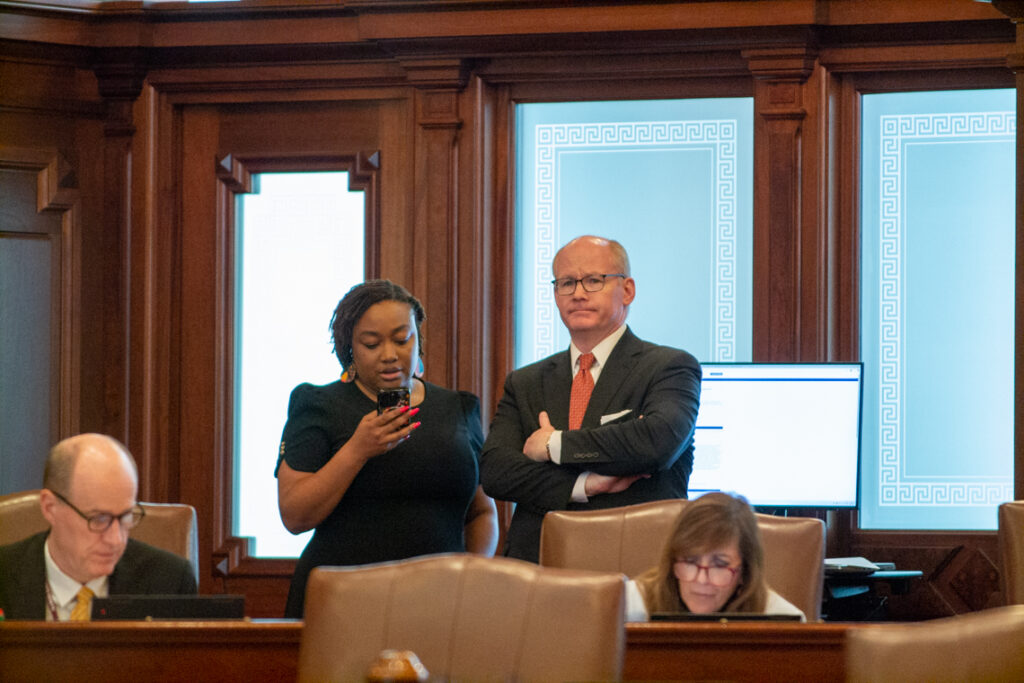
Gov. JB Pritzker signed a new law Friday to make a series of changes to the Prisoner Review Board after it released a man who would go on to commit murder, leading to intense scrutiny in Springfield.
Pritzker signed Senate Bill 19, which contains changes designed to include victims’ participation in Prisoner Review Board decisions and ensure more board members have relevant law enforcement or judicial experience.
The law gives victims the right to file impact statements ahead of hearings, provides them with additional notice when their offender is granted early release, and allows them to seek an order of protection against an offender who is incarcerated.
It also creates the Office of the Director of Victim and Witness Services within the PRB, which would ensure the board complies with victims’ rights. The measure also mandates the board provide victims with contact information for the State Victim Assistance Hotline.
“The bulk of this bill is focused on … making sure that victims, survivors, are more engaged in the process at PRB because unfortunately, too often, we’ve heard from victims and family members that they simply haven’t been given a voice in this process,” bill sponsor Rep. Will Guzzardi, D-Chicago, said when the bill passed the House last month.
Read more: Prisoner Review Board reform bill clears Senate
The bill was approved by the Senate in April on a 33-22 vote, with some Democrats opposing it. The House voted 74-37 along party lines to send the bill to Pritzker’s desk in May. Republicans, who had for months been calling for broader reforms, criticized the bill.
Pritzker’s signature comes just two weeks after a man released by the PRB was found guilty of murdering 11-year-old Jayden Perkins at his Chicago home in March 2024.
Crosetti Brand was released from prison in 2023 after serving a sentence for a domestic violence conviction. After his release, Brand began threatening a former partner, Laterria Smith, and showed up to her home in February 2024, according to the Chicago Sun-Times. Brand was sent back to prison for violating the conditions of his release, and Smith filed for an order of protection. But a Cook County judge denied the order because Brand was behind bars.
On March 12, 2024, the PRB voted to release Brand citing a lack of evidence to keep him behind bars, the Sun-Times reported. The next day, Brand confronted Smith at her home and stabbed her and her son, Perkins, multiple times. Smith survived but Perkins did not. Brand was found guilty of first-degree murder and 16 other counts earlier this month.
Two board members, including the chair, resigned after Perkins’ death. Smith sued the board for negligence in March.
Read more: Prisoner Review Board sued for negligence a year after released prisoner killed Chicago boy
The case put even more scrutiny on the board, which was already in the spotlight over other controversial decisions to release people from prison.
In May 2024, the Senate unanimously passed a bill that would have made a series of reforms to the board, including requiring that certain meetings be livestreamed and board members receive additional training. The bill appeared ready to pass the House with 76 members signing on as cosponsors. But the bill was never called for a vote in the final hours of session after Pritzker had concerns about the feasibility of the livestreaming requirements and lack of funding for the board.
Read more: Stalled bills: ‘Dignity in Pay Act,’ Prisoner Review Board changes fail to move
Instead, lawmakers moved forward with the legislation signed by Pritzker on Friday, which Republicans opposed saying it doesn’t go far enough to meaningfully reform the board.
“After the Governor ignored our consistent and clear warnings, a horrible murder was triggered by a terrible decision by the Prisoner Review Board,” Sens. Jason Plummer, R-Edwardsville, and Steve McClure, R-Springfield, said in a statement. “Now, instead of listening to a bipartisan coalition at the capitol, he and his far-left allies pushed through a bill that makes it more difficult for the PRB to keep violent criminals off the streets.”
The new law also attempts to make the board more professional, Senate President Don Harmon, D-Oak Park, the Senate sponsor of the bill, said in April. It gives board members eight-year terms instead of six so they can be more focused on their decisions rather than their reappointment, he said. It also changes qualifications for board members, requiring seven out of the 15 board members have at least five years of experience as a law enforcement officer, parole officer, prosecutor, criminal defense attorney or judge.
Republicans opposed creating longer terms for board members, saying it reduces Senate oversight of the board and fails to hold board members accountable for decisions. The Senate is responsible for confirming the governor’s appointments to the board.
Capitol News Illinois is a nonprofit, nonpartisan news service that distributes state government coverage to hundreds of news outlets statewide. It is funded primarily by the Illinois Press Foundation and the Robert R. McCormick Foundation.
The post Pritzker OKs changes to Prisoner Review Board following years of controversy appeared first on Capitol News Illinois.
Advocates await action on bill protecting rights of immigrant students in Illinois
Capitol News Illinois
SPRINGFIELD — Immigration rights advocates in Illinois are anxiously awaiting the governor’s signature on legislation aimed at protecting K-12 students who may be in the country without legal authorization from being denied access to a free public education.
House Bill 3247, known as the “Safe Schools for All Act,” passed both chambers of the General Assembly in the final days of the spring session. It would prohibit schools from denying any child access to a free public education based on their actual or perceived immigration status, or that of their parents.
It would also prohibit schools from disclosing, or threatening to disclose, information about a student’s immigration status or the status of a person associated with the child. And it would require schools to develop procedures for reviewing and authorizing requests from law enforcement agents attempting to enter a school or school facility.
The bill is intended to buffer K-12 students in Illinois from efforts by the Trump administration to launch mass deportations of noncitizens living in the United States without legal authorization.
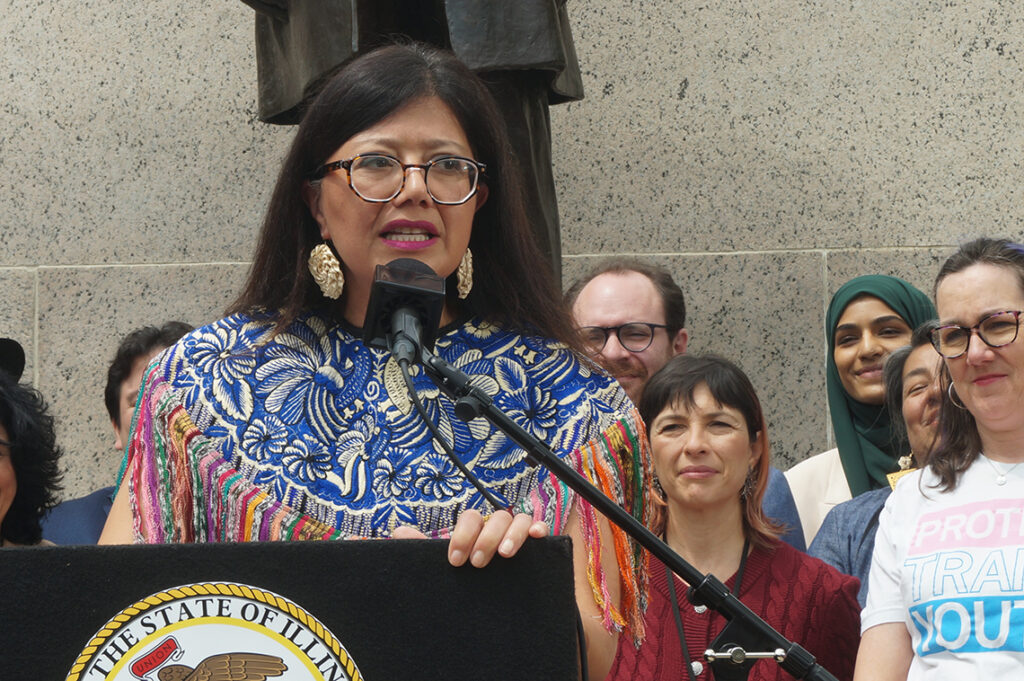
Speaking at a May 7 rally outside the Statehouse, where Democratic lawmakers and immigration rights advocates protested an appearance in Springfield that day of Homeland Security Secretary Kristi Noem, state Sen. Karina Villa, D-West Chicago, the chief Senate sponsor of the bill, vowed that Illinois would remain defiant of Trump’s political agenda.
“We are also going to protect our children,” she told the crowd gathered around a statue of Abraham Lincoln. “We’re going to make them feel safe in our schools by passing HB 3247. We are going to unite and we are going to get that done.”
On Jan. 20, the first day of the new administration, the Department of Homeland Security rescinded a Biden-era policy that prevented federal agents from conducting immigration enforcement actions in certain “sensitive” areas, including schools, churches and hospitals.
Immigrant rights advocates demonstrate outside the Illinois Statehouse for legislation protecting rights of noncitizens, including a bill meant to ensure the right of a free public K-12 education, regardless of a child’s immigration status. (Capitol News Illinois photo by Peter Hancock)
Fred Tsao, an attorney for the Illinois Coalition for Immigrant and Refugee Rights, said during an interview that the policy change has had a chilling effect on the immigrant community, making many afraid to even show up in school.
“We have seen a decline in student participation, particularly among heavily Latino schools after this inauguration,” he said. “So we want to make sure that schools are prepared in the events that federal agents, or for that matter other law enforcement, come to their door in a nonemergency situation.”
Tsao said advocates have also been concerned about possible changes in other legal protections for immigrant students that so far have only been expressed in judicial opinions.
In 1982, the U.S. Supreme Court struck down a Texas statute that authorized local school districts to either deny enrollment to children who had not been “legally admitted” to the United States, or to charge them tuition, holding the law violated the Equal Protection Clause of the 14th amendment.
Tsao, however, said there have been attempts in other state legislatures, including earlier this year in Tennessee, to pass legislation that would challenge that 43-year-old ruling. And while the effort in the Tennessee legislature fell short this year, he said advocates in Illinois wanted to act now to make sure the rights of immigrant students are protected in state law, should the Supreme Court precedent ever be overturned.
“Fortunately, our counterparts in Tennessee, the immigrant advocacy organizations and community leaders, bombarded the General Assembly with advocacy work and were able to persuade a number of legislators to vote against this legislation when it came down to it,” he said. “But you know, that’s not to say that folks in Tennessee or folks in other states won’t try again.”
As of Wednesday, June 18, HB 3247 had not yet been sent to Gov. JB Pritzker.
Capitol News Illinois is a nonprofit, nonpartisan news service that distributes state government coverage to hundreds of news outlets statewide. It is funded primarily by the Illinois Press Foundation and the Robert R. McCormick Foundation.
The post Advocates await action on bill protecting rights of immigrant students in Illinois appeared first on Capitol News Illinois.
GOP lawsuit seeks to end ‘gut-and-replace’ legislation
Capitol News Illinois
SPRINGFIELD — A group of Republican lawmakers filed a lawsuit this week that seeks to nullify legislation they say would indelibly alter both the business and legal landscape of Illinois.
Senate Bill 328 would amend a key provision of Illinois civil law by allowing, in certain kinds of cases, any company authorized to do business in the state to be sued in Illinois courts, even if the underlying claims and the parties have no connection to the state.
As written, the bill would apply only in cases filed under the Uniform Hazardous Substances Act in which the plaintiff claims an injury or illness resulting from exposure to a toxic substance.
What is unique about the GOP lawsuit, however, is that it doesn’t just seek to nullify the legislation before Gov. JB Pritzker signs it. It also asks the court to bar the legislature from using a procedure that has become common in the General Assembly known as “gut-and-replace.” This effectively allows lawmakers to sidestep the Illinois Constitution’s requirement that every bill be read, by title, three times on three different days in each chamber before it is passed because amendments are not required to be read on three different days in each chamber.
That procedure is used frequently for major legislation passed in the final days of a legislative session, including budget bills.
“Illinois’ reputation as one of the most corrupt states in the nation and one of the worst states in the nation for business go hand in hand,” Senate Republican Leader John Curran, R-Downers Grove, said during a virtual news conference Wednesday. “Allowing legislators to disregard the Constitution and good government transparency processes to make laws that are bad for our state is the root cause of both narratives.”
The proposal stems from a 2022 U.S. Supreme Court case, Mallory v. Norfolk Southern Railway Co., in which the court upheld a Pennsylvania law that requires out-of-state corporations to agree to allow Pennsylvania courts to exercise “general personal jurisdiction” over them, just as those courts exercise over domestic corporations.
“This is legalized litigation tourism,” said Sen. Jason Plummer, R-Edwardsville. “And it further damages Illinois’ reputation as a state that’s hostile to businesses and job creators.”
SB 328 began as what’s known in the General Assembly as a “shell bill” — one that has a title and a bill number but no substantive content. In this case, the original language called for making a technical change in one sentence in the Code of Civil Procedure, deleting the word “and” and replacing it with the word “and.”
Each session, lawmakers in both chambers introduce hundreds of such bills, most of which are never acted upon. But they are often amended into substantive legislation later in the session, especially after deadlines for introducing new bills or passing bills out of committees have passed.
That is what happened with SB 328, which began as a shell bill but was amended in the Senate to make a technical change to the way court clerks handle electronically filed documents. It passed out of the Senate on April 10 by a vote of 56-0 and was sent to the House.
In the House, it was read for the first time on April 11 and was assigned to a committee, which voted April 30 to recommend it be passed. It was read a second time on May 13.
On May 30, the next-to-last day of the session, Rep. Jay Hoffman, D-Swansea, introduced a “gut-and-replace” amendment that removed the language about electronic court filings and replaced it with the new language allowing out-of-state corporations to be sued in Illinois courts over acts that may have occurred elsewhere.
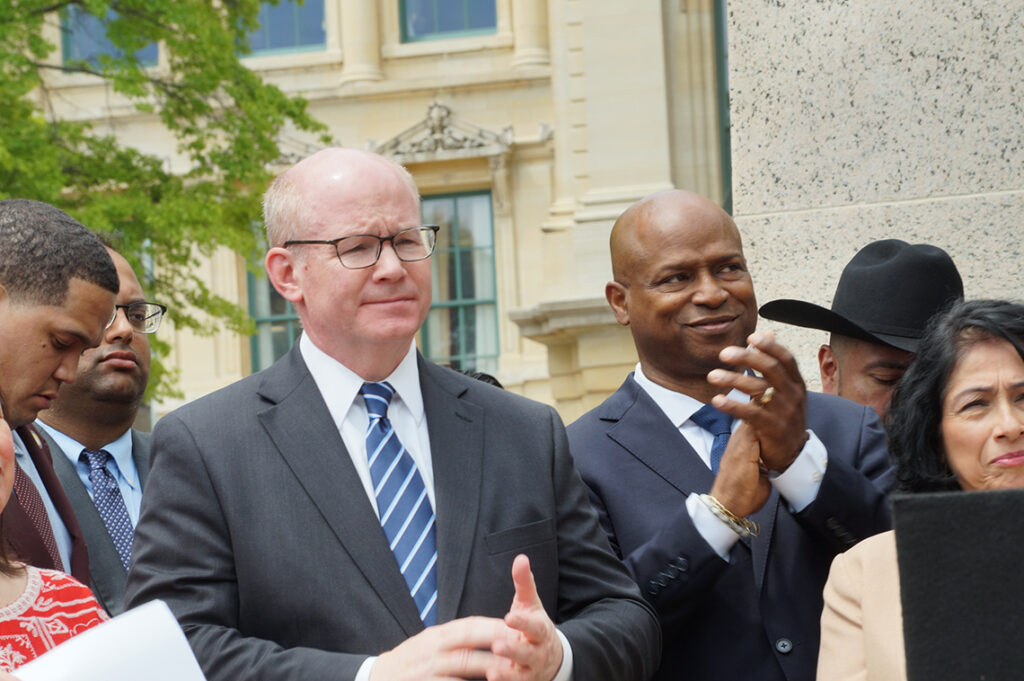
House Republican Leader Tony McCombie, left, and Senate GOP Leader John Curran speak to reporters about their lawsuit challenging passage of a controversial bill regarding corporate liability during a virtual news conference Wednesday, June 18. (Credit: Zoom.us)
That amendment was never sent to a substantive committee but instead was debated on the floor of the House where it passed the night of May 31 by a partisan vote of 77-40. That vote also counted as the third reading of the bill in the House, meaning the bill number had now been read on three different days in each chamber. It was then sent back to the Senate, which voted 37-19 shortly after midnight on June 1 to concur in the House amendment.
“We have long discussed with our partners, members and constituents filing suit on this issue, even prior to me being in leadership this year,” House Republican Leader Tony McCombie, of Savanna, said during the news conference. “The caucus members brought forward this egregious example of SB 328, and said let’s move forward.”
The lawsuit was filed in circuit court in Sangamon County. It lists 47 Republican lawmakers as plaintiffs. House Speaker Emanuel “Chris” Welch and Senate President Don Harmon are named as defendants.
Harmon, D-Oak Park, who sponsored the amended bill in the Senate, did not immediately respond Wednesday to a request for comment.
Separately, the Illinois Freedom Caucus has also filed a lawsuit in Sangamon County alleging the state’s budget bill did not satisfy the three readings requirement for similar reasons. A hearing in the case is scheduled for July 3.
Capitol News Illinois is a nonprofit, nonpartisan news service that distributes state government coverage to hundreds of news outlets statewide. It is funded primarily by the Illinois Press Foundation and the Robert R. McCormick Foundation.
The post GOP lawsuit seeks to end ‘gut-and-replace’ legislation appeared first on Capitol News Illinois.
Inside Illinois’ efforts to court the emerging quantum technology industry

Capitol News Illinois
CHICAGO — Just over one year ago, the Illinois legislature approved spending more than $700 million to attract and support a new industry: quantum technology.
Now, representatives of other countries, federal research labs and a network of private organizations with ties to the state are beginning to ink deals and make agreements to bring specific quantum companies to Illinois — and boost the startups that are already here.
Illinois state officials are interested in attracting the nascent industry because of its potential for economic growth and positioning Illinois as a high-tech leader in the coming decades.
Quantum technology is an emerging field of research and business that creates specialized machinery and computers that use the laws of quantum mechanics to solve problems and behave in ways that would be out of reach for traditional machines.
Last week, two events in Chicagoland offered a glimpse inside the world of quantum businesses and the layers of public and private funding going into the industry.
The Japan External Trade Organization — an economic development organization affiliated with the government of Japan — sponsored a two-day “delegation” of business representatives to Chicago.
At an early meeting of the delegation, representatives of the state and economic development agencies pitched the region — and Illinois’ state backing — as unique in the world.
“This is not a state government that is following trends but really setting the trends,” Intersect Illinois Chief Quantum Officer Preeti Chalsani told the delegation. “When I go to conferences, I hear about other states and countries who are thinking of doing something like Illinois. That really makes me proud.”
Intersect Illinois is a private nonprofit organization with ties to the state. It’s led by Christy George, a former Pritzker administration official who helped plan the Democratic National Convention in Chicago last summer. The organization also plays a prominent role in the state Department of Commerce and Economic Opportunity’s five-year plan for attracting business to Illinois.
“This is a state that is constantly on a mission to constantly build and expand our business environment,” George said at the event.
What is quantum tech?
Researchers and entrepreneurs are developing computers and other systems using the principles of quantum mechanics to achieve things that would be impossible with traditional computers. Current quantum computers can perform benchmark tests more than 1 billion times faster than traditional computers. Quantum technology can also be used to decode encrypted messages, posing serious questions for the cybersecurity industry. Other applications include simulations, sensor technology and communications.
World Business Chicago, an economic development organization backed by the city of Chicago, estimates the industry could generate tens of billions of dollars in Chicagoland and create more than 100,000 jobs.
Representatives of the Department of Commerce and Economic Opportunity, World Business Chicago and the University of Chicago also participated in the event.
The visit mirrored Gov. JB Pritzker’s and Chicago Mayor Brandon Johnson’s visits to Japan where both men, along with sizable entourages of economic development leaders and businesspeople, met with Japanese officials.
Read more: Federal agency opposes new state law; Pritzker to lead trade mission to Japan
Both visits, and especially Pritzker’s in October 2024, built hype in the Asian nation about Illinois’ role in the developing quantum technology sector. Pritzker is a self-professed “quantum geek” and his personal interest in the emerging industry contributes to the state’s interest in it.
Over the two days the Japanese delegation was in Chicago, they toured several local quantum businesses, including qBraid, InfleQtion, and EeroQ among other locations around the city. The DCEO and Intersect Illinois also hosted a reception for the Japanese delegation.
The efforts from state and industry boosters appear to be interesting to at least a few in the cutting-edge industry.
At a pitch and networking event capping off the Japanese visit last week, several Chicago-based and Japan-based companies discussed their business models and strategies.
One of the Japanese delegation members who pitched at the event, Quantumdata founder Yuki Nagasako, told Capitol News Illinois the quantum industry in Chicago is “very hot,” especially compared to artificial intelligence tech hubs in California.
“When I say I work in quantum technology in the Bay area? Nobody knows. Nothing,” Nagasako said. “But in Chicago, here? Everybody.”
Nagasako, whose company has offices in California and is currently in a fundraising round, said he’s seriously considering expanding in Chicago.
That event also featured a closed-door meetings between Japanese companies and officials at PsiQuantum as well as other local companies.
State quantum park
PsiQuantum is one of the jewels of the state’s quantum crown. It is the “anchor tenant” of the Illinois Quantum and Microelectronics Park, or IQMP, a research park set to break ground later this year on Chicago’s South Side.
The California-based quantum computing company was raising $750 million at a $6 billion valuation earlier this year, according to reporting from Reuters. Its last official valuation was $3.1 billion in 2021.
Read more: Quantum business park coming to Chicago, backed by $700M from state of Illinois
That park is being built with $500 million in state funding, on top of $200 million in tax breaks and other incentives going to PsiQuantum directly.
Harley Johnson, the University of Illinois professor who took over as the head of the IQMP late last year, said the “singular focus” of the research facility is to help scale up quantum computing technology.
“In some cases, it takes really specialized, industrial-scale infrastructure,” Johnson said last week.
Johnson was speaking at an event at Argonne National Lab where federal researchers and state-level quantum advocates discussed the state’s future as the “Quantum Prairie” — a riff on California’s Silicon Valley.
There, he also laid the groundwork for what is expected to be a busy few months at the state’s quantum research park.
“There are a lot of exciting announcements,” Johnson said. “We’re going to break ground very soon.”
In addition to PsiQuantum, several other major groups have said they’ll set up shop at the research park. Six months ago, IBM announced it would build a quantum computer and research center at the park. About a year ago, the Defense Advanced Research Projects Agency, or DARPA, announced it would base a quantum testing program at the park.
Two weeks ago, the IQMP also announced that Australian tech and quantum company Diraq intends to open a facility at the park.
“Diraq building and scaling their quantum operation at the IQMP is a testament to Illinois attracting the tech and security sectors,” Pritzker said in a statement at the time. “Diraq’s commitment further cements Illinois’ position as a global quantum leader and reflects the state’s commitment to fostering innovation and economic growth.”
Diraq is one of nearly 20 companies that is participating in the first stage of DARPA’s quantum testing program.
“We’ve got others that will be coming on board soon,” Johnson said in his speech last week.
Capitol News Illinois is a nonprofit, nonpartisan news service that distributes state government coverage to hundreds of news outlets statewide. It is funded primarily by the Illinois Press Foundation and the Robert R. McCormick Foundation.
The post Inside Illinois’ efforts to court the emerging quantum technology industry appeared first on Capitol News Illinois.
Pritzker signs $55.1B state budget reliant on $700M of new taxes
Capitol News Illinois
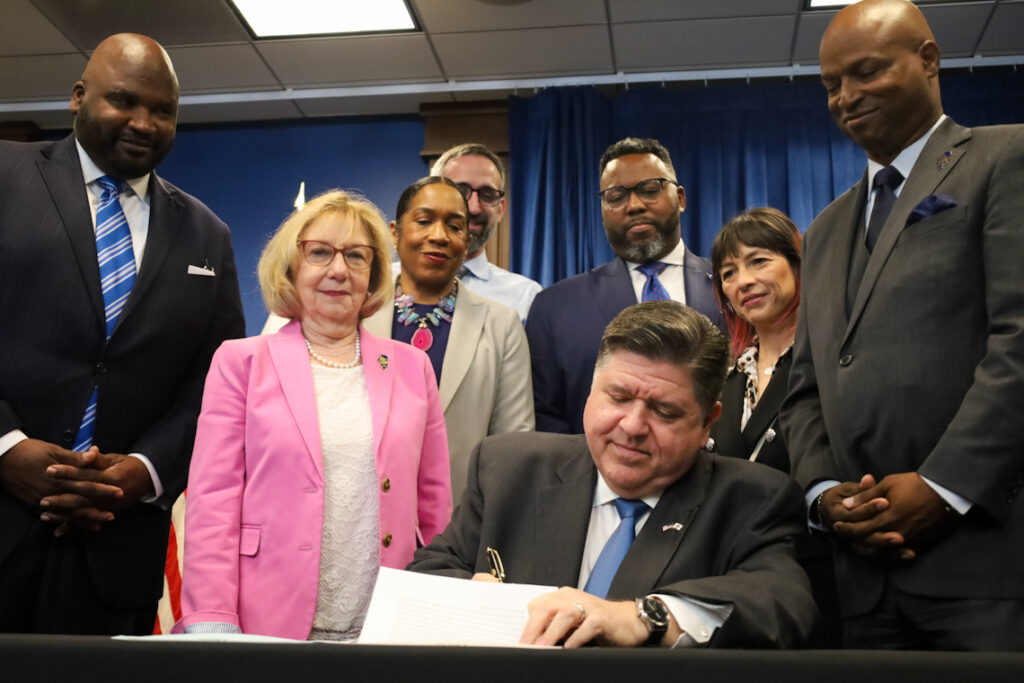
Gov. JB Pritzker signed Illinois’ fiscal year 2026 budget into law Monday, taking shots at President Donald Trump’s budget management to defend hard choices state lawmakers were forced to make this year.
The $55.1 billion spending plan set to take effect July 1 is the largest in state history and is supported by $55.3 billion in anticipated revenue, including more than $700 million in new taxes and more than $500 million in one-time revenues.
Democrats approved the budget shortly before midnight on May 31 with only a handful of Democrats opposing it and all Republicans unanimously voting against it.
The budget’s passage came after months of discussion about closing an initially projected $3 billion deficit and growing concerns about Trump’s treatment of state funding in Washington. Pritzker, a possible 2028 presidential candidate, used Monday’s budget signing ceremony in Chicago as an opportunity to draw a contrast between his and Trump’s budgets.
“While the Trump administration goes on Fox News lying about being fiscally responsible, Illinois is showing a better way: Balancing the budget while maintaining the programs that most people rely on,” Pritzker said.
“Congress is about to pass a federal budget that has one of the largest budget deficits ever in a year without a war or a pandemic. By contrast, Illinois is balancing its budget and prudently improving its fiscal condition,” he said.
Pritzker and other Democratic leaders acknowledged that crafting the FY26 budget was challenging but continues to make investments Democrats believe are priorities. Discretionary spending will increase by less than 1% in FY26, Pritzker said. Despite the minimal increase, the FY26 budget still spends about $2 billion more than FY25.
Democrats “ace the challenges and uncertainty head on, and the result is a budget that is truly balanced with no gimmicks,” House Speaker Chris Welch, D-Hillside, said.
But that’s not how Republicans view the budget’s fund sweeps and delayed transfers that free up hundreds of millions of dollars that can be used in FY26.
“This approach sets Illinois up for failure by FY27 and continues a pattern of short-term thinking,” House Minority Leader Tony McCombie, R-Savanna, said in a statement.
Senate Minority Leader John Curran, R-Downers Grove, condemned lawmakers for failing to deliver significant tax cuts since Pritzker took office in 2019 when Illinois’ budget totaled about $40 billion.
“You know it’s a bad budget when it’s based on nearly $1 billion in tax increases and enhancements,” he said in a statement.
The governor also used his broad authority to reduce a pair of technical errors in the budget. The changes lower spending by $161.2 million from what lawmakers passed.
Tax increases on tobacco and vape products, businesses
The tax plan will raise $709 million in new revenue through what House Majority Leader Robyn Gabel, D-Evanston, characterized as “smart new sources of revenue.” They include new taxes on businesses, sports betting and tobacco and vape products, according to a list provided by the Senate Democratic caucus.
The budget will not raise personal income, corporate income or sales taxes after Pritzker told reporters that he will veto any budget containing “broad-based” tax increases just days before the bill passed.
Sen. Elgie Sims, D-Chicago, discusses the state budget at a June 16 signing ceremony. Sims is the chief budget negotiator in the Senate. (Capitol News Illinois photo by Andrew Adams)
The largest sum of new taxes – $336 million – are on businesses outside of Illinois that lawmakers call “leveling the playing field” and will require businesses to pay more income tax to the state on their profits.
Consumers will face new taxes on specific items, including taxes on tobacco, vaping and other nicotine products, which are increasing to 45% to raise $50 million. An existing telecommunications tax will also rise from 7% to 8.65% and raise $49 million to fund the statewide 988 hotline.
A new tax on sports bets will charge betting sites 25 cents for the first 20 million wagers and 50 cents for each bet following that. It’s projected to raise $36 million. Sports betting sites FanDuel and DraftKings have both announced they will implement 50-cent transaction fees on Illinois customers in response to the tax.
Short-term rentals will have to begin paying the state’s hotel operator’s tax. The charge is already applied to hotels in the state, and Airbnb already pays it voluntarily, but more companies like Vrbo will now be required to pay the tax expected to raise an additional $10 million.
A pair of tax amnesty programs are expected to raise $228 million. Those programs are meant to incentivize taxpayers to pay overdue taxes.
Fund sweeps, delayed transfers free up more for spending
The budget deploys a series of tactics designed to free up more money for spending in the general fund in FY26 without repeating as a revenue source for the following year’s budget.
It suspends the monthly transfer to the “rainy day” fund for one year, freeing up $45 million for general fund use. Pritzker has taken pride in the fund’s increase in recent years as it’s grown to a balance of $2.3 billion, up from less than $60,000 when he took office. The fund is still estimated to grow by $161 million from interest and contributions from other funds in FY26.
Read more: Illinois’ $55.2B budget ‘incomplete,’ Civic Federation president says
The state will also pause the final transfer of motor fuel sales tax revenue to the road fund in order to free up $171 million. That scheduled transfer was set in motion by the state’s 2019 infrastructure plan, with the sales tax supporting bond debt taken out to complete road and bridge projects. This year was to be the final year of incremental transfers that took place over the past five years.
Gov. JB Pritzker speaks before signing Illinois’ fiscal year 2026 budget on June 16. Also pictured, from left to right: Sen. Elgie Sims, D-Chicago; Rep. Will Guzzardi, D-Chicago; Lt. Gov. Juliana Stratton; Rep. Kam Buckner, D-Chicago; House Speaker Emanuel “Chris” Welch, D-Hillside. Rep. Eva-Dina Delgado, D-Chicago, is not shown.
The budget package also establishes a new $100 million BRIDGE fund that the governor can tap into “in the event of unanticipated delays in or failures of revenues.” The measure, an apparent nod to the uncertainty of federal funding amid ongoing congressional budget negotiations, will come from money swept from 57 different funds.
When combined with the tax amnesty program, the fund sweeps and delayed transfers add up to at least $544 million of one-time revenue in this year’s state budget that will not be available in FY27.
Health and Human Services
The most notable change to health care funding is the elimination of the Health Benefits for Immigrant Adults, or HBIA, program that provided certain low-income noncitizens between ages 42 and 64 with state health care benefits akin to Medicaid. Eliminating the program saves the state $330 million, but the $110 million Health Benefits for Immigrant Seniors, or HBIS, remains in place.
“This was part of the challenge that we had to address,” Pritzker said. “It was a program that had been growing significantly in cost. I do believe that everybody should have health care. I also know that we have to live within our means in the state of Illinois.”
HBIA’s elimination comes after a recent audit found the two programs have cost the state at least $1.6 billion since their inception, far exceeding original estimates for the program. Last year, the state put new guardrails in place to limit enrollment into the programs and reduce costs through co-pays and other measures.
Read more: Audit finds Illinois’ noncitizen health care programs far outstripped original cost estimates
Gov. JB Pritzker speaks before signing Illinois’ fiscal year 2026 budget on June 16. (Capitol News Illinois photo by Andrew Adams)
HBIA’s elimination also comes as Congress debates a domestic policy plan that could reduce reimbursements to states that provide health care benefits to noncitizens.
In anticipation of broader reductions to health care and Medicaid reimbursements to the state, Illinois lawmakers also increased spending on other health care and social service programs:
$40 million for Federally Qualified Health Centers. These centers could provide care for people who lose coverage under HBIA turn.
$18 million from the General Revenue Fund for five safety-net hospitals in the state’s Medicaid managed care program. Another $100 million from Fund for Illinois’ Future will go to support the Medicaid managed care program at 12 other safety net hospitals.
$60 million for administrative expenses for the Supplemental Nutrition Assistance Program. That’s a $20 million increase from FY25 as Congress has proposed requiring states to cover half of administrative costs.
$263.7 million for HOME Illinois, a program created to reduce homelessness in Illinois. Housing advocates calculated that between Home Illinois and other housing line items, the budget includes $354 million in funding. That’s about a $14.6 million decrease from a year ago, which marks about double of what Pritzker proposed cutting in homelessness funding in February.
An 80-cent hourly wage increase for direct service professionals who service individuals with intellectual and developmental disabilities in community care settings. However, overall flat funding for the program means 305 positions in the program will be eliminated, according to the They Deserve More coalition. Community Care Program workers at the Illinois Department on Aging will receive a 75-cent hourly wage increase.
A new $25 million Prescription Drug Affordability Fund to support certain pharmacies in Illinois in competition against larger pharmacy benefit managers.
$15 million for the Medical Debt Relief Pilot Program that purchases medical debt from patients at a fraction of the total debt.
A $4 million increase for the Department of Children and Family Services aimed at hiring 100 additional staff members.
A child tax credit created in 2024 at 20% of the Earned Income Tax Credit will double to 40%.
Education
The state’s evidence-based funding model for K-12 schools calls for $350 million in additional funding each year, with a portion of that going to a property tax relief fund and the rest directly to schools. The proposed budget fully funds the K-12 education increase at $307 million but does not add $43 million in property tax relief funds.
Funding for higher education operational expenses is only going up 1%. Pritzker had proposed 3%. Democrat budget leaders have said the spending plan includes ways to increase funding by an additional 2% if there are significant cuts in federal funding for higher education, however.
Read more: Despite victories, major higher education policy bills stall in General Assembly
The budget also includes:
A $10 million increase to the Monetary Award Program grants for lower-income college students.
$8 million for a minority teacher scholarship program.
$2.9 million for the state’s Common App initiative to make it easier for high school students to apply to Illinois colleges and universities at one time.
$212 million for Pritzker’s Smart Start early childhood education program.
$21.7 million for the newly created Department of Early Childhood
Others spending areas
Part of the budget package created a new Tier 2 reserve fund that can be accessed if there are violations of what’s known as the federal “safe harbor” law. Lawmakers appropriated $75 million for the fund this year, in line with Pritzker’s proposal. Broader reform to Tier 2 was not considered this spring.
“With this fix going into effect, we’re protecting our taxpayers and state workers from future shortfalls that could cost the state much more,” Pritzker said.
Read more: ‘This issue isn’t going away’: Illinois lawmakers delay pension reform again
Lt. Gov. Juliana Statton, who is also running for U.S. Senate, speaks at a June 16 signing ceremony where Gov. JB Pritzker formally approved the state’s fiscal year 2026 budget. (Capitol News Illinois photo by Andrew Adams)
Attorney General Kwame Raoul is receiving a $15.7 million general fund increase as his office engages in a growing number of lawsuits against the Trump administration. Raoul told lawmakers he needs more attorneys to handle the cases and a generally growing workload in his office. However, because of declining revenue in other funds, total funding for the office largely remains flat in FY26.
Read more: Raoul’s office to receive $15.7M budget increase for operations
The budget sent to Pritzker included a 5% pay raise for state lawmakers, to $98,304. State law sets the pay for legislators to increase annually with inflation, and lawmakers took no action to stop it from occurring in FY26.
The budget also includes:
$500 million for the Department of Central Management Services and Department of Commerce and Economic Opportunity for the Surplus to Success program to prepare idle state properties for economic development.
$17.9 million for the Department of Financial and Professional Regulation to implement a new licensing system
$40 million for immigrant Welcoming Centers
$6.2 billion for Department of Transportation construction projects, including $4.5 billion for roads and bridges.
Capitol News Illinois is a nonprofit, nonpartisan news service that distributes state government coverage to hundreds of news outlets statewide. It is funded primarily by the Illinois Press Foundation and the Robert R. McCormick Foundation.
The post Pritzker signs $55.1B state budget reliant on $700M of new taxes appeared first on Capitol News Illinois.
Ex-Speaker Madigan sentenced to 7 ½ years in prison for bribery, corruption
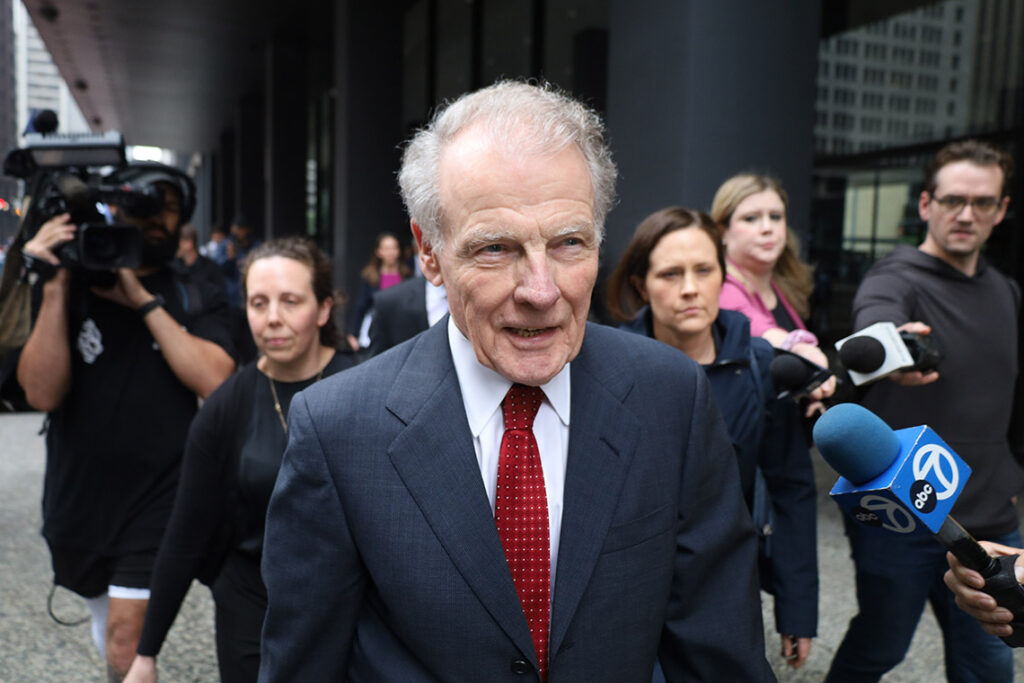
Capitol News Illinois
UPDATED: This story has been updated with a historical overview of Illinois corruption cases, new character letter details, and photos.
CHICAGO — The number of years former Illinois House Speaker Michael Madigan spent in Springfield has often been used as shorthand to explain his outsized impact on state government and politics. His political career spanned 50 years in the General Assembly, 23 years chairing the Democratic Party of Illinois, and 36 years as House speaker — the longest tenure of any state or federal legislative leader in U.S. history.
But on Friday, a new term was added to the former speaker’s list of legacy-defining terms when U.S. District Judge John Blakey sentenced Madigan to 90 months, or 7 ½ years, in federal prison.
The sentence, which also includes three years’ probation after his prison term and a $2.5 million fine, follows a jury’s split verdict in February. After a marathon two weeks of deliberation, jurors convicted him on 10 of 23 corruption charges, including bribery, but acquitted him on seven and deadlocked over another six.
Read more: Madigan guilty of bribery as split verdict punctuates ex-speaker’s fall | Madigan Trial in Review | Michael Madigan: The Rise and Fall
As Friday afternoon’s hearing passed the three-hour mark, Madigan accepted Blakey’s invitation to make a statement to the court. After taking a drink of water, putting on his glasses and blowing his nose as he approached the bench, the former speaker addressed the judge for less than two minutes, reading from a prepared script.
“I’m truly sorry for putting the people of the state of Illinois through this,” he began, noting that he “tried my best” to serve the people of Illinois. “I am not perfect.”
Later, when explaining how he was weighing Madigan’s continued insistence in his innocence, Blakey repeated Madigan’s words.
“The defendant says he’s sorry for putting the people of Illinois through this,” the judge said. “I guess that’s as close as we’ll get to remorse.”
Blakey spent a long time audibly weighing what he called “a tale of two different Mike Madigans,” calling the former speaker “a dedicated public servant” and “a good and decent person.”
“He had no reason to commit these crimes,” the judge said. “But he chose to do so.”
Blakey took particular umbrage with Madigan’s performance on the witness stand in January after he made the stunning decision to testify in his own defense. In siding with the government’s argument that the former speaker’s sentence should take into account his perjury on the witness stand, Blakey cited several examples of times Madigan’s statements conflicted with either evidence, the sworn testimony of others, or even his own testimony.
Read more: Madigan takes witness stand, denying he traded ‘public office’ for ‘private gain’
“The defendant’s testimony was littered with obstruction of justice and it was hard to watch,” Blakey said. “To put it bluntly, it was a nauseating display. … You lied, sir. You lied. You did not have to.”
Madigan, who was described by many witnesses throughout his four-month trial as difficult to read — and who attempted to explain the familial origins of his reserved personality as a defense while on the witness stand — was characteristically stoic as Blakey handed down his sentence.
After conferring with his attorney, he hugged and kissed his adult children in the front row of the courtroom gallery. A few minutes later, he and his entourage of lawyers and family quickly made their way out of the Dirksen Federal Courthouse, trailed by cameras.
True to form, the former speaker also made no statement to reporters, though he smiled slightly before getting on the elevator down to the courthouse lobby. Across the street, a man yelled to Madigan and his group, “You going to jail, buddy?”
Madigan was ordered to report to a yet-to-be-named federal prison on Oct. 13.
Madigan’s attorneys told the court he would seek a bond pending his appeal, which would allow him to remain free pending resolution of the appeal.
Prosecutors had urged a 12 ½-year sentence and a $1.5 million fine, while Madigan’s lawyers asked for five years’ probation, the first on home detention. After hearing arguments from attorneys earlier in the week, Blakey calculated the sentencing guidelines for Madigan’s convictions and other factors would dictate a prison term of 105 years, but the judge was under no obligation to follow that directive.
Read more: Prosecutors ask judge to sentence ex-Speaker Madigan to 12 ½ years in prison
‘I’m not a target of anything”
One of the last times the famously media-averse Madigan ever deigned to answer questions from journalists was in the fall of 2019, before the COVID-19 pandemic afforded the speaker an even larger buffer than usual from those outside his closed circle of staff and advisors.
The previous several months had yielded near-weekly developments in the public’s understanding of an unfolding federal corruption probe, including revelations about FBI searches executed on the homes of close Madigan allies. The intrigue only intensified after the indictment and midday FBI raids on two different Democratic state senators and the arrest of a member of Madigan’s own House Democratic leadership team on a charge that he bribed another Democratic senator, who happened to be cooperating with the feds.
Despite his name showing up on subpoenas for some of those search warrants, Madigan made a bold declaration that he was not in the feds’ crosshairs.
“No, I’m not a target of anything,” he told a gaggle of reporters in a crowded and noisy hallway of the state Capitol in Springfield in late October 2019.
Within the year, however, Madigan would be proven wrong as prosecutors filed the first in a series of bombshell charges alleging the longtime speaker had been the beneficiary of a yearslong bribery scheme from electric utility Commonwealth Edison. Prosecutors alleged ComEd officials agreed to hire Madigan allies, including a handful on no-work contracts, to grease the wheels at key times when the company was pushing for big and ultimately lucrative legislation in Springfield.
Read more: Madigan Trial in Review
In that July 2020 filing, Madigan’s status as a target of the feds’ widespread corruption investigation was marked by a new moniker: “Public Official A.”
But it wasn’t until March 2022 — more than a year after Madigan resigned from his biggest public roles after pressure from within the Democratic power structures he’d built over decades — that the former speaker was indicted.
Receiving top billing among the original 22 counts in the indictment, which was later bumped to 23, was racketeering. Prosecutors accused Madigan of using his positions as House speaker, chair of the state’s Democratic Party and as partner in his real estate law firm as a “criminal enterprise” meant to maintain and increase his power while enriching his allies.
Read more: ‘The Madigan Enterprise:’ Inside the federal indictment of the state’s former speaker
The indictment rehashed what had been already made public in July 2020 and again several months later when four former ComEd executives and lobbyists were charged with orchestrating the utility’s bribery scheme aimed at Madigan.
But it also revealed that former Chicago Ald. Danny Solis had worn a wire on the speaker and alleged the speaker had agreed to get him appointed to a lucrative state board position in exchange for introductions to real estate developers to woo them as potential clients of Madigan’s firm.
A final charge added later in 2022 alleged a tacit bribery agreement between Madigan and telecommunications giant AT&T Illinois like the ComEd scheme, albeit smaller — involving one no-work contractor hired in the months before AT&T-backed legislation passed in Springfield.
Jury delivers a split verdict
On the witness stand, Madigan repeatedly claimed that he was ignorant of the fact that the collective $1.3 million his allies earned from their ComEd contracts was for performing no work. Instead, the former speaker and his lawyers framed those contracts as the result of mere job recommendations, which they argued was a component of Madigan’s job as speaker.
Read more: ‘They were being paid as a favor to Mike Madigan’: Feds’ star witness takes stand | ‘Make it a federal court suit’: Jurors hear wiretap of McClain describing subcontracts alleged to be bribes | Madigan ally testifies he was rewarded with no-work contracts as ‘good soldier’ for speaker
Madigan’s attorneys, along with some of the government’s own witnesses, argued the ComEd-backed legislation passed after years of strategic and expensive lobbying efforts, and not because the speaker’s allies had gotten jobs and contracts with the utility.
But after a slew of witnesses, including a ComEd exec-turned-FBI cooperator and one of the former contractors, in addition to secretly recorded videos and wiretapped phone calls shown at trial, the jury was ultimately convinced on most ComEd-related charges. Madigan was convicted on seven of those charges, including four counts of bribery and conspiracy, though he was acquitted on two charges related to an effort to get his ally appointed to the utility’s board.
Watch/listen: View key secretly recorded videos admitted as evidence in Madigan’s trial | Listen to key wiretapped phone calls from the Madigan trial
The so-called “ComEd Four” were convicted in their own trial in 2023 and are scheduled to be sentenced this summer. They include Madigan’s formerly close friend and longtime Springfield lobbyist Mike McClain, who was also the speaker’s codefendant in the most recent trial. But after roughly 65 hours of deliberations over two weeks beginning in late January, the jury deadlocked on all six charges that named both the former speaker and McClain, including the feds’ marquee racketeering allegation.
The jury also deadlocked on the single count alleging Madigan’s participation in the alleged bribery scheme with AT&T, forcing Blakey to declare a mistrial on that count.
It was the second time in five months that charges alleging a bribe between AT&T and Madigan resulted in a hung jury; weeks before Madigan’s trial began, former AT&T Illinois President Paul La Schiazza’s bribery case ended in a mistrial on all five counts against him. He faces retrial in January 2026.
Read more: Jury deadlocks, mistrial declared in case of ex-AT&T boss accused of bribing Madigan | Judge won’t acquit former AT&T Illinois boss in Madigan bribery case after hung jury
Charges involving Solis, the former Chicago alderman, ended in a mix of convictions, acquittals and deadlock from the jury. While jurors convicted the former speaker on wire fraud and Travel Act violation counts related to the alleged scheme to help get Solis appointed to a state board, they acquitted him of the bribery charge pertaining to the same alleged scheme. As laid out in trial, Madigan never ended up recommending Solis to newly elected Gov. JB Pritzker.
The former speaker was also acquitted of attempted extortion and three related counts related to a real estate developer to whom Madigan wanted an introduction from Solis, who served as chair of the Chicago City Council’s powerful Zoning Board. Prosecutors alleged Madigan understood and tacitly approved of Solis’ made-up story that he’d condition the approval of a zoning change sought by the developer on whether it agreed to hire the speaker’s law firm.
At the FBI’s direction, Solis told the speaker ahead of the July 2017 introduction meeting that the developer understood “how this works, you know, the quid pro quo” — insinuating the company was under the impression that it would not get the zoning approvals it needed unless it hired the speaker’s law firm, though it wasn’t true.
A few weeks later, Madigan admonished Solis before the developer meeting, telling the alderman, “You shouldn’t be talking like that.”
The feds argued Madigan was urging Solis to not speak so brazenly about their alleged bribery agreement. But on the witness stand, the former speaker said the alderman’s use of the term “quid pro quo” caused him “a great deal of surprise and concern” to the point that he decided he needed to confront Solis about it face-to-face.
In Madigan’s contentious cross-examination, the lead prosecutor attempted to poke holes in the former speaker’s explanation of that key moment, but Madigan maintained Solis seemed to have recognized he’d “made a serious mistake” and that he considered the matter settled because “I was not going to connect a request for an introduction with anything else.”
Read more: In contentious cross-examination, prosecutor accuses Madigan of not telling ‘the whole truth’ | Madigan leaves witness stand expressing regret for ‘any time spent with Danny Solis’
The jury also deadlocked on four other bribery, wire fraud and Travel Act charges concerning a plan to get state-owned land in Chicago’s Chinatown neighborhood transferred to the city for eventual development into a mixed-use apartment building.
Read more: ‘There’s something fishy here, don’t you think?’: Wiretapped calls detail Madigan confidant’s confoundment over land deal
Prosecutors alleged Madigan intended to have his firm contract with the Chinatown developer in accordance with hints Solis had dropped on secret recordings. But Madigan’s former law partner and testimony from two former top lawyers in the speaker’s office indicated the law firm had strict conflict-of-interest rules that would have prohibited the developer from ever becoming a client.
Read more: Former Madigan aide testifies speaker had conflict of interest protocols
Sentencing factors
In the four months post-verdict, a period nearly as long as the grueling trial itself, Madigan turned 83 — a mitigating factor his defense attorneys noted in a pre-sentencing memo late last month, which asked for five years’ probation, including one on home confinement.
In another filing last week, Madigan’s lawyers painted a bleak picture of the sentence sought by prosecutors, accusing them of arguing in bad faith that ComEd’s investor profits should be considered as part of sentencing.
“The government seeks to condemn an 83-year-old man to die behind bars for crimes that enriched him not one penny,” defense attorneys wrote. “They demand that Mike Madigan spend his final years in a cell, though he spent decades as the consumers’ shield against ComEd’s predations.”
But much more emphasized was his role as caretaker to his wife, Shirley, who suffers from “a severe lung disease,” per a letter filed with the court last month from Madigan’s daughter, former Illinois Attorney General Lisa Madigan.
Instead of writing a letter, Shirley Madigan recorded a video pleading for leniency in sentencing. Clad in purple latex gloves with a medical mask hanging from her neck, Shirley praised her husband’s character as a father and grandfather but also detailed how Madigan has become her caretaker, especially since the COVID-19 pandemic hit.
“I really don’t exist without him,” she told the camera as B-roll of Madigan helping her up from a couch played over her testimonial. “I don’t know what I would do without Michael. I would probably have to find some place to live, and I’d probably have to find care.”
The former speaker and his lawyers echoed Shirley’s pleas Friday, with attorney Dan Collins telling Blakey that for Madigan, “mercy is justice,” and Madigan himself asking the judge that “you let me take care of Shirley and that you let me spend my final days with my family.”
Blakey said Madigan’s age was a factor, but said arguments that “any sentence” for an older defendant is tantamount to a life sentence are “not particularly helpful.”
But the judge said he carefully considered the nearly 250 character reference letters filed on Madigan’s behalf late last month, saying he “placed significant weight” on the support of the former speaker’s family and friends.
He even got emotional when discussing Madigan’s role as a husband, father and grandfather.
“Whatever his crimes — and he did do things wrong — but his relationship to his family? He got that right,” Blakey said, echoing words the former speaker told Solis during a secretly recorded meeting between the two in 2018.
Aside from family, faith leaders, longtime constituents and 40 former staffers, other notable letter-writers on Madigan’s behalf included prominent labor leaders and three dozen former elected officials, among them several Republicans like former Gov. Jim Edgar. Attorneys also included an op-ed in support of Madigan penned by former GOP Gov. Jim Thompson before his death in 2020.
Aside from family, other notable letter-writers on Madigan’s behalf included former U.S. Sen. Carol Moseley Braun; former Illinois Supreme Court Justice Tom Kilbride; Democratic mega-fundraisers Michael Sacks and Fred Eychaner, and Chicago Bulls and White Sox owner Jerry Reinsdorf. While many former Democratic allies of Madigan penned appeals to Judge Blakey, only a few currently hold office — among them state Reps. Marcus Evans, D-Chicago, and Curtis Tarver, D-Chicago, along with Auditor General Frank Mautino.
In determining sentencing guidelines, Blakey agreed with prosecutors’ contention that the value of the ComEd bribes should be based on testimony from utility leader Scott Vogt during trial. Vogt cited projections that the continuation of the “formula rate” contained in the first piece of ComEd-backed legislation passed during the eight-year bribery scheme was worth $400 million in increased shareholder value for the company.
The judge also agreed with smaller sentencing enhancements, for defendants who orchestrate bribery schemes, and for lying under oath while testifying in their own defense.
Blakey gave several examples of times in which Madigan perjured himself during his four days on the witness stand, including the former speaker’s attempt to “falsely minimize the close and regular relationship he had with McClain.”
Read more: McClain lawyer calls star witnesses liars as trial nears conclusion
“Other witnesses testified to their unique and close relationship, which spanned decades,” Blakey said. “In short, the evidence produced at trial showed McClain was one of Madigan’s most-trusted operatives, not merely one of many, as he falsely testified.”
Ultimately, though, the judge’s ruling in favor of sentencing enhancements for perjury and other factors is mostly symbolic, as the parties already agreed to a sentence far below the complicated calculation that would advise a 105-year prison sentence.
Sentences handed down to other convicted politicians in Illinois’ long history of elected officials caught up in corruption have varied widely.
Last year, a federal judge sentenced Madigan’s pseudo-counterpart in the Chicago City Council, five-decade Ald. Ed Burke, to two years in prison after his bribery conviction that also involved Solis’ FBI cooperation in bringing potential clients to Burke’s real estate law firm. The judge noted the number of character letters she received on the former alderman’s behalf were a strong mitigating factor in her sentencing decision.
On the other end of the spectrum, Gov. Rod Blagojevich was sentenced to 14 years in prison after his 2011 bribery convictions related to attempting to sell then-President-elect Barack Obama’s soon-to-be-vacated U.S. Senate seat in 2008. President Donald Trump commuted his sentence in 2020, and in February pardoned him completely — just two days before Madigan’s conviction.
Read more: Trump pardons Blagojevich 5 years after commutation cut prison time short | Little support in Springfield for Trump’s Blagojevich commutation
Illinois’ history of corruption
The long list of Illinois political figures who’ve been convicted on corruption charges in the last century was referenced more than once during Friday’s sentencing hearing, but Blagojevich was the only politician mentioned by name.
Blakey pointed to the former governor’s case when explaining his authority to enhance Madigan’s sentence for a bribe that wasn’t fully carried out. In Blagojevich’s case, “no one turned out to be willing or able to pay a bribe the defendant demanded,” the judge said of the U.S. Senate seat sale. In Madigan’s case, the former speaker never ended up recommending Solis for a state board position, but he and Solis discussed the $93,000-per-year pay for some of the appointments.
But Assistant U.S. Attorney Sarah Streicker’s reference to Blagojevich in her sentencing arguments went beyond pointing to legal precedent, making a direct — and deeply unflattering — comparison between the ex-governor and Madigan. During Blagojevich’s six years in office, he and Madigan were constantly at war with one another.
Streicker quoted the late U.S. District Judge James Zagel as he sentenced Blagojevich in 2011: “When it is the governor who goes bad, the fabric of Illinois is torn, disfigured and not easily repaired,” Zagel said. “You did that damage.”
The prosecutor posited that the damage from Madigan’s crimes may have been worse due to his longevity at the “highest levels of power” in state government.
“Governors? They came and went over the years,” Streicker said. “But Madigan? He stayed. His power and his presence remained constant. He had every opportunity to set the standard for honest government in this state. Instead, he fit right into the mold of yet another corrupt leader in Illinois.”
But while Blakey cited deterrence as a factor in deciding Madigan’s punishment, he said the former speaker “can only be sentenced for his crimes, not anyone else’s.”
“You can’t sentence a social problem and there’s no point in trying to do that,” the judge said. “Defendant is responsible for his public corruption, not public corruption in the state of Illinois.”
Blakey also responded to Collins’ arguments that the judge base his sentence not on the “myth” of Madigan — which he said included the feds’ contention that the former speaker was driven by greed — but on “the reality of Mike,” who has “lived a frugal life” and “takes care of his wife.”
The judge assured Collins he didn’t buy into the myth of Madigan as “The Velvet Hammer” or the “Wizard of Springfield,” references to a decades-old nickname for the former speaker and a sign that once sat on the desk of Madigan’s longtime chief of staff, who is himself serving prison time on convictions related to his ex-boss.
Read more: Ex-Madigan aide sentenced to 30 months in prison for obstruction of justice attempt, perjury | Jury convicts Madigan’s longtime chief of staff on perjury, obstruction of justice charges
“Working in the legal sausage factory in Springfield is a full-contact sport and people lie about you all the time,” Blakey said, promising he wasn’t taking into account “all that nonsense.”
In Springfield, Madigan’s name is still invoked during debates on the Illinois House floor, but the last 4 ½ years since his resignation from the legislature have seen significant turnover in the body he ruled over for all but one term, from 1983 to 2021. The political effectiveness tying Illinois Democrats to Madigan — a longtime tactic from Republicans who hold super minority status in the General Assembly — has also waned significantly since the former speaker’s departure from public office.
On one of the final days of the spring legislative session last month, a longtime GOP critic of Madigan even credited the former speaker as he was denouncing Madigan’s successor, Speaker Emanuel “Chris” Welch, for his approach to big bills.
But U.S. Attorney Anthony Boutros still claimed Madigan’s sentence as a victory for cleaning up corruption in Springfield.
“Corruption at the highest level of the state legislature tears at the fabric of a vital governing body,” he said in a statement Friday evening.
Boutros credited former Assistant U.S. Attorney Amarjeet Bhachu for leading the yearslong investigation and criminal case against Madigan and others in his inner circle, which “allowed this case to reach a jury and send a clear message that the criminal conduct by former Speaker Madigan was unacceptable.”
Capitol News Illinois is a nonprofit, nonpartisan news service that distributes state government coverage to hundreds of news outlets statewide. It is funded primarily by the Illinois Press Foundation and the Robert R. McCormick Foundation.
The post Ex-Speaker Madigan sentenced to 7 ½ years in prison for bribery, corruption appeared first on Capitol News Illinois.
‘Granny flats’ may be the answer to affordable housing in Chicago — but they’re illegal

Capitol News Illinois
by Alex Nitkin for ILLINOIS ANSWERS PROJECT
CHICAGO — For most new parents, finding last-minute child care usually means an afternoon of frantic phone calls and around $100 dropped on a trusted babysitter.
For Brian and Fiona Peterman, it means walking across their backyard.
In 2021, Fiona’s mother, Louise D’Agostino, was scanning pricey apartments near Brian and Fiona’s Lakeview home so she could live closer to them after she retired — until Brian learned about a new city program that would let the family build a second, smaller house on their own property.
After nearly two years of navigating regulatory red tape and approximately $300,000 in construction costs, D’Agostino was able to move into a 700-square-foot, two-bedroom house on top of Peterman’s garage in 2023.
After nearly two years of navigating regulatory red tape and approximately $300,000 in construction costs, Brian Peterman was able to build a “granny flat” on his property, allowing his mother-in-law to move in. “‘Life-changing’ is probably the cleanest way of saying it,” he said. (Akilah Townsend for Illinois Answers Project)
Nowadays, D’Agostino goes on walks with her 18-month-old granddaughter nearly every day. D’Agostino cooks the toddler recipes from her native Malta that she learned from her own mother, and she’s teaching her to speak Maltese.
D’Agostino pays rent to her daughter, Fiona, and son-in-law, Brian — much less than the cost of the mortgage at her previous home, but still a steady and meaningful source of income for the Petermans to supplement the salaries from their day jobs.
“‘Life-changing’ is probably the cleanest way of saying it,” Brian Peterman said. “By having her there, we always have that backup plan in case something goes awry in our normal lives.”
Homes like D’Agostino’s, typically called coach houses, carriage houses or “granny flats,” are illegal to build in most of Chicago. Their construction was banned in 1957 by city leaders who feared residential overcrowding. Chicago has since lost approximately 800,000 residents.
City officials under three mayors have been pushing for at least six years to unravel the prohibition of so-called accessory dwelling units, or ADUs — a term used to describe both coach houses and unused basement or attic spaces that are converted into apartments. In the legalization campaign, bureaucrats and policy researchers consistently highlight ADUs as a low-risk tool, free to taxpayers, that’s been proven to provide a limited but effective release valve for other cities’ affordable housing crises.
For D’Agostino, it meant finding an affordable home in an affluent neighborhood while providing extra income to offset child care costs for her daughter and son-in-law while keeping her granddaughter close.
A three-year pilot program that legalized the units in some areas showed that outcomes like the Petermans’ are widely replicable, opening up more housing options in neighborhoods where cheap apartments have become increasingly rare. But the burst of construction seen so far is a pittance compared to the more than 100,000 affordable units experts say it would take to satisfy demand.
“ADUs are our path to economic mobility,” said state Rep. Kam Buckner (D-Chicago), who sponsored legislation that would prohibit Illinois cities from banning the units. “They turn under-utilized space into income-generating property, which is a big deal.”
Many City Council members remain skeptical of ADU legalization, wary of any move that would limit their ability to guide new development in their wards.
That’s one reason why a proposal to legalize the units citywide has been sitting on the shelf for more than a year.
In the meantime, property owners inside the pilot zones, like the Petermans, are straining to build ADUs amid daunting costs and regulatory barriers.
City Hall discussions on how to expand and ease construction are clouded by a political stalemate over how far the program should reach, and by a little-understood federal complaint targeting Chicago’s housing segregation. And policymakers have struggled to craft an ordinance that would encourage ADU construction across the city — not just in wealthy, dense areas, where they’ve overwhelmingly been added during the pilot.
As Chicago leaders sit on their hands, proposals to permit ADU construction across Illinois are gaining support in Springfield, where lawmakers are pushing their own measures. Adding to the momentum is Gov. JB Pritzker, who recently endorsed ADUs as a tool to increase the state’s stock of affordable housing.
“Think about carriage houses,” Pritzker said in an April 30 episode of the Volts podcast after an interviewer asked the governor about his housing agenda. “We’ve got neighborhoods where people are not allowed to have those as separate dwellings — or just the idea that we can, if we make a few tweaks here and there, we can significantly increase the amount of housing with the existing housing stock.”
A pilot program to test the waters
Chicago planning officials under former Mayor Rahm Emanuel first promoted the idea of legalizing accessory dwelling units in 2018, saying they “can offer relatively affordable housing for tenants and can help moderate income families become homeowners with the additional income.” Researchers had taken note of new construction in Portland following the legalization of ADUs there years earlier, and a 2016 California law had already unlocked an explosion in construction of the relatively low-cost units across that state.
A 2019 study by the AARP found that in seven U.S. cities, ADU rents were hundreds of dollars lower than the rents of comparable one-bedroom apartments and could provide “a substitute for nursing home care, a means to age in community, an opportunity to live with other family members in multi-generational living arrangements, as well as a source of earning extra income to supplement fixed incomes in their retirement years.”
In 2019, the newly reconstituted Chicago Department of Housing recruited the Chicago-based Urban Land Institute to lead a task force with dozens of developers, architects, affordable housing advocates and lenders to draw up a list of recommendations for how Chicago could legalize ADUs.
The result was a 44-page report, published in May 2020, detailing the challenges of ADU legalization in other cities and ways Chicago could overcome them.
Within a month of the report’s publication, Chicago Mayor Lori Lightfoot had introduced an ordinance legalizing coach house construction and basement unit conversions in Chicago, incorporating some of the task force’s recommendations.
It got a chilly reception in the City Council.
“This will be a blanket approval … it will allow two-flats to become three-flats, three to become four and four to become five,” said then-Ald. Patrick Daley Thompson (11th), who represented the city’s Bridgeport and Chinatown neighborhoods. “If someone wants to change a two-flat to a three-flat, in my ward, we do a community meeting. All of my neighbors — the community comes out and has participation. Not a bureaucrat at City Hall making a decision for my community.”
South Side Ald. David Moore (17th) was more direct.
“I want some aldermanic control over this,” Moore said.
After months of negotiations, the council approved a test ordinance that legalized accessory dwelling ordinance in five “pilot zones” — two on the city’s North Side, one on the West Side and two on the South Side — all in areas represented by alderpeople who supported the initiative. However, the West and South Side zones were established with additional restrictions at local council members’ request, including a requirement that the new units could be built only on owner-occupied properties.
In May 2021, the Chicago Department of Housing began accepting applications for coach houses and basement unit conversions. The ordinance called on city officials to report back to the City Council three years later with data and insights.
Peterman, who had been following the ordinance closely, was among the first in line to apply.
It was a year before his coach house project would break ground.
Peterman became tangled in a weeks-long back-and-forth with zoning officials in the city planning department over the dimensions of his porch. Because the city requires homes like his to have at least one parking space, he needed to figure out how to build the coach house on top of his garage. And even after housing and planning officials gave him the go-ahead, he had to get a fresh approval from the Chicago Department of Buildings, which regulates all construction in the city.
After nearly two years of navigating regulatory red tape and approximately $300,000 in construction costs, Brian Peterman was able to build a “granny flat” on his property, allowing his mother-in-law to move in. “‘Life-changing’ is probably the cleanest way of saying it,” he said. (Akilah Townsend for Illinois Answers Project)
“It took us a very long time compared to a normal [housing] permit, which would have been one-tenth of the time if [the ADU] was already part of the zoning code,” he said.
Just as difficult, Peterman said, was financing. It typically takes between $50,000 and $100,000 to build a new unit in a basement or attic, but building a new coach house can run upwards of $250,000. Peterman and his wife had so much difficulty finding a loan package that they ultimately took out a new line of credit on their existing home to pay for the project, he said.
Despite the hurdles, more than 300 accessory dwelling units have been permitted for construction across the five pilot zones since 2021. They overwhelmingly comprised basement unit conversions, as opposed to coach houses — not surprising, observers said, considering how much cheaper it is to renovate than to build a new free-standing structure.
Open interactive graphic in new tab
More than 90% of the new units were located in one of the two North Side zones. City officials chalked up the disparity to the overwhelming demand for new housing in wealthier parts of the city — and to the added barriers placed on construction in the South and West Side zones.
‘We need them in our neighborhoods’
A May 31, 2024 memo sent to the City Council by commissioners of the Chicago planning and housing departments recommended expanding the pilot citywide. A review of data found that most of the new construction in the pilot program added garden units below existing walk-up apartment buildings. The below-grade units are typically less costly to rent.
Cook County faces a shortage of more than 150,000 affordable homes — in large part due to the disappearance of apartments in two- to four-unit apartment buildings that have either been demolished or converted into lavish single-family homes in recent years, according to the DePaul University Institute for Housing Studies.
As a result, a renter who earns the median income in Chicago today has sharply fewer housing options than they would have had 25 years ago, a WBEZ investigation found earlier this year.
Chicago’s ADU pilot has seen hundreds of units crop up in neighborhoods made up of squat two- and three-story apartment buildings, showing that their legalization has been “spurring investment in exactly the kind of neighborhood type where added housing options are most badly needed,” city commissioners wrote in their memo to the City Council.
The results of the ADU pilot were promising, but they were also underwhelming in the context of the city’s mammoth affordable housing crisis, said Daniel Hertz, who served as director of policy, research and legislative affairs for the Chicago Department of Housing from 2019 to 2024.
“It hasn’t completely transformed the face of any neighborhood,” Hertz said. “But I think 300 additional units that by and large are going to be moderately priced for the neighborhoods that they’re in … and having done that without basically any subsidy from the city — that’s a good thing.”
Ald. Daniel La Spata (1st), whose ward is inside the Northwest Side pilot zone, was an early supporter of accessory dwelling unit legalization. What he’s seen during the pilot has been “fantastic,” solidifying his position on the policy, he said.
Ald. Daniel La Spata (1st) at Chicago City Hall on Tuesday, June 20, 2023 (Victor Hilitski, for Illinois Answers Project)
“I’ve been in these units. They’re great. We need them in our neighborhoods,” La Spata said. “They’ve allowed families to develop and stay together intergenerationally.”
AARP Illinois, which supported Chicago’s ADU pilot ordinance, has since thrown its weight behind efforts to allow construction of the units statewide. A spokesperson for the seniors’ advocacy group said the housing type can provide an ideal option for older Illinoisans who want to live independently while downsizing to a smaller, more affordable home.
AARP found in its 2019 study that the average ADU in Seattle rented for $1,500, compared to nearly $1,900 for a comparable one-bedroom apartment in the same city. The price difference was even sharper in Oakland, Calif. and Washington, D.C.
Proponents argue the financial benefits of ADUs also apply to Chicago.
La Spata noted that the city spends millions of dollars each year to subsidize housing for people with low incomes. Legalizing basement unit conversions, assuming a $100,000-per-unit cost by private developers, represents an easy and efficient way to bring more affordable units into the market without spending taxpayer money, La Spata said.
“If I told someone tomorrow that we could develop 50 units of affordable housing for all of a $5 million investment, that would be the most efficient affordable housing development in the city,” he said.
La Spata supports a proposal from Ald. Bennett Lawson (44th), whose Lakeview ward straddles a pilot zone, to legalize the units across the city.
The addition of new ADUs in Lawson’s ward has “really worked out well,” Lawson said. The new units haven’t drawn any complaints from neighbors or worsened traffic or parking.
“A lot of them are legalizing spaces that were never properly permitted … and making that housing legal and safe for more people in my neighborhood,” the North Side alderperson added.
Lawson met some resistance to the proposal among his colleagues, but he tweaked the ordinance in April 2024 with a compromise that would add an additional hurdle to approval in low-density residential neighborhoods on the city’s outskirts.
Lawson said he believed the amended ordinance had ample support in the City Council and could pass easily if taken to the floor.
A year later, the ordinance remains on the shelf.
Delays and disputes gum up legislation
Lawson’s proposal can’t move forward until Ald. Walter Burnett (27th), who chairs the City Council Committee on Zoning, brings it to a vote.
Burnett is holding the proposal back. But not because he’s against the policy.
He said the hold-up is coming from Mayor Brandon Johnson’s administration.
The housing and planning departments under the mayor rejected Lawson’s proposal, saying its built-in hurdles for construction in less dense neighborhoods make it too restrictive. Instead, the Johnson Administration is pushing for zoning that allows ADU construction in every corner of the city.
“Allowing ADUs by right is essential to meaningfully addressing Chicago’s housing shortage and building on the success of the pilot program,” Chicago Department of Housing spokesperson Felicia Bolton wrote in a statement.
Burnett also blamed the delay on an obscure legal snag.
In 2019, a coalition of fair housing groups led by the Shriver Center on Poverty Law filed a legal complaint with the U.S. Department of Housing and Urban Development alleging that “aldermanic prerogative,” the unwritten rule that gives Chicago alderpeople vast power to dictate zoning changes and other approvals in their own wards, stymies proposals for new affordable housing in well-to-do neighborhoods. The case led federal officials in 2023 to send Chicago leaders a letter ruling that local aldermanic veto power violates federal civil rights law because it “perpetuates segregation” and “effectuates opposition to affordable housing based on racial animus.”
Nearly two years later, the plaintiff groups and city officials all declined to comment on the status of the legal complaint, saying they agreed to stay quiet while the parties negotiate a mutual resolution to the complaint.
Burnett blamed the grinding legal talks for freezing progress on citywide legalization of accessory dwelling units. City attorneys told the zoning committee chair that Lawson’s compromise ordinance, with its added regulations for low-density neighborhoods, would complicate the path to a legal resolution by opening a new avenue for the “aldermanic prerogative” that the plaintiffs are seeking to roll back.
“The law department were the ones that said, ‘hold off until we get past this lawsuit,’” Burnett said.
Chicago Department of Law spokesperson Kristen Cabanban wrote in a statement that city and federal officials are “negotiating a resolution to a complaint regarding the distribution of affordable housing throughout the city.” She declined to comment on the status of the negotiations or on Burnett’s characterization of them.
If city leaders delay on the ordinance much longer, their efforts could be eclipsed by pending state legislation that aims to allow coach houses and basement units across Illinois.
Buckner’s proposal, which would pair a ban on local prohibition of accessory dwelling units with a list of measures designed to boost their construction, missed a key deadline for consideration in the spring 2025 legislative session. But the legislator is also supporting a parallel legalization bill, backed by the powerful trade association Illinois Realtors, that cleared a key committee vote and remains in contention.
“I just hope we can put a little fire under them,” Buckner said of his counterparts on the Chicago City Council. “I want the city to lead this conversation — I really don’t want the state to have to do this. But we will, if we need to.”
After nearly two years of navigating regulatory red tape and approximately $300,000 in construction costs, Brian Peterman was able to build a “granny flat” on his property, allowing his mother-in-law to move in. “‘Life-changing’ is probably the cleanest way of saying it,” he said. (Akilah Townsend for Illinois Answers Project)
Peterman has become a vocal advocate for the legislation, even opening up his home to show Buckner and other state representatives how an ADU can work. He hopes statewide legalization of coach houses helps more families move closer together into affordable homes just like his mother-in-law did.
Legalizing the units in some parts of Chicago “has not changed the character of these neighborhoods,” Peterman said. “All it has done is given people more options for the property that they already own.”
This is a developing story. Check back for updates.
Making it in Chicago
The path toward upward economic mobility is increasingly out of reach for many in Chicago and Illinois. This series by Illinois Answers — the journalism arm of the Better Government Association — examines some of the obstacles, including child-care costs, skyrocketing student loan debt, medical costs and affordable housing. Stories on those topics are being reprinted here with permission from Illinois Answers. Visit Illinois Answers Project to read the entire eight-part series.
This article first appeared on Illinois Answers Project and is republished here under a Creative Commons Attribution-NoDerivatives 4.0 International License. PARSELY = { autotrack: false, onload: function() { PARSELY.beacon.trackPageView({ url: “https://illinoisanswers.org/2025/05/27/granny-flats-are-illegal-to-build-in-most-of-chicago-and-political-gridlock-is-keeping-it-that-way/”, urlref: window.location.href }); } }
The post ‘Granny flats’ may be the answer to affordable housing in Chicago — but they’re illegal appeared first on Capitol News Illinois.
Pritzker defends Illinois’ immigration laws in theatrical congressional hearing
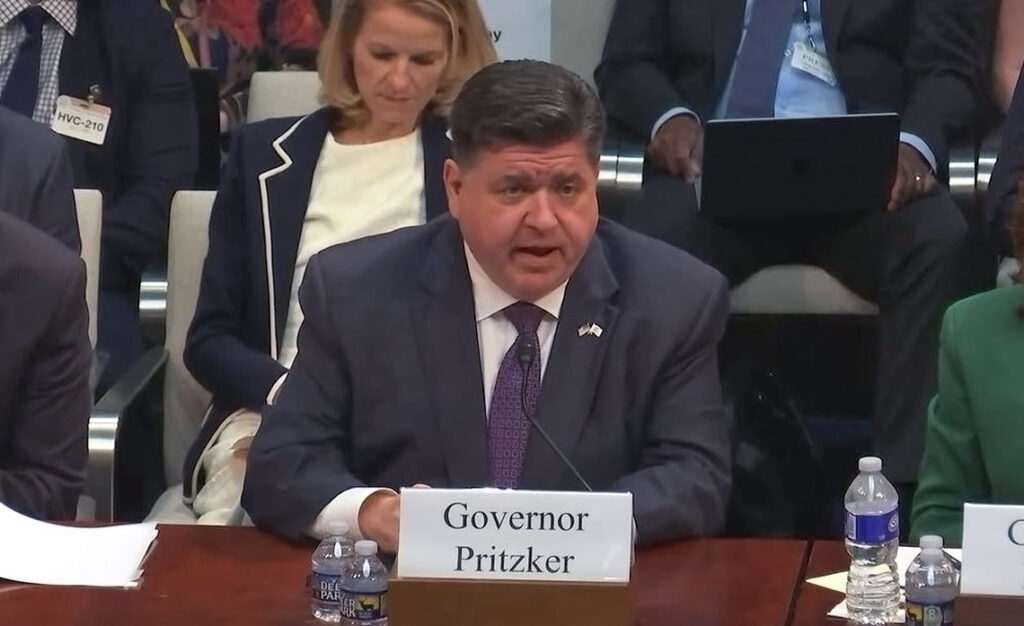
Capitol News Illinois
Gov. JB Pritzker spent hours Thursday defending his governing record and Illinois’ immigration policies as he was peppered with questions from members of the U.S. House Oversight Committee.
Pritzker and Democratic governors Kathy Hochul of New York and Tim Walz of Minnesota were summoned to Washington, D.C., by committee Chair James Comer, R-Ky., to answer questions about “sanctuary states.” The hearing mostly involved lectures from Republican members arguing immigration policies like Illinois’ diminish public safety while Democratic members blasted the Trump administration’s deportation raids.
“I invited these governors here today because as the chief executives of their states, they willfully ignore federal law, shield illegal aliens and pass the cost of free services onto their hardworking taxpayers,” Comer said. “It’s hard to figure out whose side these governors are on. They shield criminals while their own citizens pay the price.”
Pritzker countered by reiterating a point he has made publicly in Illinois several times since November’s election.
“As I have consistently said, violent criminals have no place on our streets, and if they are undocumented, I want them out of Illinois and out of our country,” Pritzker said. “And as we are reminded in Los Angeles this week, we can all agree that violence of any kind, whomever it is directed at, is unacceptable.”
Pritzker’s appearance before the committee came as nationwide protests grew over the Trump administration’s deportation tactics and increasing arrest numbers by Immigration and Customs Enforcement, especially in Los Angeles.
After protests and violence in that city last weekend prompted President Donald Trump to deploy hundreds of troops, thousands of people marched through the streets of Chicago this week protesting immigration raids. Some protestors briefly clashed with police, and 17 people were arrested, according to Chicago Police.
Dozens more protests are planned in Chicago and around Illinois on Saturday. Dubbed as “No King” protests, the gatherings are designed to contrast with a military parade planned by Trump in Washington on Saturday celebrating the U.S. Army’s 250th birthday. Saturday is also Trump’s 79th birthday.
Pritzker said if the Illinois National Guard ever needs to be activated to quell civil unrest, it’s done in coordination with local law enforcement. He criticized Trump’s deployment of the Guard in Los Angeles.
“It’s wrong to deploy the National Guard and active-duty Marines into an American city over the objection of local law enforcement just to inflame a situation and create a crisis,” Pritzker said.
Republicans on the committee alleged “sanctuary state” laws violate federal immigration laws. Illinois’ 2017 TRUST Act, signed by Republican Gov. Bruce Rauner, prohibits Illinois law enforcement from detaining people based on their immigration status and assisting in civil immigration enforcement. Law enforcement cannot hold people based on federal immigration warrants in most cases, but they can make arrests for federal criminal warrants.
Rep. Gary Palmer, R-Ala., suggested the three governors be criminally charged with obstruction because of their states’ laws. His comments follow Trump’s suggestion that California Gov. Gavin Newsom should be arrested.
“I have the highest duty to protect the people of my state, and indeed if Tom Homan were to come to my state and try to arrest us, me rather, I can say first of all that he can try,” Pritzker said of Trump’s border czar. “I can also tell you I will stand in the way of Tom Homan going after people who don’t deserve to be frightened in their community.”
Homan told CNN earlier this week Newsom hasn’t done anything to require an arrest.
Controversy over Illinois’ immigration policies
Pritzker blamed decades of federal government inaction on immigration and border security for exacerbating issues in the U.S. He also acknowledged to Comer that President Joe Biden inadequately handled immigration, particularly as 50,000 migrants were sent to Illinois mostly by the governor of Texas.
“We’re not in charge of the border in Illinois, I can tell you that,” Pritzker later told Rep. Pete Sessions, R-Texas. “We don’t have a border with a foreign country. … We had 50,000 people who came from Texas because they were shipped to us. And let me tell you, I was in favor of helping them.”
Read more: Pritzker to tell Congress ‘both parties are to blame’ for broken immigration system
Pritzker occasionally butted heads with Republicans throughout the hearing. Comer questioned the governor about the death of Katie Abraham in an Urbana car crash. She was killed in January by a suspected drunken driver illegally in the United States, according to WCIA. The GOP members mentioned several crime victims by name throughout the hearing.
Rep. Mary Miller, a Republican from Hindsboro, accused Pritzker of “rolling out the red carpet for illegal aliens,” adding “illegal aliens in our state have overwhelmed our communities.”
“I am not going to be lectured to by someone who extolled the virtues of Adolf Hitler,” Pritzker said, alluding to comments Miller made on Jan. 6, 2021.
Given multiple scenarios about what should happen to people who commit crimes while illegally in the country, Pritzker reiterated he supports deporting violent people but emphasized that must happen with due process. Democrats have argued Trump’s administration is deporting people without due process.
Republicans also criticized Illinois’ recent budgets for providing more than $1 billion of state health care benefits to people without documentation along with other programs for noncitizens. However, Pritzker is expected to sign a new state budget this month that eliminates a $330 million health care program for immigrants between ages 42 and 64.
“You do not keep track of any public service dollars in the state of Illinois that goes to illegal immigrants?” Rep. Byron Donalds, R-Fla., asked Pritzker after the governor didn’t offer specifics about exactly how much Illinois spends on “illegal immigration.”
And while Pritzker cast some blame on Republican-led border states for making Illinois part of recent waves of millions of migrants, Rep. Andy Biggs, R-Ariz., remarked that while “Illinois didn’t ask for this crisis” as Pritzker said in his opening remarks, “neither did Yuma, Arizona.”
The hearing’s message
The hearing veered off topic several times. Rep. Raja Krishnamoorthi, a Schaumburg Democrat, praised Pritzker’s work on the economy and spent time discussing Pope Leo XIV’s White Sox loyalty while Texas Republican Rep. Brandon Gill asked Pritzker whether he’s ever used a woman’s restroom.
“You’re admitting that this is just a political circus,” Pritzker responded to Gill.
Aside from Gill’s question about bathrooms, Pritzker largely avoided any immigration-related viral moments. The most intense grilling was reserved for Walz as the Democrat’s 2024 vice presidential nominee and Hochul over high-profile murders in New York.
Rep. Nancy Mace, R-S.C., remarked the hearing featured a possible preview of the 2028 Democratic presidential primary. Pritzker and Walz are both viewed as possible candidates in the next presidential election.
Pritzker’s appearance at the committee hearing is the latest opportunity to grow his national profile. His schedule throughout 2025 has been dotted with national media interviews and out-of-state speaking engagements where he has often called for more protests of the Trump administration.
Read more: Trump’s 100 days: Pritzker calls for mass mobilization as he grows his national profile
He echoed that message again Thursday.
“I encourage people to peacefully protest, and I have said that many times,” he said.
Pritzker said Trump “has created a situation where people are afraid.”
“They’re afraid they’re going to get targeted because that is what’s happening under this administration. People are getting individually targeted when they stand up and speak out,” Pritzker said.
Capitol News Illinois is a nonprofit, nonpartisan news service that distributes state government coverage to hundreds of news outlets statewide. It is funded primarily by the Illinois Press Foundation and the Robert R. McCormick Foundation.
The post Pritzker defends Illinois’ immigration laws in theatrical congressional hearing appeared first on Capitol News Illinois.
Senate’s transit funding, delivery tax proposal stalls in House
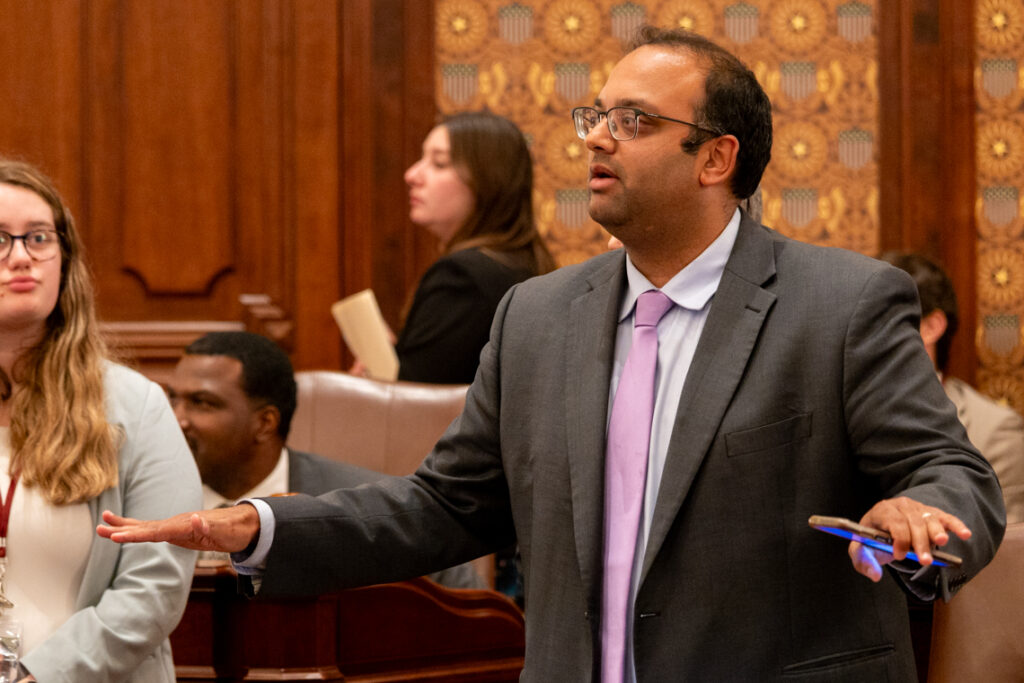
Capitol News Illinois
SPRINGFIELD – With public transit agencies in Chicagoland facing a fiscal cliff and the potential for thousands of layoffs, the state did not pass a bill that would have provided the agencies with potentially over $1 billion in new funding.
A version of the bill passed in the Senate, sponsored by Sen. Ram Villivalam, D-Chicago. But the House adjourned early Sunday morning without concurring as some of its tax hikes became too controversial. Now, the future of Chicagoland transit is in limbo as the bill awaits further action.
The Regional Transportation Authority — which oversees the Chicago Transit Authority, Metra commuter rail and Pace Suburban Bus — projects a $771 million annual operating budget shortfall.
At a hearing in the days leading up to adjournment, Amalgamated Transit Union political director Clem Balanoff told lawmakers that thousands of union bus drivers and train operators would be laid off if action wasn’t taken to fill the budget gap. RTA officials have estimated 40% service cuts are necessary to address the fiscal crisis.
Gov. JB Pritzker on Sunday said there is “significant work” left to address Chicagoland transit funding over the summer and into the fall.
“The fact is that we need to address transit funding as fast as possible,” Pritzker said.
The Senate’s proposal to do so included statewide taxes on deliveries and electric vehicle charging, as well as expanding taxes on rideshares and expanded certain Chicago taxes to the rest of Cook County and surrounding counties.
RTA and its subsidiary transit agencies will create their budgets for the upcoming fiscal year in the coming weeks. According to RTA spokesperson Tina Fassett Smith in a statement, those budgets “by law must only include funding we are confident the system will receive in 2026.”
“We think there’s probably a billion dollars for mass transit in there,” RTA Board Chairman Kirk Dillard said shortly after the Senate passed its transit bill late Saturday night.
Now, Dillard and other transit officials are going to work to minimize or avoid cuts.
“It’s clear that many in both the House and Senate support transit and our intention is to build on that shared support to identify the funding needed to avoid devastating cuts and disruption for everyone in Northeast Illinois,” Smith said in a statement.
The senate’s solution
House Bill 3438, the proposal approved by the Senate, would bail out transit authorities and send some funding outside northern Illinois. The reform package includes multiple tax increases. It’s unclear if any of these increases could come up again in future attempts to reform transit, although the House could pass it at a special legislative session or at a a future regular session.
The most controversial tax increase was a $1.50 fee added to any home delivery order placed online, with exceptions for some small businesses as well as orders containing only groceries and medication. Of the funds raised from this statewide tax, 80% would go to northern Illinois transit systems under a renamed RTA and 20% would be put into a fund for downstate transit agencies.
The bill would have also instituted a tax on real estate transfers in Cook County and the counties surrounding it. That tax is similar to one already in place in Chicago. It would have also required a charge on taxi and rideshare services in that region and a statewide 3 cents-per-kilowatt hour fee for charging electric vehicles.
“All told, we have achieved with the Senate package, a $1.5 billion investment for the northeast Illinois region,” Villivalam said. “And we have received more than double what downstate transit agencies requested for a historic investment.”
Over the two years that lawmakers have worked with the RTA on this transit funding issue, Democratic lawmakers have consistently repeated their mantra: there would be no funding without reform. To that end, they sought to institute sweeping reforms to the RTA.
Read more: Lawmakers offer 2 incomplete pitches for public transit and funding reform
The bill would rename the RTA to the Northern Illinois Transit Authority. The agency would have ultimate control over fares as well as a restructured board that places more power in the hands of the state.
While the bill will not become law soon, similar governance reforms were proposed by House lawmakers, who indicated there was agreement between the Senate and House on the reforms likely to be included in any deal.
Even still, those reform proposals drew fierce criticism from some suburban lawmakers
“This has become a bailout for Chicago CTA,” Sen. Seth Lewis, R- Bartlett, said. “We’re giving the mayor more control. We’re giving him more than a billion dollars in revenue.”
The board, under the Senate bill passed Saturday, would have five members appointed by the governor, five appointed by the president of the Cook County Board, five from the mayor of Chicago and one each from the collar counties.
Capitol News Illinois is a nonprofit, nonpartisan news service that distributes state government coverage to hundreds of news outlets statewide. It is funded primarily by the Illinois Press Foundation and the Robert R. McCormick Foundation.
The post Senate’s transit funding, delivery tax proposal stalls in House appeared first on Capitol News Illinois.