National News
9th Circuit to hear Trump’s appeal of National Guard ruling
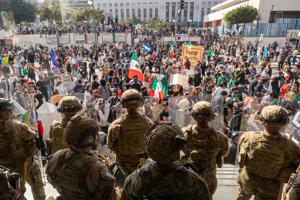
An appeals court will hear arguments Tuesday on whether President Donald Trump can keep control of the California National Guard.
Ultimately the matter could be decided by the U.S. Supreme Court.
At noon, the U.S. Court of Appeals for the 9th Circuit will hear the Trump administration’s appeal of federal Judge Charles Breyer’s temporary restraining order Thursday transferring control back to Gov. Gavin Newsom. Later the same day, the 9th Circuit issued a stay, which temporarily keeps control with Trump.
Both the 9th Circuit and the U.S. District Court for Northern California, which issued the original ruling, are based in San Francisco. The 9th Circuit is known for its liberal decisions. If the 9th Circuit rules against the Trump administration, the U.S. Department of Justice could appeal to the U.S. Supreme Court, which has a 6-3 conservative majority. The six conservative justices include three appointed by Trump, but the court has ruled against him in significant cases.
Trump took control of the National Guard and deployed 4,000 of its members to Los Angeles after protests and riots broke out downtown on the June 6-8 weekend. The protests followed mass U.S. immigration and Customs Enforcement arrests. About 300 National Guard members arrived early June 8.
Trump has also deployed 700 Marines, who started to arrive Friday to guard the Wilshire Federal Building near the University of California at Los Angeles.
Newsom and California Attorney General Rob Bonta filed a June 10 motion for a temporary restraining order or preliminary injunction to prevent the National Guard and Marines from going onto Los Angeles streets for law enforcement purposes. They argued in their motion that local police could handle crowds without federal help and that law enforcement by the military would violate the Posse Comitatus Act.
“The evidence strongly indicates that the federalized National Guard and active duty Marines deployed in Los Angeles will engage in quintessential law enforcement activity in violation of the PCC,” according to Bonta and Newsom’s motion.
The Trump administration’s 324-page appeal argued the District Court ruling is “an extraordinary intrusion” on the president’s constitutional authority to deploy the National Guard to protect federal officials. It also cites U.S.C. 12406 as giving Trump statutory power to mobilize state National Guard into federal service when there’s a rebellion or danger of rebellion against the U.S. government.
Bonta and Newsom have argued there’s no rebellion or invasion in California.
In other developments, there were over 100 “No Kings” protests Saturday in California. The largely peaceful demonstrations ranged from one with an estimated 60,000 protesters at San Diego’s waterfront to a street corner with a small crowd in Simi Valley, just north of Los Angeles.
The protests were among about 2,000 across the U.S.
Some violence broke out late Saturday on the West Coast. In Los Angeles, protesters threw glass bottles, rocks and other objects at law enforcement, LA police said.
The Los Angeles Police Department reported 38 arrests Saturday night. Thirty-five of those were for violating the downtown curfew. The rest were for failure to disperse, resisting an arrest and resisting, obstructing or delaying a police officer.
Evening violence and looting has eased since Mayor Karen Bass on June 10 started the nightly dusk-to-dawn curfew. The seventh night of the curfew will start at 8 p.m. Monday.
The LAPD Monday morning said 575 arrests have been made since June 7.
Trump: Booting Putin from G7 was a ‘very big mistake’

President Donald Trump claimed Monday that the Russia-Ukraine war could have been avoided if Moscow was still a part of the G7 forum.
Trump called Russia’s 2014 expulsion from the group a grave mistake and suggested that Putin would not have invaded Ukraine had Trump been in the White House four years ago.
“If I were president, this war would have never happened,” Trump said during a bilateral meeting with Canadian Prime Minister Mark Carney on Monday.
Heads of state from the seven allied members of the G7 summit are congregating in Alberta, Canada this week for their annual meeting on geopolitical and economic affairs.
The group is made up of the U.S., Canada, France, Germany, Italy, Japan and the United Kingdom.
In his meeting with Carney, Trump argued that the conflict between Russia and Ukraine could have been averted entirely if Russia had not been ousted from the group after annexing Crimea in 2014.
“I think you wouldn’t have a war right now if you had Russia in,” Trump said.
The president maintained that resolving the ongoing conflict would be easier if Putin was still participating in G7 talks.
“You spend so much time talking about Russia and he’s no longer at the table, so it makes life more complicated,” Trump said.
Trump put blame on former President Barack Obama and former Canadian Prime Minister Justin Trudeau for leading the efforts to axe Russia from the group over 10 years ago. Trump criticized these two leaders and sided with Putin, saying that Moscow no longer engages in diplomatic conversations with the powerful members of the G7 because of this move.
“Putin speaks to me, [but] he doesn’t speak to anybody else because he was very insulted when he got thrown out of the G8, as I would be,” Trump said.
When asked by reporters if he’s open to adding China to the G7 membership, Trump said “it’s not a bad idea.”
The president also signaled Monday that Iran is willing to de-escalate its aggressions toward Israel. Trump said a nuclear deal with Tehran is still “achievable” but expressed frustration that the Iranians nixed the agreement he offered two weeks ago.
“They’d like to talk, but they should have done that before,” Trump said.
Trump doubled down on U.S. support for Israel and warned Iran of what further aggression against America’s ally might bring.
“Iran is not winning this war,” Trump said. “They should talk immediately before it’s too late.”
Senate expected to drop tax, Medicaid edits to ‘big, beautiful bill’
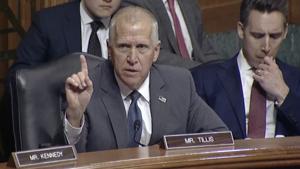
Senate Republicans are expected to reveal some of their revisions to the tax and Medicaid portions of the One Big Beautiful Bill Act, inching closer to a nail-biter floor vote.
The House-passed multitrillion-dollar budget reconciliation bill extends key portions of the expiring 2017 Tax Cuts and Jobs Act for the next 10 years. It also raises the debt ceiling by at least $4 trillion, finds $1.7 trillion in savings, and fulfills President Donald Trump’s energy, border security and defense agenda.
The Senate Finance Committee’s expected changes to the bill include making permanent three tax incentives for businesses – full reimbursement for capital investments, an expanded deduction for corporation’s interest on debt, and streamlined deductions for companies’ research costs.
The legislation will also cap the Medicaid provider tax at 3.5%, down from the House’s version which bans states from raising provider taxes higher than 6%. Other potentially controversial changes to Medicaid could be included, though the committee may leave some portions unfinished to allow for negotiations.
Other major provisions that will likely have placeholders are reductions to the state and local tax (SALT) deduction cap, which a group of House Republicans vehemently pushed for. Those lawmakers have threatened to tank the bill, assuming the Senate passes it, if the upper chamber touches the boosted $40,000 SALT deduction cap.
Senate passage is far from certain however, even though the budget reconciliation process allows the bill to pass via a majority vote.
Any changes announced Monday will likely spark opposition from at least one Republican faction. Fiscal hardliners have demanded greater spending cuts to offset the cost of the bill, while other Republicans warn they will withhold support if clawbacks of climate and energy subsidies or reductions to Medicaid spending are ramped up.
There’s also the looming question of whether the Senate Finance Committee will use an unconventional accounting method to make all the 2017 tax cuts permanent, rather than sticking with the House’s ten-year extension.
The House operated under current law baseline, which assumes that extending current tax cuts will result in trillions of lost revenue over the next decade.
But if the committee’s addition to the bill uses the current policy baseline – which would treat the 2017 tax cut extensions as a continuation of current law rather than new policy – they could paper over the cost of extension, authorizing tax cut permanence.
Republicans in both the House and the Senate have already warned they will not support a bill that uses the current policy baseline.
Supreme Court orders New York to reconsider abortion mandate
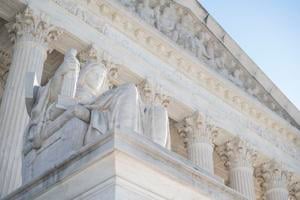
The Supreme Court ordered New York on Monday to reconsider its requirements for religious organizations to pay for medical abortions as a part of employer insurance.
“Today is a win for nuns in New York who are challenging having to pay for abortions,” said Lori Windham, senior counsel at the nonprofit Becket Fund for Religious Liberty.
Plaintiffs in Roman Catholic Diocese of Albany v. Harris argues that New York’s requirements “violate the constitution’s ‘fundamental’ requirement of ‘neutrality between religion and religion’” according to a petition by Becket Fund lawyers.
In 2017, New York required all employers to cover abortions in its employee health insurance plans. A group of religious organizations including Anglican nuns asked to be excluded from this requirement but were overruled.
In 2021, the religious groups appealed the state’s ruling to the Supreme Court when the justices asked New York to reconsider in light of a separate religious requirement decision.
The religious groups appealed yet again when the New York courts “refused to follow” the Supreme Court’s guidelines for reconsideration.
“For almost a decade now, New York’s facially unconstitutional religious discrimination has diverted them from worshipping, teaching, and serving with their faith traditions,” according to the petition. “Being ‘forced to defend themselves on matters of internal governance is itself a tax on religious liberty,’’” the petition read.
In the most recent appeal to the highest court, the justices vacated a lower court’s decision and required the New York Court of Appeals to further consider the case in light of a recent religious tax exemption decision out of Wisconsin.
The court’s verdict in Catholic Charities Bureau v. Wisconsin extended religious tax exemptions to organizations which do not proselytize one particular faith or particularly serve members of said faith.
Windham said the court’s unanimous decision to uphold the tax exemption status supports the nuns’ case as it extended rights to religious organizations that do not proselytize, like the nuns, when providing social services.
“New York state now acknowledges that its mandate is unconstitutional at least in part,” Windham said.
The court vacated the New York order even though petitioners said the issue would prevent members of the Catholic diocese from doing other work.
“Granting the petition to vacate the decision below for a second time and remanding for yet further consideration would needlessly prolong this matter, imposing significant burdens on Petitioners and other religious organizations,” the petition read.
Windham said there is still more work to be done in order to achieve a complete solution for New York’s religious organizations impacted by the insurance requirement covering abortion.
“These nuns and religious ministries want to focus on their work to serve others rather than being in court,” Windham said. “We are going to urge the New York courts to move quickly and resolve this once and for all.”
U.S. gas prices expected to rise amid Middle East conflicts

The Center Square) – U.S. consumers could soon see higher prices at the gas pump even as Iran looks to de-escalate its military conflict with Israel.
Israel launched preemptive airstrikes in the heart of Iran last week and attacks have continued. Oil prices jumped 8% on the news last Thursday and remain elevated. That could quickly translate into higher prices for U.S. motorists, said Patrick DeHaan, head of petroleum analysis at GasBuddy, which provides retail fuel pricing data.
“There’s still an increased cost that many stations have been paying as they resupply their underground storage tanks,” he told The Center Square. “So we likely still will see U.S. retail gas prices rising this week as stations pass along those increases.”
Trump said Monday that Iran wants to talk amid signs of de-escalation in the conflict.
A quick resolution could defuse rising gas prices.
“The recent potential de-escalation may limit those increases,” DeHaan said.
Israel’s destructive attacks on Iran’s nuclear sites weakened the nation. Israeli attacks also killed Iranian military leaders.
Moving forward, it’s possible that by the by the upcoming weekend, gas prices, after going up, may start to recede, but it’s obviously a pretty volatile situation,” DeHaan said. “I would hope that with today oil declining, it will limit the amount of increases that we’ll be seeing at the pump for the first half of this week.”
Some states may see gas prices spike faster than others, but the increases are likely to affect prices across the nation.
“We tend to see more pricing volatility, more sudden shifts in gas prices in areas like the Great Lakes, Michigan, Indiana, Ohio, as well as some markets like Texas and Florida, where gas prices tend to be a bit more fast-moving,” he said. “But everyone should see similar increases. Some folks may just seen them sooner than other regions.”
The average price for a gallon of gasoline in the U.S. stood at $3.14 on Monday, according to AAA.
GasBuddy noted that nation’s average price of gasoline increased for the first time since May, climbing 1.1 cents compared to a week ago. GasBuddy said the U.S. average stands at $3.08 per gallon. The national average is down 9.5 cents from a month ago and is 32.7 cents per gallon lower than a year ago, according to the company. The states with the lowest average prices were Mississippi ($2.64), Tennessee ($2.66), and Oklahoma ($2.68); the states with the highest average prices were California ($4.57), Hawaii ($4.44), and Washington ($4.31).
Fear tends to be a powerful motivator when it comes to gas prices, DeHaan said. That, along with a host of other complex factors, mean gas prices tend to rise more quickly than they fall, he added.
“Retail prices probably do move up a little faster than they go down, but a lot of the time, gas stations, often don’t fully raise their price as quickly as their own cost goes up and that also then causes them to lower prices at a slower rate,” he said.
Consumers can expect higher prices to last at least as long as the conflict between Israel and Iran.
“The impact to oil and gas prices will last as long as the conflict does,” DeHaan said. “Once the conflict shows the potential to die down or resolve, then we likely will start to see the impacts at the pumps start to fade away.”
Watchdog: Millionaires enrolled in Medicaid, costing America billions

It’s not just lower-income people or those with disabilities using Medicaid in the United States.
A new investigation led by the Patient First Coalition found that tens of thousands of wealthy people remain enrolled in Medicaid, the taxpayer-funded health insurance program meant for low-income and disabled Americans.
It’s an issue happening nationwide, the report said, though Ohio, Arizona, and South Carolina represent some of the more egregious examples. The issue is costing American taxpayers over $200 billion annually, the Patient First Coalition says.
Shannon Burns, a senior advisor with the group, told The Center Square in a phone interview that, “What we’re looking at is not reform. This is just simply asking the federal government to enforce the law.”
Burns is referring to the Medicaid Extenders Act of 2019. The bipartisan law requires states to verify people’s Medicaid eligibility.
In Ohio, the Department of Medicaid checked the assets of a sample of ABD (Aged, blind, and disabled) enrollees. However, it found that over 10,000 millionaires were improperly enrolled in the program, according to the Patient First Coalition. The same is true for around 8,000 people in South Carolina and over 20,000 in Arizona.
That’s the case even though Ohio and Arizona have Medicaid asset limits of $2,000. A Medicaid asset limit is the maximum value of assets an individual can own to qualify for Medicaid.
Additionally, Ohio only had its contractor, LexisNexis Risk Solutions, examine 56% of the files, according to Patient First Coalition. Only a quarter of enrollees were checked in Arizona and South Carolina — and only for liquid assets, as was the case in Ohio.
“This contractor only looked for the presence of liquid assets in U.S. bank accounts with routing numbers,” Burns said. “They didn’t look at second homes, luxury cars, or even stocks.”
So far, no members of Congress have launched a national oversight investigation into the matter. Yet, the Patient First Coalition is calling for one, and Burns said just one inquiry could expose a massive scandal.
“The #MedicaidMillionaires scandal clearly demonstrates an immediate need for congressional intervention,” Burns said in a statement. “The extensive systemic fraud identified in South Carolina and Ohio represents a unique opportunity to recover over $200 billion annually. Congress must act swiftly to eliminate this widespread abuse by throwing millionaires off Medicaid, ensuring Medicaid serves only those who truly need assistance.”
Burns added that some state Medicaid officials claimed the Biden administration discouraged disenrollment, keeping people on the rolls even if they didn’t qualify for Medicaid.
“This isn’t waste, fraud, and abuse,” Burns said. “This is a system that’s designed to steal the money from those that actually need it.”
The Patient First Coalition is urging Congress to take action.
It wants a full 50-state audit of Medicaid eligibility vendors, enforcement of the 2019 Medicaid Extenders Act, and hearings on the scope of the fraud. They’re also calling on the Congressional Budget Office to update its scoring to reflect the billions in potential savings so that recovered funds can be redirected to support Trump’s proposed “Big Beautiful Bill.”
WATCH: Trump says U.S., Canada have ‘different concepts’ for trade deal
President Donald Trump said Monday that he and Canada Prime Minister Mark Carney have different concepts for trade between the two neighboring countries but hope to reach an agreement soon.
Trump met with Carney at the G7 Summit in Kananaskis, in the Canadian Rockies. Trump dominated the brief news conference, and Carney essentially let Trump lead the conversation with reporters ahead of the meeting.
Asked what was holding up a trade deal between the two nations, Trump said they had different concepts for what that would look like.
“It’s not so much holding up, I think we have different concepts, I have a tariff concept, Mark has a different concept, which is something that some people like, but we’re going to see if we can get to the bottom of it today.”
Trump continued: “I’m a tariff person, I’ve always been a tariff person. It’s simple. It’s easy. It’s precise and it just goes very quickly. And I think Mark has a more complex idea, but also very good, so we’re going to look at both and we’re going to come out with something hopefully.”
Trump said a deal was “achievable” quickly, but didn’t give a more precise timeline.
Shortly after taking office in January, Trump hit Canada and Mexico with 25% tariffs for allowing fentanyl and migrants to cross their borders into the U.S. Trump later applied those 25% tariffs only to goods that fall outside the free-trade agreement between the three nations, called the United States-Mexico-Canada Agreement.
Trump put a 10% tariff on non-USMCA compliant potash and energy products. A 50% tariff on aluminum and steel imports from all countries into the U.S. has been in effect since June 4. Trump also put a 25% tariff on all cars and trucks not built in the U.S.
The tariffs have frustrated Canadian leaders and residents. Tensions between the two neighboring countries have been high.
Trump has repeatedly suggested that Canada join the U.S. as its 51st state. He previously called former Canadian Prime Minister Justin Trudeau “governor” regularly.
Economists, businesses and some publicly traded companies have warned that tariffs could raise prices on a wide range of consumer products.
Trump has said he wants to use tariffs to restore manufacturing jobs lost to lower-wage countries in decades past, shift the tax burden away from U.S. families, and pay down the national debt.
A tariff is a tax on imported goods paid by the person or company that imports the goods. The importer can absorb the cost of the tariffs or try to pass the cost on to consumers through higher prices.
Update: Federal charges brought against Minnesota shooter
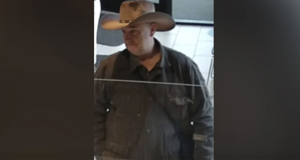
Federal stalking and murder charges have been filed against 57-year-old Vance Boelter in a 20-page charging document on Monday in what was described as the “stuff of nightmares.”
Boelter is expected to have a 1:30 p.m. Monday appearance in federal court in St. Paul.
The charges include firearms offenses, stalking using interstate commerce and murder for the stalking and killing of Minnesota House Speaker Emeritus Melissa Hortman and her husband along with the shooting of state Sen. John Hoffman, DFL-Brooklyn Park, and his wife. The Hoffmans are expected to make a full recover.
Murder charges from Hennepin County have also been filed.
Acting U.S. Attorney for District of Minnesota Joe Thompson said that, based on prior cases, he believes that the federal charges will be litigated first.
“Political assassinations are rare, they strike at the very core of our democracy,” Thompson said.
Thompson detailed many of Boelter’s action, including wearing a “hyper-realistic silicone mask” while knocking on the two politicians’ doors.
Thompson said that he “stalked his victims like prey.”
Boelter drove a black Ford SUV with emergency lights on and license plates marked as police while displaying a police badge and carrying a Beretta 9mm. Boelter allegedly repeatedly knocked on the doors, yelling “this is the police, open the door” before the door was opened.
“It is pretty clear from the evidence that he has been planning this for a long time,” Thompson said.
Further charges can be filed later and Thompson said that the death penalty is possible for some of the charges but “it is too early to tell.”
“We brought the charges that we thought are appropriate right now,” he said.
Boelter also stopped at the homes of two other Minnesota officials, one who was not home and another in New Hope where Boelter encountered a police officer, before proceeding to the Hortmans’ home in Brooklyn Park.
Minnesota state Sen. Ann Rest, DFL-New Hope, said in a statement that the shooter had also been near her home that morning.
“I have been made aware that the shooting suspect was parked near my home early Saturday morning,” Rest said in a statement. “I am so grateful for the heroic work of the New Hope Police Department and its officers. Their quick action saved my life.”
Police found “voluminous writings” in both Boelter’s vehicle and home regarding planning for the shootings and lists of names of targets.
Thompson said that there has been nothing like a “unabomber manifesto” that he has seen, but many were plans and surveillance of elected officials and not a “political screed or manifesto” that would identify the shooters motive other than “to go out and murder people.”
Officials said that 45 names of Minnesota officials were found in the writings along with other names out of state. There were names in multiple notebooks across multiple writings, they said, some of which were repeated names.
“According to the charges, the defendant had a list of possible targets and went to the homes of public officials to conduct violent attacks,” FBI Director Kash Patel said in a statement. “This type of violence is unacceptable, and the FBI stands united with our law enforcement partners to find and hold accountable anyone who commits such despicable acts. I commend all the law enforcement officers who worked throughout the weekend to find the defendant and take him into custody.”
A spokesman for Sen. Tammy Baldwin, D-Wisconsin, and Wisconsin U.S. Rep. Mark Pocan were both listed by the shooter, he wrote, are part of 11 Wisconsin lawmakers the Milwaukee Journal-Sentinel reported were listed by the shooter as targets.
• The is an updated versions of the story published earlier below:
———-
10:30 a.m. update
The Hennepin County Attorney’s Office plans to file first-degree murder charges against Vance Boelter, who was arrested by a group of 20 SWAT teams in Green Isle, Minnesota, on Sunday night after allegedly shooting two Minnesota lawmakers.
Hennepin County Attorney Mary Moriarty said that she filed second-degree murder charges in order to get a warrant for the arrest of suspect Vance Boelter, 57, that could be used nationwide. Moriarty said that those were the highest charges that could be filed at that time.
Federal charges against Boelter are expected to be announce later Monday morning while Boelter has his first scheduled appearance at 1:30 p.m.
Boelter is accused of dressing as a police officer and shooting and killing House Speaker Emeritus Melissa Hortman and her husband.
Boelter is accused of first going to the nearby home of State Sen. John Hoffman, DFL-Brooklyn Park, and shooting both him and his wife.
Boelter was booked into jail early Monday and was expected to be picked up by federal agents at 10 a.m. on Monday.
“Given the scale of this investigation, the review of evidence will take time,” Moriarty said.
Hennepin County Sheriff Dawanna Witt said that Hoffman and his wife, Yvette, are expected to make a full recovery.
Yvette said in a text message posted by Sen. Amy Klobuchar, R-Minnesota, that she was shot eight times and her husband was shot seven times.
“We are gutted and devastated by the loss of Melissa and Mark,” Yvette wrote. “We have no words. There is never a place for this kind of political hate.”
• The is an updated version of the story published earlier below:
———-
Police found three AK-47 style rifles, a 9 mm handgun and a list of names of public officials in the Ford SUV of murder suspect Vance Boelter, according to a warrant request that was under seal until Boelter was arrested late Sunday.
Police also say they found a ballistic vest, disassembled 9mm firearm, a mask and a gold police-style badge, according to the warrant.
That warrant was released after Boelter was detained in the woods near Green Isle, Minnesota, following what Minnesota Gov. Tim Walz called a “complex and dangerous manhunt.”
Boelter is accused of dressing as a police officer and shooting and killing House Speaker Emeritus Melissa Hortman and her husband.
Boelter is accused of first going to the nearby home of State Sen. John Hoffman, DFL-Brooklyn Park, and shooting both him and his wife.
The Hoffman’s daughter, Hope, had called 911 and reported the shooting.
Brooklyn Park Police then sent officers to the Hortmans’ home, where they saw the suspect, with the same Ford SUV, shoot Hortmans’ husband.
After exchanging fire with police, Boelter escaped the area and the manhunt began.
“Boelter exploited the trust our uniforms are meant to represent,” Minnesota Department of Public Safety Commissioner Bob Jacobson said in a Sunday night press conference.
Trump beheading post goes viral, scrutiny on von Haefen intensifies
Legislative attorneys are meeting with the speaker of the North Carolina House of Representatives to determine the next steps for a lawmaker who promoted a sign reflecting pursuit of the decapitation of President Donald Trump.
Speaker Destin Hall, R-Caldwell, spoke about the acts by Wake County Democratic Rep. Julie von Haefen in a statement Sunday evening. Members of Congress from coast to coast also weighed in as the news went viral.
“Her disgraceful behavior fails to meet the standards expected from House members and sets a dangerous precedent in an already volatile political climate,” Hall said in part. “I am examining next steps with our legislative attorneys to ensure this behavior does not continue.”
The state’s first-term Democratic Gov. Josh Stein, the North Carolina Democratic Party and the Democratic National Committee remained silent Monday morning, about 48 hours since the post first appeared.
The Center Square reached out to von Haefen’s office on Sunday at 2:51 p.m. At 3 p.m., she posted an explanation to her Facebook page. Increasing calls for her resignation followed, including the House speaker’s statement about three hours later.
U.S. Rep. Dr. Greg Murphy, R-N.C., says von Haefen “calls for the beheading of the U.S. president. These libs have lost their mind. The nation is not behind them.”
Using his personal account and not that tied to his U.S. Senate seat, Republican Utah Sen. Mike Lee said, “Calling for the president of the United States to be beheaded is un-democratic. It should also be un-Democratic. Tragically, it seems increasingly on-brand for today’s Democrats.”
The post by von Haefen was made Saturday morning. Her Facebook account remained active Sunday but her account on X was gone.
“Deleting your public profile isn’t accountability – it’s hiding,” said state Rep. Brenden Jones, R-Columbus. “North Carolinians deserve better.”
Monday morning, he added, “It has been over a day since Julie von Haefen posted a picture depicting the execution of the president and not a single North Carolina House Democrat has condemned her actions. Their silence speaks volumes.”
On social media, von Haefen is accused of posting an image of a woman holding signage with the image of a bloody, used guillotine; the words “In these difficult times, some cuts may be necessary”; and a prop on one end of the handle representing a beheaded Trump. The other end also had a head, a German Nazi Party swastika scrawled across it.
Minutes after The Center Square sought authentication from her office, she posted to Facebook, “Yesterday, I posted a video on social media containing crowd photos from the No Kings protest in Raleigh. One of the images of a protestor holding a sign was inappropriate, and I later edited the video to remove the photo.
“Let me be clear: I condemn political violence in all forms. My focus remains on bringing people together and fighting for the values that matter to North Carolinians. Like so many, I was horrified by the violence in Minnesota. There is no place for that kind of extremism in our democracy, no matter the target, no matter the party.”
Von Haefen did not offer an apology.
Her caption on Saturday morning said, “No Kings Protest in Raleigh. Amazing turnout all across the Triangle today, including this event at the Capitol hosted by Wake Democrats and North Carolina Democrats.” There were hashtags for an expletive, no kings and Raleigh.
The image, however, drew the criticism. Some was on von Haefen’s act itself, others said it was the timing of the shootings in Minnesota which took the lives of a state representative and her husband, and injured a state senator and his wife.
State Rep. Mike Schietzelt, R-Wake, called von Haefen’s actions “unconscionable.”
Trump survived an assassination attempt on July 13 of last year in Butler, Pa. On Sept. 15, he was golfing in Florida when a man with a rifle was found hiding adjacent to the property in what many believe was to be a second attempt on his life.
Accused shooter detained in Minnesota woods

The suspect in the shooting of four people, including two high-ranking Minnesota politicians, has been detained in the woods near Green Isle, Minnesota after a “complex and dangerous manhunt,” according to Gov. Tim Walz.
A number of SWAT teams were in the area after law enforcement received a tip before Vance Boelter, 57, was taken into custody, according to Minnesota Superintendent of the Bureau of Criminal Apprehension Drew Evans.
The suspect crawled to law enforcement teams and was ultimately taken into custody, according to Minnesota State Patrol Assistant Chief Jeremy Geiger. Boelter was armed, Evans confirmed.
“There is no question this is the largest manhunt in the state’s history,” Brooklyn Park Police Mark Bruley said.
Boelter is accused of shooting and killing House Speaker Emeritus Melissa Hortman and her husband in what Gov. Tim Walz called a politically-motivated assassination early Saturday.
State Sen. John Hoffman, DFL-Brooklyn Park, and his wife also were shot about 2 a.m., and Hortman and her husband were found about 90 minutes later.
“One man’s unthinkable actions have altered the state of Minnesota,” Walz said.
Walz said that Hoffman came out of his final surgery and is healing and the “heroic actions” of the Hoffmans and their daughter Hope saved many lives.
The gunman allegedly escaped through a back door of Hortman’s house following an exchange of gunfire with police. Media outlets reported that Boelter had a list of about 70 names in his vehicle which included the lawmakers who were shot, other lawmakers and abortion providers.
“Boelter exploited the trust our uniforms are meant to represent,” Minnesota Department of Public Safety Commissioner Bob Jacobson said.
• The is an updated version of the story published earlier below:
———-
Authorities on Sunday say they found the car of the man wanted in connection with the shootings of two Minnesota state lawmakers and their spouses, killing one of the couples. The suspect, Vance Boelter, 57, was not with the car.
Drew Evans with the Minnesota Bureau of Criminal Apprehension said Sunday authorities are seeking the public’s help locating Boelter, who is considered armed and dangerous.
“We are asking for the public’s help at this point in time in locating Vance Luther Boelter, who is a 57-year-old white male, 6 feet 1 inches tall, 220 pounds with brown hair and brown eyes,” Evans said. “We still don’t know if additional people are involved, but this individual is the one that we are looking as a person of interest now.”
Boelter’s wife was reportedly stopped near Onamia, Minnesota, on Saturday and found with a weapon, ammunition, cash and passports, according to KSTP Channel 5. KSTP reported that Boelter’s wife was the subject of a traffic stop at a convenience store located near Onamia late Saturday morning in a vehicle carrying at least three other relatives of the accused shooter.
Authorities also think Boelter is no longer in the area of the shootings and issued an alert to South Dakota authorities.
House Speaker Emeritus Melissa Hortman and her husband were shot and killed early Saturday in what Gov. Tim Walz called a politically-motivated assassination.
State Sen. John Hoffman, DFL-Brooklyn Park, and his wife also were shot about 2 a.m., and Hortman and her husband were found about 90 minutes later.
The gunman allegedly escaped through a back door of Hortman’s house following an exchange of gunfire with police. Media outlets reported that Boelter had a list of about 70 names in his vehicle which included the lawmakers who were shot, other lawmakers and abortion providers.
The shootings happened seven miles away from each other, and law enforcement officials have called both shootings “targeted.”
Boelter was appointed by Walz to serve on the Governor’s Workforce Development Board in 2019. Various media outlets reported that he is the director of Praetorian Guard Security Services, where he had access to police-like security equipment.
The FBI said it is offering a reward of up to $50,000 for information leading to the arrest of Boelter.