National News
SCOTUS to take up ‘faith-driven’ pregnancy center case

The U.S. Supreme Court agreed to hear a case that involves a New Jersey crisis pregnancy center, part of a high-profile debate that could test the limits of First Amendment rights including freedom of speech and freedom of religion.
The Supreme Court justices decided to review an appeal that was filed from First Choice Women’s Resource Centers, a “pro-life and faith-driven” nonprofit that was accused by New Jersey Democratic Attorney General Matthew Platkin in 2023 of misleading its patients. Platkin is seeking the group’s donor information.
“The First Amendment protects First Choice’s right to freely speak about its beliefs, exercise its faith, associate with like-minded individuals and organizations, and continue to provide its free services in a caring and compassionate environment to people facing unplanned pregnancies,” Erin Hawley, Alliance Defending Freedom (ADF) Senior Counsel, said in a statement.
Fox News reported that Platkin “sought records over allegations the pregnancy centers might be misleading women about offering abortion services.”
“New Jersey’s attorney general is targeting First Choice – a ministry that provides parenting classes, free ultrasounds, baby clothes, and more to its community – simply because of its pro-life views,” Hawley said.
The decision to hear the case came after the Supreme Court overturned Roe v. Wade in 2022, prompting multiple states to place restrictions on or even ban abortions, while other states made the decision to protect abortion rights.
First Choice and other crisis pregnancy centers offer women a range of services, including pregnancy tests and counseling. They oppose abortion and encourage pregnant women to choose alternatives to ending a pregnancy.
Alliance Defending Freedom is a conservative and Christian legal advocacy group that is representing First Choice at the upcoming hearing.
The case is set to be heard in October.
Trump to depart G7 summit early after warning Iranians to leave Tehran

The White House confirmed that President Donald Trump would be departing the G7 summit early, citing matters in the Middle East.
Trump told reporters he had to be “back as soon as I can…I have to be back early.”
“This is big stuff,” the president told reporters Monday evening in Alberta, Canada.
Despite earlier unconfirmed reports that the U.S. had joined Israel in a fight against Iran, Alex Pfeiffer, deputy assistant to the president and principal of deputy communications at the White House, denied the reports.
“This is not true. American forces are maintaining their defensive posture, and that has not changed. We will defend American interests,” Pfeiffer posted to X.
Earlier in the evening, White House Press Secretary Karoline Leavitt announced the president’s early departure from the summit after what she described as a great day for the president.
“President Trump had a great day at the G7, even signing a major trade deal with the United Kingdom and Prime Minister Keir Starmer. Much was accomplished, but because of what’s going on in the Middle East, President Trump will be leaving tonight after dinner with Heads of State,” Leavitt posted to X.
Earlier in the day, Trump posted an ominous message to Iran and its people, warning them to evacuate.
“Iran should have signed the ‘deal’ I told them to sign. What a shame, and waste of human life. Simply stated, IRAN CAN NOT HAVE A NUCLEAR WEAPON. I said it over and over again! Everyone should immediately evacuate Tehran!” the president posted to Truth Social.
He followed the warning with another post, reiterating that Iran should not have nuclear weapons.
“AMERICA FIRST means many GREAT things, including the fact that, IRAN CAN NOT HAVE A NUCLEAR WEAPON. MAKE AMERICA GREAT AGAIN!!!” he posted later.
This is a developing story…
Congressman urges Hegseth not to downgrade Luke AFB
U.S. Rep. Abe Hamadeh, R-Arizona, wants the Defense Department to reconsider changes at Luke Air Force Base near Phoenix.
During a June 4 hearing of the House Armed Service Committee, Hamadeh was able to confirm a report he received about the downgrade of the 56th Fighter Wing Commander billet at the base from a brigadier general to a colonel.
In a June 12 letter to Defense Secretary Pete Hegseth and General David W. Allvin, chief of staff of the Air Force, Hamadeh called the downgrade a “shortsighted decision” affecting Luke AFB, known for its training programs for F-35 fighter pilots. The Center Square received a copy of the letter from Hamadeh.
“Luke’s mission is to ‘Train the World’s Greatest Fighter Pilots and Combat-Ready Airmen,’ and its instructors, tactics and techniques are truly world-class, unmatched by any adversary,” wrote Hamadeh. “The 56th Fighter Wing is currently responsible for integrated operations with five NATO allies, and soon, Luke AFB will train Royal Canadian Air Force F-35 pilots and crews.”
The NATO allies are Belgium, Denmark, Italy, Netherlands and Norway.
Meanwhile, Luke AFB has also trained pilots and personnel from nations such as Australia, Taiwan, Germany, Poland and Singapore.
“The base hosts the only F-35 International Intelligence Formal Training course in the world, creating partner intelligence professionals for high-end F-35 operations integral to winning the Great Power Competition,” wrote Hamadeh. “Downgrading Luke needlessly risks sending the wrong signal to our security partners.”
In a statement to The Center Square following the June 4 hearing, Hamadeh said that “while he supports and appreciates the need to reduce the bloat in our military at the top, we cannot ignore the importance of Luke Air Force Base. Not only to those of us who call CD8 home, but to our nation’s national security.”
With an airspace larger than the size of the state of Maryland, Hamadeh said, “Luke trains 75% of F-35 pilots worldwide and flies 25% of global F-35 flight hours.”
Hamadeh added Luke AFB’s national security role is only expanding.
“Given the fact that Luke’s mission has many growth opportunities, and international partners who send their General Officer counterparts to Luke, having a reciprocal rank leading those engagements is advantageous for obvious reasons,” wrote Hamadeh. “Luke’s unique mission is of profound significance. We shouldn’t rush to fix what’s not broken.”
According to Hamadeh, the Luke AFB community involves 7,000 active-duty service members, 2,500 civilians, 89,000 Department of Defense beneficiaries and 9,000 retirees, all of whom “deserve to continue to have the strongest representation possible.”
CA leg quashed bill requiring state to cooperate with ICE for migrant convicts

According to federal law enforcement officials, California’s sanctuary state policy that prohibits immigration enforcement in the state jail and prison system is responsible for many of the recent raids.
Earlier this year, California legislators quashed a proposed bill that would have required local law enforcement to cooperate with federal immigration authorities for illegal immigrants convicted of serious and violent felonies. The bill’s author – Senate Minority Leader Brian Jones, R-San Diego – said the legislation would have resulted in the need for fewer ICE raids.
A Senate bill passed by Democrats, called the California Values Act, has been criticized by a U.S. attorney.
“SB 54 (Sanctuary State) is the reason you are seeing large scale enforcement operations in California,” said U.S. Attorney Bill Essayli, who served as a state Assemblyman until his federal appointment, on X. “We would much rather work with local law enforcement to focus on those involved in criminal activity, but CA law makes that illegal.”
Essayli further detailed that under SB 54, local jails are unable to honor U.S Immigration and Customs Enforcement detainers — requests that the jails hold individuals until ICE can take custody. ICE is not allowed to enter jails to screen for immigration status, and local police are not allowed to ask criminals about their immigration status or report a criminal to ICE.
“Accordingly, ICE has no choice but to go into the community and look for the criminals who have been released by local authorities,” continued Essayli.
On June 6, on the first day of Los Angeles’s ongoing immigration-enforcement-related protests and riots, Los Angeles Police Department Chief Jim McDonnell reiterated the department’s policy on cooperation with ICE, including its desire to ensure all residents feel comfortable calling for police assistance and reporting crimes.
“The LAPD is not involved in civil immigration enforcement. While the LAPD will continue to have a visible presence in all our communities to ensure public safety, we will not assist or participate in any sort of mass deportations, nor will the LAPD try to determine an individual’s immigration status,” said McDonnell. “Since 1979, our policy has barred officers from initiating police action solely to determine a person’s immigration status … I want everyone, including our immigrant community, to feel safe calling the police in their time of need and know that the LAPD will be there for you without regard to one’s immigration status.”
Jones’ SB 554, which failed to pass the Senate Public Safety Committee, would have required that California law enforcement agencies provide requested release dates to federal immigration officials for individuals convicted of serious or violent felonies or wobblers – crimes serious enough to be prosecuted as either a felony or a misdemeanor. Eligible convictions include rape, robbery, human trafficking, and committing a crime while out on bail or while released under one’s own recognizance.
“California Republicans had a solution in our Senate Bill 554, but the ‘Sanctuary City’ crowd brought this on themselves by prohibiting state and local law enforcement from cooperating with the Feds to identify violent illegal immigrants in prisons and jails,” said Jones, regarding the ongoing protests and riots. “Now the Feds have to run broader raids, like what we’re seeing in LA, which sweep up way more people. This whole thing was easily preventable.”
Opponents of SB 554, such as the Immigrant Legal Resource Center, say the bill would have increased deportations.
“In a time when immigrants and their loved ones are facing widespread fear from the current presidential administration, SB 554 would not only exacerbate fear, but roll back years of local progress that promotes building strong, and safe communities,” wrote ILRC in opposition. “Sen. Jones wants to use our local and state tax dollars to turn more Californians over to the Trump administration.”
The bill failed along party lines, with one vote in favor from state Sen. Kelly Seyarto, R-Murietta, and four votes against from state Sens. Jesse Arreguín, D-Berkeley; Anna Caballero, D-Merced; Lena Gonzalez, D-Long Beach; Sasha Pérez, D-Alhambra, and Scott Wiener, D-San Francisco.
Senate panel kills SALT compromise, permanently extends tax cuts in budget bill

The U.S. Senate Finance Committee has released some of the final pieces of Republicans’ multitrillion-dollar budget reconciliation bill implementing President Donald Trump’s policy priorities.
Yet the major tax policy changes have already caused an uproar among Republican lawmakers in both chambers, jeopardizing the bill’s chances of reaching Trump’s desk by his self-imposed July 4 deadline.
Released Monday evening, the committee’s revisions to the House-passed One Big Beautiful Bill Act include making key provisions of the expiring 2017 Tax Cuts and Jobs Act permanent, rather than the House’s 10-year extension.
“This bill prevents an over-$4 trillion tax hike and makes the successful 2017 Trump tax cuts permanent, enabling families and businesses to save and plan for the future,” Senate Finance Committee Chairman Mike Crapo, R-Idaho, said Monday. “It powers the economy by permanently extending critical pro-growth provisions and introduces new incentives for domestic investment, providing certainty for American job creators to spur domestic economic activity and invest in their workers.”
The codification of the TCJA could surge the national debt and deficit, given the trillions of dollars in federal revenue loss by 2034, according to budget watchdogs.
This includes the $15,000 maximum standard deduction, the 20% Qualified Business Income deduction, and the doubled child tax credit of $2,000, though both parents now need a Social Security number to claim it.
It also would make key business tax credits permanent – full reimbursement for capital investments, an expanded deduction for corporation’s interest on debt, and streamlined deductions for companies’ research costs.
Despite rumors the committee would axe certain temporary tax proposals in the OBBBA, lawmakers kept the four-year provisions nixing taxes on tips and overtime and ending interest on loans for American cars. However, it lowers a temporary $500 boost to the child tax credit that the House included, instead capping it at $2,200 for the next four years.
The changes also would cap the Medicaid provider tax at 3.5%, down from the House’s version that bans states from raising provider taxes higher than 6%.
The committee infuriated fiscal hawks in the House and Senate by slowing phaseouts of renewable energy subsidies from the 2022 Inflation Reduction Act, though those could still change in future negotiations.
Senate Majority Leader John Thune, R-S.D., may still be able to get 51 votes for the filibuster-skirting bill to pass the upper chamber. But the Senate committee’s sledgehammer to the House’s quadrupled state and local tax (SALT) deduction cap will make the bill “dead on arrival” when it returns to the lower chamber, according to Rep. Mike Lawler, R-N.Y., and other New York lawmakers.
The committee’s changes to SALT — making the current $10,000 SALT deduction cap permanent rather than raising it to $40,000 — undo crucial negotiations Speaker Mike Johnson, R-La., made to get the OBBBA through the House.
That number could also change, however, as Senate leaders assured lawmakers it is only a placeholder as they continue to haggle over a final compromise number.
Politicians divided over federal plan to sell public lands

Colorado Democrats are leading the effort against legislation proposed by Senate Republicans that would sell off millions of acres of public lands.
The proposal is to add the provision to the One Big Beautiful Bill Act, the budget reconciliation measure passed by the House. It was detailed in a budget blueprint that was released last week by the Senate Energy and Natural Resources Committee.
The senators’ plan would require the government to auction off between 2.2 million and 3.3 million acres of land owned by the Bureau of Land Management and the U.S. Forest Service. The sales would generate between $5 billion and $10 billion of income between fiscal years 2025 and 2034.
In total, the federal government owns roughly 640 million acres throughout the United States, or nearly one in three acres. That means, at most, this legislation would sell only 0.5% of all the federal land.
Democrats are pushing back.
“Our public lands are our most cherished heirlooms. They are American treasures that we hand down to future generations,” said U.S. Sen. John Hickenlooper, D-Colorado. “Our public lands are not for sale now, or ever. We stopped a similar effort in the House — we’ll stop this one, too.”
U.S. Sen. Mike Lee, R-Utah and chair of the Senate Energy and Natural Resources Committee, is leading the initiative to sell the land. He said this move will help address a nationwide housing crisis, while providing more money to help the federal government pay off debt.
“I am proud to unveil this historic legislation that will power our country, unleash energy innovation and help countless American families prosper,” Lee said.
The land that would be sold are considered underutilized “isolated parcels.” Before deciding what land to sell, the bill stipulates that federal authorities should consult with state, local and tribal governments.
“The legislation specifically exempts national parks, national monuments, wilderness areas, national recreation areas and 11 other categories of federally protected land from sales to build much-needed housing for American families,” Lee said.
If the proposal is passed, land eligible for sale would come from 11 states: Alaska, Arizona, California, Colorado, Idaho, Nevada, New Mexico, Oregon, Utah, Washington and Wyoming.
Colorado Attorney General Phil Weiser, a Democrat who is also running for governor in the state, said he opposes the proposal.
“Colorado’s public lands should NOT be for sale to the highest bidder. I will always stand firm,” Weiser said. “That’s because public lands are for the public.”
Yet other leaders from those western states affected are in favor of the sale.
“These are important, commonsense policies for better energy and public lands strategy,” said Utah Gov. Spencer Cox. “Senator Lee deserves enormous credit for championing the use of certain federal lands for housing — especially in rural communities surrounded by federal land, and even in cases where federal land sits within city boundaries and could be better used for homes. I appreciate that the bill prioritizes bids from states and cities, includes strong safeguards, and puts some of the proceeds toward infrastructure to support new housing.”
The U.S. House has already voted against similar legislation this session, which would have sold federal lands in Utah and Nevada.
Congress asks Pentagon for progress report after 7 failed audits
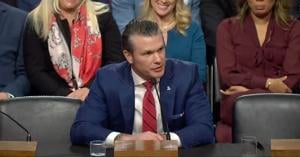
Leaders of a congressional subcommittee wrote to U.S. Secretary of Defense Pete Hegseth on Monday asking for an update on the Pentagon’s progress toward passing a financial audit.
The Department of Defense has failed to account for its spending for years properly. It failed seven consecutive audits and isn’t expected to do any better next year.
Subcommittee on Government Operations Chairman Pete Sessions, R-Texas, and Ranking Member Kweisi Mfume, D-Maryland, asked Hegseth for a bipartisan briefing on the DOD’s progress toward passing an audit by the end of the month.
“DOD spending comprises nearly half of the federal government’s discretionary spending and its physical assets make up more than 70% of the government’s physical assets,” they wrote in the letter. “The failure to fully account for these assets and spending results in gaps in DOD’s operational readiness and the financial strength of the entire federal government.”
The Pentagon is the only agency subject to the Chief Financial Officers Act of 1990 “that has never obtained an unmodified or ‘clean’ audit opinion on its financial statements, primarily due to serious financial management and system weaknesses,” Asif Khan, a director of financial management assurance at the Government Accountability Office, told the subcommittee in April.
Sessions and Mfume said they want an update to make sure the Pentagon’s progress is on track to meet the 2028 deadline.
“As stated in previous hearings, if DOD is to achieve a clean audit opinion by December 2028, significant progress must be made by fiscal year 2026,” they wrote. “Based on testimony before the Subcommittee, there is still a lot of work ahead for the Department.”
They asked for a briefing on DOD’s efforts by the end of June.
President Donald Trump previously proposed $1.01 trillion budget for the Pentagon in fiscal year 2026, a 13% increase over the previous year.
Each year, teams of independent public accountants audit the department’s $4.1 trillion in assets and $4.3 trillion in liabilities.
In January, the GAO, Congress’s research arm, said that the federal government must address “serious deficiencies” in federal financial management and correct course on its “unsustainable” long-term fiscal path. U.S. Comptroller General Gene Dodaro, head of the GAO, said many of the challenges result from financial management problems within the U.S. Department of Defense.
The report noted three major problem areas: “serious financial management problems” at the Department of Defense; the federal government’s inability to adequately account for intragovernmental activity and balances between federal entities, and “weaknesses in the federal government’s process for preparing the consolidated financial statements.”
Congress has run a deficit every year since 2001. In the past 50 years, the federal government has ended with a fiscal year-end budget surplus four times, most recently in 2001.
Trump vows to expand mass deportations, Newsom says he’s inciting violence

After President Donald Trump vowed to expand mass deportations of illegal immigrants, California Gov. Gavin Newsom accused Trump of inciting violence by enforcing federal immigration laws.
“We must expand efforts to detain and deport illegal aliens in America’s largest cities, such as Los Angeles, Chicago and New York, where millions upon millions of illegal aliens reside,” the president said in a post on his Truth Social website. “These, and other such cities, are the core of the Democrat power center, where they use illegal aliens to expand their voter base, cheat in elections, and grow the welfare state, robbing good paying jobs and benefits from hardworking American citizens.”
“The American people want our cities, schools, and communities to be safe and free from illegal alien crime, conflict, and chaos,” continued the president. “That’s why I have directed my entire administration to put every resource possible behind this effort, and reverse the tide of mass destruction migration that has turned once idyllic towns into scenes of third world dystopia.”
California Gov. Gavin Newsom, whose state is home to the nation’s largest population of illegal immigrants, said the president’s enforcement of federal immigration laws is tantamount to inciting violence.
“His plan is clear: Incite violence and chaos in blue states, have an excuse to militarize our cities, demonize his opponents, keep breaking the law and consolidate power,” said Newsom. “It’s illegal and we will not let it stand.”
White House Deputy Chief of Staff Stephen Miller responded to Newsom by calling the governor’s sanctuary state actions illegal and unconstitutional.
“You run a Sanctuary State that illegally harbors foreign terrorists and willfully perpetuates a criminal invasion of the United States,” said Miller in response. “The government of California does not recognize, but willfully and maliciously abrogates, the supremacy of federal and constitutional law.”
Newsom’s press office responded by calling Miller “Voldemort,” the villain from the Harry Potter children’s fantasy book series. Last week, Newsom’s press office controversially shared a picture of Miller, who is Jewish, photoshopped onto a gargoyle, leading Stop Antisemitism to declare the office’s sharing of the image a “grotesque display of antisemitism.”
Newsom and California Attorney General Rob Bonta have challenged Trump’s federalization of California National Guard units for deployment in Los Angeles amid the ongoing immigration-enforcement-related riots. While a federal district court initially issued a temporary restraining order in Newsom’s favor, a federal appeals court issued a stay on restraining order until a hearing can be held Tuesday.
Los Angeles Mayor Karen Bass, who did not order a curfew until the fifth night of rioting and destruction, said the president is “manufacturing a crisis” by expanding deportations of illegal immigrants.
“The Trump Administration is, once again, manufacturing a crisis,” said Bass. “Make no mistake: this is illegal, divisive, and flies in the face of everything we stand for in Los Angeles.”
According to statements earlier this year by Los Angeles City Council members, approximately 10% of Los Angeles residents are illegal immigrants. This means their removal or departure could have significant implications for local labor and housing markets, and impact the cost of many everyday goods and services that rely on all-cash compensation below the legal minimum wage.
DOJ seeks dismissal of ruling on race-based military admissions

The U.S. Department of Justice wants to dismiss an appeal filed by a group suing over race-based admissions practices in the U.S. Naval Academy after the school changed its policies.
“This department is committed to ending illegal discrimination and restoring merit-based opportunity throughout the federal government,” Attorney General Pam Bondi said Monday.
A 2023 Supreme Court decision found that considering race as part of the college admissions process was unconstitutional, but did not address admissions at military institutions.
The nonprofit Students for Fair Admissions challenged the continued consideration of race in the United States Naval Academy after the high court’s ruling. A district court struck down the nonprofit’s challenge and said it “defers to the executive branch with respect to military and personnel decisions,” which include military academy admissions.
However, President Donald Trump’s Jan. 27 executive order upended the practice in military academies across the country, which led to the Naval Academy no longer considering race or ethnicity in its admissions process.
“The United States no longer believes that the challenged practices were justified by a compelling national security interest in a diverse officer corps in the Navy and Marine Corps,” a DOJ legal filing read.
The DOJ’s challenge asks the U.S Court of Appeals for the Fourth Circuit to vacate the district court’s decision, which upheld race-based admissions because it is now “moot.”
“The Naval Academy changed its admissions policy so that race and ethnicity are no longer considered in any way at any point,” the legal filing read.
“We are proud to partner with the Department of Defense to permanently end race-based admissions at the United States Naval academy and ensure that admission to this prestigious institution is based exclusively on merit,” Bondi said.
Trump says Iran ‘not winning the war’ as Iranian people offered hope from the West

The walls could be closing in on the Iranian regime as President Donald Trump says the country is looking to de-escalate the conflict with Israel.
Less than a week after Israel preemptively began its strike against the Islamic Republic, targeting its nuclear, military and government facilities, Iran appears to be showing signs that it is willing to return to the negotiating table over its nuclear program.
However, on Monday, the opening day of the G7 summit in Alberta, Canada, Trump told reporters that it may be too late for Iran to negotiate a deal.
“They’d like to talk but they should’ve done that before,” Trump told reporters. “They have to make a deal and it’s painful for both parties, but I’d say Iran is not winning this war.”
Trump is also showing no signs of signing a statement from the G7 summit calling for de-escalation between the two countries.
The president was asked about U.S. military involvement in the conflict but was unwilling to discuss it with reporters.
The comments come as a second U.S. aircraft carrier, the USS Nimitz, is en route to the Middle East ahead of schedule, according to U.S. Naval Institute News. The oldest carrier in the U.S. fleet is expected to join the USS Carl Vinson in the U.S. Fifth Fleet, operating out of Bahrain.
The carriers typically move with strike groups normally comprised of multiple guided missile cruisers, anti-aircraft warships and anti-submarine destroyers, in addition to aircraft.
While Israel has received several hits from Iranian missiles, the Jewish state is showing no signs of slowing its targeted attack. Despite Trump’s reluctance to commit to American involvement, western influences are targeting the Iranian regime from within, using non-lethal means to expand the wedge between the Iranian-Khomeinist regime and the Persian people.
Tesla and SpaceX founder Elon Musk announced that Starlink was activated in the Islamic Republic, allowing citizens to bypass the regime’s control and censorship on the internet.
In hopes that the Iranian people inside Iran can receive communications from the West, Reza Pahlavi, the exiled crown prince of Iran and son of the last Shah of Iran, living in the U.S., has sent messages to the Iranian people to resist the regime and to rise up. Pahlavi is one of the leading advocates for a secular, democratic Iran, advocating for freedom, especially women’s rights.
In April 2023, the deposed leader visited Israel, marking the most “prominent” Iranian figure to visit the Jewish state.
Pahlavi sent a video message to the leaders at the G7 summit supporting Israel, telling the leaders that regime change is the only answer.
“I think the world now has an opportunity to see that though Iranian people realize, and the world needs to realize, that the root cause of the problem has been the regime and its nature, and the only solution, ultimately that will benefit both the Iranian people as well as the free world is for this regime to no longer be there,” Pahlavi said.
“I’ve been arguing this point from the very beginning that the ultimate solution is regime change. Now we have an opportunity, because this regime is at its weakest point. There’s a window in which we can operate and hopefully liberate our country and the world can finally breathe a sigh of relief that they no longer have to fear nuclear threats, terrorism, radicalization,” said Pahlavi.
Trump’s attempts to punt a deeper involvement in the conflict could be a game of “wait and see” as the Iranian regime remains highly unpopular in Iran. A 2022 survey of Iranians by the Netherlands-based Gamaan Institute found that 81% of Iranians inside the country do not support the Islamic Republic. Only 15% responded with support and 4% were unsure.
Since Israel began its offensive on the Islamic Republic, it has eliminated several military leaders and nuclear scientists, in addition to key military and nuclear sites, handing a major blow to the regime.
Despite a reluctance to get involved militarily, the U.S. and Trump have warned the Islamic Republic not to target Americans, saying that if it did, it would be met with full force.
“If we are attacked in any way, shape or form by Iran, the full strength and might of the U.S. Armed Forces will come down on you at levels never seen before,” Trump wrote on Truth Social.
To be sure, neither the president or the administration have advocated for a regime change – rather keeping the door open for diplomatic resolve. In addition, according to reports, Trump vetoed plans by Israel to kill Ayatollah Ali Khamenei, Iran’s supreme leader.