National News
Rep. Stevens proposes ‘No Chinese Cars Act’

U.S. Rep. Haley Stevens has proposed a No Chinese Cars Act in an effort to bolster the Michigan auto industry.
“For too long, the CCP has been rigging the market, undermining Michigan’s auto industry, and cheating the system,” said Stevens, D-Mich. “Now, they’re trying to cheat the system again by moving production to countries like Mexico to dodge tariffs and undercut American automakers. Not anymore.”
According to Stevens, Chinese manufacturing continues to threaten U.S. manufacturing jobs, especially in Michigan.
“My No Chinese Cars Act will force China to finally play by the rules to lower costs and bring Michigan manufacturing jobs back to Michigan,” she said.
While many automakers do have factories in China, a surprisingly small number of the vehicles built in those factories are actually sold in America.
According to one report, Chinese-manufactured cars made up only 0.4% of the cars sold in America in 2024. Cars manufactured in the U.S. accounted for 64%, followed by Mexico at 14%.
That means of the 16 million cars sold in the U.S. in 2024, only 56,800 were made in China.
The Trump administration has levied a number of tariffs on China and the foreign-made auto industry, including the current 25% tariff on imported cars and parts.
Yet, this has minimal impact on Chinese car manufacturing, as such a small percentage are exported to the U.S.
“The U.S. is imposing severe restrictions on Chinese-made vehicles, despite the marginal role the country plays in America’s auto industry,” said Felipe Munoz, global analyst at JATO Dynamics, which released the above report.
Still, American politicians remain concerned about the impacts of Chinese car manufacturing. One concern is that it could begin to take over the U.S. market if unchecked.
“Right now, the CCP is engaged in unfair trade practices that threaten the American auto industry and the livelihoods of Michigan auto workers,” says a release from Stevens’ office. “Unfair subsidies and low wages at Chinese firms undermine American companies and Michigan jobs. We’ve already seen how Chinese car companies like BYD have taken over the European market and the threat they pose to the American market.”
This legislation from Stevens in the U.S. House comes on the heels of similar legislation from U.S. Senator Elissa Slotkin, also a Democrat from Michigan.
“I will lay down on the border to keep Chinese vehicles from entering the U.S. market,” said Slotkin in a statement on the legislation in April. “This is my first bill I’m introducing in the Senate, and it’s for a reason.”
Both Slotkin’s and Stevens’ legislation is notable as it bucks the trend of Democrats opposing trade tariffs implemented by President Donald Trump.
Stevens’ bill would grant the United States Trade Representative the authority to expand existing tariffs on Chinese auto exports to autos arriving in the United States from other countries if those autos:
• Are produced by a firm from a country subject to existing tariffs.
• Or are produced by a firm from China, Russia, Iran, or North Korea.
This would prevent China from outsourcing its manufacturing to avoid tariffs.
MichAuto has announced its support for the No Chinese Cars Act.
“This bill would establish important new safeguards against an influx of Chinese vehicles produced outside the People’s Republic of China, which would pose serious threats to America’s automotive industry and U.S. national security,” said MichAuto Executive Director Glenn Stevens Jr. “We applaud Rep. Stevens’ work on this bill and look forward to working with her and the rest of Michigan’s federal delegation, as the industry seeks to create greater protections for domestic auto jobs and the nation’s industrial competitiveness.”
U.S. Department of Justice finds UCLA violated Title VI
The U.S. Department of Justice announced this week that the University of California, Los Angeles was found in violation of Title VI over increased hostility on campus toward Jewish and Israeli students.
In a letter addressed to University of California President Michael Drake, Assistant Attorney General Harmeet Dhillon of the Justice Department’s Civil Rights Division said that UCLA violated the Equal Protection Clause of the 14th Amendment and Title VI of the Civil Rights Act of 1964 for “acting with deliberate indifference in creating a hostile educational environment for Jewish and Israeli students.”
The DOJ claimed its investigation, launched back in May, found UCLA failed to respond to complaints from Jewish and Israeli students who faced severe harassment and abuse on campus.
Southern California college campuses have been riddled with pro-Palestine protests since Oct. 7, 2023 and the start of the Israel-Hamas War.
“Our investigation into the University of California system has found concerning evidence of systemic anti-Semitism at UCLA that demands severe accountability from the institution,” Attorney General Pamela Bondi said in a statement. “This disgusting breach of civil rights against students will not stand: DOJ will force UCLA to pay a heavy price for putting Jewish Americans at risk and continue our ongoing investigations into other campuses in the UC system.”
Other organizations are also in support of holding UCLA accountable, stating that the law objective.
“Defending Education applauds the Department of Justice’s work holding UCLA accountable for failing to correct the discrimination, abuse and harassment of Jewish and Israeli students on its campus from October 7, 2023, onward,” said Sarah Parshall Perry, Defending Education vice president and a legal fellow. “Title VI exists to prevent just such race-based discrimination and rampant anti-semitism. Our system of laws must be applied in a color-blind, race-neutral fashion, if it is to work at all.
In its statement, the DOJ noted the Civil Rights Division enforces laws to protect students from discrimination based on religion, nationality and other characteristics.
“UCLA failed to take timely and appropriate action in response to credible claims of harm and hostility on its campus,” said Dhillon of the Justice Department’s Civil Rights Division. “Its inaction constitutes a clear violation of our federal civil rights laws, and the Justice Department will hold UCLA accountable to their legal obligations so that all students can have equal protection under the law.”
The Center Square reached out to UCLA for comment but did not receive a response.
Trump lands another deal, 15% tariff for South Korea imports
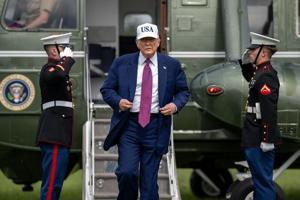
President Donald Trump outlined the framework of a trade deal with leaders in Seoul on Wednesday that will include a 15% tariff on imports from South Korea.
Trump announced the deal Wednesday afternoon in another social media post, providing few details about the scope of the agreement.
Under the terms Trump outlined, South Korea will buy $100 billion in U.S. liquefied natural gas or other energy products and give the U.S. $350 billion for investments.
“The Deal is that South Korea will give to the United States $350 Billion Dollars for Investments owned and controlled by the United States, and selected by myself, as President,” Trump wrote on Truth Social.
Trump said South Korea would announce further U.S. investments in the coming weeks when South Korean President Lee Jae Myung visits the White House.
“South Korea has agreed to invest a large sum of money for their Investment purposes,” Trump wrote.
As with a string of other trade deals Trump has announced in recent weeks, Trump said South Korea would open its markets, tariff free, to the U.S. Trump said that it would include automobiles, trucks and agricultural products.
So far, a 15% import duty is the lowest Trump has announced in recent trade deals. Only the United Kingdom, which didn’t have a substantial trade deficit with the U.S., got a 10% tariff.
Trump’s deal with the EU includes a 15% tariff on imports, although the pact still needs the approval of all 27 members of the bloc.
Trump has announced deals with Indonesia (19% tariff on imports), the Philippines (19% tariff on imports), and Japan (15% tariff on imports).
Earlier Wednesday, the U.S. president threatened India with a 25% tariff and a “penalty” for buying from Russia.
In 2024, U.S. trade with South Korea totaled an estimated $197.1 billion. U.S. goods exports to South Korea were $65.5 billion, while U.S. goods imports from South Korea totaled $131.5 billion. That year, the U.S. goods trade deficit with Korea was $66 billion.
Economists, businesses and some publicly traded companies have warned that tariffs could raise prices on a wide range of consumer products.
Trump has said he wants to use tariffs to restore manufacturing jobs lost to lower-wage countries in decades past, shift the tax burden away from U.S. families, and pay down the national debt.
A tariff is a tax on imported goods paid by the person or company that imports the goods. The importer can absorb the cost of the tariffs or try to pass the cost on to consumers through higher prices.
ICE Houston nabs more than 200 charged with, convicted of child sex crimes
In the past six months, U.S. Immigration and Customs Enforcement officers have arrested more criminal illegal foreign nationals in the Houston area who were convicted or charged with child sex offenses than they did in all of 2024.
ICE officers, working with multiple federal partners, have arrested 214 illegal foreign nationals in the Houston area who were either charged with, or convicted of, child sex offenses.
The total number of people arrested in the last six months were greater than the number ICE Houston field office agents arrested during the entire 2024 fiscal year of 211 who were also charged with or convicted of child sex offenses.
“The surge in arrests of illegal aliens charged with or convicted of child sex offenses is a direct result of a whole-of-government approach implemented under the current administration that led to the establishment of multiagency targeting teams in each area of responsibility,” ICE said.
“Bringing together the resources and expertise of the entire federal law enforcement community to confront the overwhelming surge of illegal immigration that we saw over the past four years has resulted in the arrest and removal of historic numbers of violent criminal aliens, transnational gang members and child sex offenders,” ICE Enforcement and Removal Operations Houston acting Field Office Director Paul McBride said. “While we still have a long way to go to truly get this crisis under control, the strides we have made in just six months to make our local communities safer are substantial, and our officers continue to work tirelessly every day to get the worst of the worst criminal aliens out of Southeast Texas to return our communities to places we can all enjoy.”
ICE highlighted key arrests in this group of mostly Mexican nationals, all men in the U.S. illegally, who were previously deported. They were also deported this time.
They include 67-year-old Mexican national Jesus Gutierrez Mireles, who was previously deported three times. His criminal history includes convictions for aggravated sexual assault of a child and driving while intoxicated.
Another is 48-year-old Mexican national Jorge Zebra, convicted of two counts of aggravated sexual assault of a minor and sexual indecency with a minor. Another is 40-year-old Mexican national Jose Guadalupe Meza, who was previously deported four times. His convictions include theft and sexual assault of a child. Another was 45-year-old Mexican national Sergio Rolando Galvan Guerrero, who was previously deported three times. His convictions include a DWI and aggravated sexual assault of a child.
They were deported before another group of 142 Mexican nationals in the country illegally were deported from the Houston area last month. Their 472 convictions included child sex crimes, human trafficking, human smuggling among other violent crimes, The Center Square reported.
In May, ICE ERO Houston agents removed more than 500 violent convicted criminals; in April they removed 174 to Mexico with 600 convictions, The Center Square reported.
In June, ICE officers arrested more than 1,326 in the Houston area, The Center Square reported. Among them were 32 convicted of child sex offenses, nine convicted of homicide-related offenses, 16 documented members of a transnational gang or drug cartel, and one convicted of hijacking an airplane, ICE said.
ICE officers are working with multiple federal law enforcement partners, including the FBI, ATF, DEA, U.S. Customs and Border Protection, the Diplomatic Security Service and U.S. Marshals Service.
They are also working as part of a Homeland Security Task Forces led by ICE Homeland Security Investigations-Houston and FBI-Houston targeting all of southeast Texas, The Center Square reported.
Houston, the largest city closest to the U.S.-Mexico border, is considered a major trafficking hub and gateway for criminal activity into the rest of the U.S. It’s only a few hours’ drive from Brownsville, Eagle Pass, Laredo and other major crossing points used by cartels and transnational criminal organizations. From Houston, people, weapons and drugs are moved to other major hubs like Dallas, Chicago, Atlanta, Los Angeles, New York and Miami within a matter of hours and days, law enforcement officers have explained to The Center Square.
FBI Houston Special Agent in Charge Douglas Williams said the new task force was “a united front unseen before in Houston. For the first time, law enforcement and intelligence agencies are focused on hunting down and eradicating transnational criminals within Houston communities. Federal, state and local police will coordinate with the U.S. Intelligence Community and overseas partners to efficiently eliminate newly designated terrorists wreaking havoc in our neighborhoods.”
Three killed in shooting at Reno casino; two critically injured
Three people were killed and two were critically injured when an unidentified gunman randomly opened fire Monday morning at a crowd and motorist outside a Reno casino, according to authorities.
The suspect in the shooting at the Grand Sierra Resort was taken into custody and transported to a hospital after being wounded in what the Reno Police Department called an officer-involved shooting. Police said the suspect confronted the officers with a firearm.
Six people were shot by the suspect, according to the Sparks Police Department, which has taken the lead in the investigation of both the active shooter and the officer-involved shooting
Sparks police said the suspect, a white man, was seen walking into the casino’s parking lot and approached the valet area, where the suspect pointed a gun at the group of victims. At first, the firearm malfunctioned. Then the suspect operated it, firing multiple times, police said.
Five people in the valet area were shot, and one of the victims was pronounced dead at the scene, Sparks police said. The other four victims were taken to the hospital, where one of them was pronounced dead. Two of them remain in critical condition, and the final victim was released, police said.
A casino security officer found the suspect in the parking lot, and the suspect fired at the officer, Sparks police said.
The casino security officer returned fire. The suspect fled north through the parking lot and opened fire on a motorist driving through the parking lot, Sparks police said. The motorist was pronounced dead at the scene.
Reno police, who reported getting a call about the shooter at 7:25 a.m. and arriving two and a half-minutes later, found the suspect in the parking lot, where the suspect approached officers with his firearm, police said.
The suspect fired at the officers, striking a patrol vehicle, Sparks police said. Reno police officers fired at the suspect, wounding him, Sparks police said. “The suspect was taken into custody and transported to a local area hospital where he remains in critical condition.”
“At this time, we have no reason to believe there is a connection between the suspect and victims,” Sparks police said.
Witnesses who haven’t spoken to police or anyone else with information are asked to call the Sparks Police Department at 775-353-2231. Information can be left anonymously by calling or texting 775-322-4900 or at secretwitness.com.
Gov. Joe Lombardo said the Nevada Department of Public Safety is assisting with the investigation.
“While we wait for more information, please join Donna and me in praying for the victims and their families and for our brave first responders,” Lombardo posted on X, referring to first lady Donna Lombardo.
“My heart breaks for the victims, their families, and our entire community,” Reno City Council member Devon Reese posted on Facebook. “Reno is strong — but we are not immune to the epidemic of gun violence gripping this nation.
“We cannot accept this as normal,” Reese wrote. “Not here. Not anywhere.”
Reno Police Chief Kathryn Nance expressed condolences to the victims and their families and the community.
“Tragedies like this are horrific for any community to endure, not just for the victims, the first responders, and people who were there, but everyone who calls our community home,” Nance said.
“Violence is not acceptable, especially in our public spaces. Everyone has a right to be safe here, and we are committed to ensuring safety in our city. I want to be clear; the suspect is to blame for his actions and is responsible for the tragedies he created.”
Reno police said one of its officers had minor injuries during the response, most likely from glass fragments. There were no other injuries to the police.
Assisting with the response were the Washoe County Sheriff’s Office, the Nevada Highway Patrol, Nevada Parks and Probation, Sparks Police Department, the Reno Fire Department and the Regional Emergency Medical Services Authority.
Trump announces EU trade deal with 15% tariff on imports
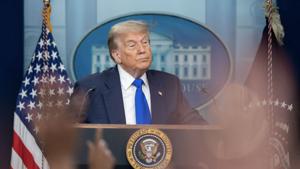
President Donald Trump announced a trade deal with the European Union on Sunday that will require imports from the 27-nation bloc to face a 15% tariff.
Trump had previously threatened tariffs of 30% on European goods. Trump announced the the deal after a meeting with European Commission President Ursula von der Leyen.
“It’s a good deal for everybody,” Trump told reporters after the meeting at his golf resort in Turnberry, Scotland.
Trump has been on a roll recently, announcing deals with Indonesia (19 tariff on imports), the Philippines (19% tariff on imports) and Japan (15% tariff on imports) earlier this week.
Trump said the EU will buy $750 billion in energy from the U.S. and agreed to invest $600 billion in the U.S.
“We have a trade deal between the two largest economies in the world. It’s a big deal, it’s a huge deal, it will bring stability, it will be predictability,” von der Leyen said. “It’s a good deal, it’s a tough deal.”
It’s the biggest deal Trump has reached so far.
U.S. total goods trade with the European Union were an estimated $975.9 billion in 2024. U.S. goods exports to the European Union in 2024 were $370.2 billion. U.S goods imports from the European Union totaled $605.8 billion in 2024. The U.S. goods trade deficit with the European Union was $235.6 billion in 2024, according to the Office of the U.S. Trade Representative.
By comparison, U.S. trade goods with Japan totaled an estimated $227.9 billion in 2024.
Trump has been working to reorder global trade through tariffs to give U.S. companies an advantage at home.
Economists, businesses and some publicly traded companies have warned that tariffs could raise prices on a wide range of consumer products.
Trump has said he wants to use tariffs to restore manufacturing jobs lost to lower-wage countries in decades past, shift the tax burden away from U.S. families and pay down the national debt.
Officials seek terrorism charges for man who stabbed 11 in Michigan
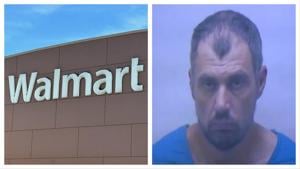
Two victims remain in serious condition Sunday and a Michigan man is facing terrorism charges related to stabbing 11 people at a Walmart in Traverse City on Saturday afternoon in an apparently random attack.
Minutes after the attack began inside the store, 42-year-old Bradford James Gille was cornered by a number of civilians in the parking lot, including one armed with a pistol. Local authorities then took him into custody, according to Grand Traverse County Sheriff Michael D. Shea.
Shea held a press conference on Sunday regarding the incident.
“Aid was immediately provided to the victims by responding law enforcement, citizens, and other emergency responders,” he said. “For all of those people that were involved, first of all, I commend them. It’s not very often that we have citizens that are willing to step up and take action.”
All victims were taken to the local hospital, Munson Medical Center. The victims range in age from 29 to 84 and include one Walmart employee.
While two victims remain in serious condition as of Sunday afternoon, all are expected to survive.
Gille is currently charged with 11 counts of assault with intent to murder, along with the one count of terrorism. He is awaiting trial in the Traverse County Jail.
“Any time there is a mass incident like this, where it is something that appears to be a very random act of violence . . . it is, we believe, in some ways done to affect the entire community, to put fear in the entire community,” said Grand Traverse County Prosecutor Noelle Moeggenberg at the press conference. “So, that is why we are looking at that terrorism charge.”
Gille has previously had encounters with law enforcement, including charges for controlled substances.
If sentenced on all charges, Gille could face life in prison. Authorities say he acted alone.
Shea said that during interviews with Gille, it was not yet apparent what his motive for the attacks were.
The FBI is also involved in the investigation. Dan Bongino, deputy director of the FBI, responded to the incident on social media.
“FBI personnel are responding to provide any necessary support to the Grand Traverse County Sheriff’s Office in their investigation,” Bongino said.
Districts brace for growing costs as cyber criminals target schools

When hackers stole a rural school district’s computer system last year, students in the middle of midterm exams were left frustrated, but concerns went far beyond testing.
Cafeteria staff scrambled to help students who depended on school meals. Parents searched for childcare when district officials canceled classes. Seniors worried about college application deadlines while transcripts were inaccessible.
A report from the Center for Internet Security found such attacks are becoming more sophisticated, more frequent and more damaging to K-12 schools. CIS runs the Multi-State Information Sharing and Analysis Center with the goal of better overall cybersecurity posture for governments at all levels through coordination and collaboration.
The 2025 CIS MS-ISAC K-12 Cybersecurity Report found 82% of K-12 organizations experienced cyber incidents. Of the nearly 14,000 security events, 9,300 were confirmed. It also found that attacks surge during high-stakes periods such as exams, disrupting education and forcing officials to make difficult decisions.
Randy Rose, vice president of security operations and intelligence at the Center for Internet Security, said cyber attacks at school can have “huge, broad implications.” He pointed to the unnamed rural school district highlighted in the report. Like many other schools, it serves as a central hub in the community and school disruption can create a cascade of community problems.
“Schools are really central to a community. So when they’re impacted, it’s far beyond just kids in classrooms,” he told The Center Square. “We’re talking about their kids who only eat when they’re in school. So if they’re out of school, there’s no food. There are parents whose lives are disrupted because they’re unable to work, and a lot of those parents don’t have jobs where they can take time off. So if they’re not working, they’re not making money, which has an impact on the local economy.”
Many districts have some form of insurance to cover cyber attacks, but those policies vary widely in what they cover after a breach, Rose said.
“Insurance will cover things like initial incident response. In some cases, they’ll cover ransomware payments. Sometimes they won’t,” he said. “Sometimes they’ll require you to have a particular provider that does ransomware negotiations with the actors. But sometimes they stop short of actual recovery and future implementation.”
What insurance doesn’t cover usually ends up on local taxpayers.
“If you’re having to pay massive amounts of money for restoration and ransomware payments, guess whose taxes are going to go up next?” Rose said.
It can get more complicated when foreign state-backed groups are involved. Some policies might consider that an Act of War, which isn’t covered.
Recovering from cyber attacks can take time, according to a U.S. Government Accountability Office report from 2023. That report found the loss of learning after an attack “ranged from 3 days to 3 weeks and recovery time ranged from 2 to 9 months.”
The GAO report found financial losses to school districts ranged from $50,000 to $1 million. The GAO also noted that the “precise national magnitude of cyberattacks on K-12 schools is unknown.”
Experts said many attacks are not reported. The issue isn’t limited to schools. It can affect the vendors that districts hire. In 2022, a cyber attack on Illuminate Education, an education technology company based in California, affected more than 1 million students, including students in New York, California, Connecticut, Washington, Oklahoma and Colorado.
Josh Bauman is the technology director at Festus R6 School District, located in Festus, Missouri. The district serves about 3,500 students at five schools near the Mississipi River and the state’s border with Illinois. It’s about 35 miles south of St. Louis. Outside of school, he hosts a K-12 Tech Talk podcast on cyberattacks, talking with school officials who have reported breaches. Most of the people on the podcast change details to protect the identity of the schools involved.
He said simple things such as public-facing school calendars can give hackers an advantage. Since they know what’s happening at the school, they can use information to make strikes more damaging, hit at key times, or wait until no one is in the building.
Bauman said that ransomware attacks have morphed into double extortion-style attacks. First, the hackers will gain access, start extracting data, and then encrypt machines. They’ll then ask for a ransom to get the machines back. If the school district pays, the hackers will threaten to post all the information they downloaded to the dark web unless they get another ransom payment.
The latest trend has been hackers impersonating school vendors, which is also often public information that can be found on a district’s website, to switch accounts and steal the money.
Bauman said that as the threats evolve, so must schools. In the case of a key vendor, for example, school officials may ask the company to come to the school in person to change any payment or account information.
But unlike building a new cafeteria, gymnasium or upgrading sports facilities, money that goes into IT to prevent attacks isn’t very flashy. Rarely is it something that district’s are eager to spend money on, but some insurance policies require schools to have things like multi-factor authentication or procedures in place before they’ll offer coverage, Bauman said.
A 2023 report from S&P Global Ratings found that cyberattacks have not affected schools’ credit quality or resulted in long-term operational problems. Successful attacks can prove costly, requiring technology investments, ransom payments, legal fees, cyber security consultant fees and costs associated with credit monitoring services for affected people, according to the S&P report. That report found 50% of providers paid to get data back.
One more problem: When Bauman and other technology directors discuss prevention efforts with school boards, those discussions often occur during public meetings streamed on the web.
“We don’t want to be in a public setting and say, ‘Oh, hey, we’re using product X, Y, Z to protect our edge,’ and keeping in mind that the bad guys know our calendars, and if we’re streaming our board meetings, it’s a huge threat vector, we have to be very careful about what we say and where we say it,” Bauman said.
Scandals heat up Washington as Congress begins to simmer
As Congress heads into August, conflicts and scandals are poised to derail a seemingly quiet end to the summer in Washington, with the investigations into and debates about former President Joe Biden’s mental decline, Jeffrey Epstein and Russiagate just heating up.
The investigation into Biden’s mental and physical fitness continues, with more witnesses expected to appear before the House Oversight Committee in the coming week.
So far, three witnesses, including Annie Tomasini, who served as an assistant to the former president and deputy director of Oval Office Operations, former First Lady Jill Biden’s chief of staff, Anthony Bernal, and Dr. Kevin O’Connor, Biden’s physician – all pleaded their Fifth Amendment rights against self-incrimination.
The committee may have had a breakthrough on Thursday when Ron Klain, who served as former President Joe Biden’s chief of staff during the first half of Biden’s presidency, testified in a marathon hearing. Unlike the other witnesses, Klain appeared voluntarily.
Committee Chairman Rep. James Comer, R-Ky., told Newsmax Friday that Klain answered every question, admitting that Biden’s “memory had deteriorated a little bit” and “wasn’t as sharp” in the lead up to the former president dropping out of the race for reelection. However, Comer added that Klain told the committee that he believed Biden was still competent to lead.
Comer added that the investigation has been easier by the number of Biden aides and staffers “writing books” or mentioned in tell-all’s regarding the former president, including a book written by Jake Tapper and Alex Thompson, “Original Sin,” which the congressman quoted as claiming, “Five people were running the country, and Joe Biden was at best a senior member of the board.”
During Comer’s interview, he segued into another ongoing investigation gripping the nation, the Epstein files. The congressman announced on Thursday that he has issued a subpoena to Ghislaine Maxwell for a deposition, which will occur at the federal prison in Tallahassee, Fla., where the former close associate of Epstein is being held. Comer said the subpoena is issued for Aug. 11.
U.S. Deputy Attorney General Todd Blanche spent two days, Thursday and Friday, interviewing Maxwell, adding that the Department of Justice will release information regarding the interview “at the appropriate time.”
Comer also announced that the committee is preparing to subpoena more individuals, including former President Bill Clinton and former Secretary of State Hillary Clinton, to uncover more on the Epstein case. Those listed include big names, spanning multiple presidential administrations, such as James Comey, Loretta Lynch, Eric Holder, Merrick Garland, Robert Mueller, William Barr, Jeff Sessions and Alberto Gonzales.
As President Donald Trump was preparing to leave on an overseas trip to Scotland Friday, he was asked if he had considered pardoning Maxwell to get her to talk. The president didn’t appear to rule the possibility out.
“I’m allowed to do it, but it’s something I have not thought about,” Trump told reporters.
Questions continue to swirl around Trump’s involvement with Epstein as the Wall Street Journal is doubling down on claims that the president was included in a book of messages for the late, disgraced financier’s 50th birthday, reportedly compiled by Maxwell.
Senior Democratic Virginia Sen. Mark Warner is showing no signs of backing down, holding Trump and his administration accountable for not disclosing files on the Epstein case. Warner claims that the latest, emerging scandal accusing former President Barack Obama of “manufacturing” intelligence information that the Trump campaign and Russia colluded on influencing the 2016 presidential campaign is merely a means to be a distraction from the Epstein files.
Warner took aim at Director of National Intelligence Tulsi Gabbard, who appeared at a White House press briefing Wednesday, highlighting the explosive claims against Obama, accusing the administration of engaging in a “coup” to undermine the election.
“Tulsi Gabbard has been on the outs with Trump since she undermined him on Iran intelligence. So it’s no surprise she’s doing everything she can to help him distract from Epstein files. But America isn’t looking away,” Warner posted on X.
It would appear the latest scandals may be causing a distraction and potential delays in implementing the president’s agenda, including the confirmation of over 100 presidential appointees. Trump has been urging Senate Majority Leader Sen. John Thune, R-S.D., to cancel the August recess and confirm his nominations.
Pritzker encourages North Carolina Democrats to fight
Expressing the values of the party and fighting together are pivotal to North Carolinians winning 2026 midterms, as is making a change in the White House three years from now, Illinois Gov. J.B. Pritzker says.
“Folks, 2026 can be our year, but we’re going to have to fight for it,” the second-term Democratic governor from the Midwest told a packed room Saturday night at the Talley House on the campus of N.C. State University. “And the values at our rallies need to be front and center.”
In a roughly 25-minute speech, Pritzker both back-slapped friend Roy Cooper and his campaign for U.S. Senate and shouted down second-term Republican President Donald Trump. He sought to energize the partisans and explain how the messaging works best – showing voters the values of the party.
It is a state party that, a month ago in executive committee, passed a resolution against Israel calling for the United States to withdraw support of its closest Middle Eastern ally. And a state party that is in decline in registration numbers.
The Duke University graduate chuckled with the crowd, saying he couldn’t find fellow Blue Devils. He also rallied them to applause and shouts of encouragement.
“I’ve been around long enough to many times hear the talking heads declare each party dead on the table,” Pritzker said. “The reports of demise of any political party are always greatly exaggerated.”
Democrats included, even as the ground where he spoke has been in a two-decade free fall. On Jan. 1, 2004, the state’s more than 5 million voters were split 47.6% Democrats, 34.4% Republicans and 17.7% unaffiliated. Today it’s barely above 30% for his party and falling, almost a dead heat with the Grand Old Party, and independents have soared to more than 38%.
Head to head, the net difference of Democrats and Republicans has swung more than 800,000 registrations since 2008 Election Day.
Still, Pritzker practiced what he preached on boldness. In what was easily a presidential ticket audience audition of sorts, the response was receptive. Each encouraged the other.
He’s one of several governors Democrats are checking for 2028. California’s Gavin Newsom, Minnesota’s Tim Walz, Maryland’s Wes Moore and Kentucky’s Andy Beshear are other notables visiting annual state party conventions, though Walz – on 92 of the 108 days in Kamala Harris’ ticket last year – says he won’t if he chooses to run for governor again.
More could be out there. Pennsylvania’s Josh Shapiro is the biggest governor name, though he’s more low-profile nationally in 2028 presidential circles talk. And the potential tickets are certainly not limited to governors.
For Pritzker, he’s a fly in the ointment of Democrats’ rally cry against the wealthy. He spoke of policies that hurt every day, middle class Americans.
Yet, Pritzker’s state is a Democratic trifecta and ranks No. 37 in tax competitiveness, according to the most recent analysis by The Tax Foundation. The report says Illinois is No. 13 in individual income taxes, No. 38 in sales taxes, No. 41 in property taxes, No. 42 in corporate taxes, and No. 43 in unemployment insurance taxes.
North Carolina – where Republican policies of the last 15 years have turned the consensus of metrics about the economy – is No. 12 overall in the same report. Respectively by category, the Tarheel State is Nos. 21, 16, 20, 3 and 7.
He talked about what could happen in the future of North Carolina and the country economically, saying he had taken over and changed a poor fiscal situation in Illinois.
In the most recent analysis by the Reason Foundation released in December, state debt liability is $247.9 billion in Illinois – behind only California’s $498.1 billion. It’s $31.5 billion in North Carolina, better than 31 other states. Per capita, North Carolina is ninth best; Illinois is only better than Connecticut, New Jersey and Hawaii.
“Folks love Gov. J.B. Pritzker,” said Anderson Clayton, chairwoman of the North Carolina Democratic Party. “He’s someone that I think has really taken on the Trump administration like we need to see from the Democratic Party right now. It’s a great way to showcase the party that fights back.”
Pritzker described the values and fights as being different than what Republicans are telling voters.
“It’s wrong to snatch a person off the street and ship them to a foreign gulag and not give them a chance in a court of law,” he said. “It’s about the Constitution, not immigration policy. They’re literally arresting U.S. citizens in broad daylight.
“They’re not criminals. Law-abiding people, people paying taxes for decades, are being forced to go into hiding because of black or brown skin.”
Pritzker said, instead, that immigrants’ contributions are “incalculable.”
“Our nation’s economy depends on attracting the best and the brightest to our shores,” he said, referring to Trump policies causing many college students from foreign countries to leave.
He went on to take swipes at a number of Cabinet members, saying Education Department Secretary Linda McMahon “hates teachers and doesn’t know the difference between AI and A-1 steak sauce.” He more than once called Tom Homan, Trump’s appointed border czar and the interim director of U.S. Immigration and Customs Enforcement, “ICE Barbie.” Pritzker said Homan knows nothing of keeping America secure, even as border numbers from the government are without dispute showing the most secure in the history of the country.
Pritzker also spoke on behalf of the vulnerable, farmers, small business owners, autistic children and soldiers.
“Our values are where they ought to be,” he said. “It’s time to stop apologizing when we’re not wrong. It’s time to stop surrendering when we need to fight.”
The governor reminded the dinner crowd this party “built Medicare, Medicaid and Social Security. We created the Voting Rights Act and the Civil Rights Act. And we have to fight like hell to preserve them.”
He indicated regulation is necessary for development of artificial intelligence.
And he said the story being written by Democrats in 2026 and 2028 is “a chance to leave a story of restoration.”
Americans, Pritzker said, are wondering who will fight for them.
“When we emerge from this, and we will emerge from this, our Democratic agenda must be bold,” Pritzker said. “And our ideas fearless. America needs us. We must be willing to slay sacred cows and get things done.”
“We must deliver on an agenda centered on working families who truly make America great.”