National News
Grand jury declines to re-indict Letitia James
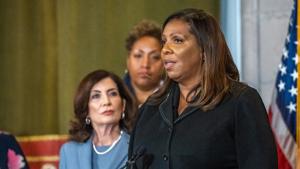
The Justice Department has reportedly failed to secure a new indictment against New York Attorney General Letitia James in a blow to the Trump administration’s efforts to prosecute the top Democratic and vocal critic of the administration’s policies.
A federal grand jury in Norfolk, Va., on Thursday declined to indict James after DOJ prosecutors reintroduced previously dismissed charges of mortgage fraud, multiple news outlets reported, citing sources familiar with the secret court proceedings.
The grand jury’s rejection comes after a federal judge dismissed an earlier indictment against James, ruling that Lindsey Halligan, the federal prosecutor handpicked by Trump to handle the case, had been unlawfully appointed.
James’ attorney Abbe Lowell said the grand jury’s failure to indict is “a decisive rejection of a case that should never have existed in the first place.”
“A federal court threw this case out after President Trump illegally installed a U.S. Attorney to file baseless charges against Attorney General James that career prosecutors refused to bring,” he said in a statement.
“This should be the end of this case,” he added. “If they continue, undeterred by a court ruling and a grand jury’s rejection of the charges, it will be a shocking assault on the rule of law and a devastating blow to the integrity of our justice system.”
James took to social media to celebrate her latest legal win, saying she is “grateful to the members of the grand jury and humbled by the support I’ve received across the nation.”
As I’ve said from the start, these charges are baseless. It’s time for the weaponization of our justice system to stop,” James posted. “I will keep doing my job standing up for New Yorkers.”
The Justice Department declined to comment on the grand jury proceedings. Under federal law, DOJ prosecutors can re-present the charges to another grand jury if they choose.
James was indicted in October by a federal grand jury on one count of bank fraud and one count of making false statements to a financial institution. She denies any wrongdoing and claims the charges are politically motivated.
In the original indictment, prosecutors alleged that James falsely claimed on an application for a federally backed mortgage that she would be living in a Norfolk, Va., home she bought in 2020 for about $137,000 as a secondary residence but allegedly used it as an investment property. That allowed James to receive a favorable interest rate, saving her nearly $19,000 over the life of the loan, prosecutors allege.
Last week, U.S. District Judge Cameron Currie ordered the charges against James and former FBI director James Comey dismissed on the grounds that Halligan, a former White House aide, was unlawfully appointed to the job.
U.S. Supreme Court upholds Texas’ new congressional maps
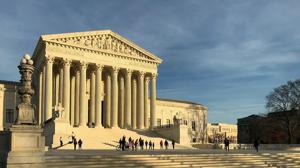
The U.S. Supreme Court on Thursday handed Texas a win in a challenge to its new congressional redistricting maps, granting a stay of a lower court ruling blocking them from going into effect. The ruling allows Texas’ new congressional maps to remain in effect for the 2026 midterm election. The new maps could flip up to five seats currently held by Democrats to Republican, analysts say.
In a 6-3 ruling, the Supreme Court said Texas was likely to succeed on the merits of the case and the district court “committed at least two serious [legal] errors.” It also ignored Supreme Court warnings about redistricting lawsuits filed months before an election, the court said.
“This Court has repeatedly emphasized that lower federal courts should ordinarily not alter the election rules on the eve of an election.
“The District Court violated that rule here. The District Court improperly inserted itself into an active primary campaign, causing much confusion and upsetting the delicate federal-state balance in elections,” the high court said.
The justices also chastised the two lower court judges who issued the opinion for “failing to apply correct legal standards set out in case law.”
The high court’s ruling was expected after the lone dissenting Circuit Judge Jerry Smith expressed outrage over the process, alleging the chief judge engaged in “judicial misbehavior” and “outrageous conduct,” The Center Square reported. The ruling was issued in the U.S. District Court Western District of Texas El Paso Division, whose two majority judges have issued other decisions the U.S. Supreme Court later vacated, Smith said, adding that their ruling this time was no different.
In this case, two El Paso judges ruled that a new redistricting law that had already been on the books for more than 75 days couldn’t be used and Texas had to use a 2021 law, which the 2025 law repealed.
Smith argued the ruling was flawed and a “federal court cannot reinstate a statute that the legislature has explicitly repealed and voided.” He also said the majority judges engaged in judicial activism and ignored extensive case law.
Gov. Greg Abbott made a similar argument and the Attorney General’s Office filed an emergency appeal with the Supreme Court requesting a stay of the lower court ruling. Last month, the Supreme Court granted the request.
After hearing arguments on the case, the Supreme Court sided with Texas and chastised the lower court. The two majority district court judges “failed to honor the presumption of legislative good faith by construing ambiguous direct and circumstantial evidence against the legislature” and “failed to draw a dispositive or near-dispositive adverse inference against respondents even though they did not produce a viable alternative map that met the State’s avowedly partisan goals,” the justices said.
The Supreme Court upheld the Nov. 18 stay Justice Samuel Alito issued, effectively killing any chance of an appeal.
Justices Alito, Clarence Thomas and Neil Gorsuch issued a statement noting that the lower court based its findings on “a mistaken impression of applicable legal principles. … Neither the duration of the District Court’s hearing nor the length of its majority opinion provides an excuse for failing to apply the correct legal standards as set out clearly in our case law.”
Justices Elena Kagan, Sonia Sotomayor and Ketanji Brown Jackson issued a brief dissent, saying the ruling “disrespects the work of the District Court” and “disserves the millions of Texans whom the District Court found were assigned to their new districts based on their race.”
The district lines were redrawn according to demographic shifts and voting patterns where Hispanic-majority districts increasingly voted Republican, state lawmakers argued.
Abbott praised the ruling in a statement, saying, “”We won! Texas is officially – and legally – more red. The U.S. Supreme Court restored the redistricting maps passed by Texas that were based on constitutional principles and Supreme Court precedent. The new congressional districts better align our representation in Washington D.C. with the values of our state. This is a victory for Texas voters, for common sense, and for the U.S. Constitution.”
The new maps will go into effect, changing nearly every congressional district in Texas. Many incumbents are moved to new districts, opening up at least seven new seats in which at least five are expected to flip Republican, The Center Square reported.
In last four years, five northern states saw most illegal crossings
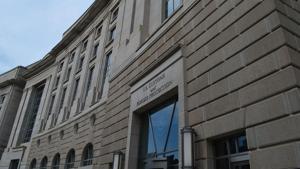
Under the Biden administration, the greatest number of illegal border crossers at the U.S.-Canada border were reported in U.S. history, breaking records nearly every month for four years, The Center Square first reported.
While record high numbers dropped under the Trump administration, illegal entries still remain high in northern border states, with some states reporting more apprehensions in 2025 than during the Biden years.
Fourteen U.S. states share the longest international border in the world with Canada, totaling 5,525 miles across land and water.
The majority of illegal border crossers were apprehended and encountered in five northern border states, according to U.S. Customs and Border Protection data analyzed by The Center Square. Nearly half were reported in New York. Washington, Vermont, Maine and Montana recorded the next greatest numbers.
The majority of northern border states reported the greatest number of illegal entries in U.S. history in 2024, the last year of the Biden administration, according to CBP data. At the height of the border crisis, illegal entries reached nearly 200,000 at the northern border in 2024 and in 2023, first reported by The Center Square.
For fiscal years 2022 through 2025, 754,928 illegal border crossers were reported in 14 northern border states, according to the latest available CBP data.
From west to east, illegal entries at the northern border totaled:
Alaska: 7,380Washington: 135,116Idaho: 620Montana: 32,036North Dakota: 14,818Minnesota: 8,315Wisconsin: 118Michigan: 50,321Ohio: 1,546Pennsylvania: 19,145New York: 363,910Vermont: 61,790New Hampshire: 82Maine: 59,731
Notably, Alaska, Idaho, New York, Pennsylvania and Wisconsin reported record high illegal crossings in 2023. Although Montana and North Dakota saw a drop in 2025 from record highs in 2024, the number of illegal border crossers apprehended in the two states in 2025 were greater than they were in 2022; in Montana they were more than double.
The data only includes nine months of the Trump administration. The CBP fiscal year goes from Oct. 1 through Sept. 30. Biden administration data includes the first three months of fiscal 2025, nine months of fiscal 2021, and all of fiscal years 2022, 2023 and 2024. Combined, illegal northern border crosser apprehensions totaled roughly one million under the Biden administration, according to CBP data.
The data excludes “gotaways,” the official term used by CBP to describe foreign nationals who illegally enter between ports of entry to evade capture, don’t make immigration claims and don’t return to their country of origin. CBP does not publicly report gotaway data. The Center Square exclusively obtained it from Border Patrol agents. More than two million gotaways were identified by Border Patrol agents under the Biden administration, although the figure is expected to be much higher, The Center Square first reported.
For decades, the northern border has been largely unmanned and unprotected with increased threats of terrorism and lack of operational control, The Center Square reported.
Unlike the 1,954-mile U.S.-Mexico border, there is no border wall, significantly less technological equipment exists and far fewer agents are stationed there.
Officials have explained that the data represents a fraction of illegal border crossers – it remains unclear how many really came through largely remote areas where one Border Patrol agent may be responsible for patrolling several hundred miles, The Center Square has reported.
Despite being understaffed and having far less resources, Border Patrol and CBP agents at the U.S.-Canada border apprehended the greatest number of known or suspected terrorists (KSTs) in U.S. history during the Biden administration – 1,216, or 64% of the KSTs apprehended nationwide, The Center Square exclusively reported.
In February, President Donald Trump for the first time in U.S. history declared a national emergency at the northern border, also ordering the U.S. military to implement border security measures there. After shutting down illegal entries at the southwest border, the administration acknowledged the majority of fentanyl and KSTs were coming through the northern border, The Center Square reported.
The Trump administration has also prioritized increased funding, recruitment and hiring and investment in technological capabilities at the northern border.
Report: Hegseth violated multiple protocols and federal law in ‘Signalgate’
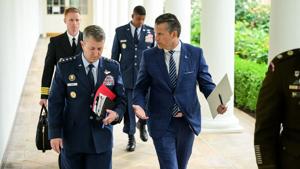
Secretary of War Pete Hegseth violated multiple protocols and federal law in the “Signalgate” affair in March, according to Pentagon watchdog the Office of Inspector General of the Department of Defense.
In a report commissioned by Congress, the office concluded that Hegseth stepped outside his authority as war secretary when he used his personal phone and an unapproved commercial messaging app to communicate attack plans with other government officials; he also didn’t keep a record of all of the chat’s messaging, some of which auto-deleted after a set time, violating both federal law and department policy. Finally, putting the information in the Signal group chat posed additional threats to American forces and missions, according to the office.
Though Hegseth as war secretary does have the authority to determine the classification level of any information he shares (how sensitive the information is), the report affirmed, the methods of communication are a separate matter governed by federal cybersecurity, recordkeeping and communications rules.
In March, Hegseth sent a “team update” to a Signal group chat with 18 other government officials, listing the planned times and assets to be used in strikes against the Yemeni Houthi rebel group later that day.
F-18s would launch at 12:15 Eastern time, and their first strike window would start at 1:45 PM.
“Target Terrorist is @ his Known Location so SHOULD BE ON TIME,” Hegseth noted.
He went on to include launch and strike times for the second group of F-18s, when the first bombs would “definitely drop” and when sea-based Tomahawks would be launched.
Hegseth has described this information as an “unclassified summary” of “non-specific, general details” that wouldn’t endanger anyone or anything on their own.
“There was nothing classified in this text. There were no locations or targets identified. There were no details that would endanger our troops or the mission. The details which were included would be useless without also knowing the undisclosed details,” Hegseth wrote in a statement to the office in July.
But the office disagreed, instead describing the texted information as “sensitive, nonpublic, operational information” that the War Department prohibits from being sent on a personal device or an unapproved messaging app like Signal, even though it is encrypted.
The office also determined that the Houthis could have acted preemptively based on the information in the messaging thread.
“If this information had fallen into the hands of U.S. adversaries, Houthi forces might have been able to counter U.S. forces or reposition personnel and assets to avoid planned U.S. strikes,” the report reads. “Even though these events did not ultimately occur, the Secretary’s actions created a risk to operational security that could have resulted in failed U.S. mission objectives and potential harm to U.S. pilots.”
Despite its conclusions, the office did not make recommendations about the use of commercially available messaging apps like Signal in its report because the event was “only one instance of a larger, DoD-wide issue.” Instead, it recommended in another report that “the DoD improve training for senior DoD officials on the proper use of electronic devices.”
Some push for FDA approval of psychedelic treatments for veterans
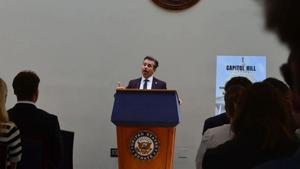
State leaders across the country are pushing for medical trials of the psychedelic drug ibogaine to treat neurological conditions.
Former Texas Gov. Rick Perry spoke at the American Legislative Exchange Council’s States and Nation Policy Summit on Thursday to push for a clinical trial of the psychedelic drug. Perry pointed to the positive benefits for veterans with post-traumatic stress disorders.
“This is a compound that God gave us that is showing extraordinary ability to free people from post-traumatic stress, literally break addictions,” Perry said.
Ibogaine is a compound found in the African shrub iboga. In the United States, Ibogaine is a Schedule I drug and is not approved for therapeutic use.
Earlier this year, Texas lawmakers approved $50 million to conduct clinical trials on ibogaine. The effort appears to be aimed at receiving medical approval for the drug from the U.S. Food and Drug Administration.
“We need other states to be partners in this,” Perry said. How bad do you got to hate somebody to not make this available?”
A 2024 Stanford Medicine study found that ibogaine provided veterans with relief from depression, anxiety, and poor functioning symptoms.
Bryan Hubbard, CEO of Americans for Ibogaine, called for greater use of the psychedelic, particularly for veterans. He said mental health challenges and post-traumatic stress particularly affect veterans across the country.
Since 2000, roughly 480,000 military service members have sustained traumatic brain injuries, according to the Defense and Veterans Brain Injury Center and RAND’s Invisible Wounds of War Project.
“These special forces veterans and their families have discovered that our government commodifies problems that it is supposed to solve by monetizing sustained human misery,” Hubbard said.
Hubbard cited efforts in Alabama, Idaho, South Carolina, Kentucky, Maryland, Mississippi, Tennessee, New Hampshire, Oklahoma and Vermont to increase funding for ibogaine studies and achieve FDA approval.
In 2024, Kentucky lawmakers considered allocating funds to support research of ibogaine, but backed off after pushback from doctors. Mark Haginey, a cardiologist, told a Kentucky commission that he did not believe ibogaine was safe for FDA approval.
However, after Texas approved funding, Kentucky lawmakers have renewed interest in funding proposals.
FDA Commissioner Marty Makary and U.S. Department of Health and Human Services Secretary Robert F. Kennedy Jr., have appeared to display support for exploring psychedelic drug options to treat post-traumatic stress disorders.
“This is one of our top priorities at the FDA: to listen to doctors, to listen to patients, and to make sure we don’t get in the way with red tape,” Makary said about the use of psychedelic treatments.
“I’m going to challenge you to have the courage to join Texas and those other states so that we have this massive effort all across the country, because you change people’s lives,” Perry said to attendees at ALEC’s policy conference.
WATCH: IL congresswoman willing to withhold highway dollars over CDL issues
A Republican congresswoman from Illinois is looking to enforce federal Commercial Drivers License requirements by withholding federal funds from states that aren’t compliant.
Data provided by Illinois State Police shows nearly 1 in 5 CDL holders with English Language Proficiency infractions have licenses issued by the state of Illinois. U.S. Rep. Mary Miller, R-Oakland, said she’s done her own sampling.
“I have in plain clothes gone from truck stop to truck stop in my district and I go to the cashier and I ask them this question, ‘how many of the truckers come in here speak no English?’ And every single time they have told me almost all of them,” Miller told The Center Square. “And it’s just outrageous.”
Miller said if Illinois doesn’t get the issue under control, she’s willing to advocate for withholding federal tax funds.
“If you don’t stop the funding to the states that are flouting our laws, they’re not going to change,” she said. “The bill, the Safe Driving Law Act, that will rescind half of the highway funding to states like Illinois that refuse to cooperate.”
The Illinois Secretary of State’s office said the office takes the federal standards seriously “because they are critical to road safety.”
“We will continue enforcing federal requirements and working with our partners to ensure CDL holders in Illinois meet all licensing and safety obligations,” Illinois Secretary of State Alexi Giannoulias spokesman Max Walczyk said in an email.
The agency said CDL applicants are not allowed to use a translator at any point in the licensing process and tests take at least 45 minutes and require continuous communication between the applicant and the examiner.
“If an applicant cannot understand or respond to the questions asked by our staff – whether during testing or even at the counter when providing basic information – the process is stopped, and they are not issued a CDL,” Walczyk said.
Miller said she will go further.
“These used to be good jobs for people that didn’t go to college, and we should restore the trucking industry back to the American people,” she said. “And I want to go after the trucking companies, is another thing, that’s hiring these people.”
The Illinois Secretary of State’s website shows only U.S. citizens and lawful permanent residents can apply for a CDL, but the Deferred Action for Childhood Arrivals can be considered with a CDL application.
The federal DACA program was frozen earlier this year, pending legal action. The U.S. Citizenship and Immigration Services said it will accept initial DACA requests, but are not processing them at this time. Related federal documents remain valid until they expire, unless individually terminated, the federal agency’s website said.
Illinois U.S. Sen. Dick Durbin, D-Springfield, reintroduced the Dream Act Thursday, a bipartisan bill he’s proposed for years to allow DACA recipients a pathway to legal status if they meet certain criteria like no felonies, and passing English language proficiency tests.
“They are teachers, nurses, doctors, and small business owners throughout our communities and in all 50 states. But because DACA hangs by a thread in the courts, and many are not covered by DACA, they live each day in fear of deportation,” Durbin said in a statement. “This is a matter of simple American fairness and justice.”
As of September 2024, Durbin’s office said there are roughly 530,000 people with active DACA status nationwide.
35 lawmakers unveil bipartisan health care proposal, beg leadership to adopt it
With only 27 days until the enhanced Obamacare Premium Tax Credits expire, a group of U.S. House members is urging congressional leadership to accept a bipartisan healthcare framework that includes a short-term extension.
Dubbed CommonGround 2025, the framework lays out a two-year process where the enhanced PTC would be extended, but with targeted reforms. Spearheaded by U.S. Reps. Jen Kiggans, R-Va., and U.S. Josh Gottheimer, D-N.J., it is backed by 15 Republicans and 20 Democrats, who unveiled it in a Thursday news conference.
“We have a responsibility before the end of the year to pass a bill that will address the issue of health care costs in this country,” Rep. Mike Lawler, R-N.Y., said. “We can all sit here and go through the perils of our healthcare system – it is a disaster, from start to finish. The question is, how do we deal with this in the immediate, and the long-term?”
Established under the Affordable Care Act and temporarily expanded during the COVID-19 pandemic, the PTC is a subsidy that health insurance companies use to lower Marketplace enrollees’ monthly premiums. The enhanced tax credits are set to revert to original pre-pandemic levels, partially contributing to millions of Americans’ premiums rising after Dec. 31.
The lawmakers are calling on leadership in both chambers of Congress to vote on a plan using their framework by Dec. 18.
“Doing nothing is not an option in these circumstances,” U.S. Rep. Juan Ciscomani, R-Ariz., told reporters. “This is a short-term way to address this emergency, and there’s longer-term policy on the reform that we’re going to work on later.”
Under the framework, in the first year, the credits would phase out for enrollees earning between 600% and 1000% of the federal poverty line. Republicans have criticized the PTC expansion in part due to it subsidizing insurance for well-to-do Americans.
By the second year, lawmakers will have a menu of long-term reform options to consider, including mostly eliminating $0 monthly premium plans that the enhanced PTC made possible and adopting Sen. Bill Cassidy’s, R-La., idea to gradually replace the enhanced PTC with personal Health Savings Accounts.
Congress also would implement multiple transparency and antifraud measures, including those found in the Insurance Fraud Accountability Act, which would punish health insurance agents and brokers who engage in fraudulent enrollment or deceptive marketing.
A recent Government Accountability Office report found proof of systemic fraud risk in the Marketplace, including shoddy antifraud prevention practices and instances of brokers helping fictitious applicants receive the tax credits, The Center Square reported.
Aside from fraud prevention measures, the bipartisan health plan lists multiple out-of-pocket cost-reducing options. One is reforms to Pharmacy Benefit Management, including a ban on “spread pricing” in Medicaid and separating PBM compensation from medication costs in the Medicare Part D program.
Though a compromise resulting from weeks of work, CommonGround 2025 is unlikely to go very far with congressional leaders.
Senate Minority Leader Chuck Schumer, D-N.Y., revealed Thursday afternoon his own health care plan – a three-year subsidies extension, destined to fail – that the chamber will soon vote on.
House Speaker Mike Johnson, R-La., already tanked a proposal similar to CommonGround 2025 before the White House even publicly released it.
With only nine session days left until the end of the year, Lawler urged leadership to focus “on getting a solution, rather than a political win.”
“You know, it’s very easy to vote no. It’s very easy to say what you’re against and it’s very easy to point the finger at the other side. It is a lot harder to do the work of legislating,” Lawler said. “And the reality is, if you want to make lasting change in this country, if you want to actually accomplish something that impacts the vast majority of Americans, it cannot be done without bipartisan support.”
DOJ confirms identity of pipe bomb suspect
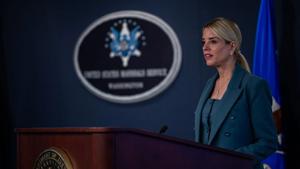
The U.S. Department of Justice offered few details in the ongoing investigation that led to the arrest of a suspect related to pipe bombs planted outside the Democratic and Republican National Committee headquarters in Washington, D.C., on Jan. 5, 2021.
The suspect has been identified as Brian Cole, Jr., 30, of Woodbridge, Va. Cole was taken into custody Thursday morning after a nearly five-year investigation.
The suspect was arrested for “transporting an explosive device in interstate commerce, as well as the attempted malicious destruction by means of explosive materials,” U.S. Attorney Jeanine Pirro said during a U.S. Department of Justice news conference Thursday afternoon.
DOJ officials emphasized that multiple search warrants have been issued in the case, and the investigation is ongoing. When asked, officials wouldn’t comment on a possible motive. DOJ officials offered little to no new information on the case. They did indicate more charges could be forthcoming and would not say if terrorism charges could be included.
Just the News, citing a newly filed criminal complaint, reported that the FBI examined the suspect’s credit card purchases to find the components allegedly used to manufacture the two bombs.
Despite the arrest, U.S. Attorney General Pam Bondi said investigators hadn’t discovered any new information that led to Cole’s arrest, but instead combed through existing data, tips and evidence leading to the latest development.
The undetonated pipe bombs were planted on the eve of the Jan. 6 U.S. Capitol riots, according to video footage. The RNC and DNC headquarters, located in Southwest D.C. are within blocks of each other, just south of the U.S. Capitol.
Investigators indicated the explosive devices were homemade, which included black powder and a kitchen timer. Surveillance footage from the scenes appeared to show an individual wearing sweats, Nike shoes, a hoodie, and a mask. In addition, the footage appeared to show the explosives were placed between 7:30 and 8:30 p.m. on Jan. 5, 2021.
This year, the FBI offered a $500,000 reward for fresh information leading to the arrest of the person suspected of planting the bombs.
During the news conference, FBI Deputy Director Dan Bongino was credited for spearheading the investigation by FBI Director Kash Patel.
“You’re not going to walk into our capital city, put down two explosive devices and walk off in the sunset. Not going to happen,” Bongino said. “We were going to track this person to the end of the earth. We didn’t have to track him to the end of the earth. It wound up in Woodbridge, Virginia.”
Bongino and Patel called the investigation a “team effort.”
Darren Cox, assistant director in charge of the FBI Washington Field Office, said investigators evaluated three million lines of data during the investigation. Bongino told reporters that forensic data eventually led to the breakthrough.
Trump admin implements swath of visa restrictions for dozens of countries
The Trump administration has implemented a swath of visa restrictions citing national security threats, human rights abuses and illegal immigration.
After National Guard troops were shot in Washington, D.C., the Department of Homeland Security and U.S. Citizenship and Immigration Services announced they suspended entry to foreign nationals from 19 countries whose “entry would be detrimental to the interests of the United States.” They include Afghanistan, Burma, Burundi, Chad, Republic of Congo, Cuba, Equatorial Guinea, Eritrea, Haiti, Iran, Laos, Libya, Sierra Leone, Somalia, Sudan, Togo, Turkmenistan, Venezuela and Yemen.
However, the ban is retroactive to June and restrictions for these countries were already in place since June, in accordance with an executive order President Donald Trump issued.
The order directed federal agencies to review vetting and screening capabilities and information sharing policies with other countries. They also reviewed country-specific risk factors, including countries’ terrorist presence, visa-overstay rate and cooperation with accepting back their citizens the U.S. wants to remove.
The order directed federal agencies to identify foreign nationals before they are admitted into the U.S. and to determine that those who were already admitted “do not bear hostile attitudes toward its citizens, culture, government, institutions, or founding principles, and do not advocate for, aid, or support designated foreign terrorists or other threats to our national security.”
Cabinet members made recommendations and, in June, Trump then implemented full entry restrictions for immigrants and nonimmigrants from 12 countries: Afghanistan, Burma, Chad, the Congo, Equatorial Guinea, Eritrea, Haiti, Iran, Libya, Somalia, Sudan and Yemen.
Partial restrictions were also implemented for Burundi, Cuba, Laos, Sierra Leone, Togo, Turkmenistan and Venezuela.
The State Department is continuing to announce new visa restrictions, citing a range of human rights abuses, including religious persecution, supporting gangs and foreign terrorist organizations (FTOs), and facilitating human trafficking and illegal immigration.
This week it restricted Nigerian government officials and anyone engaged in religious freedom violations, as well as their family members, who’ve enabled or supported genocide of Nigerian Christians. The move comes after Trump and U.S. Sen. Ted Cruz, R-Texas, called out Nigerian leaders for their alleged complicity.
“Christianity is facing an existential threat in Nigeria. Thousands of Christians are being killed. Radical Islamists are responsible for this mass slaughter. I am hereby making Nigeria a country of particular concern [CPC] but that is the least of it,” Trump said, The Center Square reported.
The State Department said, “the United States cannot stand by while such atrocities are happening in Nigeria, and numerous other countries.”
It also imposed restrictions on Haitian government officials, individuals and their family members who provide financial or material support to gangs and other criminal organizations. “The Haitian people have had enough with gang violence, destruction, and political infighting,” the department said. “The Trump Administration will promote accountability for those who continue to destabilize Haiti and our region.”
It also revoked visas, and is taking steps to impose visa restrictions on Mexican executives and senior officials of transportation companies that “knowingly provided travel services designed primarily” to facilitate human smuggling and illegal immigration.
This is after a federal investigation found that minors were being smuggled from the Caribbean and other regions to Central America and into Mexico to illegally enter the U.S., it said.
The State Department is also taking similar measures against Nicaraguan owners, executives and senior officials of transportation companies, travel agencies and tour operators that assist foreign nationals with illegal entry into the U.S.
Federal investigators also found that Nicaraguan companies, “enabled by the Nicaraguan dictatorship’s permissive-by-design migration policies,” worked to “destabilize the region and push illegal immigration to the United States,” the department said. It’s “revoking currently valid visas and imposing other restrictions to ensure these individuals cannot enter the United States.”
The visa revocations and restrictions are part of a larger effort to identify individuals and entities that undermine U.S. national security and immigration laws and hold accountable “those who seek to profit from illegal immigration, disrupting smuggling networks, and protecting the integrity of U.S. borders,” it says.
Legislation would limit U.S. military action toward Venezuela
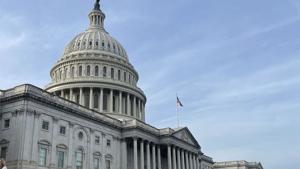
A new proposal in Congress led by a Virginia U.S. senator aims to prevent the federal government from using taxpayer money for military operations toward Venezuela without formal authorization.
The bill, called the “Prohibiting Unauthorized Military Action in Venezuela Act of 2025,” would stop the War Department and other federal agencies from carrying out military operations unless Congress approves the mission or authorizes it through the War Powers Resolution.
Sen. Tim Kaine, D-Va., and Sen. Jeff Merkley, D-Ore., say the bill is intended to prevent military action from moving forward without congressional authorization or a clear legal basis.
Supporters say the measure is meant to keep the United States from being drawn into a conflict without knowing the full mission or understanding the possible consequences.
“We shouldn’t stumble into an unnecessary war with Venezuela, risking U.S. servicemembers’ lives, with no congressional authorization and incomplete information about the Administration’s objectives, its legal rationale, and the potential consequences of a long-term conflict that could drive migration and irreparably fracture Venezuela,” Kaine said in a statement.
Merkley said Congress has a responsibility to act when military decisions are being made without approval.
“Nicolás Maduro is a brutal dictator, but that does not provide justification for the Trump Administration to ignore U.S. law to carry out these unconstitutional military strikes,” Merkley said. “Donald Trump cannot be trusted, and we must say no to another endless war, reckless regime change, and lethal operations, which are essentially extrajudicial killings, and do nothing to make the American people safer.”
The bill says it allows a few exceptions, including protecting U.S. forces or citizens facing an imminent attack, participating in counternarcotics missions that do not involve hostilities, or providing humanitarian assistance to Venezuelans.
Co-sponsor Sen. Chris Van Hollen, D-Md., said the legislation is intended to prevent taxpayer money from being used for what he described as a “manufactured conflict.”
The proposal also notes that it does not change any existing requirements under the War Powers Resolution.