National News
HHS: Pritzker ‘eroded public trust’ in public health

A U.S. Department of Health and Human Services spokesman says Illinois Gov. J.B. Pritzker eroded public trust and is trying to reinvent public health.
The governor thanked Democratic state lawmakers last week when he signed legislation to empower the Illinois Department of Health to circumvent the federal government and issue its own vaccine guidelines.
“I’d also like to acknowledge the folks who are debunking the federal government’s junk science, our public health leaders who advocated for this bill to protect the well-being of the people of Illinois,” Pritzker said.
State Rep. Bob Morgan, D-Deerfield, joined Pritzker’s criticism of President Donald Trump’s administration and U.S. Health and Human Services Secretary Robert F. Kennedy Jr.
“Illinois will go on the offense. We are not powerless. We can defend against the delusions stemming from RFK Jr.’s unfounded assertions that Tylenol causes autism or that vaccines fail to prevent illness,” Morgan said.
HHS Communications Director Andrew Nixon provided The Center Square with a statement after Pritzker signed House Bill 767 in Chicago on Tuesday.
“Democrat-led states that imposed unscientific school closures, toddler mask mandates, and vaccine passports during the COVID era destroyed public trust and should not be guiding policy,” Nixon said.
Nixon’s statement also included remarks about Pritzker.
“Now, the same governor who eroded public trust is trying to reinvent public health under the guise of ‘filling a void.’ The Trump Administration and Secretary Kennedy are rebuilding that trust by grounding every policy in rigorous evidence and Gold Standard Science – not the failed politics of the pandemic,” Nixon concluded.
On Friday, the U.S. Centers for Disease Control and Prevention’s Advisory Committee on Immunization Practices (ACIP) voted to change its hepatitis B vaccination recommendation for infants from birth to no earlier than two months if the mother tests negative for hepatitis B.
Illinois Department of Public Health Director Dr. Sameer Vohra responded with a statement.
“As a pediatrician and a parent, I am deeply concerned by this shift away from universal newborn vaccination, particularly in the absence of any new scientific evidence to support such a change. In Illinois, we remain committed to science-based public health policy and have recently enshrined into law vaccine access and a state-level structure to provide evidenced-based recommendations,” Vohra said.
The IDPH director said the current guidance in Illinois remains unchanged.
“Earlier this fall, the Illinois Department of Public Health adopted the CDC immunization schedules as revised on August 7, 2025, which continue to recommend hepatitis B vaccination for all newborns,” Vohra stated.
Before the ACIP voted, Morgan criticized the proposed change away from hepatitis B vaccination at birth.
“Something that saves 98% of those who get three shots of hep B,” Morgan said.
During Illinois House floor debate in October, state Rep. Bill Hauter, R-Morton, called Morgan’s legislation “a Trump Derangement Syndrome bill.”
As Morgan’s HB 767 gives Illinois state health officials more power, Florida is moving to give individual families more freedom.
Florida’s surgeon general, Dr. Joe Ladapo, told MAHA Media that his state is trying to end discrimination against patients and families who make different vaccine choices.
“This extends from every family who, for example, maybe doesn’t want a single vaccine to families who want all the vaccines but just want to take them on their own timetable,” Ladapo said.
During Friday’s ACIP meeting, committee vice chair Robert Malone said the public lost trust in vaccines during the COVID-19 pandemic. The panel voted 8-3 in favor of changing the hepatitis B recommendations.
Dr. Cody Meissner voted against the change, noting that the American Academy of Pediatrics did not participate in ACIP deliberations.
“The academy has a long history of working closely with ACIP to the betterment of vaccine recommendations for children,” Meister said.
Meister expressed concern that the academy would be seen as more focused on making a political statement instead of focusing on the health of children.
In the CDC statement announcing the change, the agency noted that it was recommending individual-based decision making for parents.
“ACIP also voted to recommend that when evaluating the need for a subsequent hepatitis B vaccine dose in children, parents should consult with health care providers to decide whether to test antibody levels to hepatitis surface antigen to evaluate adequacy of protection through serology results,” the statement said.
A recommendation from ACIP becomes part of the CDC immunization schedule once it is adopted by the CDC director.
The Illinois Immunization Advisory Committee will convene Dec. 16 to review the latest ACIP recommendation.
WATCH: House passes bills to block CCP’s influence on schools
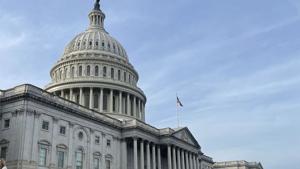
House representatives passed three bills this week aimed at protecting K-12 classrooms from the influence of the Chinese Communist Party.
The bills – PROTECT Our Kids Act, CLASS Act and TRACE Act – essentially prohibit funding from foreign sources and reinforce protections for American students and families. All three passed with bipartisan support.
U.S. Rep. Dave Joyce, R-Ohio, introduced H.R. 1005, PROTECT Our Kids Act, which prohibits public schools from accepting funds from foreign sources and requires the schools to disclose contributions over $10,000.
Joyce called the legislation a safeguard against foreign interference in the classroom.
“American classrooms and what is taught in them should be guided by Americans, not by foreign influences,” said Joyce.
U.S. Rep. Bobby Scott, D-Virginia, opposed H.R. 1005, calling it unnecessary during his closing statements on the House floor Wednesday.
“[T]here is absolutely zero credible evidence that K–12 schools are under threat from misinformation or covert influence by authoritarian foreign governments in any meaningful way,” Scott said in a transcript sent to The Center Square. “This bill does nothing to improve our schools, close achievement gaps, or increase teacher pay. Instead, it burdens schools with bureaucratic red tape due to imagined covert influence from foreign governments.”
Republican lawmakers disagree.
U.S. Rep. Kevin Hern, R-Oklahoma, introduced H.R. 1069, the CLASS Act, which blocks federal education funds from going to any public school that has received direct or indirect support from foreign sources.
“The threat of the CCP is real and growing, and we absolutely must do what we can to protect our children from anti-American brainwashing material funded by one of our greatest adversaries,” Hern told The Center Square in an email. “The 164 Democrats who voted against passing my PROTECT Our Kids Act and believe the CCP isn’t a threat to our education system are either willfully ignorant or too caught up in partisan politics.”
U.S. Rep. Aaron Bean, R-Florida, introduced H.R. 1049, the TRACE Act, which seeks to allow parents the right to request information about foreign influence in education.
“The TRACE Act puts parents back in charge, exposes foreign influence for what it is, and slams the door on hostile nations trying to reach America’s youth,” Bean said.
“The CCP uses our free and open society against us, bankrolling civil organizations … to sponsor exchange programs and curriculum that hide the truth about China,” Select Committee on China Chairman John Moolenaar, R-Michigan, said on the House Floor Wednesday.
House Republican Conference Chairwoman Lisa McClain, R-Michigan, said the measures reverse unchecked foreign influence under the Biden administration and emphasized that “federal funding is a privilege, not a right.”
New fiscal year begins with lowest border apprehensions in recorded history

Illegal border crossings continued an historic downward trajectory in October and November, representing the lowest numbers ever reported at the beginning of a fiscal year in recorded U.S. history. The fiscal year goes from Oct. 1 through Sept. 30.
In October, 30,573 illegal border crosser apprehensions/encounters were reported nationwide – a massive drop from 142,742 in October 2024, 309,605 in October 2023 and 278,317 in October 2022, according to U.S. Customs and Border Protection data.
According to preliminary data for November, illegal border crosser apprehensions and encounters nationwide were slightly lower – 30,367.
The numbers include apprehensions made by Border Patrol agents nationwide between ports of entry and by CBP agents at ports of entry.
“Our focus is unwavering: secure the border, enforce the law, and protect this nation,” CBP Commissioner Rodney Scott said. “These numbers reflect the tireless efforts of our agents and officers who are delivering results that redefine border security. We’re not slowing down. We’re setting the pace for the future.”
The total encounters in October and November – 60,940 – are lower than all of the first two months of any fiscal year to date. The next lowest number was reported in fiscal 2012 of 84,293, according to CBP data.
Notably, the total number of illegal border crossers apprehended in the first 10 months of the Trump administration were less than the number of foreign nationals who illegally entered the country under the Biden administration in one month.
From Jan. 21 through end of November, there were 117,105 total illegal border crosser apprehensions along the southwest border, 37% less than the monthly average of 185,625 during the Biden administration, according to the data.
Border Patrol apprehensions averaged less than 10,000 a month at the southwest border since President Donald Trump took office, “a level of deterrence unmatched in modern border history,” Scott said.
Average apprehensions along the southwest border totaled 245 per day, less than 11 people per hour. That’s 95% lower than the daily average under the Biden administration, which saw the highest numbers in recorded U.S. history. From February 2021 through December 2024, Border Patrol agents faced a minimum of 5,110 apprehensions a day along the southwest border, according to CBP data.
In December 2023, at the height of the border crisis, with December being a normally slow winter month, 336 illegal border crossers were apprehended every hour. That’s more than the daily total of apprehensions under the Trump administration.
Every month and every year the greatest number of illegal border crossers were single adults, followed by single adults claiming to be in a family unit, and unaccompanied children, according to the data.
The data excludes “gotaways,” the official CBP term for foreign nationals who illegally enter between ports of entry to evade capture. They don’t make immigration claims and don’t return to Mexico or Canada. The majority have been found to have criminal records or were previously deported, authorities have said.
CBP doesn’t publicly release gotaway data. The Center Square exclusively obtained it from a Border Patrol agent every month, revealing that more than two million gotaways were recorded by Border Patrol agents during the Biden administration. The total is expected to be much higher because not all gotaways were reported.
As record numbers of illegal border crossers poured through, Border Patrol agents were pulled from the field to process them into the country contrary to federal law, creating a national security crisis, they argued.
Retired San Diego Chief Border Patrol Agent Aaron Heitke testified before Congress that Border Patrol agents across the southwest border were taken out of the field to process everyone into the country, including “groups of hundreds and thousands coming into the United States and turning themselves in.” The result was “80% to 90%, sometimes 100% of the agents on duty [were taken] away from” the southwest border. Hundreds of miles of the border were left unstaffed, unprotected and unpatrolled where there was “no agent presence for weeks and months at a time,” he said, The Center Square reported.
Foreign nationals “who did not want to be caught could simply walk in. … We have no idea who and what entered our country over this time.”
Under the Trump administration, Border Patrol agents were put back in the field, Biden administration policies were reversed and illegal border crossers aren’t being released but processed for removal.
Debate over AI heats up as GOP scraps moratorium in annual Defense bill
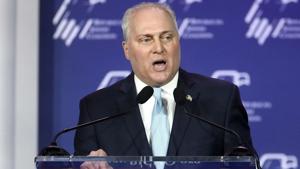
Lawmakers are becoming increasingly concerned about the rapid expansion of AI technology and its impacts on cybersecurity, the power grid, and online safety.
While the Trump administration and some congressional Republicans like U.S. Sen. Ted Cruz, R-Texas, and Rep. Brett Guthrie, R-Ky., are pushing for a federal moratorium on state AI regulations, most other members of Congress are calling for a more prudential approach.
Democrats on the House Energy and Commerce committee asked the Federal Energy Regulatory Commission in a Friday letter to ensure that AI data center growth does not raise Americans’ energy bills.
The lawmakers urged FERC “to prioritize holding American families harmless from the costs imposed upon the nation’s grid by large loads, including data centers,” as the commission considers rulemaking proposals addressing the impact of increased electricity demand on the power grid.
“Ensuring that the buildout of a 21st century grid is fundamentally fair will take many stakeholders: Congress, the federal government, and state regulators,” the lawmakers noted.
“But we appreciate the need for expeditious FERC action in this case, which could help prevent a “race to the bottom” where data center developers would be incentivized to build in jurisdictions with the weakest regulations, and not in the best places to minimize the costs they impose upon the grid.”
Multiple states are attempting to lure data center developers with massive tax breaks, even as the majority of American voters don’t want energy-sucking data centers in their communities.
Communities with data centers often shoulder increased energy costs as electricity demand soars and utilities force American taxpayers to fund discounted rates for data centers, a recent study by Harvard Law School found.
As data centers nevertheless continue to pop up around the country, the Trump administration’s push for nationwide AI regulatory uniformity is meant to further both data center construction and AI innovation in general.
One federal AI standard – which the “One Big Beautiful Bill” initially included before senators stripped it – could prevent states from enacting AI-related online safety laws, zoning restrictions, taxation rules, and other regulations, depending on what form it takes.
Pro-AI moratorium Republicans tried again to insert a 10-year AI moratorium into legislation, this time within the 2026 National Defense Authorization Act, the annual must-pass Defense bill that will drop next week.
But due to strong pushback from both Democrats and Republicans alike, House Majority Leader Steve Scalise, R-La., indicated this week that a moratorium won’t be included in the NDAA, explaining that the must-pass bill “wasn’t the best place for this to fit.”
“Good. This is a terrible provision and should remain OUT,” Sen. Josh Hawley, R-Mo., responded on social media.
Scalise added, however, that “we’re still looking at other places, because there’s still an interest.”
Evers vetoes 9 bills, including block on illlegal BadgerCare enrollment

Wisconsin Gov. Tony Evers vetoed nine bills Friday, including a much-debated bill that would prevent tax money from going toward the health care of undocumented immigrants.
The bill had passed the Senate 21-12 and the Assembly 51-44 with bill sponsors saying it was aimed at preventing those who are unlawfully present in the country from receiving BadgerCare benefits.
Evers pointed to legislative debate on Assembly Bill 308 where a co-author stated that undocumented immigrants already cannot enroll in BadgerCare.
“I am vetoing this bill in its entirety because I object to Republican lawmakers passing legislation they acknowledge is unnecessary to prevent problems they admit do not exist, all for the sake of trying to push polarizing political rhetoric,” Evers wrote in his veto message.
Sen. Tim Carpenter, D-Milwaukee, was removed from the Committee on Licensing, Regulatory Reform, State and Federal Affairs after a dispute about the bill when Carpenter reached for the gavel of Committee Chair Sen. Chris Kapenga, R-Delafield.
Evers also vetoed bills regarding student teaching requirements, disputes with the Elections Commission, military recruiting access to schools, building codes, emotional support animals, the state smoking ban in tobacco bars, data from University of Wisconsin system schools and a ban on local guaranteed income programs.
“I am vetoing this bill in its entirety because I object to burdening institutions of higher education in Wisconsin with additional administrative requirements, most especially when the Wisconsin State Legislature imposes such mandates without providing the necessary resources to successfully implement those requirements,” Evers wrote in vetoing Assembly Bill 166. “Further, many of the mandated reporting as required under this bill will, according to the University of Wisconsin System, ‘overlap substantially’ with existing information that is already available and submitted to the federal government.”
Bull Moose Project criticizes Sen. Lummis over stalled crypto legislation

A conservative advocacy group is pressuring U.S. Sen. Cynthia Lummis, R-Wyo., over her handling of a major digital asset bill, arguing that she slowed progress on a measure backed by the White House and a bipartisan group of lawmakers.The Bull Moose Project released a football-themed AI video and statement criticizing Lummis, a Wyoming Republican who has positioned herself as a leader on cryptocurrency issues. The group said she “fumbled” the Digital Asset Market Clarity Act of 2025, a bill that passed the U.S. House earlier this year with bipartisan support.Lummis shifted her focus to the Responsible Financial Innovation Act, a separate proposal that has not advanced, according to a Bull Moose Project press release. The group argues that move stalled both measures.“The White House was clear that it wanted digital asset market legislation passed and on the President’s desk before Thanksgiving. The House did its job and the Senate was ready to pass it until Senator Lummis called an audible and fumbled the ball,” Aiden Buzzetti, founder of the Bull Moose Project, said in the release.The organization said the CLARITY Act would establish clearer rules for the digital asset market, including definitions for digital commodities, regulatory roles, and operational requirements for companies. Its supporters have described it as a way to provide stronger consumer protections and more certainty for investors.President Trump “declared digital asset market structure legislation a priority months ago,” the group said. The release warned that “thanks to Sen. Lummis’ poor play calling, that’s all at risk.” Lummis’ office did not immediately respond to a request for comment.The video, released alongside the statement, uses football analogies to criticize Lummis’ role in the process. “President Trump called the play. The industry set the formation. The House put it in motion. But Senator Cynthia Lummis fumbled the ball,” the narration said. It adds that her decision “surpris[ed] policymakers and spook[ed] crypto investors.”The video also states that “when it comes to legislating on President Trump’s biggest priorities, Senator Lummis is a liability and should be benched,” and urges viewers to “tell Senator Lummis to get on the right play for Wyoming and America. Pass the Clarity Act now.”The ad will run on social media during major college football games, the group says.
Read MoreU.S. Supreme Court to decide birthright citizenship case
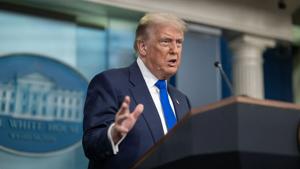
The U.S. Supreme Court on Friday agreed to decide a case challenging President Donald Trump’s plan to end birthright citizenship.
On the first day of his second term, Trump signed an executive order directing federal agencies to refuse to recognize U.S. citizenship for children born in the U.S. to mothers who are in the country illegally or are here legally on visas if the father is not a U.S. citizen or lawful permanent resident. The order also called for denying U.S. citizenship to those children born in the U.S. if at least one parent isn’t an American citizen or green card holder.
A U.S. Supreme Court ruling more than a century ago held that children born in the U.S. to foreign parents are U.S. citizens under the 14th Amendment. However, the Trump administration said the 14th Amendment has “never been interpreted” to give universal citizenship to everyone born in the country.
Section 1 of the 14th Amendment states: “All persons born or naturalized in the United States, and subject to the jurisdiction thereof, are citizens of the United States and of the State wherein they reside.”
Several lower federal court judges blocked Trump’s attempts to end birthright citizenship in response to lawsuits filed by state attorneys general, mothers and others.
The Supreme Court already has heard arguments related to nationwide injunctions issued as a result of the legal challenges. Now it will decide the merits of Trump’s executive order.
A decision will is expected in 2026.
• Brett Rowland contributed to this report.
Polis calls on U.S. Treasury to extend free tax filing service

Colorado Gov. Jared Polis sent a letter this week to the U.S. Treasury Department calling on it to undo its suspension of the IRS Direct File tool, which he argues saves money for taxpayers.
The free, online tool was launched in 2024.
“I want to make it as simple as possible for people to file taxes and access the tax credits and deductions they’ve already earned but often miss out on,” Polis said in his letter. “I was disappointed to see the result of the Treasury’s report on Direct File, which announces the suspension of the tool and ignores how effective and accurate it was.”
The U.S. Treasury Department cited high costs and the many filing alternatives available to taxpayers as reasons for the program’s suspension.
“Direct File had low overall participation and relatively high costs and burdens on the federal government, compared to other free filing options,” it said in its October report on the service. “For tax year 2024, returns submitted using Direct File constituted less than 0.5 percent of the approximately 146 million returns filed. Direct File had a cost to the federal budget of at least $41 million for tax year 2024 returns, or a cost of at least $138 per return accepted through Direct File.”
Polis argued in his letter that the nearly $140 per tax return is still cheaper than the $290 the average American spends to file their return.
“Direct File offered a free, efficient alternative that saved taxpayers both time and money, making government more efficient and reducing taxpayer errors,” he said.
In 2024, 423,450 taxpayers across eight states logged on to Direct File. Of those, 140,803 submitted accepted federal returns.
This year, despite the service receiving no funding for marketing, that number increased to 751,235 taxpayers in 25 states, with 296,531 accepted returns. Already, four million taxpayers nationally used Direct File’s eligibility checker.
Polis said in his letter that the tool helped improve the taxpayers’ experience by addressing the “high cost and complexity of filing.”
“That’s why last year we were proud to partner with the IRS so starting next year, taxpayers in Colorado could use Direct File as a one-stop shop to fully file and get their money back,” he said.
Ultimately, Direct File cost the government annually $41 million, but saved the taxpayers an estimated $7.8 million in tax preparation fees this year.
While the department is considering alternatives to Direct File, it said the IRS’s efforts should be refocused to higher priorities.
“American taxpayers have access to a range of free income tax preparation and filing options delivered by the private sector, the IRS, and longstanding public-private partnerships,” it said. “This path forward aims to increase awareness of and access to free filing services in a cost-effective way that better serves taxpayers’ interests without imposing unsustainable burdens on the government.”
Netflix buys Burbank-based Warner Bros. for $72 billion

The multibillion dollar question of who’s buying Warner Bros. was answered Friday when Netflix announced its purchase of the iconic Burbank studio.
After a weeks-long bidding war, the world’s biggest streaming service said it is buying Warner Bros., the studio known for everything from “Casablanca” and Bugs Bunny cartoons to the Superman and Harry Potter movies, for $72 billion. That’s the equity value. Netflix puts the total enterprise value at $82.7 billion.
The announcement ends bidding that last weeks after New York-based parent company Warner Bros. Discovery announced it was selling. Netflix offered nearly $28 per share, more than that offered by what was seen as the frontrunner: Paramount Skydance. The third bidder was Comcast.
Netflix expects the deal, which is subject to federal approval, to close in 12 to 18 months. It said it will continue to operate Warner Bros.’ movie and TV studios in Burbank, near Los Angeles, and release Warner Bros. movies in theaters.
The sale includes Warner Bros.’ film and TV studios, HBO Max and Max. The sale also includes Burbank-based DC Comics and DC Studios, which produces TV shows and movies including the recently released “Superman” film.
“Today’s announcement combines two of the greatest storytelling companies in the world to bring to even more people the entertainment they love to watch the most,” said David Zaslav, president and CEO of Warner Bros. Discovery, in a statement.
Under the deal, Discovery’s global networks division, Discovery Global, would leave Warner Bros. Discovery and become a separate publicly traded company, according to Netflix.
Netflix executives discussed the sale during a webinar Friday morning.
Netflix is better known as “builders, not buyers,” Ted Sarandos, co-CEO of Netflix, told viewers, which included The Center Square. But he added the Warner Bros. purchase was a rare opportunity to entertain the world with great stories.
Netflix has long realized it needed to take bold moves to evolve, Sarandos added.
“Remember, we started off as a DVD-by-mail company,” he said. “Then we moved to streaming, to producing original content, live programming from a U.S.-centric business to a global business.
“In a world where people have so many choices, more choices than ever, how to spend their time, we can’t stand still,” Sarandos said.
Netflix has the global reach to bring Warner Bros.’ content to a bigger audience, Sarandos said.
And Netflix will get a significant increase in its production capacity with Warner Bros.’ studios, Netflix co-CEO Greg Peters noted during the webinar.
“It’s going to mean more options for consumers. It’s going to mean more opportunities for creators, more value for our shareholders,” Peters said.
U.S. Supreme Court takes up Michigan foreclosure case

A Michigan family’s decades-long fight over a property seizure will soon be before the U.S. Supreme Court, marking the latest high-stakes challenge to how counties nationally handle property tax foreclosures.
This week, the Pung family filed their opening brief in Pung v. Isabella County. Represented by attorney Phil Ellison and the Pacific Legal Foundation, the case asks the nation’s highest court to decide whether local governments must compensate homeowners based on fair market value.
The plaintiffs also argue that the government should not be allowed to seize properties worth far more than needed to satisfy a tax debt.
The Center Square spoke with PLF Senior Attorney Christina Martin in an exclusive interview regarding the case, which will be decided in 2026.
“If Isabella County can with impunity confiscate the Pung’s entire home over a small disputed tax bill, and force them into a decade of litigation to recover less than half of its value, any municipality could do it to anyone,” Martin said. “Tax sales should be a last resort.”
The plaintiffs argue that this was not a last resort for the county, but that, at the time, Michigan counties were using property foreclosures to make profits.
The dispute dates back to 1994, when Scott Pung received an exemption on a small local tax. Over a decade later, after Scott and his wife had both died, the local tax assessor said that the family should have reapplied for the exemption following Scott’s death.
“The tax assessor was wrong: State law says the exemption continues as long as family members continue to live in the home,” Martin said. “Scott’s son still lived there. No further paperwork was necessary.”
The Pung family fought the assessment and initially won. But as legal challenges continued, Isabella County launched foreclosure proceedings over a disputed 2012 bill. That led to the county seizing the home, just 10 days after the family prevailed in the Michigan Court of Appeals for earlier tax years.
“The home was worth nearly $200,000 and all the properly imposed taxes were paid,” Martin said. “The Pungs tried to get the home back, but the county fought them every step of the way, refusing to allow the Pungs to even pay the improperly imposed debt to recover the home.”
The county eventually auctioned the home for $76,000 – keeping all the money it profited. A federal court later concluded that Isabella County only needed to return the surplus proceeds from the auction, not the full value of the home the family lost.
The plaintiffs argue that the house being sold under its proper home value “destroyed” equity in an “unnecessary auction” and that they are due fair market value from the county, not just what is surplus from the auction.
“The Takings Clause [in the Fifth Amendment] requires just compensation when the government takes your private property,” Martin said. “While the government has an option to forcibly sell private property to collect unpaid taxes, it must act reasonably. It has to avoid unnecessary tax sales, which means it should never be forcibly auctioning homes to collect relatively tiny debts or improperly imposed debts.”
The Supreme Court will consider whether the government must pay fair market value, rather than auction surplus, when it takes property. It will also hear arguments about whether Isabella County imposed an excessive fine in violation of the Eighth Amendment, especially since plaintiffs argue the underlying tax debt should never have existed.
This case follows the foundation’s 2023 Supreme Court victory in Tyler v. Hennepin County, which barred the government from taking more than what is owed in tax foreclosures.
Now, this case asks the court to go even further, in a decision that will have broad implications for homeowners nationwide.
Martin is hopeful the court will decide in the plaintiffs’ favor, making it “more likely for states and local governments everywhere to be more thoughtful when seizing property for taxes and less careless when selling it.”
Oral arguments in the case are expected in early 2026.
Martin noted that the PLF has several other Michigan-related petitions pending before the Supreme Court, challenging counties’ continued attempts to keep more than what is owed in tax foreclosures despite a state statute.
“Thirty counties failed to remit a single penny,” Martin explained. “We are urging the court to grant review to hold that this failure to remit just compensation violates the Takings Clause and that the procedures themselves violate due process.”