Illinois News
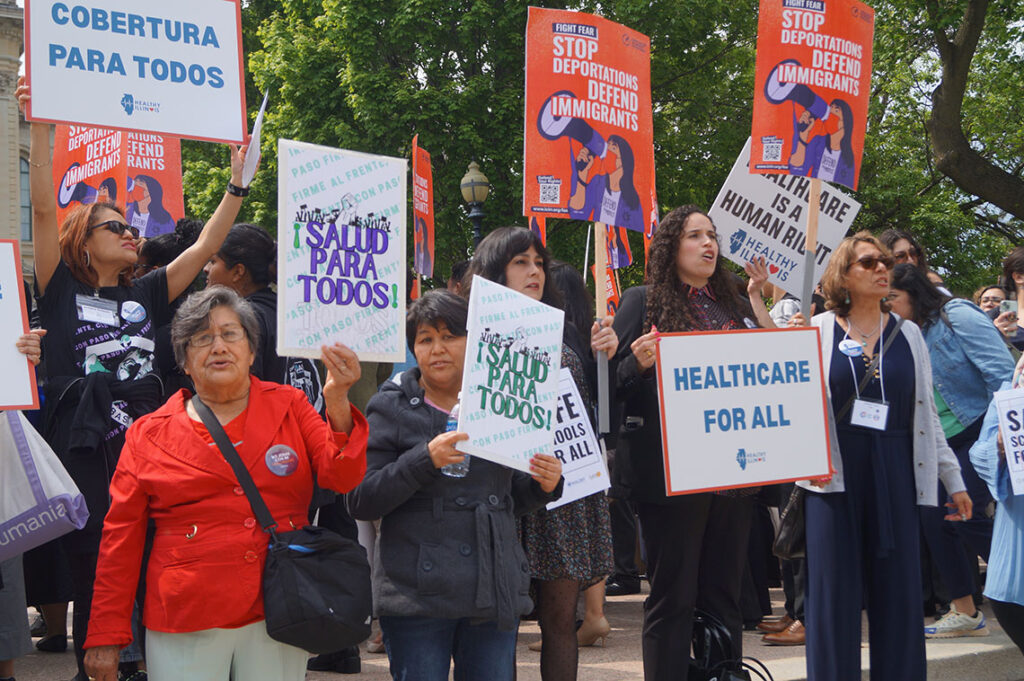
Immigrant health care programs boosted hospital bottom lines, study suggests
Capitol News Illinois
SPRINGFIELD – Two state-run health care programs that extend Medicaid-like coverage to noncitizens may have provided significant financial benefits for Illinois hospitals.
That’s according to preliminary results of an ongoing study at the University of Chicago that suggests the programs corresponded, at least in part, to a 15% reduction in the amount of bad debt Illinois hospitals incurred each year since the programs have been in full effect.
“The number that we find is a 15% reduction,” Aresha Martinez-Cardoso, an assistant professor and researcher at U of C’s Embodying Racism Lab, where the study is being conducted, said in an interview. “We think that that might be a high estimate, given what we know about perhaps other things that are going on that we can’t entirely rule out, but we do think that part of that reduction is associated with the policy.”
That translates to an average of $1.5 million per year, per hospital, according to the report, although the exact amount would vary greatly depending on a hospital’s size and the volume of patients it treats who are covered by the programs.
“Our early findings show that this landmark policy isn’t just about access — it also serves as a strategic investment in our hospitals and the health of entire communities,” Martinez-Cardoso said.
Those findings come as Gov. JB Pritzker’s administration is preparing to shut down the larger of the two programs as part of his budget proposal for the upcoming fiscal year. The Health Benefits for Immigrant Adults, or HBIA, currently covers more than 31,000 eligible noncitizens aged 42-64, at a cost of about $21 million per month, according to the most recent data from the Department of Healthcare and Family Services.
The other program, Health Benefits for Immigrant Seniors, covers eligible noncitizens aged 65 and over. That program currently covers about 8,900 individuals at a cost of about $10 million per month. Pritzker has not proposed eliminating it.
The programs were launched in 2020 and 2021, during the COVID-19 pandemic, as a means of extending health coverage to individuals who did not qualify for other publicly funded health care programs solely due to their immigration status. Those include individuals who are in the United States without legal authorization as well as certain legal permanent residents who have not yet been in the country long enough to qualify for Medicaid.
The programs have been controversial since they were first proposed. Republicans have been especially critical, saying the programs serve as an incentive for immigrants to cross into the United States illegally and settle in Illinois to receive taxpayer-funded health benefits.
With the state facing slow revenue growth and a projected budget deficit in the coming year, Pritzker surprised many of his supporters in February when he proposed closing the HBIA program.
Eliminating the program for middle-aged adults is projected to save the general revenue fund about $330 million, according to the governor’s office. Pritzker told reporters after his address in February he expects the federal government will stop reimbursing states for costs associated with programs providing services to noncitizens.
A week after the governor’s budget address, the Illinois Auditor General released a report that said enrollment in both programs and their eventual costs had far exceeded their original projection. The cost for the two programs, the report said, exceeded $1.6 billion over the course of four fiscal years.
Read more: Audit finds Illinois’ noncitizen health care programs far outstripped original cost estimates
Unlike Medicaid, which is jointly funded with state and federal funds, the health programs for noncitizens are funded almost entirely with state dollars.
The study looked at publicly available hospital financial reports to analyze changes in the amount of uncompensated care they provided from 2017 to 2023. It also looked at similar data from hospitals in Indiana and Wisconsin, neighboring states that do not provide health benefits for noncitizens.
“We tried to flip it a few different ways,” Martinez-Cardoso said in an interview. “There could be a lot of other things happening. But when we test a bunch of different models … we kind of see a consistent pattern that the policy timing is associated with bad debt.”
She said the results so far are only preliminary and that analysis of the data is continuing. But she said the analysis so far shows a strong link between the enactment of the programs and an overall reduction in uncollectable debt.
Capitol News Illinois is a nonprofit, nonpartisan news service that distributes state government coverage to hundreds of news outlets statewide. It is funded primarily by the Illinois Press Foundation and the Robert R. McCormick Foundation.
The post Immigrant health care programs boosted hospital bottom lines, study suggests appeared first on Capitol News Illinois.
Pritzker signs order to protect personal autism data in response to federal action
Capitol News Illinois
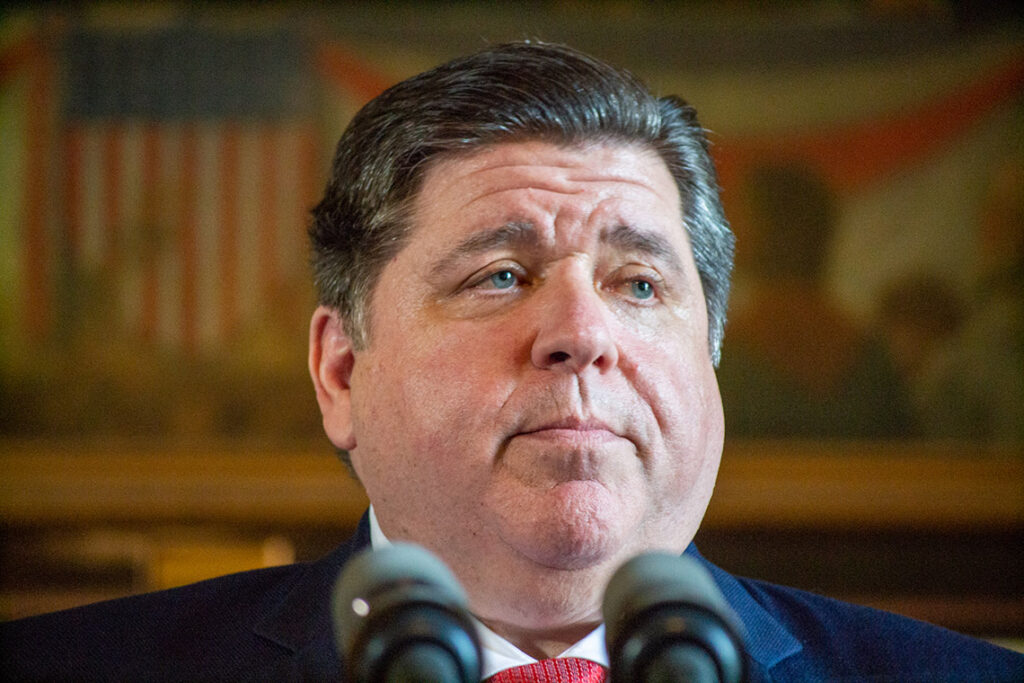
SPRINGFIELD — Gov. JB Pritzker issued an executive order Wednesday that bars state agencies from collecting and disclosing data about autism to the federal government unless it’s medically or legally necessary.
The order was in response to a move by the U.S. Department of Health and Human Services earlier Wednesday to research and create a national autism database.
In a statement, Pritzker called the project a “threat” to the rights of disabled individuals. The order stated that the project raises privacy concerns about the collection and use of data, as well as potential “discriminatory profiling or surveillance of individuals with disabilities.”
“Every Illinoisan deserves dignity, privacy, and the freedom to live without fear of surveillance or discrimination,” Pritzker said. “As Donald Trump and DOGE threaten these freedoms, we are taking steps to ensure that our state remains a leader in protecting the rights of individuals with autism and all people with disabilities.”
Executive Order 2025-02 also requires state agencies to follow strict privacy and data protection requirements when they do disclose such data, including making personal information anonymous where it’s practicable and only disclosing the minimum amount of personal information that’s legally necessary.
The move was prompted by an HHS announcement of a research project on Wednesday. The project will allow the National Institutes of Health and the Centers for Medicare and Medicaid Services to have access to data and medical records of Medicare and Medicaid enrollees diagnosed with autism in an effort to research autism, Newsweek reported.
It also directly responded to remarks made last month by U.S. Department of Health and Human Services Secretary Robert F. Kennedy Jr., who called autism an “epidemic” and said that President Trump has tasked him with finding a cause for the “epidemic.”
“Autism is a neurological difference—not a disease or an epidemic,” Pritzker’s order read. “People with disabilities, including individuals with autism, are too often stigmatized and underestimated, and public policy should never diminish the diverse strengths and potential of this community.”
This is not the first time Kennedy has touched on his beliefs about autism. During an interview in 2023, he confirmed that he believes that vaccines cause autism, a theory the U.S. Centers for Disease Control and Prevention and a wide body of research have long since debunked.
Read more: How RFK Jr.’s health proposals could affect Illinois
Executive orders aren’t often enacted by the Illinois governor, as last year he only signed three. This is the second order he has signed this year and is his latest action against the Trump Administration since his trade mission to Mexico this spring.
Read more: Pritzker hopes trade mission to Mexico sparks new investment despite tariffs
Capitol News Illinois is a nonprofit, nonpartisan news service that distributes state government coverage to hundreds of news outlets statewide. It is funded primarily by the Illinois Press Foundation and the Robert R. McCormick Foundation.
The post Pritzker signs order to protect personal autism data in response to federal action appeared first on Capitol News Illinois.
Illinois regains access to $77M in federal education funds following judge’s order
Capitol News Illinois
A federal judge in New York issued a preliminary order Tuesday blocking the Trump administration from cutting off states’ access to hundreds of millions of dollars in pandemic relief funds for public schools, including more than $77 million for Illinois.
U.S. District Judge Edgardo Ramos, of the Southern District of New York, issued a preliminary injunction blocking enforcement of an order that Education Secretary Linda McMahon issued on Friday, March 28. That order reversed earlier decisions to grant the states additional time to spend funds they had been allocated.
The effect of McMahon’s order was to immediately cut off access to funds that states said they had already committed to spend but not yet made the actual expenditures.
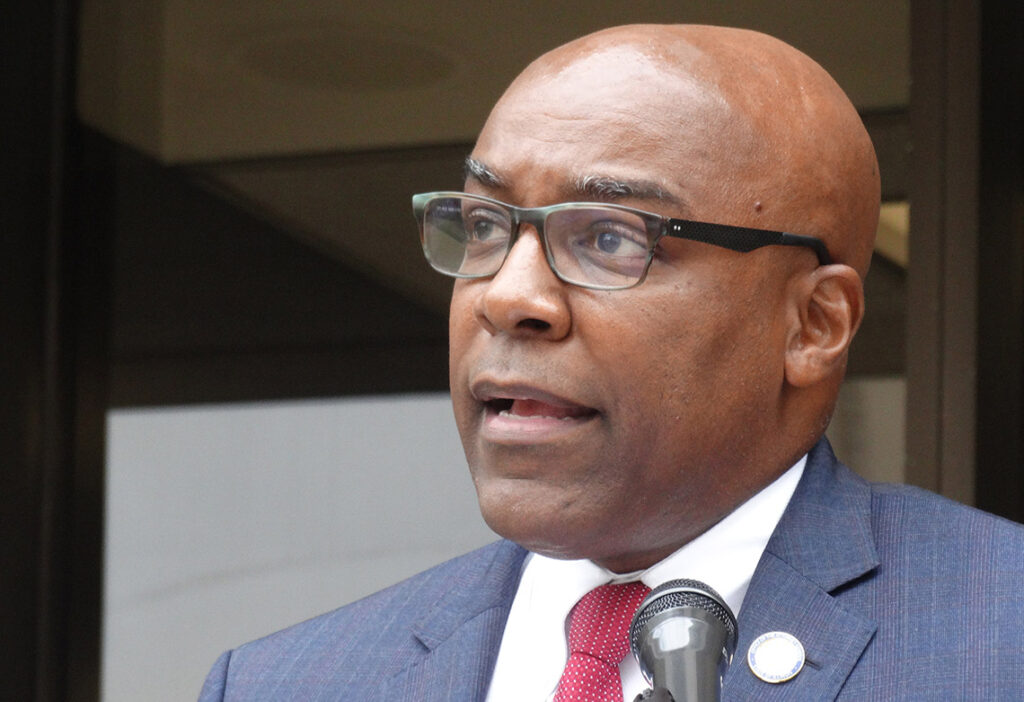
Illinois Attorney General Kwame Raoul joined a coalition of 17 states in suing the federal government to block McMahon’s order.
“The Trump administration’s shortsighted and illegal decision to attempt to rescind already-appropriated education funding would hurt vulnerable students the most and could wreak havoc on the budgets of school districts throughout Illinois and the nation,” Raoul said in a statement Tuesday.
The lawsuit over pandemic-related education money is one of more than a dozen multistate suits Raoul has joined, in combination with other Democratic state attorneys general, challenging actions Trump has taken since being sworn in for a second term Jan. 20.
In 2020 and 2021, Congress passed several relief and economic stimulus packages totaling trillions of dollars to help individuals, businesses and state and local governments deal with the financial consequences of the pandemic. For schools, that included costs associated with preparing for the safe return to in-person learning, addressing the learning loss students suffered during the extended period of school closures, and addressing some of the unique needs of homeless children that were exacerbated by the pandemic.
According to the complaint, Illinois was awarded just over $5 billion in “education stabilization” funds under the American Rescue Plan Act, or ARPA, which was enacted in March 2021. Of that, $77.2 million remained obligated but not yet spent as of the end of March 2025.
Those funds had been earmarked for such things as teacher mentoring, statewide instructional coaching, new principal mentoring, trauma response initiatives, the creation of social-emotional learning hubs and contracts for technology infrastructure upgrades, according to the complaint.
Under ARPA, those funds were intended to cover expenses incurred through Sept. 30, 2023. Subsequent legislation gave states an additional year, to Sept. 30, 2024, to “obligate” their funds. And under agency regulations, they had another 120 days beyond that to draw down the funds, although they were also given the option of requesting further extensions.
In January 2025, Illinois requested, and later received, permission to extend its deadline for drawing down the remainder of its funds to March 28, 2026. Other states involved in the lawsuit also received extensions.
But on Friday, March 28, 2025, the Department of Education issued a memo rescinding those extensions, effectively cutting off the states’ access to any unspent funds.
“Extending deadlines for COVID-related grants, which are in fact taxpayer funds, years after the COVID pandemic ended is not consistent with the Department’s priorities and thus not a worthwhile exercise of its discretion,” McMahon said in a memo to state education agency heads.
The injunction means the Department of Education cannot enforce the order, at least while the case is still being litigated or until the court issues a different order.
Capitol News Illinois is a nonprofit, nonpartisan news service that distributes state government coverage to hundreds of news outlets statewide. It is funded primarily by the Illinois Press Foundation and the Robert R. McCormick Foundation.
The post Illinois regains access to $77M in federal education funds following judge’s order appeared first on Capitol News Illinois.