Illinois News
Senate’s transit funding, delivery tax proposal stalls in House
Capitol News Illinois
SPRINGFIELD – With public transit agencies in Chicagoland facing a fiscal cliff and the potential for thousands of layoffs, the state did not pass a bill that would have provided the agencies with potentially over $1 billion in new funding.
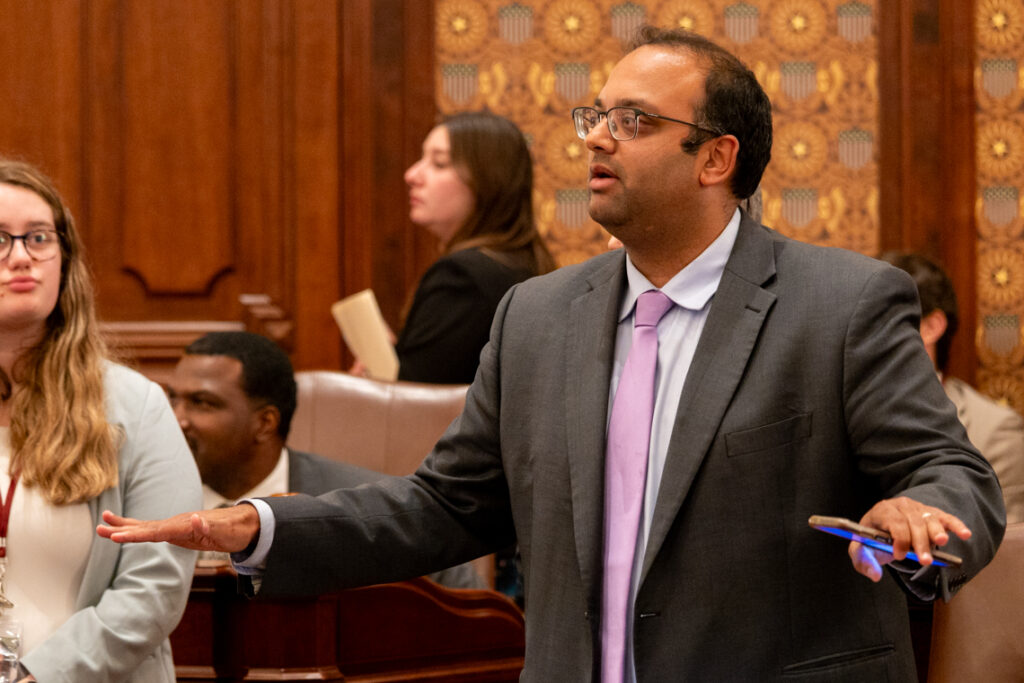
A version of the bill passed in the Senate, sponsored by Sen. Ram Villivalam, D-Chicago. But the House adjourned early Sunday morning without concurring as some of its tax hikes became too controversial. Now, the future of Chicagoland transit is in limbo as the bill awaits further action.
The Regional Transportation Authority — which oversees the Chicago Transit Authority, Metra commuter rail and Pace Suburban Bus — projects a $771 million annual operating budget shortfall.
At a hearing in the days leading up to adjournment, Amalgamated Transit Union political director Clem Balanoff told lawmakers that thousands of union bus drivers and train operators would be laid off if action wasn’t taken to fill the budget gap. RTA officials have estimated 40% service cuts are necessary to address the fiscal crisis.
Gov. JB Pritzker on Sunday said there is “significant work” left to address Chicagoland transit funding over the summer and into the fall.
“The fact is that we need to address transit funding as fast as possible,” Pritzker said.
The Senate’s proposal to do so included statewide taxes on deliveries and electric vehicle charging, as well as expanding taxes on rideshares and expanded certain Chicago taxes to the rest of Cook County and surrounding counties.
RTA and its subsidiary transit agencies will create their budgets for the upcoming fiscal year in the coming weeks. According to RTA spokesperson Tina Fassett Smith in a statement, those budgets “by law must only include funding we are confident the system will receive in 2026.”
“We think there’s probably a billion dollars for mass transit in there,” RTA Board Chairman Kirk Dillard said shortly after the Senate passed its transit bill late Saturday night.
Now, Dillard and other transit officials are going to work to minimize or avoid cuts.
“It’s clear that many in both the House and Senate support transit and our intention is to build on that shared support to identify the funding needed to avoid devastating cuts and disruption for everyone in Northeast Illinois,” Smith said in a statement.
The senate’s solution
House Bill 3438, the proposal approved by the Senate, would bail out transit authorities and send some funding outside northern Illinois. The reform package includes multiple tax increases. It’s unclear if any of these increases could come up again in future attempts to reform transit, although the House could pass it at a special legislative session or at a a future regular session.
The most controversial tax increase was a $1.50 fee added to any home delivery order placed online, with exceptions for some small businesses as well as orders containing only groceries and medication. Of the funds raised from this statewide tax, 80% would go to northern Illinois transit systems under a renamed RTA and 20% would be put into a fund for downstate transit agencies.
The bill would have also instituted a tax on real estate transfers in Cook County and the counties surrounding it. That tax is similar to one already in place in Chicago. It would have also required a charge on taxi and rideshare services in that region and a statewide 3 cents-per-kilowatt hour fee for charging electric vehicles.
“All told, we have achieved with the Senate package, a $1.5 billion investment for the northeast Illinois region,” Villivalam said. “And we have received more than double what downstate transit agencies requested for a historic investment.”
Over the two years that lawmakers have worked with the RTA on this transit funding issue, Democratic lawmakers have consistently repeated their mantra: there would be no funding without reform. To that end, they sought to institute sweeping reforms to the RTA.
Read more: Lawmakers offer 2 incomplete pitches for public transit and funding reform
The bill would rename the RTA to the Northern Illinois Transit Authority. The agency would have ultimate control over fares as well as a restructured board that places more power in the hands of the state.
While the bill will not become law soon, similar governance reforms were proposed by House lawmakers, who indicated there was agreement between the Senate and House on the reforms likely to be included in any deal.
Even still, those reform proposals drew fierce criticism from some suburban lawmakers
“This has become a bailout for Chicago CTA,” Sen. Seth Lewis, R- Bartlett, said. “We’re giving the mayor more control. We’re giving him more than a billion dollars in revenue.”
The board, under the Senate bill passed Saturday, would have five members appointed by the governor, five appointed by the president of the Cook County Board, five from the mayor of Chicago and one each from the collar counties.
Capitol News Illinois is a nonprofit, nonpartisan news service that distributes state government coverage to hundreds of news outlets statewide. It is funded primarily by the Illinois Press Foundation and the Robert R. McCormick Foundation.
The post Senate’s transit funding, delivery tax proposal stalls in House appeared first on Capitol News Illinois.
Amid uncertainty in Washington, Illinois lawmakers pass slimmed-down Medicaid package
Capitol News Illinois
SPRINGFIELD — Nearly every year, Illinois lawmakers pass a package of measures dealing with the state’s Medicaid program, the joint federal and state health care program that covers low-income individuals.
Known as the Medicaid omnibus bill, it sometimes includes bold components, like a 2021 initiative that made millions of dollars available to local communities to help them plan and design their own health care delivery systems. Other packages have focused on smaller changes like guaranteeing coverage for specific conditions and medications or adjusting reimbursement rates for different categories of health care providers.
And moThe Illinois General Assembly passed a scaled-back Medicaid package on the last day of the session Saturday.st years, the packages receive bipartisan support because they are negotiated, largely behind closed doors, by an unofficial, bipartisan Medicaid Working Group.
This year, however, lawmakers passed one of the narrowest packages in recent memory, due mainly to the Trump administration’s vows to make sweeping cuts in federal funding for the program while state lawmakers faced their own set of budget constraints.
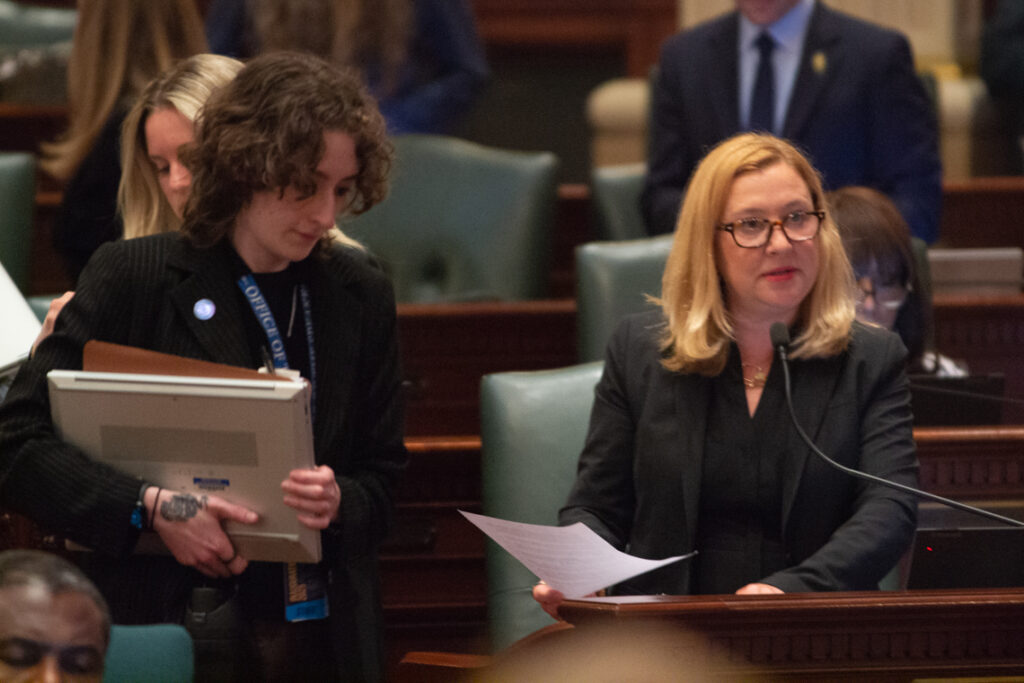
“There were many, many, very worthy program expansions, rate increases that we considered during this process that we were unable to include because of the uncertainty in Washington,” Rep. Anna Moeller, D-Elgin, the current chair of the Medicaid Working Group, said on the House floor Saturday.
The Illinois Medicaid program currently costs about $33.7 billion a year, according to the Department of Healthcare and Family Services. Of that, $20.9 billion, or about 62%, comes from the federal government while much of the state’s share comes from taxes levied on hospitals, nursing homes and managed care organizations – money the state uses to draw down federal matching funds.
The program covers nearly 3.5 million people in Illinois, or about a quarter of the state’s population. According to the nonpartisan health policy think tank KFF, the program pays for 40% of all child births in Illinois while covering 69% of all nursing home residents.
This year’s Medicaid omnibus bill, a 231-page amendment inserted into Senate Bill 2437, contains items that could be hugely beneficial to many Medicaid enrollees, but which don’t carry large price tags. In fact, the entire package is estimated to cost just under $1 million.
One of this year’s additions would make it easier for family members of medically fragile children who qualify for in-home nursing care to receive training to become certified family health aides, a designation that would enable them to administer medications, help with feeding and perform many of the same tasks as a certified nursing assistant.
Another provision would require all hospitals with licensed obstetric beds and birthing centers to adopt written policies that permit patients to have an Illinois Medicaid certified doula of their choosing to accompany them and provide support before, during and after labor and delivery.
Although those provisions enjoyed bipartisan support, another provision that extends coverage to certain categories of noncitizens drew Republican opposition Saturday, resulting in a partisan roll call vote.
The program covers noncitizens who meet the income requirements for Medicaid and have pending applications for asylum in the United States or for special visas as victims of trafficking, torture or other serious crimes. Those individuals can receive coverage for up to 24 months, provided they continue to meet the eligibility requirements.
Moeller said the language was not a new extension of health care benefits to noncitizens, but instead a “technical and administrative fix” to an existing program that had been requested by the Department of Healthcare and Family Services.
But for Republicans, the programs sounded too similar to the more controversial programs, Health Benefits for Immigrant Seniors and Health Benefits for Immigrant Adults, that extend health care to a large category of people who are not U.S. citizens, including some who are in the country illegally.
“For us on this side of the aisle, that is the poison pill,” said Rep. Noreen Hammond, R-Macomb, the deputy House minority leader. “So in spite of the fact that we have article after article in here, that is very worthy of a yes vote, I would urge a no vote.”
At Gov. JB Pritzker’s request, the budget bill lawmakers passed Saturday night cancels the program for immigrant adults, which had covered about 31,000 noncitizens age 42-64. But it provides $110 million over the next year, all in state funds, for the immigrant seniors program, which covers about 8,900 noncitizens age 65 and over.
The Medicaid bill passed the House late Saturday night, 76-39. It then passed the Senate shortly after midnight, 36-19.
It next goes to Pritzker’s desk for his consideration.
Capitol News Illinois is a nonprofit, nonpartisan news service that distributes state government coverage to hundreds of news outlets statewide. It is funded primarily by the Illinois Press Foundation and the Robert R. McCormick Foundation.
The post Amid uncertainty in Washington, Illinois lawmakers pass slimmed-down Medicaid package appeared first on Capitol News Illinois.
New taxes on sports bets, nicotine products as Democrats pass $55.2B budget
Capitol News Illinois
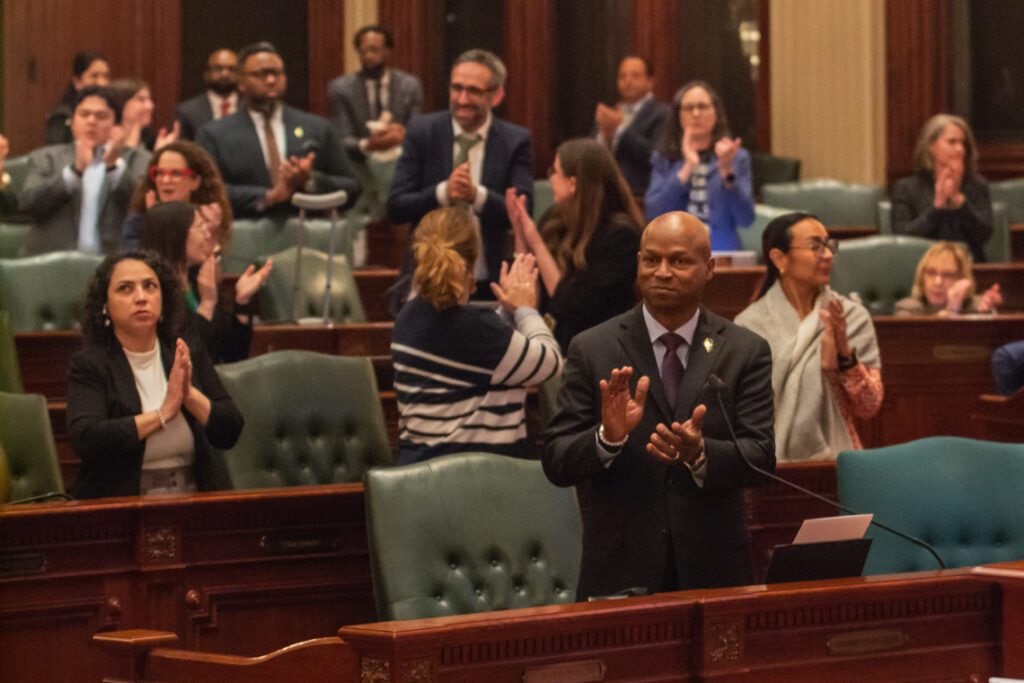
SPRINGFIELD – Giving almost no time for public review, Illinois Democrats pushed through a $55.2 billion budget for next fiscal year late Saturday, bolstering coffers with new taxes on sports bets, nicotine products and businesses.
The $55.2 billion spending plan is supported by $55.3 billion of revenue, including just over $1 billion in new taxes and revenue changes.
The four bills making up the budget and capital spending plan, were part of a flurry of thousands of pages of legislation that went from introduction to passage in the final 48 hours of the legislative session.
The budget marked a roughly 3.9% spending increase from the current year, while Republicans criticized it for containing few cuts. It raises about $500 million more in new revenue than what Gov. JB Pritzker proposed in February to make up for declining base revenues.
The minority party also aired frustration with supermajority Democrats for providing next to no time for public review of the massive spending plan and other major bills.
“We’re rushing this process like we always do. ‘Let’s hide this stuff. Let’s hide it so that the public doesn’t see it until it’s too late,’” Rep. John Cabello, R-Machesney Park, said.
Democrats said it was the best budget they could manage in a difficult year. To address potential uncertainties stemming from federal policy changes, they gave the governor authority over a new $100 million “emergency” fund. And they frequently lobbed criticisms at President Donald Trump and Republicans in Congress.
“I am very pleased to be able to present a balanced budget crafted to be fiscally and socially responsible, because we see the decisions made in Washington right now are neither,” House Majority Leader Robyn Gabel, D-Evanston said. “Erratic leadership in Washington has affected our economic outlook, our revenue projections, and even threatened federal funding for our most crucial services.”
The GOP also took issue with the tax increases, although the measure did not raise or create new sales, income or service taxes.
Instead, the measures expand state taxes on foreign and out-of-state income for businesses, raise tax rates on tobacco, vapes and sports gambling, and sweep fund balances from several lesser-known and utilized state funds.
The spending measure, Senate Bill 2510, passed the House 75-41 just before 10 p.m. The Senate followed around 11:30 p.m. with a 34-23 vote. The revenue and tax changes, House Bill 2755, and the budget implementation bill, House Bill 1075, both passed with relative ease before the constitution’s midnight deadline and only Democratic votes as well. Gov. JB Pritzker issued a statement saying he would sign it.
Another spate of tax increases included in a transit governance overhaul bill surfaced late but sputtered. The failed measure would have added a $1.50 fee on food and package deliveries and taxed electric vehicle charging statewide among other changes. Talks on that bill could resume later this year.
New taxes on vaping, gaming, deliveries
The revenue bill creates a tax of 25 cents per wager for a sports betting licensee’s first 20,000 wagers accepted, and 50 cents per wager after that.
Consumers will also see new taxes on tobacco products. The tax rate will rise to 45% from 36%. Vape products and nicotine pouches would also now be included under the tax.
The revenue plan amends state law to tax sales from all businesses that transact in the state, rather than only businesses with a physical presence in Illinois. The plan also eliminates a “safe harbor” exemption for businesses that move money outside the state.
Businesses that move profits to other countries would also be subject to the state’s corporate income tax. The federal government currently taxes half of income moved offshore and Illinois would tax the other half under the revenue plan.
Businesses outside Illinois that sell $100,000 or more to people in the state must also collect Illinois sales taxes even if the business doesn’t have a physical location in Illinois. This would apply to businesses like Amazon.
“I will not support this betrayal of hard-working Illinoisans,” Sen. Don DeWitte, R-St. Charles, said. “And if you care about the people who sent you here, if you truly represent them, you’ll vote no too. Enough is enough. It’s time for this body to stand with taxpayers, not stand up against them.”
Another source of new revenue is a delinquent tax payment incentive program designed to help the state recuperate overdue tax payments. It will generate $228 million, Rep. Will Guzzardi, D-Chicago, said.
The state would also pause the final transfer of motor fuel sales tax revenue to the road fund in order to free up $171 million, according to the governor’s office’s estimate.
A separate bill designed to lower prescription drug prices calls for levying a fee on pharmacy benefit managers based on the number of patients they insure. Money from that fee would go into a fund for the Department of Commerce and Economic Opportunity to award up to $25 million a year in grants to independent pharmacies and pharmacies located in rural counties. The remaining money would go to the state’s general revenue fund.
The measure also extends the state’s Hotel Operators’ Occupation Tax to short-term rentals like Airbnb and Vrbo.
Immigrant health cuts
A controversial program that provides health insurance to more than 30,000 noncitizens between ages 42 and 64 will be cut in FY26. The program’s elimination saves the state $330 million, but a $110 million program for seniors will remain in place.
Together, the two programs have cost the state at least $1.6 billion, according to an audit released in February, far exceeding budgeted costs for the program.
“We had to make some tough decisions here. That program grew at greater rates, financially, than we thought it would, and we had to make some hard decisions,” Gabel said.
Federally Qualified Health Centers are set to receive $40 million in the budget. The centers provide health services to low-income and uninsured people. Democrats touted that increase to provide care for immigrants who would have qualified for the health care program.
Illinois still risks losing some Medicaid funding under a proposal in Congress that threatens to slash reimbursements for states that provide health insurance to people illegally in the United States. But Gabel noted it’s possible those reductions won’t take place until 2027.
The budget also increases funding for safety-net hospitals with federal Medicaid funding cuts possible.
Education spending
The state’s evidence-based funding model for K-12 schools calls for $350 million in additional funding each year, with a portion of that going to a property tax relief fund and the rest directly to schools. The proposed budget fully funds the K-12 education portion at $307 million but does not add $43 million in property tax relief funds, according to Democratic leaders.
Funding for the Illinois Community College Board would also decrease by $24 million, mostly because lawmakers reduced spending on a workforce development grant that Democrat leaders said was not being fully utilized.
Funding for state universities would only increase by 1%. Pritzker proposed a 3% increase for higher education even as most other areas of his budget would’ve increased by 1%. Senate Democrats’ budget leader Sen. Elgie Sims, D-Chicago, said the budget allows for an additional 2% increase in FY26 if the federal government eliminates substantial funding.
Pensions
Despite more than a year of discussions, Illinois lawmakers did not tackle pension reform this spring. Illinois’ Tier 2 pension system is likely out of compliance with Social Security’s “safe harbor” law that requires pension benefits to be at least equal to Social Security.
Part of the budget package created a new Tier 2 reserve fund that can be accessed if there are violations of the “safe harbor” law. Lawmakers appropriated $75 million for the fund this year, in line with Pritzker’s proposal.
‘Emergency’ fund, raises, more
Notably not in this year’s budget is an increase to the “rainy day” fund. Pritzker has taken pride in the fund’s increases in recent years, as it’s grown to a balance of $2.3 billion, up from less than $60,000 when Pritzker took office. The FY26 budget would suspend the monthly transfer for one year, freeing up $45 million for general fund use.
The budget package also establishes a new $100 million fund that the governor can tap into “in the event of unanticipated delays in or failures of revenues.” The measure, an apparent nod to the uncertainty of federal funding amid ongoing congressional budget negotiations, will come from money swept from other funds.
“That will allow us to respond to actions by the federal government and challenges that present themselves and costs that have been diverted from the federal government to the state government,” Sims said in a committee hearing.
The attorney general’s office would get $116 million from the general fund. Attorney General Kwame Raoul asked lawmakers to boost funding for his office as he engages in a growing number of lawsuits against the Trump administration. Raoul was hoping to receive $120 million in funding.
Direct service providers are in line for an 80-cent per hour wage increase, but Republicans said calling it a funding increase is “sleight of hand,” because the measure would also reduce work hours for DSPs by the hundreds of thousands. That makes the increase negligible, Sen. Chapin Rose, R-Mahomet, said in committee.
“It’s not a great budget, but it is a good budget and it is the budget we need for this very difficult moment,” Rep. Lindsey LaPointe, D-Chicago, said.
Lawmakers will see their salaries rise as part of the budget, going to a $98,304 base salary from roughly $92,000. That’s an annualized rate of increase that is set by law.
“You raised our pay, you gave yourselves hundreds of millions of dollars of our taxpayers funds to spend on your pet projects,” Rep. Amy Elik, R-Godfrey, said. “So I simply don’t believe you anymore that you ever intended to be fiscally careful.”
No Bears stadium funding
Lawmakers did not appropriate funding for the Chicago Bears to build a new stadium. But NASCAR would be the recipient of a $5 million grant ahead of the sport’s third downtown Chicago race in July, and the PGA Tour would receive a $1 million grant as part of hosting the 2026 President’s Cup in DuPage County. Those were two economic development measures criticized by Republicans during the Senate committee hearing.
The budget also contains $200 million to prepare unused state properties to be repurposed for development, Sims said. Lawmakers removed another $300 million that Pritzker had sought in spending aimed at offloading surplus property.
Gabel said the state’s employee management department has negotiated more than $100 million in health care cost savings as well.
Any remaining federal pandemic relief funding would also be sent to recipients that have not received payments in previous years before the funding expires in 2026.
Jade Aubrey contributed.
Capitol News Illinois is a nonprofit, nonpartisan news service that distributes state government coverage to hundreds of news outlets statewide. It is funded primarily by the Illinois Press Foundation and the Robert R. McCormick Foundation.
The post New taxes on sports bets, nicotine products as Democrats pass $55.2B budget appeared first on Capitol News Illinois.
Prosecutors ask judge to sentence ex-Speaker Madigan to 12 ½ years in prison

Capitol News Illinois
CHICAGO — Federal prosecutors are asking for a lengthy 12 ½-year prison sentence for former Illinois House Speaker Michael Madigan, calling the longtime Democratic power broker “steeped in corruption” and alleging he lied on the witness stand when he testified in his own defense earlier this year.
In their 72-page filing Friday evening, prosecutors also called for a $1.5 million fine in addition to prison time for the 10 corruption charges — including bribery — on which Madigan was convicted in February.
Read more: Madigan guilty of bribery as split verdict punctuates ex-speaker’s fall
“The crimes charged and proven at trial demonstrate that Madigan engaged in corrupt activity at the highest level of state government for nearly a decade,” prosecutors wrote in their sentencing memorandum. “Time after time, Madigan exploited his immense power for his own personal benefit by trading his public office for private gain for himself and his associates, all the while carefully and deliberately concealing his conduct from detection.”
But in a competing filing published to the court docket two hours later, Madigan’s attorneys argued the former speaker should only serve five years’ probation, including a year of home detention followed by community service.
Madigan is scheduled to be sentenced June 13.
Along with Madigan’s legal arguments for no prison time, his attorneys also filed hundreds of pages of character letters asking U.S. District Judge John Blakey for leniency in sentencing, upon which Madigan’s lawyers bolstered their request.
“Throughout his 83-year life, Mike quite literally changed the lives of tens of thousands of people in his district on the south side of Chicago,” Madigan’s filing stated. “He positively impacted millions of people throughout the State of Illinois. The more than 200 letters submitted on Mike’s behalf demonstrate that this is not hyperbole.”
Madigan, who stepped away from public life in early 2021 as the feds’ investigation swirled around his inner circle, spent five decades in the Illinois House, including 36 as House speaker — the longest tenure of any legislative leader in the country. He also spent 23 years as head of the state’s Democratic Party, granting him even more power over Illinois’ political landscape.
Split verdict
After three months of testimony from more than 60 witnesses and dozens of hours of secretly recorded audio and video, a jury convicted Madigan on 10 of 23 counts he was facing. But jurors acquitted the former speaker on seven counts and deadlocked on another six, including an overarching racketeering charge.
The former speaker’s convictions involved alleged bribery from electric utility Commonwealth Edison, which hired five of the speaker’s allies on no-work contracts at various times from 2011 and 2019 — an eight-year period during which ComEd was pushing for major legislation in the General Assembly. The jury also convicted Madigan on supporting counts related to an alleged scheme to help get Chicago alderman-turned-FBI mole Danny Solis appointed to a lucrative state board position, though he was acquitted of the bribery charge pertaining to the same alleged scheme.
Read more: Madigan Trial in Review
Some of the trial’s most dramatic moments came in January, when Madigan made the stunning decision to testify in his own defense. The high-risk move opened him up to blistering cross-examination from lead prosecutor Amarjeet Bhachu, who left the U.S. Attorney’s office in March and isn’t a party to sentencing recommendations.
Over two days, Bhachu sparred with the former speaker, and weeks later he and his colleagues quoted Madigan’s testimony back to the jury during closing arguments in an attempt to prove he’d lied on the witness stand.
Read more: In contentious cross-examination, prosecutor accuses Madigan of not telling ‘the whole truth’ | Prosecutor calls Madigan, McClain ‘grand masters of corruption’ as case goes to jury
Prosecutors leaned on that alleged perjury once more in Friday’s sentencing memorandum, counting his “obstructive conduct” as a key justification for their sentencing recommendation.
“Madigan has expressed no remorse for his crimes, nor has he acknowledged the damage wrought by his conduct,” prosecutors wrote. “Indeed, Madigan went so far as to commit perjury at trial in an effort to avoid accountability, and he persists in framing his actions as nothing more than helping people.”
Madigan repeatedly claimed — and his attorneys repeatedly argued — that he was ignorant of the fact that the collective $1.3 million his allies earned from their ComEd contracts was for performing no work. Instead, the former speaker and his lawyers framed those contracts as the result of mere job recommendations, which they argued was a core component of Madigan’s job as speaker.
But as a result of Madigan’s testimony, U.S. District Judge John Blakey reversed a pre-trial decision and allowed prosecutors to play a damning wiretapped phone call for the jury in which Madigan laughed about ComEd contractors having “made out like bandits.” In the call, the former speaker’s co-defendant, longtime Springfield lobbyist Mike McClain, laughed, too, replying, “for very little work.”
Read more: Jurors to hear tape of Madigan saying ComEd contractors ‘made out like bandits’
Prosecutors cited that call in its Friday filing as evidence the former speaker wasn’t forthcoming when he “testified that McClain never said he believed or suspected that any of the people that Madigan had referred to ComEd were not working.”
“This testimony was a lie,” the feds wrote in their filing.
Prosecutors also ripped Madigan’s attempts on the witness stand to distance himself from McClain, his longtime close friend and advisor, which the feds said “completely undermined” the former speaker’s “credibility as a witness.”
“The multitude of recorded conversations, emails, and documents presented at trial established a uniquely close and longstanding relationship of mutual dependence between Madigan and McClain and demonstrated that Madigan was lying when he tried to distance himself from his key operative,” prosecutors wrote.
“Madigan assigned McClain, and only McClain, to carry out the most sensitive assignments and requests and to engage in the most potentially politically explosive conversations when Madigan wanted bad news delivered, including to legislators who served under Madigan.”
Read more: ‘My client is the speaker’: Jury hears wiretapped calls of Madigan co-defendant, longtime friend | ComEd execs joked Madigan co-defendant was ‘double agent,’ utility’s former top lawyer testifies | Madigan co-defendant had unparalleled access to speaker, ex-top aide testifies
The jury in February deadlocked on all six counts pertaining to McClain, but he faces his own sentencing in July on charges related to the ComEd bribery scheme after a jury in May 2023 convicted him and three other ex-utility executives and lobbyists for their roles.
Plea for leniency
Of the more than 200 letters filed Friday with Madigan’s legal arguments for a non-custodial sentence, many came from former constituents or other Illinoisans who wrote about how the former speaker helped them in some way.
Letters also came from prominent faith leaders across the state, 40 former staffers, prominent labor leaders and three dozen former elected officials, among them several Republicans like former Gov. Jim Edgar. Attorneys also included an op-ed in support of Madigan penned by former GOP Gov. Jim Thompson before his death in 2020.
All four of Madigan’s children wrote lengthy letters, including former Illinois Attorney General Lisa Madigan, whom the former speaker adopted after marrying her mother Shirley in 1976. In addition to writing about how Madigan operated in the world of Illinois government and politics that her adoptive father introduced her to, Lisa Madigan’s letter highlighted what the former speaker’s attorneys called “a key consideration” for Madigan’s sentencing: his wife’s health.
“Mike keeps my mother alive,” Lisa Madigan wrote in her letter, which said Shirley Madigan suffers from “a severe lung disease” and has “rarely been well enough to leave the house” in the last five years since the beginning of the COVID-19 pandemic, as she’s “extremely susceptible to infections” and has been hospitalized three times.
“She is able to remain in their house primarily because of the care my father provides,” Lisa Madigan wrote. “He shops for groceries, brings her food (as you heard during the trial), does laundry, and generally takes care of her and their house.”
Lisa Madigan was referring to a lighthearted moment on one of the wiretapped calls played for the jury in which the then-speaker read a menu of soup options to his wife over the phone.
Madigan’s attorneys wrote that even “one day of imprisonment” for Madigan “will upend her (Shirley’s) entire life.”
“Mike presence is medically necessary to provide the direct assistance, supervision, and emotional support required to maintain Shirley’s well-being in a familiar home environment, which is paramount for patients with Shirley’s conditions,” the filing said, going on to refer to Madigan as Shirley’s “caretaker.”
The former speaker’s lawyers also referred to Madigan’s own age as a mitigating factor for sentencing, though leaned more heavily on kneecapping prosecutors’ arguments that a 12 ½-year sentence would serve as a deterrent.
“The defendant respectfully submits that a sentence of imprisonment would be greater than necessary to protect the public or deter him from criminal conduct,” the filing read. “Mike does not pose a risk of committing new crimes. He will never hold public office again.”
Madigan’s attorneys went on to detail “intense public embarrassment for (the former speaker) and his family,” which they argued “is a significant punishment in and of itself.” They also claimed the former speaker’s grandchildren “are teased at school” because of Madigan’s criminal case.
“As one example, Mike was publicly compared to a mob boss,” Madigan’s filing read. “Politicians also continue to use Mike as a cheap political shot, without any regard for his history of good works and positive impact on Illinois. … He will also live the rest of his years as a felon.”
Other notable letter-writers on Madigan’s behalf included former U.S. Sen. Carol Moseley Braun, former Illinois Supreme Court Justice Tom Kilbride, Democratic mega- fundraisers Michael Sacks and Fred Eychaner and Chicago Bulls and White Sox owner Jerry Reinsdorf. While many former Democratic allies of Madigan penned appeals to Judge Blakey, only a few currently hold office — among them state Reps. Marcus Evans, D-Chicago, and Curtis Tarver, D-Chicago, along with Auditor General Frank Mautino.
Several authors of Madigan’s character letters had testified in trial, including his former law partner Vincent “Bud” Getzendanner, whose time on the witness stand was spent trying to explain the ethical firewall the Madigan & Getzendanner real estate law firm had with official state business.
In his letter, Getzendanner joked that he was “pretty sure” Madigan was “only human” and also poked a hole in the longtime Springfield mythology Madigan’s daily lunchtime apple, which he said demonstrated the former speaker’s “famous willpower.”
“Strangely enough, on many occasions I subsequently found an unexplained residue of chocolate chip cookie crumbs on his plate,” Getzendanner wrote, later apologizing to the judge for his sense of humor.
Capitol News Illinois is a nonprofit, nonpartisan news service that distributes state government coverage to hundreds of news outlets statewide. It is funded primarily by the Illinois Press Foundation and the Robert R. McCormick Foundation.
The post Prosecutors ask judge to sentence ex-Speaker Madigan to 12 ½ years in prison appeared first on Capitol News Illinois.
Lawmakers unveil $55B spending plan with just 1 day left to pass it
Capitol News Illinois
SPRINGFIELD — Illinois Democrats introduced what a leading budgeteer described as a $55 billion budget Friday evening ahead of a Saturday deadline to pass the fiscal year 2026 spending plan.
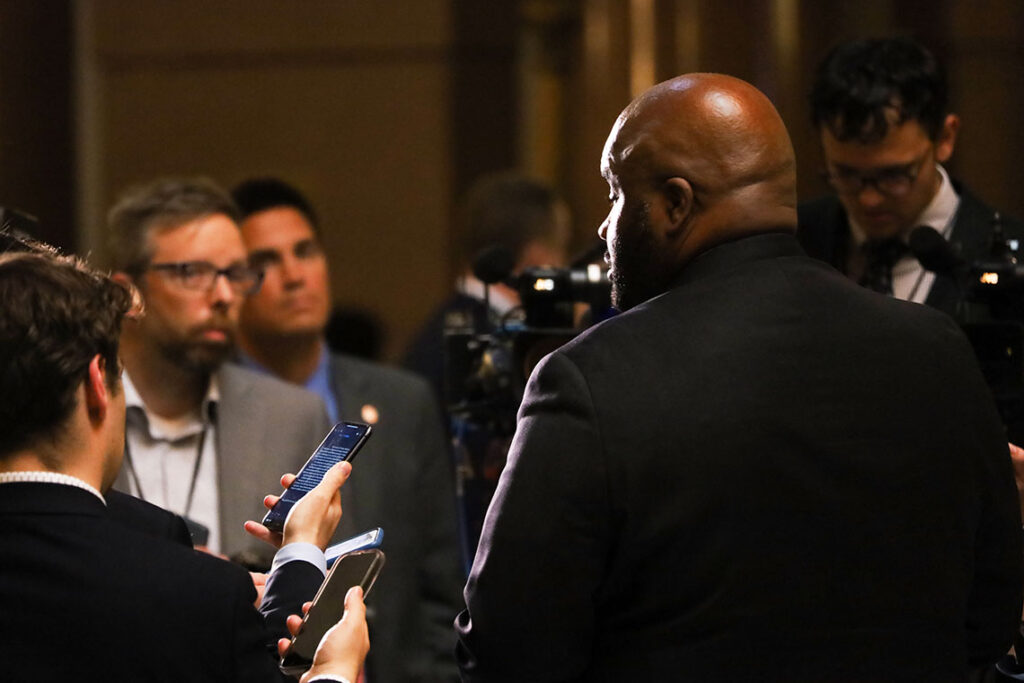
The 3,363-page spending proposal was unveiled after 6 p.m. At the time the Senate’s lead budget negotiator, Sen. Elgie Sims, D-Chicago, briefed reporters on the plan; an exact proposal for raising about $1 billion in revenue to pay for it had not been made publicly available.
But Sims said lawmakers are not using broad tax hikes to balance the budget, although the plan does call for specific tax increases in certain areas. Sims said the proposal includes new taxes on gambling as well as tobacco and vape products. He also hinted that some businesses will pay more under the plan – though Illinois’ constitution mandates that the state corporate income tax remain a flat rate.
“We’re trying to make sure that individuals pay their fair share, and corporations, who are the most prosperous are most profitable, also pay their fair share,” Sims said.
Later, in a House hearing on the spending plan, Democratic Rep. Robyn Gabel, D-Evanston, said it relies upon $55.4 billion in revenue with $55.2 billion in spending. But at several points the chamber’s budget leaders declined to talk about revenue, noting that proposal will come before the committee later, likely on Saturday.
The plan is roughly in line with what Gov. JB Pritzker proposed in his February budget address as budget talks in Congress have injected uncertainty in state finances.
“This budget recognizes that there are significant challenges that we have, that we will face, and it makes sure that the chaos that is coming out of Washington, we’re prepared for it,” Sims told reporters Friday night. “We’re not running away from our responsibility. We’re running towards it.”
A health care program that provides benefits to undocumented immigrants in Illinois between ages 42 and 64 also appears to be eliminated. Pritzker proposed eliminating the program to save the state $330 million.
“He did not include the HBIA (Health Benefits for Immigrant Adults) program in the budget,” Sims said. “But again, that’s in recognition of the challenges that we’re seeing coming out of Washington and the devastating effects that those proposals are having on our state and states across the country.”
Pritzker proposed a $55.2 billion spending plan in February, but revenue forecasts have declined since then. The latest estimate in early May from the governor’s office pegged FY26 revenue at $54.9 billion while the General Assembly’s independent Commission on Government Forecasting and Accountability projected revenue would come in at $54.5 billion – $1 billion below Pritzker’s February revenue estimate.
Expected declines in federal funding and a diminishing economic outlook have caused the downward revisions.
But the yet-to-be-filed revenue plan would make up a little over $1 billion in revenue, according to Sims.
Read more: Pritzker calls $55.2 billion budget ‘responsible and balanced’ | Governor’s office cuts revenue projection by $500 million
Another source of new revenue in the budget proposal is a delinquent tax payment incentive program. The program is designed to help the state recuperate overdue tax payments. The program was proposed by Pritzker and is estimated to generate about $198 million in revenue.
With Medicaid funding cuts possible from Congress, Sims said the budget makes “significant” increases for the state’s hospital systems, in particular safety-net hospitals. He said the plan also builds in wage increases for direct service providers.
The state’s evidence-based funding model for K-12 schools calls for $350 million in additional funding each year, with a portion of that going to a property tax relief fund and the rest directly to schools. The proposed budget fully funds the K-12 education portion at $307 million but does not add $43 million in property tax relief funds, according to House Democratic leaders.
Republicans prodding House Democratic budget leaders for details during a late-night hearing said pausing the grant fails to deliver benefits to property owners.
“The taxpayers are begging and pleading for tax relief and then we put a program on pause?” Rep. John Cabello, R-Machesney Park, said. “Maybe we should look at all the different programs going to Democratic districts and stop those for a little bit instead of telling the taxpayers that there’s not going to be property tax relief.”
Republicans pressed on why House Democrats are set to get $1.5 million of spending for their districts while Senate Democrats are expecting $3 million of spending on districting projects – although Democrats wouldn’t confirm or deny those numbers.
Lawmakers will also see their salaries rise as part of the budget, going to a $98,304 base salary from roughly $92,000. That’s an annualized rate of increase that is set by law.
Editor’s note: This story was updated with more information on the budget from an evening House committee hearing.
Capitol News Illinois is a nonprofit, nonpartisan news service that distributes state government coverage to hundreds of news outlets statewide. It is funded primarily by the Illinois Press Foundation and the Robert R. McCormick Foundation.
The post Lawmakers unveil $55B spending plan with just 1 day left to pass it appeared first on Capitol News Illinois.
Illinois criminal justice advocates tout ‘Clean Slate’ legislation as ‘economic boon’
Capitol News Illinois
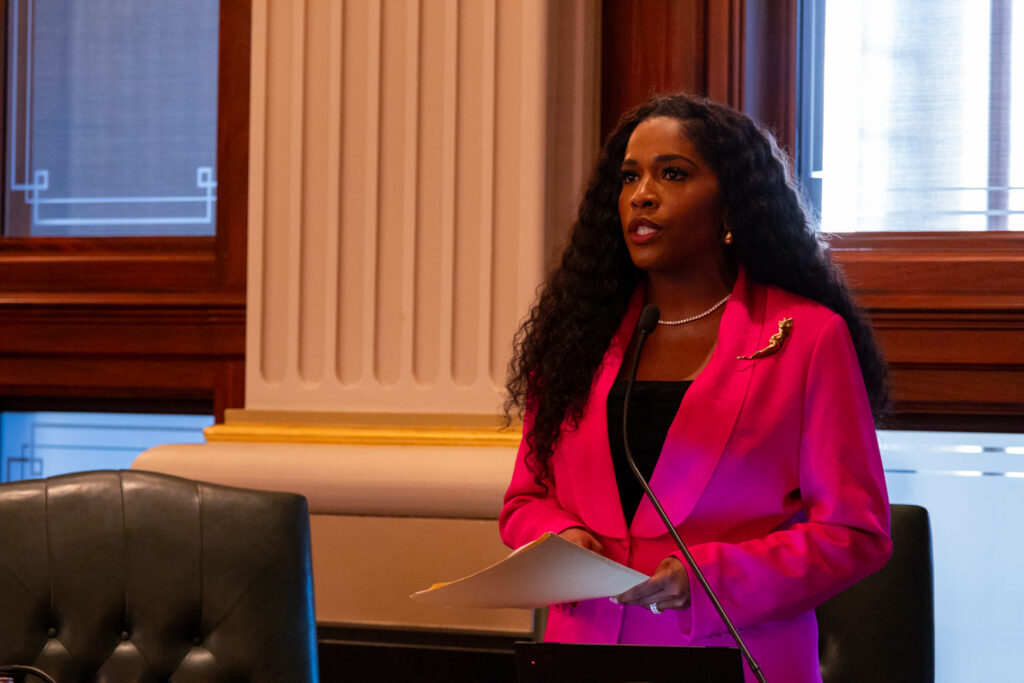
SPRINGFIELD — Criminal justice reform advocates say legislation to seal criminal records for certain nonviolent crimes, which passed Friday in the House, would unlock economic opportunity for thousands of Illinoisans.
The so-called Clean Slate Act has failed twice before, but activists see renewed fiscal messaging as the key to reinvigorating the campaign. This time, the bill’s sponsor points to a “diverse coalition of stakeholders” and backing from business groups as signs Illinois could become the 13th state to enact similar legislation.
“This is something I’ve worked on for six long years, and now we have law enforcement and the business community — folks like the Illinois Retail Merchants Association, the Illinois Manufacturers Association — all on board,” Rep. Jehan Gordon-Booth, D-Peoria, said in an interview. “Not as a neutral party, but they are proponents. They want to see this bill passed.”
Like earlier proposals, Senate Bill 1784 would require law enforcement agencies to automatically seal records for nonviolent criminal convictions twice a year — Jan. 1 and July 1. The records would no longer be public, although law enforcement and state’s attorneys would retain access.
Gordon-Booth has sponsored Clean Slate legislation twice before — once in 2021 and again in 2023 — but neither bill progressed past committee.
Just a few days before the 2025 legislative session concludes, she filed it again. Within two days, it passed the House mostly along partisan lines, and is headed for debate on the Senate floor.
The session ends at midnight Saturday, although the bill could still pass after that deadline.
People convicted of certain violent offenses — including sex crimes against minors, DUI, reckless driving and violent offenses that require sex offender registration — would be ineligible to have their records sealed.
“I want to make this very, very clear: Serious criminal records are not eligible for automated sealing,” Gordon-Booth said during floor debate.
Gordon-Booth argued that conviction records trap formerly incarcerated individuals in a state of perpetual punishment, eclipsing access to employment, housing and educational opportunities. She said Clean Slate would remove these barriers, helping system-impacted people reintegrate into society instead of recidivating.
Paul Rothschild, managing director of operations for the Illinois Coalition to End Permanent Punishment — a group that advocates for the rights of people with criminal records — said he agrees. He said the justice system fails to follow through on its own promise: Once someone has served their time, they are entitled to a second chance.
“We believe that people should be accountable for the crimes that they commit. But we also believe there is an implied covenant that when they finish, they’re supposed to be returned to the world made whole, and that covenant is not being kept by society. They’re being forever subjugated in that lower caste, that lower class,” Rothschild said.
More than 3 million Illinoisans have arrest or conviction records, and an estimated 921,000 people are eligible for “sealing relief” — but only about 10% actually petition to have their records cleared, according to statistics from Live Free Illinois, a grassroots organization aimed at reforming the state criminal justice system and part of the Clean Slate Illinois steering committee, which coordinates the campaign’s messaging and advocacy efforts.
The bill would automate the process for individuals with nonviolent convictions to have their records sealed, once they have served their sentences, completed probation, and remained crime-free.
Many eligible individuals are deterred by steep fines, complex paperwork and long waiting periods, Gordon-Booth said. The “burdensome” process has contributed to massive court backlogs, according to Clean Slate Illinois.
“It’s going to automate the process, so this way we don’t have to go through that whole trying to get the paperwork, trying to go through all the rigmarole,” said Chauncy Stockdale, who was formerly incarcerated and is now a member of the Live Free Illinois Fellowship, a reentry program that supports returning citizens.
The measure passed the House 81-28, with five Republicans joining Democrats in support of the measure. No Democrats voted against the bill.
During debate on the House floor, Minority Floor Leader Rep. Patrick Windhorst, R-Metropolis, voiced concerns about the tentative $18 million price tag, and whether the state is capable of fully funding the policy in the years ahead, leaving counties to cover the cost.
“If this isn’t funded, we’re either going to be sending a large unfunded mandate to our counties, or we’re making a promise to 2.1 million people that will not be fulfilled without any funding,” he said.
Gordon-Booth detailed a three year “implementation ramp,” which would give the state time to identify funding sources for the local circuit clerks. She also said the Illinois State Police would absorb the initial costs and emphasized the state’s commitment to supporting circuit clerks in the rollout phase.
“It is our full intention to provide clerks with all that they need to implement this,” she said. “We are not going to send an unfunded mandate to our local governments.”
‘Workforce and economic policy’
On April 10, nearly 300 members, supporters and advocates from Live Free Illinois chapters gathered in front of the Abraham Lincoln monument in Springfield for Advocacy Day, calling on lawmakers to introduce the Clean Slate Act.
Live Free Illinois — a faith-based nonprofit focused on ending gun violence and mass incarceration — organizes Black congregations to push for systemic change. The organization is involved in the broad-based Clean Slate steering committee, which also includes the Fully Free Campaign, the Illinois Coalition to End Permanent Punishments, and Impact for Equity.
The day before, Muslim leaders also advocated for Clean Slate legislation at Illinois Muslim Action Day.
Beyond criminal justice reform, advocates pushed a new messaging angle this year to usher the legislation across the finish line: Clean Slate could boost Illinois’ economy.
As of April, Illinois has one of the highest unemployment rates in the country, at 4.8% — above the national average of 4.2%, according to the data from the U.S. Bureau of Labor Statistics.
Jerika Richardson, senior vice president for equitable justice and strategic initiatives at the National Urban League, said the act would open doors for thousands of people who have been barred from work because of background checks.
“There are so many employers and businesses across this country who are struggling to find the workers that they need, and part of the reason is because these records are barriers,” Richardson said. “If Illinois passes the Clean Slate Act, you won’t have to worry about businesses going to another state or leaving the country.”
An amendment to the Illinois Human Rights Act, signed by Gov. JB Pritzker in 2021, expanded legal protections for state workers by prohibiting discrimination based on criminal convictions, in addition to arrest records. Yet many say they continue to face employment hurdles despite the law.
People with conviction histories earn an average of 25% less than those with clean records — a gap the National Urban League says costs the state billions of dollars in lost wages. According to a news release from the National Urban League, the Clean Slate Act could generate more than $4.7 billion in lost wages for Illinois, easing economic disparities and addressing labor shortages.
Gordon-Booth echoed Richardson’s point, adding that her office frequently hears from constituents who are missing out on life-changing chances.
“I get calls from people saying, ‘I had an opportunity to get my dream job, and it fell through because of something that I did when I was 18 or 19.’ And we’re talking about folks that are in their 30s,” Gordon-Booth said. “They have not gone through the process of hiring a lawyer, going through the court-mandated process, and folks are losing out.”
Reilly Cook is a graduate student in journalism with Northwestern University’s Medill School of Journalism, Media, Integrated Marketing Communications, and a fellow in its Medill Illinois News Bureau working in partnership with Capitol News Illinois.
Capitol News Illinois is a nonprofit, nonpartisan news service that distributes state government coverage to hundreds of news outlets statewide. It is funded primarily by the Illinois Press Foundation and the Robert R. McCormick Foundation.
The post Illinois criminal justice advocates tout ‘Clean Slate’ legislation as ‘economic boon’ appeared first on Capitol News Illinois.
‘Medical aid in dying’ bill moves forward in Illinois
Capitol News Illinois
SPRINGFIELD — Terminally ill Illinoisans may have the legal option to end their own life with the help of a physician next year under a bill approved by lawmakers Thursday.
The procedure, which advocates and the bill call “medical aid in dying,” would give people in a sound mental state with severe health issues the option to end their life with the help of a doctor.
Under Senate Bill 1950, doctors would be allowed to prescribe terminally ill patients a lethal dose of medication that they could self-administer at a time of their choice.
Advocates for the procedure, which is legal in 10 states and the District of Columbia, say it provides agency to people at the end of their life.
“I want to enjoy the time I have left with my family and friends,” Deb Robertson, a terminally ill woman, told lawmakers via Zoom on Wednesday. “I don’t want to worry about how my death will happen. It’s really the only bit of control left for me.”
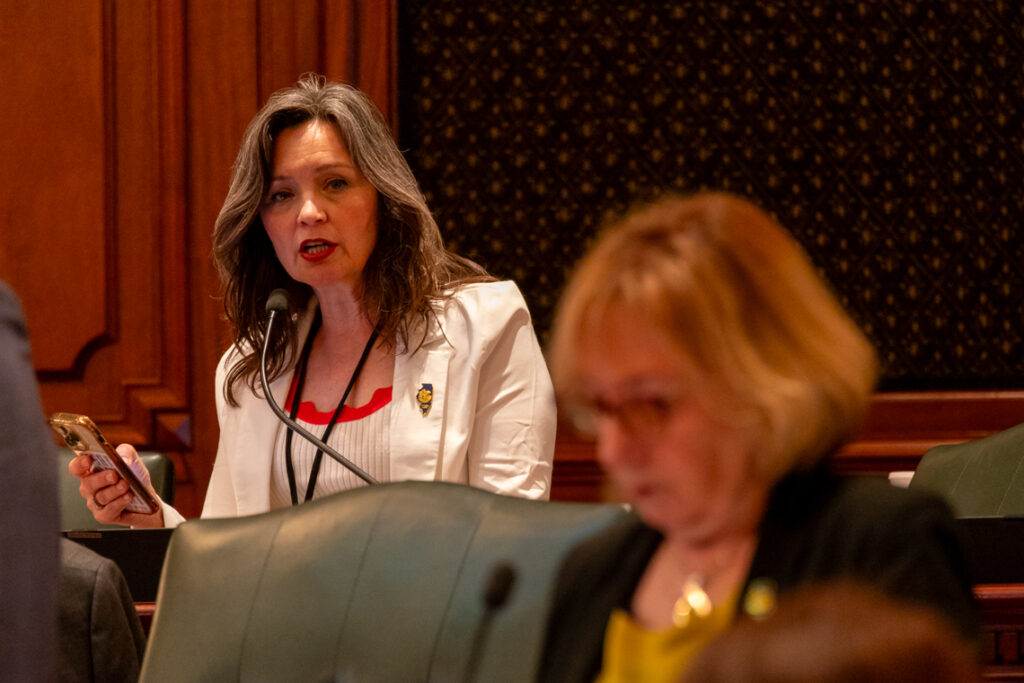
The measure passed in the House 63-42 after more than an hour of intense, sometimes tear-filled debate. It now awaits action in the Senate. Senators have a matter of hours to pass the bill before their scheduled adjournment Saturday.
The bill outlines a process that includes two doctors recommending the procedure, sometimes referred to as medically assisted suicide, and limits the people who are eligible. People must be of sound mind and have a prognosis of less than six months.
Death certificates of those who use the procedure would also list their underlying diseases, not “suicide,” reflecting the common belief among advocates that the procedure should not be called suicide. Bill sponsor Rep. Robyn Gabel, D-Evanston, noted in debate Thursday that the provision would also “prevent inappropriate suicide investigations.”
But even with these protections, some oppose allowing the procedure.
Medical associations are divided on the issue. The American Medical Association, the largest and most influential medical association, notes an “irreducible moral tension” inherent in the practice.
The AMA’s Code of Ethics, for many years, said the procedure is “fundamentally incompatible with the physician’s role as healer.” The association has recently softened its stance, opening the door for physicians to act on their own conscience on the matter.
Rep. Bill Hauter, R-Morton, a practicing physician, opposed the bill and told his colleagues during debate Thursday that it “changes forever the soul of medicine.”
During the House debate, the division among the health care industry reared its head. Rep. Nicolle Grasse, D-Arlington Heights, is a hospice chaplain and was supportive of the bill.
“I’ve seen hospice ease pain and suffering and offer dignity and quality of life as people are dying, but I’ve also seen the rare moments when even the best care cannot relieve suffering and pain, when patients ask us with clarity and peace for the ability to choose how their life ends,” she said.
Outside of health care, religious groups and disability rights advocates are also divided. Members of both parties invoked their faith during floor debate, including Rep. Maurice West, D-Rockford, an ordained Christian minister.
“Life is sacred. Death is sacred, too,” West said. “The sanctity of life includes the sanctity of death. This bill allows, if one chooses by themselves, for someone with a terminal diagnosis to have a dignified death.”
Republicans, who are generally more aligned with pro-life religious groups, opposed the bill. Catholic groups say procedures like medically assisted suicide violate the church’s teachings and many conservative protestant groups oppose the practice as well.
Rep. Adam Niemerg, R-Dietrich, said the procedure does not “uphold the dignity of every human life.”
“This does not respect the Gospel,” Niemerg, who is Catholic, said during debate. “This does not respect the teachings of Jesus Christ or uphold the values of God.”
Disability rights activists are also split on the issue. Sebastian Nalls, a policy analyst at the disability rights organization Access Living, said that if the procedure is legalized, insurers may pressure some sick people into it instead of expensive treatment.
“This bill carries far too many loopholes and lacks oversight to be safe and equitable, but the bottom line for Access Living is this: The existence of assisted suicide is a threat, to not just the kind of health care we deserve, but a threat to our ability to live and die with dignity,” Nalls said in a committee hearing Wednesday.
Other disability rights advocates, like Beth Langen, note that “disability is not terminal.”
“Death, like life, is easier to navigate when you know you will have options to choose from, even if you never need to,” Langen said at Wednesay’s hearing.
Capitol News Illinois is a nonprofit, nonpartisan news service that distributes state government coverage to hundreds of news outlets statewide. It is funded primarily by the Illinois Press Foundation and the Robert R. McCormick Foundation.
The post ‘Medical aid in dying’ bill moves forward in Illinois appeared first on Capitol News Illinois.
What Trump’s cuts to federal climate research could mean for Illinois

Capitol News Illinois
CHICAGO — The Trump administration took the unprecedented step of halting work on the next National Climate Assessment last week, dismissing all 400 volunteer scientists who were tasked with writing the new version of the report.
Illinois State Climatologist Trent Ford was among those dismissed in his volunteer capacity with the federal program. On April 28, Ford and his colleagues received an email saying the upcoming Sixth National Climate Assessment, due to be released in 2027, is “currently being reevaluated in accordance with the Global Change Research Act of 1990.”
The Global Change Research Act mandates that the National Climate Assessment be published every four years to inform the public of the ongoing impacts, risks and responses to climate change. In the last 35 years, the federal government has never failed to publish the nation’s preeminent report on climate change, but its fate was brought into question last month when it was reported that NASA canceled a critical contract for the U.S. Global Change Research Program, which oversees the assessment.
“It’s disappointing from a personal standpoint,” said Ford, who served as a technical contributor to the Fifth National Climate Assessment published in 2023. He said he was looking forward to taking on a larger role as an author of the Midwest chapter in the next report, which was due in 2027.
He and the other authors of the Midwest chapter had already begun planning what topics the next report should focus on, like the effects of extreme heat on farmers and farm workers, livestock and even mental health, “something that the Midwest chapter hadn’t done previously,” Ford said.
Illinois researchers have always played a role in the National Climate Assessment. University of Illinois emeritus professor Donald Wuebbles has contributed to all five previous reports, including serving as a lead author of the fourth assessment in 2017.
He said his greatest concern is that the report could now move forward under a different team of scientists hand-picked by President Donald Trump, who has a history of denying climate change as a “hoax.”
“There’s a group of denialists out there,” Wuebbles said. “They let their politics affect their science.”
The National Climate Assessment is meant to help policymakers understand the immediate threats of rising global temperatures to the environment in their region and implement solutions at the local level.
“Almost all impacts of climate change are local,” Ford said.
In Illinois, those impacts include heavy rainfall and flooding, heat waves and drought in the summer, and natural disasters like tornadoes, which can lead people to become displaced and cost the state billions of dollars in damage, according to Ford.
Read more: Flooding is Illinois’ Most Threatening Natural Disaster. Are We Prepared?
A 2021 Illinois climate change assessment, which Wuebbles led and Ford co-authored, cites extreme flooding in the spring of 2019 as an example of how climate change is already impacting Illinois. Crop yield losses that year led to a record number of Prevented Plant claims and crop insurance payouts to farmers by the state. Similar events are expected to occur more often and with more intensity if global temperatures continue to increase at the current rate, the 2021 assessment found.
“Climate change isn’t going to stop by ignoring it,” Ford said. “If we don’t have the assessment, we don’t know what to expect, and therefore we can’t plan. Is it (climate change) going to cost $5 billion to the economy, or is it going to be $10 billion?”
The Trump administration is reportedly not going to track the cost of major natural disasters any longer.
Ford shared Wuebbles’ concerns that the next assessment, if published, could be influenced by Trump’s anti-climate change regulation agenda. He also said without the involvement of a diverse group of researchers, the next assessment could fail to represent the interests of the states.
“We are, as experts, tasked with assessing what kinds of problems and solutions are worth including in the National Climate Assessment,” Ford said. “But if this is being disbanded, who’s going to be leading this?… Probably not people from Illinois.”
Trump’s White House has fueled these concerns, saying climate change regulations threaten the president’s goal of “unleashing American energy.” He described state and local climate policies as “burdensome and ideologically motivated,” saying they” “threaten American energy dominance and our economic and national security.”
This is paired with a recent move by U.S. Environmental Protection Agency Administrator Lee Zelden to repeal the endangerment finding of 2009, the agency’s official recognition of greenhouse gases as harmful to human health and the planet.
Proposed Illinois legislation could fill gaps in research
Amid national setbacks to climate change research and environmental policy, Illinois lawmakers are continuing to advance progressive climate legislation at the state level, such as Illinois Senate Bill 1859, referred to as the Climate Displacement Act. That measure cleared the state Senate and is awaiting action in the House.
If passed, the act would establish a state task force to assess and provide recommendations for how Illinois can prepare for the impacts of climate change — specifically, an anticipated influx of climate-displaced people moving to the Midwest from other parts of the U.S.
Sponsors say the bill was informed by the Fifth National Climate Assessment, which projected a trend of increased migration of people away from coastal areas over the next 20-30 years, due to greater frequency of natural disasters. The task force would evaluate ways Illinois might proactively respond, and what the cost burden of that response would be. An initial report of its findings would be due in 2026.
“There’s not a lot of states that are proactively doing this kind of planning despite, you know, the looming danger,” said Senate bill sponsor Sen. Graciela Guzmán, D-Chicago.
Rep. Blaine Wilhour, R-Beecher City, criticized the measure in an Energy and Environment committee hearing.
“Is this task force going to study the outmigration as a result of some of our climate policies in this state, specifically the outmigration of good union jobs?” he asked.
House bill sponsor Rep. Will Guzzardi, D-Chicago, said the proposed task force would work to project those trends. Wilhour said if the task force were to include relevant union stakeholders, he would consider supporting the bill.
The bill passed the House Energy and Environment Committee, and now moves to the House floor.
Illinois has a track record of enacting progressive climate policies, which Ford said is the silver lining to an otherwise difficult situation for climate scientists.
“They don’t have to follow the science,” he said. “But they’re at least informed by the science at the state level in Illinois. We’re at least doing that.”
Isabella Schoonover is a graduate student in journalism with Northwestern University’s Medill School of Journalism, Media, Integrated Marketing Communications, and a fellow in its Medill Illinois News Bureau working in partnership with Capitol News Illinois.
Capitol News Illinois is a nonprofit, nonpartisan news service that distributes state government coverage to hundreds of news outlets statewide. It is funded primarily by the Illinois Press Foundation and the Robert R. McCormick Foundation.
The post What Trump’s cuts to federal climate research could mean for Illinois appeared first on Capitol News Illinois.
Illinois state parks draw highest number of visitors in more than a decade

Capitol News Illinois
SPRINGFIELD – Illinois state parks saw more visitors in 2024 than any point in the past 15 years, according to new data from the Illinois Department of Natural Resources.
Illinois’ 290 state parks and 56 historic sites recorded more than 41 million visitors last year, which was the most in 15 years, following several significant capital projects to upgrade and improve many of the parks.
Interest in state parks has been growing since the pandemic, IDNR Director Natalie Phelps Finnie said in an interview.
“During COVID, people were stir crazy, shut in, and they once again realized how important nature is to all of us,” Phelps Finnie said.
An aggressive advertising campaign by the state has also helped, she said. The Illinois Department of Commerce and Economic Opportunity launched the state’s “Middle of Everything” marketing campaign in 2022, which promotes tourism at the state’s top recreation and cultural attractions in TV commercials, billboards and online advertising.
Starved Rock State Park in LaSalle County topped the list in 2024 with 2.4 million visitors coming to explore the canyons and waterfalls nestled in gorges along the Illinois River in north-central Illinois.
Read more: State completes project preserving its only undeveloped Lake Michigan shoreline
The second-most visited park last year was Illinois Beach State Park, near Zion, with 2 million visitors. IDNR completed a major $73 million project last year to preserve the park from erosion.
“It’s always been a high number of visitors, but certainly the uptick we’ve seen since the beach was restored and since the resort is being invested in once again and remodeled,” Phelps Finnie said.
Beach State Park holds Illinois’ only undeveloped stretch of Lake Michigan shoreline, but it’s subject to the ferocious waves of the lake. The conditions have sometimes eroded up to 100 feet of shoreline a year in parts of the park.
To preserve the park’s shoreline, IDNR’s project included building 22 breakwater structures in the lake to decrease the power of the waves hitting the shore. Several of the structures are entirely submerged while others that poke out the surface of the lake are designed to provide nesting for migratory birds.
The project also included extending the public beach further into Lake Michigan. Erosion had diminished the beach to come within feet of the parking lot and hotel at the park.
The state also announced earlier this year it will put $60 million toward deferred maintenance projects. More than half of that will go to Starved Rock for trail improvements, facility renovations and building a new wastewater system.
The department is also working on adding electric vehicle chargers at state parks and renovating the Old State Capitol in Springfield.
This summer, IDNR plans to restore and upgrade the Crenshaw House in Gallatin County to include a visitor center at a location on the reverse underground railroad, where slaves were held. According to IDNR, John Crenshaw used slaves at his southern Illinois home where he manufactured salt. Crenshaw is also believed to have kidnapped freed or escaped slaves to sell them back to slavery in the South.
“We’re excited that the investment is being made and these parks are getting the attention they deserve,” Phelps Finnie said.
Read more: Illinois commits $8M to repair deteriorating site where Lincoln launched political career
Lincoln’s New Salem Historic Site in Peterburg, where the 16th president lived in his 20s, was the state’s most visited historic site last year with 360,000 visitors. The site is in line for funding to repair aging buildings.
IDNR announced in March it will invest $8 million to repair up to 23 replica log buildings at the site that depict how the village looked when Lincoln lived there in the 1830s.
“You have things fall into disrepair and then it dominoes,” Phelps Finnie said. “It builds. So what was once maybe $100 million or so is now a little over $1 billion worth of deferred maintenance” across IDNR’s properties.
Capitol News Illinois is a nonprofit, nonpartisan news service that distributes state government coverage to hundreds of news outlets statewide. It is funded primarily by the Illinois Press Foundation and the Robert R. McCormick Foundation.
The post Illinois state parks draw highest number of visitors in more than a decade appeared first on Capitol News Illinois.
Longtime Chicago friend describes first American pope as ‘very dedicated’

Capitol News Illinois
As the red velvet curtains at the Vatican parted, a priest realized that his college pal from the South Side of Chicago that he knows as “Bob” had been elected the first American pope.
“Oh, dear God,” the Very Rev. Anthony Benedetto Pizzo, the prior provincial of the Augustinian Order in Chicago, said as he heard the news.
Pizzo knew Robert Prevost could be named Pope, but it was an outside chance. Prevost was just named cardinal in 2023. Pope Francis named Prevost the Prefect of the Dicastery for Bishops, whose job it is to vet potential bishops. His name had come up a few times to succeed Pope Francis, Pizzo said, but he wasn’t a named favorite.
“We were waiting with bated breath to see what would happen,” Pizzo said, speaking from Southern Italy, in an interview with Capitol News Illinois.
Pizzo watched as his friend was introduced to the world as Pope Leo XIV. It was the same man he knew in college, seminary and throughout his career — a man dedicated to his faith and his friends.
Pizzo planned to travel to Rome on Friday but was unsure whether he would see his old friend. He had known Prevost since the men were undergraduates studying at Villanova University in Philadelphia.
[caption id="attachment_65931" align="alignleft" width="275"] The Rev. Robert Prevost, a native of Chicago, on Thursday was named the new pope of the Catholic Church, taking the name Pope Leo XIV. (Credit: Frayjhonattan)[/caption]
Prevost was one of three brothers living in Dolton on the far South Side. One brother remains in Chicago. The other lives in Florida. His father, a World War II veteran, was a teacher and school administrator, Pizzo said. His mother was a librarian.
Young Robert Prevost attended St. Mary of the Assumption Church, located on the Chicago-Dolton border, serving as an altar boy and attending the parish school.
“Bob is such a good friend. He was there throughout my life,” Pizzo said. “He was there when I made my vows, the death of my parents and my installation as a pastor.”
The man who would become pope likes to drive and enjoyed long treks, driving back and forth to college with Pizzo, who described him as very open and an excellent companion.
Pizzo said his friend is down to earth, outgoing and well-rounded.
“He was very dedicated and applied himself in all that he did,” Pizzo said.
The two men attended the Catholic Theological Union in Chicago in 1977. The new pope obtained a Master of Divinity degree.
Prevost began doing missionary work in Peru in 1985, serving in various roles including parish pastor, diocesan official, seminary teacher and administrator. He led an Augustinian seminary for a decade.
[caption id="attachment_65926" align="alignright" width="225"] Rev. Anthony Benedetto Pizzo. (Credit: Order of St. Augustine)[/caption]
From 2001-2013, he served as prior general of the Order of Saint Augustine. He was succeeded by his friend, Pizzo, who continues to serve in the role. In 2014, the young man who grew up in Chicago was appointed Bishop of Chiclayo, Peru.
He became a Peruvian citizen in 2015.
Prevost selected his name after Pope Leo XII, who was famous for his 1891 treatise that outlined rights of workers to a fair wage, safe working conditions and the formation of trade unions.
When Prevost became a cardinal in 2023, Sister Barbara Reid, president of the Catholic Theological Union in Chicago, was in attendance. On Thursday, after the announcement, things got hectic at CTU.
Patrick Bittorf, vice president for development at CTU, was fielding calls and requests for media interviews.
“Well, we graduated a pope!” he said.
Pizzo said he hopes his friend receives all the support he needs in his new role and that he continues to be as attentive as he has been, relying on God’s grace.
And does the new pope have a favorite Chicago baseball team? Pizzo said his friend is from the South Side and was likely a White Sox fan, but then demurred.
“I mean, we never went to a game or anything, but I would assume …”
Capitol News Illinois is a nonprofit, nonpartisan news service that distributes state government coverage to hundreds of news outlets statewide. It is funded primarily by the Illinois Press Foundation and the Robert R. McCormick Foundation.
The post Longtime Chicago friend describes first American pope as ‘very dedicated’ appeared first on Capitol News Illinois.