Posts by Newspaper Staff
U.S. adds 64K jobs in November, unemployment steady

The United States added 64,000 jobs in the month of November, according to the most recent jobs report.
The U.S. Bureau of Labor Statistics provided the November jobs report more than a week late due to the federal government shutdown from Oct. 1 to Nov. 12. The bureau did not release a jobs report for October but said the U.S. lost 105,000 jobs, mainly due to federal government cuts.
November’s report acknowledges a slowdown in job additions, with 119,000 jobs added in September.
Heather Long, chief economist at Navy Federal Credit Union, said artificial intelligence, tariffs and cost-cutting are responsible for the slowdown in job creation.
“The US economy is in a hiring recession,” Long said in a post to social media on Tuesday.
The unemployment rate in November was 4.6%, a slight increase from the 4.4% reported in September.
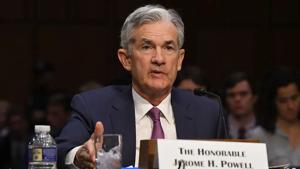
“A good part of the slowing likely reflects a decline in the growth of the labor force due to lower immigration and labor force participation, though labor demand has clearly softened as well,” Federal Reserve Chair Jerome Powell said in a press conference last week.
The two main economic sectors where jobs increased were the health care and construction industries. The health care industry added 46,000 jobs in November and construction added 28,000.
November saw a decrease in the transportation and warehousing sector, with 18,000 jobs lost. The report said transportation and warehousing employment has declined by 78,000 since February.
The report found a decline of 6,000 federal government jobs in November. The decline follows a significant decline of 162,000 in October as federal employees who accepted deferred resignation offers were removed from federal payrolls.
Illinois leaders ‘won’t back down’ following Trump’s order limiting AI regulation
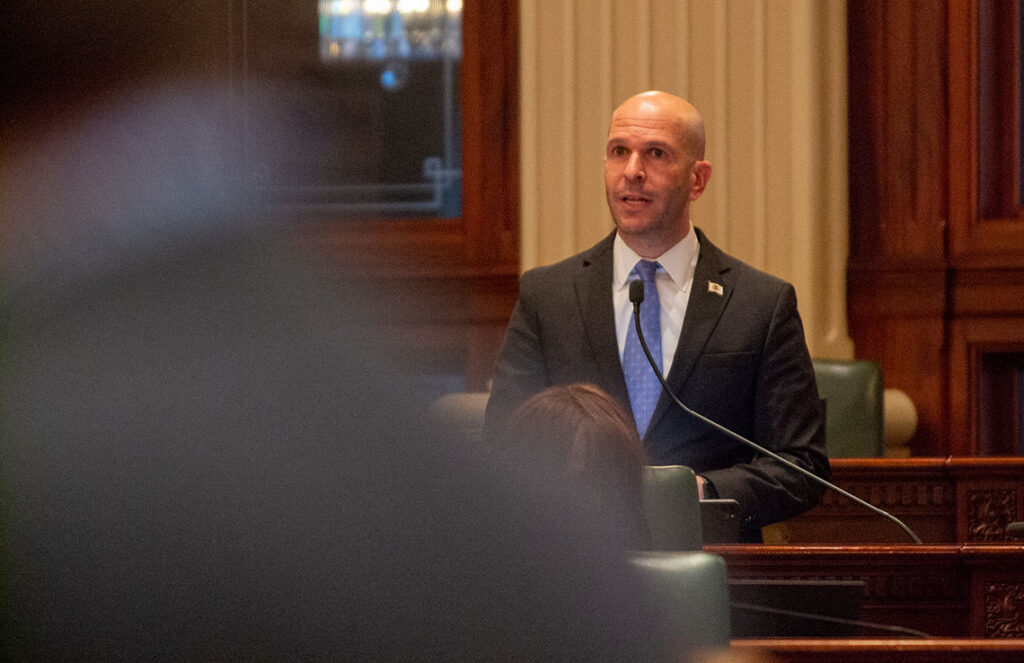
President Donald Trump said winning the AI race is a national security matter.
Read MoreWill County Executive Committee Rejects School Choice Advisory Referendum

Will County Board Executive Committee Meeting | December 11, 2025 Article Summary: The Will County Board Executive Committee voted against advancing a resolution that would have placed an advisory referendum regarding the “Educational Choice for Children Act” on the March 2026 primary ballot. Proponents argued the measure would give voters a voice on federal scholarship…
Read MoreGroup launches campaign backing health-care price transparency push
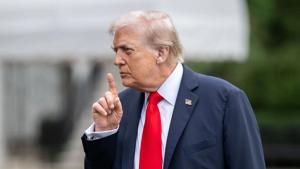
A national conservative nonprofit will launch a new television advertisement advocating for President Donald Trump’s efforts to reduce healthcare costs through price transparency, arguing that patients need clearer information about medical care costs.
Save Our States, a grassroots organization focused on federalism and regulatory reform, announced the ad will begin airing on Tuesday. The spot highlights Trump-era policies aimed at requiring hospitals and insurers to disclose prices in advance, allowing consumers to compare costs and plan expenses.
The ad launch follows the group’s recent “Show Us Your Prices” campaign, which calls on policymakers to expand healthcare cost transparency requirements.
The campaign argues that hidden pricing has contributed to rising costs for families and small businesses while protecting hospitals and insurers from competition.
The 30-second ad frames price transparency as a nonpartisan consumer issue. It criticizes hospitals and insurance companies for keeping prices hidden and urges immediate action to empower patients with clearer cost information before receiving care.
“Donald Trump is fighting to make healthcare affordable again,” the ad says. “Hospitals and insurance companies have kept prices hidden, charging anything they want. They win, you lose. Profits go up, patients get left behind. They won’t put America first. But President Trump will. Americans need price transparency now. More choices, more power, lower costs.”
Save Our States says the campaign builds on executive actions taken during the Trump administration that required hospitals to publicly post prices and insurers to provide advanced explanations of benefits through a provision in the No Surprises Act, which Trump signed into law during his first term but the Biden administration didn’t enforce. Supporters argue officials should strengthen these rules.
Andrew Bremberg, who served as assistant to the president and director of the Domestic Policy Council during the first Trump administration, said transparency reforms could deliver near-term relief if fully implemented.
“Americans are being crushed by hidden healthcare costs, and the fastest way to deliver relief is to implement real price transparency now,” Bremberg said. “When patients can see the actual price of care upfront, you unleash competition so prices fall and families can finally plan and budget with confidence.”
Bremberg said reforms like requiring advanced notice of what insurance covers and what patients will owe out of pocket would help restore accountability in the healthcare system.
“Americans shouldn’t have to wait years to feel a policy’s impact,” he said. “That’s why swift implementation of reforms like the Advanced Explanation of Benefits is so critical.”
Healthcare price transparency has gained bipartisan attention in recent years as costs continue to outpace wages. Advocates argue that without transparent pricing, patients cannot shop for care or avoid unexpected bills, especially for routine procedures.
Healthcare industry critics say opaque pricing benefits large institutions while leaving families vulnerable to surprise post-treatment charges. Transparency supporters argue that market pressure would push providers to lower prices once consumers have upfront access to costs.
The Save Our States ad directs viewers to a website supporting expanded transparency requirements and praising Trump’s approach to healthcare affordability. The group says the campaign focuses on immediate policy changes rather than long-term restructuring of the healthcare system.
Trump designates fentanyl a ‘weapon of mass destruction’
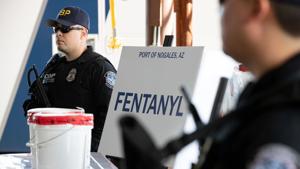
Following an alarming rise in fentanyl deaths in recent years, President Donald Trump is taking another step in cracking down on the deadly drug seeping its way onto American streets by designating it a weapon of mass destruction.
The president signed the executive order Monday during an event in the Oval Office, saying the illicit drug “is closer to a chemical weapon than a narcotic.”
The designation comes on the heels of the administration’s increasing military presence in the Caribbean, targeting narco-terrorists and “successful” meetings with Chinese leaders, who have vowed to crack down on the production of precursors of the drug.
Critics of Trump’s move want to address the fentanyl crisis through a different way. For example, a 2024 bill from attorneys general asking former President Joe Biden to do the same thing expressed concerns about political optics and the language akin to military. Overreach and blurred lines in domestic actions, such as rounding up users.
The order would provide the secretaries of the Department of War and Department of Homeland Security to “update all directives regarding the armed forces’ response to chemical incidents in the homeland to include the threat of illicit fentanyl.”
Trump said the fentanyl drug trade “threatens” national security by fueling “lawlessness” in the Western Hemisphere. This is the area of North America and South America, and the islands near each.
“The production and sale of fentanyl by foreign terrorist organizations and cartels fund these entities’ operations – which include assassinations, terrorist acts, and insurgencies around the world – and allow these entities to erode our domestic security and the well-being of our nation,” the order says in part.
Trump said two cartels are predominantly responsible. The Sinaloa Cartel and the Jalisco New Generation Cartel, known also as CJNG, are based in Mexico.
The Drug Enforcement Agency said last December that in 2023, more than 107,000 people died from drug overdoses, with nearly 70% attributed to opioids, like fentanyl.
In late February, the U.S. Centers for Disease Control and Prevention via its National Vital Statistics System predicted a 24% decline in drug overdose deaths for the 12 months ending in September. The finding was based on 87,000 drug overdose deaths from October 2023 to September 2024, down from 114,000 the year prior.
Trump declared opioid overdose a public health emergency in 2017 during his first term.
‘Welcome Move’: 815 Mulch-It Granted More Time to Relocate in Homer Glen

Will County Land Use & Development Committee Meeting | December 2025 Article Summary: The Will County Land Use and Development Committee granted a second extension to a landscape and lawn maintenance business moving to South Cedar Road in Homer Glen. Committee Chair Frankie Pretzel praised the relocation and the site’s aesthetic improvements, noting the business…
Read MoreTwo states designate Muslim group as terrorist, but other GOP governors mum
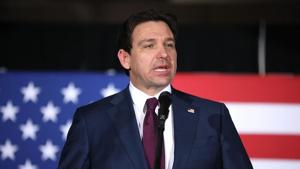
The governors of Texas and Florida have declared the nation’s largest Muslim advocacy group a foreign terrorist organization, but they may stand alone. None of their Republican counterparts in other states seem ready to follow suit.
The Center Square reached out to every other Republican governor whose state has offices of the nonprofit Council on American-Islamic Relations. Not one – from Alabama, Georgia, Missouri, Ohio, Oklahoma or Virginia – responded to inquiries about whether they plan to slap a terror label on the group, too.
“I don’t know why anyone wouldn’t want to designate CAIR a foreign terror organization,” Florida Republican Congressman Randy Fine, a fierce critic of the group, told The Center Square.
The 31-year-old, Washington-based civil rights organization strongly denies supporting terrorism, saying on its website it has “specifically opposed unjust violence perpetrated in the name of Islam.”
The U.S. State Department does not consider CAIR a foreign terrorist organization, though U.S. Rep. Fine introduced a bill this year that would direct Secretary of State Marco Rubio to review if it meets the criteria.
“Maybe other states are waiting to see how it goes,” Fine said of the governors’ non-responses. “CAIR is threatening litigation, which I think we all hope happens because that will require them to disclose the dark web of relationships that they have.”
Last month, Texas Gov. Greg Abbott issued a proclamation accusing the group of ties to Hamas and the Muslim Brotherhood, an international organization bent on establishing Islam’s “mastership of the world.” The designation prohibits CAIR from buying or acquiring land in Texas.
Florida Gov. Ron DeSantis issued his own executive order last week, also designating both CAIR and the Muslim Brotherhood terrorist groups. He called on state agencies to deny resources to them and directed the Florida Department of Law Enforcement and Florida Highway Patrol to keep tabs.
“CAIR was founded by persons connected to the Muslim Brotherhood,” DeSantis’ order says, “and was created, in the words of persons affiliated with CAIR, as ‘an official U.S. cover representing the Islamic community’ to conceal ties to Islamic extremist groups.”
CAIR and the Muslim Legal Fund of America have already sued in Texas, asking a federal judge to strike down Abbott’s order. CAIR has threatened to sue DeSantis, as well. The group says its pro-Palestinian stance has attracted the ire of “Israel-first” politicians.
“It seems to be a coordinated campaign to push back against anyone who spoke out against the genocide effectively,” CAIR spokesman Ibrahim Hooper told The Center Square.
In a letter to DeSantis last week, CAIR National Deputy Director Edward Ahmed Mitchell called the executive order “defamatory” with “no basis in law or fact.” The organization has never been an affiliate, offshoot, or subsidiary of any foreign group, he said.
“You do not have the constitutional authority to unilaterally declare any Americans or American institutions foreign terrorist groups, nor is there any basis to level this smear against our organization.” Mitchell told the governor. “We look forward to seeing you in a court of law, where facts and the law still matter.”
DeSantis said in an X post last week, “I look forward to discovery – especially the CAIR finances. Should be illuminating!”
According to its website, CAIR has chapters in Austin, Dallas and Houston. In Florida, it has a Tampa chapter.
At least 21 other states have chapters and satellite offices, six of which have Republican governors. There are branches in Birmingham, Ala.; Duluth, Ga.; St. Louis; Cincinnati, Cleveland and Columbus, Ohio; Oklahoma City; and Herndon, Va., the website says.
The Center Square contacted the offices of Alabama Gov. Kay Ivey, Georgia Gov. Brian Kemp, Missouri Gov. Mike Kehoe, Ohio Gov. Mike DeWine, Oklahoma Gov. Kevin Stitt, and outgoing Virginia Gov. Glenn Youngkin – asking if they’re planning to do anything similar to Texas or Florida or to comment on what Abbott and DeSantis did.
None answered.
“Most Americans recognize that Ron DeSantis is a failed politician,” Mitchell, of CAIR, told The Center Square, “who prioritizes the Israeli government over the people of Florida and is always looking for publicity stunts to stay relevant. I would not be surprised if other governors do not decide to take the leap with him and Governor Abbott, given they don’t want to end up in court and embarrassed.”
The Texas proclamation and the Florida order delve deep into the organization’s history to accuse it of ties to Hamas and the Muslim Brotherhood, a transnational Sunni Islamist network with no centralized leader that pushes for Sharia law in all aspects of life. The Muslim Brotherhood also has not been designated a foreign terrorist organization by the State Department, though President Trump issued an executive order last month launching a formal process that could see some of its chapters labeled as such.
The Texas and Florida actions both cited CAIR’s role as an unindicted co-conspirator in the 2007-2008 federal trial of the Holy Land Foundation, Its leaders were found guilty of funneling funds to Hamas.
“Internal documents plainly identified CAIR as a subsidiary of the Muslim Brotherhood and a federal court eventually found ‘ample evidence to establish’ that CAIR was associated ‘with Hamas,'” Abbott’s proclamation says.
The Texas document also lists a half dozen staffers and associates as being criminally convicted or deported for financing or supporting terrorist causes, including Al Qaeda, the Taliban and Saddam Hussein’s government.
Anti-Muslim activist Amy Mekelburg, founder of RAIR (Rise Align Ignite Reclaim) Foundation USA, has been urging other states to join Texas and Florida with designations of their own.
“ALL Red states with CAIR offices must act NOW – before CAIR’s influence becomes irreversible,” Mekelburg said in an X post last week. “Every red governor. Every red AG. Every red legislature.” She did not respond to The Center Square’s attempts to reach her, and CAIR has labeled RAIR a “hate group.”
While no governors have gone as far as Abbott and DeSantis, other state legislatures passed non-binding resolutions introduced over the past decade telling law enforcement and other state agencies to stop cooperating with CAIR.
When he was still a state representative last year, Fine introduced a resolution passed in the Florida House encouraging state and local governments to cut off contacts with the group, just as the FBI did more than a decade ago citing alleged ties to Hamas.
“They’ve made themselves out to be the NAACP for Muslims,” Fine said. “And I think it’s a very interesting thing, because if they’re the NAACP for Muslims, what does that say about Muslims?”
Last week CAIR called for Fine’s resignation over an X post where he said of mainstream Muslims, “I don’t know how you make peace with those who seek your destruction, I think you destroy them first.”
And Mitchell said the tactics being used against CAIR do hearken back to the NAACP, when southern states tried to shut it down in the 1960s by accusing its members of plotting with communists and seeking access to finance records and membership lists. He called the allegations in the Texas and Florida orders either factually inaccurate, or “a true fact that has been manipulated to sound nefarious and much worse than it is.”
The Holy Land Foundation trial was “one of the most notoriously-flawed and widely-criticized excesses of the post-9/11, War on Terror, Bush era,” he said. And of Abbott’s list of criminal convicts, “Some of those people did not work for CAIR at all whatsoever. None of them did anything criminal in relation to CAIR at all. And some of them were wrongly convicted of things they did not do.”
“CAIR is probably target number one for anti-Muslim bigots. They absolutely hate us because we defend the Muslim community, and we’re very, very good at it,” Mitchell said. “The NAACP was not a communist agent. We do not have any connection with any foreign entity. We’re an independent American organization, and Ron DeSantis is going to find that out.
A once dying mall in Southern Illinois is getting a mighty makeover, thanks to $112M bond deal — created by the state and backed by local tax money — but the project has hit a speed bump

Officials say the massive redevelopment is on track, but a main developer has already dropped out, facing a slew of lawsuits
Read MoreEveryday Economics: A divided Fed heads into a critical data week
The Federal Reserve cut interest rates again last week, lowering the target range for the federal funds rate by 25 basis points to 3½–3¾ percent. The decision reflects a growing concern about downside risks to the labor market, even as inflation remains above the Fed’s 2% target.
A closer look at the Summary of Economic Projections (SEP) helps explain why the decision was far from unanimous. While the median projection for the unemployment rate is essentially unchanged from September, inflation in 2026 is now expected to be modestly lower than previously thought. The median projection for the fed funds rate path, however, was left unchanged relative to the September SEP.
What did change meaningfully was the degree of disagreement within the Committee.
At the December meeting, three policymakers dissented from the 25-basis-point cut – Austan Goolsbee and Jeffrey Schmid favored no change, while Stephen Miran argued for a larger 50-basis-point cut. That marks a notable increase in dissent from September, when only one participant dissented, also in favor of a larger cut.
The growing split is also visible in the Fed’s “dot plot.” The range of projections for the appropriate level of the federal funds rate at the end of 2026 widened to 175 basis points, up from 125 basis points in the September SEP. That wider dispersion signals rising disagreement over how quickly – and how far – policy should ease once inflation is clearly on a path back toward target.
Why the Fed Is Increasingly Split
The source of the division is straightforward: inflation is still too high, but the labor market is becoming harder to read.
Inflation has moved up modestly this year and remains elevated, according to the Fed’s own assessment, but there is limited evidence so far of a persistent re-acceleration. At the same time, the labor market appears to be losing momentum. Job gains slowed earlier this year, and the unemployment rate edged higher through September. Since then, a lack of official data – caused by the government shutdown – has increased uncertainty around current conditions.
That uncertainty puts more weight on the data arriving this week.
The Week Ahead: Jobs and Inflation Take Center Stage
This week brings two critical releases: the November jobs report and the November Consumer Price Index (CPI).
Private-sector indicators suggest further cooling in the labor market. ADP and Revelio Labs both point to a decline in employment in November, while Gusto reports that hiring among small businesses was flat over the month. Combined with ongoing declines in federal government employment, these signals raise the risk that overall job growth has stalled – and may now be turning negative – potentially resulting in a higher unemployment rate.
On inflation, the CPI report is expected to show continued pressure in goods prices and healthcare costs. However, housing inflation remains a key offset. Measures of shelter inflation have been steadily easing, reflecting a deceleration in market rents over recent months.
According to Zillow’s forecasts, Rent of Primary Residence inflation is expected to end the year up 3.0% year over year, before slowing sharply to 1.6% in 2026. In September, that measure was running at 3.4%. Owner’s Equivalent Rent (OER) is expected to end the year up 3.6%, down from 3.8% in September, and to decelerate further to 2.6% in 2026.
That continued cooling in housing inflation should help limit upside surprises in core CPI, even if other categories remain firm.
Why It Matters
The Fed’s December decision makes clear that policymakers are now navigating a narrower and more uncertain path. Inflation is still above target, but the balance of risks has shifted. With demand cooling, housing inflation easing, and labor-market momentum fading, the cost of keeping policy too tight for too long is rising.
This week’s jobs and CPI reports will go a long way toward determining whether December’s cut proves to be a cautious adjustment or the beginning of a more sustained easing cycle.
Person of interest in custody in deadly Brown University shooting
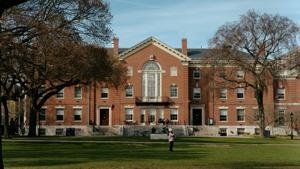
A “person of interest” is in custody in connection to Saturday’s shooting at Brown University that left two people dead and nine others injured, authorities said Sunday morning.
The person of interest was apprehended at a hotel in Coventry, Rhode Island, just southwest of the Providence-based campus, multiple news outlets reported. Few other details were released as of mid-morning.
Saturday night, local law enforcement described the suspect as a male wearing all black who opened fire in Barus & Holley Building during final exams in the afternoon.
The campus and Providence had been placed on lockdown, but that ended Sunday morning when the person of interest was taken into custody.
“We are able to report that we have detained a person of interest involved in yesterday’s shooting,” Providence Mayor Brett Smiley said at a Sunday morning news conference. “I want to let the Providence community know we are lifting the shelter-in-place.”
Of the nine people injured in the mass shooting, seven are in stable condition, Smiley said, one is in critical condition, and one was released from the hospital. Authorities were not yet ready to release information about the victims, Smiley said.
Colonel Oscar L. Perez, Jr. of the Providence Police Department said authorities could not release many details as the investigation is ongoing. Perez said as of the Sunday morning news conference, police are not looking for any other suspects.
Roughly 11,000 students attend the Ivy League university established in 1764. Brown University said it would be issuing a series of announcements regarding this week’s campus schedule.
President Donald Trump told Fox News from the White House that he’d been “fully briefed” on the situation. Rhode Island Gov. Dan McKee confirmed he’d been in touch with the president, as well, and the FBI is assisting with the investigation.
“What a terrible thing it is,” he said. “And all we can do right now is pray for the victims.”