Posts by Newspaper Staff
Many voters blame AI data centers for rising electricity costs

A significant number of American voters are blaming AI data centers for rising energy costs across the country, a new poll reveals.
The Center Square Voters’ Voice Poll found 15% of registered voters blame AI data centers for rising electricity costs across the country. Additionally, 22% of voters said companies are using AI data centers as an excuse to raise profits. Combine the two responses and 37% of voters blame rising electricity costs on data centers. That’s compared to 27% of voters who blame general inflation.
The Voters’ Voice Poll was conducted by Noble Predictive Insights between March 2-5, 2026. The poll sample included 2,569 registered voters, comprising 1,177 Republicans, 1,270 Democrats and 773 independents, of which 330 do not lean toward either major party. It is one of the most comprehensive tracking polls in the U.S.
Mike Noble, founder of Noble Predictive Insights, said he considers responses related to AI data centers as the same. He used the different responses to gauge specific concerns about data centers.
“We had both those in there to see if there is a difference of reasoning behind what people are attributing this to,” Noble said. “I’d say ⅓ agree that data centers are attributing to it.”
Across partisan lines, voters were concerned about data centers or companies using data centers to increase profits, raising electric costs. About 20% of Republican respondents said companies are using AI data centers as an excuse to raise profits, alongside 24% of Democrats and 22% of independents who do not lean toward either major party.
When combined with responses blaming AI data centers, 33% of Republicans said they are raising energy costs, alongside 41% of Democrats and 37% of Independents.
Younger voters are more likely to blame AI data centers for rising electricity costs. About 41% of adults ages 18-29 blame AI data centers to some degree for raising electricity costs, while 35% of adults ages 30-44 said the same. About 40% of voters aged 65 years old or older blame data centers or companies using data centers as an excuse to raise profits for rising electricity costs.
While concerns over AI data centers are high, about 27% of registered voters blame general inflation for rising energy costs.
“The inflation voters are feeling is not only real, it’s probably the most important thing on their mind,” Noble said. “Any policy or decision maker right now should absolutely be factoring inflation in any type of decision they’re making.”
Across partisan lines, Democrats were most concerned about inflation raising electricity costs. About 30% of Democrat respondents were concerned over inflation raising costs, compared to 27% of Independents and 25% of Republicans.
“These people are really feeling a pocketbook squeeze,” Noble said. “A lot of them are working on a pretty tight budget.”
Over the last year, the vast majority of states reported increased electric costs, according to the U.S. Energy Information Administration.
The District of Columbia saw the highest spike in energy prices from December 2024 to December 2025 at a 27% increase. California saw a 13.4% increase, Washington saw a 12.5% hike and Illinois saw a 7% increase over the same time period.
Nevada topped the list of states with a 13.7% decrease in energy costs between December 2024 and December 2025 , followed by Connecticut at a 10% decrease and Tennessee with 0.5% decrease.
Voters also blamed increased labor costs and green energy policies for rising electricity costs. About 27% of overall voters said labor costs were to blame for electricity costs, compared to 11% who blamed green energy policies.
Noble said predictions for wage growth paint a bleak picture with concerns over the cost of electricity.
“They’ve been getting beat up pretty bad over the last four, five years,” Noble said. “It doesn’t look like there’s much of an answer in sight. When you look at wage growth compared to [inflation] it’s not even freaking close.”
U.S. Supreme Court to hear mail-in ballots case Monday

The U.S. Supreme Court on Monday will hear arguments in a consequential case to determine if states can accept and count mail-in ballots after Election Day.
The case, Watson v. RNC, challenges a Mississippi law that allows mail-in ballots to be received up to five days after Election Day, as long as the ballot is postmarked by Election Day. Fourteen states and the District of Columbia also allow mail-in ballots to be received after Election Day.
Jason Snead, executive director of the Honest Elections Project, said the case would give an opportunity for mail-in ballot laws to be uniform across the country.
“Federal law clearly states that ballots must be received by Election Day,” Snead told The Center Square. “Despite this, states continue to allow absentee ballots to pour in days or even weeks late.”
In Illinois, mail-in ballots can be received up to 14 days after Election Day. Lawyers for the RNC argued that the federal government sets a date for federal elections and that all ballots need to be available for counting by that date.
Lisa Dixon, executive director at the Center for Election Confidence, said delayed mail-in ballot receipt deadlines became more prominent during the COVID-19 pandemic. She said a ruling in favor of the RNC would still allow states to accept late mail-in ballots for nonfederal elections.
Lawyers for Mississippi have argued that upholding a strict receipt deadline would jeopardize ballots for military and overseas voters. However, Congress’ passage of the Uniformed and Overseas Citizen Voting Act established requirements for states to send absentee ballots 45 days before a federal election.
“Congress has spoken in that area and created a system of law that’s arguably separate from the federal Election Day statutes themselves,” Dixon said.
In December, the U.S. Postal Service altered its postmark policy so that the date reflected is when mail first arrives at a processing facility, not when it is dropped off. Dixon said this aspect of the case could be substantial grounds for a claim of disenfranchised voters.
“There is unfortunately a real risk of disenfranchising voters who drop their ballots off close to Election Day and assume it’s going to be postmarked as normal,” Dixon said. “States haven’t really begun to grapple with that and its impact on voters yet.”
Dixon admitted the court could carve out a distinction between overseas voters and domestic mail-in ballot voters.
“To the extent that the court wants to maintain the status quo, I would also see them being reluctant to kind of disrupt the whole system of U.S. law that governs military voters and overseas voters,” Dixon said.
Regardless of possible exceptions, Snead thinks the court will likely strike down Mississippi’s late receipt deadline for mail-in ballots. He said strict mail-in ballot receipts are popular among the American public.
When asked, 78% of American voters said that requiring ballots to be received by election officials at the end of Election Day makes elections more secure, according to a new poll shared with The Center Square.
The poll was conducted by CRC Research for Honest Elections Project between March 12-17 and included 1,600 likely voters nationwide. Among those surveyed, 90% of likely Republican voters said requiring ballots to be received by election officials by the end of Election Day makes elections more secure. About 77% of Independent voters and 68% of Democrat voters agreed.
Going a step further, the poll found 59% of voters said they would not trust the results of an election that counts ballots received after polls close on Election Day. About 60% of voters said counting ballots received after polls close on Election Day makes it easier to cheat.
“What you want to see is at the end of the voting period, the polls close on Election Day, you know how many votes are cast,” Snead said. “The absolute maximum number of ballots should be set when the polls close.”
While the justices will hear arguments on Monday, they are not likely to issue a decision until June.
Snead does not anticipate the decision timeline will affect upcoming midterm elections. He urged advocacy groups to educate voters on possible mail-in ballot changes, based on the court’s decision.
“Federal law is clear: all ballots must be received by Election Day to be counted,” Snead said. “The Supreme Court has a prime opportunity to keep it easy to vote and make it harder to cheat by upholding the rule of law and ensuring that ‘Election Day’ means Election Day.”
Trump: Strikes on Iran could be ‘winding down’

The U.S. is “very close” to meeting objectives in Iran, President Donald Trump said Friday, while providing a glimpse of the region after military strikes cease.
The president added that the U.S. is considering “winding down” military operations in the region. He made the comments in a Truth Social post Friday evening after fielding several questions from reporters outside the White House on his way to Florida.
Trump cited several reasons as he considers “winding down” the strikes, including the “degrading” of the Islamic Republic’s missile capabilities, the destruction of their defense industrial system and the elimination of their navy and air force.
He underscored that Iran will never “get even close to nuclear capability,” allowing the U.S. to “quickly and powerfully react to such a situation, should it take place.”
The president noted ongoing tension in the international community over securing the Strait of Hormuz, the vital shipping passage connecting the Persian Gulf and the Gulf of Oman.
“Protecting, at the highest level, our Middle Eastern Allies, including Israel, Saudi Arabia, Qatar, the United Arab Emirates, Bahrain, Kuwait, and others. The Hormuz Strait will have to be guarded and policed, as necessary, by other Nations who use it – The United States does not! If asked, we will help these Countries in their Hormuz efforts, but it shouldn’t be necessary once Iran’s threat is eradicated. Importantly, it will be an easy Military Operation for them,” the president wrote.
The latest development comes as the operation marks three weeks since strikes began. Multiple reports indicate that several thousand Marines are en route to the region; however, Trump refused to confirm them.
The closure of the Strait of Hormuz has taken center stage this week as NATO allies have sparred with Trump over commitments to help secure the strait.
However, on Thursday, France, Germany, Italy, Japan, the Netherlands and the United Kingdom released a joint statement condemning Iranian attacks while expressing “readiness to contribute to appropriate efforts to ensure safe passage through the Strait.”
Trump has been putting international pressure on countries, including China, Japan, South Korea, and NATO members, to step in and help secure the Strait of Hormuz, which connects the Persian Gulf and the Gulf of Oman.
The president has underscored that Japan imports about 95% of its oil from the region, with China close behind at 90% and South Korea receiving about 35%, while the U.S. imports less than 1% from the Strait of Hormuz.
In the last few days, the president has expressed his disappointment with NATO countries’ reluctance to do more to secure the strait – at times claiming that the U.S. doesn’t need NATO.
On Tuesday, The Center Square asked the president in the Oval Office whether he is rethinking the U.S.’s relationship with NATO.
“Well, I’m disappointed in NATO that we spend trillions of dollars on NATO. Think of it, trillions over the years … It’s one of the reasons we have deficits and we help other countries when they don’t help us,” Trump told The Center Square. “I mean, it’s certainly something that we should think about. I don’t need Congress for that decision … I can make that decision myself.”
The president reiterated his frustration with NATO Thursday morning, saying that NATO is “getting much nicer” since his comments. Though Trump indicated it may not be enough. “As far as I’m concerned, it’s too late.”
Arizona Republican lawmakers plan to end Cesar Chavez Day

The Republican majority in the Arizona Legislature is working on a bill to end Cesar Chavez Day following allegations of sexual abuse and rape by the late United Farm Workers cofounder.
Sen. Shawnna Bolick, R-Deer Valley, has proposed a strike-everything amendment to House Bill 2072. Such an amendment is a quick way to move legislation by replacing the entire content of an unrelated bill already proceeding through the Legislature. Rep. Lisa Fink, R-Glendale, the original sponsor of HB 2072, supports the amendment.
The Senate Regulatory Affairs and Government Efficiency Committee will discuss the amendment at 9 a.m. Wednesday. Bolick is the committee chair.
The action to end the holiday follows United Farm Workers cofounder Dolores Huerta’s allegations this week that Chavez raped her, leading her to give birth to two children. There are also allegations that Chavez raped two young girls.
The accusations prompted UFW to cancel celebrations on Cesar Chavez Day, a state holiday on March 31 in Arizona, California and seven other states. The allegations have also prompted cities and school districts throughout the Southwest to discuss renaming streets and schools named after Chavez, as well as efforts to end or rename Cesar Chavez Day or anything else with Chavez’s name. Statues of Chavez have been covered up or removed.
For now, members of the Republican majority in the Arizona Senate and House are pushing to end the holiday.
“We cannot say we stand with victims and then maintain laws that send a conflicting message,” Bolick said in a statement Thursday. “This is about ensuring Arizona law reflects a clear commitment to protecting victims and upholding accountability.”
Senate President Warren Petersen said he was shocked when he heard the allegations against Chavez.
“The amount of abuse, sexual assault, rape, everything involved, is a horrific, heinous crime,” Petersen, R-Gilbert, told The Center Square during a phone interview Friday afternoon.
“Crimes against children are the most heinous,” Petersen said.
He noted he has been encouraged by bipartisan support for removing Chavez’s name from anything that honors him.
“The Republicans are leading the way on this, but I think Democrats will be on board with this,” Petersen said about the bill ending the holiday.
“People are moving quickly to make sure his legacy is not preserved,” he said. “A person who has committed such a heinous act should not be honored in any way. This is an evil man. There’s no way our state should have a state holiday for a man who raped these women.”
The Senate president said it normally takes 17 days to pass a law, but efforts are being made to repeal Cesar Chavez Day before March 31, which is less than two weeks away. He added he expects Democratic Gov. Katie Hobbs, who has already canceled plans to honor Cesar Chavez on March 31, to sign the bill.
Instead of canceling the holiday altogether, Los Angeles Mayor Karen Bass on Thursday announced the city’s plans to rename Cesar Chavez Day as Farm Workers Day. The Center Square asked Petersen why Arizona legislators wouldn’t do that.
“It’s an interesting question,” Petersen said. “We have Labor Day.”
He said there hasn’t been a push among legislators to rename the holiday, but compared efforts to remove Chavez’s name to a brush fire.
“I’m seeing efforts at all levels of government to scrub his name,” Petersen said, adding that no state parks are named after Chavez.
House Speaker Steve Montenegro, R-Surprise, said the state can’t honor Chavez following the allegations.
“We are not going to keep honoring a man who committed sexual abuse against children and assaulted women,” Montenegro said in a statement Thursday. “If even the Governor is stepping back from recognizing Cesar Chavez this year, then the Legislature needs to finish the job. Looking the other way is not leadership.”
But Pedro Hernandez, the California state program director for GreenLatinos, said he would prefer government entities rename Cesar Chavez Day rather than end the holiday altogether.
“I hope this can be an opportunity to highlight all of the farm workers movement,” the Fresno resident told The Center Square during a phone interview Friday afternoon.
“There were thousands of other people who were doing this same work and were committed to the same vision for the people who keep America fed and sacrificed their bodies and so much,” he said, referring to the hard physical labor of farming.
Hernandez, whose organization is a Latino-led environmental nonprofit, said he doesn’t see the distancing from Chavez’s name as a setback for workers.
“I think the Latino civil rights and farm workers movement is in a different place than it was in the 1960s,” Hernandez said. “The rapid nature of how the Latino community has reacted to this is a sign that we are still very strong and open to accepting these truths in recognition that people were hurt. We need to uplift them as best as we can.”
He added efforts to rename everything associated with Chavez won’t happen overnight. Cities and school districts can move quickly to remove Chavez’s name, but it will take more time to rename, for example, the Cesar Chavez National Monument, a 116-acre park in Southern California’s inland Kern County, Hernandez said.
Meanwhile, more progress is needed to help Latino workers, who experience a high level of heat-related mortalities in farming, construction and landscaping, said Hernandez, who lives in California’s agricultural San Joaquin Valley.
“I hope as we are in the 250th anniversary of the United States, this can be a broader opportunity to remember our nation’s history and move forward,” Hernandez told The Center Square.
Carterville coach at center of sexual abuse investigation has history of disciplinary action
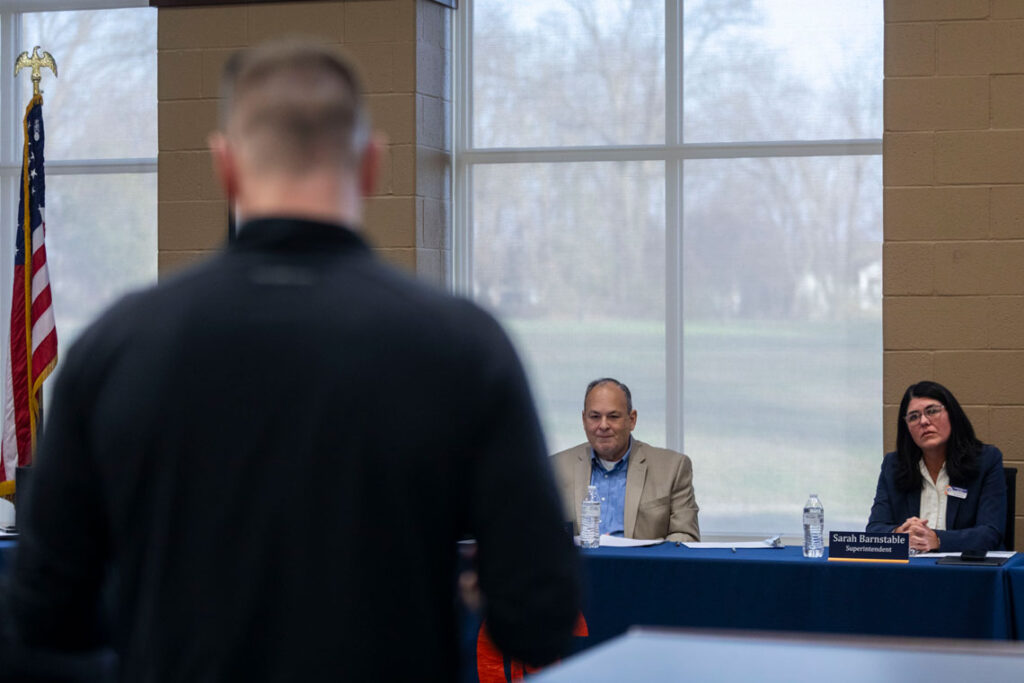
Public records reveal that an assistant football coach in Carterville who’s under investigation for criminal sexual abuse had previously been disciplined for inappropriate conduct involving students.
Read MoreRegulators OK ComEd’s plan to increase deposit costs for large-load projects like data centers

The order is seen as a first step, but advocates say more is needed to make data centers carry infrastructure costs.
Read MoreMapping Juliana Stratton’s U.S. Senate Democratic primary win
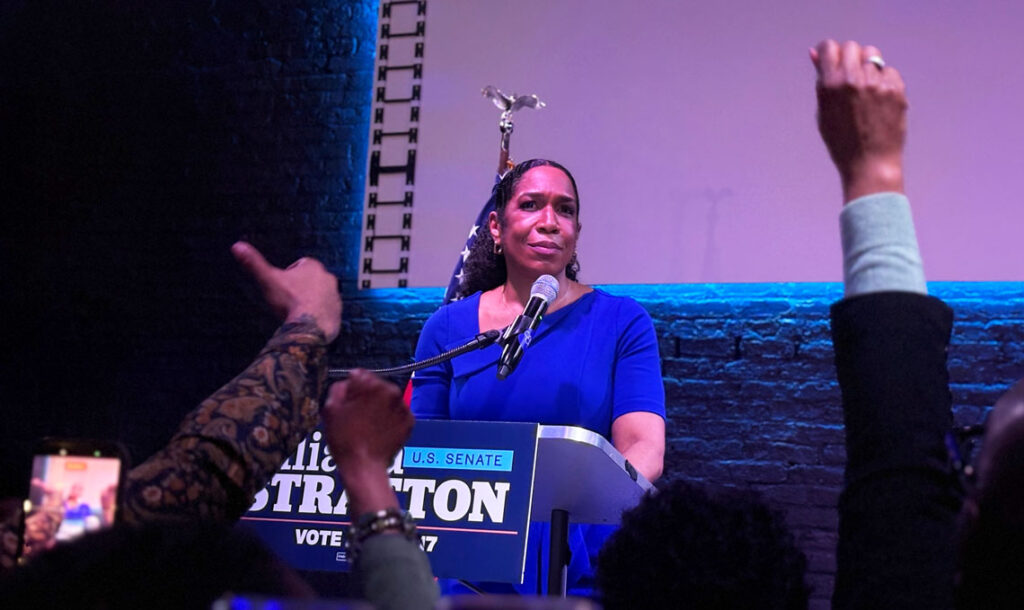
The foundation of Lt. Gov. Juliana Stratton’s larger-than-expected victory in the Democratic primary for Illinois’ open U.S. Senate was laid with a dominant performance in Chicago but padded by a surprisingly strong performance downstate. She also kept up with Rep. Raja Krishnamoorthi in the Chicago suburbs.
Read MoreBarrasso: Senate Dems have ‘blood on their hands’ for DHS shutdown
With the ongoing partial government shutdown now the second-longest in American history, irritated Republicans are berating Senate Democrats, who for the fifth time Friday blocked the advance of the Department of Homeland Security funding bill.
The failed vote highlighted how firmly Democrats are entrenched in their opposition to any fiscal year 2026 Homeland Security bill that doesn’t include an extensive list of new restrictions on immigration enforcement operations.
With no federal funding, DHS agencies – including TSA, the Coast Guard, the Secret Service, and the Cybersecurity and Infrastructure Security Agency – have ceased nonessential operations and faced worker shortages, even as homeland security risks have heightened.
Since the U.S.-Israeli-Iran conflict began in February, multiple attempted and successful Islamic terrorist attacks have occurred on U.S. soil in the states of Michigan, Virginia, New York, and other places.
In a social media post Friday, Senate Majority Whip John Barrasso, R-Wyo., blamed the increased violent incidents on Democrats’ refusal to reopen DHS.
“Americans need and deserve safety and security,” Barrasso wrote. “Democrats are preventing it and they have blood on their hands.”
This is the second time in less than six months that Democrats have forced a shutdown over policy demands, with the most recent lasting a record-long 43 days.
As with the previous shutdown, DHS workers deemed “essential” have been forced to work without pay, leading to hours-long waits at airports across the country as workers call in sick or leave for other paying jobs.
“It is incredibly frustrating that for 35 days, Democrats have blocked DHS funding. There is a name and a family tied to every single one of these paychecks,” Sen. Jim Justice, R-W.V., said Friday on X. “Yet again, they are forced to go without so the political theater can continue. It’s time to put an end to this.”
Senate Democrats have offered to fund all DHS agencies except for Immigration and Customs Enforcement and Customs and Border Patrol, but Republicans have refused to dissect the House-passed bill.
“We can fund the TSA. We can fund FEMA. We can fund CISA. We can fund the Coast Guard. Then we can talk through our differences on reining in the tactics of ICE and CBP to better protect Americans,” Sen Angus King, I-Maine., who caucuses with Democrats, said on X Friday.
As of Friday, the DHS shutdown has cost the U.S. economy $2.5 billion, according to the Council of Economic Advisors.
DEA seizes fentanyl, pill presses, guns and millions in cash

Armed with battering rams and search warrants, federal agents stormed homes and warehouses across the country, seizing millions in cash, piles of illegal drugs and a deadly arsenal, signaling an aggressive escalation in America’s war on drugs.
The multi-agency crackdown, highlighted by the DEA’s Operation Fentanyl Free America, comes as the United States faces a shifting landscape in the opioid crisis. Although overdose deaths have declined from record highs, fentanyl and other synthetic drugs remain a deadly threat, fueling action by law enforcement and policymakers.
In the second phase of Operation Fentanyl Free America, the DEA seized more than 4.7 million fentanyl pills and nearly 2,400 pounds of fentanyl powder between Jan. 12 and Feb. 10.
“The drug poisoning epidemic has been cultivated by designated terrorist cartels who operate like multi-billion-dollar corporations and have weaponized fentanyl with the clear objective to increase America’s dependence on illicit drugs,” DEA Administrator Terrance Cole said in a statement.
Agents also confiscated 147,000 pounds of cocaine, 21,000 pounds of methamphetamine, more than 26 million methamphetamine pills, 1,200 pounds of heroin, 65,000 pounds of illicit cannabis and more than 1,500 firearms. More than 3,000 arrests were made nationwide.
President Donald Trump has made fentanyl the face of his renewed war on drugs in the U.S. He has also taken aggressive steps to reduce drug trafficking around Venezuela with military strikes on suspected drug boats. In October 2025, the DEA launched an enforcement initiative and awareness campaign called “Fentanyl Free America” to reduce supply and demand for fentanyl.
While drug overdose deaths have declined in the U.S., they remain a significant public health crisis. Provisional CDC data show about 87,000 overdose deaths from October 2023 to September 2024, a drop from around 114,000 the previous year and the lowest total in any 12-month period since June 2020. For families, the toll remains devastating.
In December, the DEA reported that the first phase of the operation put “unprecedented pressure on the global fentanyl supply chain.” DEA lab testing found that 29% of fentanyl pills analyzed in fiscal year 2025 contained a potentially lethal dose, a sharp decrease from 76% in fiscal 2023. Fentanyl powder purity also dropped to 10.3%, down from 19.5%.
“Aside from producing less potent fentanyl, the cartels have increasingly diversified their operations in an attempt to minimize their risks and maximize profits, an evolution driven by opportunity and greed,” according to the drug agency.
Cole said the operations are hurting cartels.
“Drug seizures in the United States strike directly at cartel profits, while efforts to disrupt supply chains and dismantle money laundering networks deliver consequences far beyond our borders,” he said.
Cole also stressed education around opioids could help reduce overdose deaths.
“We must reach into our communities nationwide and share the simple truth: One pill can kill,” he said. “Enforcement saves lives. Education prevents the next tragedy. Together, we can end this crisis.”
The DEA seized about 29% less fentanyl in 2024 compared to the prior year, according to its 2025 threat assessment. In 2024, agents seized 22,000 pounds of fentanyl and 61 million fake pills – a 24% decrease from 2023. Data from the El Paso Intelligence Center’s National Seizure System reflect the same trend, with total fentanyl seizures down nationwide.
The drug agency is expected to release an updated drug threat assessment late this year.
The latest DEA operations come amid a wider war on drugs. The Department of War’s U.S. Southern Command carried out more than 45 strikes on suspected drug boats in the Caribbean and the eastern Pacific since September, killing more than 140 people. The most recent military strikes came on Thursday, when Gen. Francis Donovan conducted a lethal kinetic strike, but Southern Command didn’t say how many people were killed in the strike.
“Intelligence confirmed the low-profile vessel was transiting along known narco-trafficking routes in the Eastern Pacific and was engaged in narco-trafficking operations,” Southern Command announced in a social media post.
Three suspected drug traffickers survived the attack. Military officials alerted the U.S. Coast Guard to begin search-and-rescue operations for survivors.
The strikes, part of Joint Task Force Southern Spear, target international drug smuggling operations in international waters. Trump has frequently said that each strike saves 25,000 American lives.
Since Trump began the controversial military strikes on suspected drug boats in the region in September, Democrats, a few Republicans, and some international groups have condemned the U.S. military strikes. Congress failed to pass a measure requiring Trump to get permission before launching such strikes.
U.S. officials have not estimated the weight or value of illegal drugs that have been destroyed in the military strikes. Trump has yet to use the military on suspected drug operations in other parts of the world, but has said he would consider military action elsewhere to stop drug smuggling.
The military strikes continue on some vessels, while others face more traditional enforcement, such as seizures and arrests.
Last month, the U.S. Coast Guard Cutter Seneca’s crew unloaded about 17,750 pounds of cocaine worth more than $133.5 million in Port Everglades from four interdictions in international waters off the eastern Pacific Ocean, according to the Coast Guard.
Most of the world’s cocaine supply comes from nearby Colombia. China and other Asian nations produce most of the precursor chemicals needed to make fentanyl, the potent opioid responsible for most U.S. overdose deaths in recent years.
House Republican leaders back White House AI framework
House Republican leaders are pledging to enact the Trump administration’s newly released national legislative framework for AI regulation.
The proposal outlines how Congress should address AI threats to child safety, intellectual property rights, and free speech, as well as AI-driven rises in electricity costs and integrating AI into the workforce and national security sphere.
These nationally applicable issues “require strong Federal leadership to ensure the public’s trust in how AI is developed and used in their daily lives,” the administration said in its Friday announcement.
“Importantly, this framework can succeed only if it is applied uniformly across the United States. A patchwork of conflicting state laws would undermine American innovation and our ability to lead in the global AI race,” the White House added. “The Administration looks forward to working with Congress in the coming months to turn this framework into legislation that the President can sign.”
House Speaker Mike Johnson, R-La., House Majority Leader Steve Scalise, R-La., and other committee leaders praised the roadmap, stating that it “provides innovators with much-needed certainty, while protecting consumers and prioritizing kids’ online safety.”
“House Republicans look forward to working across the aisle to enact a national framework that unleashes the full potential of AI, cements the U.S. as the global leader, and provides important protections for American families,” the lawmakers said.
Any and all legislative implementation, the framework tells Congress, should respect states’ ability to impose their own AI regulations regarding child and consumer protection, fraud prevention, zoning laws for AI infrastructure, and state usage of AI.
At the same time, Congress should prevent state AI laws imposing “undue burdens” on AI development and ensure that state laws “do not govern areas better suited to the Federal Government or act contrary to the United States’ national strategy to achieve global AI dominance.”
“States should not be permitted to regulate AI development, because it is an inherently interstate phenomenon with key foreign policy and national security implications,” the framework emphasizes.
Specific proposals the White House wants to see adopted include establishing “commercially reasonable, privacy protective, age assurance requirements (such as parental attestation) for AI platforms and services likely to be accessed by minors,” though states can still make their own.
The administration also wants lawmakers to establish grants and tax incentives to support AI deployment among small businesses; expand AI-training workforce programs, especially for the youth; and streamline federal permitting for AI infrastructure while ensuring that residents don’t pick up the tab for increased electricity costs.
Communities with data centers often shoulder increased energy costs as electricity demand soars and utilities force American taxpayers to fund discounted rates for data centers, a recent study by Harvard Law School found.
Notably, the national AI framework calls for allowing Americans to sue the federal government if it censors free expression on AI platforms or dictates the information AI platforms can provide.
But it also suggests that Congress install protections for individuals against “unauthorized distribution or commercial use of AI-generated digital replicas of their voice, likeness, or other identifiable attributes, while providing clear exceptions for parody, satire, news reporting, and other expressive works protected by the First Amendment.”
The White House urged Congress to leave the issue of whether training AI models on copyrighted material is legal to the courts and refrain from establishing a new federal rulemaking body for AI.
From the beginning of his second term in office, President Donald Trump has focused on stimulating AI development and pushed for national cohesion on regulations.
Weeks after being sworn in, Trump reversed former President Joe Biden’s executive order that took a more cautious approach to AI development. He has touted and encouraged investments in AI startups. Republicans’ “One Big, Beautiful Bill” funneled billions of dollars to AI-related initiatives.
Trump also signed an executive order in December withholding broadband funds from states with AI regulations deemed to “harm innovation.”