Posts by Newspaper Staff
Deporations of nearly 500,000 allowed to proceed

Deportation of nearly 500,000 people illegally in the country was cleared by the U.S. Supreme Court on Friday, handing a victory to the Trump administration.
The decision puts a hold on a lower court’s decision to allow people from Cuba, Haiti, Nicaragua and Venezuela to remain in the U.S. for two years through a Biden-era decision. The case will continue to play out in lower courts.
Judge Indira Talwani of the U.S. District Court for the District of Massachusetts blocked an executive order from President Donald Trump instructing Homeland Security Secretary Kristi Noem to “terminate all categorical parole programs,” which included the CHNV (Cuba, Haiti, Nicaragua and Venezuela parole program).
In the ruling from the Supreme Court, the court said that “parole is discretionary by statute.”
“DHS awards the parole status through a competitive and detailed application process that involves a rigorous, individualized assessment of the applicant’s circumstances,” the justices said.
In the complaint filed in the Boston court detailed in the Supreme Court’s ruling, Talwani said Noem “acted arbitrarily and capriciously, contrary to law, and in excess of her legal authority by prematurely terminating their parole.”
The court did not sign the order; however, Justices Sonia Sotomayor and Ketanji Brown Jackson dissented from the ruling.
The lawsuits were filed after the Trump administration terminated the Biden administration-era CHNV Parole program that was used to facilitate the illegal entry of more than 531,000 citizens from Cuba, Haiti, Nicaragua and Venezuela into the U.S., The Center Square exclusively reported.
Under the Biden administration, more than three million illegally entered the U.S. or attempted illegal entry from CHNV countries, The Center Square exclusively reported. They totaled more than the population of 20 individual U.S. states.
The ruling comes after the Supreme Court allowed the Trump administration to terminate temporary protected status for roughly 600,000 Venezuelans, The Center Square reported.
Congress formally questions Nashville mayor about ICE-related order
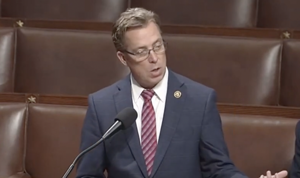
Two committees in the U.S. House of Representatives want more information on an executive order issued by Nashville Mayor Freddie O’Connell, which they say could “chill” the enforcement of federal immigration law.
O’Connell’s order required city of Nashville employees to report any encounters with federal immigration authorities within one business day. It was amended to include all departments after an operation conducted by U.S. Immigration and Customs Enforcement and the Tennessee Highway Patrol in early May netted 196 arrests. Some of those arrested had extensive criminal histories and some had removal orders, according to a release from ICE.
The joint letter from the Judiciary and Homeland Security committees and the Congressional Counter-Terrorism Caucus requests all documents related to the order since May 1, documents referring to the ICE operation and any documents and communications between Metro Nashville employees and others.
O’Connell has until June 12 at 5 p.m. to respond, according to the letter posted on social media by U.S. Rep. Andy Ogles, R-Tenn., chairman of the Congressional Counter-Terrorism Caucus.
“Instead of defending our state, Mayor Freddie O’Connell is sabotaging it,” Ogles said. “He’s weaponized his office to dox and surveil federal agents who are trying to stop violent criminals – and worse, he’s embraced those criminals by creating a taxpayer-funded program to aid illegal aliens. The recipients of these funds are untraceable. The purpose is crystal clear: help illegal foreigners evade the law.”
Nashville officials are publishing all encounters with immigration officers on a website. The names of some officers were listed on the site, Ogles said. The names are now redacted, according to a report from WSMV.
The Center Square was unsuccessful prior to publication of getting comment from the mayor’s office.
O’Connell also announced the “Belonging Fund” on May 5, described as a “new effort to support immigrants in Nashville during moments of crisis.” It is a partnership between the Community Foundation of Middle Tennessee and the Metropolitan Government of Nashville and Davidson County, according to a release.
Metro Council Member David Benton called for an audit of the fund at a Monday news conference with Ogles.
Trump admin identifies ‘sanctuary jurisdictions’ in 35 states, DC

(The Center Square) –The U.S. Department of Homeland Security has published a list of “sanctuary jurisdictions” in 35 states and the District of Columbia.
Illinois has the greatest number of counties listed of any state of 96, just a few shy of its 102 counties. All but one of Massachusetts’ 14 counties are listed. Washington is not far behind with 36 out of its 39 counties listed.
Fifteen states aren’t on the list, nearly all are run by Republicans: Alabama, Arizona, Arkansas, Florida, Iowa, Mississippi, Missouri, Montana, Oklahoma, South Carolina, South Dakota, Texas, Utah, West Virginia and Wyoming.
This is the first time DHS has published a sanctuary jurisdiction list. The list was published in accordance with an executive order President Donald Trump issued last month, “Protecting American Communities from Criminal Aliens,” The Center Square reported.
In it, Trump directs the attorney general and Homeland Security secretary to identify sanctuary jurisdictions that defy or obstruct federal immigration enforcement and are engaging in “a lawless insurrection against the supremacy of Federal law and the Federal Government’s obligation to defend the territorial sovereignty of the United States.”
“The prior administration allowed unchecked millions of aliens to illegally enter the United States,” the order states, which created “public safety and national security risks,” exacerbated by cartel, transnational criminal organizations and foreign terrorist organizations operating in the U.S. “who intend to harm … the American people.”
Because Trump declared the U.S. was under invasion, he said the federal government must “take measures to fulfill its obligation to the States.” He’s referring to the “Guarantee Clause,” (Article IV, Section 4) of the Constitution, which states the federal government “shall protect each state against invasion.” Fifty-five Texas counties cited it when they were the only ones in America that declared an invasion during the Biden Administration, The Center Square exclusively reported.
Because some state and local officials continue “to violate, obstruct, and defy the enforcement of Federal immigration laws,” committing “lawless insurrection against the supremacy of Federal law and the Federal Government’s obligation to defend the territorial sovereignty of the United States,” the president said he is taking action.
Trump’s order also says these jurisdictions are creating national security risks, violating federal criminal laws, including obstructing justice, “unlawfully harboring or hiring illegal aliens,” conspiring against the U.S., potentially violating the Racketeer Influenced and Corrupt Organizations Act, among others.
“Sanctuary cities protect dangerous criminal aliens from facing consequences and put law enforcement in peril,” DHS said. Each jurisdiction is being notified of non-compliance, instructed to comply, or face legal action and withholding of federal funds.
The initial list includes the District of Columbia and 35 states:
Alaska: AnchorageCalifornia: self-identifies as a sanctuary state; 48 of its 58 counties; 63 citiesColorado: self-identifies as a sanctuary state; 41 of its 64 counties; 14 citiesConnecticut: self-identifies as a sanctuary state; 6 citiesDelaware: self-identifies as a sanctuary state; New Castle County; Camden and NewarkGeorgia: four counties, Athens and AtlantaHawaii: HonoluluIdaho: BoiseIllinois: self-identifies as a sanctuary state; 96 of its 102 counties; 7 citiesIndiana: Monroe CountyKansas: Lawrence County, Douglas CountyKentucky: four counties, LouisvilleLouisiana: New Orleans/Orleans ParishMaine: two counties, PortlandMaryland: self-identifies as a sanctuary state; 8 counties; 10 cities, including Annapolis, where the U.S. Naval Academy is basedMassachusetts self-identifies as a sanctuary state; 13 counties; 12 cities. The list is missing Natick, whose officials voted for sanctuary status after an Iranian national was arrested there for his alleged ties to a terrorist attack that killed three U.S. service members, The Center Square reported.Michigan; six counties; Ann Arbor and East LansingMinnesota: self-identifies as a sanctuary state; 20 counties; Minneapolis and St. PaulNebraska: 10 countiesNevada: Las Vegas CityNew Hampshire: Hanover, LebanonNew Jersey: self-identifies as a sanctuary state; three counties; 18 citiesNew Mexico: 23 out of 33 counties; Albuquerque and Santa FeNew York: self-identifies as a sanctuary state; 15 counties; 12 citiesNorth Carolina: five countiesNorth Dakota: seven countiesOhio: three counties; Cincinnati and ColumbusOregon: self-identifies as a sanctuary state; 15 counties; four citiesPennsylvania: 11 counties; five citiesRhode Island: self-identifies as a sanctuary state; Central Falls and ProvidenceTennessee: Shelby County and Nashville, whose mayor is being investigated by Congress, The Center Square reported.Vermont: self-identifies as a sanctuary state; Burlington, Montpelier and WinooskiVirginia: 20 counties; 13 cities, including the state’s capital of RichmondWashington: self-identifies as a sanctuary state; 36 of 39 counties and five citiesWisconsin: two counties; Madison and Milwaukee
While Texas is not on the list, some county commissioners and some in law enforcement have expressed opposition to working with federal immigration authorities in Democratic strongholds, including in Houston and Harris County, The Center Square reported. The Office of the Texas Attorney General also provides millions of dollars in grants to nonprofits providing legal assistance to illegal foreign nationals fighting deportation through a legal defense fund. The Texas legislature allocates the funds as part of the AOG’s budget request.
Frankfort Park Board Holds Closed-Door Talks on Five Oaks HOA Dispute
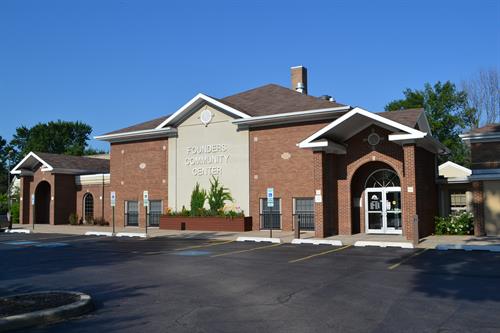
The Frankfort Park District Board of Commissioners entered into a closed executive session on Tuesday, May 27, to discuss pending litigation concerning the Five Oaks Park parcel, signaling a deepening dispute with the neighborhood’s homeowners association. The special meeting was convened with a single action item on the agenda: “Approve Settlement with Five Oaks HOA.”…
Read MoreFrankfort Township Approves Employee Raises, Details Major Infrastructure and Service Projects

Frankfort Township employees will receive a 2.5% cost-of-living pay increase after the Board of Trustees unanimously approved the adjustment at its Monday, May 19 meeting. The move came as Supervisor Nick George detailed a slate of significant ongoing projects, including the continuous remodeling of senior housing units, upgrades to township facilities, and plans to solicit…
Read MoreNew High-End Bar ‘Ace & Vine’ Gets Green Light from Township Board
A new bar focused on high-end liquor and an extensive wine collection is one step closer to opening in Frankfort Township after the Board of Trustees voted to recommend a special use permit for its liquor license. During its May 19 meeting, the board heard a proposal from agent Erin Gallagher on behalf of Ace…
Read MoreGolf Carts Not Permitted on Township Roads, Supervisor Clarifies
Residents hoping to drive golf carts on roads in unincorporated Frankfort Township are out of luck, as the practice is illegal under state law, Supervisor Nick George clarified at the township’s May 19 board meeting. The issue was raised during public comments by Frankfort Square resident Greg Grant, who asked the board about the process…
Read MoreMeeting Briefs: Frankfort Township Board for May 19, 2025
The Frankfort Township Board approved a 2.5% cost-of-living raise for its employees and discussed several major projects at its meeting on Monday, May 19. Supervisor Nick George announced that the township is continuing to remodel its Autumn Valley Senior Housing units, upgrading its maintenance garage, and preparing to seek bids for a new food pantry.…
Read MoreWill County Board Rejects Two Solar Farm Projects After Heated Public Opposition

New Lenox area residents cite safety concerns, property values in opposing commercial solar facilities The Will County Board voted decisively against two proposed commercial solar energy facilities during its May 15 meeting, marking a continued pattern of local resistance to large-scale solar development in residential areas. By a vote of 16-5, the board rejected Pentagon…
Read MoreCounty Approves $15 Million Water System Takeover for Southeast Joliet Area
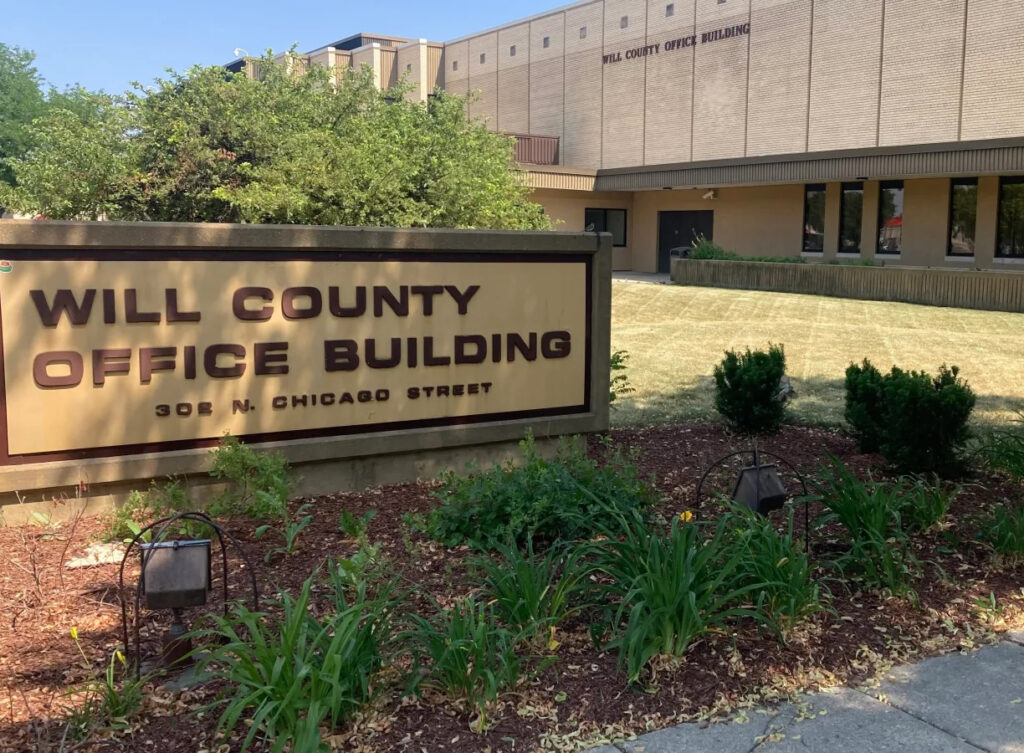
700 homes to receive upgraded service as Joliet takes control of failing sanitary district The Will County Board voted 20-1 to support dissolving the Southeast Joliet Sanitary District and transferring its failing water system to the City of Joliet, setting in motion a $15 million infrastructure upgrade project. The resolution supports using $3 million in…
Read More